Breaking The Stigma with Anusha Dandekar

Breaking The Stigma with Anusha Dandekar - Hashtag Magazine

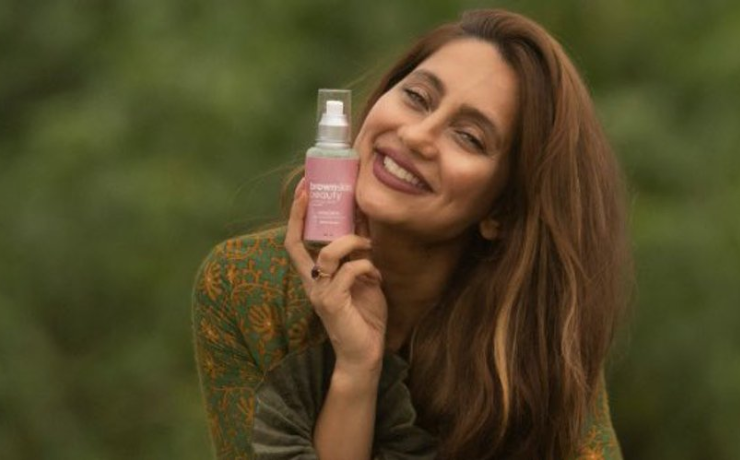
Introducing BrownSkin Beauty, a ground-breaking start-up founded by a renowned television host and former VJ Anusha Dandekar. With a passion for breaking barriers and promoting diversity, this innovative venture is dedicated to celebrating and uplifting women with dark skin tones. BrownSkin Beauty is inspiring women to embrace their unique beauty and celebrate their cultural heritage. Hashtag Magazine captures the journey…

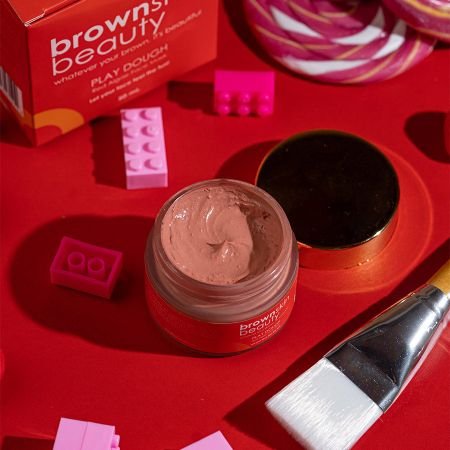
From being a VJ, actress, television host, and judge on India’s Next Top Model to now launching a beauty skincare brand with a message, tell us a little about your entrepreneurial journey. 

It’s been a completely new experience for me creatively, mentally and physically. It’s incredible to create products and learn so much about ingredients and various formulas for the skin. You also learn to be patient because you want to get it perfect and I can’t stop testing the products until I’m happy with every bit of the product from ingredients to the packaging to the way we advertise it. I think with being on camera, I had to just focus on that, whether it was hosting, acting, or singing, and I would shoot and leave. Here it’s a million things happening at once and it never ends, even when you get home! 

Why did you choose to launch a skincare brand specifically for brown skin women? Any personal experience or stigma? 

I think for Indian skin and brown skin all over the world, it was important to change the narrative, be inclusive and also have representation for an entire colour that was more or less abandoned by the beauty industry. I have been a brown girl, who grew up in Australia and I wanted to fit in with the kids all the time, so I would hide my culture a lot. I didn’t have anyone representing me and making me feel a part of anything.  As I got older, I had to build that path for myself and luckily I come from a family that never told me being brown is bad. So, I started this because I wanted everyone to feel empowered with products that are specifically designed for our skin type. After all, we have problems like hyperpigmentation, melasma etc., but being Brown is NOT and shouldn’t be the problem! 

Being Brown is NOT and shouldn’t be the problem!

Starting a brand that targets dark skin people in a country that’s obsessed with fair skin can be quite a challenge, how has the project taken off so far?

It feels like a one-woman army sometimes and then once I hire girls for the company and educate them on the same, it feels great to see them understanding so much more in-depth how serious a problem and how brainwashed we are as a society, nation and world! We have customers ask if this will make you “browner” because they thought it might be the opposite effect to Fair and lovely which promises “Fairer skin”. I wish people knew there is no cream in the world that can make your skin lighter and that bleaches are very harmful. And BrownSkin beauty is not and doesn’t want to change you, it wants to enhance you and make you feel proud to be brown and comfortable in your skin #filterfree. So, we are doing well, but believe me, we have a long, long way to go for it to make a massive impact. 
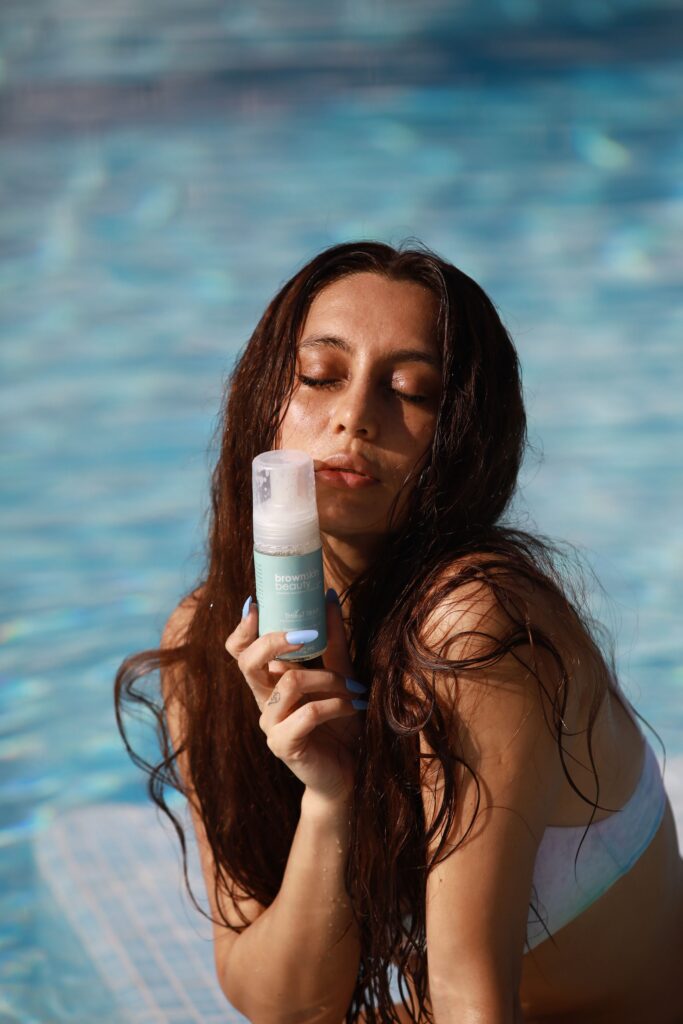
Tell us a little more about your line, how different is it from what we have in the market?

We use safe chemicals and natural ingredients with the perfect blend; we really take into consideration our weather for each range. We think about the different skin types during different seasons. We focus on the majority of skin problems in our country and how we can help minimise them and still be for the majority of people to use. If you are completely new to skincare, we know how confusing and intimidating it can be, so we created sets for you and you get free merchandise with each set! So, it makes a great gift as well. We aren’t time-consuming yet so effective.

I think for Indian skin and brown skin all over the world, it was important to change the narrative, be inclusive and also have representation for an entire colour that was more or less abandoned by the beauty industry.

 Our products do not dry your skin out or make it greasy. Our sunscreen is also the best in the world and I vouch for that. So really just an honest brand doing honest things and also giving 5 percent of profit to help girls finish their education, our foundation is called Beyond Brown Skin… so not only do we want you to feel good about yourself but also feel good that you helped someone through your purchase. Also, we use glass packaging as much as we can to help the environment and overall, we genuinely want to see everyone see themselves differently in the best way possible and that’s beautiful. 
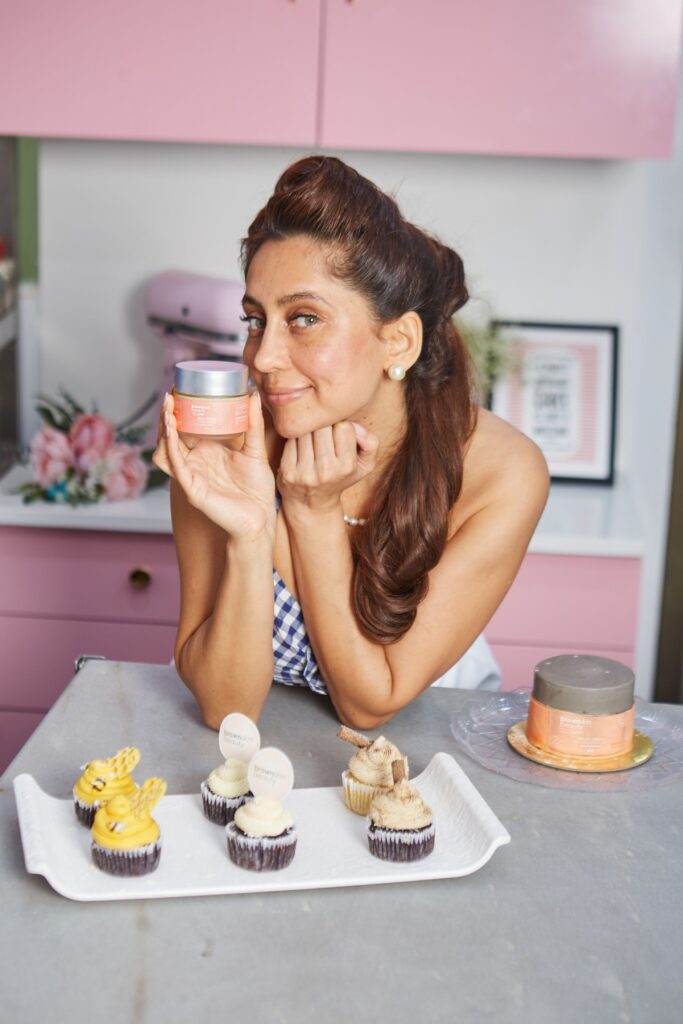
How do you see your beauty brand evolving in the future? What are your plans/ strategies going forward?

I want to take it worldwide! A “made in India” brand created by Indians would feel so incredible. Helping change the narrative here and all over would make me feel so proud and help so many feel included and confident! I also want to start BrownSkin Boy, BrownSkin Mumma, and BrownSkin Baby… but all in good time! 

How different is being an entrepreneur from being an artist?

They are quite different, both require incredible patience as things can change any minute, stamina as hours can be long, creativity because you are building a show or products, and passion because if you put your whole heart into it, your audience knows and can feel it! And I love both things I do so it never really feels like work unless there is paperwork! Yet still, they are very different because when I come home from a shoot, I switch off. BSB never ends. 

How do you balance your career between work, business, and personal commitments?

I think a human has time to make for any of these things if they want to. And for me, work and business have always been things I enjoy and can immerse myself into. I also believe personal commitments are important and you have to make time for them, I just also believe if you need some alone time to be with your own energy after long days, that’s healthy also. 

Helping change the narrative here and all over would make me feel so proud and help so many feel included and confident!

What next, any other interesting projects on the cards?

I have a Marathi film coming soon and another project in the pipeline that I can’t talk about right now. But I am excited about different things this year! 

Quick takes:

What’s your daily skincare routine? 
Thirst trap Face wash, Immortal face cream, and SunLit tinted sunscreen serum, all from my BrownSkin beauty range. 

What are your top skin rules? 
Always take make-up off and do a night time routine to relax and let your skin breathe. Stay away from sugar and dairy as much as possible. Exercise to release all toxins from your body and mind. Say kind words to yourself when you look in the mirror. 

Must have in your beauty bag? 
Lip gloss, studio fix by Mac, cream blush by Nars, my tinted sunscreen serum, Sunlit by BrownSkin beauty. 

One mantra you swear by.
Love yourself or change till you do. And the kinder you are to yourself, the better your mind and body will feel and it will show, glow!

Leave a comment

Your email address will not be published. Required fields are marked *

Lakmé Fashion Week 2026: Designers Shaping the Future of Indian Fashion

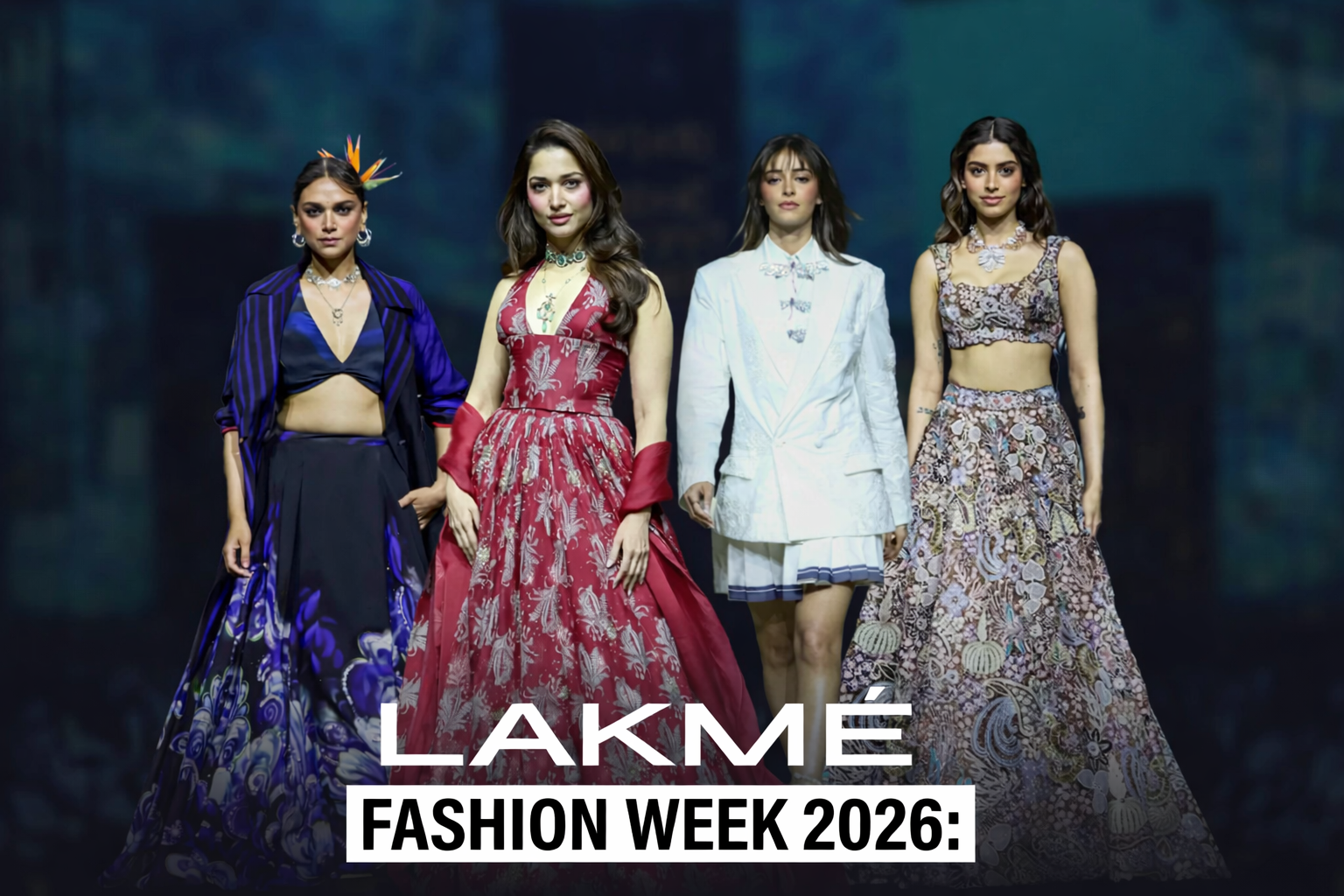
At Lakmé Fashion Week March 2026, Indian fashion moved beyond spectacle into a more process-driven, thoughtful era. This season wasn’t just about trends; it was about how clothes are made, who makes them, and why they matter. From artisanal revival to futuristic textiles, designers showcased a powerful blend of sustainability and innovation. Hashtag magazine gives you the key highlights Péro by Aneeth Arora: Out of Office Background: Known for “international clothing with an Indian heart,” Aneeth Arora focuses on artisanal, handmade textiles. Collection Spotlight: The runway was transformed into a theatrical office space complete with desks and telephones. The collection used a strict palette of blue and white to reimagine rigid workwear as playful, comfortable attire. USP: Sartorial theatre that addressed the modern work-life balance through hand-embroidered, “carefree” garments. Manish Malhotra: Luxury Prêt & Accessories Debut Background: India’s premier bridal couturier, Malhotra, is famous for his cinematic glamour and association with Bollywood. Collection Spotlight: This show marked his first dedicated luxury prêt (ready-to-wear) line and the launch of MM Accessories. The collection focused on “Quiet Luxury”, multi-wear separates and travel-ready couture. USP: Lifestyle Branding. A pivot from heavy bridal couture to a versatile, modern wardrobe that maintains his signature “timeless glamour”. AFEW by Rahul Mishra: White Gold Background: Mishra is a global pioneer in sustainable luxury and was the first Indian to win the International Woolmark Prize. Collection Spotlight: In partnership with SUPIMA, this collection explored the ecology of cotton. Motifs included dragonflies, marigolds, and insects, all hand-embroidered on fine cotton and Chanderi weaves. USP: “Cotton into Couture.” Repositioning humble cotton as a high-luxury fibre through artisanal density and a quieter, more restrained aesthetic. Amit Aggarwal: Orizon Background: A master of structured, architectural fashion who uses recycled materials and signature metallic polymer strips. Collection Spotlight: In collaboration with Indriya Jewels,

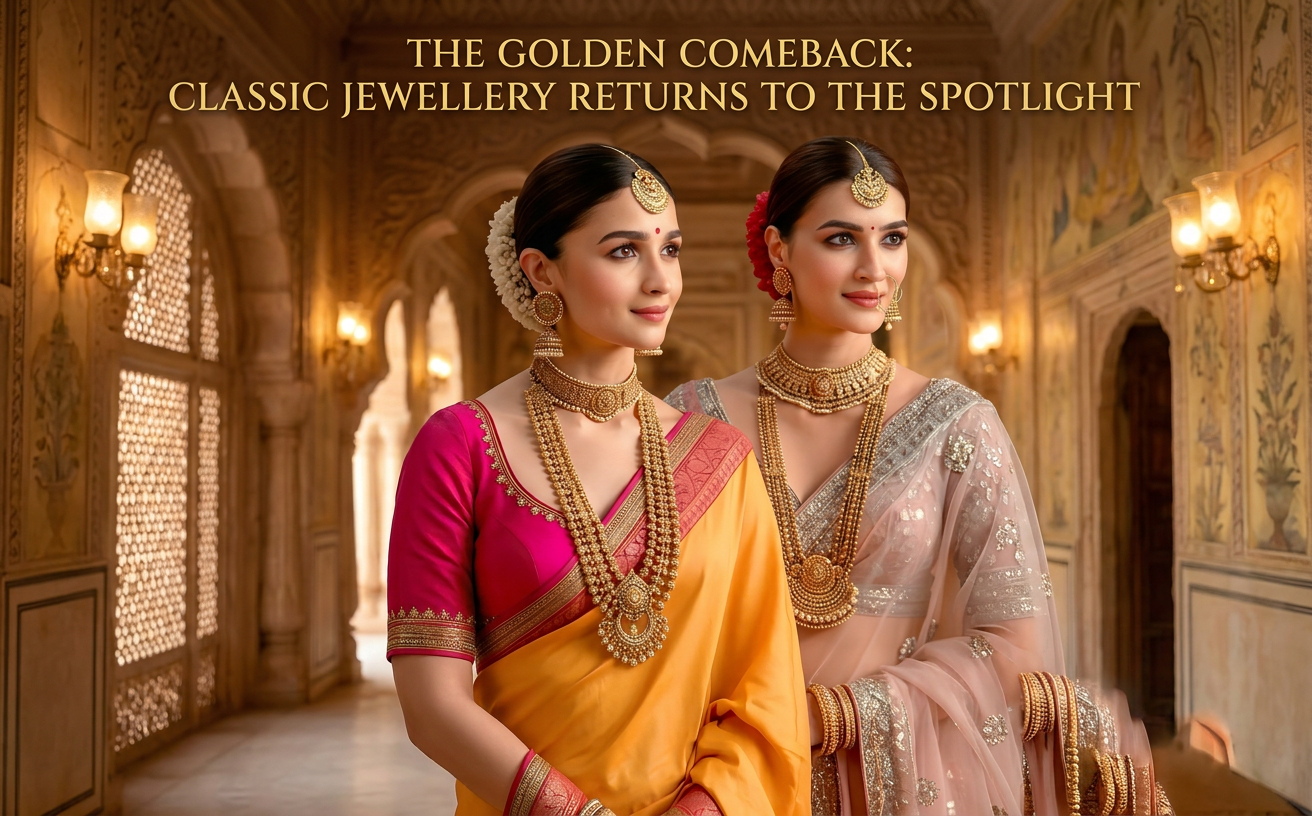
Gold Is Back: Why Classic Jewellery Is Regaining Its Shine in 2026

For the past decade, the jewellery industry has seen waves of change. Artificial jewellery, minimalist designs, and the rapid rise of lab-grown diamonds have transformed consumer preferences, especially among younger buyers looking for affordable luxury. Yet in 2026, gold jewellery is quietly reclaiming its throne. From weddings to everyday fashion and even men’s accessories, gold is experiencing a powerful resurgence not just as ornamentation, but as a trusted investment. The Investment Factor One of the biggest reasons for gold jewellery’s comeback is simple: stability. While diamonds and lab-grown alternatives have gained popularity due to affordability, they often lack strong resale value. Gold, on the other hand, remains a tangible asset that can be sold, exchanged, or passed down generations. This financial security has made gold increasingly attractive to modern buyers who want jewellery that doubles as an investment. During recent wedding seasons in India, jewellers have reported rising demand for plain gold jewellery in 22K, 18K and 14K forms as buyers prioritise long-term value over heavily diamond-studded pieces. With gold prices steadily climbing in recent years, many consumers now view gold jewellery as a form of wearable wealth something that carries emotional significance while also retaining monetary value. Celebrity Influence and the Wedding Effect Celebrity culture continues to play a major role in shaping jewellery trends. A recent example is the high-profile wedding of actors Rashmika Mandanna and Vijay Deverakonda, which sparked widespread discussion about heritage jewellery. The couple’s wedding looks prominently featured elaborate handcrafted gold pieces inspired by South Indian temple architecture. Rashmika reportedly wore eleven pieces of traditional gold jewellery, while Vijay made headlines for embracing bold groom jewellery including layered necklaces, ear studs, cuffs and other royal-inspired ornaments. Their wedding highlighted something significant: gold jewellery is no longer just for brides. Men Are Embracing Jewellery Again Historically,

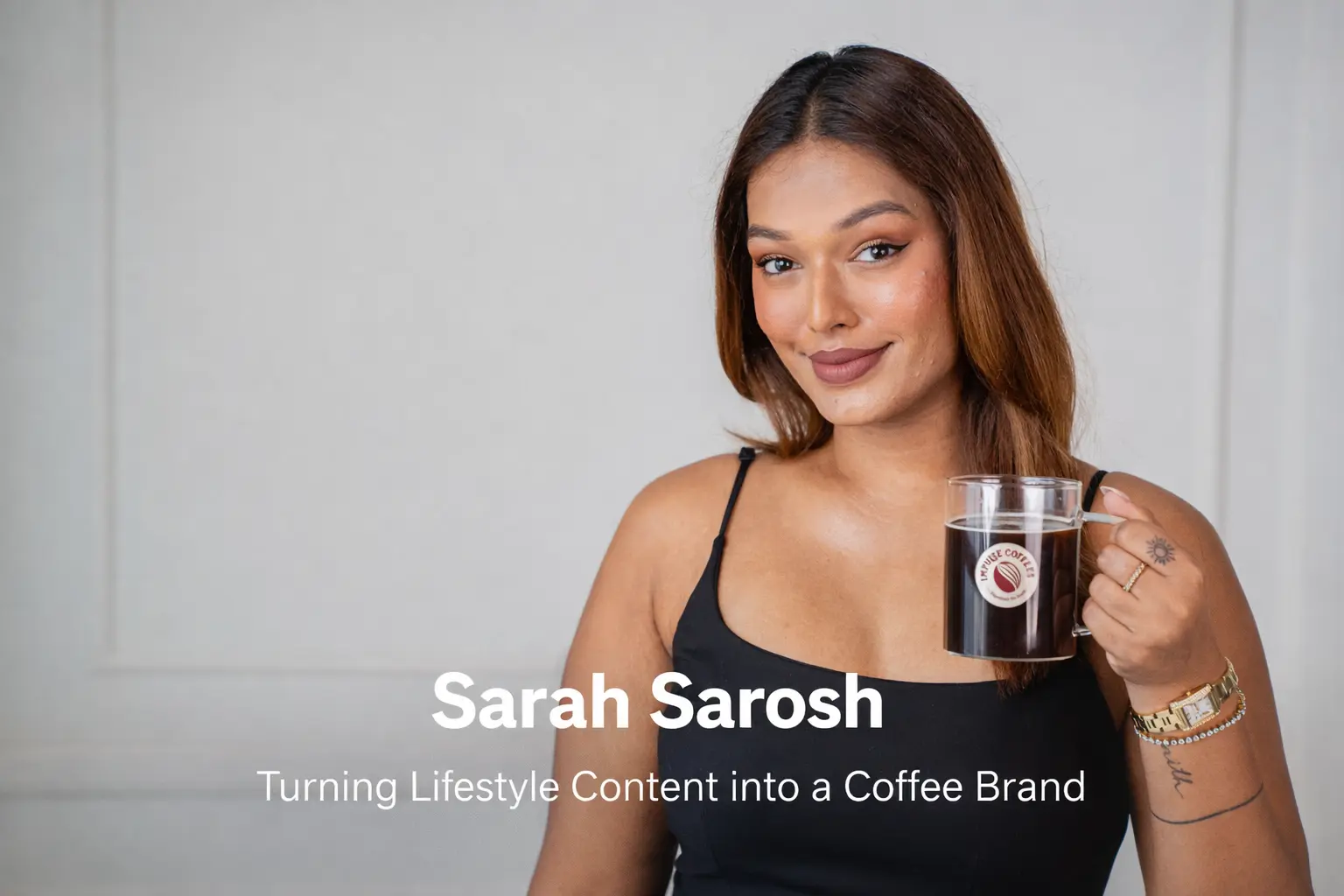
From Creator to Founder: Sarah Sarosh’s Impulse Journey

Sarah Sarosh’s foundation lies in her training in Occupational Therapy at KEM, Mumbai, a discipline that shaped her understanding of behaviour, confidence, and well-being far beyond textbooks. “It trained me to look at self-image and lifestyle as more than surface-level experiences,” she explains. That holistic lens continues to influence how she creates and builds today. Raised in a middle-class household, she learned early that stability comes from discipline, not shortcuts. There was no predefined creative roadmap or safety net, which meant resilience and independence were cultivated organically. Her personal struggles with acne and self-image also played a defining role. “It made me more observant of how deeply appearance is tied to confidence and belonging,” she says. That sensitivity now informs her approach to beauty, representation, and storytelling. Where Storytelling Meets Building Sarah describes her work as a blend of storytelling and entrepreneurship. “Content and business may look separate from the outside, but for me they stem from the same instinct, the desire to create something meaningful.” Her content journey began while she was still a student, documenting beauty, health, and self-image through lived experience. Entrepreneurship followed with the launch of Impulse Coffees, born from identifying a gap in how instant coffee was positioned in India. “It was widely consumed but rarely treated with care or storytelling,” she notes. Building Impulse introduced her to sourcing, product development, packaging, and customer experience, expanding her role from creator to founder. “Storytelling helps me understand people. Building helps me translate that understanding into something tangible.” Real, Not Remote “At its core, my work is about documenting life as it unfolds,” she says. Rather than presenting polished perfection, Sarah has consistently allowed her audience to witness transitions, uncertainties, and growth in real time. “It feels less like performance and more like continuity.” She is most

Alfiya Karim Khan: Mumbai YouTuber Redefining Modest Fashion and Digital Influence

Alfiya Karim Khan grew up in Mumbai in a family where education was non-negotiable, and ambition was encouraged, so long as it followed a conventional path. Academically strong, medicine seemed almost predetermined for her. But internally, she felt drawn elsewhere. “Deep down, I always knew my life did not belong in a hospital corridor,” she says. “It belonged in the creative industry.” Choosing to pursue a Bachelor’s degree in Mass Media instead of medicine was met with hesitation and doubt. Coming from a background where most women were financially dependent, she had rarely seen female entrepreneurship firsthand. That absence became fuel. “Every time someone questioned whether content creation was serious, it pushed me to take it more seriously,” she reflects. What began quietly in her bedroom evolved into financial independence and professional stability. Today, her work represents more than a career; it symbolises “choosing conviction over comfort.” A Cultural Voice in Modest Fashion Alfiya identifies as a digital entrepreneur and a cultural voice within the modest fashion space. A decade ago, the online fashion landscape felt misaligned with her personal style. “I did not want to shape-shift just to belong,” she explains. “I decided to build around my authenticity instead of bending away from it.” Over the past 10 years, she has collaborated with global and legacy brands, been recognised among Forbes’ Top 100 Digital Stars, and represented modest fashion at Paris Couture Week. For her, these milestones represent more than visibility; they signal representation. “This is not just fashion content,” she says. “It is about showing that ambition and values can coexist.” Reinterpreting, Not Rejecting At its core, her work reinterprets mainstream fashion through a modest lens. Rather than rejecting trends, she modifies them, layering strategically and reshaping silhouettes. “Fashion does not have to be abandoned to align with

You May Also Like

Connect with us