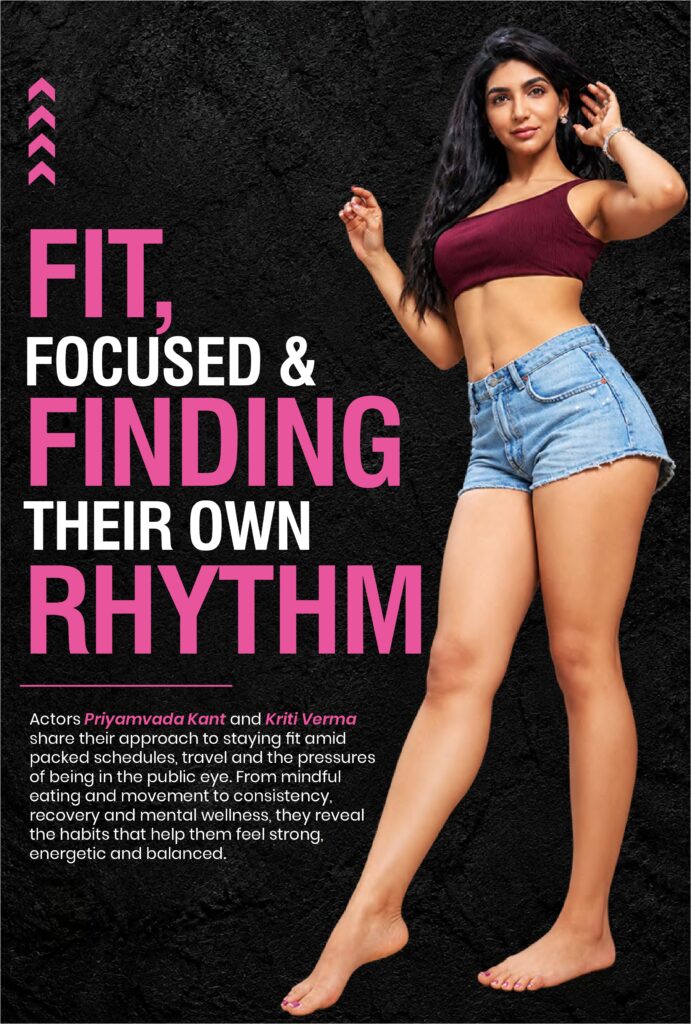
Fit, Focused & Finding Their Own Rhythm

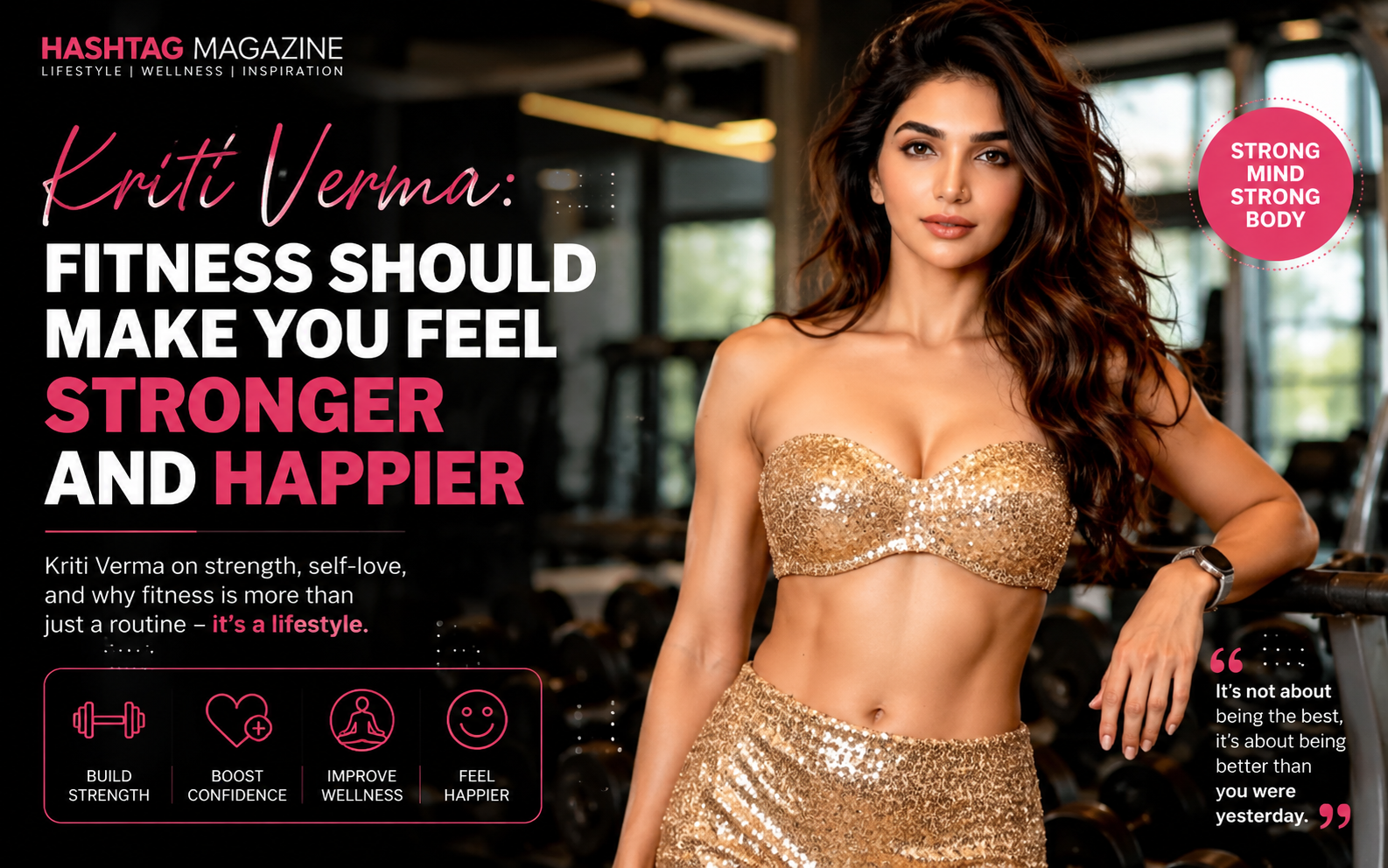
Kriti Verma: Fitness should make you feel Stronger and Happier

Actors Priyamvada Kant and Kriti Verma share their approach to staying fit amid packed schedules, travel and the pressures of being in the public eye. From mindful eating and movement to consistency, recovery and mental wellness, they reveal the habits that help them feel strong, energetic and balanced.

Kriti Verma: Fitness should make you feel Stronger and Happier
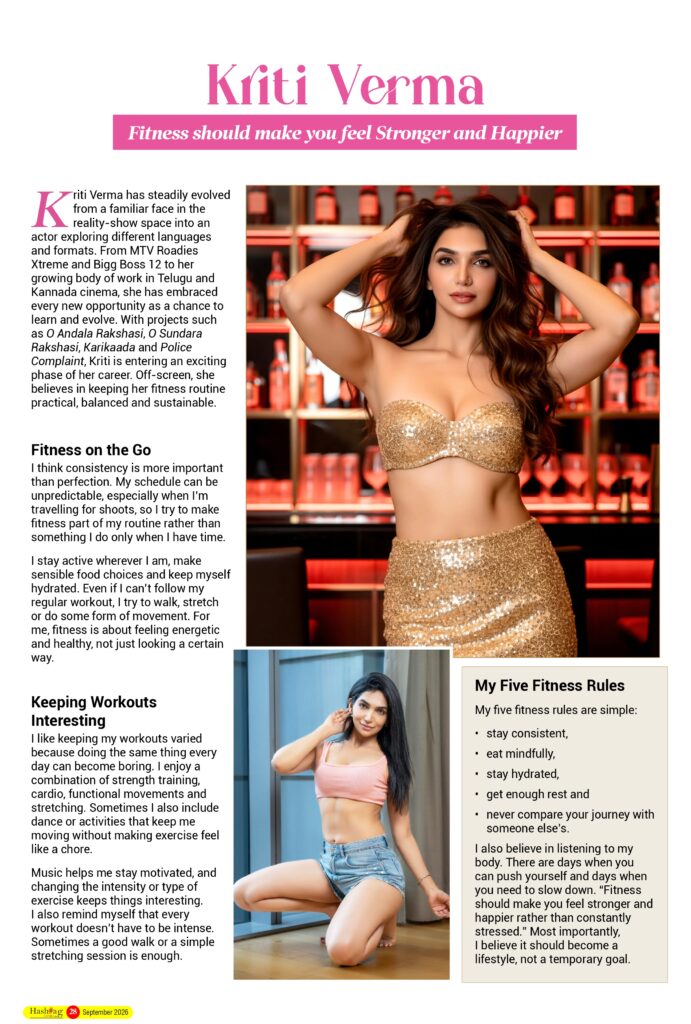
Kriti Verma has steadily evolved from a familiar face in the reality-show space into an actor exploring different languages and formats. From MTV Roadies Xtreme and Bigg Boss 12 to her growing body of work in Telugu and Kannada cinema, she has embraced every new opportunity as a chance to learn and evolve. With projects such as O Andala Rakshasi, O Sundara Rakshasi, Karikaada and Police Complaint, Kriti is entering an exciting phase of her career. Off-screen, she believes in keeping her fitness routine practical, balanced and sustainable.
Fitness on the Go
I think consistency is more important than perfection. My schedule can be unpredictable, especially when I’m travelling for shoots, so I try to make fitness part of my routine rather than something I do only when I have time. I stay active wherever I am, make sensible food choices and keep myself hydrated. Even if I can’t follow my regular workout, I try to walk, stretch or do some form of movement. For me, fitness is about feeling energetic and healthy, not just looking a certain way.

Keeping Workouts Interesting
I like keeping my workouts varied because doing the same thing every day can become boring. I enjoy a combination of strength training, cardio, functional movements and stretching. Sometimes I also include dance or activities that keep me moving without making exercise feel like a chore. Music helps me stay motivated, and changing the intensity or type of exercise keeps things interesting. I also remind myself that every workout doesn’t have to be intense. Sometimes a good walk or a simple stretching session is enough.
My Five Fitness Rules
My five fitness rules are simple: stay consistent, eat mindfully, stay hydrated, get enough rest and never compare your journey with someone else’s. I also believe in listening to my body. There are days when you can push yourself and days when you need to slow down. “Fitness should make you feel stronger and happier rather than constantly stressed.” Most importantly, I believe it should become a lifestyle, not a temporary goal.
My Approach to Diet
I believe in a balanced and sustainable approach rather than following extreme diets. I try to include enough protein, vegetables, fruits and wholesome foods in my meals, while avoiding excessive processed or sugary foods. A typical day starts with something nourishing, followed by balanced meals through the day. I also make sure I drink enough water. When I’m working, I prefer food that keeps me energetic without making me feel too heavy. “I don’t believe in starving myself to stay fit.” Good nutrition should support your energy, mood and overall health.

Handling Cravings
Of course, I get cravings! I don’t think completely depriving yourself is healthy because it can make you want something even more. I prefer moderation. If I really want something, I’ll have it in a sensible portion and then get back to my routine. I don’t necessarily believe in calling it a “cheat day” because food shouldn’t feel like something you have to cheat on. For me, it’s about balance. One indulgent meal doesn’t undo all the healthy choices you’ve made.

Food as Fuel
I look at food as fuel, especially because my work demands a lot of energy. I try to include good sources of protein, fibre, vitamins and healthy fats in my meals. I like keeping fruits, vegetables and wholesome protein-rich foods in my routine, while limiting excessively processed foods and sugary drinks. At the same time, I don’t believe in putting a long list of foods into a “never eat” category. The key is understanding what works for your body and maintaining balance.
Handling Scrutiny
Being in the public eye definitely comes with scrutiny, and I think every actor experiences that at some point. Earlier, it could affect me more, but with time I’ve learned to focus on my own journey. There will always be comparisons, whether it’s about looks, fitness, work or social media. “I don’t want to compete with another person because everyone’s journey is different.” I’d rather compete with the version of myself from yesterday and keep improving.
Staying grounded and remembering why I started helps me deal with external opinions.
My Fitness Inspiration
For me, Shilpa Shetty is definitely one of the fittest stars in Bollywood. What I admire is that fitness seems to be a genuine part of her lifestyle.
She has maintained incredible discipline over the years while showing that fitness isn’t about having a certain body type. Her dedication to yoga, wellness and overall health is something I really admire. She is a great example of how consistency and taking care of yourself can help you stay strong and energetic at every stage of life.

My 2026 Fitness Resolution
My fitness resolution for 2026 is to be more consistent and focus on becoming stronger from within. I don’t want fitness to be only about appearance or numbers on a weighing scale. I want to improve my strength, stamina, flexibility and overall energy. With my work taking me to different cities and sets, I also want to get better at maintaining my routine even when life gets hectic. Most importantly, I want fitness to remain something that makes me feel good, confident and happy.
Leave a comment

Your email address will not be published. Required fields are marked *

Hot on Screen, Healthier Off Screen: The Celeb Fitness Stories

Lights, camera, consistencyvyour favourite celebs aren’t just sculpted for the screen; they’re committed to everyday wellness. Sinduri Vuppala dives into the fitness stories that are shaping their lives. Who: Divyansha Kaushik An Indian actress known for her work in Telugu and Hindi cinema, Divyansha first gained attention with her praised debut in Majili (2019) and Has Since appeared in films such as The Wife, Ramarao on Duty, Michael, and Takkar, steadily building her presence in the industry. With a growing lineup of diverse roles, she continues to emerge as one of the most promising talents in South Indian cinema. Known for her disciplined lifestyle, she often shares insights into her fitness routine and wellness philosophy. 1. Staying Consistent With Fitness I’ve had phases when I was highly dedicated to fitness and phases when I didn’t work out for over 6 months. Recently, I realised my mental health, consistency, and discipline all improve when I move my body. Even five push-ups are better than doing nothing. It doesn’t have to be about reps just movement. I do Pilates, gymnastics, kickboxing, boxing, and MMA, including Muay Thai and jiu-jitsu. I also make sure to get in 30 minutes of cardio and core work. This has been my routine lately. 2. Your Top Five Fitness Rules These are what work for me: Hydration: essential. Water helps your body function and flush out anything that doesn’t suit you. Waking up early: I’m an early riser and love morning workouts; by noon, I feel accomplished and energised. Matcha over coffee: coffee overstimulates me, but matcha gives me steady energy. Two kiwis every morning: my dose of vitamin C. Pescatarian, balanced meals: one fish meal a day, lots of salad and fibre, and a hearty breakfast with eggs, carbs, and sourdough. 3. “You Are What You

From Law to Wellness: Sohrab Khushrushahi’s Journey to Building India’s Cleanest Nutrition Brand

In an exclusive interview with SINDURI VUPPALA, SOHFIT founder and celebrity fitness coach Sohrab Khushrushahi opens up about his evolution from law to fitness and now to clean-label performance nutrition with The Func Lab. Co-founded with Sahil Kukreja and Tashya Davar, The Func Lab is cutting through industry noise with science backed, transparent products built for real people. From coaching stars like Alia Bhatt and Mira Kapoor to formulating no-fluff supplements, Sohrab’s mission remains the same: help people feel stronger, move better, and live well. From law to fitness and now nutrition: what inspired this pivot to launching The Func Lab? Honestly, I’ve never seen it as a pivot. For me, it’s been an evolution. I started in law because it was the “safe” thing to do. But over time, I realized it didn’t light me up. Fitness came in as something that felt real and meaningful. When I started SOHFIT, it was never about six-packs it was about helping people move better, feel stronger, and live fuller lives. The Func Lab is just a continuation of that mission. I saw firsthand how many people were doing the training, showing up, but still not recovering well or getting results because their nutrition was broken. There was a lot of confusion and even more compromise in the supplement space. I knew we could do better. So, we built it. How did your experience building SOHFIT inform your approach to creating a product-based wellness brand? SOHFIT taught me that people don’t want to be complicated. They want guidance they can trust, routines that work, and things that actually make them feel good. That mindset shaped everything about The Func Lab. Instead of chasing trends, we asked: “What does the average person actually need to support a sustainable fitness lifestyle?” The answer was

Yoga vs. Pilates: What Works Better for the Digital-Age Spine?

Introduction: We live in an era of screens. From remote work to binge-watching, our spines are silently bearing the burden of our digital lives. Neck stiffness, back pain, poor posture, and compressed discs are now common across all age groups. But amidst this modern-day strain, two movement systems Yoga and Pilates are gaining ground as effective solutions. So, what works best for your digital-age spine? Hashtag magazine gives you an overview… The Digital Spine Problem Text neck. Rounded shoulders. Slouched lower back. The prolonged hours we spend hunched over devices disrupt the natural curvature of the spine. This leads to muscle imbalances, reduced flexibility, chronic tension, and even nerve compression over time. What we need today is more than just exercise; we need restorative movement, spinal alignment, and deep core engagement. Yoga: Flexibility Meets Awareness What It Does for Your Spine: Improves posture through poses like Tadasana, Bhujangasana (cobra), and downward dog Increases spinal flexibility and length through stretches and backbends Encourages mindful movement and body awareness, helping you notice slouching and misalignment in daily life Breathwork (pranayama) and meditation reduce stress, which often causes physical tension in the neck and shoulders What to Watch Out For: Without proper guidance, deep backbends or twists may aggravate pre-existing disc issues Some styles (like power yoga) may not focus enough on core strength, which is key to spinal support Pilates: Core-Centric Control What It Does for Your Spine: Strengthens the deep core muscles (transversus abdominis, pelvic floor) that stabilise the spine Focuses on neutral spine alignment crucial for those who sit for hours Builds muscle endurance and control around the lumbar and thoracic spine Gentle, low-impact, and highly structured ideal for those with back pain, disc issues, or postural strain What to Watch Out For: May feel repetitive or mechanical for those

Vipassana Meditation: The Path to Inner Clarity and Peace

Introduction: In today’s fast-paced, hyper-connected world, true silence and stillness have become rare luxuries. But centuries ago, a powerful method of self-transformation was discovered, one that involves no rituals, no chanting, and no belief systems. This is Vipassana, one of the most ancient meditation techniques in India, rediscovered and popularised by S.N. Goenka. It is not just a practice but a deep mental training designed to purify the mind and reveal the nature of reality. Hashtag Magazine gives you a lowdown… What is Vipassana? Vipassana means “to see things as they really are.”It is a form of insight meditation that involves observing your thoughts, bodily sensations, and breath, without reaction or judgment. Practitioners learn to watch their inner experiences with equanimity, breaking the automatic cycle of craving and aversion that leads to suffering. Vipassana is traditionally taught in 10-day silent residential courses, offered in centres worldwide, free of charge. Core Principles of Vipassana Anicca (Impermanence): Everything is constantly changing. Dukkha (Suffering): Clinging to impermanent things causes suffering. Anatta (Non-self): There is no permanent “I” or ego. By deeply observing these truths within one’s own body and mind, one begins to detach from emotional reactivity and experience lasting peace. Benefits of Vipassana Meditation 1. Mental Clarity & Focus Vipassana sharpens awareness and reduces mental noise, allowing practitioners to stay focused and present. 2. Emotional Balance Regular practice helps you respond to challenges calmly rather than react impulsively. This emotional intelligence benefits relationships and daily decision-making. 3. Stress & Anxiety Reduction By observing sensations instead of resisting them, Vipassana breaks the cycle of stress and fear. Many report deep inner calm after courses. 4. Deep Self-Awareness You develop profound insight into your own patterns thoughts, habits, and emotions helping you understand and ultimately transform them. 5. Increased Compassion & Patience As the