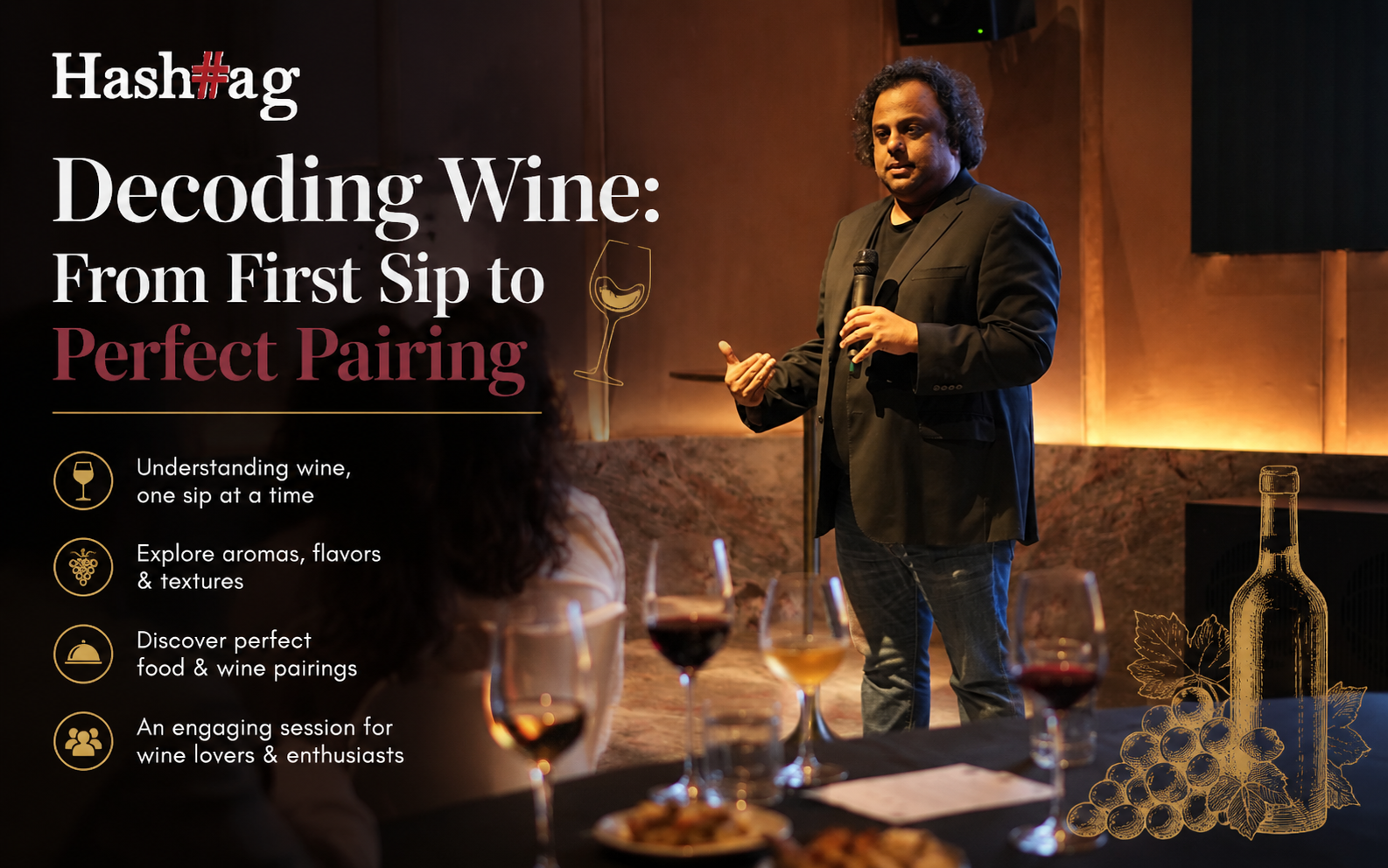
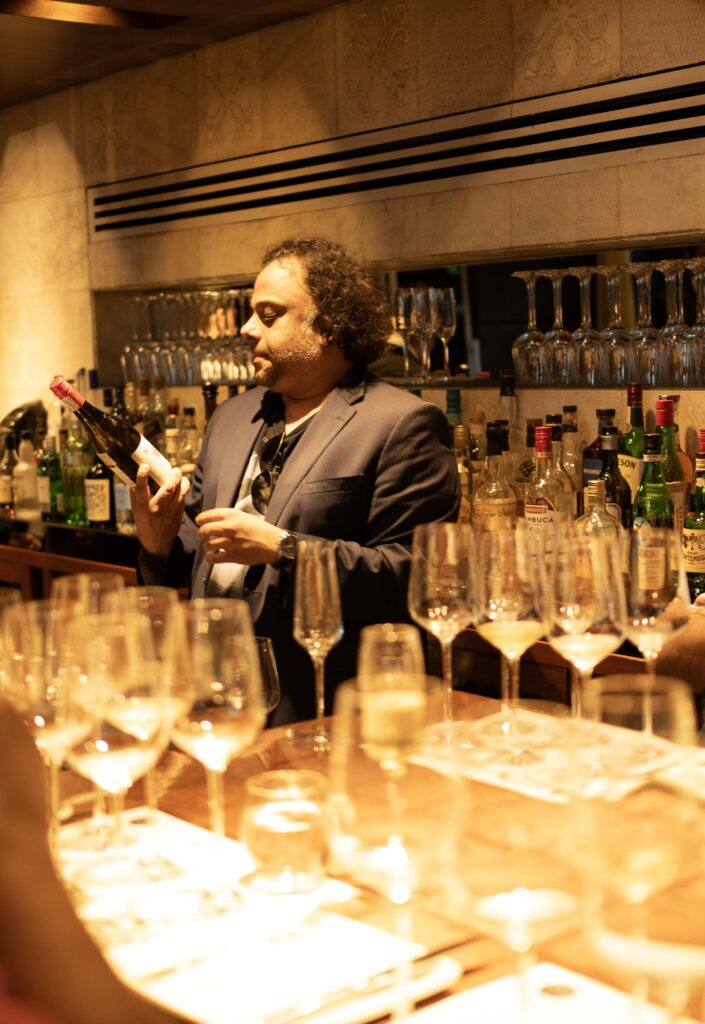
Intro: As India’s dining and drinking culture evolves, wine is no longer seen as niche or intimidating; it’s becoming an integral part of modern lifestyle and experiential dining. To decode the basics, bust common myths, and understand how wine fits into the Indian palate, Sinduri Vuppala speaks with Nikhil Agarwal, Founder of All Things Nice. With over two decades of experience in the wine and spirits industry, he shares practical insights on wine fundamentals, pairing it with Indian cuisine, and navigating wine etiquette with ease.
For someone new to wine, how would you explain the difference between red and white wines in simple terms?
The juice inside the grape is clear, and the colour in the wine comes from the skin. When making white wines, the skin of the grape is separated from the juice. This applies to white grapes like Chardonnay, Sauvignon Blanc, etc.
When making rosé, the skin of a red wine grape is kept in contact with the juice for a short period of time to extract a little colour and a longer time for red wine. The skin, while it provides colour, also provides flavour, structure and tannins.
What is the correct way to taste wine for beginners, and what should they actually look for?
They should look for pleasure. Does the wine smell and taste good? For beginners, that’s all that matters.
Does the type of glass or serving temperature really make a difference to the experience?
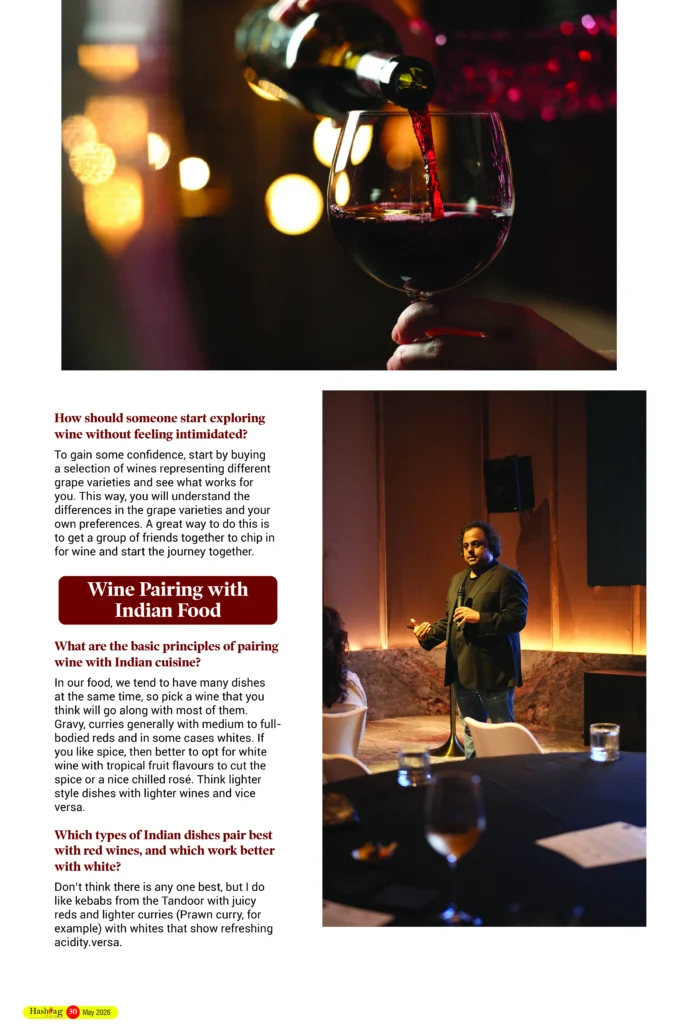
Serving wine in the wrong glassware can ruin a wine experience. You do not need to buy yourself expensive glassware, but a good thin glass for white, red, sparkling, etc., in the correct shape is a great start. Wine temperature plays an important role; white wine must be served at 11 degrees, red wine at 16 degrees and sparkling wine at 8 degrees.
How should someone start exploring wine without feeling intimidated?
To gain some confidence, start by buying a selection of wines representing different grape varieties and see what works for you. This way, you will understand the differences in the grape varieties and your own preferences. A great way to do this is to get a group of friends together to chip in for wine and start the journey together.

Wine Pairing with Indian Food
What are the basic principles of pairing wine with Indian cuisine?
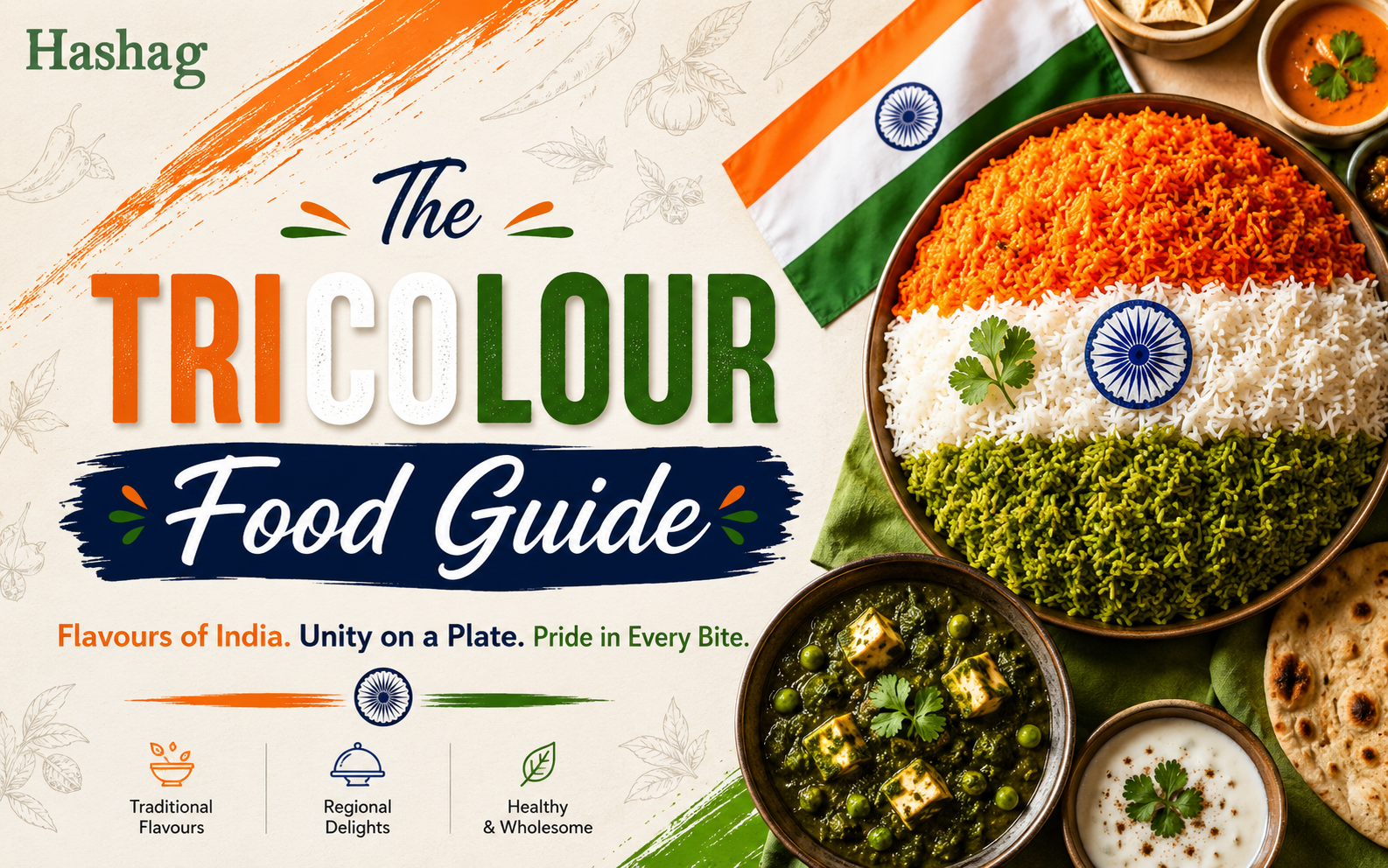
In our food, we tend to have many dishes at the same time, so pick a wine that you think will go along with most of them. Gravy, curries generally with medium to full-bodied reds and in some cases whites. If you like spice, then better to opt for white wine with tropical fruit flavours to cut the spice or a nice chilled rosé. Think lighter style dishes with lighter wines and vice versa.
Which types of Indian dishes pair best with red wines, and which work better with white?
Don’t think there is any one best, but I do like kebabs from the Tandoor with juicy reds and lighter curries (Prawn curry, for example) with whites that show refreshing acidity.
How should spice levels and rich gravies influence wine selection?
Spice levels need to be balanced with wines that can cut the spice: off-dry or fruit-forward wines work best here. Big, bold tannic red wines with spice are not a good idea.
Rich gravies require wines that can match up to food. Oaked full-bodied whites and reds work best here.
Are there any unexpected or unconventional wine pairings with Indian food that you personally enjoy?
I love curd rice with a chilled glass of New Zealand Sauvignon Blanc. Or Vada pav with a Chardonnay.
What are the essential wine etiquette rules everyone should know when dining out or hosting?
There’s no strict etiquette; if you’re hosting, choose wines that suit the group, not just your own taste.
Is there a right way to hold, swirl, or smell wine, or are these often overcomplicated?
Hold the glass from the stem, swirl the wine to enhance the aromas, sip the wine and let it go all over your tongue. You don’t need to do this every time, just perhaps once to get a sense of the wine.
What are the most common wine etiquette mistakes people make?
Not having the wine at the right temperature or serving the wine in glassware that compromises the wine.
If someone is ordering wine at a restaurant for the first time, how should they choose?
Think about what you want to eat and work the wine selection around it.
What is a simple rule of thumb for picking a good wine for a meal at home?
It depends on the meal, but for everyday dining, an easy, affordable wine that you can enjoy regularly works best.
What’s one myth about wine you’d like to debunk?
Many assume expensive wines taste better, but preference isn’t dictated by price; your palate judges the wine, not its cost.