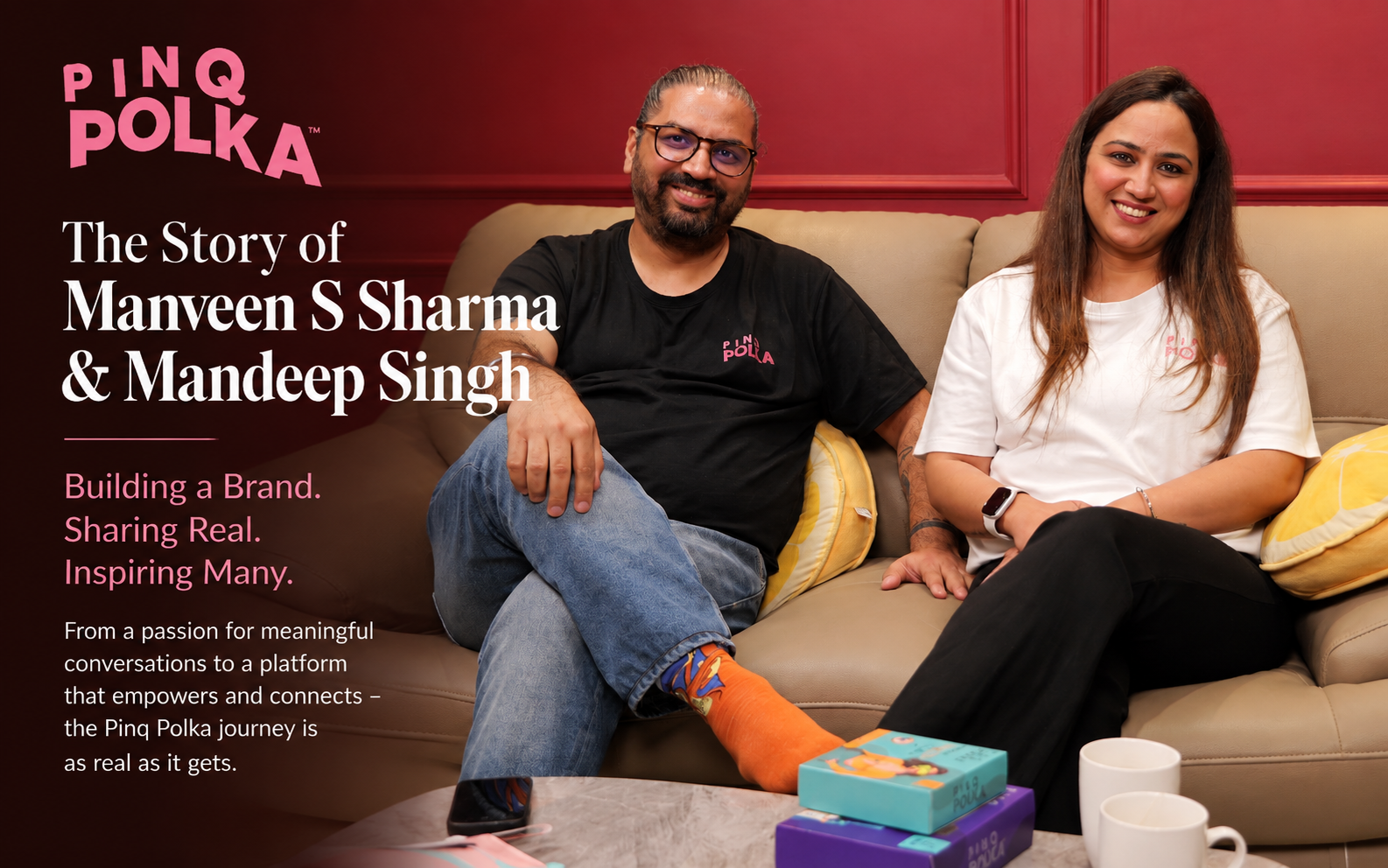
Pinq Polka: The Story of Manveen S Sharma & Mandeep Singh

Pinq Polka: The Story of Manveen S Sharma & Mandeep Singh

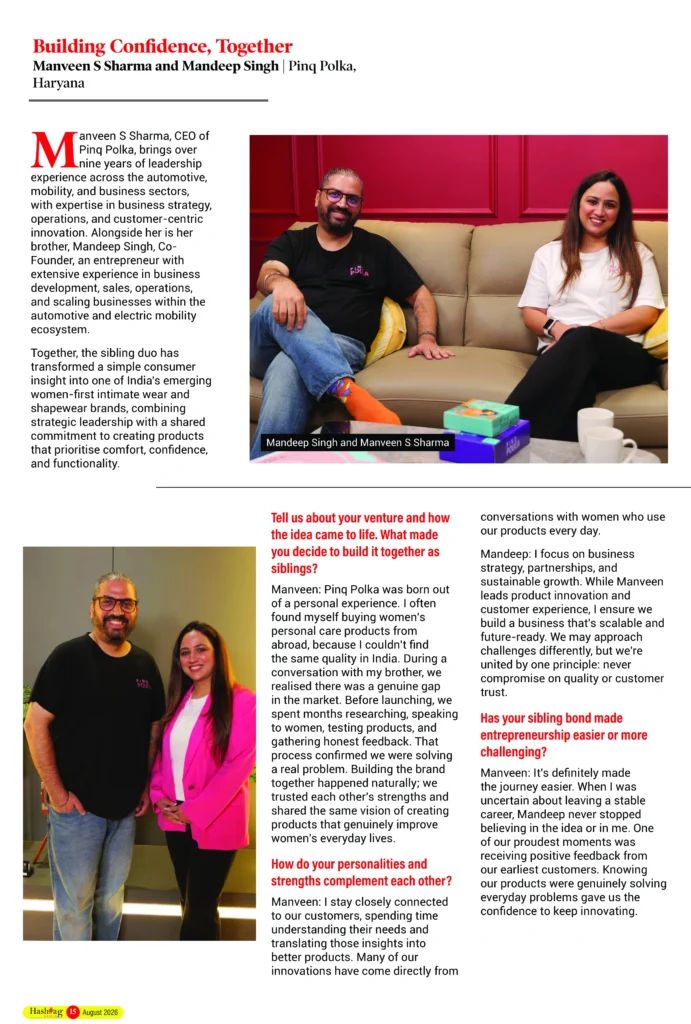
Manveen S Sharma, CEO of Pinq Polka, brings over nine years of leadership experience across the automotive, mobility, and business sectors, with expertise in business strategy, operations, and customer-centric innovation. Alongside her is her brother, Mandeep Singh, Co-Founder, an entrepreneur with extensive experience in business development, sales, operations, and scaling businesses within the automotive and electric mobility ecosystem. Together, the sibling duo has transformed a simple consumer insight into one of India’s emerging women-first intimate wear and shapewear brands, combining strategic leadership with a shared commitment to creating products that prioritise comfort, confidence, and functionality.

1. Tell us about your venture and how the idea came to life. What made you decide to build it together as siblings?

Manveen: Pinq Polka was born out of a personal experience. I often found myself buying women’s personal care products from abroad, because I couldn’t find the same quality in India. During a conversation with my brother, we realised there was a genuine gap in the market. Before launching, we spent months researching, speaking to women, testing products, and gathering honest feedback. That process confirmed we were solving a real problem. Building the brand together happened naturally; we trusted each other’s strengths and shared the same vision of creating products that genuinely improve women’s everyday lives.

2. How do your personalities and strengths complement each other?

Manveen: I stay closely connected to our customers, spending time understanding their needs and translating those insights into better products. Many of our innovations have come directly from conversations with women who use our products every day.

Mandeep: I focus on business strategy, partnerships, and sustainable growth. While Manveen leads product innovation and customer experience, I ensure we build a business that’s scalable and future-ready. We may approach challenges differently, but we’re united by one principle: never compromise on quality or customer trust.

3. Has your sibling bond made entrepreneurship easier or more challenging?

Manveen: It’s definitely made the journey easier. When I was uncertain about leaving a stable career, Mandeep never stopped believing in the idea or in me. One of our proudest moments was receiving positive feedback from our earliest customers. Knowing our products were genuinely solving everyday problems gave us the confidence to keep innovating.

4. How do you resolve disagreements without affecting your relationship?

We let the customer make the final decision. Whenever we disagree, we go back to research, product testing, and customer feedback instead of relying on assumptions. Since we’re both working towards the same long-term vision, discussions remain focused on building the best possible product rather than proving who’s right.

5. What’s been your biggest milestone together, and what’s next?

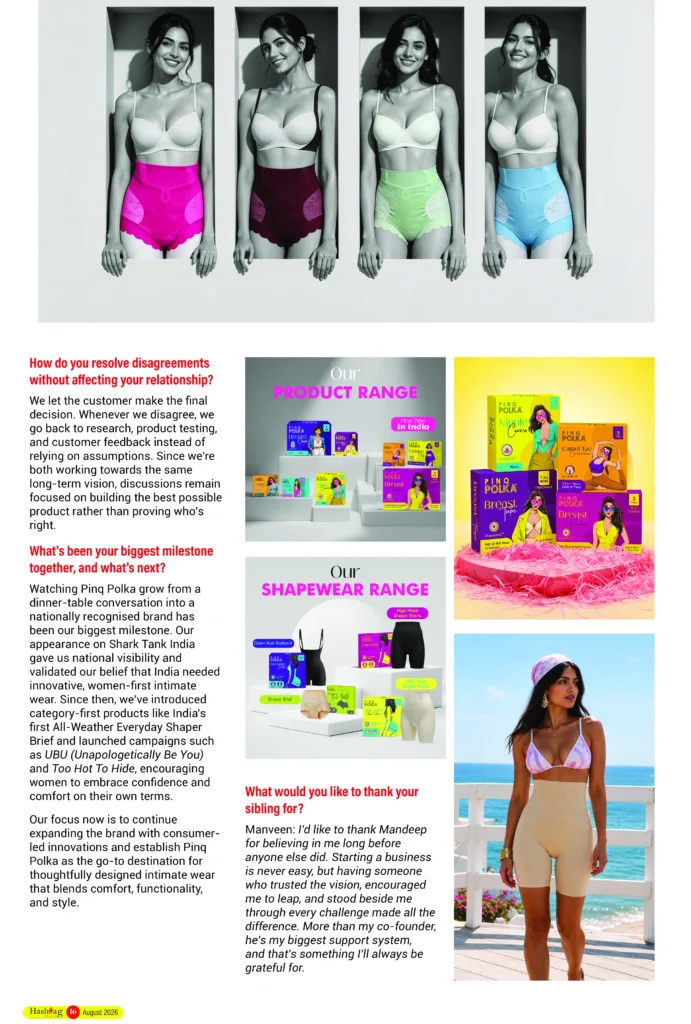
Watching Pinq Polka grow from a dinner-table conversation into a nationally recognised brand has been our biggest milestone. Our appearance on Shark Tank India gave us national visibility and validated our belief that India needed innovative, women-first intimate wear. Since then, we’ve introduced category-first products like India’s first All-Weather Everyday Shaper Brief and launched campaigns such as UBU (Unapologetically Be You) and Too Hot To Hide, encouraging women to embrace confidence and comfort on their own terms.

Our focus now is to continue expanding the brand with consumer-led innovations and establish Pinq Polka as the go-to destination for thoughtfully designed intimate wear that blends comfort, functionality, and style.

6. What would you like to thank your sibling for?

Manveen: I’d like to thank Mandeep for believing in me long before anyone else did. Starting a business is never easy, but having someone who trusted the vision, encouraged me to leap, and stood beside me through every challenge made all the difference. More than my co-founder, he’s my biggest support system, and that’s something I’ll always be grateful for.
Leave a comment

Your email address will not be published. Required fields are marked *

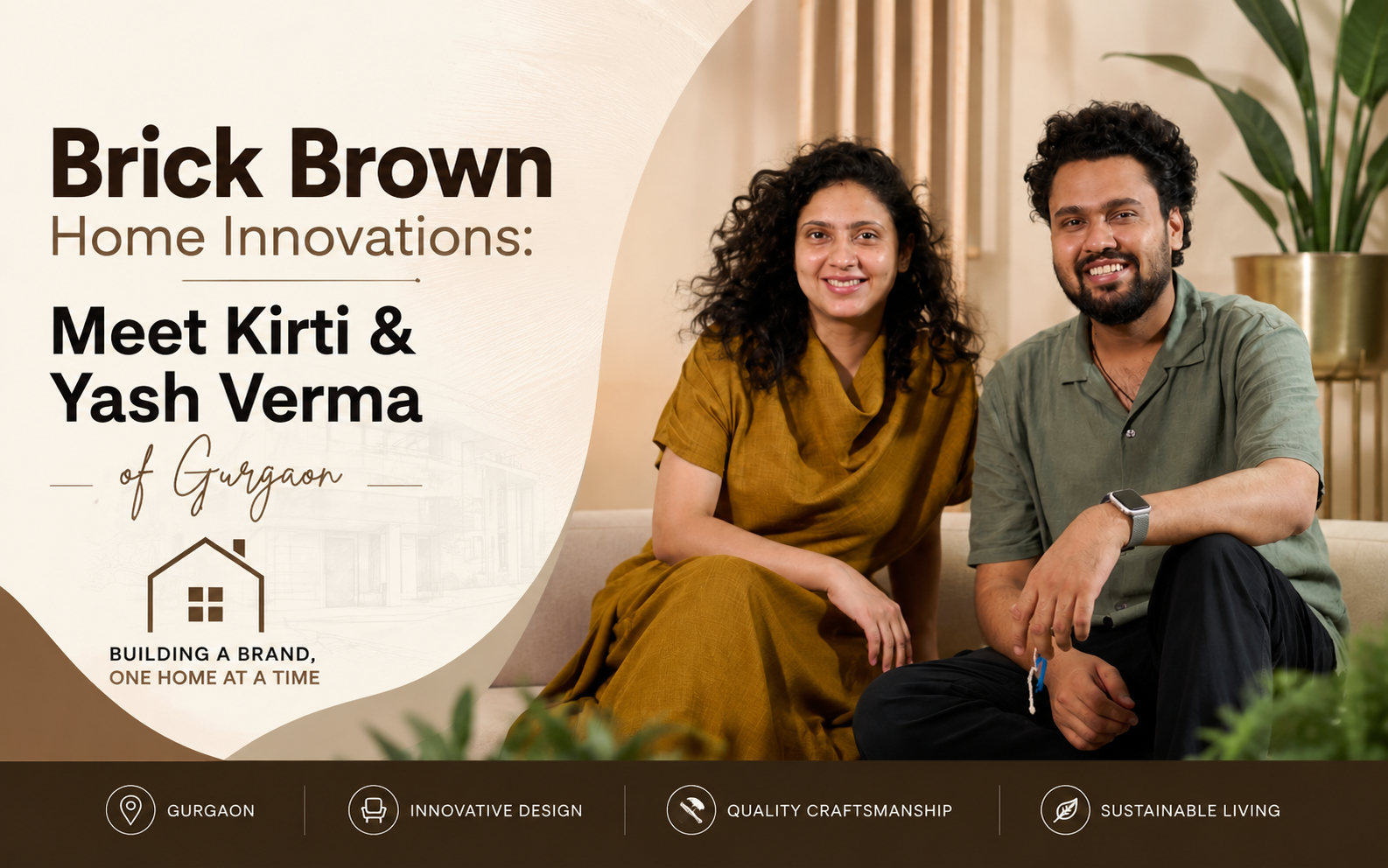
Brick Brown Home Innovations: Meet Kirti & Yash Verma of Gurgaon

Sibling duo Kirti Verma and Yash Verma, founders of Brick Brown Home Innovations, are redefining modern living through thoughtfully designed home décor that blends traditional Indian craftsmanship with contemporary aesthetics. Based in Gurgaon, the brand creates handcrafted solid wood storage solutions, organisers, and home essentials that celebrate functionality, sustainability, and timeless design. Yash Verma leads product innovation, artisan collaborations, and technology-driven operations, while Kirti Verma shapes the brand’s creative vision, design language, and business strategy. Together, they have built Brick Brown into a contemporary homegrown brand that seamlessly blends heritage craftsmanship with modern design. 1. Tell us about your venture and how the idea first came to life. Why did you decide to build it together as siblings? Brick Brown began with a simple belief that homes should feel warm, personal, and lived in. We wanted to create handcrafted wooden pieces that people would cherish for years instead of following short-lived trends. Building the business together wasn’t a planned decision; it happened naturally. Having grown up with similar values and design sensibilities, we instinctively understood each other’s way of thinking, making us natural partners. 2. How do your personalities and strengths complement each other? We bring very different strengths to the table, and that’s what makes the partnership work. I (Yash) focus on product design, manufacturing, and working closely with artisans to perfect every detail. Kirti leads branding, creative direction, storytelling, and business growth. One of us builds products worth talking about, while the other ensures their story reaches the right audience. 3. Has your sibling bond made entrepreneurship easier or more challenging? It has definitely made the journey easier because trust was never something we had to build; it already existed. One moment we’ll always remember is opening our own studio in Gurgaon. Standing in that space, we realised

Getting Sassiest: The Brand Making Sexual Wellness More Inclusive In India

In a country where conversations about sex are still low-key at dinner tables and turn school classrooms awkwardly silent, brands like Sassiest are changing the script, one meme, conversation, and pleasure-positive post at a time. From cheeky Instagram content and relatable humour to refreshingly honest takes on intimacy, confidence, and self-exploration, the brand is helping young Indians approach sexual wellness with far less awkwardness and a lot more openness. Mehak Walia gets sassy with Aishwarya Dua and Karishma Chavan, the co-founders of Sassiest. And honestly, that shift feels long overdue. For years, discussions around pleasure and desire in India have either been buried under shame or treated like something too scandalous to say out loud, especially when women are leading the conversation. Founded by Aishwarya Dua and Karishma Chavan, Sassiest is pushing back against that discomfort with a voice that feels warm, inclusive, funny, and unapologetically real. Instead of sounding clinical or preachy, the brand creates space for conversations around boundaries, body confidence, emotional well-being, and modern relationships in a way that actually feels relatable to today’s generation. For Karishma, the inspiration behind the brand came from noticing just how disconnected many women grow up feeling from their own bodies. “Most conversations around intimacy here are either hidden, judged, or purely medical,” she says. “Nobody was really talking about pleasure, confidence, self-exploration, or emotional wellness in a way that felt normal, safe, and relatable.” That silence, she explains, extends far beyond intimacy itself. Shame and conditioning often shape confidence, relationships, and even the way women exist in the world. “I wanted Sassiest to feel less clinical and more like a movement,” Chavan shares. “A space where women and queer people could feel seen without embarrassment.” Of course, building a sexual wellness brand in India came with its fair share of

From Dam to Dish: How Dam Good Fish Is Transforming India’s Seafood Industry

With rising awareness around clean eating and traceable food sources, Dam Good Fish is rethinking how fresh seafood reaches urban consumers. Co-founders Shobhit Gaur and Shailesh Patel share how their unlikely partnership, built on complementary strengths in branding and aquaculture, led to a venture that prioritises natural sourcing, transparency, and freshness in India’s rapidly growing seafood market. Tell us a little about yourselves, your backgrounds, and personalities. Shobhit Gaur (Co-Founder & CEO):With a Master’s in Business Management and several years as National Head at a leading advertising agency, my career has always combined creativity with strategy. I see myself as a big-picture thinker who enjoys building disruptive ideas in traditionally unorganised markets. I’m naturally outgoing and enjoy exploring new concepts, whether in business or food culture. When I’m not working, I’m usually tracking food trends or spending time working out. Shailesh Patel (Co-Founder):My background is rooted in science, followed by a Master’s degree in business. Over the past decade, I’ve worked with multinational organisations and helped build ventures centred around sustainable solutions. I’m very hands-on and detail-oriented, someone who thrives on execution. For me, strategy must always be backed by strong ethics and measurable results. How did two people from different professional worlds come together to build a venture centred around fresh, natural seafood? Our paths crossed through shared sporting networks, where casual conversations gradually shifted toward food, health, and sustainability. Shobhit’s expertise in media and branding combined naturally with my background in aquaculture. As we discussed clean-label foods and the gaps in India’s seafood ecosystem, it became clear there was a real opportunity. In 2023, we decided to bootstrap Dam Good Fish. The idea was simple: combine strong storytelling and consumer awareness with operational expertise that ensures traceability and quality. Our complementary skill sets helped turn that idea into

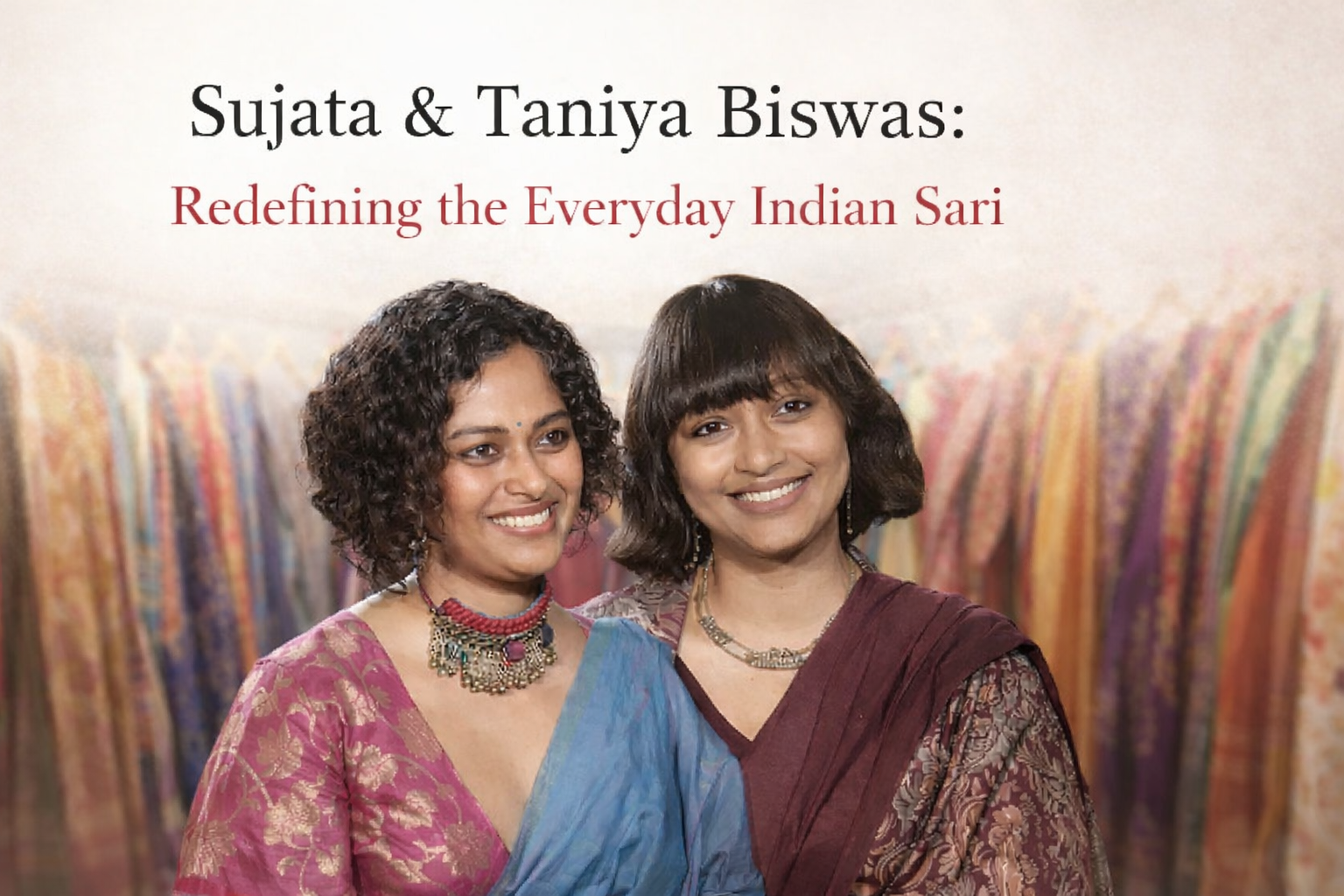
Sujata & Taniya Biswas: Redefining the Everyday Indian Sari

A homegrown Indian fashion brand redefining the sari as an everyday, breathable, and expressive garment. Combining Sujata’s structured, systems-driven approach with Taniya’s creative vision, they work closely with artisan communities across India to create clothing rooted in comfort, honesty, and human connection. Their journey blends entrepreneurship with sisterhood, building a brand that values trust, craftsmanship, and mindful fashion. Taniya, you left a stable career with the Tata group and IBM after IIM Lucknow, and Sujata, you pivoted from IIFT Delhi and corporate life. What was the exact moment when both of you realised that the corporate path wasn’t enough and that Suta was waiting to happen? Taniya: It wasn’t a rebellion. It was recognition. I had done everything “right”: engineering, IIM, a Consulting role that looked perfect on paper. But somewhere between late-night presentations and early morning meetings, I realised I was living life from the neck up. My hands missed fabric. My heart missed stories. I kept returning mentally to memories of wet saris drying on clotheslines, of Maa moving through the house with her pallu tucked in. One evening, over chai, I said it aloud to Sujata: I don’t think this is it. The moment I spoke it, Suta was born. Sujata: For me, it came as the discomfort of becoming someone I wasn’t. The corporate world had given me growth, but it had also hardened me. I remember thinking: If success requires me to lose softness, I don’t want it. My PhD was an attempt to find meaning, but even that felt academic, distant. What we really wanted was to build something with our hands, our intuition, and our values. Suta didn’t arrive as planned. It arrived as relief. From travelling through remote weaving clusters in Meghalaya, Varanasi, MP, and Odisha to working directly with artisan families,

You May Also Like

Connect with us