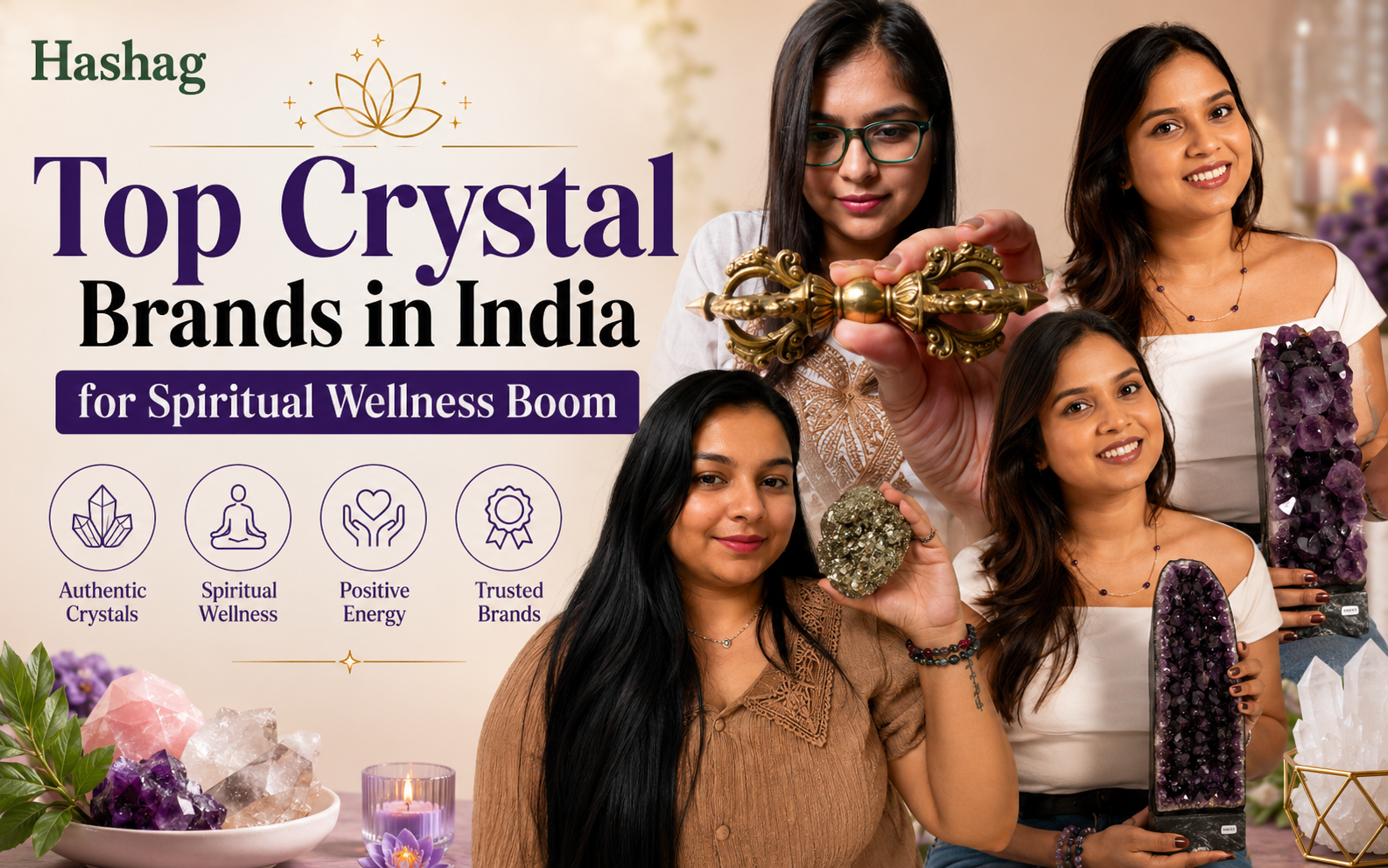
From rose quartz tucked into handbags to amethyst clusters doubling up as bedside décor, crystals have quietly made their way from niche spiritual circles to the everyday routines of a generation searching for balance. In a world obsessed with self-care, manifestation, and mindful living, these shimmering stones have become more than just beautiful objects. Across India, a new wave of homegrown brands is redefining how people engage with crystals. What was once limited to a handful of metaphysical stores has evolved into thoughtfully curated businesses offering everything from ethically sourced stones and crystal jewellery to workshops, energy healing, and personalised spiritual experiences. Backed by growing communities and a desire to make alternative wellness more approachable, these brands are proving that spirituality can be both deeply personal and beautifully modern.
Meet the homegrown brands bringing a touch of magic, mindfulness, and meaning to the country’s thriving spiritual wellness space.
Top 6 Homegrown Brands Fueling India’s Crystal Wellness Boom
Crystals by Riya: What began as curiosity eventually became a life-changing journey for founder Riya Jain. After completing her MBA and working in the corporate world, she found herself drawn to something more meaningful. Fascinated by crystals and spiritual wellness, she left her job to launch Crystals by Riya, which has now completed six years and fulfilled over 50,000 orders. Customisation remains one of the brand’s defining pillars. “We believe jewellery should tell a personal story,” says Jain. “We work closely with our clients to transform their ideas into meaningful pieces they can cherish for years.” More than sales, she values the community the brand has built, adding, “Many of our customers return to us not just for products, but because they resonate with the values we stand for.”
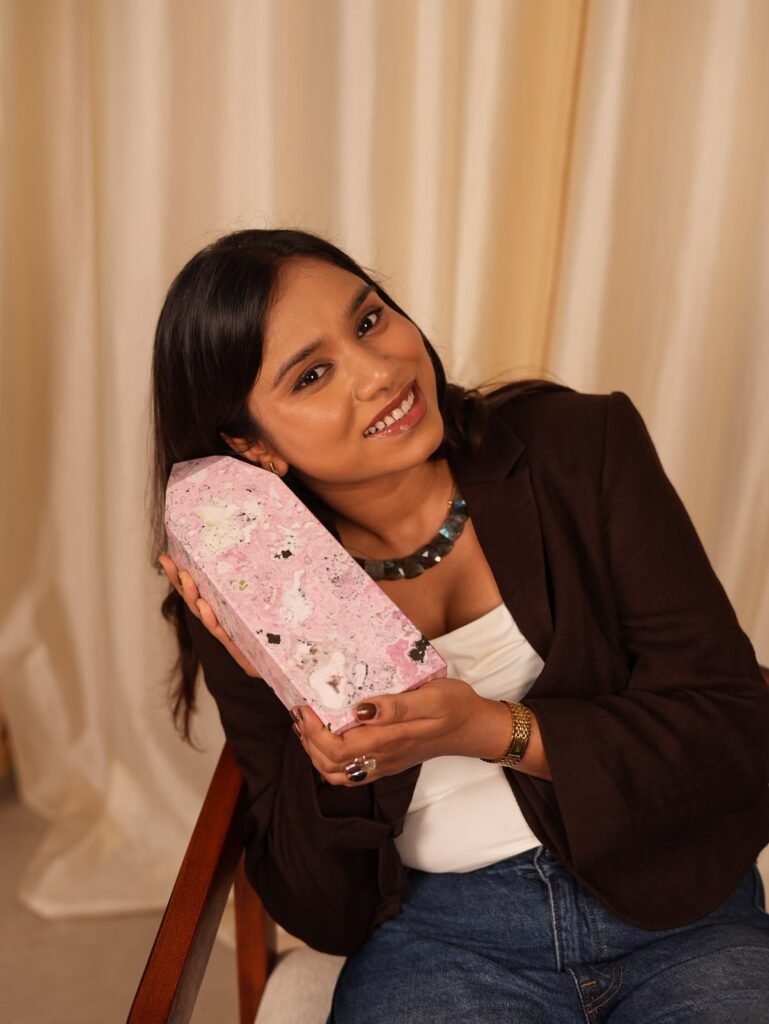
Having watched the spiritual wellness space evolve, Jain believes people are becoming “far more intentional about their emotional well-being and personal growth.” While customers often share stories of healing and positive change, she is quick to dispel the idea of crystals as magical solutions. “Mindset, discipline, and consistent effort remain the foundation of any meaningful transformation,” she says. “Crystals can support intention and emotional well-being, but they cannot replace personal responsibility.” For many in her community, she says, these stones have become “symbols of hope, healing, resilience, and intentional living,” something she finds “truly powerful.”
Shubhanjali: For Priyanka Gupta, founder of Shubhanjali, the journey into crystals began with a chance encounter. “I walked into a store that sold crystals, and I was instantly fascinated,” she recalls. “I remember looking at the stones and thinking, ‘Wow, Mother Earth is so beautiful.’” Intrigued by both their beauty and the healing energies associated with them, Gupta found herself diving deeper into the subject. What started as curiosity gradually evolved into a purpose. “I wanted to become a medium through which people could find comfort, positivity, and support during difficult phases of their lives,” she says. Seven years later, Shubhanjali continues to be rooted in that vision, helping people reconnect with themselves and bring more balance into their everyday lives.
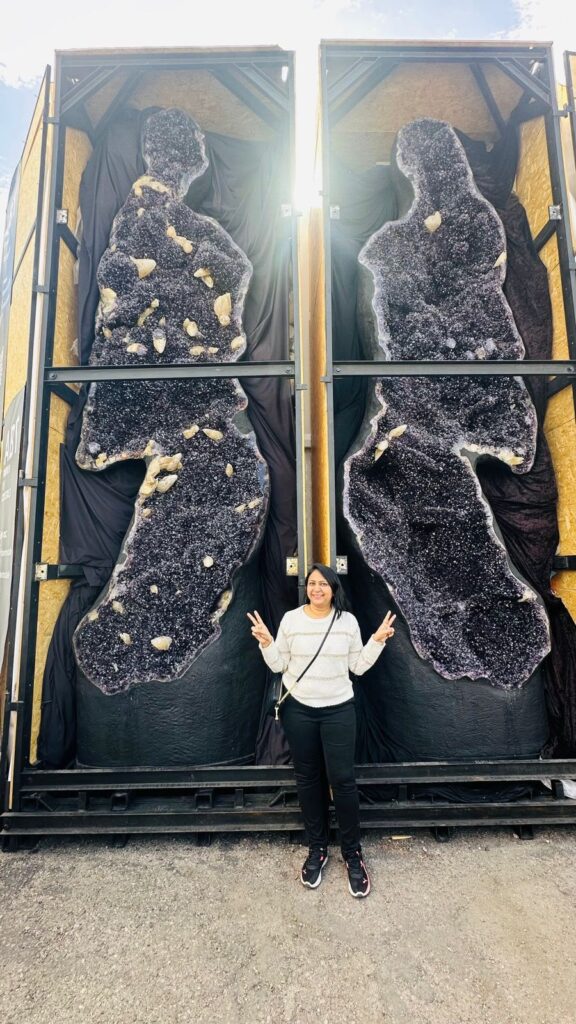
Gupta admits that introducing crystals to Indian consumers wasn’t always easy. “Whenever I introduced crystals, people would immediately associate them with gemstones and astrology,” she says. Over the years, however, she has witnessed a growing interest in self-healing and emotional well-being, particularly after the pandemic. “People are actively seeking tools and practices that help them feel more balanced and connected,” she explains. At the same time, she is keen to dispel misconceptions. “Crystals are not magic wands that will change your life overnight,” she says. “They work best when combined with belief, intention, and conscious action.” Her hope, she adds, is that more people approach crystals “with curiosity rather than fear” and experience the positivity and inspiration they can bring.
Kaivalya – House of Crystals: For Akshay, founder of Kaivalya – House of Crystals, the journey began not with business, but with curiosity. Drawn to nature, minerals, and geology, he spent years exploring, collecting, and even hunting for crystals, gradually uncovering a deeper purpose. “People weren’t just drawn to crystals for their beauty; they were looking for meaning, mindfulness, grounding, and moments of connection in a fast-moving world,” he says. However, his experiences also exposed him to the industry’s lesser-known problems, including misinformation and imitation materials. “I wanted to build a brand that was more than just selling crystals, but about education, transparency, and helping people make educated choices,” he explains. Named after the Sanskrit word for inner freedom and higher awareness, Kaivalya was created as a space where people could discover crystals authentically and explore spirituality in a practical, approachable way.
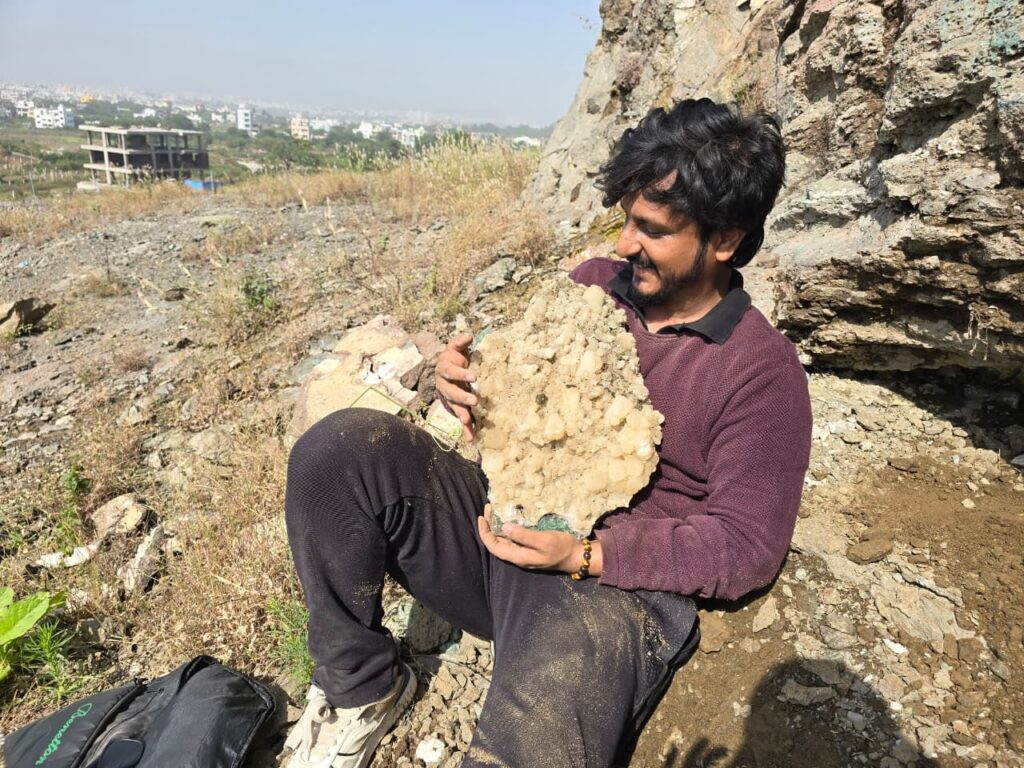
Over the years, Akshay has witnessed consumers become more curious and informed. “People want authenticity, education, and experiences that are authentic and not performative,” he says, adding that spirituality itself is becoming increasingly personal and intentional. At the same time, he is keen to challenge extreme perceptions surrounding crystals. “Crystals are not a shortcut or a substitute for real action, healing, professional help, or personal growth,” he says. Instead, he believes they can serve as “tools of intention, awareness, and connection.” “There is no one ‘right’ way to experience crystals,” he adds. “If crystals can have a role in someone’s life, it is often a simple but powerful one: helping people slow down, set intentions, reconnect with nature, and create moments of mindfulness in their everyday lives.”
Talk To Crystals: For Sahil Jain, founder of Talk To Crystals, spirituality has always been a part of his life, but everything changed when a friend gifted him crystals in 2014. “I felt connected to them very strongly and deeply,” recalls the engineer and CFA. “I felt connected to stars and galaxies, and something deep shifted inside of me.” As his fascination grew, Jain began studying and teaching others about crystals. With limited access to quality stones in India at the time, he started importing them himself, laying the foundation for Talk To Crystals. “I could talk to them for hours,” he says. “I felt they were living, and that’s how TTC was born.” Today, the brand offers crystal meditations, workshops, and a space where people can explore spiritual practices and emotional healing.
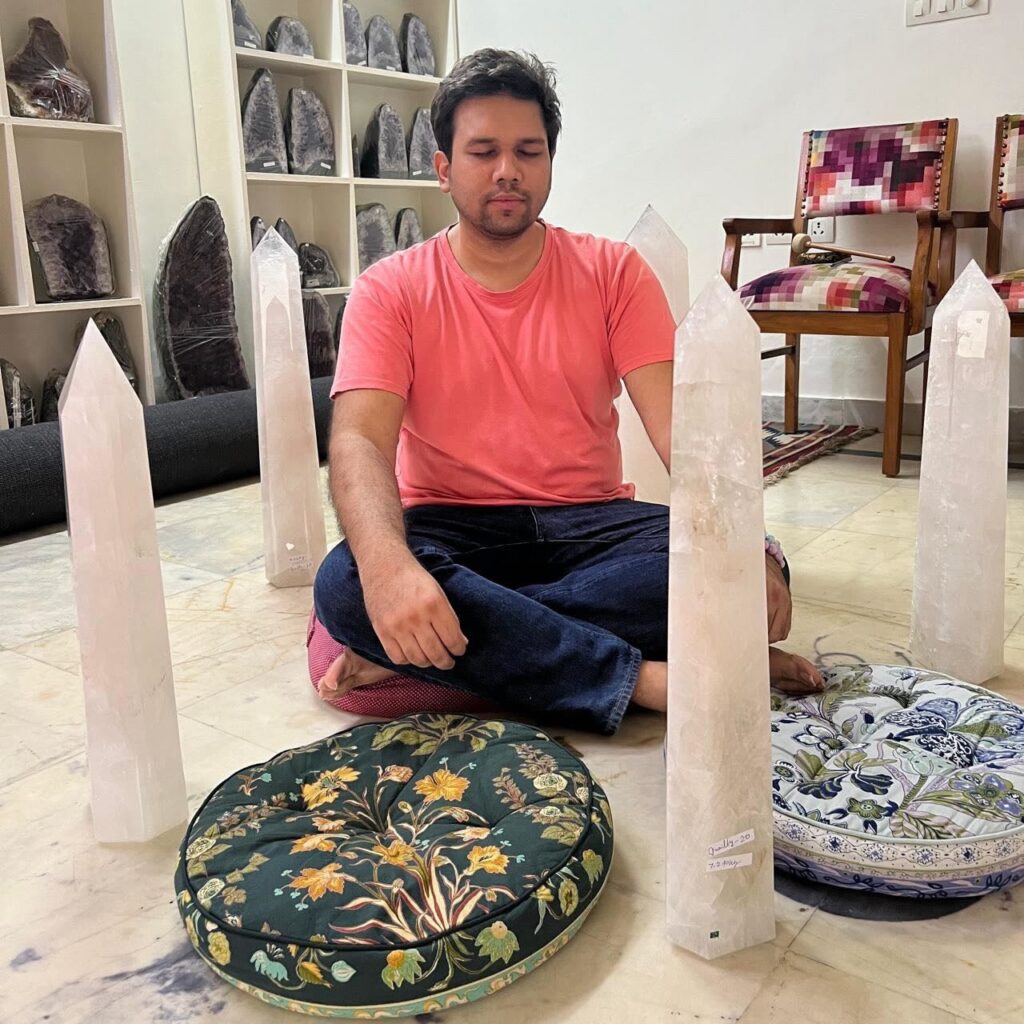
Having witnessed the industry’s evolution over the past 12 years, Jain believes the conversation around spirituality and mental well-being has transformed dramatically. “After Covid, people became more open to using tools to help themselves and their families become mentally okay,” he says. At the same time, he hopes to break the fear surrounding crystals. “Crystals have no astrological significance,” he explains. “We believe crystals are like plants. There are no rules for wearing and using them.” Instead, he sees them as companions. “It’s like adopting a crystal or making a new friend. They are living, beautiful, and pure consciousness.”
Lotus Petalss: For Nandini Goel, founder of Lotus Petalss, spirituality was born out of one of the most difficult periods of her life. During the pandemic in 2020, she found herself navigating the loss of her job, her grandmother, and several close relationships. Seeking answers, she turned inward, guided by her mother, whom she calls her first guru, and mentors Vikul Sir of Pinnacle Vastu and Payal Ma’am of Cosmik Vibes. “One of the first things I learned was Vastu,” says Goel. “As I worked on the energy of my home and surroundings, I began noticing changes within myself.” What began as a personal journey and a career in tarot reading gradually expanded into Lotus Petalss, a spiritual shop offering crystals, healing tools, and mindful products. “Spirituality taught me that transformation is not easy, but with dedication and self-work, abundance follows naturally,” she adds.
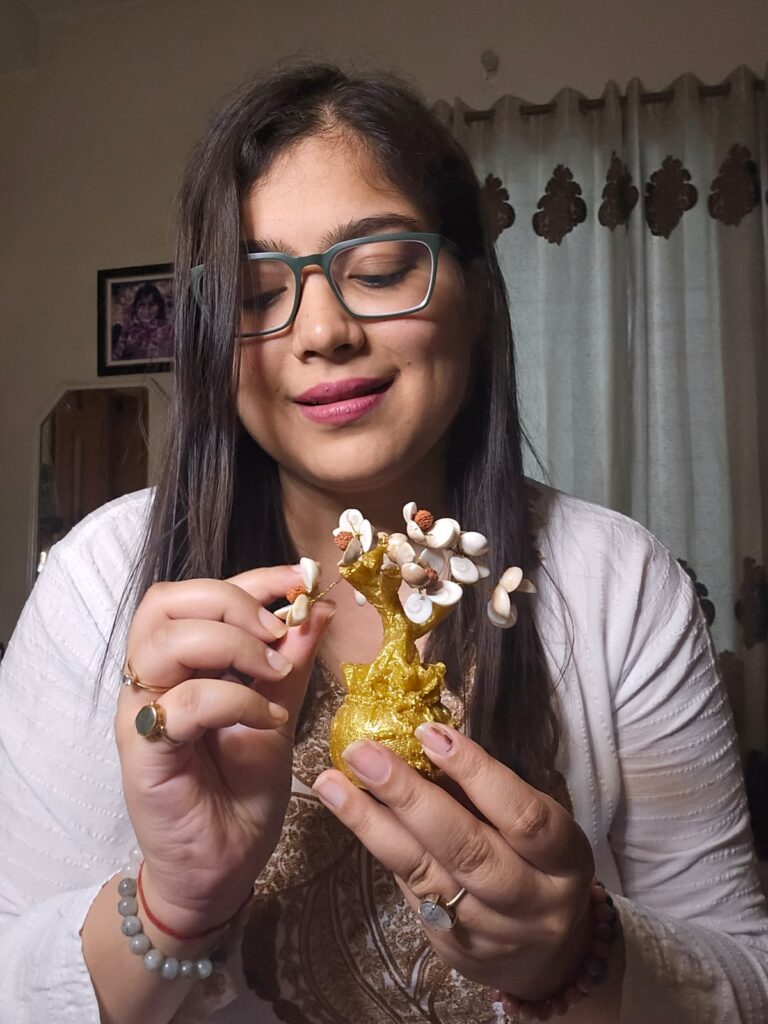
Named intuitively after the lotus and inspired by the divine feminine and Venusian energy, Lotus Petalss has grown alongside its founder’s own spiritual evolution. While crystals have become an important part of the brand, Goel remains focused on learning and self-growth. “Even today, I consider myself a student first,” she says. “The learning continues, the journey evolves, and Lotus Petalss grows alongside it.” She is also quick to challenge the idea of crystals as instant solutions. “I strongly believe crystals are like vitamins,” she says. “You have to wear them or work with them consistently to notice their effects. They are not quick fixes.” In an increasingly crowded spiritual wellness space, that sense of authenticity and curiosity continues to define the brand.
The Moon Daughter: For Drisshti Sappru, founder of The Moon Daughter, the journey into crystals began unexpectedly during a tarot reading. “I found myself repeatedly drawn to Rose Quartz,” she recalls. “At the time, I wasn’t a believer, but when I explored its meaning, it reflected the exact healing I needed in my own life.” What started as curiosity soon turned into a deeply personal experience that sparked a larger exploration of crystals and their energies. “The more I experienced, the more I felt called to share them with others,” says Sappru. That calling eventually evolved into The Moon Daughter, a spiritual wellness brand built around crystals, tarot, astrology, and healing, offering others a space to discover these tools for themselves.
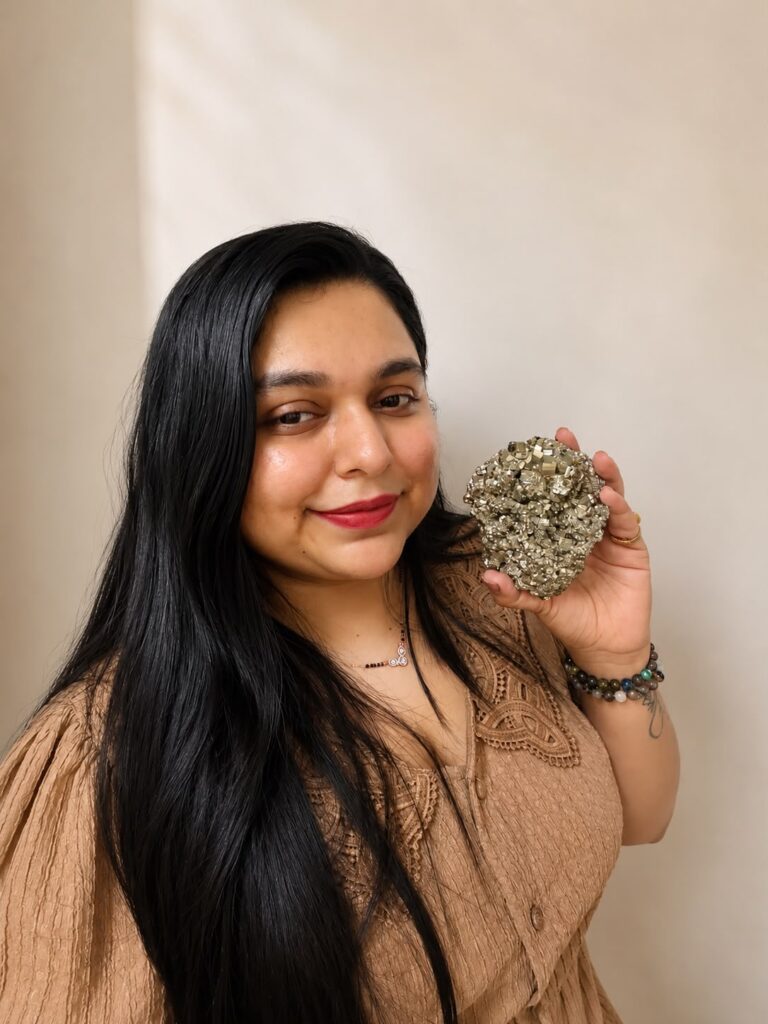
Over the years, Sappru has noticed a growing openness towards spirituality and self-work. “People aren’t just seeking crystals or spiritual tools; they’re seeking meaning, self-awareness, and a sense of balance in an increasingly fast-paced world,” she says. Having once been skeptical herself, she understands the doubts people may have. “Crystals are less about blind belief and more about personal experience,” she explains. Rather than promising miracles, she encourages people to approach them “with curiosity rather than expectation” and allow themselves to discover what resonates. “They helped me become more aware of my emotions, patterns, and healing journey,” she adds, a transformation she hopes others can experience in their own way.
As crystals continue to find their place in modern wellness routines, one thing is clear: the movement is no longer just about collecting beautiful stones. It is about slowing down, setting intentions, and creating space for self-reflection in an increasingly chaotic world. The founders behind these homegrown brands may come from different backgrounds, but they share a common belief: crystals are not quick fixes or magical shortcuts. Instead, they are tools that encourage people to reconnect with themselves, cultivate awareness, and embrace healing at their own pace.