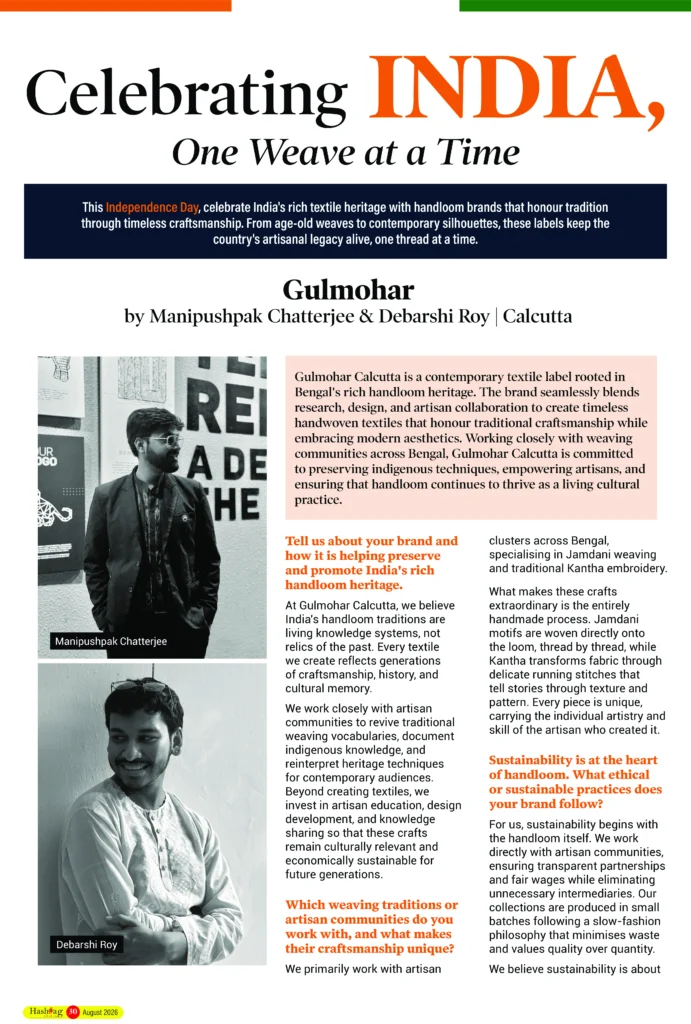
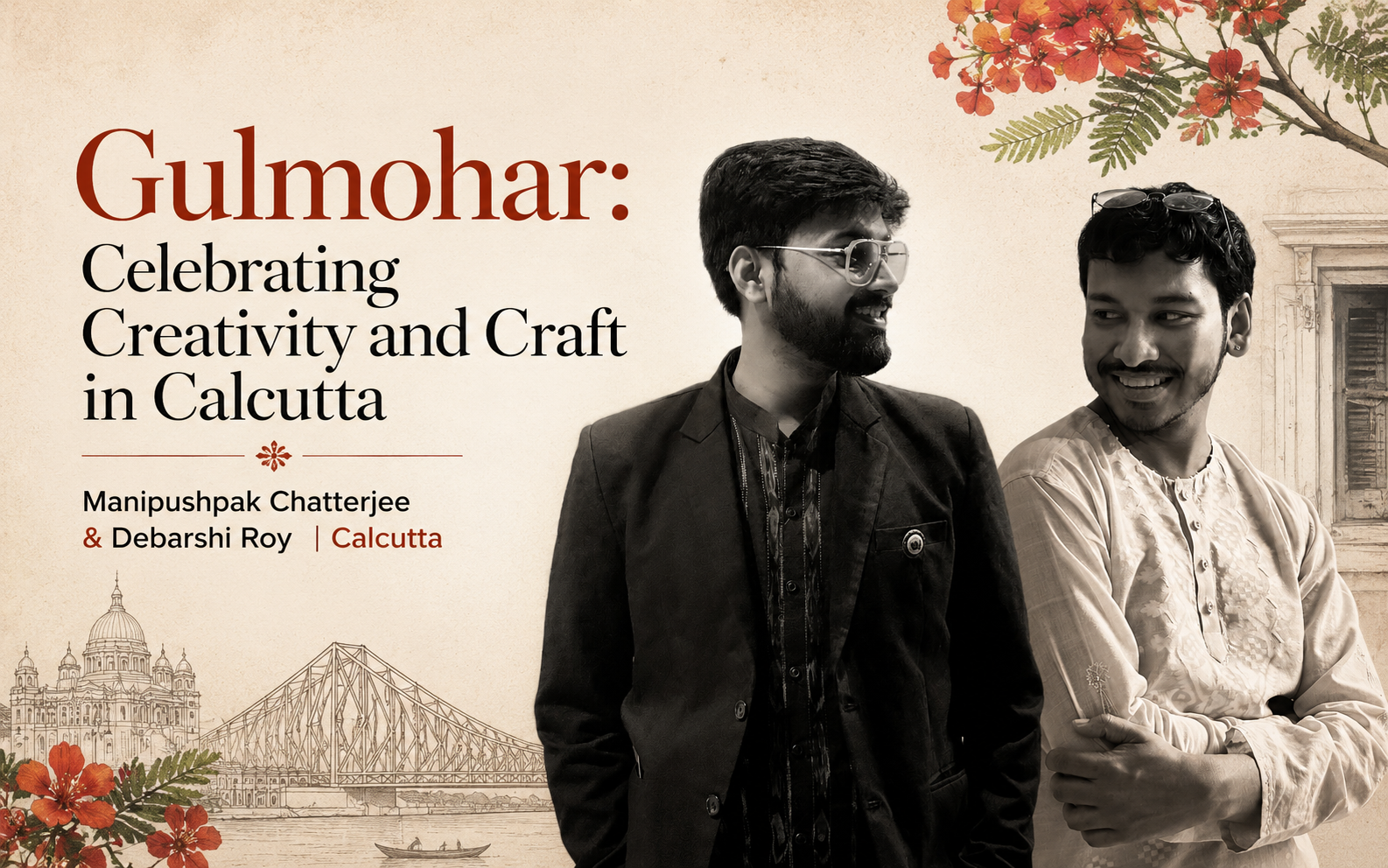
Gulmohar Calcutta is a contemporary textile label rooted in Bengal’s rich handloom heritage. The brand seamlessly blends research, design, and artisan collaboration to create timeless handwoven textiles that honour traditional craftsmanship while embracing modern aesthetics. Working closely with weaving communities across Bengal, Gulmohar Calcutta is committed to preserving indigenous techniques, empowering artisans, and ensuring that handloom continues to thrive as a living cultural practice.
1. Tell us about your brand and how it is helping preserve and promote India’s rich handloom heritage.
At Gulmohar Calcutta, we believe India’s handloom traditions are living knowledge systems, not relics of the past. Every textile we create reflects generations of craftsmanship, history, and cultural memory.
We work closely with artisan communities to revive traditional weaving vocabularies, document indigenous knowledge, and reinterpret heritage techniques for contemporary audiences. Beyond creating textiles, we invest in artisan education, design development, and knowledge sharing so that these crafts remain culturally relevant and economically sustainable for future generations.
2.Which weaving traditions or artisan communities do you work with, and what makes their craftsmanship unique?
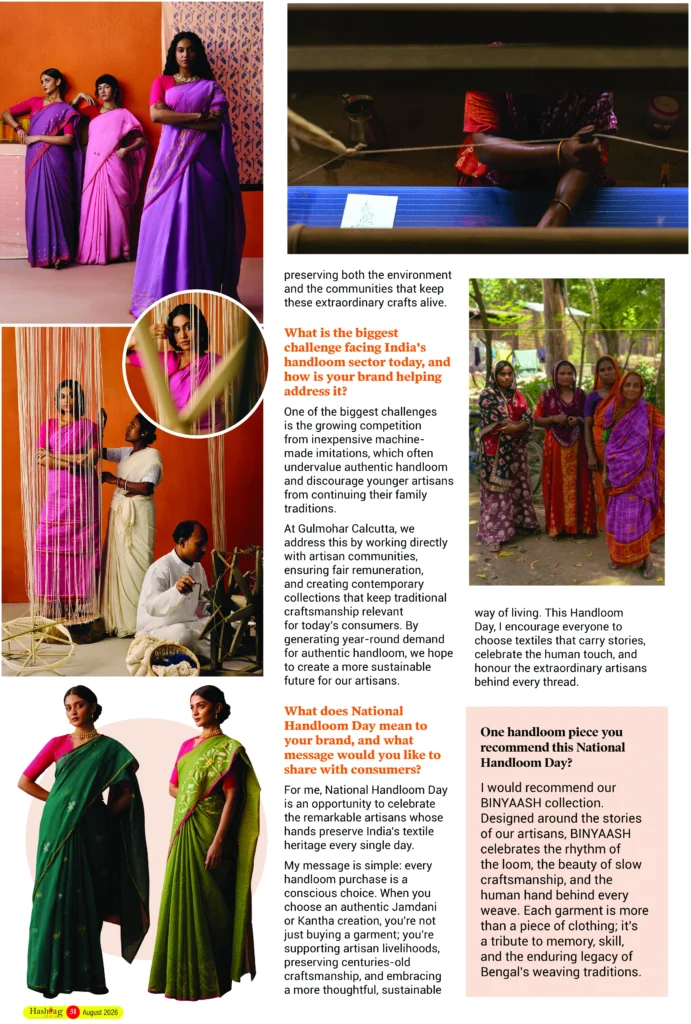
We primarily work with artisan clusters across Bengal, specialising in Jamdani weaving and traditional Kantha embroidery.
What makes these crafts extraordinary is the entirely handmade process. Jamdani motifs are woven directly onto the loom, thread by thread, while Kantha transforms fabric through delicate running stitches that tell stories through texture and pattern. Every piece is unique, carrying the individual artistry and skill of the artisan who created it.
 3.Sustainability is at the heart of handloom. What ethical or sustainable practices does your brand follow?
For us, sustainability begins with the handloom itself. We work directly with artisan communities, ensuring transparent partnerships and fair wages while eliminating unnecessary intermediaries. Our collections are produced in small batches following a slow-fashion philosophy that minimises waste and values quality over quantity.
We believe sustainability is about preserving both the environment and the communities that keep these extraordinary crafts alive.
4.What is the biggest challenge facing India’s handloom sector today, and how is your brand helping address it?
One of the biggest challenges is the growing competition from inexpensive machine-made imitations, which often undervalue authentic handloom and discourage younger artisans from continuing their family traditions.
At Gulmohar Calcutta, we address this by working directly with artisan communities, ensuring fair remuneration, and creating contemporary collections that keep traditional craftsmanship relevant for today’s consumers. By generating year-round demand for authentic handloom, we hope to create a more sustainable future for our artisans.
5.What does National Handloom Day mean to your brand, and what message would you like to share with consumers?
For me, National Handloom Day is an opportunity to celebrate the remarkable artisans whose hands preserve India’s textile heritage every single day.
My message is simple: every handloom purchase is a conscious choice. When you choose an authentic Jamdani or Kantha creation, you’re not just buying a garment; you’re supporting artisan livelihoods, preserving centuries-old craftsmanship, and embracing a more thoughtful, sustainable way of living. This Handloom Day, I encourage everyone to choose textiles that carry stories, celebrate the human touch, and honour the extraordinary artisans behind every thread.
One handloom piece you recommend this National Handloom Day?
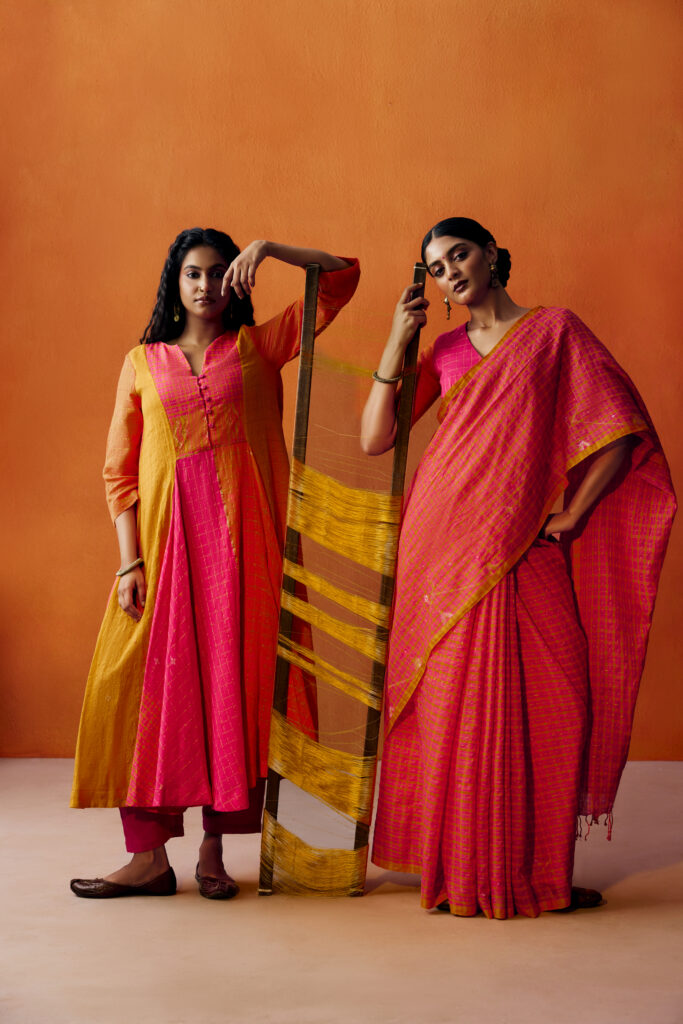
I would recommend our BINYAASH collection. Designed around the stories of our artisans, BINYAASH celebrates the rhythm of the loom, the beauty of slow craftsmanship, and the human hand behind every weave. Each garment is more than a piece of clothing; it’s a tribute to memory, skill, and the enduring legacy of Bengal’s weaving traditions.