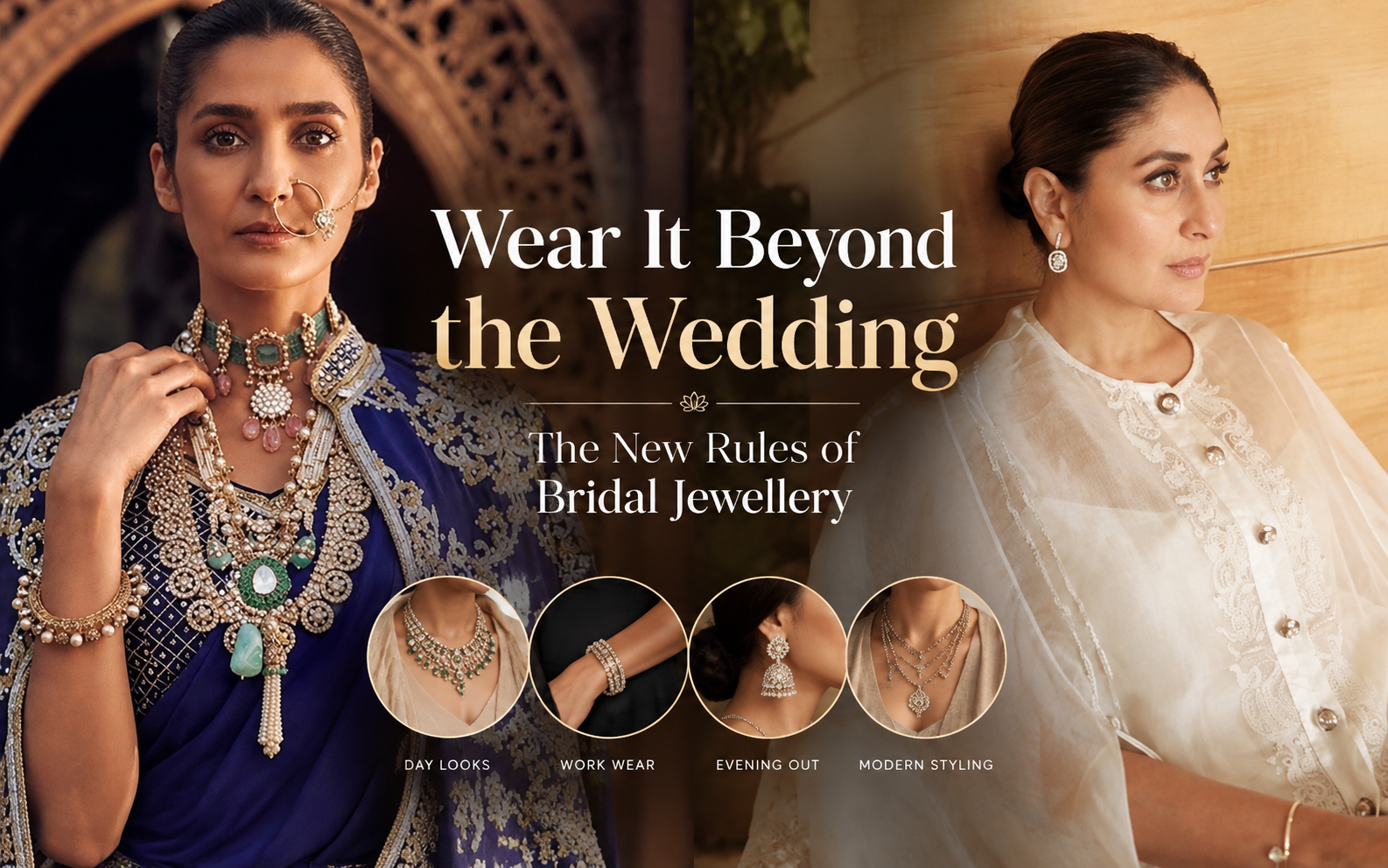
Wear It Beyond the Wedding: The New Rules of Bridal Jewellery

Wear It Beyond the Wedding: The New Rules of Bridal Jewellery

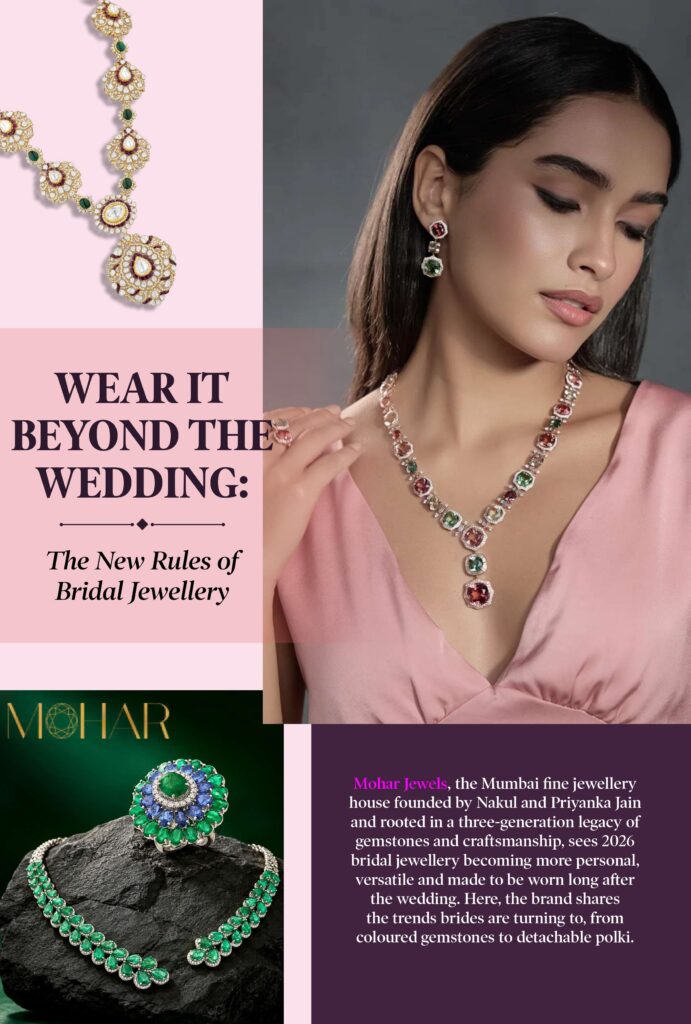
Mohar Jewels, the Mumbai fine jewellery house founded by Nakul and Priyanka Jain and rooted in a three-generation legacy of gemstones and craftsmanship, sees 2026 bridal jewellery becoming more personal, versatile and made to be worn long after the wedding. Here, the brand shares the trends brides are turning to, from coloured gemstones to detachable polki.

Bridal Jewellery Trends 2026
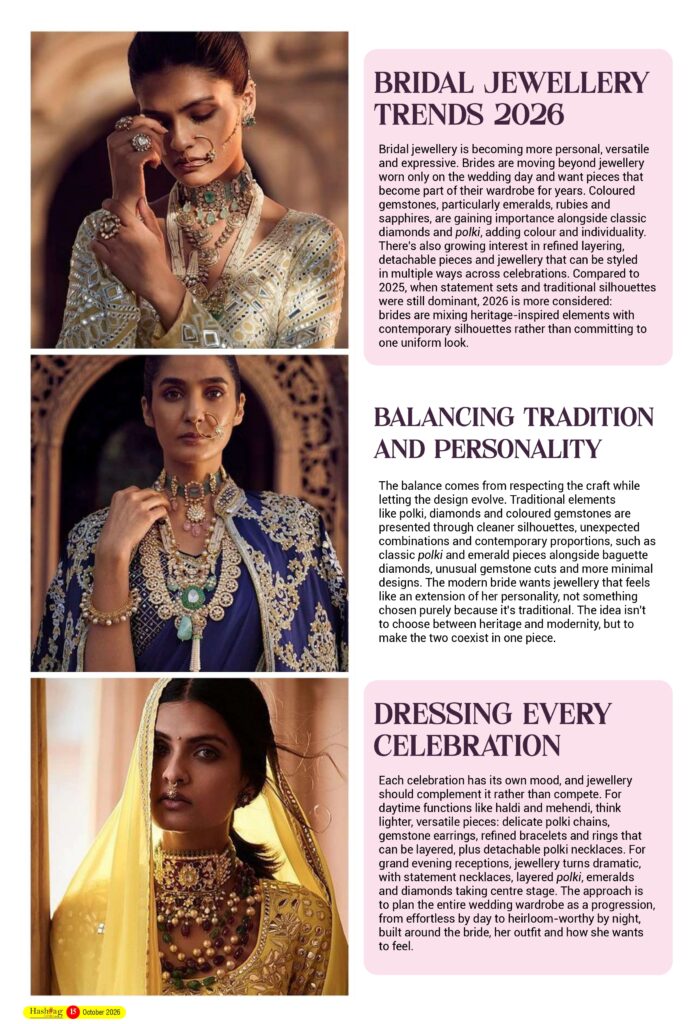
Bridal jewellery is becoming more personal, versatile and expressive. Brides are moving beyond jewellery worn only on the wedding day and want pieces that become part of their wardrobe for years. Coloured gemstones, particularly emeralds, rubies and sapphires, are gaining importance alongside classic diamonds and polki, adding colour and individuality. There’s also growing interest in refined layering, detachable pieces and jewellery that can be styled in multiple ways across celebrations. Compared to 2025, when statement sets and traditional silhouettes were still dominant, 2026 is more considered: brides are mixing heritage-inspired elements with contemporary silhouettes rather than committing to one uniform look.

Balancing Tradition and Personality
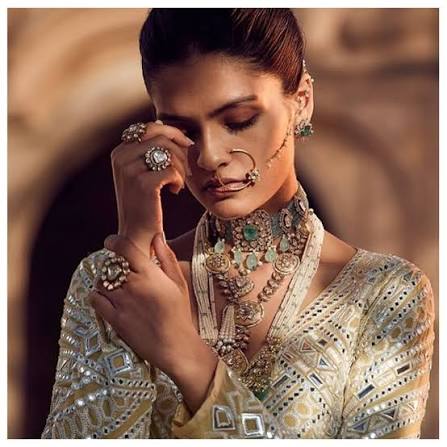
The balance comes from respecting the craft while letting the design evolve. Traditional elements like polki, diamonds and coloured gemstones are presented through cleaner silhouettes, unexpected combinations and contemporary proportions, such as classic polki and emerald pieces alongside baguette diamonds, unusual gemstone cuts and more minimal designs. The modern bride wants jewellery that feels like an extension of her personality, not something chosen purely because it’s traditional. The idea isn’t to choose between heritage and modernity, but to make the two coexist in one piece.
Dressing Every Celebration
Each celebration has its own mood, and jewellery should complement it rather than compete. For daytime functions like haldi and mehendi, think lighter, versatile pieces: delicate polki chains, gemstone earrings, refined bracelets and rings that can be layered, plus detachable polki necklaces. For grand evening receptions, jewellery turns dramatic, with statement necklaces, layered polki, emeralds and diamonds taking centre stage. The approach is to plan the entire wedding wardrobe as a progression, from effortless by day to heirloom-worthy by night, built around the bride, her outfit and how she wants to feel.
Leave a comment

Your email address will not be published. Required fields are marked *

The Biggest Bridal Trends of 2026: Fresh Drapes and Statement Jewellery

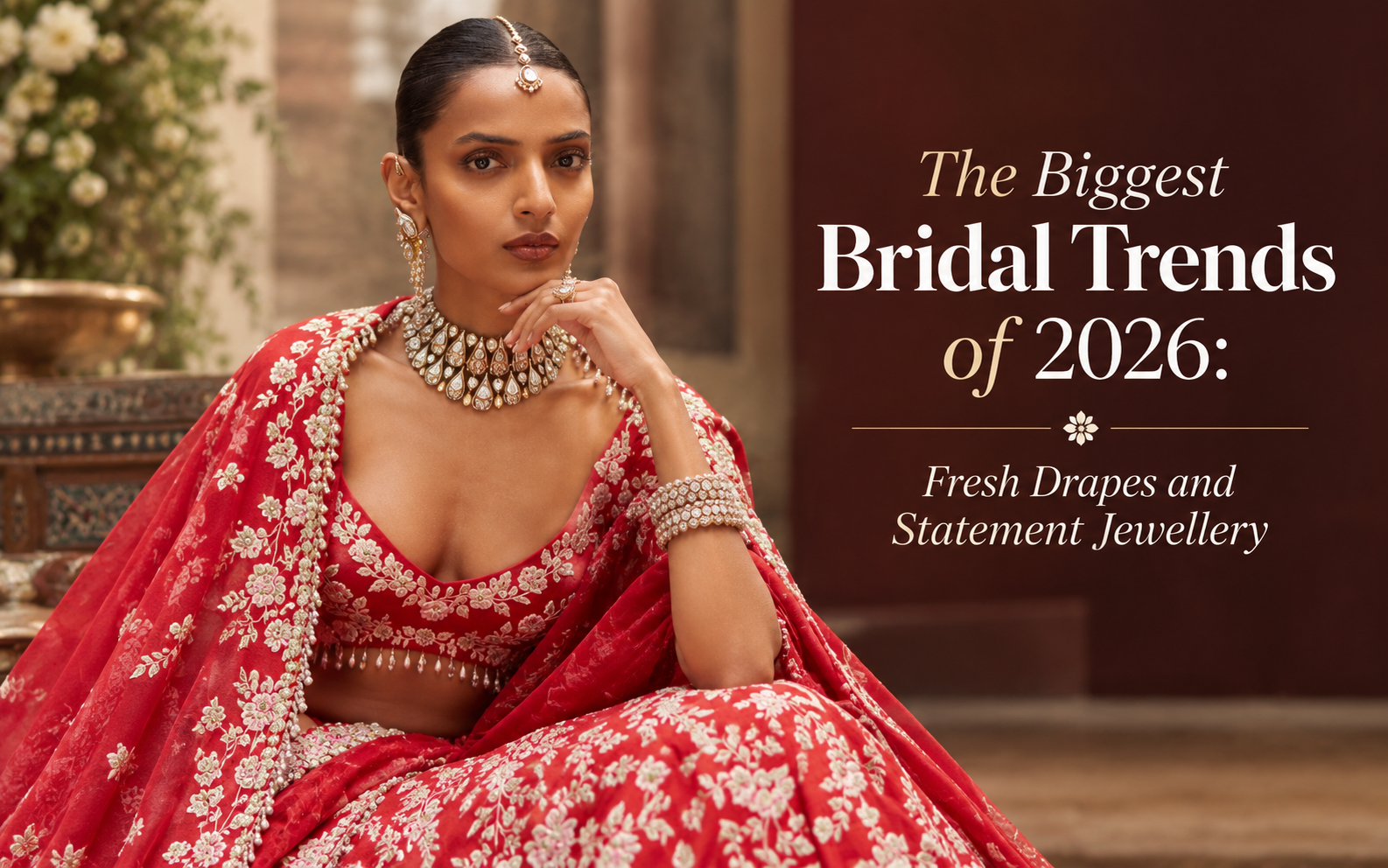
What are the three biggest bridal trends you predict will dominate 2026? For me, it’s the reimagining of the drape, the beauty of crafts like chikankari and lace, and a much stronger focus on jewellery. Whether it’s a traditional necklace from our High Jewellery or a contemporary ear cuff that can completely change the feel of an outfit. I think we’ll see the sari and different interpretations of the drape becoming a big part of bridalwear again. There is something so timeless about it, but there are endless ways to make it feel fresh and personal. Which colours and fabrics are going to be particularly relevant? I see a beautiful mix. Ivory and soft pastels continue to feel very relevant, but I also see deeper jewel tones, wine, garnet and unexpected blues becoming important. In fabrics, I love organza, tissue, lace and chiffon for their lightness and movement, balanced with richer silks and velvets. What interests me most is mixing textures rather than allowing one fabric to dominate the entire look. What is one bridal fashion choice you think women should avoid? Wearing something simply because it is trending. Your wedding photographs stay with you forever, and the most beautiful brides are always the ones who still look like themselves. Experiment, absolutely, but don’t allow the outfit to wear you. How should couples approach the challenge of dressing for multiple wedding events without making every look feel repetitive? I always look at a wedding wardrobe as a story. If the wedding is traditional, perhaps the sangeet becomes more glamorous and experimental, the mehendi lighter and playful, and the reception sharper and more contemporary. Change the silhouette, colour, texture and jewellery rather than simply changing the outfit. Every event should reveal another side of you, but together they should still feel

CINTA & Pantai Pura Founder Rupika Harshwardhan P

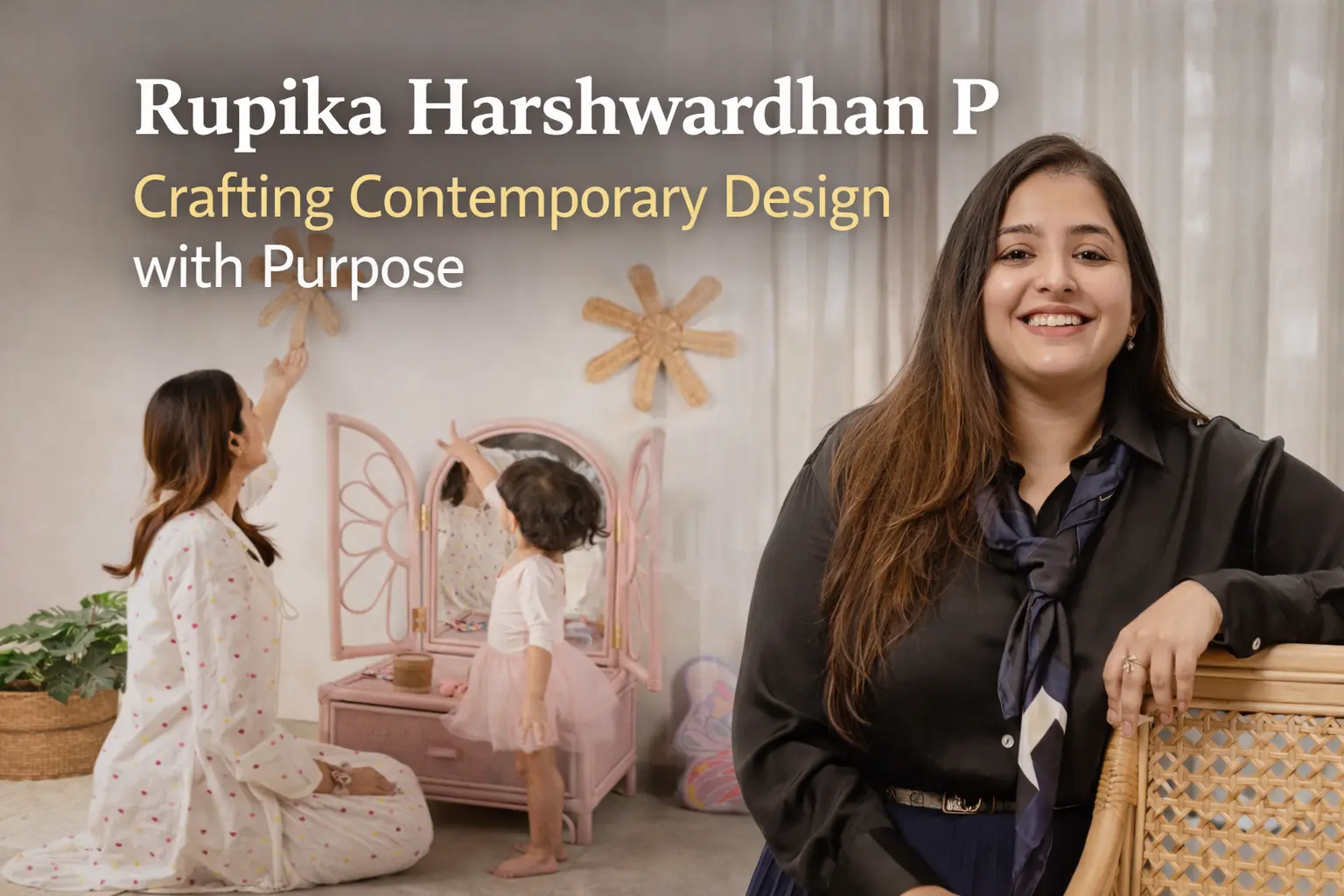
For Rupika Harshwardhan P, design has never been merely aesthetics; it is emotional architecture. A graduate of Srishti School of Art and Design, with further studies in art history at Chitrakala Parishad, her education trained her to see spaces as layered narratives shaped by material, form, and feeling. An early internship at Elle Decor India proved pivotal. It offered her an insider’s view of the design industry and crystallised a quiet but firm decision: she would not simply participate in design, she would build something of her own. Drawn instinctively to craft traditions and handmade objects, Rupika’s understanding of “home” is rooted in belonging. For her, furniture is not functional; it is memory made tangible. Brands Built on Meaning Rupika is the Founder and Creative Director of CINTA and Pantai Pura. CINTA, meaning “love,” is a children’s home décor brand centred on imagination and family bonds. Pantai Pura, “Sacred Beach,” explores natural harmony and mindful living. “I didn’t create these brands just to sell furniture,” she explains. “I wanted to change how we see materials and craftsmanship.” Her work bridges tradition and modernity, connecting artisan communities with contemporary homes. Particularly through CINTA, she reflects on how a child’s first furniture piece can become part of their emotional blueprint. Reimagining Rattan At the core of her practice is rattan, a material she champions for its agility, durability, and quiet elegance. Challenging misconceptions that it is dated or interchangeable with bamboo, Rupika reinterprets rattan through a contemporary lens while honouring traditional craft. Her approach rests on three pillars: craftsmanship, co-creation, and community. Designs are developed collaboratively with artisans, resulting in bespoke pieces that respond to real homes rather than fleeting trends. “Design is a conversation, not a monologue,” she says. From Online Beginnings to Experiential Spaces Both brands began online, where one

Power Dressing 2025: How Women Can Own Formal Wear with Confidence

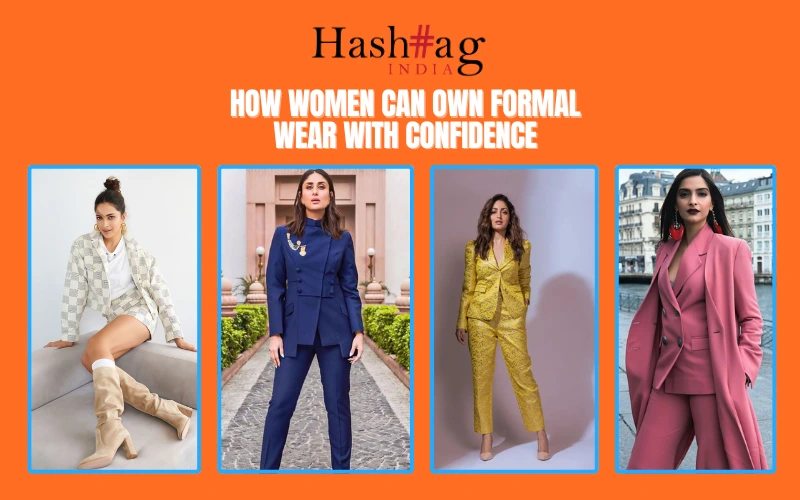
Power dressing is no longer about boxy blazers and stiff formals it’s about striking a balance between authority and style. Today’s formal wear for women reflects individuality, inclusivity, and modern flair, making it perfect for boardrooms, networking events, and even hybrid workspaces. The key? Dressing smart while staying authentic. 1. The New Rules of Power Dressing Fit is Everything: Tailored Silhouettes are back. Invest in well-fitted trousers, blazers, and dresses that complement your body type. Monochrome Magic: Neutral palettes (beige, cream, navy, black) remain timeless, but bold single-tones like emerald, cobalt, or burgundy are trending. Comfort with Structure: Think stretch fabrics, breathable cotton-blends, and soft linen with sharp cuts robust yet wearable. 2. Key Trends in Women’s Formal Wear Relaxed Blazers: Oversized yet structured blazers paired with slim trousers or skirts. Statement Shirts: Ruffles, asymmetrical collars, or tie-up necklines that add flair without being loud. Wide-Leg Trousers: High-waisted, floor-grazing trousers elongate the frame while exuding confidence. Skirt Suits: Pair pencil skirts and A-line midi skirts with blazers for a feminine twist. Minimalist Accessories: Sleek belts, layered chains, or geometric earrings that enhance but don’t overpower. 3. How to Wear Formal Wear Right Balance Masculine & Feminine: Pair a strong-shouldered blazer with soft silk blouses or delicate heels. Invest in Classics: A crisp white shirt, tailored black trousers, and a navy blazer form the foundation of a classic power look. Shoes Matter: Block heels, loafers, or pointed-toe flats comfort without compromise. Play with Prints (Sparingly): Pinstripes, houndstooth, or checks add character while maintaining a professional look. 4. Accessories & Grooming for the Win A structured handbag or tote keeps things polished. Watches remain the ultimate power accessory. Groomed hair (sleek buns, soft waves) and neutral-toned makeup complete the look. Pro Tip: True power dressing isn’t just about clothes it’s about wearing

Open Marriage: What the Law Says in India

In a time where conversations around love, relationships, and commitment are evolving rapidly, open marriages have started entering the mainstream discussion — often met with equal parts curiosity and judgment. Popularized by celebrity revelations and global media, the idea of consensual non-monogamy within a legally recognized marriage is no longer taboo, though still controversial. Hashtag magazine explores what open marriages really are, the potential pros and cons, and where Indian law stands on the subject.  What Is an Open Marriage? An open marriage is a consensual agreement between spouses that allows either or both partners to have sexual or emotional relationships outside the marriage — without it being considered cheating. The key component is mutual consent and communication. It differs from infidelity or extramarital affairs, as both partners are aware and accepting of the arrangement.  Pros of an Open Marriage 1. Honest Communication To make an open marriage work, partners need to have open, honest, and deep communication. This can lead to stronger emotional transparency and reduced chances of deception. 2. Personal Freedom Some people feel constrained by lifelong monogamy. Open marriages may offer them the ability to explore their identities, desires, and attractions — while still being emotionally and legally committed to their spouse. 3. Better Conflict Resolution Surprisingly, couples in open marriages often report better conflict resolution skills, as constant communication and negotiation become second nature. 4. Avoiding Sexual Stagnation Over the years, some couples report a loss of physical intimacy. An open marriage may help maintain physical excitement without ending the relationship. 5. Emotional Security If done with consent and care, it can reduce insecurities as the primary emotional bond stays intact while physical exploration is allowed outside the marriage.  Cons of an Open Marriage 1. Jealousy and Insecurity Despite rules and agreements, jealousy often creeps in. Managing emotional responses can be challenging, especially if one partner feels replaced or less valued. 2. Risk of Emotional Attachment Even

You May Also Like

Connect with us