India’s Most Famous Paintings

Famous-Indian-Paintings-Featured

Painting is a better way to convey thoughts, emotions, and feelings. For the past few years, paintings have held the attention of art lovers because the paintings hold a story within the thick brush strokes. India had the privilege of being called the land of some wonderful artists with excellent minds. Every painting is a masterpiece and we have selected the best for you.
Famous Paintings of India

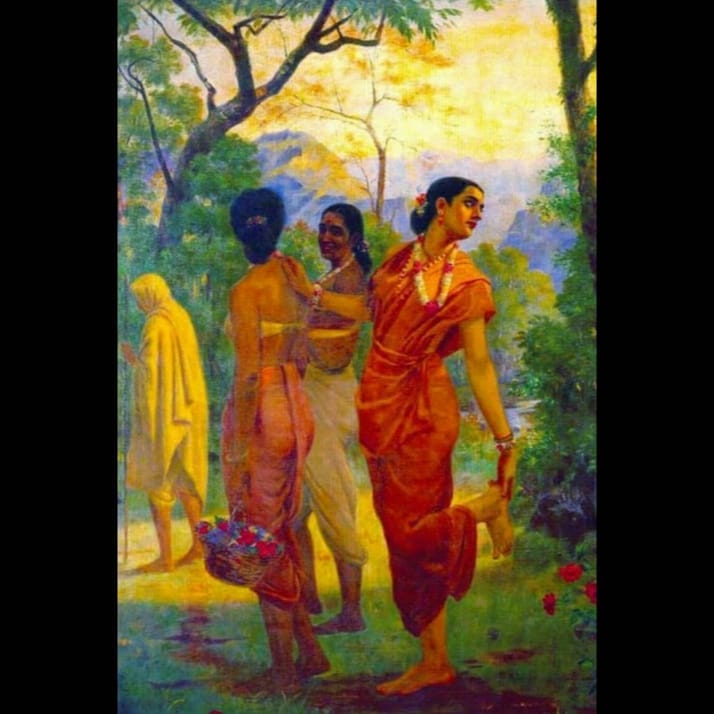
1)Shakuntala- Shakuntala the epic painting by Raja Ravi Varma painted in the year 1870. Shakuntala is an important character from Mahabharat pretending to remove a thorn from her foot while she is looking for her husband Dushyant. The painting beautifully captures the body language and expressions of Shakuntala and her friends.

The worth of Shakunta’s painting is somewhere around Rs 12crores. There are many other wonderful paintings of Raja Ravi Varma like Hamsa Damayanthi, Woman Holding a fruit, Yashodha Krishna, and there comes papa.

Location: Sree Chitra Art Gallery, Thiruvanthapuram
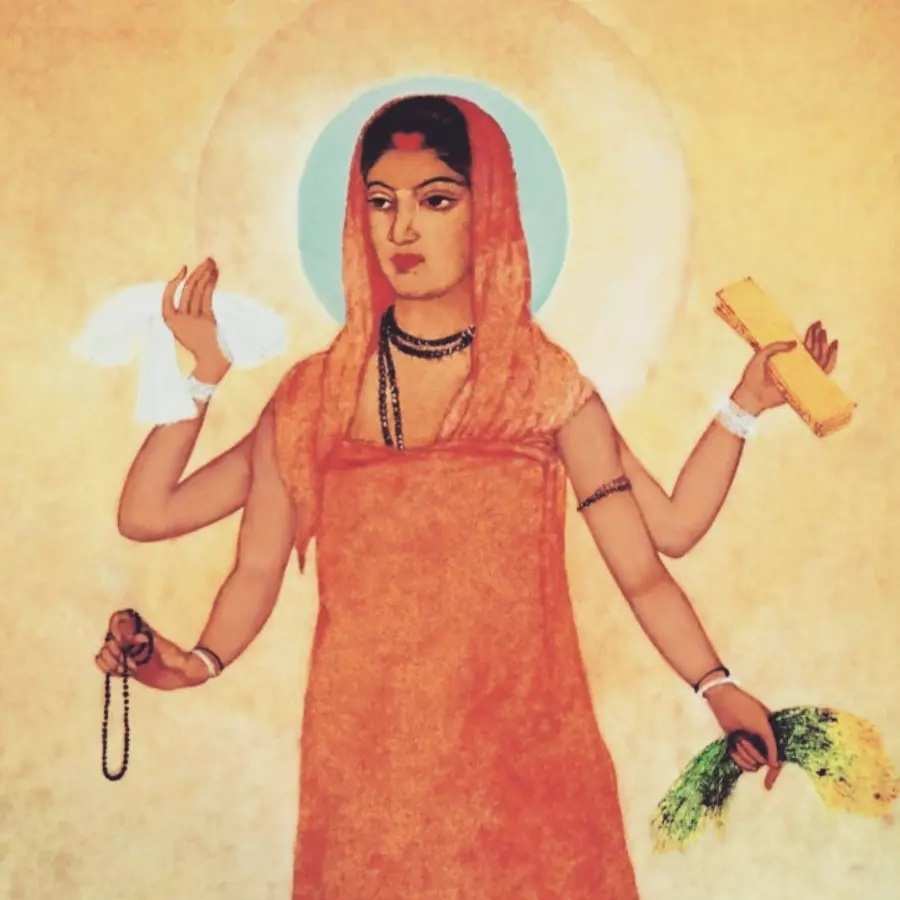
2)Bharat Mata- Bharat Mata is one of the best works of Abanindranth Tagore who is the founder of the Bengal School of Art. In this painting, we see Bharat Mata in Saffron clothing holding a book, paddy, a piece of white cloth, and a garland in her hands. The painting signifies that Bharat Mata blesses her devotees with education, food, cloth, and initiation.

Some of the masterpieces of Abanindranth Tagore are Asoka’s Queen, Ganesh Janani, My mother. The worth of Bharat Mata is 3.7million dollars.

Location: Victoria Memorial Hall, Kolkata.
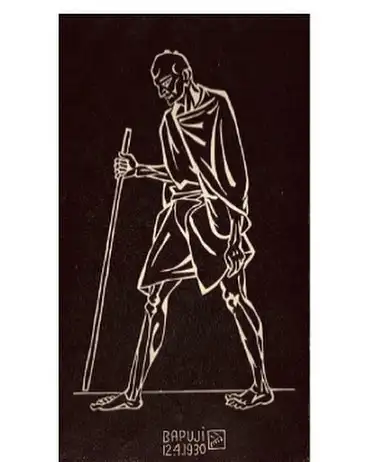
3)Bapuji- Bapuji painting was created by Nandlal Bose in the year 1930 as a mark of respect to Gandhi’s Dandi March protest. Nandlal Bose’s fascination and respect for Gandhi are reflected in the linocut portrait of Gandhi which unified the entire nation. It is displayed at the National Gallery of Modern Art in New Delhi.

Here are some other works of Nandlal bose are Floating a canoe, Rati with her bow, Darjeeling, and Fog. Nandlal Bose was the pupil of Abanindranth Tagore and he became popular for his unique style of painting and later on became the principal of Kala Bhavan in 1922.

Location: National Gallery of Modern Arts, New Delhi
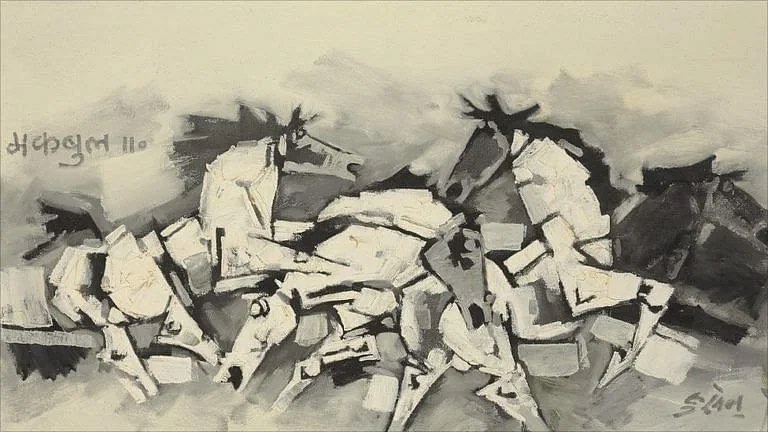
4)Horses- M F Hussain’s abstract art Horses was painted in the year 1960. His fondness for horses is seen throughout his paintings. This specific painting captures the power and energy of the horses through wonderful outlines that show the horse’s strength in galloping. This painting was placed on auction in 2008 and it was sold for 1Crore Rupees. The other popular works of MF Hussain are Mother India, British India, Mother Teresa, Lady with Veena.

Location: Asia Society Museum, Mumbai
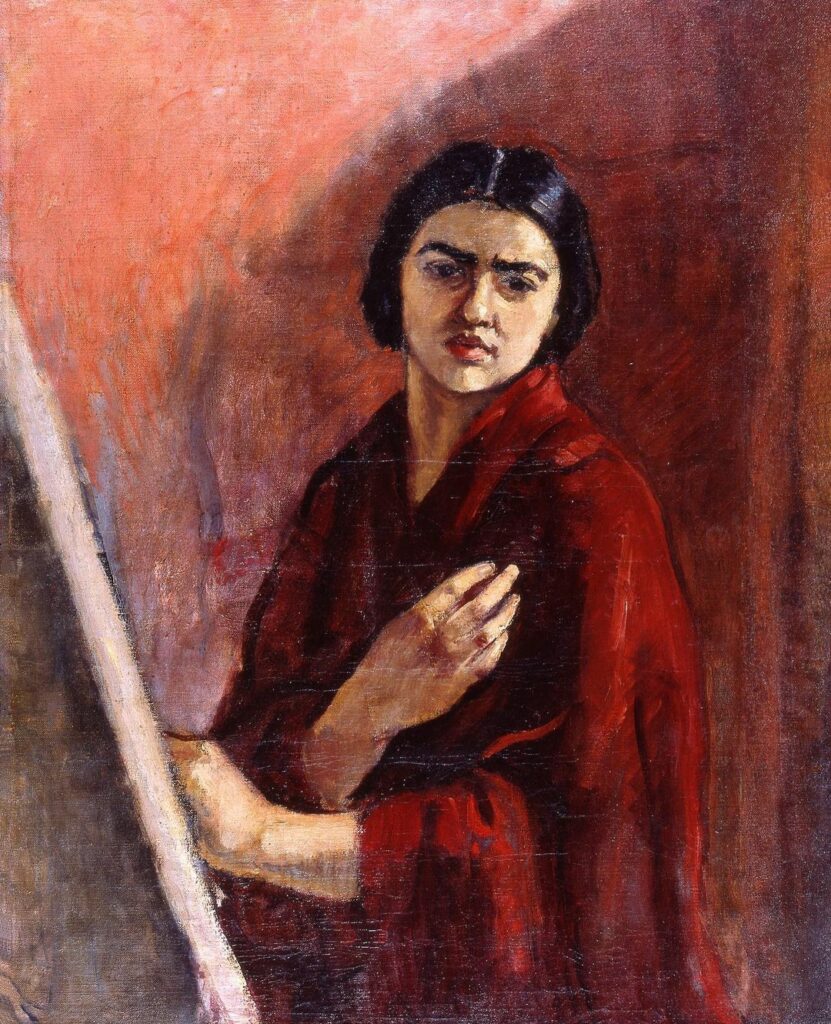
5)Self Portrait by Amrita Sher Gil- The Self Portrait of Amrita Sher Gil is one of India’s famous paintings. The portrait shows us the 18-year-old Amrita who is half-smiling with intensity. Some of her other portraits capture her various moods which draw the viewer into the innermost feelings of the artist. The masterpiece of Amrita Sher-Gil’s Self portrait fetched $3million in an auction. Some of the renowned works of Amrita are Three Girls, Brahmacharis, Ancient Story Teller.

Location: Kiran Nadar Museum of Art, New Delhi
6)Self Portrait by Rabindranath Tagore- The Noble prize winner Rabindranath Tagore made illustrations for his poems and verses in the early phases of his life. Later on, he went on to make sketches as well and this self-portrait of the artist is raw, expressive, and simple. Tagore was striving to create a universal art that is accessible to everyone that is why he took up painting as a medium and the most famous of them is his self-portrait.

Tagore painted some wonderful artworks like Dancing Woman, Dancing Girl, Head Study, Brooding.

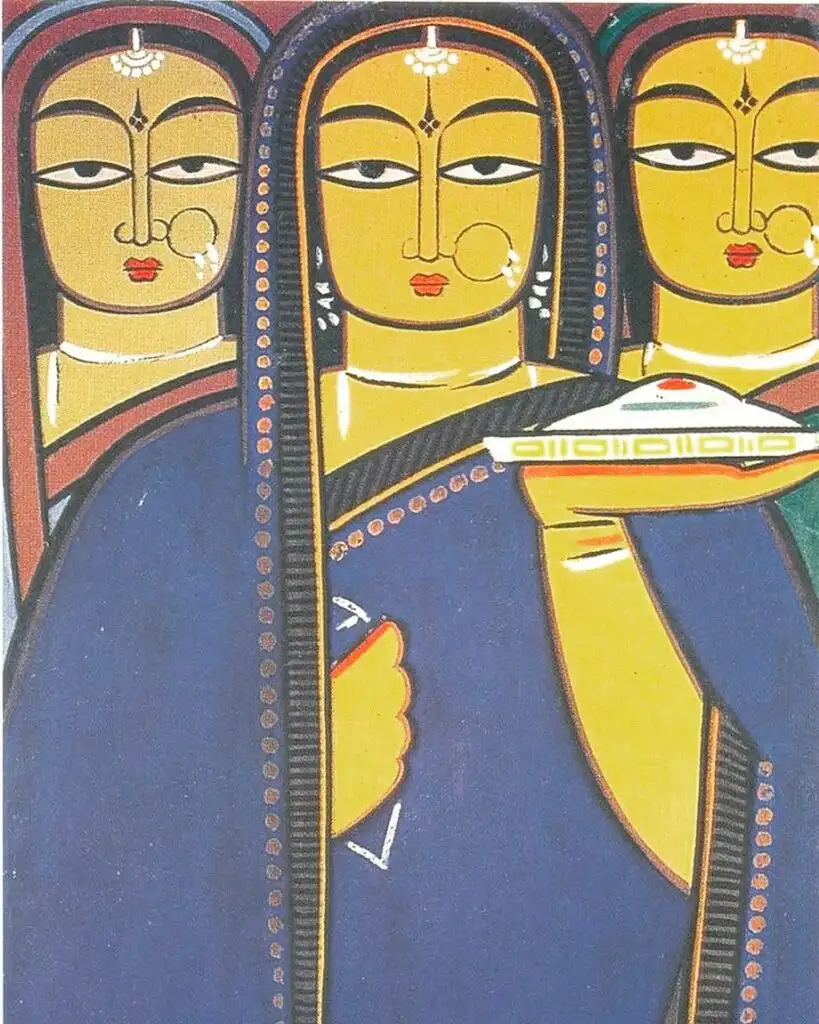
7)Three Pujarins- Jamini Roy is one of the eminent artists in India was a wonderful painter who paints some great masterpieces that represent Indian essence. The three pujarins is one of the famous paintings which depicts three Bengali women in traditional saree holding their poise calmly. Jamini Roy created wonderful paintings with a technique of his own called flat technique and most of his artworks show women doing their regular work.

Some of his other best works are Krishna with Gopis, Woman, Cat, and the lobster, Bride, and two companions.

Location: National Gallery of Modern Art, New Delhi
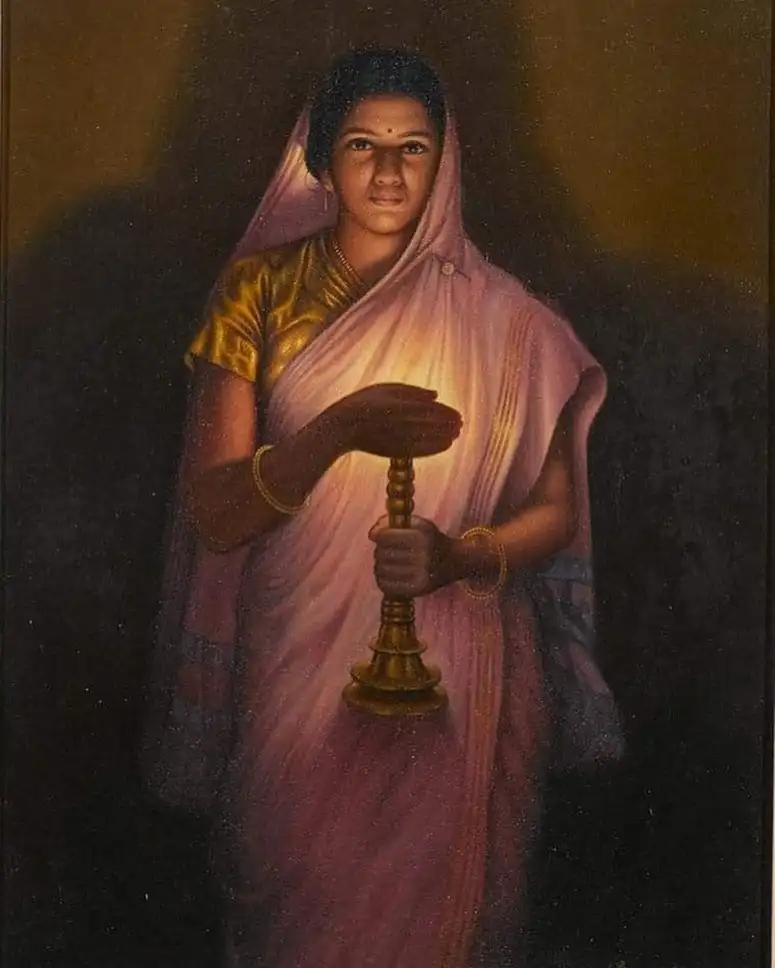
8)Glow of hope- Lamp of Glow or Glow of Hope is a watercolor masterpiece created by S L Haldankar is a wonderful attraction in the Sri Jayachamarajendra Art Gallery in Mysore. This painting is so famous because Haldankar’s daughter stood still for three hours with a lamp in her hand posing for her father’s work. The painting depicts the simplicity, sensitivity, and ray of hope which is reflected from the fingers has made this wonderful painting famous across the globe.

Location: Sri Jayachamarajendra Art Gallery, Mysore
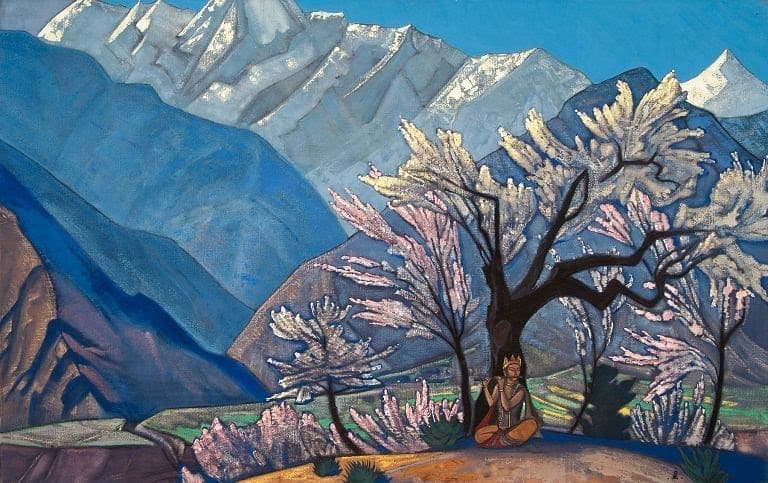
9)Krishna Spring in Kullu- Krishna Spring in Kullu was painted by the Russian Artist Nicholas in 1930. In this painting we see Lord Krishna playing the flute under a tree with big snow-covered mountains in the background. The painting is displayed at Nicholas Roerich Museum in New York. ASI has recognized him as one of the nine artists whose work is considered a national art treasure.

Nicholas Roerich was also an activist who stood for preserving art and architecture during times of war. For this, he was nominated for the Nobel prize as well. Some of his other wonderful works are Visitors from over the sea, mother of the world, Himalayas, the last angel.

Location: Nicholas Roerich Museum, New York
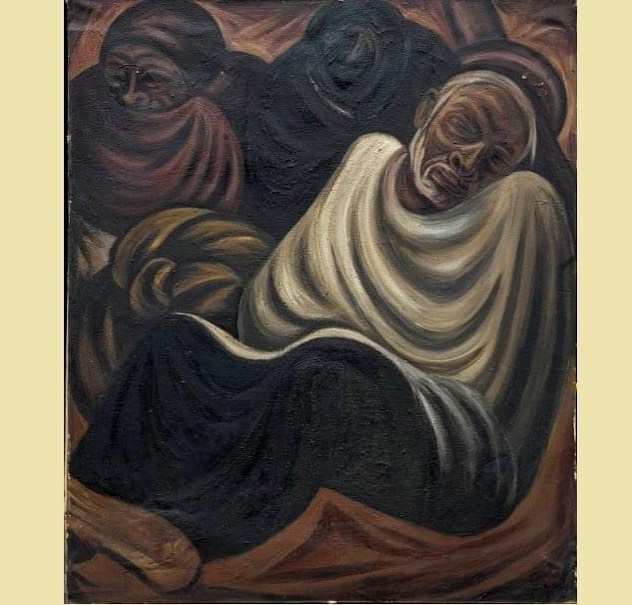
10)Days of Glory- Days of Glory has been created by Satish Gujral who was a painter and a Padma Vibushan awardee. This wonderful painting is done in black and white which reflects the human emotions like pain, suffering, and trauma which the artist has witnessed during the partition of India and Pakistan.

Satish Gujral was known for his versatility in his art and he changed his medium, materials to explore different types of art. Some of the best works for Satish Gujral are Mourning en masse, Tree of Life, and Meera Bhai.
Famous Paintings in India

Conclusion:

So these are some of the famous paintings of India. There are many other popular masterpieces like Bindu by S.H.Reza, Mahishasura by Tyeb Mehta. All of these wonderful works are an inspiration to art lovers because every one of them greatly shows India and its beauty.

Leave a comment

Your email address will not be published. Required fields are marked *

ABHAY PRABHAVANA: WHERE INDIA’S ANCIENT VALUES MEET THE FUTURE

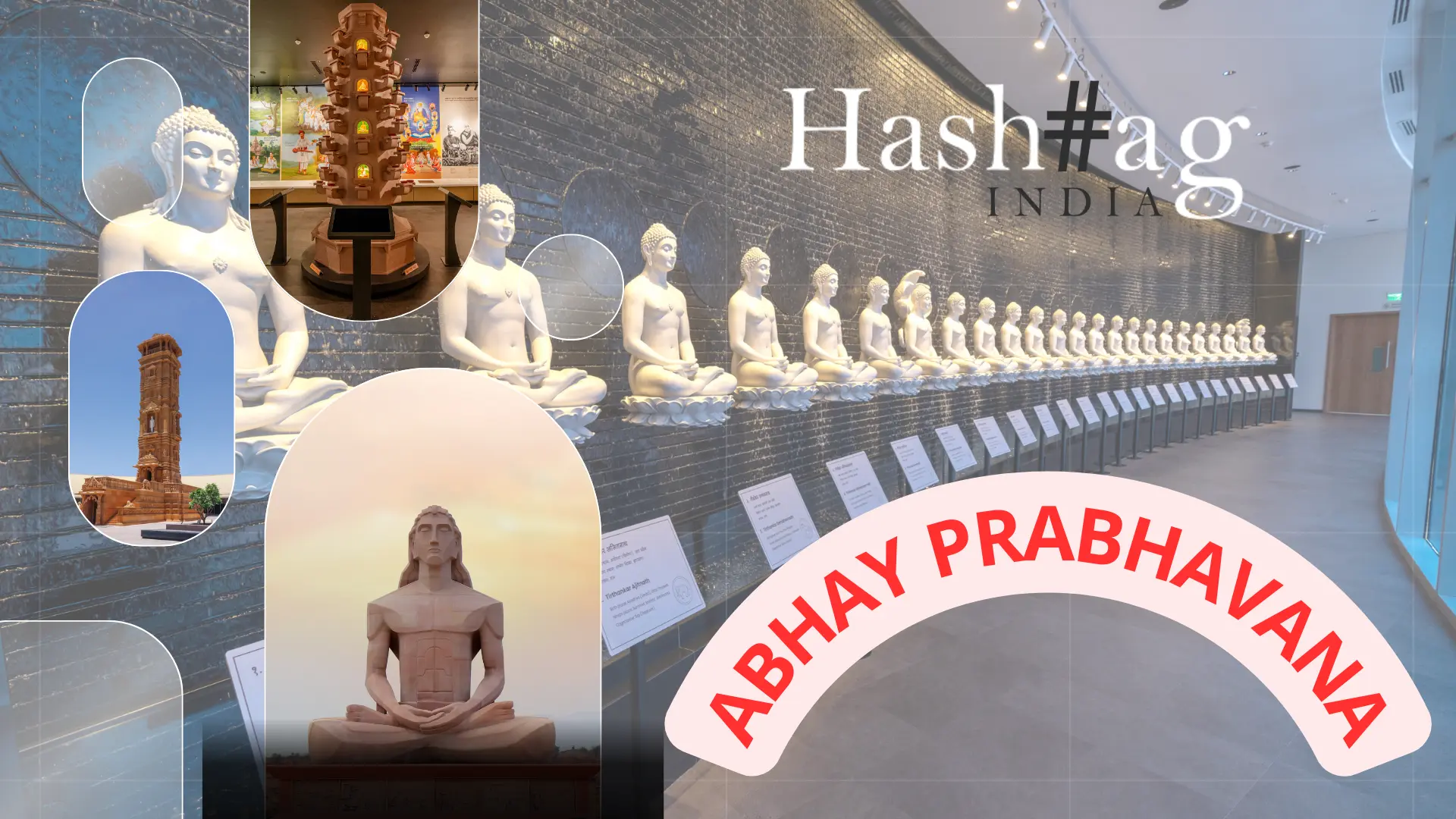
What if a museum didn’t just show you history, but revealed the very values that built India as a civilisation? Abhay Prabhavana is a remarkable museum nestled far away from the rush and noise of the city. Surrounded by peaceful rural landscapes and open skies, the place feels deliberately distanced from distractions, almost as if silence itself is part of the experience. As Vonteru Aarthi Reddy explores, this space offers far more than visual exhibits. Unlike any museum I’ve visited, Abhay Prabhavana does not rely on ancient artefacts or recycled displays. Instead, it invites you on a carefully crafted journey to understand India’s values, evolution, and inner wisdom. What makes it even more extraordinary is that the museum took nearly ten years to build researching, writing, sculpting, designing, revising, and refining all dedicated to presenting India’s civilisation with clarity and integrity. A Museum Built Like a Civilisation — Layer by Layer The first thing that struck me was how thoughtfully everything is structured. This is not a place that overwhelms you with dates and artefacts. Instead, the museum unfolds like a narrative, a story of who we are, where we came from, and why our civilisation stood firm for thousands of years. The journey begins with India’s ancient values. Concepts like Atma, Karma, restraint, truthfulness, compassion, and discipline, often misunderstood or oversimplified, are explained here with remarkable clarity. Visual storytelling blends seamlessly with philosophy. As you move forward, the museum transitions into India’s civilizational story. You witness how our earliest cultures formed along the rivers, how Jain, Buddhist, and Vedic traditions shaped thought, and how ideas circulated freely in ancient India. The narrative is honest and balanced; it explains prosperity, decline, resilience, and transformation without exaggeration or omission. Everything inside the museum is freshly created: every sculpture, every painting, every

Metaverse: Can VR Replace Traditional ?

The roar of virtual slot machines, the digital chime of winning spins, and the hypnotic glow of your screen the sweet symphony of online casinos, where wallets vanish with a click, and dreams dangle on the edge of an algorithm. But what if you could sit at virtual blackjack tables, sip virtual cocktails, and smoke virtual cigars, while the only thing actually smoking was your GPU? Welcome to the metaverse, the latest boogeyman for traditional online casinos. VR casinos, promise a fully immersive experience from the comfort of your couch or bed, no judgment. But is this the end of traditional casinos, or just a shinier way to chase the same old odds? One thing’s for sure: at least here, you won’t have to dodge tourists or bad karaoke. A Casino You Can’t Touch The metaverse is a glorious invention that proves we don’t need reality anymore. In its simplest form, the metaverse is a digital universe where people interact via avatars, living their best virtual lives. This brave new world blends VR, AR, blockchain, and a touch of living in a simulation paranoia to create an interactive space for everything, including gambling. For example: an online casino in Decentraland, where you can strut around in your digital Gucci outfit, playing blackjack with people who may or may not be real. They use DG tokens, players earn rewards, stake crypto, and experience a gambling hall that doesn’t smell like cigars and regret. Of course, this wasn’t invented overnight. The concept of the metaverse was first described in 1992 by Neal Stephenson in Snow Crash, a cyberpunk novel where people escaped their dull reality through a virtual world. Little did he know, decades later, tech giants and crypto bros would make this dream a very expensive reality. Feature Metaverse Casino Traditional

Vartika Chandani: Wedding Planner Trends for 2025

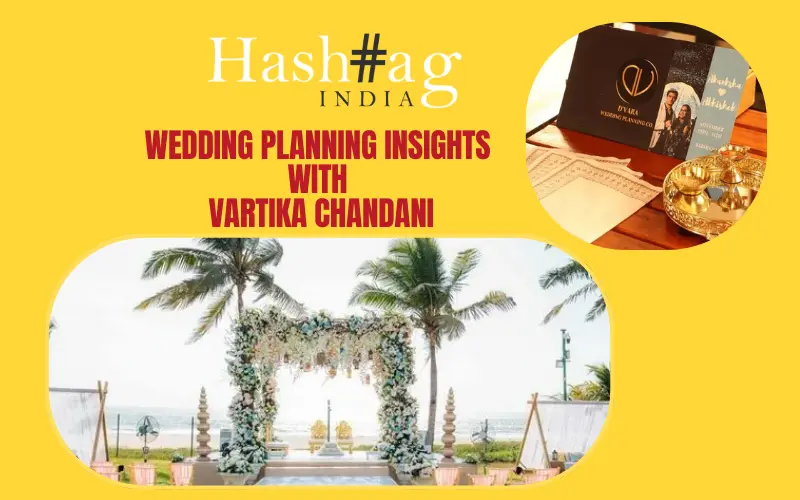
At just 19, Vartika Chandani has transformed The Vara Weddings into a cross-city, cross-border celebration design company known for its culturally rooted yet contemporary weddings. From Mumbai to Marrakech, her team curates immersive experiences that blend emotion, tradition, and storytelling. Among India’s new wave of trailblazers, she gives us a lowdown on the latest wedding trends this 2025. What are the top 3 most requested luxury add-ons in 2025 weddings?In 2025, couples are investing in experiences that immerse guests completely. Personalised touchpoints like curated welcome hampers, live perfume bars, and interactive food artistry counters are huge. Entertainment is bigger than ever think international acts, celebrity performances, aerial musicians, and projection mapping shows. Design has gone bold, with dramatic floral tunnels, bespoke thematic entries, and LED or 3D-mapped dance floors that transform spaces into dreamscapes. For couples looking to elevate their wedding beyond tradition, what unexpected elements are trending? Indian weddings are embracing immersive, non-traditional elements that surprise and delight festival-style after-parties, intimate chef’s table dinners for family, and live artists painting moments as they happen. Interactive zones are booming, from mixology counters and tarot corners to custom fragrance blending. These details create a personal storyline for the wedding, making it an unforgettable journey rather than just an event. Guests today expect more than food and music. How are you keeping them engaged between events? Guests crave connection and interaction they want to be part of the celebration, not just watch it. We create “mini-worlds” within weddings: nostalgia corners with childhood games, art walls for illustrated messages, live food theatres, and immersive setups like chai-tasting lounges or quirky photo booths that change with each function. These zones spark conversations, laughter, and memories beyond the dance floor. How are tech and AI shaping modern weddings? Couples are embracing AI powered memory booths

Reviving the art of storytelling: Chitrakathi

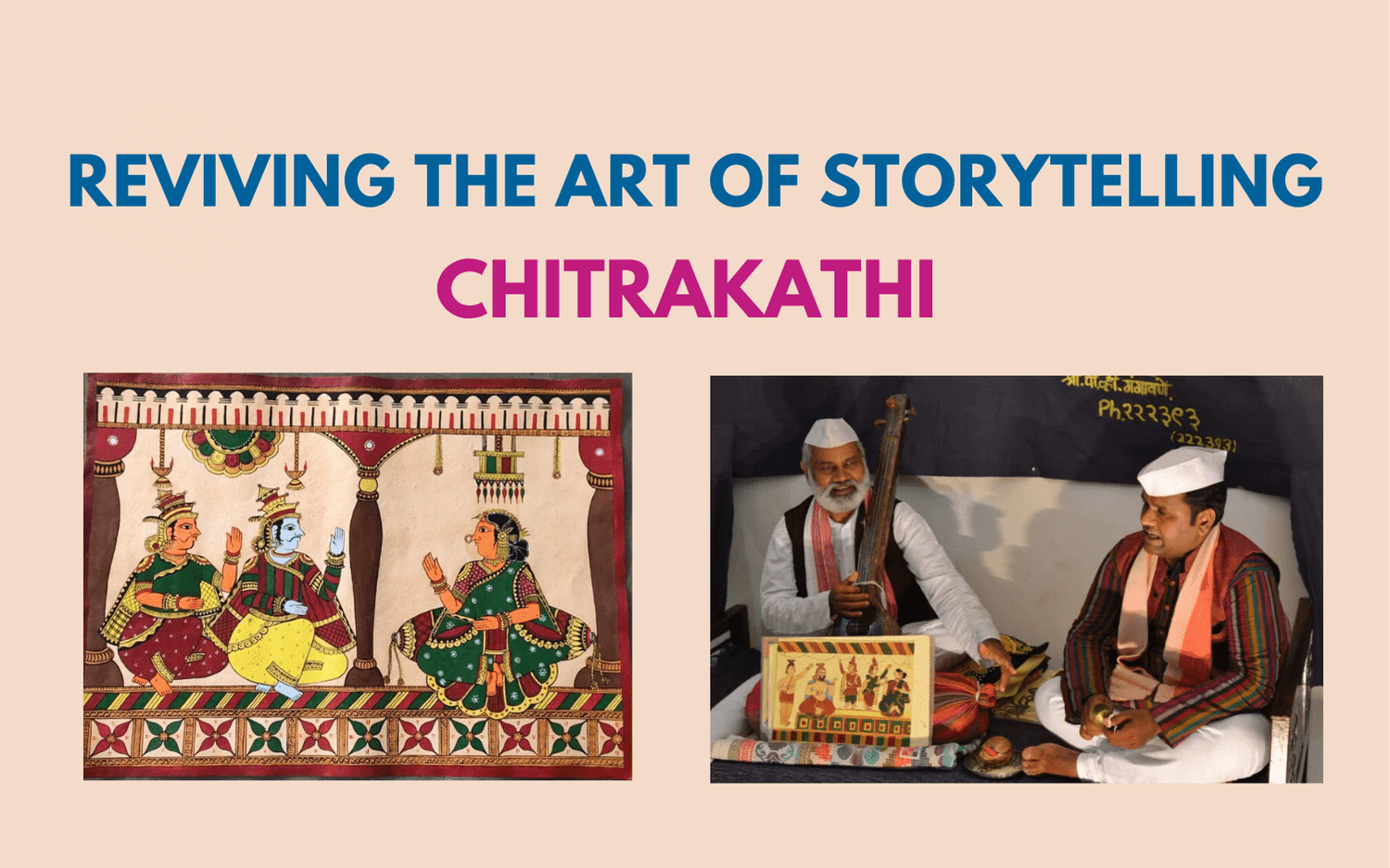
The once popular Chitrakathi, storytelling through paintings, is brought back to life by the Gangawane family in Maharashtra’s Sindhudurg. Ketki Gadre interviews the last family practicing this art form to delve into their motivations and the supporters who have aided them on this journey. After a long day of trekking the Western Ghats around Bhogwe Beach in Sindhudurg, my luxury resort, Coco Shambhala, suggested an unusual activity – an art class. They agreed to it and invited Chetan Gangavane, a third-generation Chitrakathi artist working to revive this art form. Chitrakathi Art While setting up the art activity, Mr Chetan briefs me about the 11 art forms his community (Thakar) has been involved with for generations. His family currently practices three art forms unique to Maharashtra: String puppetry, Chitrakathi, and Shadow puppetry. “Chitrakathi involves storytelling through art on a 12×15” or 12×18” canvas, which can take 1-3 days to complete, depending on the painting’s intricacy. Traditionally, these paintings depicted scenes from mythological epics like the Ramayana and Mahabharata, accompanied by live singers playing instruments. Therefore, Chitrakathi artists needed not only painting skills but also the ability to sing and play instruments,” explains Mr. Chetan. The Thakar community, an Adivasi tribe living in the forests, gained recognition for their art from the erstwhile warrior king Chhatrapati Shivaji Maharaj. He brought them out of forests and closer to towns and provided them opportunities to perform art shows during festivals. In return, the community assisted the king by spreading messages of social enlightenment through their art. The artists earned their livelihood for many years through food or monetary donations. However, over time, attitudes shifted, and people stopped donating food and began treating them with disrespect. The Gangavane family is the last Thakar community to practice this centuries-old art form. The rest gave up with

You May Also Like

Connect with us