The Rise Of EdTech Startups In India

The Rise Of EdTech Startups In India - Hashtag Magazine

In the past few years, the Indian education system has witnessed a major transformation, thanks to technology. With EdTech startups, traditional methods of teaching are slowly but surely making way for innovative techniques. These startups have created a lot of buzz in the education industry, and it is now easier and far more accessible for students to get quality education. Dhanush Kumar takes a closer look at how technology is transforming education in India. 

What are EdTech Startups?

EdTech stands for Educational Technology, and some companies use technology to revolutionize the education industry. The main aim is to provide students with a more personalized and engaging learning experience while making education more accessible, easy, and affordable. These startups use a variety of tools like mobile apps, online courses, and e-learning platforms to achieve this major goal.

How is technology transforming education in India?

  • One of the biggest advantages of technology in education is that it has made education more accessible. Right now, everybody has a smartphone and data. With the help of online courses and e-learning platforms, students can learn from anywhere in the world, and at any time. This is especially beneficial for students who are in remote areas and may not have access to get quality education.
  • Another major benefit is that it allows for a more personalized learning experience. Students can learn at their own pace and focus on the topics on which they can improve. This can significantly improve their learning outcomes and make education more fun and engaging.
  • Technology has also made education more engaging, with the help of interactive tools like videos, simulations, quizzes, and more. This can help students have a better learning experience and make learning easy and increase retention rates as well.
  • Technology has also made education more affordable, with the help of online courses and e-learning platforms, quality education has become less expensive than traditional methods of learning. This makes education more accessible to a wider range of students.

EdTech Startups In India

  • BYJU’s is one of the most well-known EdTech startups in India. The company provides online courses for students from kindergarten to 12th grade, as well as tough competitive exams like UPSC and CAT.
  • Unacademy is an online learning platform that provides live classes and online courses for students preparing for competitive exams such as UPSC, CAT, and JEE.
  • Vedantu is an online tutoring platform that provides live classes for students in grades 1-12, and the platform also offers coaching for competitive exams such as JEE and NEET.

Conclusion

Technology is transforming education in India, and EdTech startups are playing an important role in this transformation. The rise of EdTech startups in India is a clear indication that the education industry is ripe for disruption, and we can expect to see more innovative solutions in the future. 

Leave a comment

Your email address will not be published. Required fields are marked *

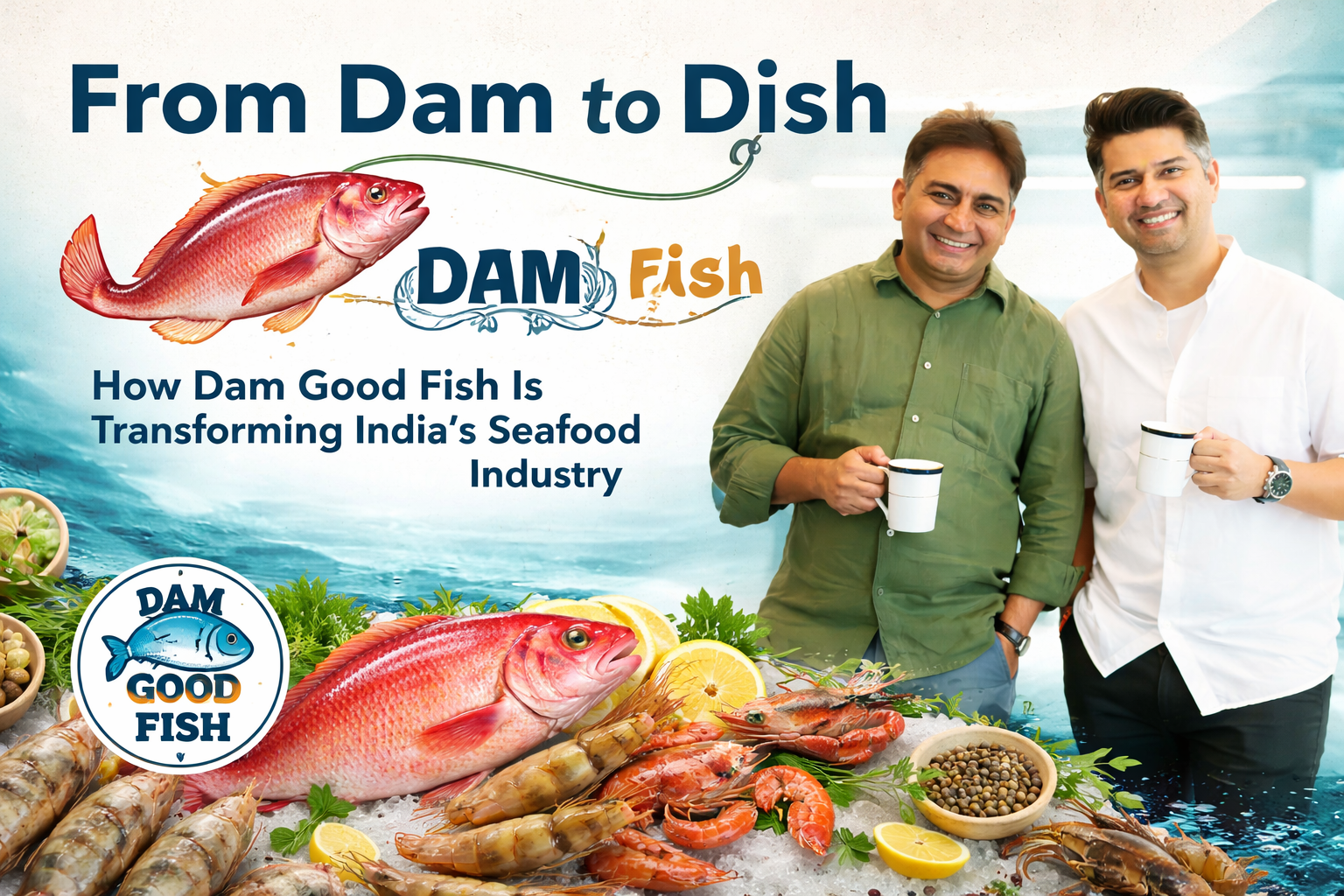
From Dam to Dish: How Dam Good Fish Is Transforming India’s Seafood Industry

With rising awareness around clean eating and traceable food sources, Dam Good Fish is rethinking how fresh seafood reaches urban consumers. Co-founders Shobhit Gaur and Shailesh Patel share how their unlikely partnership, built on complementary strengths in branding and aquaculture, led to a venture that prioritises natural sourcing, transparency, and freshness in India’s rapidly growing seafood market. Tell us a little about yourselves, your backgrounds, and personalities. Shobhit Gaur (Co-Founder & CEO):With a Master’s in Business Management and several years as National Head at a leading advertising agency, my career has always combined creativity with strategy. I see myself as a big-picture thinker who enjoys building disruptive ideas in traditionally unorganised markets. I’m naturally outgoing and enjoy exploring new concepts, whether in business or food culture. When I’m not working, I’m usually tracking food trends or spending time working out. Shailesh Patel (Co-Founder):My background is rooted in science, followed by a Master’s degree in business. Over the past decade, I’ve worked with multinational organisations and helped build ventures centred around sustainable solutions. I’m very hands-on and detail-oriented, someone who thrives on execution. For me, strategy must always be backed by strong ethics and measurable results. How did two people from different professional worlds come together to build a venture centred around fresh, natural seafood? Our paths crossed through shared sporting networks, where casual conversations gradually shifted toward food, health, and sustainability. Shobhit’s expertise in media and branding combined naturally with my background in aquaculture. As we discussed clean-label foods and the gaps in India’s seafood ecosystem, it became clear there was a real opportunity. In 2023, we decided to bootstrap Dam Good Fish. The idea was simple: combine strong storytelling and consumer awareness with operational expertise that ensures traceability and quality. Our complementary skill sets helped turn that idea into

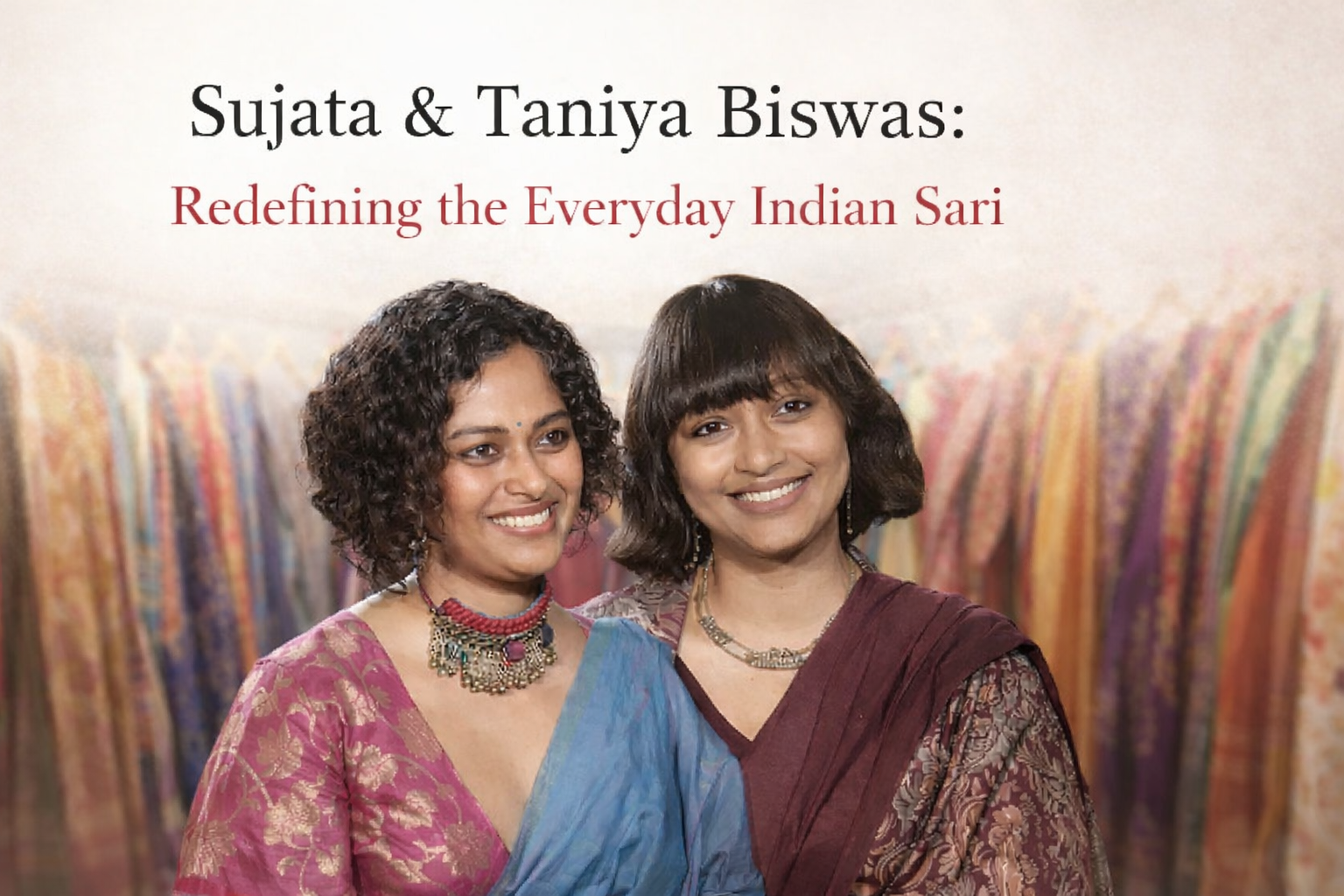
Sujata & Taniya Biswas: Redefining the Everyday Indian Sari

A homegrown Indian fashion brand redefining the sari as an everyday, breathable, and expressive garment. Combining Sujata’s structured, systems-driven approach with Taniya’s creative vision, they work closely with artisan communities across India to create clothing rooted in comfort, honesty, and human connection. Their journey blends entrepreneurship with sisterhood, building a brand that values trust, craftsmanship, and mindful fashion. Taniya, you left a stable career with the Tata group and IBM after IIM Lucknow, and Sujata, you pivoted from IIFT Delhi and corporate life. What was the exact moment when both of you realised that the corporate path wasn’t enough and that Suta was waiting to happen? Taniya: It wasn’t a rebellion. It was recognition. I had done everything “right”: engineering, IIM, a Consulting role that looked perfect on paper. But somewhere between late-night presentations and early morning meetings, I realised I was living life from the neck up. My hands missed fabric. My heart missed stories. I kept returning mentally to memories of wet saris drying on clotheslines, of Maa moving through the house with her pallu tucked in. One evening, over chai, I said it aloud to Sujata: I don’t think this is it. The moment I spoke it, Suta was born. Sujata: For me, it came as the discomfort of becoming someone I wasn’t. The corporate world had given me growth, but it had also hardened me. I remember thinking: If success requires me to lose softness, I don’t want it. My PhD was an attempt to find meaning, but even that felt academic, distant. What we really wanted was to build something with our hands, our intuition, and our values. Suta didn’t arrive as planned. It arrived as relief. From travelling through remote weaving clusters in Meghalaya, Varanasi, MP, and Odisha to working directly with artisan families,

Blood, Bond & Business: The Real Equations behind Family-Driven Startups

February is the month of relationships, and at Hashtag, we’re celebrating the bonds that shape not just personal lives, but powerful businesses. This special edition explores entrepreneurs who share more than a company; they share roots. From siblings turning into strategic partnerships to spouses balancing love and leadership, we dive into the real dynamics behind relationship-driven ventures. This month, discover how strong relationships can become a business’s most valuable asset. Vijayaraghavan Venugopal is the Co-founder at Fast&Up and has been instrumental in building the brand in India. He has over 26 years of business experience in diverse fields, which includes pharmaceuticals, Healthcare and Information Technology. He has been responsible for business development in multiple geographies, including the Triad (USA, Europe and Japan). He has worked with TekFriday, Dr Reddy’s, Lupin and Emcure in different senior management roles. He was Lupin’s country head in China for three years between 2007 and 2010. He is a mechanical engineer and an MBA in International Business from the Indian Institute of Foreign Trade, Delhi. He is one of the fastest amateur marathoners in the country, having run in sub-3-hour marathons 12 times in major cities throughout the world, including Paris, Boston, Chicago, Berlin, London, Tokyo and New York, all while leading the growth of India’s fastest-growing nutrition brand, Fast&Up. He also has the distinction of being the first Indian to do all six world marathon majors under 3 hours, and is the winner of the recently held Tata Mumbai Marathon in his age group. Varun Khanna is the CEO of Fullife Healthcare Pvt. Ltd., a company he started at the age of 23 with the sole purpose to focus on healthy living. A relentless passion to do something innovative for the millennial need for an active life drove him to launch India’s first effervescent

Top 6 Startups Of 2025: The New Architects of India’s Future

From sustainable farming to EV mobility, discover six Indian startups shaping a cleaner, smarter, and more connected tomorrow. Every generation finds its dreamers, the ones who don’t just talk about change, but build it. In 2025, India’s startup scene feels less like a rush for valuation and more like a movement with a purpose. These founders aren’t chasing unicorn tags; they are chasing impact. They are solving what truly matters. This is the India that rolls up its sleeves and says ‘Let’s make it ourselves.’ Dhanush Kumar writes about the Top 6 Startups of 2025, born from soil, steel, and software, each shaping tomorrow with courage and conscience. 1.Handpickd: Fresh from Farm to Table When freshness becomes a luxury, Handpickd restores it to the everyday plate. This Bengaluru-based agritech startup has built a direct bridge between local farmers and urban consumers ensuring every tomato, mango, and millet travels fewer miles and earns farmers more smiles. Using tech-driven logistics and transparent sourcing, Handpickd doesn’t just deliver produce; it delivers trust. In an era of overprocessed everything, this is simplicity redefined clean food, honest pricing, and a system where farmers finally get their due.It’s not a brand. It’s a return to our roots literally. 2.Bambrew: Building a Plastic-free Future At a time when the planet gasps under plastic, Bambrew breathes innovation. The Bengaluru-based packaging pioneer crafts biodegradable, compostable alternatives made from bamboo, sugarcane, and cornstarch materials that love the earth back. Their vision isn’t just green, it’s bold. Bambrew’s eco-packaging now wraps products for top FMCG and e-commerce giants, proving sustainability doesn’t have to look boring or cost a fortune.This isn’t rebellion it’s reinvention. A reminder that small choices, multiplied by millions, can rewrite the story of our planet. 3.Eeki Foods: Vertical Farming for a Greener Tomorrow In the deserts of Rajasthan, where

You May Also Like

Connect with us