Chardham Yatra and its significance.

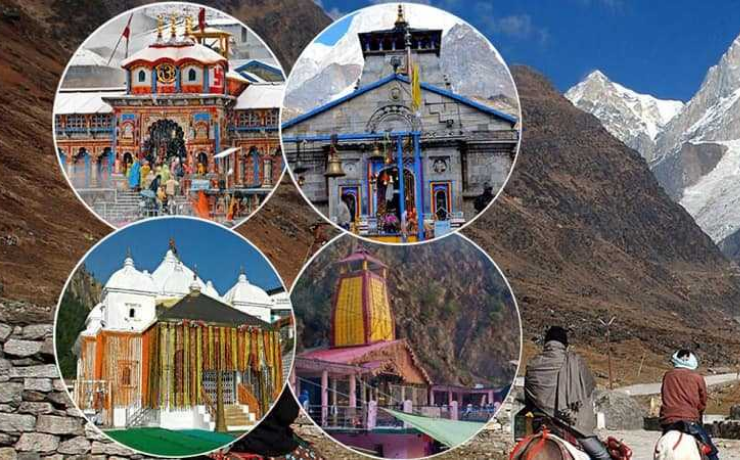
Chardham Yatra is one of India’s most famous pilgrimage tours. Every year, thousands of devotees visit these holy shrines located in Uttarakhand. The Char Dham route consists of four sacred places: Yamunotri, Badrinath, Kedarnath, and Gangotri. All these shrines are surrounded by mountains and a thick layer of snow. This amazing journey opens the gates of salvation for devotees, and it is a wonderful experience that should not be missed. We explain the importance of visiting these holy shrines and the stories associated with them

1. Yamunotri

The journey begins at Haridwar first, and then the devotees visit Yamunotri temple. The temple is dedicated to the Goddess Yamuna and was built in the 19th century, located in the Garhwal hills at an altitude of 3,291metres above sea level. The actual source of the Yamuna River is located at a height of 4,421 meters but it is not easily accessible. The temple is located at the foot of the hill and pilgrims offer prayers at the temple itself.

There is a powerful rock pillar located near the Surya Kund where pilgrims offer prayers to the pillar before entering the main temple.

How to reach: The nearest railway stations to Yamunotri are Rishikesh and Dehradun.

Opening hours: 1st week of May-October from 6 AM-8 PM. The Aarti time is from 6:30 PM-7:30 PM.

2. Gangotri

Gangotri is the birthplace of the River Ganga, and it is located at a height of 3.200 meters. Thousands of people visits the holy temple every year. According to Hindu mythology, Goddess Ganga took the form of the river to cleanse the ashes and liberate the souls of humans.

Lord Shiva placed her in his locks and minimized the impact of her fall. The major highlight of the Gangotri Dham is Gomukh which is the origin point of the Holy river Ganges. Before visiting the temple, pilgrims dip in the holy river and purify themselves from their sins.

How to reach: The nearest railway station to Gangotri is Rishikesh. Taxis and buses are available from Rishikesh.

Opening hours: May-October from 6:30 AM-2 PM, 3 PM-9:30 PM.

3. Kedarnath

Shri Kedarnath Dham is one of the holiest pilgrimages for Hindus and it is also one of the twelve Jyotirlingas of Lord Shiva. The temple is known to be built by the Pandavas and it is restored by Adi Shankaracharya in the 8th century. Adi Shankaracharya’s samadhi is located remarkably close to Kedarnath. The Kedarnath temple is surrounded by breathtaking snow-clad mountains, and it is located at the head of River Mandakini in the Himalayas.

How to reach: To reach Kedarnath first you must know that Gaurikund is the last accessible road and from there it is a trek along the Himalayas.

Opening hours: May-October 6;30AM-3 PM, 5 PM-9:30 PM.

4. Badrinath

Badrinath is the place where Lord Vishnu set his foot on the earth for the very first time. The temple is located at the height of 3,133 meters from sea level, and the temple is on the left bank of the Alaknanda River.

In this temple, Lord Vishnu is worshipped as Badrinarayan, and the story goes back to the time of Adi Shankaracharya who discovered a black Saligram stone image of Lord Vishnu and he enshrined in Tapt Kund. In the 16th century, the Garhwal king moved the idol to the present-day temple.

How to reach: Badrinath is well connected by accessible roads and if you have experience driving in the mountains you can drive on your own or you can hire a cab from Jolly Grant Airport.

Opening hours: May-October 4:30 AM-1 PM, 4 PM-9 PM.

Why is it important to go for Chardham Yatra?

It is highly believed that whoever visits these holy shrines at least once in their lifetime will attain salvation. It is also believed that this journey is an exercise of willpower, and faith because the devotee has to travel to difficult locations, and once they reach the place the devotee feels a sense of satisfaction and leaves all their problems at the feet of the deity. It is truly a spiritual experience for those seeking god and the best time to take the Chardham Yatra is around July and September. Make sure to carry thick woollens for the cold temperatures because the temperature may fall to 1 degree centigrade at night.

Conclusion:

This is the significance and details of the Chardham Yatra. The journey may feel long, but it is rewarding. It is the perfect time to head for a Chardham Yatra and offer prayers to gods and goddesses.

Leave a comment

Your email address will not be published. Required fields are marked *

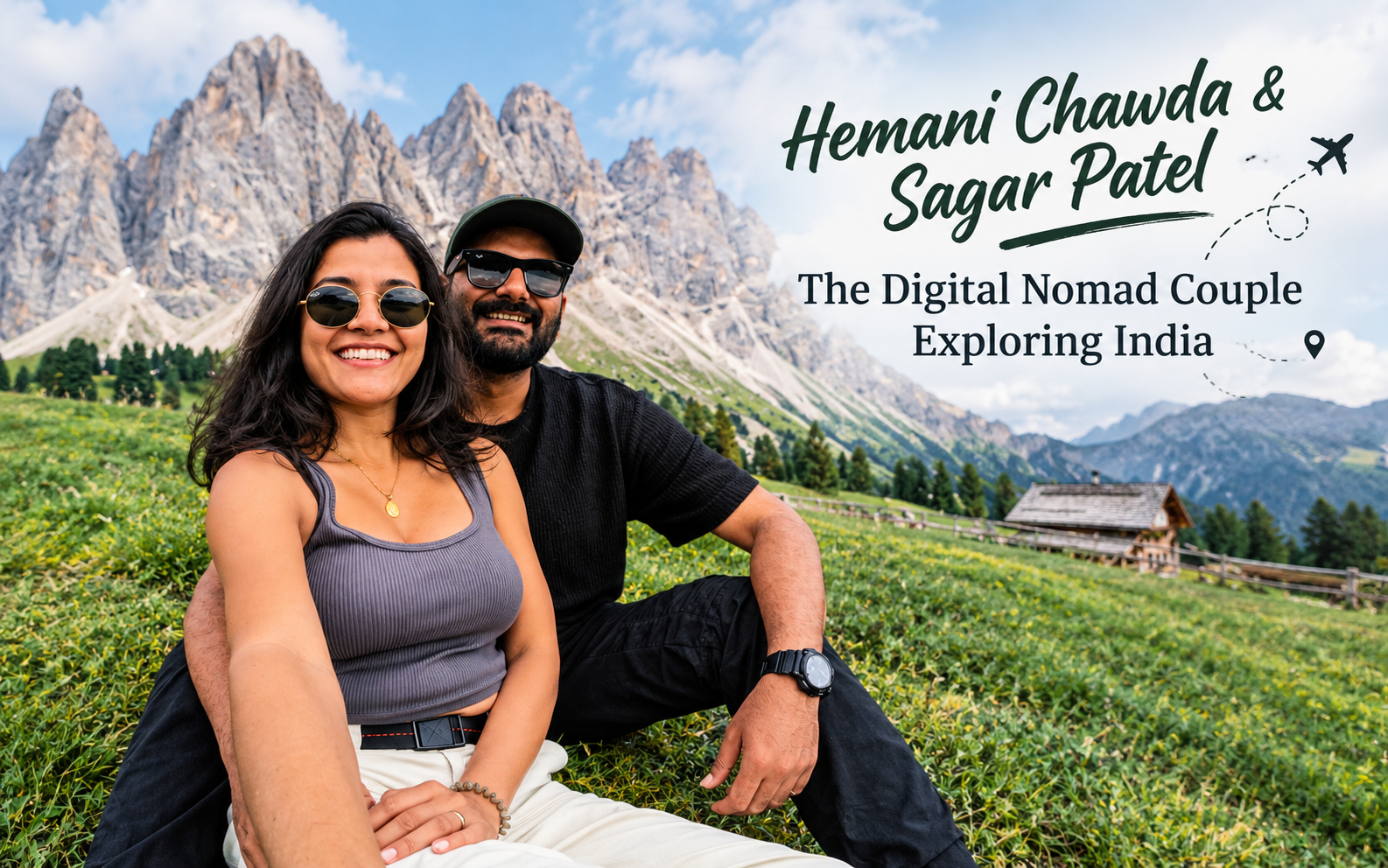
Hemani Chawda and Sagar Patel

Hemani Chawda and Sagar Patel are a travel-content-creator couple and digital nomads who chose a life of exploration over convention. Based between Jhabua, Madhya Pradesh, and Raipur, Chhattisgarh, the duo has built a journey around discovering new places, embracing different cultures, and sharing authentic travel stories. Hemani, a former Radio Jockey, left her career seven years ago to follow her passion for travel and storytelling. Sagar, a post-graduate engineer, later stepped away from the corporate world to join her in creating a life centred around experiences rather than routines. Through their content, they go beyond showcasing destinations to capture the emotions, challenges, connections, and everyday moments that shape life on the road. From ancient traditions to untouched landscapes, here are three countries that have left the deepest impression on their journey. 1. Japan — Where Tradition Meets Tomorrow “Japan holds a special place in our hearts for its incredible balance of ancient traditions, modern innovation, and breathtaking landscapes.” From the peaceful streets of Kyoto and its centuries-old temples to the vibrant energy of Tokyo, every experience feels like discovering a new story. What we love most about Japan is the way it preserves its cultural roots while embracing the future. Whether it is experiencing a quiet tea ceremony, exploring traditional neighbourhoods, or discovering local cuisine, Japan constantly inspires us with its attention to detail, warm hospitality, and endless storytelling possibilities. 2. Philippines — A Tropical Paradise Filled With Human Connections “The Philippines is a destination that feels magical at every turn, with turquoise waters, stunning islands, and some of the warmest people we have met during our travels.” From swimming alongside marine life and exploring hidden lagoons to discovering local communities and untouched beaches, the country offers the perfect blend of adventure and relaxation Beyond its natural beauty, what makes

Mehzabin Shaikh (Maahie) | Mumbai

Meet Maahie, a Mumbai-based travel content creator who transformed her passion for storytelling into a full-time career. After stepping away from engineering to follow her creative calling, she has spent the last 3.5 years building a journey around travel, exploration, and meaningful connections. For Maahie, travel goes beyond popular destinations; it is about discovering lesser-known places, meeting people, understanding their lifestyles, and experiencing cultures through local food, conversations, and everyday moments. Supported by her best friend and travel partner Rahul Yadav, Maahie continues to create stories that inspire people to step beyond their comfort zones and discover that every journey has a story worth sharing. 1. Bhadarwah, Jammu — A Hidden Paradise Beyond the Usual Kashmir Trail “When people think of snowfall and breathtaking Himalayan landscapes, Kashmir is often the first destination that comes to mind. But for me, Bhadarwah in Jammu is one of the most beautiful places I have ever experienced.” What makes Bhadarwah special is its untouched beauty. The snow-covered landscapes feel peaceful, personal, and far away from the crowds and commercialisation of popular hill stations. However, the real magic of Bhadarwah lies in its people. During my first visit, we stayed at a small homestay run by a family of three a husband, wife, and their young daughter. We instantly connected, and by the end of the trip, saying goodbye felt impossible. Over time, they became more than hosts; they became family. Today, visiting Bhadarwah has become an annual ritual. It is a place that reminds me that travel is not just about destinations; it is about the people and relationships you discover along the way. 2. Thailand — The Journey That Introduced Me to Freedom “Thailand will always hold a special place in my heart because it gave me a feeling I had never experienced

Kahanda Kanda: A Rain-Kissed Escape in Galle

Rain, mist and 17 villas that don’t look alike. Kahanda Kanda is a hidden gem above Koggala Lake in Galle, Sri Lanka. Spread across 14 acres of tea-fringed grounds, this intimate retreat is built around one simple idea: slowing down. Sinduri Vuppala spends a few unhurried days at the estate, discovering its distinctive design, fascinating history and the quiet luxury of doing very little. There’s a particular kind of luxury that has nothing to do with thread counts or infinity pools, and everything to do with being left alone in the best possible way. That’s the feeling that defines a stay at Kahanda Kanda, a boutique estate tucked into the hills above Koggala Lake in Galle, Sri Lanka. The journey there is part of the story. After a stint in the busier coastal town of Bentota, the drive inland feels like a decompression, roads turning greener and quieter, the pace of the island slowing with every mile. By the time the gates swing open onto a sweep of tea bushes, garlands, and a welcome glass of estate-grown lemongrass cordial, you’ve already left the “resort” mindset behind. We arrived off-season and were the only guests on the property. There’s something disorienting about having a place this beautiful entirely to yourself, mist over the tea plantation, no queue for breakfast, just birdsong somewhere in the canopy. When the rain came, it didn’t spoil anything; it turned the estate into something softer and more private. The Villas Kahanda Kanda comprises 17 stand-alone villas, and the property’s defining trick is that none of them looks alike. Rather than the interchangeable rooms you’d find at a larger resort, each villa here has its own layout, its own mix of antiques, and its own mood, a blend of European and Asian pieces alongside contemporary art, none

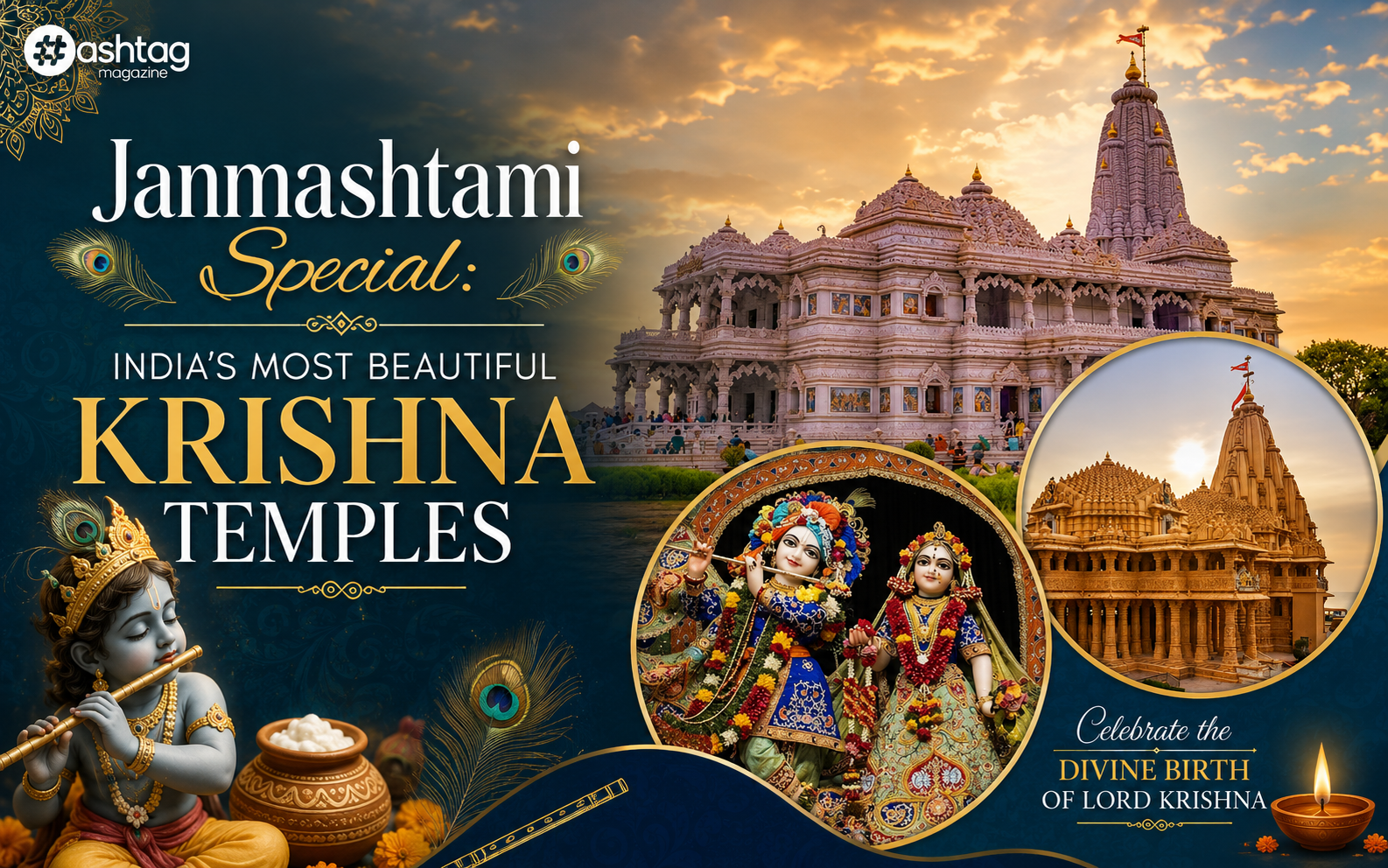
Janmashtami Special: India’s Most Beautiful Krishna Temples

Every year, as the monsoon clouds part and the fragrance of tulsi and jasmine fills temple courtyards across India, millions of devotees prepare to celebrate the birth of Lord Krishna, the playful cowherd, the divine statesman, the eternal beloved, Janmashtami is more than a festival, it is a nationwide outpouring of devotion, music, and midnight joy, marking the moment Krishna was born in a Mathura prison cell over 5,000 years ago. While Krishna’s story unfolds across the length and breadth of India, a handful of temples stand out not just for their spiritual significance, but for their sheer visual splendour. Marble carvings that seem to breathe, gold-plated domes that catch the sunrise, silver windows through which only a sliver of the deity is visible. This Janmashtami, Dhanush Kumar writes about eight of India’s most beautiful Krishna temples worth adding to your pilgrimage list. Banke Bihari Temple, Vrindavan: Tucked into the narrow lanes of Vrindavan, Banke Bihari is famous for its curtained deity; the eyes of Banke Bihari are considered so powerful that the curtain is drawn and redrawn constantly to prevent devotees from being overwhelmed. On Janmashtami, the temple performs its once-a-year Mangala Aarti at dawn, drawing enormous crowds who believe witnessing it wards off financial hardship. Prem Mandir, Vrindavan: Built entirely from Italian marble, Prem Mandir is arguably the most photogenic Krishna temple in India. Every surface is carved with scenes from Krishna’s life, and the temple’s evening fountain and light show transform the complex into a shimmering spectacle. During Janmashtami, the grounds glow with thousands of lamps, making it a favourite for both pilgrims and photographers. Dwarkadhish Temple, Dwarka, Gujarat: Perched on the banks of the Gomti River where it meets the Arabian Sea, this temple marks the site of Krishna’s legendary kingdom. Its soaring five-story spire, visible