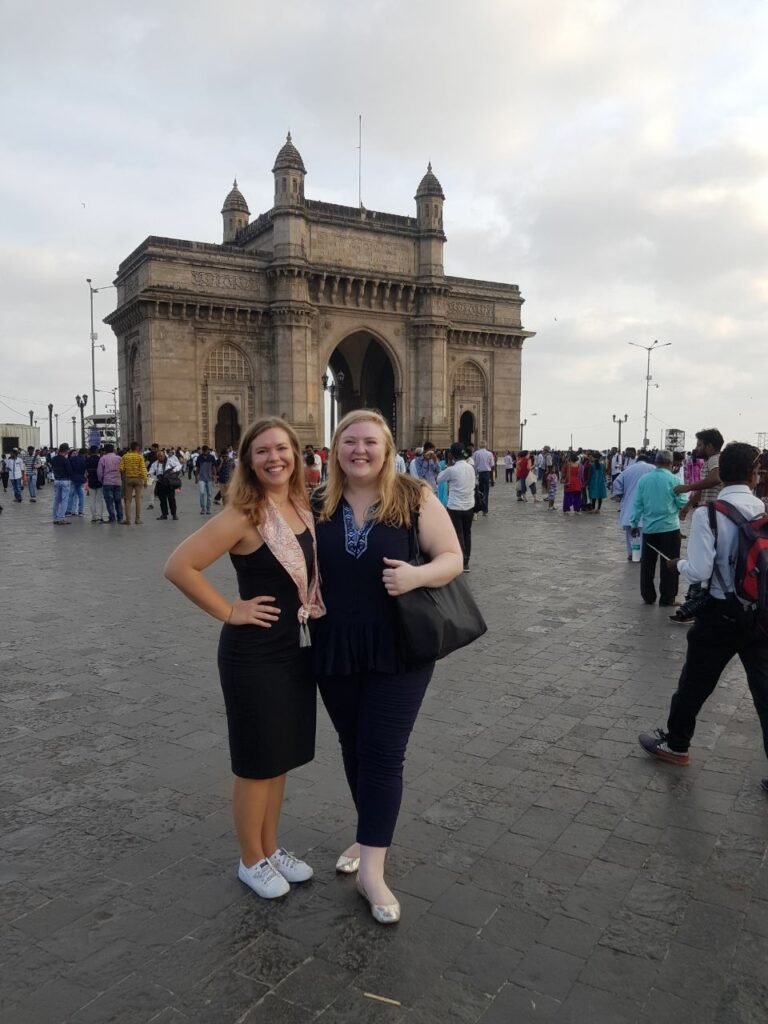
Khaki Tours – Heritage tours with a difference

Heritage tours

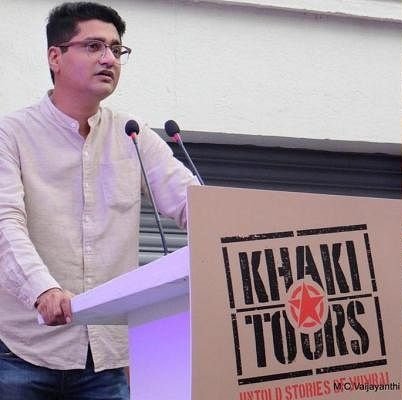
A qualified mechanical engineer with a degree in Business Management, Bharat Gothoskar, always had his heart set on becoming a conservation architect. Canta Dadlaney asks Bharat what makes him a pioneer in this space.

Born to Sushila Raghavan, a history teacher and a journalist father, Bharat Gothoskar drew influences from his school teacher, Ms. Sushila Raghavan and writer Sharada Dwivedi. “I imbibed a love for culture and creativity from my mom and communication skills from my dad,” says Bharat, a conservation architect. Bharat felt a deep desire to create a culture of appreciation and self-respect, something which Khaki Tours has been associated with for the last six years.
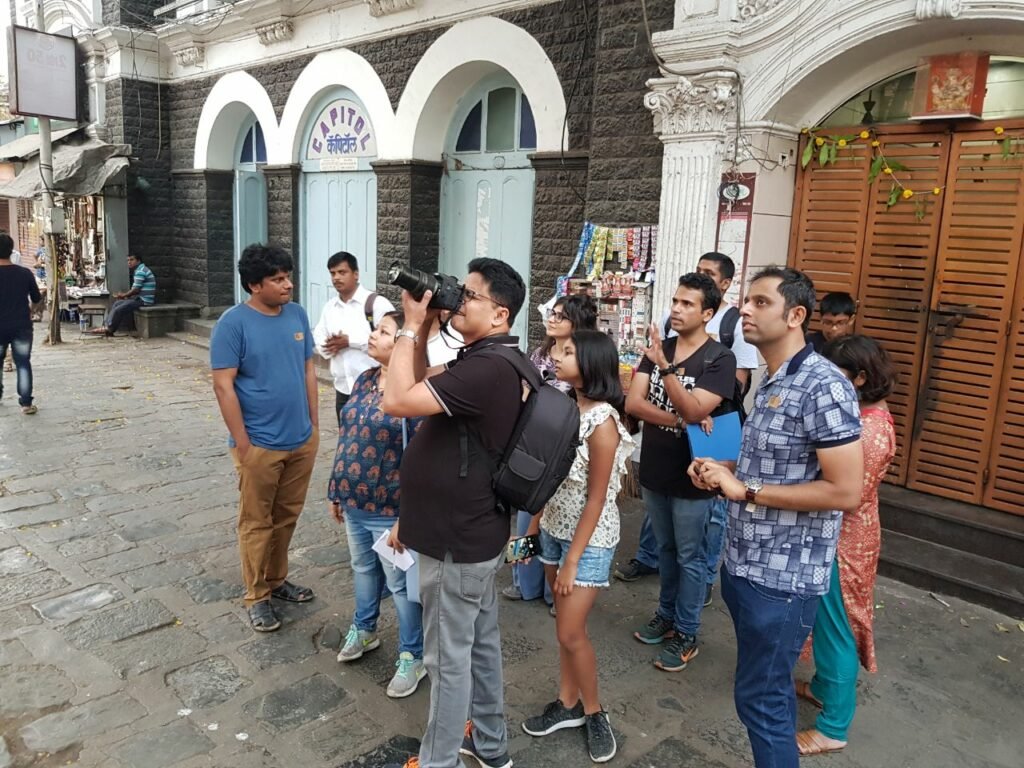
The world’s first and only Urban Jeep Safari

In November of 2016, Bharat found himself stuck in a traffic jam at Bhuleshwar, South Mumbai. He realised he could have admired the architecture in that part of the city better if it weren’t for staying put in a closed car. That gave birth to the concept of an open, urban safari, “The first of its kind,” says Bharat. He was ready for every brickbat for this initiative. “It was an alien concept and the initial response was not great but once the wheels were set in motion, people caught on and were very enthused by it,” shares Bharat. Food walks, jeep safaris, day tours and even themed tours—people welcomed it all and the numbers swelled with each passing day.

The engineer-turned-conservation architect established the not-for-profit Khaki Foundation in 2018. He has also established ‘Khaki Lab’, a multi-cultural space that hosts a library with a wide range of books about Mumbai city. One can also be party to various events and exhibitions as well as workshops organised by the Lab. 

The lone ranger

At the outset, Khaki Tours was a complete one-man show, from research, to entertaining queries on social media and taking his family members, whom he refers to as the first-ever guinea pigs on his ‘free walks’. As word got around, the numbers slowly increased and that set the pace for building a team.

Bharat also conceptualised a unique tour for the 26/11 tragedy of Mumbai. When asked if that was rather disturbing, pat comes the reply, “People visit tragic locales of Auschwitz and Hiroshima, right? They do it not to celebrate genocide or the nuclear war but to encounter the horrors. That is what we do, too.  The 26/11 event tour is a homage tour to every single spot that came under attack in Mumbai, to revere the heroism of the ordinary Mumbaikar and the sacrifices of the martyrs. The tour also includes offering flowers to all those brave hearts,” he adds.
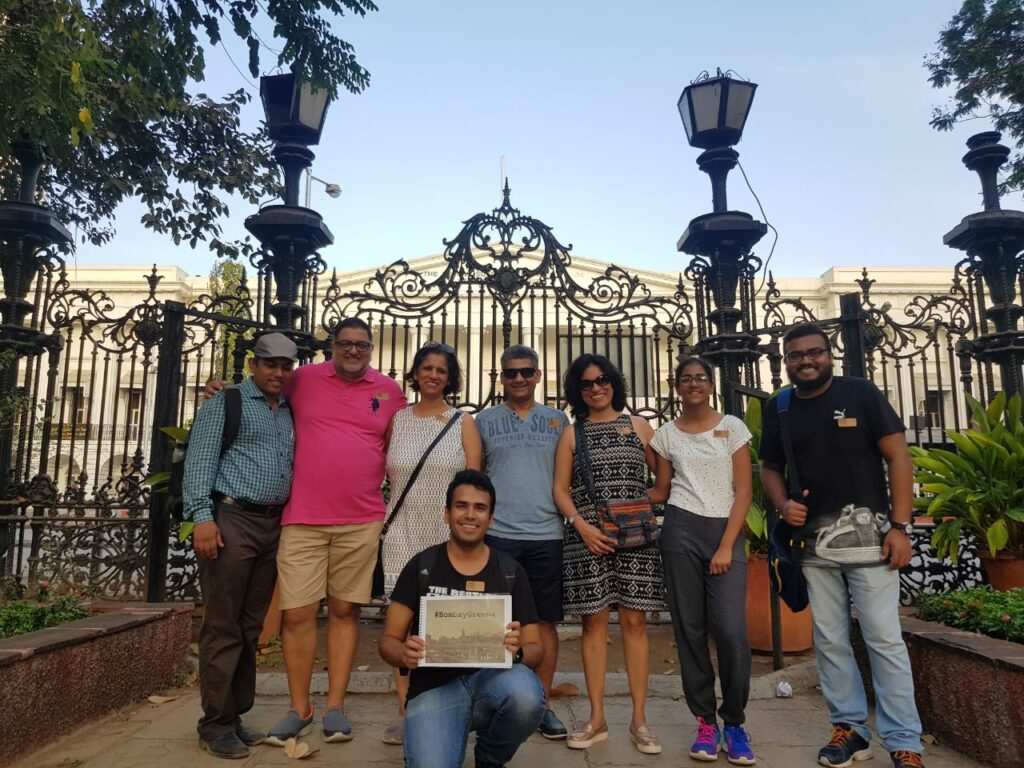
The Ambassadors of Mumbai 

This is how Bharat addresses his team members, “Not a single one is a tourist guide in the conventional sense. They are working professionals from different walks of life who make time outside of their regular jobs to host visitors. They are of course, trained intensively on the city’s history, geography, architecture and culture. They are given practical training on hosting—communication skills, storytelling, and other requisite skills. In our recent recruitment drive, we had 150 applications, trained 35 personnel and finally only 7 made the cut.”

The future

With no regrets whatsoever at his chosen path, Bharat believes that heritage tourism has a bright future for those aspiring to embrace it as a career, “Academic institutions are already stressing upon the importance of heritage conservation in schools and colleges, as are parents. The education has already started. We just need to accelerate it.” 

In the fast-lane

  • The greatest hurrah:  

When total strangers walk up to us in public places and say that Khaki has changed the way they look at their own city.

  • One tour that left a lasting impact

#WonderWomen – A walk that talks of 20 pioneering women who worked or stayed in a small enclave of Gamdevi.

Leave a comment

Your email address will not be published. Required fields are marked *

Kahanda Kanda: A Rain-Kissed Escape in Galle

Rain, mist and 17 villas that don’t look alike. Kahanda Kanda is a hidden gem above Koggala Lake in Galle, Sri Lanka. Spread across 14 acres of tea-fringed grounds, this intimate retreat is built around one simple idea: slowing down. Sinduri Vuppala spends a few unhurried days at the estate, discovering its distinctive design, fascinating history and the quiet luxury of doing very little. There’s a particular kind of luxury that has nothing to do with thread counts or infinity pools, and everything to do with being left alone in the best possible way. That’s the feeling that defines a stay at Kahanda Kanda, a boutique estate tucked into the hills above Koggala Lake in Galle, Sri Lanka. The journey there is part of the story. After a stint in the busier coastal town of Bentota, the drive inland feels like a decompression, roads turning greener and quieter, the pace of the island slowing with every mile. By the time the gates swing open onto a sweep of tea bushes, garlands, and a welcome glass of estate-grown lemongrass cordial, you’ve already left the “resort” mindset behind. We arrived off-season and were the only guests on the property. There’s something disorienting about having a place this beautiful entirely to yourself, mist over the tea plantation, no queue for breakfast, just birdsong somewhere in the canopy. When the rain came, it didn’t spoil anything; it turned the estate into something softer and more private. The Villas Kahanda Kanda comprises 17 stand-alone villas, and the property’s defining trick is that none of them looks alike. Rather than the interchangeable rooms you’d find at a larger resort, each villa here has its own layout, its own mix of antiques, and its own mood, a blend of European and Asian pieces alongside contemporary art, none

Janmashtami Special: India’s Most Beautiful Krishna Temples

Every year, as the monsoon clouds part and the fragrance of tulsi and jasmine fills temple courtyards across India, millions of devotees prepare to celebrate the birth of Lord Krishna, the playful cowherd, the divine statesman, the eternal beloved, Janmashtami is more than a festival, it is a nationwide outpouring of devotion, music, and midnight joy, marking the moment Krishna was born in a Mathura prison cell over 5,000 years ago. While Krishna’s story unfolds across the length and breadth of India, a handful of temples stand out not just for their spiritual significance, but for their sheer visual splendour. Marble carvings that seem to breathe, gold-plated domes that catch the sunrise, silver windows through which only a sliver of the deity is visible. This Janmashtami, Dhanush Kumar writes about eight of India’s most beautiful Krishna temples worth adding to your pilgrimage list. Banke Bihari Temple, Vrindavan: Tucked into the narrow lanes of Vrindavan, Banke Bihari is famous for its curtained deity; the eyes of Banke Bihari are considered so powerful that the curtain is drawn and redrawn constantly to prevent devotees from being overwhelmed. On Janmashtami, the temple performs its once-a-year Mangala Aarti at dawn, drawing enormous crowds who believe witnessing it wards off financial hardship. Prem Mandir, Vrindavan: Built entirely from Italian marble, Prem Mandir is arguably the most photogenic Krishna temple in India. Every surface is carved with scenes from Krishna’s life, and the temple’s evening fountain and light show transform the complex into a shimmering spectacle. During Janmashtami, the grounds glow with thousands of lamps, making it a favourite for both pilgrims and photographers. Dwarkadhish Temple, Dwarka, Gujarat: Perched on the banks of the Gomti River where it meets the Arabian Sea, this temple marks the site of Krishna’s legendary kingdom. Its soaring five-story spire, visible

Sanya Batra: From Corporate Career to Travel Storyteller

Sanya Batra is a Delhi-based travel content creator and storyteller who traded a decade-long corporate career for a life driven by exploration and creativity. With experience across marketing, sales, innovation, and entrepreneurship, Sanya brings a unique perspective to travel storytelling. Through her content, she goes beyond showcasing destinations, sharing experiences of personal growth, cultural discoveries, and the transformative impact of stepping outside one’s comfort zone. Her journey inspires others to embrace independence, pursue their passions, and create a life that feels truly fulfilling. 1. Thailand — A Destination for Every Kind of Traveller “Thailand holds a special place in my heart because it offers the perfect balance of adventure, relaxation, culture, and discovery.” From pristine beaches and scenic mountains to thrilling activities, vibrant nightlife, luxury experiences, and incredible local cuisine, Thailand has something for every traveller. As a solo female traveller, I also find Thailand to be one of the safest and most accessible destinations, making it an ideal choice for those looking to explore independently while experiencing a warm and welcoming culture. 2. Switzerland — A Real-Life Postcard “Switzerland feels like stepping into a dream. The snow-covered mountains, charming villages, crystal-clear lakes, and breathtaking train journeys make every moment feel magical.” What makes Switzerland truly special is its beauty in every season. Whether surrounded by winter landscapes or exploring its lush summer countryside, every corner offers a picture-perfect experience. It is a destination that captures the imagination and leaves you with memories that feel almost unreal. 3. Spiti Valley, India — A Journey of Transformation “Spiti Valley is unlike any other destination I have experienced. Raw, rugged, and untouched, it offers a sense of adventure and introspection that stays with you long after the journey ends.” From dramatic mountain landscapes and ancient monasteries to remote villages and endless star-filled

The Places That Stay with You: Travel Creators on Journeys That Transformed Them

From life-changing solo trips to journeys that built lasting human connections, travel means something different to everyone. We spoke to four travel creators who have shaped their lives around exploration, asking them to share the destinations that left the deepest impact on them: places that inspired growth, freedom, resilience, and a renewed way of seeing the world. Sneha Layek & Ranjan Simkhada | Tezpur, Assam Sneha and Ranjan are a travel-loving couple from Tezpur, Assam, driven by a shared passion for exploration, storytelling, and meaningful experiences. They believe in the art of slow travel: taking the time to connect with local cultures, communities, and the true essence of every destination. Ranjan is a filmmaker and photographer who captures their journeys through a visual storytelling lens, while Sneha, a government school teacher, creates thoughtful travel content inspired by their experiences. Together, they explore destinations beyond the usual tourist trails, focusing on authentic connections, local stories, and immersive travel experiences. 1.Indonesia — A Destination of Endless Discoveries “Indonesia is a place we can return to endlessly and still find something new every time.” From pristine beaches and powerful waterfalls to ancient temples, lush valleys, and volcanic landscapes, the country offers an incredible variety of experiences. Whether exploring its natural wonders, diving into its vibrant marine life, or discovering its rich cultural traditions, every journey feels unique. What makes Indonesia truly special for us is the warmth of its people and the perfect balance it offers between adventure, culture, nature, and relaxation. 2.Nepal — Where the Mountains Feel Like Home “Nepal holds a very special place in our hearts because of our deep connection with the mountains.” The mighty Himalayas never fail to leave us speechless, no matter how many times we visit. Beyond its breathtaking landscapes, Nepal’s charm lies in its welcoming