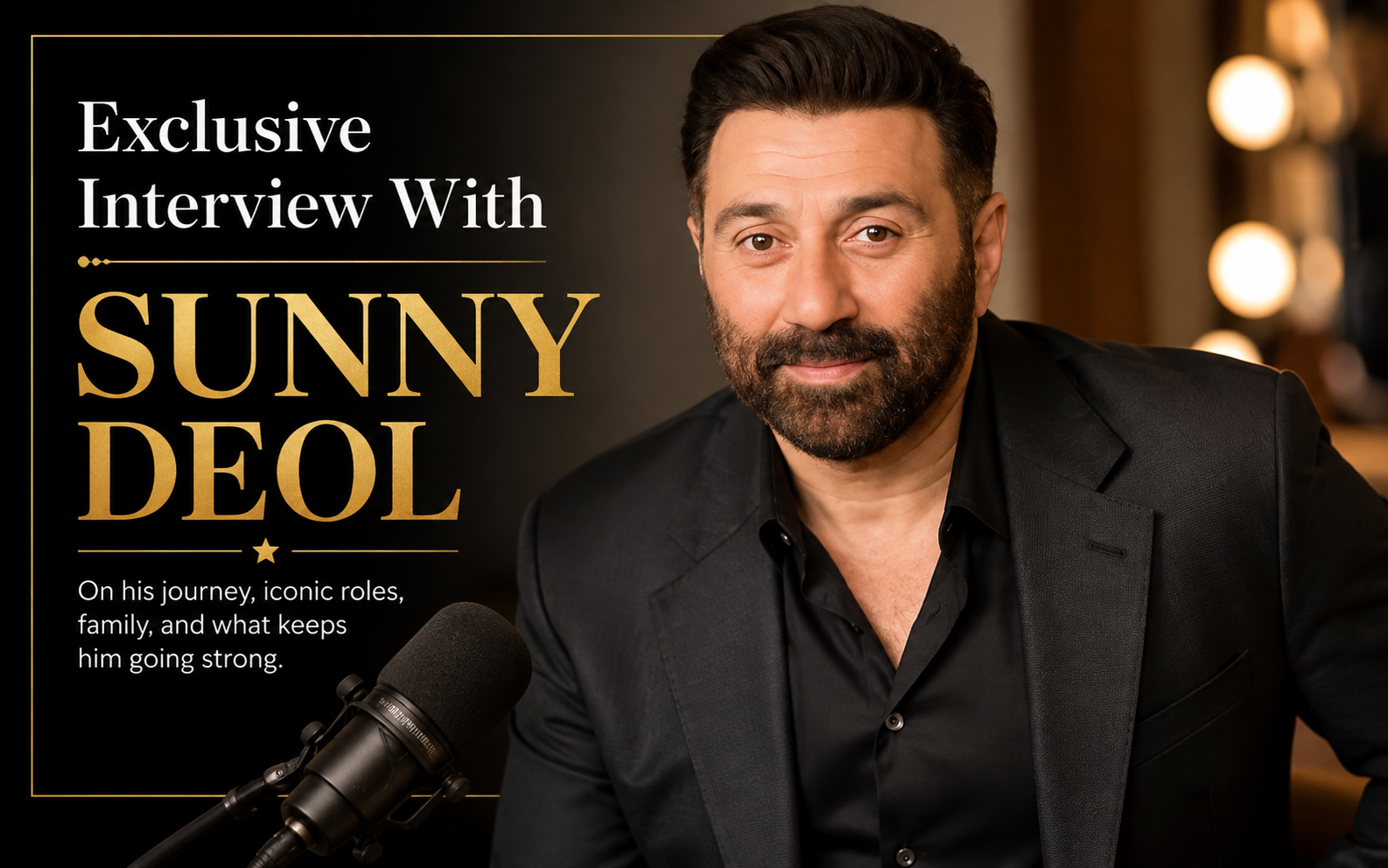
Exclusive Interview with Sunny Deol: Life Beyond Bollywood

Exclusive Interview with Sunny Deol: Life Beyond Bollywood

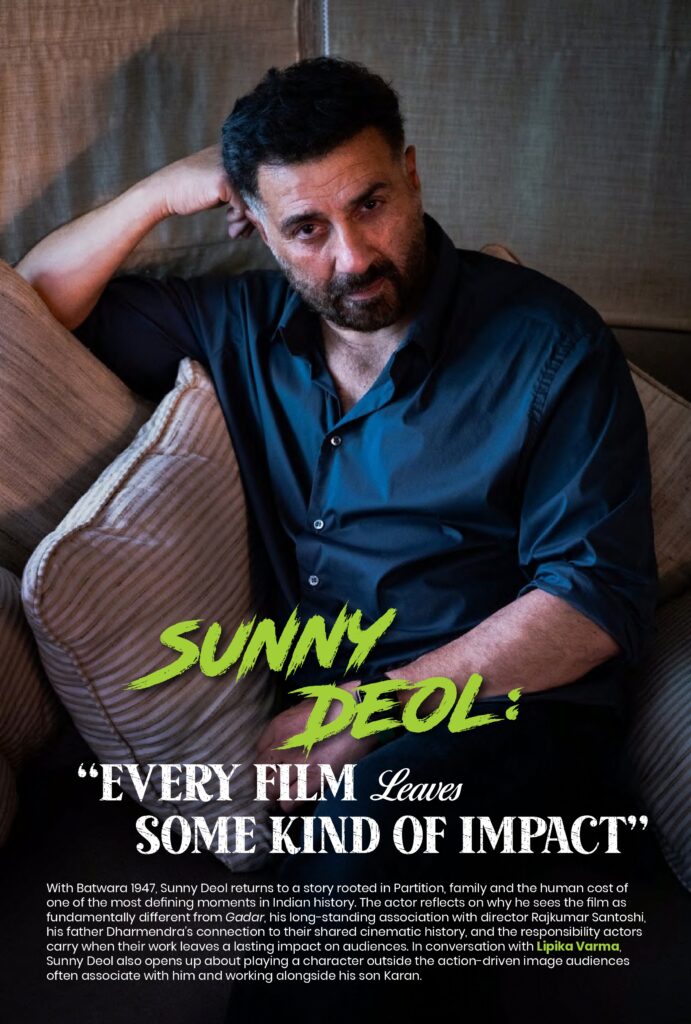
Sunny Deol: “Every Film Leaves Some Kind of Impact” 

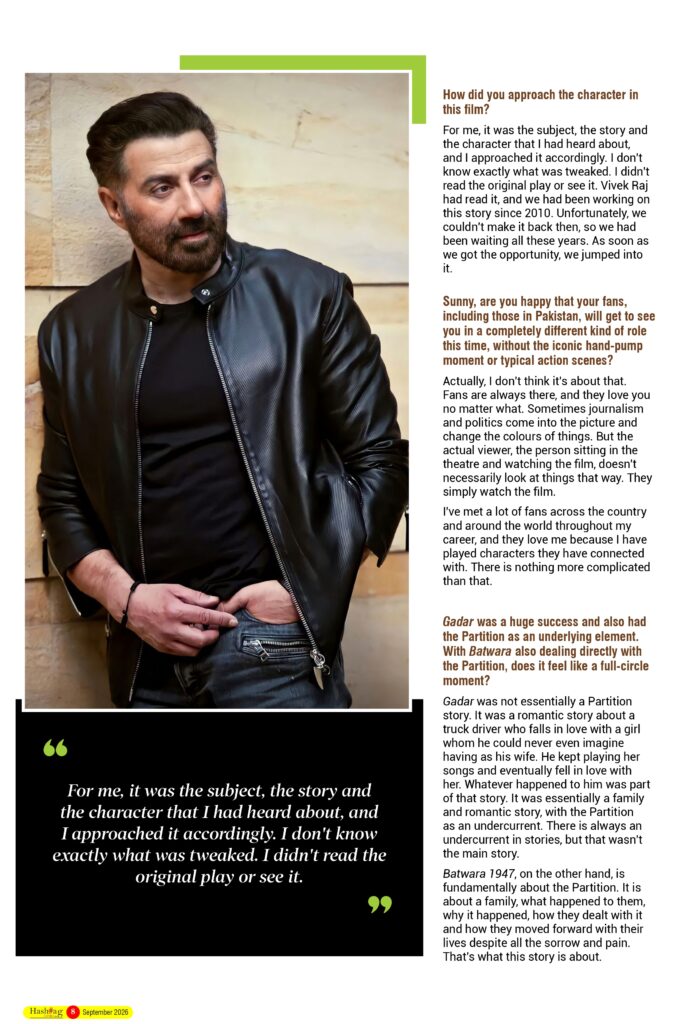
With Batwara 1947, Sunny Deol returns to a story rooted in Partition, family and the human cost of one of the most defining moments in Indian history. The actor reflects on why he sees the film as fundamentally different from Gadar, his long-standing association with director Rajkumar Santoshi, his father Dharmendra’s connection to their shared cinematic history, and the responsibility actors carry when their work leaves a lasting impact on audiences. In conversation with Lipika Varma, Sunny Deol also opens up about playing a character outside the action-driven image audiences often associate with him and working alongside his son Karan.

How did you approach the character in this film?

For me, it was the subject, the story and the character that I had heard about, and I approached it accordingly. I don’t know exactly what was tweaked. I didn’t read the original play or see it. Vivek Raj had read it, and we had been working on this story since 2010. Unfortunately, we couldn’t make it back then, so we had been waiting all these years. As soon as we got the opportunity, we jumped into it. 

Sunny, are you happy that your fans, including those in Pakistan, will get to see you in a completely different kind of role this time, without the iconic hand-pump moment or typical action scenes?

Actually, I don’t think it’s about that. Fans are always there, and they love you no matter what. Sometimes journalism and politics come into the picture and change the colours of things. But the actual viewer, the person sitting in the theatre and watching the film, doesn’t necessarily look at things that way. They simply watch the film. 

I’ve met a lot of fans across the country and around the world throughout my career, and they love me because I have played characters they have connected with. There is nothing more complicated than that. 

Gadar was a huge success and also had the Partition as an underlying element. With Batwara also dealing directly with the Partition, does it feel like a full-circle moment?

Gadar was not essentially a Partition story. It was a romantic story about a truck driver who falls in love with a girl whom he could never even imagine having as his wife. He kept playing her songs and eventually fell in love with her. Whatever happened to him was part of that story. It was essentially a family and romantic story, with the Partition as an undercurrent. There is always an undercurrent in stories, but that wasn’t the main story.

Batwara 1947, on the other hand, is fundamentally about the Partition. It is about a family, what happened to them, why it happened, how they dealt with it and how they moved forward with their lives despite all the sorrow and pain. That’s what this story is about.

The film is releasing around Independence Day. At a time when many feel that today’s generation is becoming disconnected from the meaning of war and freedom, how much can cinema contribute to reminding people of that history? 

Cinema has always been a reflection of society. A good film reflects the society it comes from. That’s why people continue to watch films; they know they will find something in them that connects with them. Several decades have passed, and there are many people today who don’t know what war was actually like. But they are still curious to understand it. 

The way Raj has written and directed this story, audiences will get immersed in it. They will experience what happened during that period. Whether something was right or wrong is a different discussion, but at least they will understand what happened and how people experienced it.

The film also connects you with your father, Dharmendra, and his film Batwara. What does that connection mean to you?

Raj and I actually met through Batwara. We went to the Batwara set, where my father heard the story of Ghayal. He said, “Go ahead.” He also said that if he was going to produce the film, his name should be there. That’s where things started between Raj and me. 

All the films I’ve done have been about families and strong emotions. Batwara was also like that. The response to the film has been wonderful, and I have a strong feeling that people will really like this film. Raj and I have done three films together before, and this is our fourth. Whenever we come together, we try to create something meaningful.

What message do you think Batwara carries for today’s audience?

Every film has a message, and nothing happens without leaving some kind of impact. As actors, we don’t realise how much a character we play can change someone’s life or inspire them. We simply do our work, have fun and move on, without realising the impact we can have on an audience.

I remember after Border, I was in England when a young boy came up to me at a petrol pump. He said, “Paaji, I want to touch your feet.” He then spoke to me about Border and told me how much the film had affected him. Later, while shooting Border 2 in Dehradun, a soldier stopped me. At first, he said he didn’t want to meet me. Then he took hold of his uniform and told me, “This uniform is because of you.”

It was overwhelming and humbling. You start wondering, “What have I done?” I’m just a normal person. But the films we make can have an effect on people. That’s why I believe we have a responsibility to give the youth and humanity something meaningful: to encourage people to be good human beings, to be courageous, to stand up for what is right and to walk with truth.

Sunny, what is your reaction to Karan being cast in the film?

I think you’ve seen the film and the response it has received. I’ve also seen the film. Obviously, he is my son. But I’m also looking at him as an actor, and because I’ve directed him as well, I’ve seen how much he has grown. He has grown tremendously as an actor, and I’m very proud of him. I just hope that after this film, he regains the confidence that he needs. He has done a good job.
Leave a comment

Your email address will not be published. Required fields are marked *

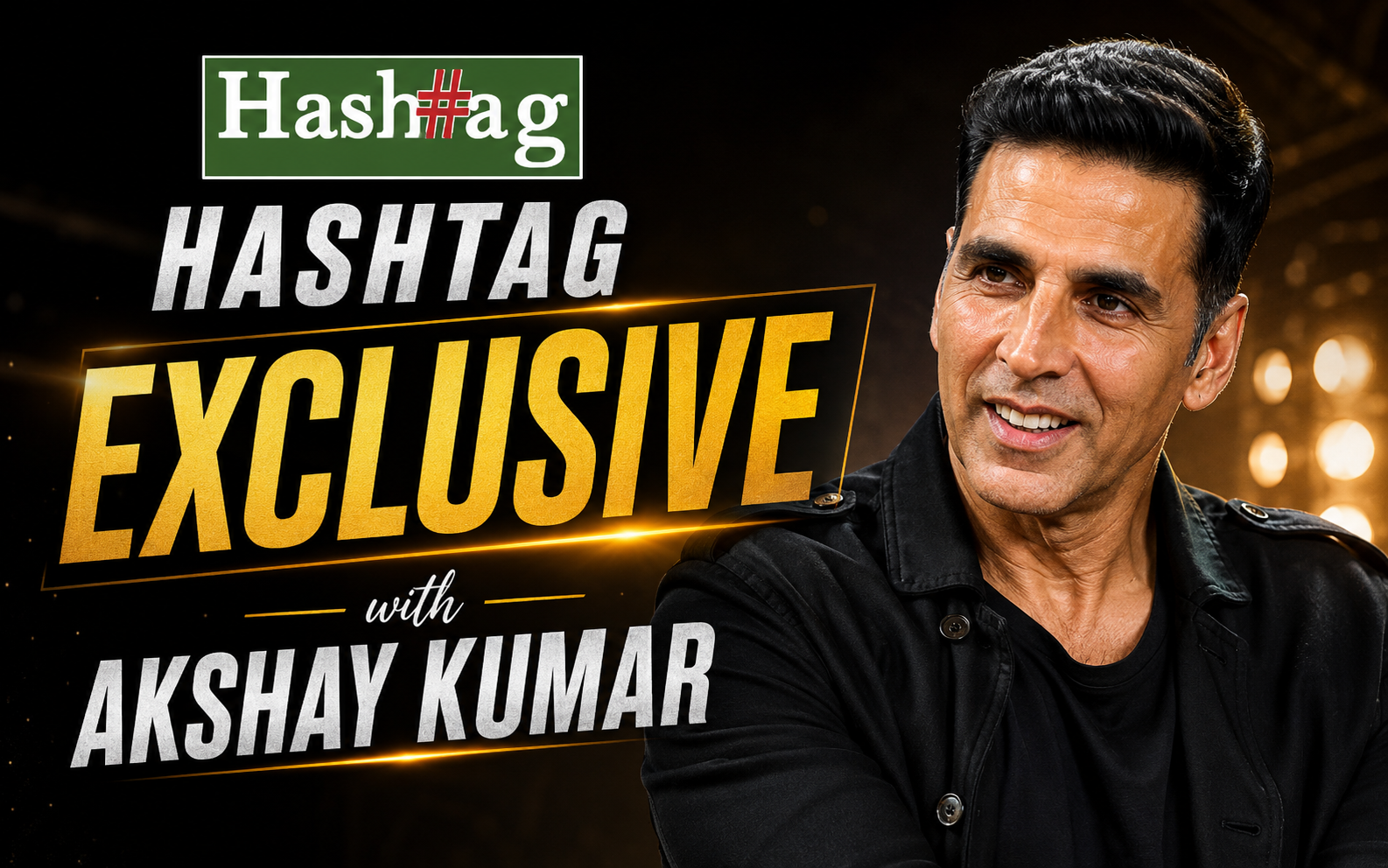
Akshay Kumar: “The Craft Has Changed, But Hard Work Never Goes Out of Style”

With a career spanning over three decades, Akshay Kumar continues to reinvent himself across genres, from action and comedy to social dramas and entertainers. As he looks ahead to his upcoming projects, including the action-thriller Haiwaan and a lineup of comedy entertainers, the actor reflects on his journey, his approach to cinema, discipline, and why staying connected to the craft remains his biggest priority. In conversation with Lipika Varma, Akshay opens up about his evolving approach to cinema, the importance of teamwork, and the values that guide him both on and off screen. You have played action heroes, comedians, romantic leads, and intense characters. What kind of roles excite you the most today? I enjoy all kinds of roles. When I entered the industry, people mostly saw me as an action hero. After that, I consciously chose to explore different genres and keep discovering myself as an actor. I have done comedy, romance, social dramas, and action films. Every genre brings a different challenge, and that is what keeps the journey interesting. Comedy has been one of your strongest genres. What makes it so special for you? Comedy is definitely one of the hardest genres. Making someone emotional can sometimes be supported by the situation or background music, but making someone genuinely laugh requires precision, timing, and a lot of hard work. Comedy often looks effortless on screen, but there is a lot of discipline behind creating that moment. That challenge is what makes it exciting for me. You have been part of several ensemble films. What is your view on multi-starrers? Everyone has their own approach. Some actors prefer solo films, while others enjoy working in ensemble projects. There is no fixed formula for success. A film works because of its content, storytelling, and execution, not simply because of

Exclusive Bollywood Interview: Varun Dhawan, Mrunal Thakur & Pooja Hegde

Varun Dhawan, Mrunal Thakur and Pooja Hegde step into a world of love triangles, high-voltage comedy and classic Bollywood chaos, where every scene is designed to make audiences laugh out loud. Behind the madness of Hai Jawani Toh Ishq Hona Hai lies a fast-paced entertainer shaped by humour, music and family drama in true David Dhawan style. Hashtag Magazine brings you a glimpse into the energy, spontaneity and comic rhythm that powers the film. Varun Dhawan Q: How is this film different from your earlier David Dhawan comedies? Every film has its own madness. This one has double the confusion and double the fun. In a David Dhawan film, you have to stay alert all the time because he can suddenly change a scene, a reaction or even the way you say a dialogue. As an actor, you are always on your toes. You have to fully surrender to the comedy and conviction of the character. Q: Did you feel pressure working with your father again?Working with him is never easy because he pushes me the most. He won’t go easy on me just because I’m his son. In fact, he becomes stricter. There’s pressure, because I know the audience has expectations from a David Dhawan comedy and from our combination as well. He’s very clear on set. If something is wrong, he says it immediately. There’s no sugarcoating. Q: What was the toughest part of the film?Comedy timing is the toughest thing. People think comedy is easy because everyone is laughing, but it’s actually very technical. One second early or late, and the joke dies. Maintaining energy through chaotic scenes while keeping the rhythm correct was the hardest part. David Sir’s comedy looks effortless on screen, but while shooting, it’s extremely demanding physically and mentally. Q: Salman Khan joked

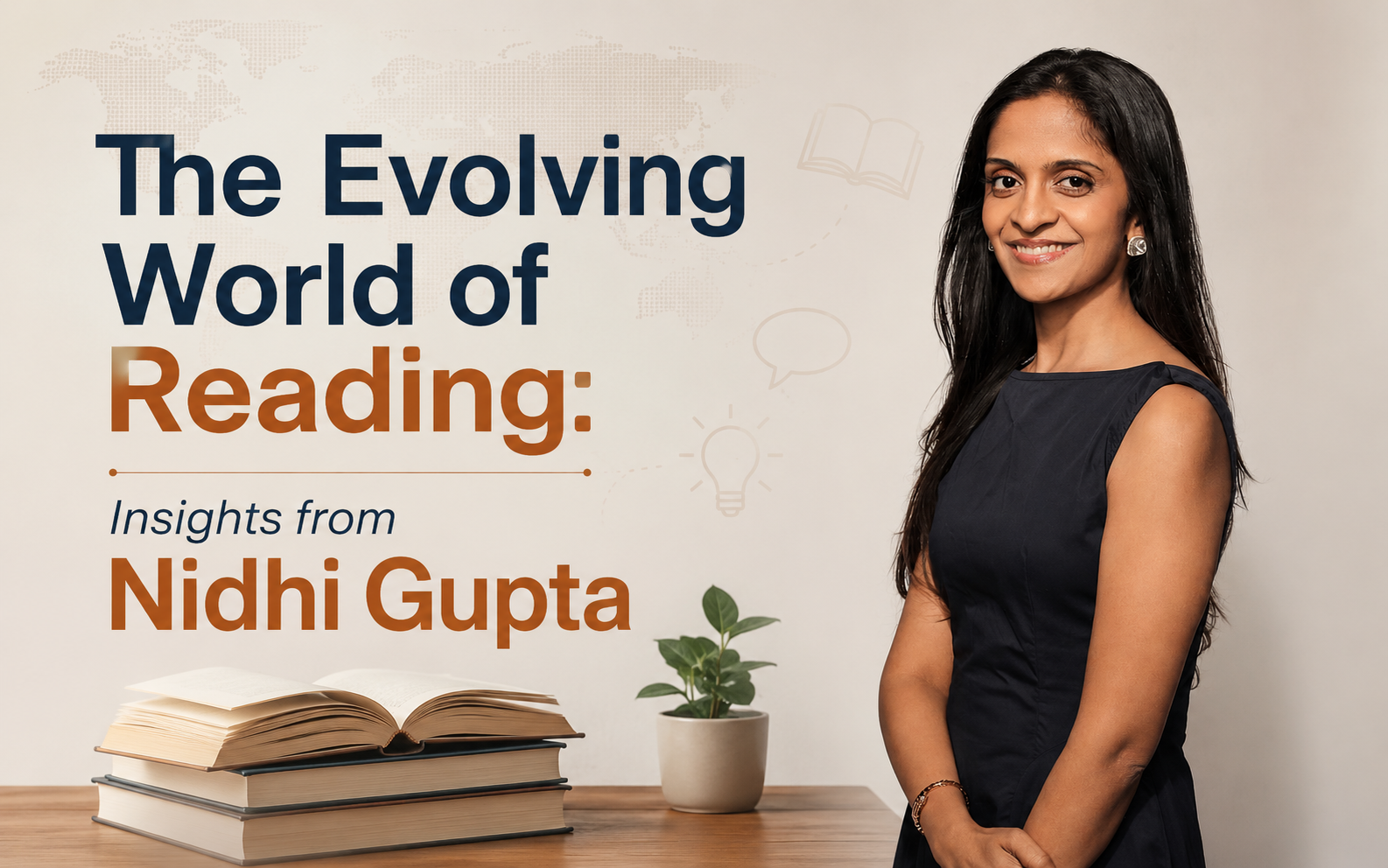
Turning Pages, Building Communities: Nidhi Gupta on the Evolving World of Reading

In a time when attention spans are shrinking and digital content dominates, the enduring power of books continues to find new ways to resonate. At the helm of Crossword Bookstores, Nidhi Gupta has spent over 15 years shaping not just a retail brand, but a thriving reading culture. In this conversation, she reflects on her personal relationship with books, the shifting habits of modern readers, and why bookstores today are as much about community as they are about commerce. You’ve spent over 15 years shaping Crossword’s journey. What role have books played in your own life, and which titles or authors have deeply influenced you personally and professionally? I’ve always shared a deep connection with books. They hold many roles in our lives, serving as companions, guiding us as teachers, and opening windows to perspectives we might never otherwise experience. Growing up, reading helped shape my curiosity and empathy, and over the years, it’s become integral to how I think and make decisions. I’ve been deeply influenced by authors who combine storytelling with insight, whether it’s literary fiction that explores human complexity or business writing that sharpens perspective. Professionally, books have taught me the importance of staying adaptable and constantly learning, which is essential in an ever-evolving industry like ours. In an age of short-form digital content and shrinking attention spans, how do you see the culture of reading evolving, especially among younger audiences in India? While it’s true that attention spans are being challenged, I don’t believe the desire to read has diminished. Younger audiences today are discovering stories in new ways, whether through curated recommendations, social media, or genre-driven communities. What’s encouraging is that when the right book reaches the right reader, the engagement is still deeply immersive. We’re also seeing a shift toward more accessible formats, relatable

Movies to Watch This Summer May 2026

From high-fashion drama to gritty psychological thrillers and action-driven regional cinema, this summer’s big-screen lineup offers something for every kind of moviegoer. Whether you’re in the mood for a nostalgic sequel, an intense character study, or a gripping continuation of a beloved franchise, these upcoming releases promise compelling stories, standout performances, and plenty of cinematic spectacle. The Devil Wears Prada 2 Language: English Drama, Comedy The Devil Wears Prada 2 is the much-anticipated sequel to the iconic 2006 fashion drama, set to release on May 1, 2026. Directed by David Frankel and written by Aline Brosh McKenna, the film revisits the high-stakes world of fashion journalism in a rapidly evolving media landscape. The original star-studded cast returns, including Meryl Streep as the formidable Miranda Priestly, Anne Hathaway as Andy Sachs, Emily Blunt as Emily Charlton, and Stanley Tucci as Nigel. New additions like Justin Theroux and Kenneth Branagh bring fresh dynamics to the story. The sequel follows Andy’s return to Runway magazine as Miranda struggles to keep the publication relevant. With Emily now leading a luxury brand holding the key to Runway’s future, the film promises drama, power shifts, and a stylish look at modern media. BandarLanguage: HindiPsychological thriller Bandar is a crime thriller directed by Anurag Kashyap, known for his raw, unfiltered storytelling. The film follows Samar, an ageing television star whose life spirals after a scandal lands him in prison, forcing him to confront both external brutality and internal demons.Premiering at the Toronto International Film Festival (TIFF) 2025, the film has already generated buzz for its dark, character-driven narrative and intense performances, particularly Bobby Deol’s transformative role. Sanya Malhotra is expected to bring emotional depth, adding another layer to the story. True to Kashyap’s style, the film explores themes of power, downfall, and survival within a harsh, claustrophobic