How AI Chatbots are transforming Healthcare

How AI Chatbots are transforming Healthcare

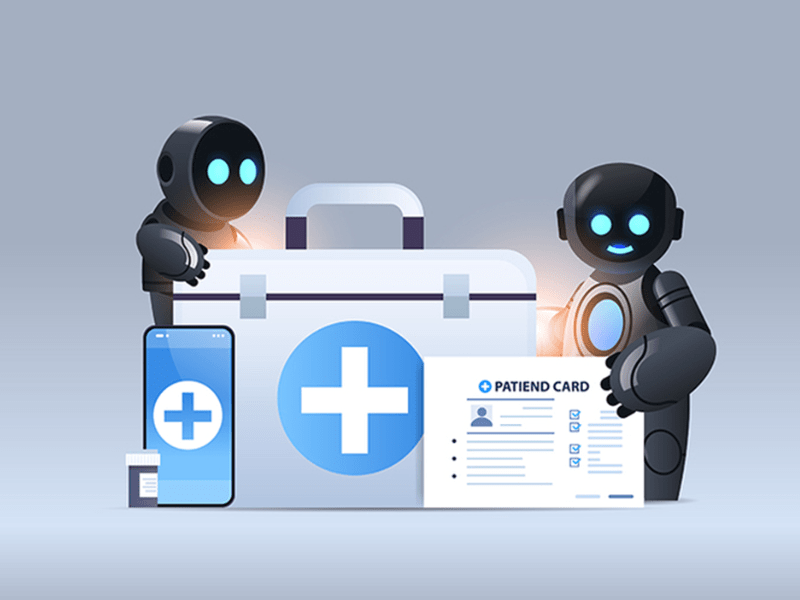
Artificial Intelligence (AI) and automation have rapidly become popular in many industries, including Healthcare. One of the most fascinating applications of AI and automation in healthcare is using chatbots. Chatbots are computer programs designed to simulate conversation with human users, providing personalized assistance and support. Dhanush Kumar will explore how chatbots are transforming Healthcare in various ways.

What are Chatbots in Healthcare?

Chatbots in Healthcare are AI-powered virtual assistants that provide personalized support to patients and healthcare providers. They are designed to simulate human-like conversation, enabling patients to interact with them as they would with a real person.

These chatbots are trained on healthcare-related data and can respond to many patient inquiries, such as appointment scheduling, prescription skills, and symptom checking. They can also streamline internal support by giving healthcare professionals quick access to information, such as patient history and treatment plans.

How are Chatbots used in Healthcare?

Chatbots are used in Healthcare to provide patients with a more personalized experience while reducing the workload of healthcare professionals.

  • Scheduling appointments: Patients can use chatbots to schedule appointments with healthcare providers, eliminating the need for phone calls or in-person visits.
  • Check symptoms: Chatbots can ask patients questions about their symptoms and provide recommendations for the next steps, such as seeking medical treatment or self-treatment.
  • Manage Medication: Chatbots can remind patients to take their medication on time and provide information on dosage and side effects.
  • Educate Patients: Chatbots can provide patients with educational resources on nutrition and exercise.
  • Monitor Health: Chatbots can track patient data, such as blood pressure and glucose levels, and provide feedback on improving health outcomes.

What are the benefits of Chatbots in Healthcare?

  • Improved Patient Engagement: Chatbots provide patients with a more personalized experience, making them feel more valued and cared for. Chatbots can also engage patients throughout their healthcare journey, from diagnosis to recovery.
  • Increased efficiency: Chatbots can handle a large volume of patient inquiries, reducing the workload of healthcare professionals and freeing up their time for more complex tasks. Chatbots can also reduce errors and delays in communication and information retrieval.
  • 24/7 availability: Chatbots can provide round-the-clock patient support, regardless of location and time zone. Chatbots can also reduce the need for emergency visits and hospitalizations by providing timely and accurate guidance.

What are the best examples of Chatbots in Healthcare?

Many chatbots in Healthcare are positively impacting patient care and experience.

  • Babylon: It is an end-to-end platform with symptom-checking and triage chatbots. Babylon allows users to check their symptoms, get a diagnosis, and book a consultation with a doctor, all through a chatbot interface. It also provides personalized health reports.
  • Sensely: It is a conversational platform that specializes in conversational search for health information. Sensely allows users to ask questions about their health and get answers from reliable sources, such as Mayo Clinic and NHS. It also provides a virtual nurse to monitor the user’s health and provide guidance and support.
  • Ada: Ada is an AI symptom checker and health assessment chatbot. Ada allows users to enter their symptoms and get a possible diagnosis and next steps. It also provides a personal health guide to help users manage their health and wellness.

Conclusion

AI chatbots are transforming Healthcare by providing patients with a more personalized and convenient experience, external support, and saving costs. Chatbots in Healthcare are not only a trend but a necessity and a future we can look forward to.

Leave a comment

Your email address will not be published. Required fields are marked *

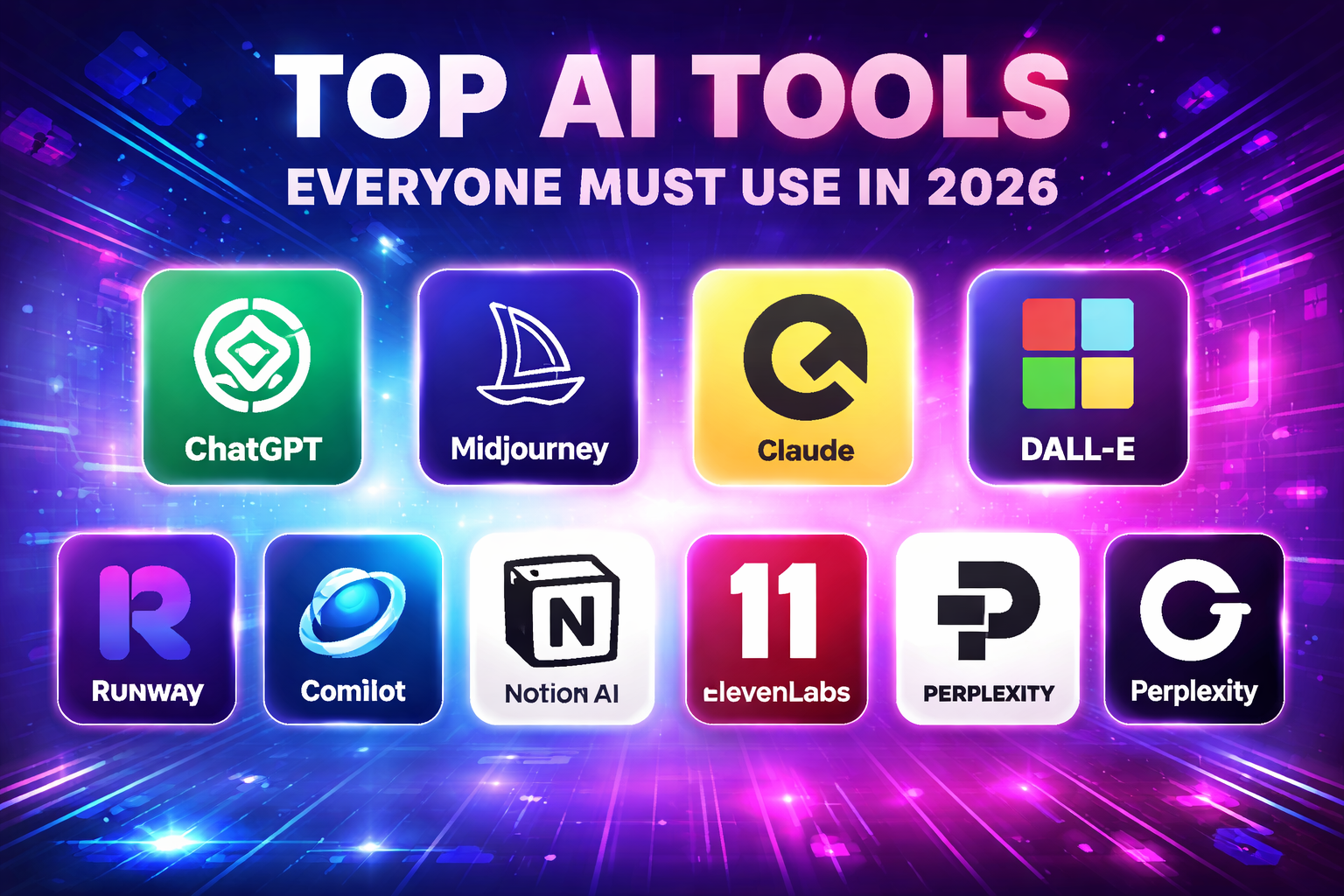
Top AI Tools Everyone Must Use in 2026

Artificial Intelligence is no longer limited to tech companies or programmers. In 2026, AI tools are becoming essential everyday companions for students, professionals, entrepreneurs, designers, and content creators. From writing emails and designing visuals to coding software and researching complex topics, AI-powered platforms are transforming how we work and create. Experts say generative AI tools now help automate repetitive tasks, speed up creativity, and improve productivity across industries. They allow users to produce content, analyze data, generate visuals, and even compose music within minutes. Here are some of the most powerful AI tools everyone should consider using in 2026. 1. ChatGPT – The All-Purpose AI Assistant ChatGPT remains one of the most widely used AI tools globally. It can help users write articles, generate ideas, summarize information, plan projects, and even assist with coding. Its conversational interface allows people to interact with AI as if they were talking to a colleague. Best for: Writing and editing content Brainstorming ideas Coding and debugging Learning new topics For many professionals, ChatGPT has become a daily productivity companion. 2. Google Gemini – AI for Research and Productivity Google Gemini is designed to integrate deeply with Google’s ecosystem, including Gmail, Docs, Sheets, and Android devices. It excels at analyzing large amounts of information, summarizing reports, and answering complex research questions. Best for: Research and information analysis Email drafting and document summaries Data insights and knowledge work Because of its integration with Google tools, Gemini is especially useful for students and professionals. 3. Microsoft Copilot – The Workplace AI Microsoft Copilot is embedded directly into Microsoft 365 apps like Word, Excel, Outlook, and Teams. It can generate reports, create presentations, summarize meetings, and analyze spreadsheets. Best for: Office productivity Data analysis in Excel Drafting professional emails and reports For businesses and corporate teams, Copilot acts

India’s New Digital Leisure Trends: From Streaming to Interactive Gaming

India is increasingly going digital in every facet imaginable. That should not be super surprising given that the country now has close to a billion Internet users and more than six hundred and fifty million active smartphone ones. According to many, the digital revolution in the world’s most populous nation began in the mid-2010s, when the Digital India platform launched, spreading fiber optic infrastructure across the nation, Reliance Jio activated 4G while lowering data transfer rates, and Chinese smartphones entered this market. These three things, along with the rise of UPI-powered payments, fueled a wave of digital adoption in The Golden Sparrow, which dramatically increased during the start of the 2020s, amidst the COVID pandemic and stay-at-home government-imposed measures. This was a time when people had to look for more modern forms of entertainment, and OTT streaming platforms posted record user numbers. People also turned to playing mobile games and enjoying sites like Casino Days in India. Hence, the 2020s marked a new era in leisure activities in this part of the world, and below, we explore the trends that have defined this new age characterized by novel ways to have fun. The JioHotstar and OTT Streaming Explosion At the start of this decade, India saw a massive expansion of OTT users, with the number of individuals subscribing to these platforms continuing to grow throughout today. As noted above, COVID-19 spurred many Indians to test streaming video entertainment. Because movie theaters were closed for months during the pandemic, some film studios decided they could not wait for them to open back up and chose to release their movies directly on streaming platforms. This further boosted the visibility of Over-the-Top services, as they are called here, which skyrocketed their subscriber counts. The fact that more people than ever had smartphones that

2026 Automotive Outlook: The Most Anticipated Cars, Bikes, & EVs

The wait-and-watch phase of the Indian automotive market is officially over. If you have been holding off on a new purchase, 2026 is the year the industry finally delivers on its biggest promises. We aren’t just looking at minor facelifts; we are looking at the return of icons, the entry of mass-market EV giants, and a shift toward experience-led cockpits. Whether you are a long-distance tourer or a city commuter looking to slash your fuel bill, the 2026 line-up is designed to solve specific pain points. Here is what you should expect to see in showrooms and on the streets. The Battle of the EV Titans: Tata Sierra Vs Maruti e-Vitara January 2026 is set to be the most consequential month for Indian EVs, as two of the most prominent players launch their flagship solutions. Tata Sierra.ev–This isn’t just a car, it’s a nostalgia trip. Look for the Lounge Seating in the rear and the panoramic sunroof. While the 500km claimed range is the headline, the real winner is the Gen 2 Acti.ev platform, which promises much better floor space and a flat rear floor for passengers. Maruti Suzuki e-Vitara–This is Maruti’s first serious move into EVs. Don’t just look at the battery, look for the AllGrip-e AWD system. It’s designed to provide the grip of a traditional SUV without the mechanical lag. Expect a real-world range of approximately 350-400 km from the larger 61kWh pack. The Tech Forward Family SUV: Mahindra XUV.e8 If you found the XUV700 impressive, the e8 is designed to turn the cabin into a command centre. The triple-screen Dashboard is the standout feature. We are talking about three 10.25-inch high-definition displays stretching across the entire width of the car. Beyond the screens, expect 175kW fast charging. This means a 20 to 80% charge in under

How Melbet Turns Digital Assets into Real-World Wins

On Melbet, crypto is treated like a working balance, not a side feature. A player can register, verify a profile, and fund the same account with Bitcoin or INR, then use it across sports, casino, and live tables. The key detail is simple: once coins land on the platform, they are converted into an internal currency, so odds, stakes, and payouts stay clear even when the original deposit was in BTC. That removes guesswork when a slip shows ₹2,000 while the user actually sent a fraction of a coin. Using the app to move crypto in and out Most Indian players now handle deposits on their phones, so the app flow matters more than the website. Installing the Android package through the melbet app gives direct access to crypto wallets, UPI deposits, and withdrawals in one place, without jumping between browsers and exchange apps. A typical pattern looks very practical: top up with BTC, bet on cricket or football, then withdraw part of the profit in INR to UPI and leave the rest in crypto for later. The same account is used, but the route in or out changes based on the user’s plan for that week. What actually happens to your coins When someone sends Bitcoin to Melbet, the system generates a unique address per account. After network confirmations, the platform credits the balance in the wallet section. For everyday play, users usually see an amount shown as rupees or dollars, not raw BTC. That helps when setting stake sizes for pre-match slips or live markets, especially on busy cards like IPL or Champions League days. For most active players, it is worth setting a personal structure for balances in the account, not just reacting to wins. A simple approach can look like this. One part for regular bets

You May Also Like

Connect with us