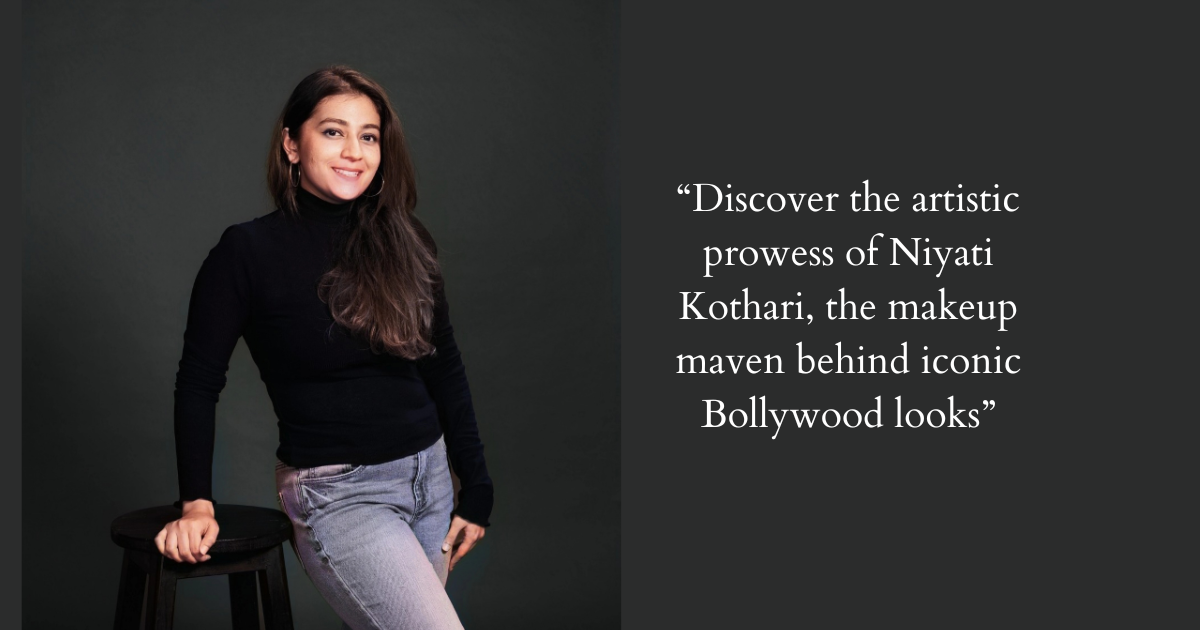
Discover the artistic prowess of Niyati Kothari

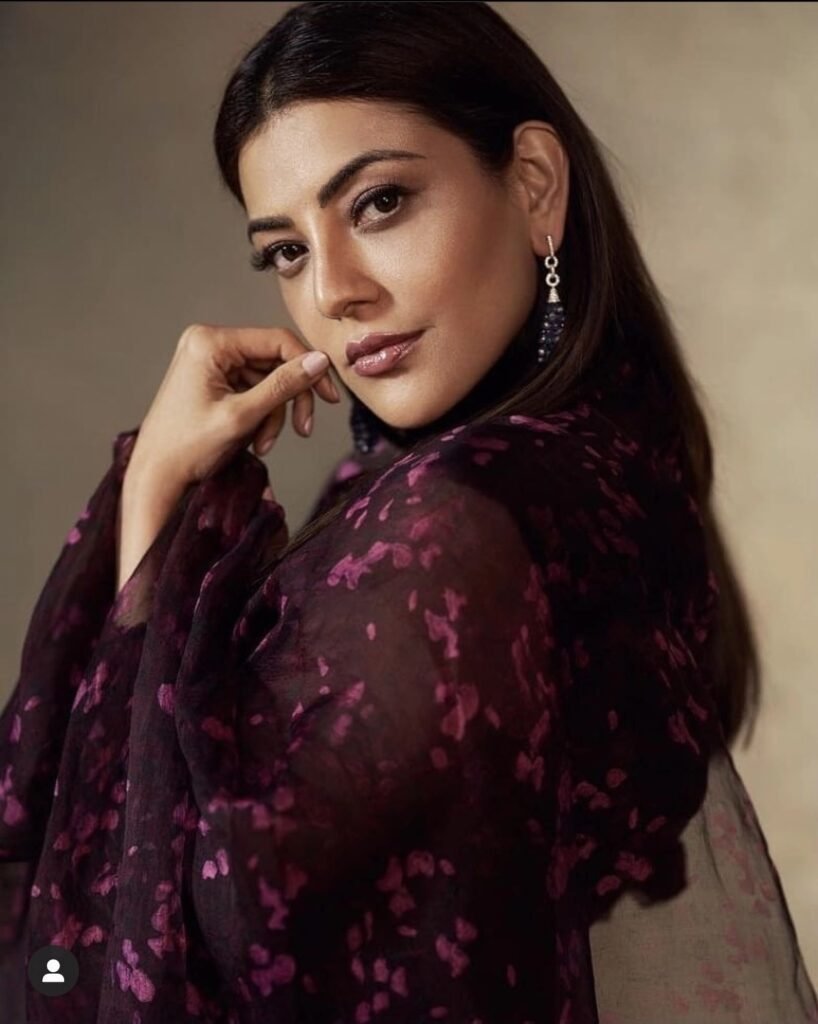
Niyati Kothari, the master of minimal glam, adds her artistic touch to Mumbai’s brightest stars. From Lakme Fashion Week to prestigious academies like Cory Walia Makeup Academy and Delamar Academy in London, Niyati’s path has been adorned with passion and dedication. Working alongside her mother, Niyati discovered her love for enhancing the allure of actors, leading her to collaborate with Bollywood icons like Taapsee Pannu, Kajal Aggarwal, and Keerthy Suresh. Get an exclusive glimpse into Niyati Kothari’s remarkable journey as a celebrity makeup artist, where she reveals her top beauty tips in a captivating interview with Surabhi Goel.

Working in the Bollywood industry presents its unique set of challenges that demand Niyati’s constant evolution and trend awareness. Adapting to change, is crucial for delivering exceptional results. To stay updated, Niyati immerses herself in various learning opportunities, connecting with fellow makeup artists, reading books, and studying renowned experts like Pat McGrath. She firmly believes in expanding her horizons and staying connected with like-minded professionals to unlock new possibilities within her field. As a movie makeup artist, Niyati navigates the dynamic landscape, tackling sudden changes in looks or briefs with adaptability and unwavering focus. The maestro quotes, “The unpredictable nature of my job keeps me on my toes, demanding heightened awareness and flexibility at every turn.”
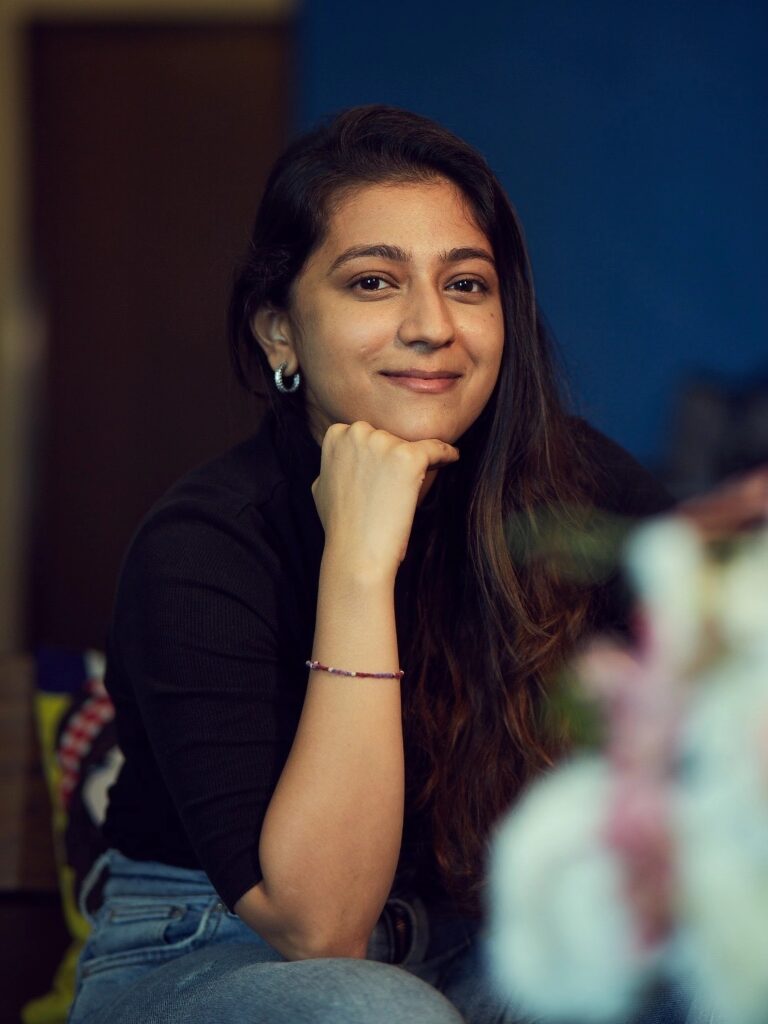
Makeup Tips by Niyati Kothari:

  • When it comes to makeup application, one common mistake to avoid is using the wrong foundation shade, as it can result in an unnatural appearance. To achieve a flawless minimalist look, follow these pointers: focus on enhancing your natural features instead of masking them, and opt for a tinted moisturizer or lightweight foundation for sheer coverage.
  • To find the perfect foundation shade for your skin tone, consider these tips: determine your undertone (cool, warm, or neutral) to guide your shade selection, test foundation shades on your jawline or wrist in natural light, choose a shade that seamlessly blends into your skin, and if needed, seek assistance from a makeup artist experienced with a diverse clientele.
  • Building a well-rounded makeup collection is essential, and here are the must-have products: foundation or tinted moisturizer, concealer, mascara, lip balm or lipstick, and blush or bronzer.
  • For a quick and radiant complexion, try this makeup hack: mix a small amount of liquid highlighter with your foundation or moisturizer before applying it. This simple trick adds a subtle luminosity, resulting in a glowing and healthy-looking complexion.
  1. What is your favourite makeup product or brand?

My favourite makeup brands are Charlotte Tilbury and Pat McGrath. I adore Charlotte Tilbury for their skin products, and Pat McGrath for their stunning eyeshadows.

  1. What are your self-care routines to unwind and recharge?

I enjoy indulging in Hydra facial treatments and following a nightly skincare routine to recharge and pamper myself.

  1. Which Bollywood celebrity is your favourite and who would you love to collaborate with?

I would choose Alia Bhatt as my preferred Bollywood celebrity to collaborate with because I admire her makeup style and it aligns with my work as a makeup artist.

  1. Share a challenging celebrity look you’ve created as a makeup artist.

Recently, I took on the challenging task of creating a character look for Keerthy Suresh in the movie Dashera.

  1. What non-professional activity brings you joy and fulfilment?

Finding purpose in service gives peace to my heart.  I have a deep passion for volunteering at Shrimad Rajchandra Mission Dharampur, where I actively participate in diverse transformative activities.

Leave a comment

Your email address will not be published. Required fields are marked *

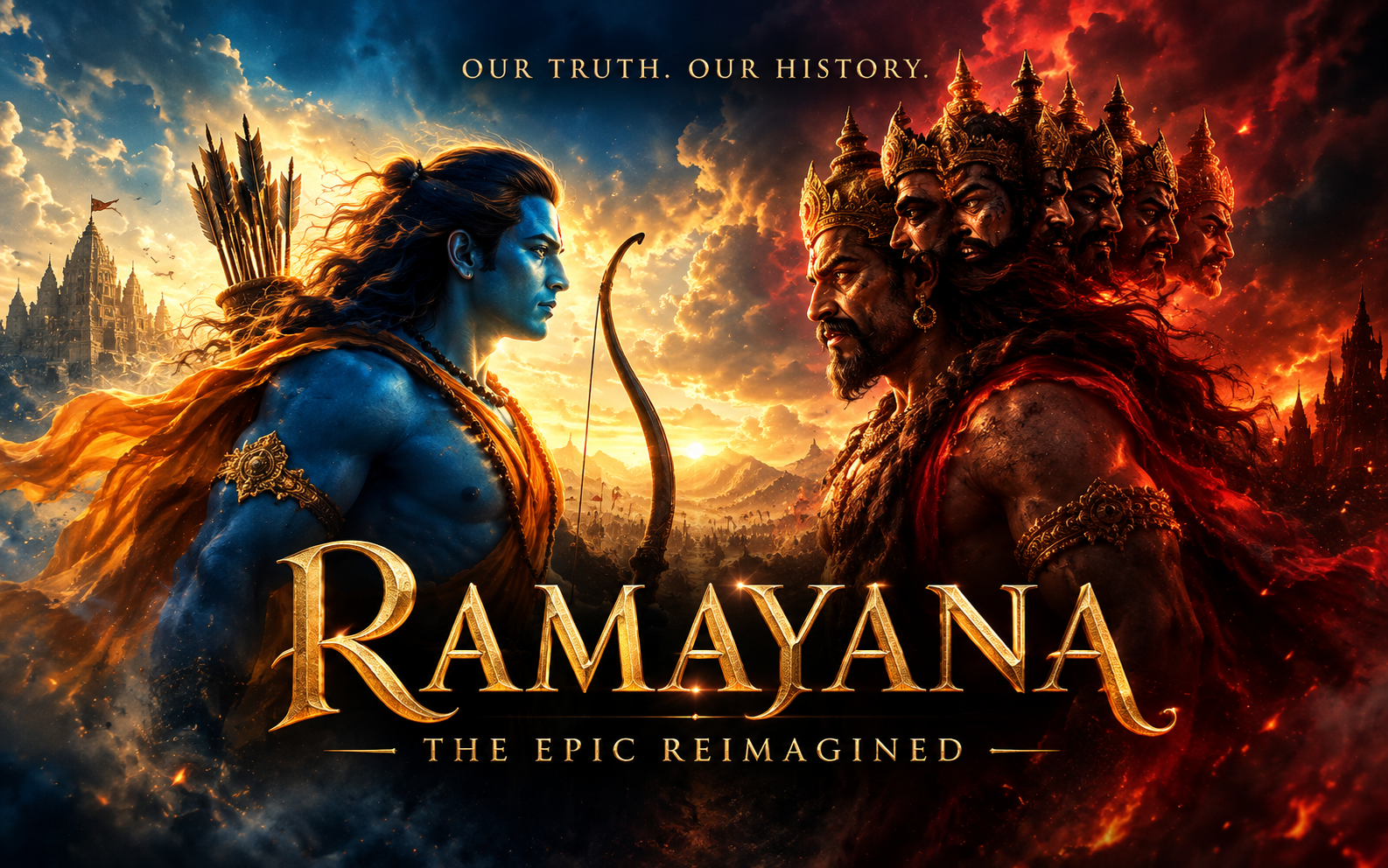
RAMAYANA: THE EPIC REIMAGINED

Ramayana: The Epic Reimagined is shaping up to be one of Indian cinema’s most ambitious productions, bringing together a star-studded cast and an international creative team. From its two-part format and reported ₹4,000-crore budget to its cutting-edge visual effects and global release plans, here are 10 things to know about the epic cinematic spectacle. 1.Two films, one epic Ramayana is planned as a two-part cinematic project. The first instalment is scheduled for release during Diwali 2026, with the second chapter planned for Diwali 2027. The films are directed by Nitesh Tiwari and produced by Namit Malhotra. Ranbir Kapoor has revealed that the team shot around six hours of footage for the first film before editing it down. A Chinese listing reportedly indicates a runtime of about 166 minutes for Part One. 2.Ranbir Kapoor as Rama: The first choice Ranbir Kapoor plays Lord Rama, amid years of speculation over other names. Mahesh Babu, Hrithik Roshan and Ram Charan were among the actors linked to various versions of the project. However, director Nitesh Tiwari and producer Namit Malhotra have clarified that Ranbir was always their first choice for their current Ramayana. Tiwari cited his physicality, screen presence and ability to convey emotion through his expressions. Interestingly, Yash, who plays Ravana, was also reportedly considered for Rama before taking on the antagonist. 3.Sai Pallavi is Sita Sai Pallavi plays Sita opposite Ranbir Kapoor’s Rama. The role marks a major Hindi-film project for the acclaimed South Indian actor and adds another prominent South Indian star to the cast alongside Yash. 4.A large ensemble cast An extensive ensemble supports the three leads. Sunny Deol plays Hanuman, Ravi Dubey plays Lakshman, Arun Govil plays Dasharath, Lara Dutta plays Kaikeyi, Indira Krishnan plays Kausalya, Kajal Aggarwal plays Mandodari, Rakul Preet Singh plays Shurpanakha, Kunal Kapoor plays Indra

Exclusive Interview: Nikhil Siddhartha on Swayambhu, Family and Politics

After the pan-India success of Karthikeya 2, Nikhil Siddhartha finds himself at a pivotal phase in his career. The actor is currently gearing up for the release of Swayambhu, one of the most ambitious projects he has undertaken to date, a historical action drama that demanded nearly two-and-a-half years of dedication, extensive physical transformation, and months of post-production work. In a candid conversation with Priyanka Goud, Nikhil opens up about the challenges of mounting a large-scale period film, why he prioritises quality over quantity, how fatherhood has changed his outlook on life, and his belief in using cinema as a tool for social awareness. A Two-and-a-Half-Year Commitment Describing Swayambhu as a project unlike any other in his career, Nikhil revealed that he dedicated nearly two and a half years exclusively to the film.“Some films are easy to make, and some are difficult. Swayambhu falls into the category of films that demand complete commitment. I underwent a significant transformation for the role, growing my hair long, maintaining a specific physique, and immersing myself in the character and story throughout the production period,” he said. A Historical Story with Universal Appeal One of the aspects that attracted Nikhil to Swayambhu was its historical backdrop. Nikhil plays Krishnan Raman, a historical figure whose name appears on ancient copper plate inscriptions that have recently gained attention. “This story is rooted in history, but its themes are universal,” he said. “It’s not confined to one region; audiences across India will be able to connect with it.” The actor also highlighted the growing importance of visual effects in modern filmmaking. Swayambhu reportedly contains nearly 2,700 VFX shots, making post-production one of the most demanding phases of the project. “We completed principal photography in December 2025, but for the last five to six months it has been

Preity Zinta on Batwara 1947, Motherhood and Finding Her Way Back to Cinema

For Preity Zinta, returning to the screen with Batwara 1947 is about more than making a comeback. The period drama allowed her to explore a chapter of India’s history, work with director Rajkumar Santoshi for the first time, and step into a world far removed from her own. But the film also made her reflect on how much life has changed since she began her career, from the freedoms available to women today to the perspective that comes with becoming a mother. For Zinta, Batwara 1947 is ultimately a story about family, resilience and hope, as she tells Lipika Varma in an exclusive conversation. Why did you say yes to doing this film? What touched you the most? There were a couple of things. First, I really wanted to work with Raj ji. I had never worked with him before, so working with him was always on my bucket list. I had also always wanted to do a period film. Beyond that, I genuinely loved the story. What touched me most was that even in the darkest of times, there is always a ray of hope. People may see this as a story about two countries, but for me, it is essentially about a family. I was also deeply affected by stories of families who believed they were leaving their homes temporarily, even burying their jewellery and valuables, thinking they would return. They never imagined they would lose everything forever. Since this is my first period film, I spent time researching and understanding that era. After such a long break from films, why did you choose this project? I was enjoying my personal life, focusing on my family and raising my children. Professionally, I had always wanted to work with Raj ji and also wanted to do a period film.

Exclusive Interview with Sunny Deol: Life Beyond Bollywood

Sunny Deol: “Every Film Leaves Some Kind of Impact” With Batwara 1947, Sunny Deol returns to a story rooted in Partition, family and the human cost of one of the most defining moments in Indian history. The actor reflects on why he sees the film as fundamentally different from Gadar, his long-standing association with director Rajkumar Santoshi, his father Dharmendra’s connection to their shared cinematic history, and the responsibility actors carry when their work leaves a lasting impact on audiences. In conversation with Lipika Varma, Sunny Deol also opens up about playing a character outside the action-driven image audiences often associate with him and working alongside his son Karan. How did you approach the character in this film? For me, it was the subject, the story and the character that I had heard about, and I approached it accordingly. I don’t know exactly what was tweaked. I didn’t read the original play or see it. Vivek Raj had read it, and we had been working on this story since 2010. Unfortunately, we couldn’t make it back then, so we had been waiting all these years. As soon as we got the opportunity, we jumped into it. Sunny, are you happy that your fans, including those in Pakistan, will get to see you in a completely different kind of role this time, without the iconic hand-pump moment or typical action scenes? Actually, I don’t think it’s about that. Fans are always there, and they love you no matter what. Sometimes journalism and politics come into the picture and change the colours of things. But the actual viewer, the person sitting in the theatre and watching the film, doesn’t necessarily look at things that way. They simply watch the film. I’ve met a lot of fans across the country and around the