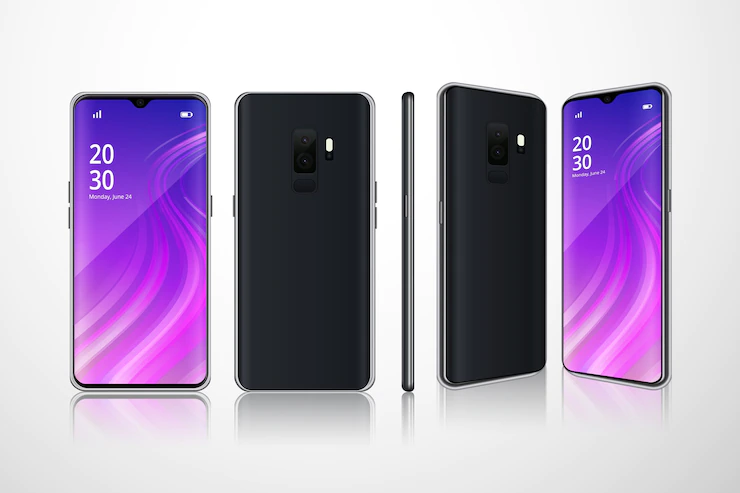
Smartphones Under Rs 20,000

Watch these smartphones under Rs 20,000 available in the market with an overall good experience and simultaneously fitting your budget.

Intro: In today’s world a smartphone is one of the most essential parts of our life. Be it browsing through social media, gaming, clicking pictures or doing some professional work, everyone wants a smartphone that fulfils all their needs, gives them a good overall experience and most importantly, also fits their budget. A wide variety of options are available in the market and it gets very confusing for a buyer to make the right choice. Aniket Pande of BlazeTechnica presents some of the best picks for smartphones under Rs 20,000 available in the market at this moment.

Realme C21Y

Source: Realme

Price: Starting at Rs 9,499

For someone having a tight budget and looking for a smartphone under Rs 10,000, the Realme C21Y is a great option. Realme C21Y was launched last year in August 2021, and for a starting price of Rs 9,499, it offers some decent specs. 

The base variant of this smartphone comes with 3 GB of RAM and 32 GB of internal storage, which is quite limiting, but the phone does come with a dedicated microSD card slot for memory expansion. Realme C21Y features a 6.5 inches 720p IPS LCD display. Powering this smartphone is the Unisoc T610 processor which is capable of handling all day to day life tasks as well as some casual gaming. 

When it comes to cameras, Realme C21Y has a triple camera setup on the back where the main camera is 12 MP, and the other two cameras are 2-2 MP sensors for Macro and Depth, with the front-facing camera being 5 MP. The overall camera performance is good enough and can click some decent looking pictures for its price and shoot videos up to 1080p at 30fps. The battery capacity is 5000 mAh and the smartphone supports only 10W Charging, so no fast charging on this.

POCO M4 Pro 5G

Source: POCO

Price: Starting at Rs 14,999

The POCO M4 Pro 5G is currently one of the best options under the Rs 15,000 price segment. The smartphone was recently launched in India in the month of February for a starting price of Rs 14,999. 

Looks-wise, the POCO M4 Pro stands out due to its unique design and flashy colour options. Along with this, it is IP53 rated which makes it splash resistant up to an extent but not completely water-resistant. The smartphone features a 6.6 inches Full HD+ IPS LCD display with a refresh rate of 90 Hz, making the scrolling experience a lot smoother. The smartphone also comes with a second speaker vent on the top along with the bottom, making it a stereo speaker setup for a great multimedia consumption experience. Powering this smartphone is the Mediatek Dimensity 810 processor which is a very good processor in this price range. It offers good overall performance even in high-end gaming as the Dimensity 810 comes with an integrated 5G MODEM. The smartphone also has 5G connectivity and supports seven 5G bands. 

POCO M4 Pro 5G comes with a dual-camera setup at the back where the main camera is 50 MP and the second camera is 8 MP Ultrawide. The cameras can shoot videos up to 1080p at 60 fps, with the front-facing camera being 16 MP. Battery capacity is 5000 mAh along with support for 33W fast charging.

Motorola G51 5G

Source: Motorola 

Price: Rs 14,999

For a similar price of Rs 14,999, we have one more option which is the Motorola G51 5G. There are a lot of buyers for whom the topmost priority is a clean and stock Android software experience and for such requirements, the Motorola G51 is an ideal pick. 

The smartphone comes with a tall 6.8 inches Full HD+ IPS LCD Display with a refresh rate of 120 Hz. Powering this smartphone is the Qualcomm Snapdragon 480+ processor which performs well in handling day to day life tasks as well as some graphic-intensive games. As the name indicates, the Moto G51 also has 5G connectivity and supports twelve 5G bands. 

The smartphone comes with a triple camera setup where the main camera is 50 MP, the second camera is 8 MP for clicking some Ultrawide shots and the third camera is a 2 MP Macro sensor. The front camera is 13 MP and the overall camera performance is good enough but surely not the best in this price segment. The battery capacity is 5000 mAh and the phone supports 20W fast charging.

Samsung Galaxy F23 5G

Source: Samsung 

Price: Starting at Rs 15,999

For someone looking for a balanced mid-range smartphone, especially from a tier 1 brand, Samsung’s newly launched Galaxy F23 5G is a good option. The price of the Galaxy F23 starts at Rs 15,999 for its 4/128 GB variant and the smartphone offers some decent specs for its price. The smartphone features a 6.6 inches Full HD+ TFT LCD Display with a fast refresh rate of 120 Hz. Not having an AMOLED display, that too in a Samsung smartphone, is a bit of a letdown but apart from that, the display seems good. 

The processor used in the Galaxy F23 is the Qualcomm Snapdragon 750G which is a very good processor, especially for the price of this smartphone. 5G connectivity is also present in the Galaxy F23 and the smartphone supports 12 5G bands. 

When it comes to cameras the Galaxy F23 has got a triple camera setup where the main camera is 50 MP, the second camera is an 8 MP Ultrawide lens and the third camera has 2 MP sensor for clicking macro photos. The front camera is 8 MP and the rear camera can shoot videos up to 1080p at 30 fps. Battery capacity is 5000 mAh and the phone supports fast-charging up to 25W. Samsung has removed the charger from the box of Galaxy F23 so buying the charger separately adds up to the cost of the smartphone.

Redmi Note 11S

Source: Xiaomi

Price: Starting at Rs 16,499

For a slightly higher price, we have another recently launched smartphone which is the Redmi Note 11S. The smartphone sells for a starting price of Rs 16,499 for its 6/64 GB variant. Xiaomi’s Redmi Note has always been a very popular series in the mid-range smartphone market and the Note 11S also offers some of the best things in this price segment. 

The smartphone features a 6.43 inches Full HD+ AMOLED Display with a refresh rate of 90 Hz which can go up to a peak brightness of 1000 nits, making it easily visible outdoors. Indeed, one of the best displays in this price segment. Along with this, the smartphone also has a stereo speaker setup for a great multimedia consumption experience. The Note 11S is also IP53 rated making it dust and splash resistant. Powering this smartphone is the Mediatek Helio G96 processor which is almost comparable to the Dimensity 810 processor found on the POCO M4 Pro 5G. Redmi Note 11S doesn’t support 5G, so it is a 4G smartphone. 

When it comes to cameras the Note 11S has got a Quad camera setup where the main camera is 108 MP, the second camera is 8 MP Ultrawide and the other two cameras are 2-2 MP sensors for Macro and depth detection. The front camera is 16 MP and the maximum resolution in which the rear camera can shoot videos is only up to 1080p at 30 fps. Battery capacity is 5000 mAh, along with support for 33W fast charging.


Leave a comment

Your email address will not be published. Required fields are marked *

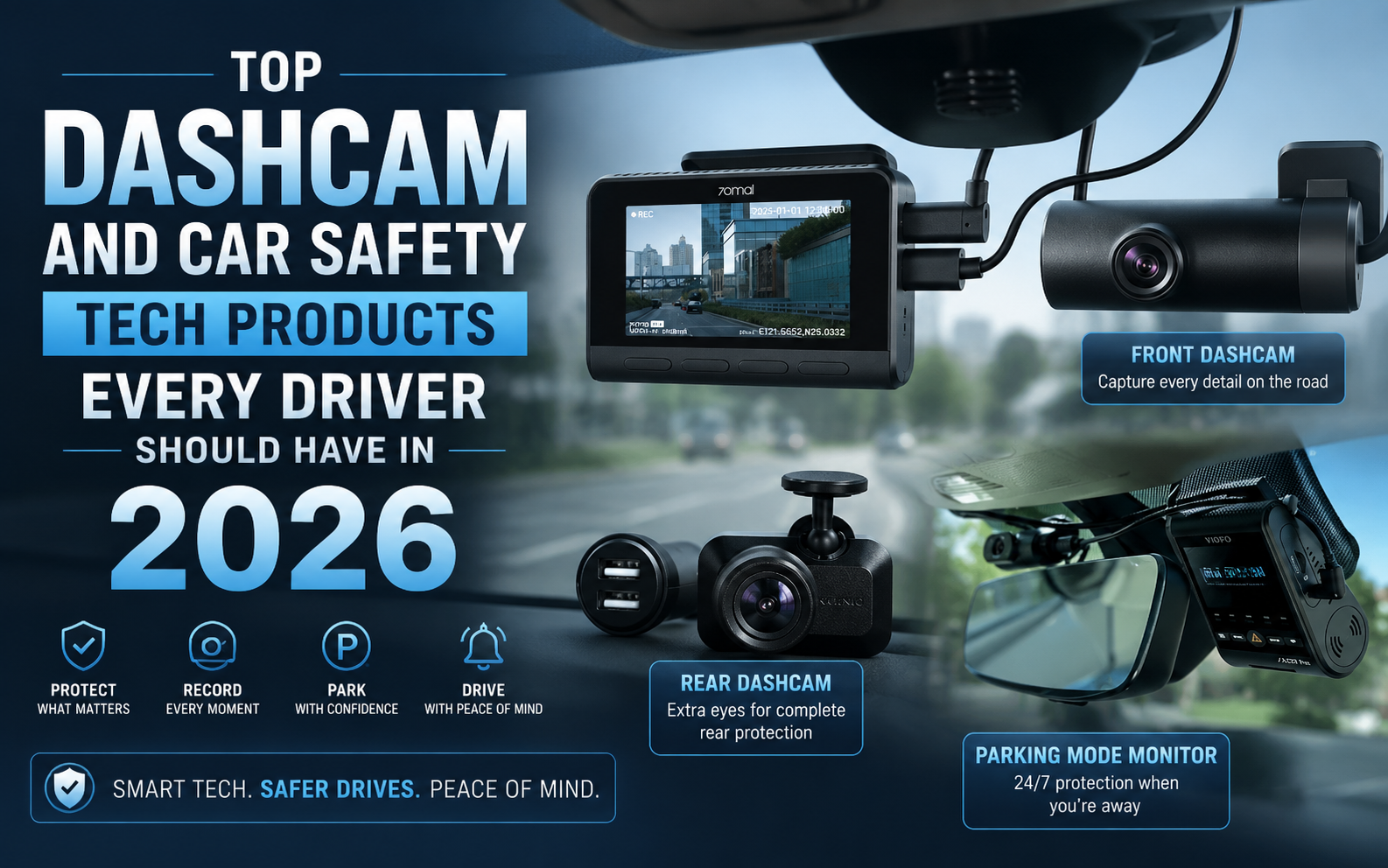
Top Dashcam and Car Safety Tech Products Every Driver Should Have in 2026

Best dashcams and car safety tech every driver needs in 2026, from AI collision alerts to tyre monitors. Drive smarter, drive safer. Think about the last time you were on a highway at night. Trucks overtaking from the left. Potholes with no warning signs. Someone running a red light at a junction you thought was clear. Indian roads are not forgiving. They are among the most unpredictable in the world, and that is not an exaggeration. In 2024, India recorded over 1.7 lakh road accident deaths, which is roughly one every three minutes. But here is what is changing. In 2026, the technology available to ordinary drivers, not just luxury car owners, is genuinely remarkable. Dashcams that record everything and call for help automatically. Tyre sensors that warn you before a blowout happens. Blind spot monitors: systems that keep you awake on long drives. Viofo A229 Pro 3-Channel If there is one dashcam built for Indian road reality, this is it. The Viofo A229 Pro covers three angles simultaneously: front, rear, and the cabin interior. So whether someone rear-ends you, you have a dispute at a toll booth, or a passenger causes trouble, it is all on record. The 4K front camera footage is clear enough to read number plates even at night. And night is when most serious accidents happen on Indian highways. The Sony STARVIS 2 sensor inside handles low light better than most cameras twice the price. It also has built-in GPS, which stamps your exact location and speed onto every clip, making it incredibly valuable as evidence in insurance claims or legal disputes.The parking mode is genuinely useful too. Park on a busy street, and if anyone bumps your car or breaks in, the camera wakes up and records it. In cities like Bengaluru and Mumbai,

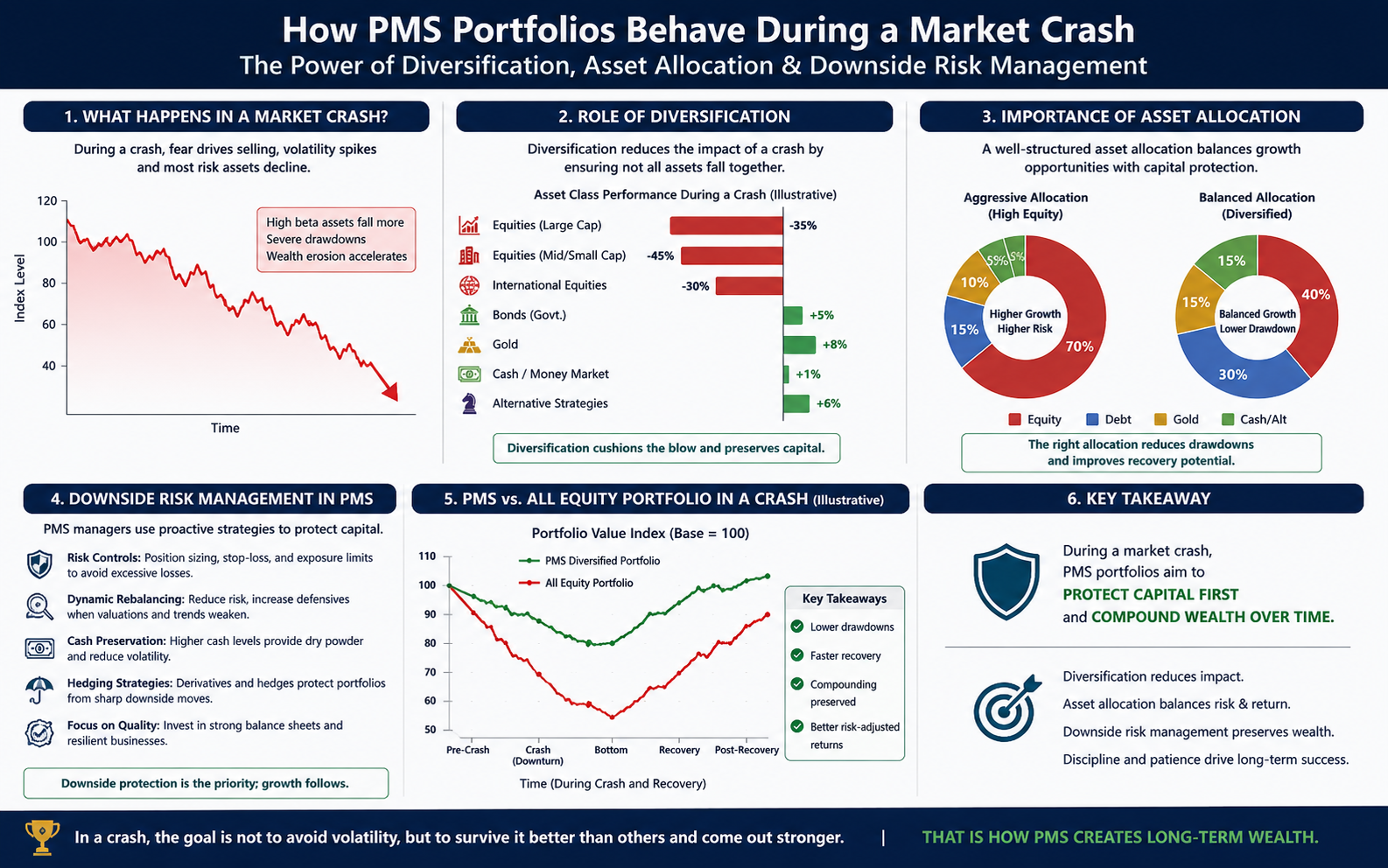
How PMS Portfolios Perform During a Market Crash | Risk Management Guide

Market crashes are the ultimate stress test for any investment strategy. While returns dominate conversations during bull markets, it is during downturns that the true structure and resilience of a PMS portfolio become visible. Many investors assume that all portfolio management services portfolios behave similarly in a crash. In reality, outcomes can vary significantly depending on how the portfolio is constructed. 1. What a Traditional PMS Looks Like A traditional equity PMS is typically built as a concentrated portfolio of 15–30 individual stocks. This structure is intentional: Managers aim to generate alpha through high-conviction bets Capital is allocated meaningfully to each idea Diversification is limited compared to mutual funds However, during a market crash, this concentration becomes a double-edged sword. What happens in a crash? If a few key holdings fall sharply, the overall portfolio can decline disproportionately Single-stock risk gets amplified Liquidity issues in mid and small caps can worsen drawdowns For example, if a PMS holds 20 stocks and 3–4 of them fall 40–50%, the portfolio impact can be severe. This is the structure most investors picture when they think “PMS in a crash” — and it is also what has given PMS an unfair reputation for being high-risk by default. But concentration in direct stocks is a choice, not a requirement of the PMS structure. What sits inside the portfolio is what determines crash behaviour. 2. Not All PMS Portfolios Are Built the Same It is a common misconception that all PMS providers only buy direct stocks. In reality, a PMS is simply a personalized account managed by a professional. The strategy inside can vary wildly. While many providers stick to equities, others take a multi-asset approach. These providers build portfolios using a mix of mutual funds, direct bonds, gold, REITs (Real Estate Investment Trusts), and InvITs

Top Gaming Laptops That Can Handle Indian Summer Heat

April in Hyderabad, May in Delhi, and June in Chennai, you know what that feels like! The kind of heat that makes your phone hot just sitting on a table. The kind that turns a power cut into a genuine crisis. Now imagine gaming in that.Most laptops panic. The fans scream. The frame rates drop. The machine thermal throttles, which is a technical way of saying it gives up and slows down to stop itself from burning alive. But some laptops were built differently. Dhanush Kumar writes about the laptops that handle the heat, keep their cool, and let you game through an Indian summer without melting down. ASUS ROG Strix G16 If there is one laptop that truly understands Indian summer, it is this one. Asus put a Tri-fan technology system inside the ROG Strix G16, three fans working together, so no single part of the machine overheats. There are also liquid metal thermal compound pads on the CPU, which is a premium touch you usually only find on much more expensive machines. Even during long gaming sessions at room temperatures of 35 to 38 degrees, this laptop holds steady. Frame rates stay consistent. The keyboard doesn’t become a frying pan. The RTX 4070 inside pushes beautiful visuals in everything from BGMI to Cyberpunk. This is the one we would put our money on for an Indian summer. Lenovo Legion Pro 5i Gen 9 Lenovo’s Legion line has always been serious about thermal management, and the Pro 5i Gen 9 is their best effort yet. The Cold Front 5.0 cooling system uses a hybrid fan design with a bigger air intake. Translation: more cool air comes in, more hot air goes out, faster. What makes this special for India is how it handles dust. Indian summers come with dust.

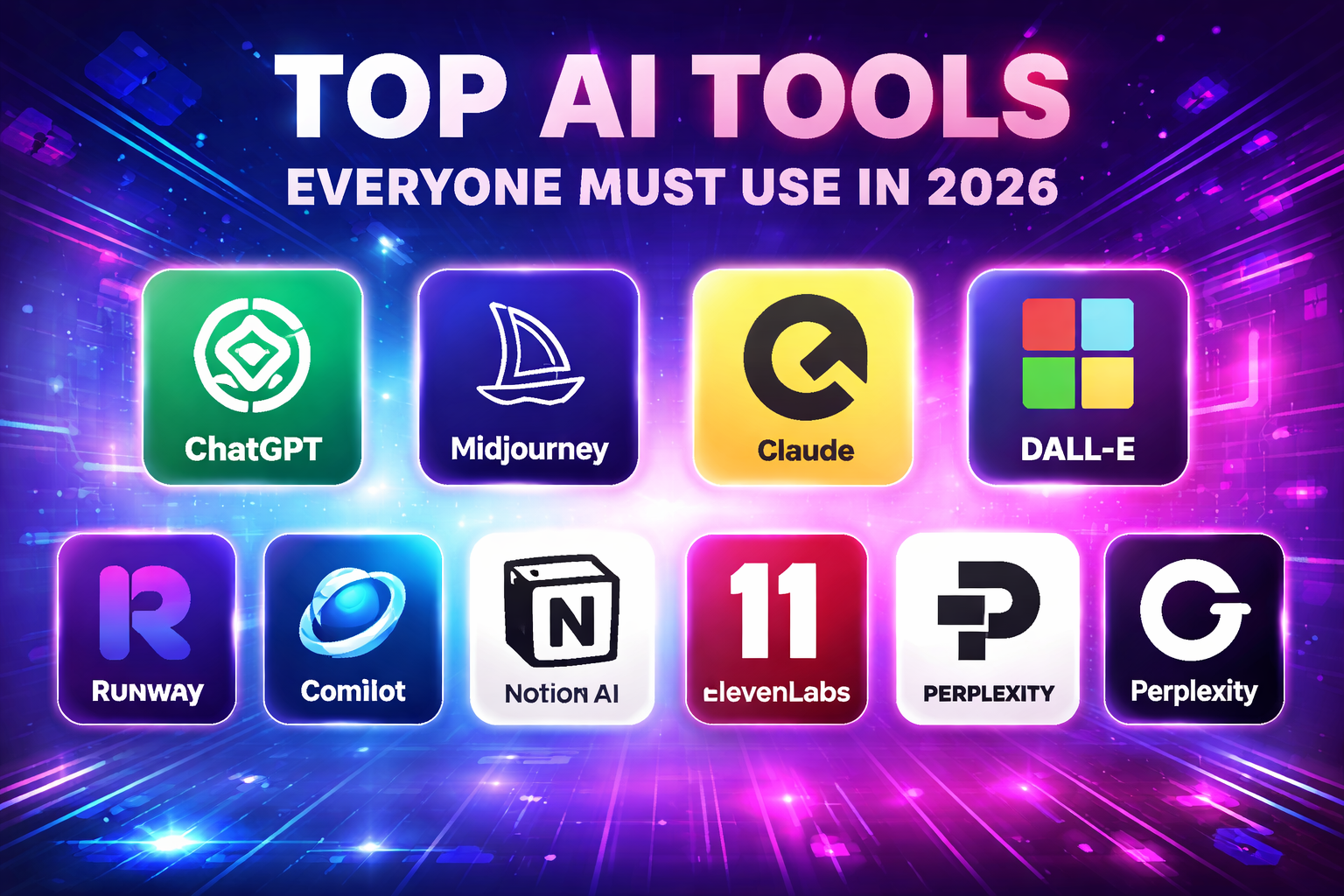
Top AI Tools Everyone Must Use in 2026

Artificial Intelligence is no longer limited to tech companies or programmers. In 2026, AI tools are becoming essential everyday companions for students, professionals, entrepreneurs, designers, and content creators. From writing emails and designing visuals to coding software and researching complex topics, AI-powered platforms are transforming how we work and create. Experts say generative AI tools now help automate repetitive tasks, speed up creativity, and improve productivity across industries. They allow users to produce content, analyze data, generate visuals, and even compose music within minutes. Here are some of the most powerful AI tools everyone should consider using in 2026. 1. ChatGPT – The All-Purpose AI Assistant ChatGPT remains one of the most widely used AI tools globally. It can help users write articles, generate ideas, summarize information, plan projects, and even assist with coding. Its conversational interface allows people to interact with AI as if they were talking to a colleague. Best for: Writing and editing content Brainstorming ideas Coding and debugging Learning new topics For many professionals, ChatGPT has become a daily productivity companion. 2. Google Gemini – AI for Research and Productivity Google Gemini is designed to integrate deeply with Google’s ecosystem, including Gmail, Docs, Sheets, and Android devices. It excels at analyzing large amounts of information, summarizing reports, and answering complex research questions. Best for: Research and information analysis Email drafting and document summaries Data insights and knowledge work Because of its integration with Google tools, Gemini is especially useful for students and professionals. 3. Microsoft Copilot – The Workplace AI Microsoft Copilot is embedded directly into Microsoft 365 apps like Word, Excel, Outlook, and Teams. It can generate reports, create presentations, summarize meetings, and analyze spreadsheets. Best for: Office productivity Data analysis in Excel Drafting professional emails and reports For businesses and corporate teams, Copilot acts

You May Also Like

Connect with us