The 2021 Padma Shri Awards

Padma Shri Awards 2021

The nation’s fourth highest civilian award was recently conferred in a much-awaited ceremony. Aditi Paul presents a brief review.

The Padma Awards were conferred by President Ram Nath Kovind in a two-day ceremony at the Rashtrapati Bhavan this week. The Padma Awards are three of the highest civilian awards the Government of India elects to bestow. The ceremony is traditionally held on Republic Day, with the list of awardees released earlier in the year. The rampant and violent COVID-19 pandemic, however, led to the 2020 and 2021 ceremonies being deferred until a suitable time. In a two-day ceremony, awardees for both years were honoured, in the presence of Prime Minister Narendra Modi and other dignitaries. 

The 2021 List of Awardees

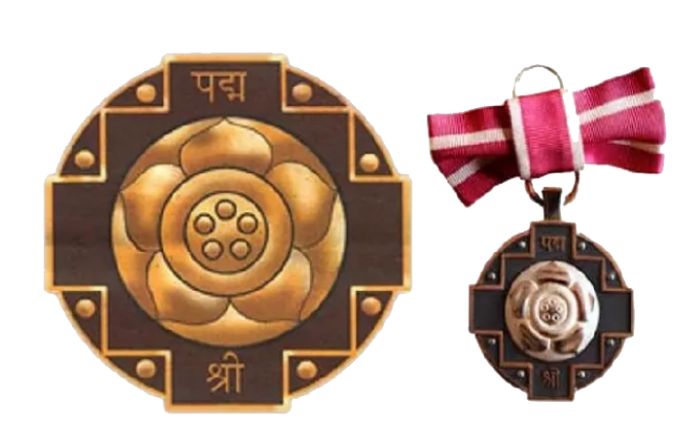
The 2021 list includes seven Padma Vibhushan, 10 Padma Bhushan, and 102 Padma Shri awardees. Of these, 29 are women, 16 are posthumous awardees, and there is 1 transgender awardee. The Padma Shri, the fourth highest civilian award in the country, is awarded for distinguished service. Although the awards are not usually conferred posthumously, some cases are considered exceptions. 

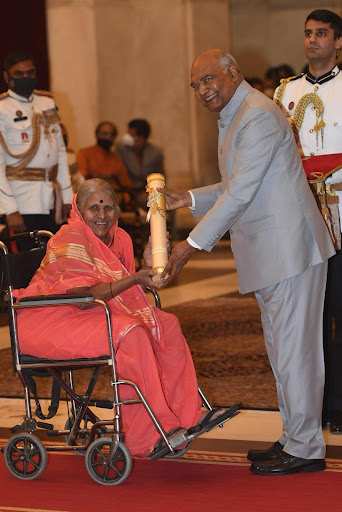
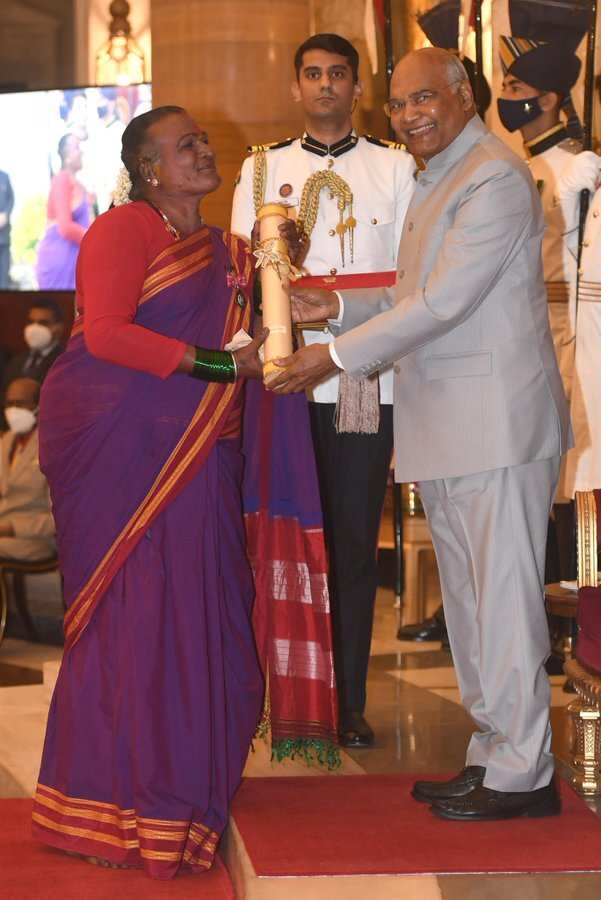
President Kovind presents Padma Shri to Matha B. Manjamma Jogati for Art :
Previously, the awards have faced criticism for being granted in a partial manner. 2018 saw the creation of an online platform where people can now vote to elect those individuals they feel are deserving of the nomination. Over the two-day ceremony, netizens trended the tag #PeoplesPadma while commenting on the coverage of the event. 

The Padma Shri

This year’s Padma Shri was awarded across a diverse range of categories such as art, literature and education, medicine, agriculture, public affairs, social work, sports, trade and industry etc. 

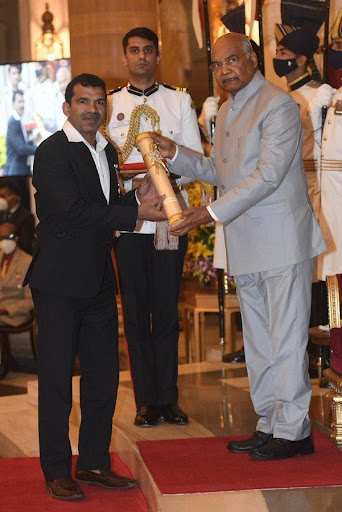
President Kovind presents Padma Shri to Smt Usha Yadav for Literature and Education :
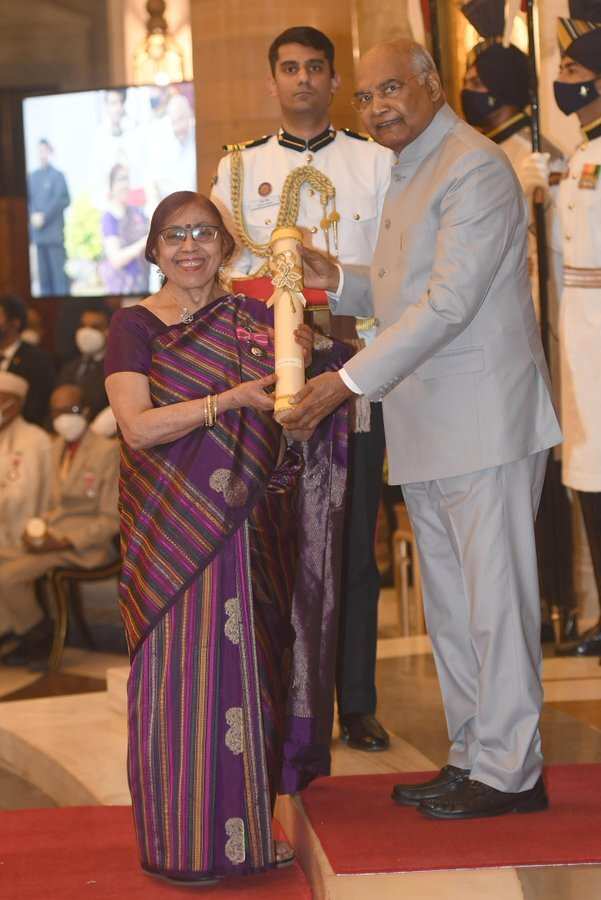
Following is the list of Padma Shri awardees for 2021, across all categories. 

ART

1.Matha B. Manjamma JogatiKarnataka
2.Ms Bhuri BaiMadhya Pradesh
3.Ms Bombay Jayashri RamnathTamil Nadu
4.Ms Dulari DeviBihar
5.Ms LajwantiPunjab
6.Ms Nidumolu SumathiAndhra Pradesh
7.Ms. Purnamasi JaniOdisha
8.Ms Radhe DeviManipur
9.Ms Sanjida KhatunBangladesh
10.Shri Biren Kumar BasakWest Bengal
11.Shri Damodaran KaithapramKerala
12.Shri Dulal MankiAssam
13.Shri Ghulam Rasool KhanJammu and Kashmir
14.Shri Gopiram Bargayn BurabhakatAssam
15.Shri Gulfam AhmedUttar Pradesh
16.Shri K C Sivasankar (Posthumous)Tamil Nadu
17.Shri K K Ramachandra PulavarKerala
18.Shri K KesavasamyPuducherry
19.Shri Kanaka RajuTelangana
20.Shri Kartar Paras Ram SinghHimachal Pradesh
21.Shri Kartar SinghPunjab
22.Shri Lakha KhanRajasthan
23.Shri Maheshbhai & Shri Nareshbhai Kanodia (Duo)
(Posthumous)
Gujarat
24.Shri Narayan DebnathWest Bengal
25.Shri Parshuram Atmaram GangavaneMaharashtra
26.Shri Peter BrookUnited Kingdom
27.Shri Radhe Shyam BarleChhattisgarh
28.Shri Rama Swamy AnnavarapuAndhra Pradesh
29.Shri Ramachandra ManjhiBihar
30.Shri Rewben MashangvaManipur
31.Shri Satyaram ReangTripura
32.Shri Subbu ArumugamTamil Nadu
33.Shri Vinayak Vishnu KhedekarGoa
34.Shri Wayan DibiaIndonesia

LITERATURE AND EDUCATION

35.Father Vallés (Posthumous)Spain
36.Ms Mridula Sinha (Posthumous)Bihar
37.Ms Usha YadavUttar Pradesh
38.Shri Arjun Singh ShekhawatRajasthan
39.Shri Balan PutheriKerala
40.Shri Chaman Lal Sapru (Posthumous)Jammu and Kashmir
41.Shri Chandrakant MehtaGujarat
42.Shri Dadudan GadhaviGujarat
43.Shri Dharma Narayan BarmaWest Bengal
44.Shri Imran ShahAssam
45.Shri Jagadish Chandra HalderWest Bengal
46.Shri Jai Bhagwan GoyalHaryana
47.Shri Kapil TiwariMadhya Pradesh
48.Shri Mangal Singh HazowaryAssam
49.Shri Namdeo C KambleMaharashtra
50.Shri Nanda PrustyOdisha
51.Shri Nicholas KazanasGreece
52.Shri Prakasarao AsavadiAndhra Pradesh
53.Shri Rajat Kumar KarOdisha
54.Shri Ram Yatna ShuklaUttar Pradesh
55.Shri Rangasami Lakshminarayana KashyapKarnataka
56.Shri Srikant DatarUnited States of America
57.Shri Sujit ChattopadhyayWest Bengal

LITERATURE AND EDUCATION-JOURNALISM

58.Shri Roman SarmahAssam
59.Shri Solomon PappaiahTamil Nadu

MEDICINE

60.Dr Bhupendra Kumar Singh SanjayUttarakhand
61.Dr. Chandrakant Sambhaji PandavDelhi
62.Dr. Dhananjay Diwakar SagdeoKerala
63.Dr Dilip Kumar SinghBihar
64.Dr. J N Pande (Posthumous)Delhi
65.Dr Krishna Mohan PathiOdisha
66.Dr Rattan Lal MittalPunjab
67.Dr Thiruvengadam Veeraraghavan (Posthumous)Tamil Nadu
68.Shri Ashok Kumar SahuUttar Pradesh

AGRICULTURE

69.Ms PappammalTamil Nadu
70.Shri Chandra Shekhar SinghUttar Pradesh
71.Shri Nanadro B MarakMeghalaya
72.Shri Prem Chand SharmaUttarakhand

GRASSROOTS INNOVATION

73.Shri Ali ManikfanLakshadweep

PUBLIC AFFAIRS 

74.Ms Bijoya ChakravartyAssam
75.Col Quazi Sajjad Ali ZahirBangladesh

SCIENCE AND ENGINEERING 

76.Shri Rattan LalUnited States of America

SOCIAL WORK

77.Guru Maa Kamali SorenWest Bengal
78.Ms Birubala RabhaAssam
79.Ms Chutni DeviJharkhand
80.Ms Lakhimi BaruahAssam
81.Ms Niru KumarDelhi
82.Ms Prakash KaurPunjab
83.Ms Sangkhumi BualchhuakMizoram
84.Ms Shanti DeviOdisha
85.Ms Sindhutai SapkalMaharashtra
86.Shri Girish PrabhuneMaharashtra
87.Shri Jagdish Chaudhary (Posthumous)Uttar Pradesh
88.Shri Jitender Singh ShuntyDelhi
89.Shri Marachi SubburamanTamil Nadu
90.Shri Shyam Sundar PaliwalRajasthan
91.Shri Tsultrim ChonjorLadakh

SPORTS

92.Ms Anshu JamsenpaArunachal Pradesh
93.Ms Mouma DasWest Bengal
94.Ms P. AnithaTamil Nadu
95.Ms Sudha Hari Narayan SinghUttar Pradesh
96.Shri K Y VenkateshKarnataka
97.Shri Madhavan NambiarKerala
98.Shri Virender SinghHaryana

TRADE AND INDUSTRY

99.Ms Jaswantiben Jamnadas PopatMaharashtra
100.Ms Rajni BectorPunjab
101.Shri P Subramanian (Posthumous)Tamil Nadu
102.Shri Sridhar VembuTamil Nadu

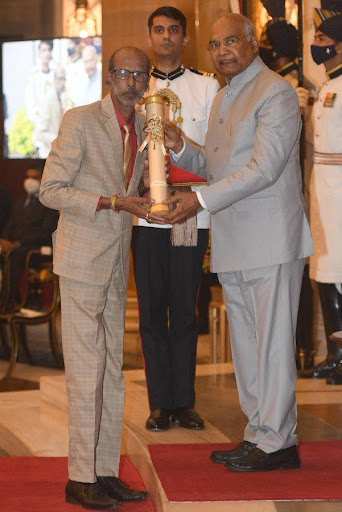
President Kovind presents Padma Shri to Dr. Roman Sarmah for Literature and Education (Journalism)

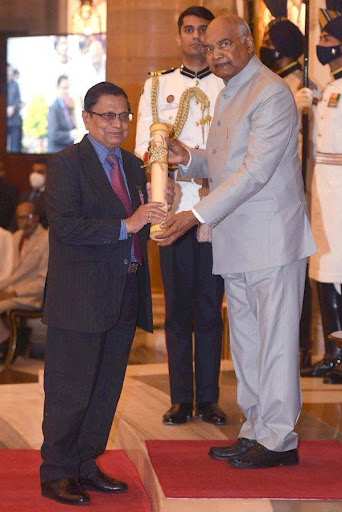
President Kovind presents Padma Shri to Prof. Krishna Mohan Pathi for Medicine.

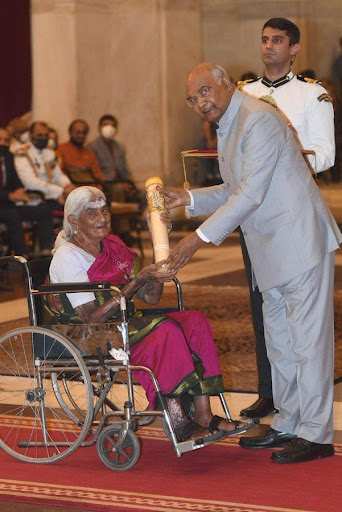
President Kovindpresents Padma Shri to Smt. Rangammal Alias Pappmmal for Agriculture.

President Kovind presents Padma Shri to Lt Col Quazi Sajjad Ali Zahir (Retd.) for Public Affairs. 

President Kovind presents Padma Shri to Dr Sindhutai Sapkal (Maai) for Social Work.
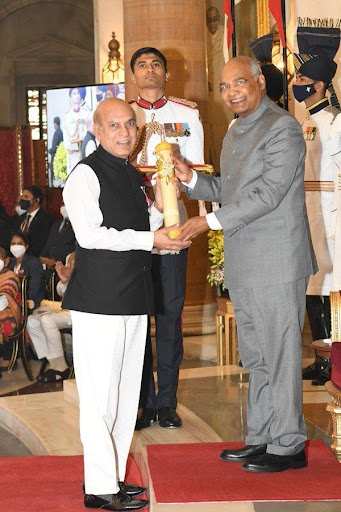
President Kovind presents Padma Shri to Shri Virender Singh for Sports.

President Kovindpresents Padma Shri to Smt. Rajni Bector for Trade and Industry.

Leave a comment

Your email address will not be published. Required fields are marked *

Prince Cecil Decodes the Perks & Challenges of a Destination Wedding

Actor Prince Cecil married Sai Machiraju in an intimate, 80–100 guest wedding in New Zealand, her home country, on August 24. In an exclusive with Hashtag Magazine, he breaks down what nobody tells you about planning a wedding away from home. The Perks An intimate celebration: New Zealand as our destination wedding was special because my wife, Sai Machiraju, is from there. But the thing about destination weddings is you have to keep it very private, like close-knit. I think just 80-100 people attended our wedding. Core memories that last: Destination weddings create core memories that stay lifelong. Our post-wedding pics in the snow, flying down from a helicopter, were just two happy people who wanted to capture our love. The couple even shot part of their album at Cecil Peak, a nod to his name. It was pretty cold, but it felt like a Classic Bollywood moment; at least I was covered in a sherwani, and my wife was in a saree. The right team makes the difference: There are a lot of challenges in planning a destination wedding: admin for travel, tickets, food, stage, clothes, logistics. They were quite major, but having a great team, management and a limited crowd was a huge plus. The Challenges Not everyone can make it: Someone close wants to attend it badly, but life, work commitments and the distance meant they had to skip it. That’s one of the hardest parts, missing someone you desperately want there on your special day. You can’t control the weather: The night before their outdoor ceremony, it rained heavily. We were so tensed and worried about how we’d manage, and checking for last-minute backup options. Planning can get chaotic: Coordination outside your space, managing things as per our customs and rituals, is so hard. Everything was

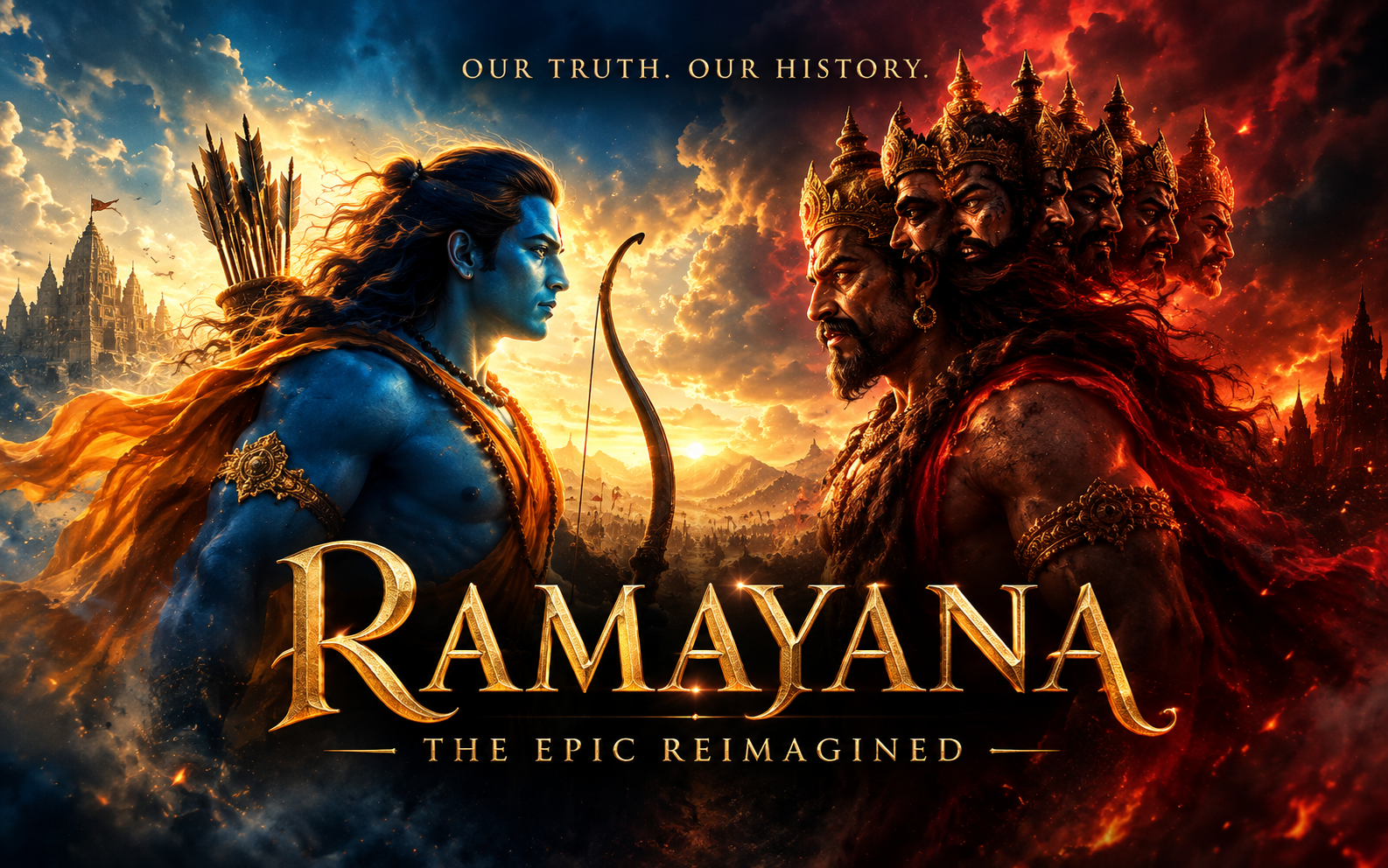
RAMAYANA: THE EPIC REIMAGINED

Ramayana: The Epic Reimagined is shaping up to be one of Indian cinema’s most ambitious productions, bringing together a star-studded cast and an international creative team. From its two-part format and reported ₹4,000-crore budget to its cutting-edge visual effects and global release plans, here are 10 things to know about the epic cinematic spectacle. 1.Two films, one epic Ramayana is planned as a two-part cinematic project. The first instalment is scheduled for release during Diwali 2026, with the second chapter planned for Diwali 2027. The films are directed by Nitesh Tiwari and produced by Namit Malhotra. Ranbir Kapoor has revealed that the team shot around six hours of footage for the first film before editing it down. A Chinese listing reportedly indicates a runtime of about 166 minutes for Part One. 2.Ranbir Kapoor as Rama: The first choice Ranbir Kapoor plays Lord Rama, amid years of speculation over other names. Mahesh Babu, Hrithik Roshan and Ram Charan were among the actors linked to various versions of the project. However, director Nitesh Tiwari and producer Namit Malhotra have clarified that Ranbir was always their first choice for their current Ramayana. Tiwari cited his physicality, screen presence and ability to convey emotion through his expressions. Interestingly, Yash, who plays Ravana, was also reportedly considered for Rama before taking on the antagonist. 3.Sai Pallavi is Sita Sai Pallavi plays Sita opposite Ranbir Kapoor’s Rama. The role marks a major Hindi-film project for the acclaimed South Indian actor and adds another prominent South Indian star to the cast alongside Yash. 4.A large ensemble cast An extensive ensemble supports the three leads. Sunny Deol plays Hanuman, Ravi Dubey plays Lakshman, Arun Govil plays Dasharath, Lara Dutta plays Kaikeyi, Indira Krishnan plays Kausalya, Kajal Aggarwal plays Mandodari, Rakul Preet Singh plays Shurpanakha, Kunal Kapoor plays Indra

Exclusive Interview: Nikhil Siddhartha on Swayambhu, Family and Politics

After the pan-India success of Karthikeya 2, Nikhil Siddhartha finds himself at a pivotal phase in his career. The actor is currently gearing up for the release of Swayambhu, one of the most ambitious projects he has undertaken to date, a historical action drama that demanded nearly two-and-a-half years of dedication, extensive physical transformation, and months of post-production work. In a candid conversation with Priyanka Goud, Nikhil opens up about the challenges of mounting a large-scale period film, why he prioritises quality over quantity, how fatherhood has changed his outlook on life, and his belief in using cinema as a tool for social awareness. A Two-and-a-Half-Year Commitment Describing Swayambhu as a project unlike any other in his career, Nikhil revealed that he dedicated nearly two and a half years exclusively to the film.“Some films are easy to make, and some are difficult. Swayambhu falls into the category of films that demand complete commitment. I underwent a significant transformation for the role, growing my hair long, maintaining a specific physique, and immersing myself in the character and story throughout the production period,” he said. A Historical Story with Universal Appeal One of the aspects that attracted Nikhil to Swayambhu was its historical backdrop. Nikhil plays Krishnan Raman, a historical figure whose name appears on ancient copper plate inscriptions that have recently gained attention. “This story is rooted in history, but its themes are universal,” he said. “It’s not confined to one region; audiences across India will be able to connect with it.” The actor also highlighted the growing importance of visual effects in modern filmmaking. Swayambhu reportedly contains nearly 2,700 VFX shots, making post-production one of the most demanding phases of the project. “We completed principal photography in December 2025, but for the last five to six months it has been

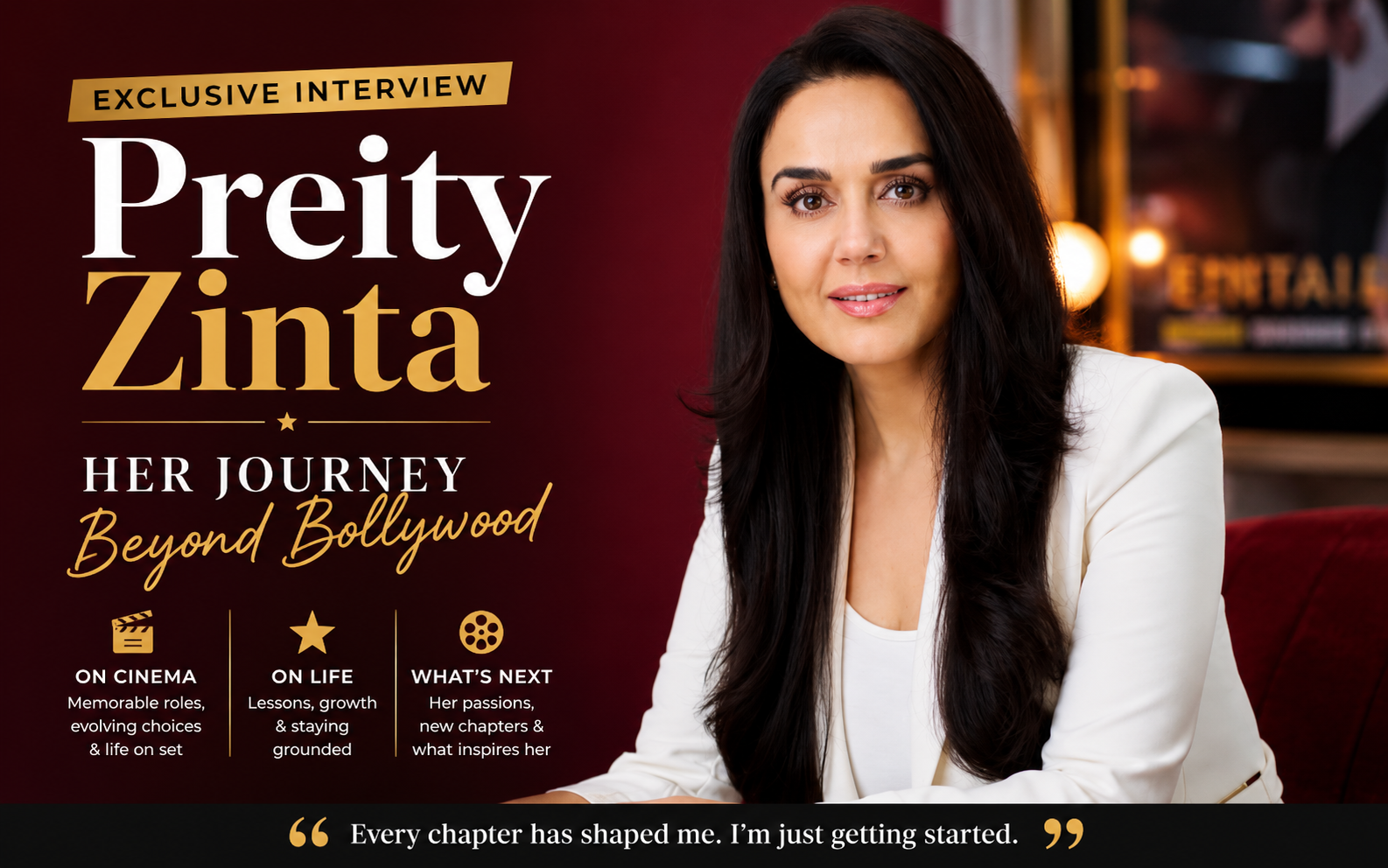
Preity Zinta on Batwara 1947, Motherhood and Finding Her Way Back to Cinema

For Preity Zinta, returning to the screen with Batwara 1947 is about more than making a comeback. The period drama allowed her to explore a chapter of India’s history, work with director Rajkumar Santoshi for the first time, and step into a world far removed from her own. But the film also made her reflect on how much life has changed since she began her career, from the freedoms available to women today to the perspective that comes with becoming a mother. For Zinta, Batwara 1947 is ultimately a story about family, resilience and hope, as she tells Lipika Varma in an exclusive conversation. Why did you say yes to doing this film? What touched you the most? There were a couple of things. First, I really wanted to work with Raj ji. I had never worked with him before, so working with him was always on my bucket list. I had also always wanted to do a period film. Beyond that, I genuinely loved the story. What touched me most was that even in the darkest of times, there is always a ray of hope. People may see this as a story about two countries, but for me, it is essentially about a family. I was also deeply affected by stories of families who believed they were leaving their homes temporarily, even burying their jewellery and valuables, thinking they would return. They never imagined they would lose everything forever. Since this is my first period film, I spent time researching and understanding that era. After such a long break from films, why did you choose this project? I was enjoying my personal life, focusing on my family and raising my children. Professionally, I had always wanted to work with Raj ji and also wanted to do a period film.

You May Also Like

Connect with us