
Yami Gautam on Haq: Courage, Controversy, and the Power of a Woman’s Voice

Why Yami Gautam’s Roles Are Redefining the Heroine

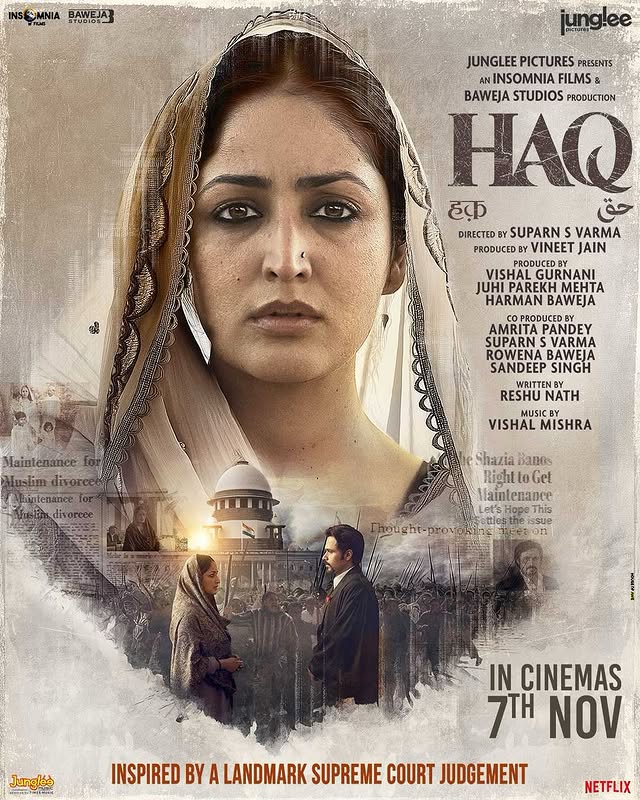
Yami Gautam’s latest film Haq has struck a powerful chord with audiences for its bold storytelling and emotional honesty. In a candid conversation with Lipika Varma, Yami reflects on what drew her to the film, her collaboration with Emraan Hashmi, the responsibility of portraying a character inspired by real struggles, and how motherhood and support have shaped her personal and professional life.

On working with Emraan Hashmi: “When the film was first offered to me, and I learned I’d be cast opposite Emraan, I couldn’t imagine anyone else in the role,” Yami shares. “I’ve always admired him his grace, dignity, the music, the performances, the aura. He has a legacy that spans generations.” She adds, “When you watch the film, you’ll see the incredible energy he brings to his character. Emraan is a brilliant actor respectful, secure, and inspiring. It was a joy to work with him.”

Why She Chose a Hard-Hitting Role in Haq: “I go by instinct and this story needed to be told,” Yami says. “This character reflects courage, truth, and resilience. I haven’t met the real woman it draws inspiration from, but her journey deeply moved me. It captures the true meaning of a woman’s power.”

She clarifies that the film is not a biopic but a blend of facts and fiction. “As an artist, I had to understand why this case became so important. I wasn’t representing one woman I was representing many.”

On Taking Up Socially Sensitive Subjects: “As actors, we have only one lens the tone of the film,” she explains. “Is it made to create controversy or to start a discussion? There’s a difference. I don’t believe in controversies. I do my work and go home.”

She adds, “A film must create discussion or debate. There is no scope for being ‘average’. My first instinct is always pure if I feel I must do it, I do it without fear.”

Preparing for Emotionally Intense Roles: “For this film, emotional strength was more important than physicality,” Yami says. “I imagined the courage a woman in the ’70s or ’80s would need to stand up for herself and her children. Every emotion betrayal, pain, tears, strength had to be real.”

Her preparation also included learning stitching and crochet to inhabit the character naturally.
“For Article 370, the journey was different there was physical training, MMA, weapons. Here, the emotional graph dictated everything else.”
Training in Urdu: “Yes, I trained extensively,” she says. “Our diction coach from Indore helped me with pronunciation, flow, and emotional delivery. Even English words had to sit naturally in Urdu. Urdu is such a beautiful language  to perform naturally, you must make the words your own.”

She also credits dialogue writer Reshu Nath for giving the film its poetic strength.

Raising Her Voice — On Screen and Off

On whether she has ever raised her voice for something in real life, Yami reflects: “Using actions is better than words. Earlier, actresses couldn’t openly speak about marriage. Today, I’m a mother, and it hasn’t affected my work  that itself is a big change. Education and women’s safety are the areas where I feel change is most needed.”

What Made Her Say Yes to This Story“There were two aspects,” she explains. “My instinct, and the writing. I always ask for a hard copy of the script. When I finished reading it, I took a moment  and the answer was clear: yes.”

Having read about the real case in newspapers during school, Yami felt a deeper connection. “It felt surreal to take on a story inspired by something I once studied.”

What an Artist looks for in a Script: “Three things matter most  the story, the role, and the director,” Yami says. “Originality is always exciting. Look at Kantara  rooted in local folklore yet universal. Heartland stories have a unique power.”

A Responsible Character and the Weight of Representation: “If anyone feels inspired by my performance, that would be my personal victory,” she says softly. “During the climax, I felt I was representing many people at once. If even one person feels courage after watching it that’s enough.”

Understanding Urdu deeply, she says, allowed the performance to feel instinctive.
“To perform naturally, you must speak without thinking that’s when cinema feels real.”

Life after Marriage and Motherhood “My parents would be surprised! Tension exists everywhere Mumbai or Leh. But yes, marriage adds stability. Support from family helps you stay grounded.”

She speaks warmly about her husband, Aditya Dhar: “The support was always there. Both of us can work only because our parents stand behind us. Their contribution can never be repaid.”

She recalls flying from Chandigarh early morning just to be with her son before returning to set. “My producers and director trusted me completely. When crores are invested, dedication matters.”

Balancing Work and Motherhood “Everyone’s journey is subjective some take a break, some continue working. Both choices are valid. I’m grateful I could manage both because of my mother’s help,” she says.

A Message Through the Film “It’s hard for me to give a ‘message’,” she says. “But I’ve always chosen strong, meaningful roles. Yes, times have changed since the 1980s Nikah, but change takes time. Everyone has their own battles.” “I hope that when people watch Haq, they feel something courage, hope, strength. Anything positive.”

Leave a comment

Your email address will not be published. Required fields are marked *

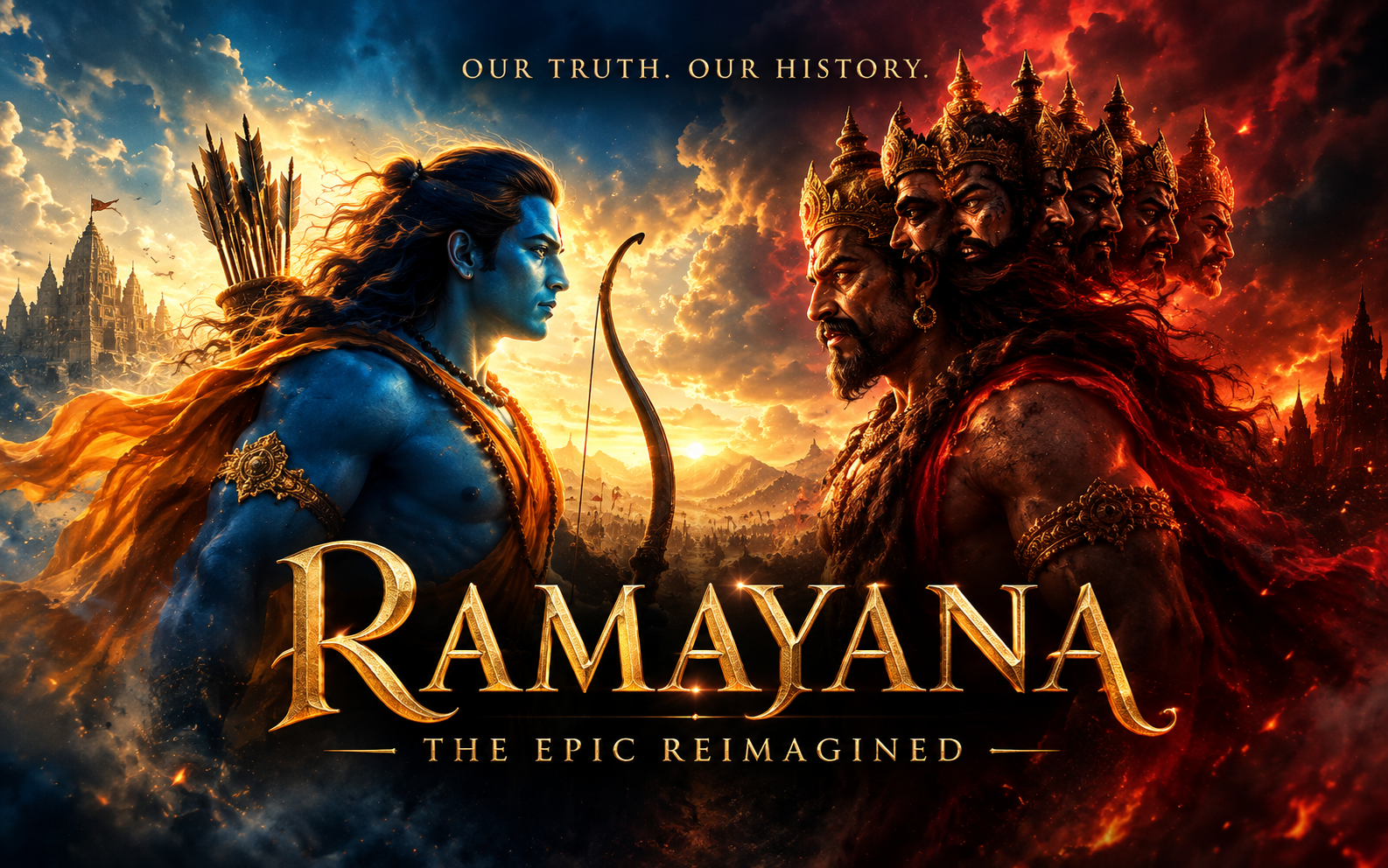
RAMAYANA: THE EPIC REIMAGINED

Ramayana: The Epic Reimagined is shaping up to be one of Indian cinema’s most ambitious productions, bringing together a star-studded cast and an international creative team. From its two-part format and reported ₹4,000-crore budget to its cutting-edge visual effects and global release plans, here are 10 things to know about the epic cinematic spectacle. 1.Two films, one epic Ramayana is planned as a two-part cinematic project. The first instalment is scheduled for release during Diwali 2026, with the second chapter planned for Diwali 2027. The films are directed by Nitesh Tiwari and produced by Namit Malhotra. Ranbir Kapoor has revealed that the team shot around six hours of footage for the first film before editing it down. A Chinese listing reportedly indicates a runtime of about 166 minutes for Part One. 2.Ranbir Kapoor as Rama: The first choice Ranbir Kapoor plays Lord Rama, amid years of speculation over other names. Mahesh Babu, Hrithik Roshan and Ram Charan were among the actors linked to various versions of the project. However, director Nitesh Tiwari and producer Namit Malhotra have clarified that Ranbir was always their first choice for their current Ramayana. Tiwari cited his physicality, screen presence and ability to convey emotion through his expressions. Interestingly, Yash, who plays Ravana, was also reportedly considered for Rama before taking on the antagonist. 3.Sai Pallavi is Sita Sai Pallavi plays Sita opposite Ranbir Kapoor’s Rama. The role marks a major Hindi-film project for the acclaimed South Indian actor and adds another prominent South Indian star to the cast alongside Yash. 4.A large ensemble cast An extensive ensemble supports the three leads. Sunny Deol plays Hanuman, Ravi Dubey plays Lakshman, Arun Govil plays Dasharath, Lara Dutta plays Kaikeyi, Indira Krishnan plays Kausalya, Kajal Aggarwal plays Mandodari, Rakul Preet Singh plays Shurpanakha, Kunal Kapoor plays Indra

Exclusive Interview: Nikhil Siddhartha on Swayambhu, Family and Politics

After the pan-India success of Karthikeya 2, Nikhil Siddhartha finds himself at a pivotal phase in his career. The actor is currently gearing up for the release of Swayambhu, one of the most ambitious projects he has undertaken to date, a historical action drama that demanded nearly two-and-a-half years of dedication, extensive physical transformation, and months of post-production work. In a candid conversation with Priyanka Goud, Nikhil opens up about the challenges of mounting a large-scale period film, why he prioritises quality over quantity, how fatherhood has changed his outlook on life, and his belief in using cinema as a tool for social awareness. A Two-and-a-Half-Year Commitment Describing Swayambhu as a project unlike any other in his career, Nikhil revealed that he dedicated nearly two and a half years exclusively to the film.“Some films are easy to make, and some are difficult. Swayambhu falls into the category of films that demand complete commitment. I underwent a significant transformation for the role, growing my hair long, maintaining a specific physique, and immersing myself in the character and story throughout the production period,” he said. A Historical Story with Universal Appeal One of the aspects that attracted Nikhil to Swayambhu was its historical backdrop. Nikhil plays Krishnan Raman, a historical figure whose name appears on ancient copper plate inscriptions that have recently gained attention. “This story is rooted in history, but its themes are universal,” he said. “It’s not confined to one region; audiences across India will be able to connect with it.” The actor also highlighted the growing importance of visual effects in modern filmmaking. Swayambhu reportedly contains nearly 2,700 VFX shots, making post-production one of the most demanding phases of the project. “We completed principal photography in December 2025, but for the last five to six months it has been

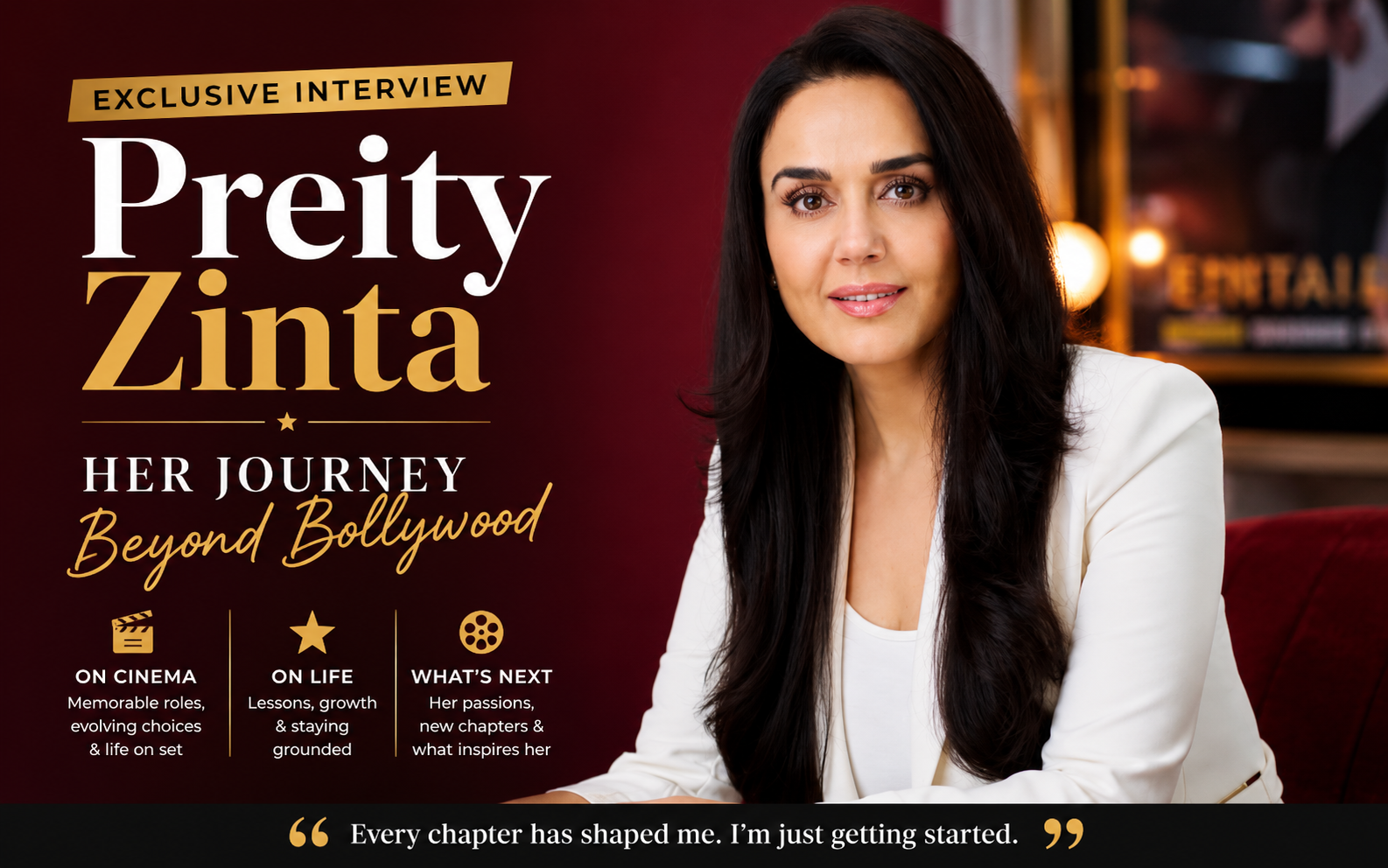
Preity Zinta on Batwara 1947, Motherhood and Finding Her Way Back to Cinema

For Preity Zinta, returning to the screen with Batwara 1947 is about more than making a comeback. The period drama allowed her to explore a chapter of India’s history, work with director Rajkumar Santoshi for the first time, and step into a world far removed from her own. But the film also made her reflect on how much life has changed since she began her career, from the freedoms available to women today to the perspective that comes with becoming a mother. For Zinta, Batwara 1947 is ultimately a story about family, resilience and hope, as she tells Lipika Varma in an exclusive conversation. Why did you say yes to doing this film? What touched you the most? There were a couple of things. First, I really wanted to work with Raj ji. I had never worked with him before, so working with him was always on my bucket list. I had also always wanted to do a period film. Beyond that, I genuinely loved the story. What touched me most was that even in the darkest of times, there is always a ray of hope. People may see this as a story about two countries, but for me, it is essentially about a family. I was also deeply affected by stories of families who believed they were leaving their homes temporarily, even burying their jewellery and valuables, thinking they would return. They never imagined they would lose everything forever. Since this is my first period film, I spent time researching and understanding that era. After such a long break from films, why did you choose this project? I was enjoying my personal life, focusing on my family and raising my children. Professionally, I had always wanted to work with Raj ji and also wanted to do a period film.

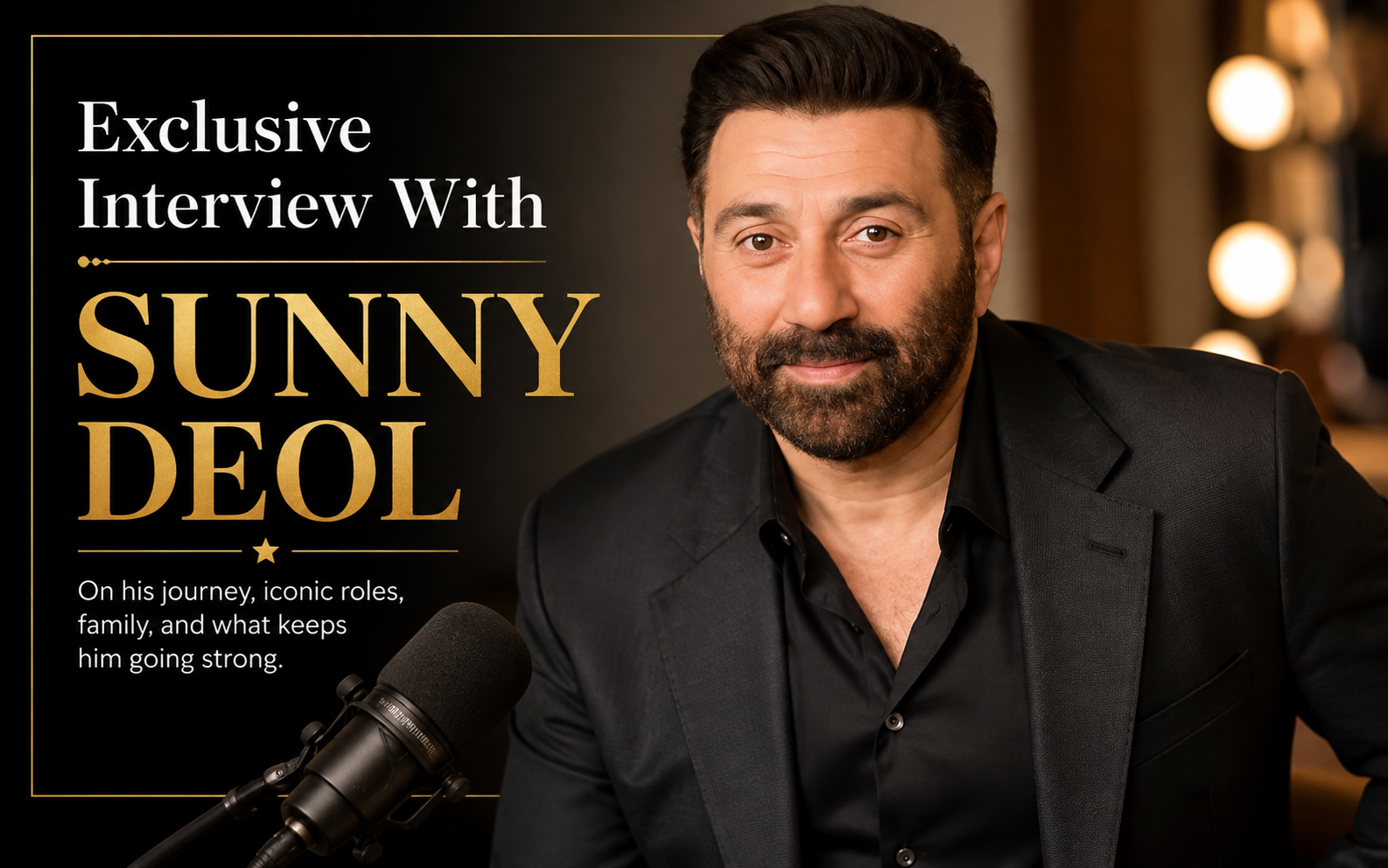
Exclusive Interview with Sunny Deol: Life Beyond Bollywood

Sunny Deol: “Every Film Leaves Some Kind of Impact” With Batwara 1947, Sunny Deol returns to a story rooted in Partition, family and the human cost of one of the most defining moments in Indian history. The actor reflects on why he sees the film as fundamentally different from Gadar, his long-standing association with director Rajkumar Santoshi, his father Dharmendra’s connection to their shared cinematic history, and the responsibility actors carry when their work leaves a lasting impact on audiences. In conversation with Lipika Varma, Sunny Deol also opens up about playing a character outside the action-driven image audiences often associate with him and working alongside his son Karan. How did you approach the character in this film? For me, it was the subject, the story and the character that I had heard about, and I approached it accordingly. I don’t know exactly what was tweaked. I didn’t read the original play or see it. Vivek Raj had read it, and we had been working on this story since 2010. Unfortunately, we couldn’t make it back then, so we had been waiting all these years. As soon as we got the opportunity, we jumped into it. Sunny, are you happy that your fans, including those in Pakistan, will get to see you in a completely different kind of role this time, without the iconic hand-pump moment or typical action scenes? Actually, I don’t think it’s about that. Fans are always there, and they love you no matter what. Sometimes journalism and politics come into the picture and change the colours of things. But the actual viewer, the person sitting in the theatre and watching the film, doesn’t necessarily look at things that way. They simply watch the film. I’ve met a lot of fans across the country and around the