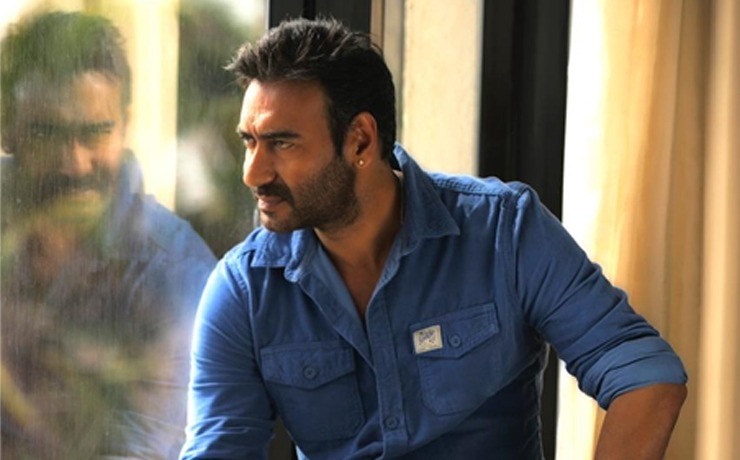
Ajay Devgn: “People need to know of our history, which has not been depicted a lot.”

Ajay Devgn

LIPIKA VARMA , in conversation with AJAY DEVGN, on Bhuj, the rise of OTT, and how he believes films are apt mediums to depart historical knowledge.

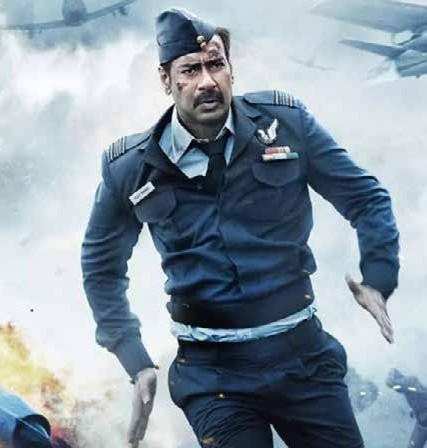
Actor, film director and producer Ajay Devgn has to his credit over one hundred films alongside not just one, but two National Awards to his name. His last theatrical release, Tanhaji: The Unsung Warrior, was a successful biographical film. It comes as no surprise to his viewers then that, with his next release, Devgn continues to push the envelope. Bhuj: The Pride of India is set during the Indo-Pakistan war of 1971. The film charts the life of Squadron Leader Vijay Karnik, then in charge of Bhuj airport. As has been seen with other films over the past year, Bhuj is now streaming on the OTT platform Disney+Hotstar.

On Bhuj, biopics, and historical lineage

After your last film Tanhaji, you seem to be doing another biopic with Bhuj. Is it a conscious decision? How realistic is this one?

Be real to the character; don’t make it too filmy. Whatever you have seen, it’s very real. When any person is fighting for his country, he is not showing off. It comes naturally from within. So, a film needs to be made true to its craft and should be based on reality. We have shown it to Army and Air Force personnel, and they are happy about it.

Be real to the character; don’t make it too filmy

Bhuj was slated for theatrical release but is now an OTT venture. What do you think of the tussle between theatrical release and the OTT platform?
There is no certainty that the third wave will not happen. While we have been facing losses as theatres have been shut, they will be made up for. Whenever theatres open, even across the world, people will go to watch films. We recently saw our film on the big screen for colour corrections. It was altogether a different experience. OTT is a very good chance for the industry. Most filmmakers from the industry keep arguing for theatre. Theatres will open and we producers will strike a good balance as films will still be seen in theatres. Many films can still be watched on OTT. Bhuj will be seen on OTT; it is a growth for the industry.

How important is it for the recent generation to know about India’s unsung heroes and more of our history?

 People need to know of our history, which has not been depicted a lot. The British tried to push our history under the carpet so that the sacrifices of our true heroes wouldn’t come to the forefront. There is not much written about the unsung heroes in the school textbooks either. Tanhaji’s bravery had a mention of half a page when we went to school, and this has disappeared now. We should talk about it. This generation does not know of all who fought and sacrificed their lives to get us freedom from the clutches of the British. When you understand the difficulty that has gone to achieve independence, you will come together. Real people have worked selflessly, and their sacrifices need to be remembered.

What do actors want? They want to be seen to the maximum.

An Insider’s Insight on the Industry

Do you agree that a big producer’s muscle power will fetch him more theatres?

All of us, including you guys, are aware of this fact. When you make a film, you want your product to go all over, and you are looking at the best release. It’s not about muscle power. It’s not that we are trying to create a loss for others, but we are trying to get maximum theatres to be able to show our product to many more people. There is nothing wrong with it. Woh ladaayi toh chalti rahegi [That fight will go on]. Many people are involved in the filmmaking process and so much money is spent. You will try your best that the product reaches the right place. Whether you are at loss, or the others are at loss…this happens in all the industries. We have no choice. Theatres are less compared to the number of films made every year, so this fight will continue.
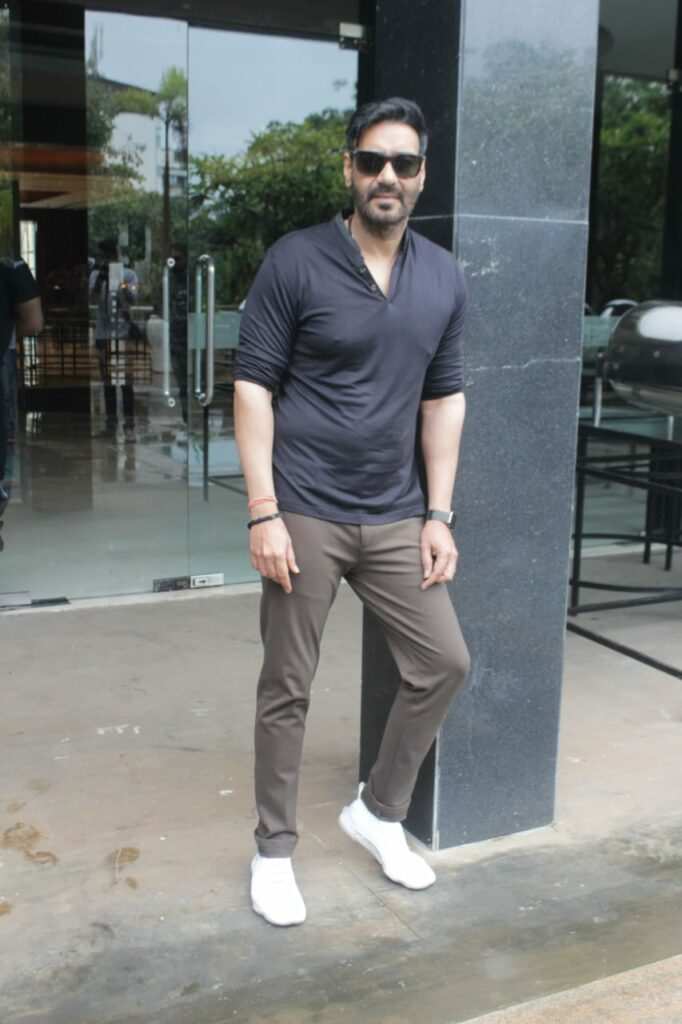
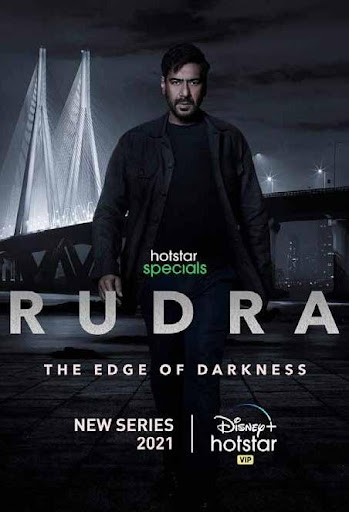
You have debuted on OTT with Rudra. What difference did you find? What are do your future plans look like?

We are currently working on an OTT project and are planning a film. The idea of telling historical and biographical stories is merely for people to know about their sacrifices. We have completed May Day with just 4- 5 days’ work remaining. I debuted with Rudra on the OTT platform and realised working for OTT platforms is the same. Filming on OTT takes a lesser number of days in comparison to films. Also, we have to up our sleeves in terms of filmmaking and its storytelling. If it’s not up to the mark, children also shun it within a minute and say, “Yeh kya bakwas hai.”

Whenever theatres open, even across the world, people will go to watch films.

Many stars are shifting to working on OTT now. What do you make of this shift?

What do actors want? They want to be seen to the maximum. So, with the advent of platforms, it strikes a good balance between theatres and OTT. We can show our work on both OTT and films. This will enable the filmmakers to show their work to people all over.
Besting Social Media

Many say social media has become the deciding factor for how well films fare depending on reviews. How do you look at it?

The deciding factor is the film ultimately. Regarding the meter gauge of the film on OTT, that is there, we don’t come to know exactly about it. But can make out knowing how well the film has been received and this helps you know about the success of the film. We cannot do anything as everyone has become the media by putting their own comments. The best part is to be away from it. I’m not much on Twitter or any other platform. I only use it whenever I feel like conveying something.

So how do you handle trolls?

Honestly, speaking on my phone, I am not operational on any social media platform be it Twitter or Instagram. The best way is not to keep updated. Whenever I wish to say something, I do go on it and write it on my social media platform. Most of the time we see cuss words written on it. There is no credibility about what is written. How do we know what is right and what is wrong? Only our trusted people’s judgment makes sense. Most of the time I remain disconnected.


Leave a comment

Your email address will not be published. Required fields are marked *

Exclusive Interview: Nikhil Siddhartha on Swayambhu, Family and Politics

After the pan-India success of Karthikeya 2, Nikhil Siddhartha finds himself at a pivotal phase in his career. The actor is currently gearing up for the release of Swayambhu, one of the most ambitious projects he has undertaken to date, a historical action drama that demanded nearly two-and-a-half years of dedication, extensive physical transformation, and months of post-production work. In a candid conversation with Priyanka Goud, Nikhil opens up about the challenges of mounting a large-scale period film, why he prioritises quality over quantity, how fatherhood has changed his outlook on life, and his belief in using cinema as a tool for social awareness. A Two-and-a-Half-Year Commitment Describing Swayambhu as a project unlike any other in his career, Nikhil revealed that he dedicated nearly two and a half years exclusively to the film.“Some films are easy to make, and some are difficult. Swayambhu falls into the category of films that demand complete commitment. I underwent a significant transformation for the role, growing my hair long, maintaining a specific physique, and immersing myself in the character and story throughout the production period,” he said. A Historical Story with Universal Appeal One of the aspects that attracted Nikhil to Swayambhu was its historical backdrop. Nikhil plays Krishnan Raman, a historical figure whose name appears on ancient copper plate inscriptions that have recently gained attention. “This story is rooted in history, but its themes are universal,” he said. “It’s not confined to one region; audiences across India will be able to connect with it.” The actor also highlighted the growing importance of visual effects in modern filmmaking. Swayambhu reportedly contains nearly 2,700 VFX shots, making post-production one of the most demanding phases of the project. “We completed principal photography in December 2025, but for the last five to six months it has been

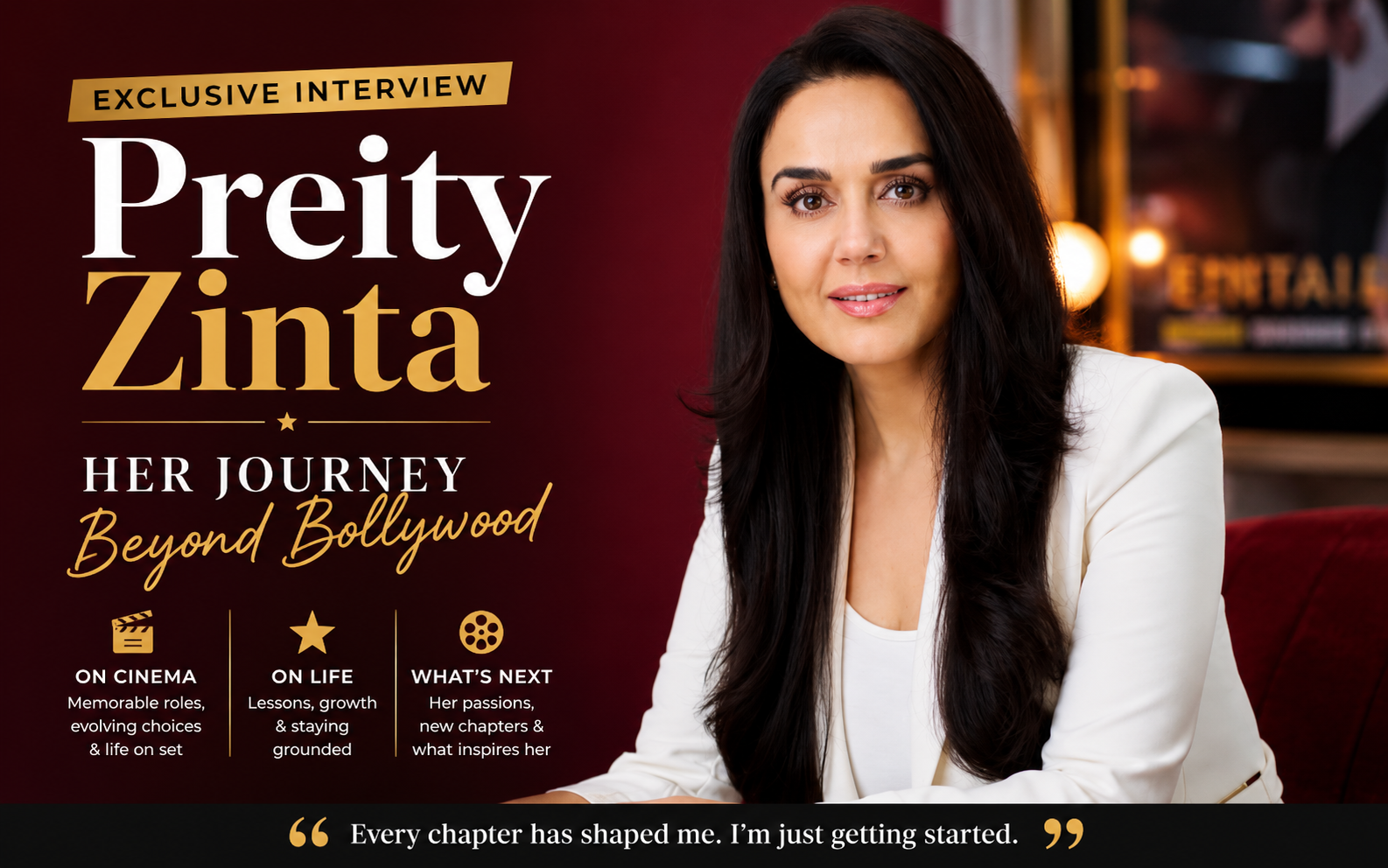
Preity Zinta on Batwara 1947, Motherhood and Finding Her Way Back to Cinema

For Preity Zinta, returning to the screen with Batwara 1947 is about more than making a comeback. The period drama allowed her to explore a chapter of India’s history, work with director Rajkumar Santoshi for the first time, and step into a world far removed from her own. But the film also made her reflect on how much life has changed since she began her career, from the freedoms available to women today to the perspective that comes with becoming a mother. For Zinta, Batwara 1947 is ultimately a story about family, resilience and hope, as she tells Lipika Varma in an exclusive conversation. Why did you say yes to doing this film? What touched you the most? There were a couple of things. First, I really wanted to work with Raj ji. I had never worked with him before, so working with him was always on my bucket list. I had also always wanted to do a period film. Beyond that, I genuinely loved the story. What touched me most was that even in the darkest of times, there is always a ray of hope. People may see this as a story about two countries, but for me, it is essentially about a family. I was also deeply affected by stories of families who believed they were leaving their homes temporarily, even burying their jewellery and valuables, thinking they would return. They never imagined they would lose everything forever. Since this is my first period film, I spent time researching and understanding that era. After such a long break from films, why did you choose this project? I was enjoying my personal life, focusing on my family and raising my children. Professionally, I had always wanted to work with Raj ji and also wanted to do a period film.

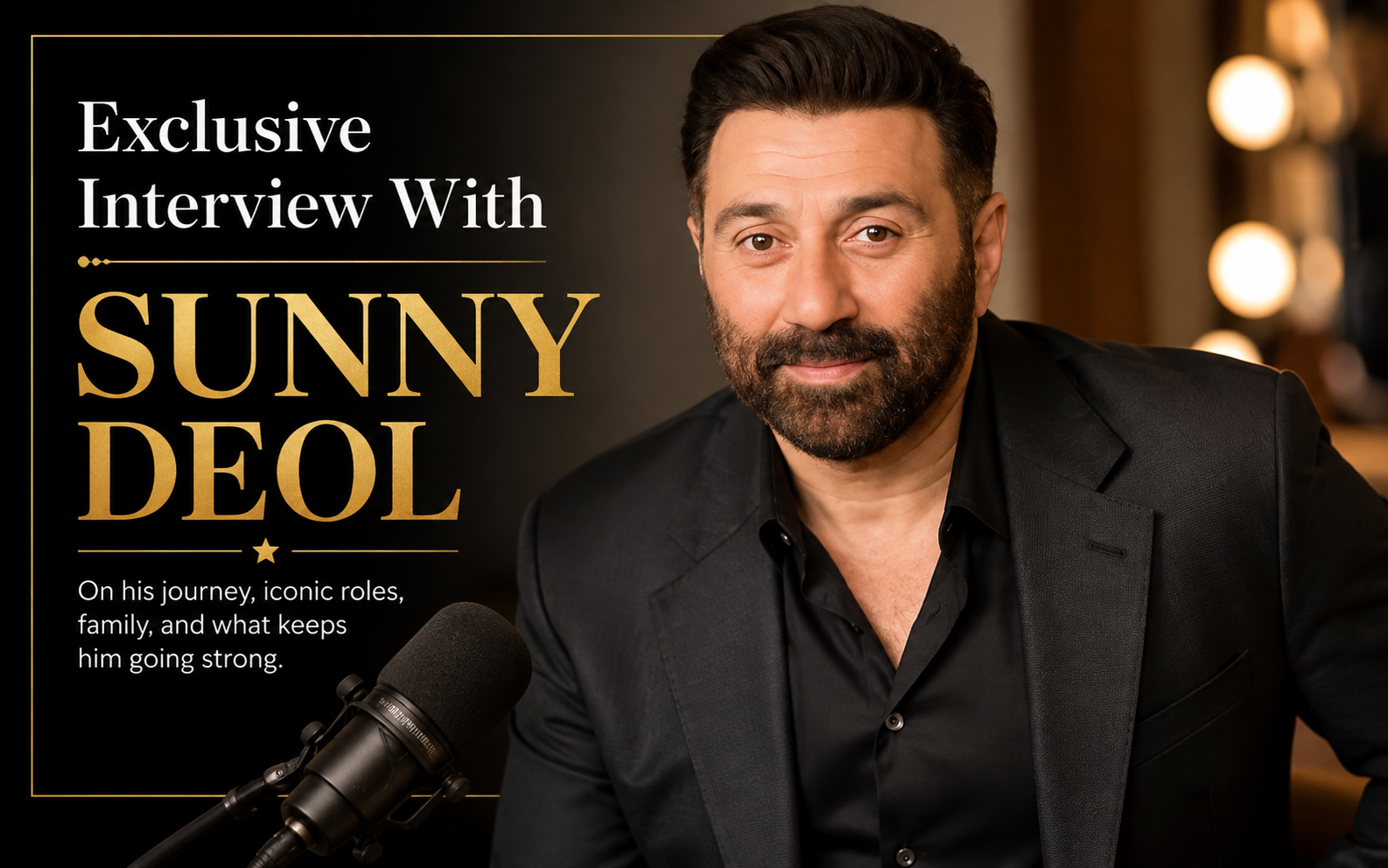
Exclusive Interview with Sunny Deol: Life Beyond Bollywood

Sunny Deol: “Every Film Leaves Some Kind of Impact” With Batwara 1947, Sunny Deol returns to a story rooted in Partition, family and the human cost of one of the most defining moments in Indian history. The actor reflects on why he sees the film as fundamentally different from Gadar, his long-standing association with director Rajkumar Santoshi, his father Dharmendra’s connection to their shared cinematic history, and the responsibility actors carry when their work leaves a lasting impact on audiences. In conversation with Lipika Varma, Sunny Deol also opens up about playing a character outside the action-driven image audiences often associate with him and working alongside his son Karan. How did you approach the character in this film? For me, it was the subject, the story and the character that I had heard about, and I approached it accordingly. I don’t know exactly what was tweaked. I didn’t read the original play or see it. Vivek Raj had read it, and we had been working on this story since 2010. Unfortunately, we couldn’t make it back then, so we had been waiting all these years. As soon as we got the opportunity, we jumped into it. Sunny, are you happy that your fans, including those in Pakistan, will get to see you in a completely different kind of role this time, without the iconic hand-pump moment or typical action scenes? Actually, I don’t think it’s about that. Fans are always there, and they love you no matter what. Sometimes journalism and politics come into the picture and change the colours of things. But the actual viewer, the person sitting in the theatre and watching the film, doesn’t necessarily look at things that way. They simply watch the film. I’ve met a lot of fans across the country and around the

Akshay Kumar: “The Craft Has Changed, But Hard Work Never Goes Out of Style”

With a career spanning over three decades, Akshay Kumar continues to reinvent himself across genres, from action and comedy to social dramas and entertainers. As he looks ahead to his upcoming projects, including the action-thriller Haiwaan and a lineup of comedy entertainers, the actor reflects on his journey, his approach to cinema, discipline, and why staying connected to the craft remains his biggest priority. In conversation with Lipika Varma, Akshay opens up about his evolving approach to cinema, the importance of teamwork, and the values that guide him both on and off screen. You have played action heroes, comedians, romantic leads, and intense characters. What kind of roles excite you the most today? I enjoy all kinds of roles. When I entered the industry, people mostly saw me as an action hero. After that, I consciously chose to explore different genres and keep discovering myself as an actor. I have done comedy, romance, social dramas, and action films. Every genre brings a different challenge, and that is what keeps the journey interesting. Comedy has been one of your strongest genres. What makes it so special for you? Comedy is definitely one of the hardest genres. Making someone emotional can sometimes be supported by the situation or background music, but making someone genuinely laugh requires precision, timing, and a lot of hard work. Comedy often looks effortless on screen, but there is a lot of discipline behind creating that moment. That challenge is what makes it exciting for me. You have been part of several ensemble films. What is your view on multi-starrers? Everyone has their own approach. Some actors prefer solo films, while others enjoy working in ensemble projects. There is no fixed formula for success. A film works because of its content, storytelling, and execution, not simply because of