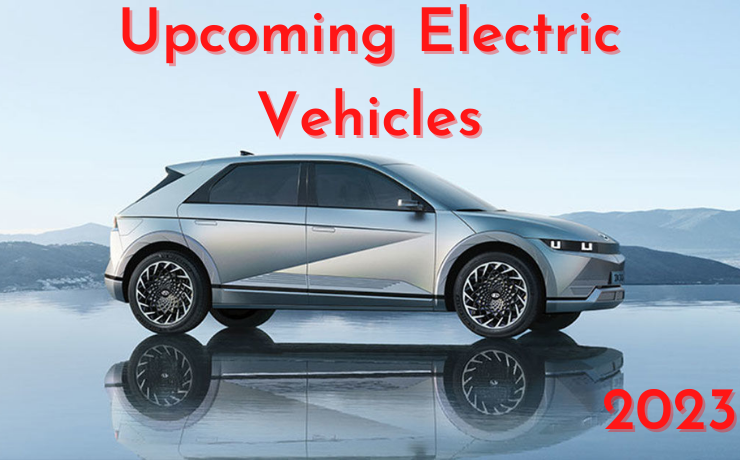
Upcoming Electric Vehicles In 2023

Upcoming Electric Vehicles In 2023 - Hashtag Magazine

2023 will be a great year for Indian automobile companies because people are showing interest in electric vehicles. With hikes in fuel prices and government-given subsidies towards EVs, automobile companies have lined up a new series of upcoming new electric vehicles that will be launched in 2023-2024. These are some of the most popular electric vehicles and their features.

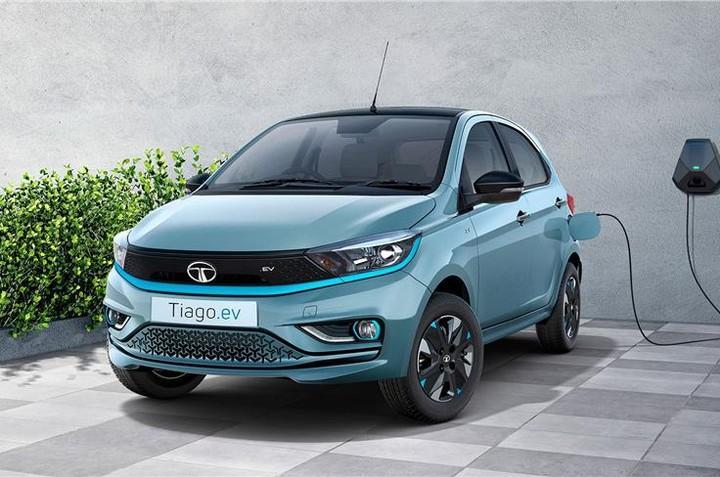
  1. Tata Tiago EV

Tata Tiago EV is one of the most affordable cars in the country. It is the third electric vehicle from Tata Motors. The new car comes with an electric hatch with two options are 19.2kWh battery with a range of 250 kms and a 24kWh battery with a range of 315 kms on a single charge. Tata Tiago EV can pick up speed from 0-60kmph in just 5.1 seconds. 

Expected Price: Rs 8.5 lakhs- 11.79 lakhs.
Expected launch date: January 2023.

  1. Mahindra XUV 400

Mahindra & Mahindra’s upcoming car XUV400 is set to be launched in 2023. The new EV car comes with a battery pack paired with an electric motor. The claimed range of the Mahindra XUV 400 is 456 kms on a single charge and it supports up to 50kw fast charging. The car will be available in three variants that are Base, EP, and EL. 

Expected Price: Rs 14-16 lakhs.
Expected launch date: 19th January 2023.

  1. Citroen C3 EV

Citroen C3 EV is an amazing EV car and it will come under the brand’s c-cubed program. The car will be designed on Citroen’s CMP platform. The new car will include a 50kWh battery pack that delivers 350 km on a full charge. Citron C3 EV features are quite similar to petrol-powered C3. It will come with a digital instrument cluster, a 10.2-inch touchscreen system, wireless Apple car play, and Android Auto connectivity.

Expected Price: Rs 9-13 lakhs.
Expected launch date: January 2023.

  1. Skoda ENYAQ IV EV

Skoda company is all set to launch its first electric SUV named ENYAQ IV in 2023. The new car is spacious with a comfortable interior, and beautiful exterior design. The battery capacity of this upcoming vehicle is 55Kwh with a range of 420 kms on a single charge. The car can pick up the speed from 0-100 kmph in just 6.9 seconds. The car comes with a larger touchscreen system with wireless Apple Car Play and Android Auto, and wireless charging.

Expected Price: Rs 60 lakhs.
Expected launch date: January 2023.

  1. Hyundai KONA Electric

Hyundai KONA Electric is the upgraded variation of the on-road Kona electric car. It is a flexible all-electric SUV that provides higher acceleration of 0-100 km/per hour in just 9.7 seconds. It is available with the Automatic transmission, and it comes with a five-seater and has 10-way power adjustable driver’s seat. The battery capacity of 39.2kWh and the approximate time for full charging is 6 hours 10 mins. 

Expected price: Rs 23-24 lakhs.
Expected launch date: January 2023.

  1. Volkswagen ID.4 GT

The German-based company Volkswagen is planning to launch its first electric SUV Car that is Volkswagen ID4 GT in India. The new car will be based on MEB architecture and comes with two variants that are 52kWh with a 346 kms range and 77kWh with a 517 kms range. The fast charging speeds of up to 125kW can add a 320 km range in just 30 minutes. 

Expected Price: Rs 50-60 lakhs.
Expected launch date: June 2023.

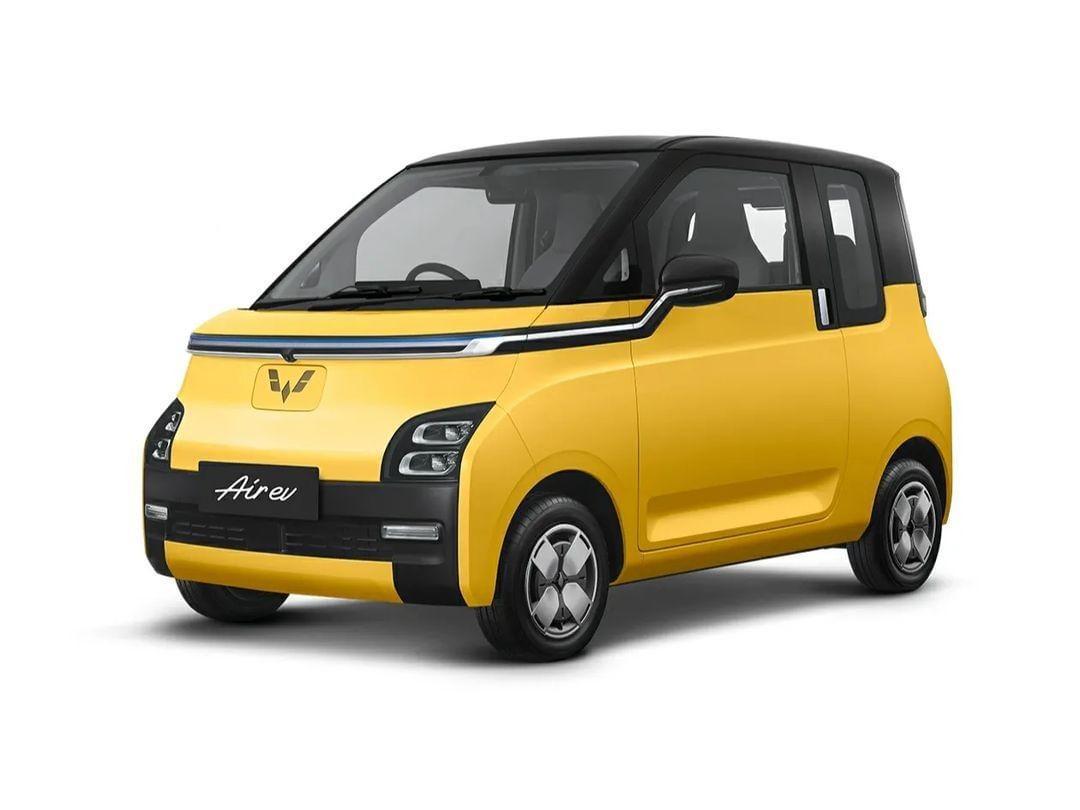
  1. MG Air EV

The British Automaker company MG has announced its two-door compact car. The new car will be showcased at the upcoming 2023 Auto Expo. The tiny SUV car is just 2.9 meters long with a battery capacity of 20-25kWh. The car offers a range of 100-200 kms on a full charge with a max power of 40bhp.

Expected price: Rs 10-15 lakhs.
Expected launch date: March 2023.

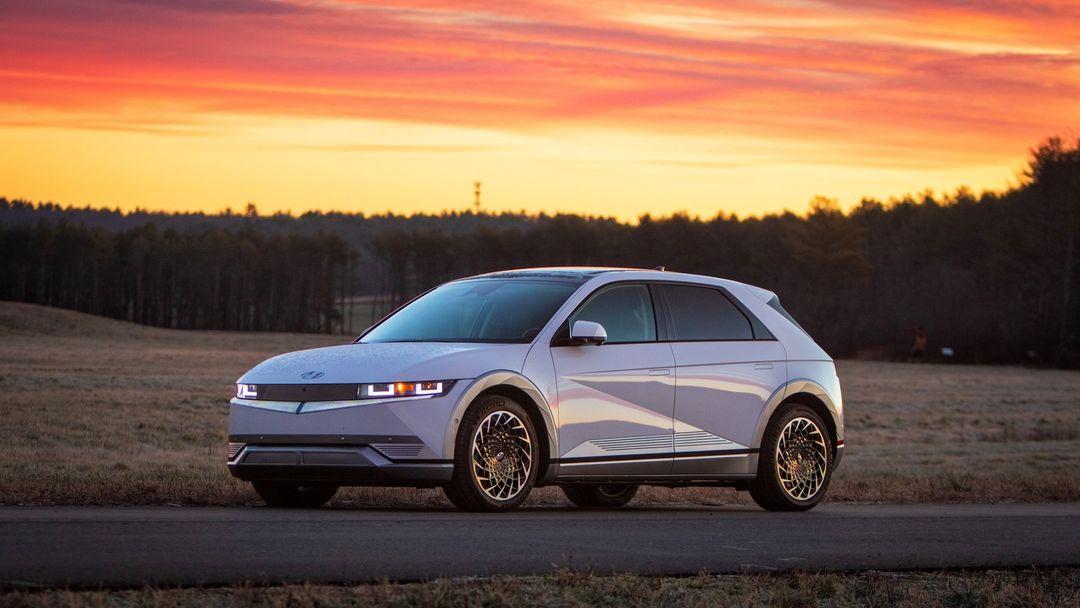
  1. Ioniq 5

Hyundai India will showcase its upcoming EV car that is Ioniq 5 at the 2023 Auto Expo. The car has a distinctive design with rapid fast charging capability. The Hyundai Ioniq 5 picks up the speed from 0 to 60 kmph in just 5.2 seconds. The car comes with a standard 57kWh battery with an estimated range of 220 miles, a 77.4kWh battery with a range of 266 miles with dual motors, and 303 miles with a single motor.

Expected price: Rs 45-55 lakhs.
Expected launch date: March 2023.

Conclusion: These are some of the most popular electric vehicles that are releasing in 2023. Electric vehicles are going to be the new trend in 2023, and they will soon take over transportation. The EV car maintenance will be low and they are environmentally friendly because they do not emit pollutants. Electric cars are far better than regular fuel cars. 

Leave a comment

Your email address will not be published. Required fields are marked *

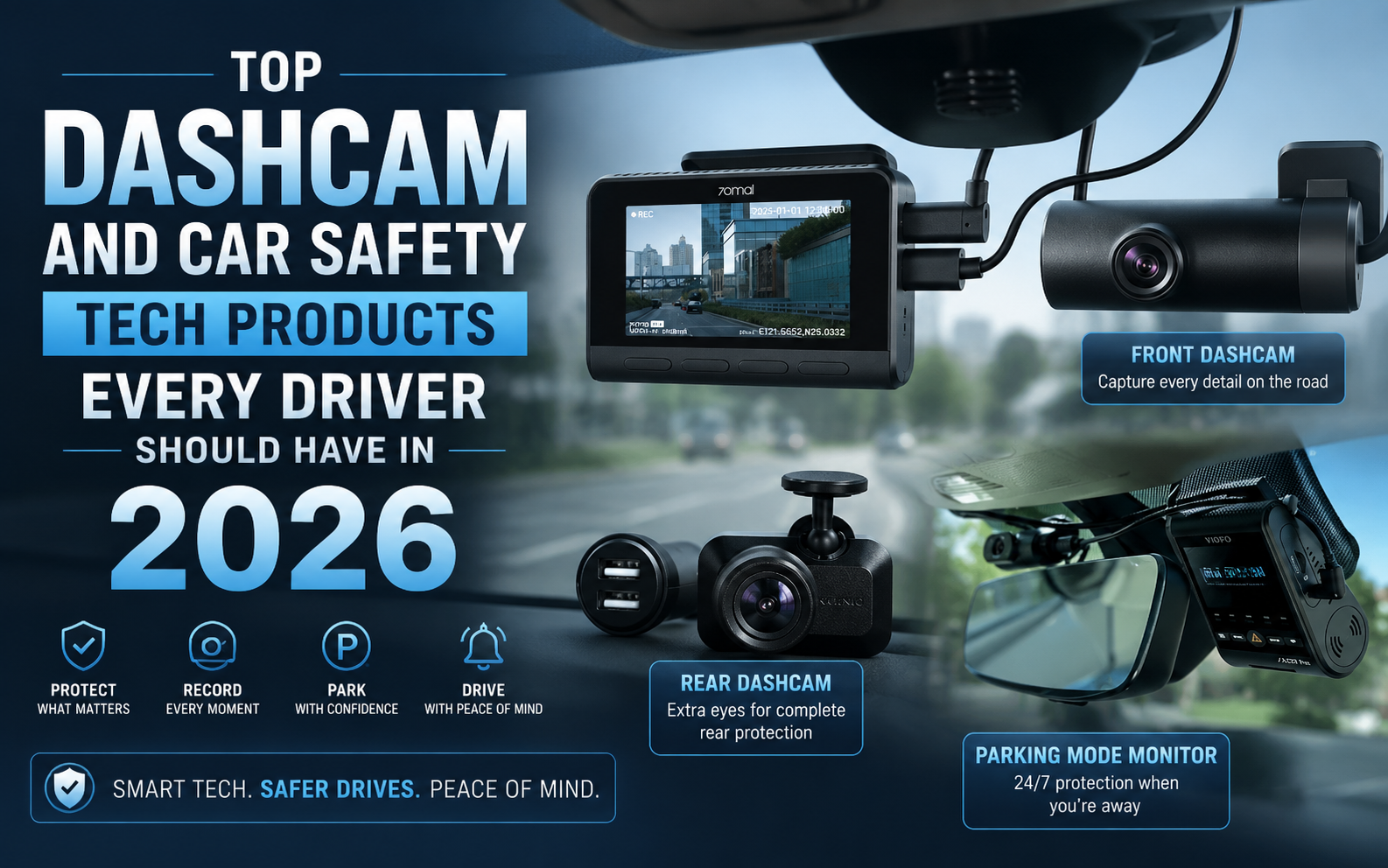
Top Dashcam and Car Safety Tech Products Every Driver Should Have in 2026

Best dashcams and car safety tech every driver needs in 2026, from AI collision alerts to tyre monitors. Drive smarter, drive safer. Think about the last time you were on a highway at night. Trucks overtaking from the left. Potholes with no warning signs. Someone running a red light at a junction you thought was clear. Indian roads are not forgiving. They are among the most unpredictable in the world, and that is not an exaggeration. In 2024, India recorded over 1.7 lakh road accident deaths, which is roughly one every three minutes. But here is what is changing. In 2026, the technology available to ordinary drivers, not just luxury car owners, is genuinely remarkable. Dashcams that record everything and call for help automatically. Tyre sensors that warn you before a blowout happens. Blind spot monitors: systems that keep you awake on long drives. Viofo A229 Pro 3-Channel If there is one dashcam built for Indian road reality, this is it. The Viofo A229 Pro covers three angles simultaneously: front, rear, and the cabin interior. So whether someone rear-ends you, you have a dispute at a toll booth, or a passenger causes trouble, it is all on record. The 4K front camera footage is clear enough to read number plates even at night. And night is when most serious accidents happen on Indian highways. The Sony STARVIS 2 sensor inside handles low light better than most cameras twice the price. It also has built-in GPS, which stamps your exact location and speed onto every clip, making it incredibly valuable as evidence in insurance claims or legal disputes.The parking mode is genuinely useful too. Park on a busy street, and if anyone bumps your car or breaks in, the camera wakes up and records it. In cities like Bengaluru and Mumbai,

How PMS Portfolios Perform During a Market Crash | Risk Management Guide

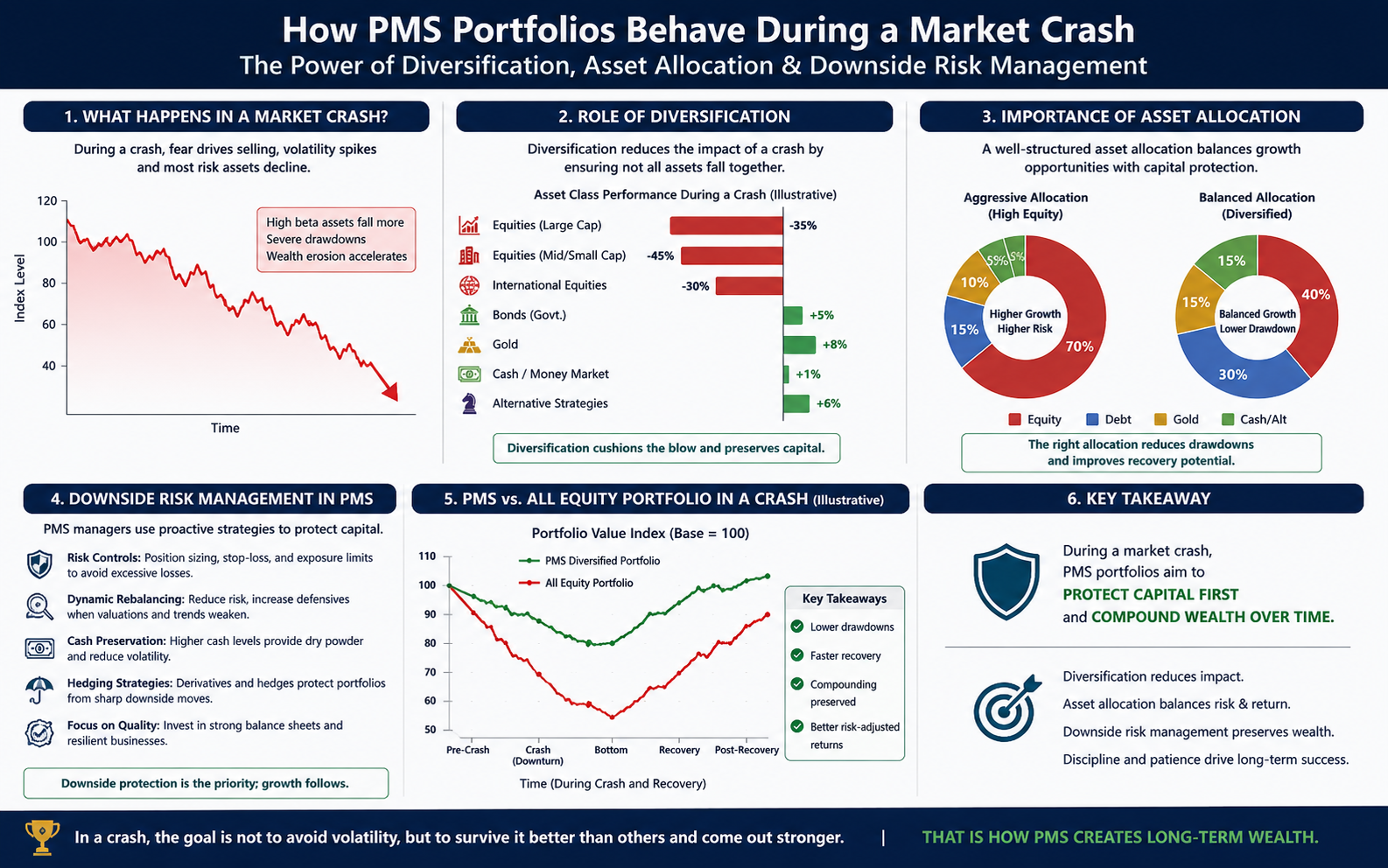
Market crashes are the ultimate stress test for any investment strategy. While returns dominate conversations during bull markets, it is during downturns that the true structure and resilience of a PMS portfolio become visible. Many investors assume that all portfolio management services portfolios behave similarly in a crash. In reality, outcomes can vary significantly depending on how the portfolio is constructed. 1. What a Traditional PMS Looks Like A traditional equity PMS is typically built as a concentrated portfolio of 15–30 individual stocks. This structure is intentional: Managers aim to generate alpha through high-conviction bets Capital is allocated meaningfully to each idea Diversification is limited compared to mutual funds However, during a market crash, this concentration becomes a double-edged sword. What happens in a crash? If a few key holdings fall sharply, the overall portfolio can decline disproportionately Single-stock risk gets amplified Liquidity issues in mid and small caps can worsen drawdowns For example, if a PMS holds 20 stocks and 3–4 of them fall 40–50%, the portfolio impact can be severe. This is the structure most investors picture when they think “PMS in a crash” — and it is also what has given PMS an unfair reputation for being high-risk by default. But concentration in direct stocks is a choice, not a requirement of the PMS structure. What sits inside the portfolio is what determines crash behaviour. 2. Not All PMS Portfolios Are Built the Same It is a common misconception that all PMS providers only buy direct stocks. In reality, a PMS is simply a personalized account managed by a professional. The strategy inside can vary wildly. While many providers stick to equities, others take a multi-asset approach. These providers build portfolios using a mix of mutual funds, direct bonds, gold, REITs (Real Estate Investment Trusts), and InvITs

Top Gaming Laptops That Can Handle Indian Summer Heat

April in Hyderabad, May in Delhi, and June in Chennai, you know what that feels like! The kind of heat that makes your phone hot just sitting on a table. The kind that turns a power cut into a genuine crisis. Now imagine gaming in that.Most laptops panic. The fans scream. The frame rates drop. The machine thermal throttles, which is a technical way of saying it gives up and slows down to stop itself from burning alive. But some laptops were built differently. Dhanush Kumar writes about the laptops that handle the heat, keep their cool, and let you game through an Indian summer without melting down. ASUS ROG Strix G16 If there is one laptop that truly understands Indian summer, it is this one. Asus put a Tri-fan technology system inside the ROG Strix G16, three fans working together, so no single part of the machine overheats. There are also liquid metal thermal compound pads on the CPU, which is a premium touch you usually only find on much more expensive machines. Even during long gaming sessions at room temperatures of 35 to 38 degrees, this laptop holds steady. Frame rates stay consistent. The keyboard doesn’t become a frying pan. The RTX 4070 inside pushes beautiful visuals in everything from BGMI to Cyberpunk. This is the one we would put our money on for an Indian summer. Lenovo Legion Pro 5i Gen 9 Lenovo’s Legion line has always been serious about thermal management, and the Pro 5i Gen 9 is their best effort yet. The Cold Front 5.0 cooling system uses a hybrid fan design with a bigger air intake. Translation: more cool air comes in, more hot air goes out, faster. What makes this special for India is how it handles dust. Indian summers come with dust.

Top AI Tools Everyone Must Use in 2026

Artificial Intelligence is no longer limited to tech companies or programmers. In 2026, AI tools are becoming essential everyday companions for students, professionals, entrepreneurs, designers, and content creators. From writing emails and designing visuals to coding software and researching complex topics, AI-powered platforms are transforming how we work and create. Experts say generative AI tools now help automate repetitive tasks, speed up creativity, and improve productivity across industries. They allow users to produce content, analyze data, generate visuals, and even compose music within minutes. Here are some of the most powerful AI tools everyone should consider using in 2026. 1. ChatGPT – The All-Purpose AI Assistant ChatGPT remains one of the most widely used AI tools globally. It can help users write articles, generate ideas, summarize information, plan projects, and even assist with coding. Its conversational interface allows people to interact with AI as if they were talking to a colleague. Best for: Writing and editing content Brainstorming ideas Coding and debugging Learning new topics For many professionals, ChatGPT has become a daily productivity companion. 2. Google Gemini – AI for Research and Productivity Google Gemini is designed to integrate deeply with Google’s ecosystem, including Gmail, Docs, Sheets, and Android devices. It excels at analyzing large amounts of information, summarizing reports, and answering complex research questions. Best for: Research and information analysis Email drafting and document summaries Data insights and knowledge work Because of its integration with Google tools, Gemini is especially useful for students and professionals. 3. Microsoft Copilot – The Workplace AI Microsoft Copilot is embedded directly into Microsoft 365 apps like Word, Excel, Outlook, and Teams. It can generate reports, create presentations, summarize meetings, and analyze spreadsheets. Best for: Office productivity Data analysis in Excel Drafting professional emails and reports For businesses and corporate teams, Copilot acts

You May Also Like

Connect with us