Delightful Daysie

Delightful Daysie - Hashtag Magazine

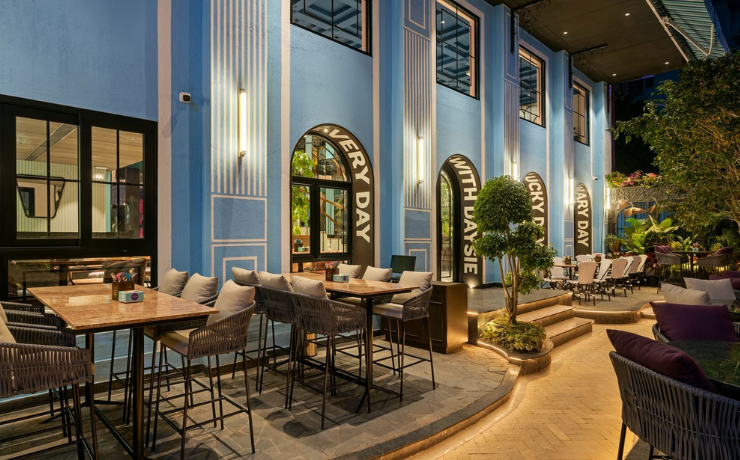
Daysie is an all-day casual bar that has recently opened doors in Bengaluru’s MG Road and has an eclectic menu that has something for everyone. An all-day dining space, Daysie is one of the newer additions to the burgeoning restaurant scene in Bengaluru, and much like its name has décor that is fresh and calming. Bindu Gopal Rao has a taste at this new venture. Started by partners, Anirudh Kheny, Neeti Gokhalay Kheny and Atul Sunder, the restaurant is spread over an expansive 10,000 square feet. 

Décor Details

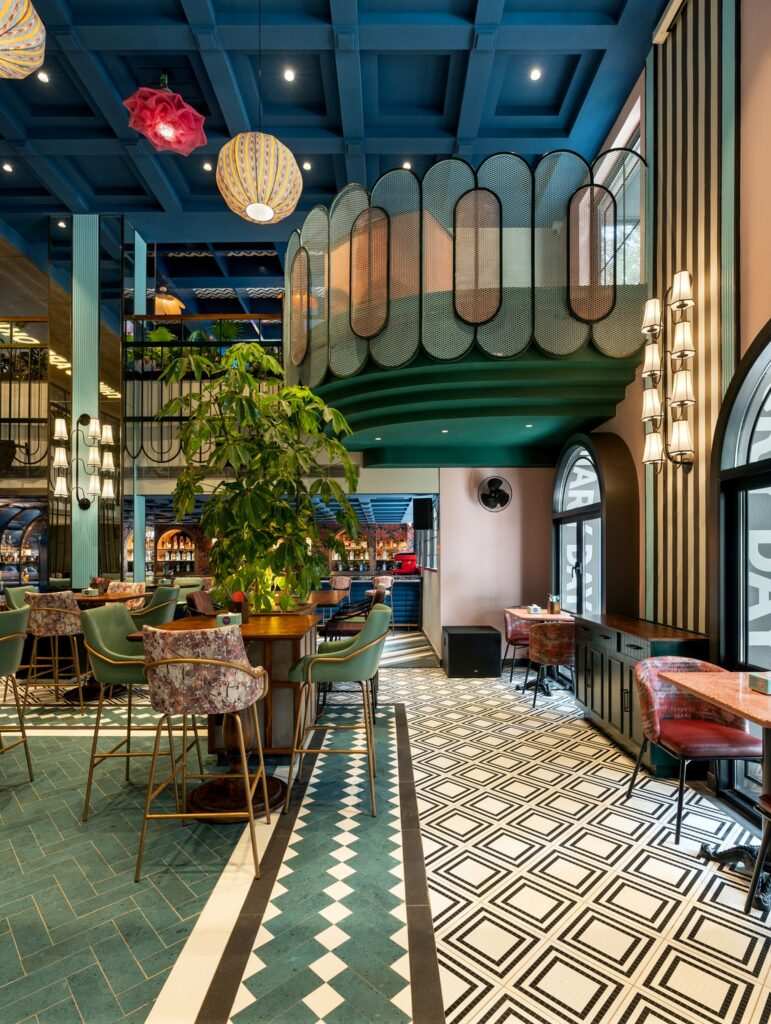
With 400 covers that include alfresco and indoor seating, the pastel colour palette is not just pleasing, it also lends a nice chic vibe to the space. A meandering stone-paved pathway set amidst a lush green landscaped space makes the alfresco dining experience breezy and an ode to the city’s salubrious climate. The ground level has a mix of regular and bar seats with see the stunning floral light fixtures that bloom in and out adding a lovely feel to the space. There is a mezzanine level that is connected by a dramatic staircase, a favourite with selfies and photography lovers. The entire space has a nice interplay of colours, tones, and textures with a dash of playfulness which makes the space aesthetic and functional.
Start Right

The menu at Daysie is extensive and you will be spoilt for choice as you navigate the 14-page menu (that you will need to scan using the QR code on the table). The Wholesome Start section has a selection of hearty soups like the Green Pea Soup, a tender and velvety soup made with green peas and infused with fennel as well as the Gunpowder Lobster Bisque, a French soup made with whole lobster chunks, tempered with gun powder. There are a wide variety of Bar Bites that range from the classic Masala Peanuts to Peri-Peri Masala Fries that are tossed with peri-peri masala and served with mustard mayo to the Bohri Keema Samosa that comes with a spicy mutton filling served with chutney.  My vote goes to the Cheese Onion Rings that have the perfect crunchy, crumb-fried onion rings stuffed with cheese and served with a spicy mayo dip. Chaat lovers can rejoice as the restaurant serves an eclectic selection that includes the classic Bhel Puri, Dahi Bhalla, Papdi Chaat (in chicken and salmon variants as well) and Pani Puri.

Food Coma

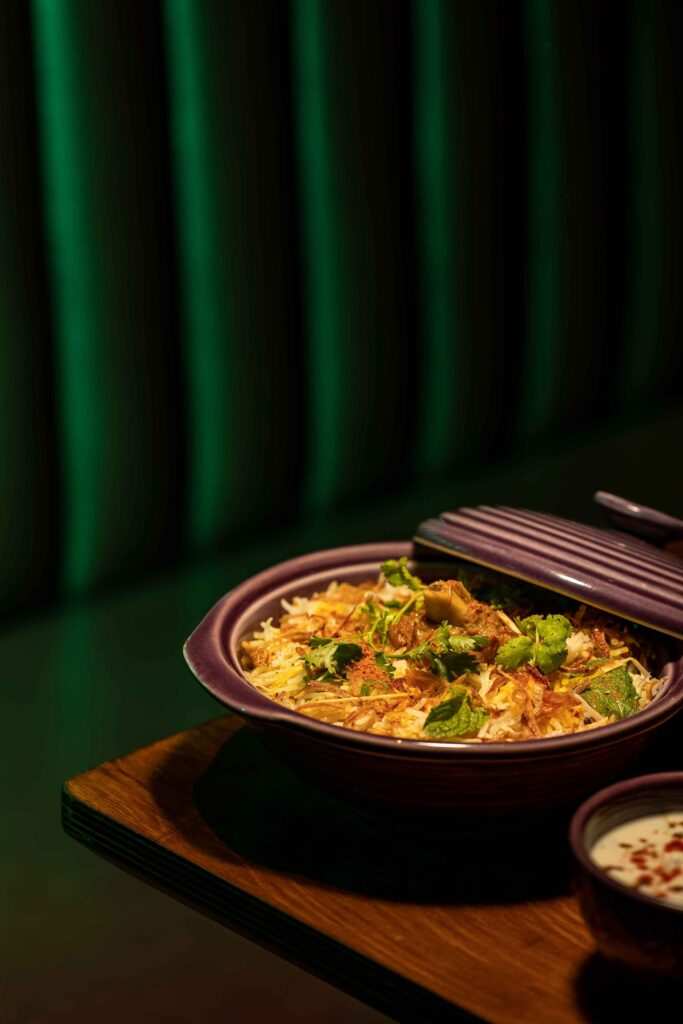
Apart from a wide choice of Small Plates, there is also a set of stacks and wraps served with dip and masala fries that has sandwiches, burritos, burgers, succulent kebabs, and tikka. The menu also includes scrumptious pizzas and delicious flatbreads as well. Do try the Beets and Ricotta Rigatoni pasta tossed in a zesty beet and cashew nut sauce – it tastes as good as it looks. If you prefer Indian, the Large Plates section will take you on a culinary sojourn across India from Dal Bhatinda, a Punjabi-style lentil preparation with chana and toor dal, tempered with garlic, red chillies and asafoetida and the Mushroom Chettinad that has button mushrooms tossed with a spicy south Indian Chettinad-style masala gravy. The Asian Large Plates includes the very popular Hunan-Style Sliced Lamb that is tossed with scallion and chillies in a fragrant sauce. Keep some space for the decadent desserts. I recommend the Textures of Coffee which has a rich Belgian coffee mousse, Arabica bean soil, coffee joconde sponge, dalgona cream and coffee almond praline. Also sample the moist Saffron and Rose Tres Leches that has a vanilla sponge, rose milk, saffron and cardamom mascarpone that will melt in your mouth.
Say Cheers

Daysie has a cocktail menu that is an extension of the brand’s ethos of being fun, relaxed, and playful. Sustainability is key as they use locally sourced ingredients that are given innovative twists that ensure you experience creative flavour profiles and notes. The signature cocktails combine taste notes like sweet, sour, and bitter and are mixed along with premium brands and garnished with the finest ingredients. Twisted Classics involve adding their charm to traditional drinks while the Sub-Continental Cocktails are specifically curated and have locally sourced ingredients making them perfect with Indian cuisines. A selection of Gin and Tonic, Rum and Cola cocktails with homemade syrups, bitters, and masalas, shareable Community Cocktails, a range of Dessert Cocktails and Long Island Iced Teas make sure you never run out of drinks. The mocktails are also interesting here and great if you are a teetotaller. If you are looking to have a fun dining experience in Bengaluru, bookmark Daysie!

Fact File

  • Address: Daysie, Ground Floor, No. 18, Ramanashree Arcade, M.G. Road, Craig Park Layout, Bangalore 560001
  • Timing: 12:00 noon – 12:30 a.m. 
  • Reservations: +9180 4725 0000
  • Average cost for a meal for two is INR 1,000 without drinks and INR 1,800 with cocktails, all-inclusive.


Leave a comment

Your email address will not be published. Required fields are marked *

Exclusive Interview: Nikhil Siddhartha on Swayambhu, Family and Politics

After the pan-India success of Karthikeya 2, Nikhil Siddhartha finds himself at a pivotal phase in his career. The actor is currently gearing up for the release of Swayambhu, one of the most ambitious projects he has undertaken to date, a historical action drama that demanded nearly two-and-a-half years of dedication, extensive physical transformation, and months of post-production work. In a candid conversation with Priyanka Goud, Nikhil opens up about the challenges of mounting a large-scale period film, why he prioritises quality over quantity, how fatherhood has changed his outlook on life, and his belief in using cinema as a tool for social awareness. A Two-and-a-Half-Year Commitment Describing Swayambhu as a project unlike any other in his career, Nikhil revealed that he dedicated nearly two and a half years exclusively to the film.“Some films are easy to make, and some are difficult. Swayambhu falls into the category of films that demand complete commitment. I underwent a significant transformation for the role, growing my hair long, maintaining a specific physique, and immersing myself in the character and story throughout the production period,” he said. A Historical Story with Universal Appeal One of the aspects that attracted Nikhil to Swayambhu was its historical backdrop. Nikhil plays Krishnan Raman, a historical figure whose name appears on ancient copper plate inscriptions that have recently gained attention. “This story is rooted in history, but its themes are universal,” he said. “It’s not confined to one region; audiences across India will be able to connect with it.” The actor also highlighted the growing importance of visual effects in modern filmmaking. Swayambhu reportedly contains nearly 2,700 VFX shots, making post-production one of the most demanding phases of the project. “We completed principal photography in December 2025, but for the last five to six months it has been

Preity Zinta on Batwara 1947, Motherhood and Finding Her Way Back to Cinema

For Preity Zinta, returning to the screen with Batwara 1947 is about more than making a comeback. The period drama allowed her to explore a chapter of India’s history, work with director Rajkumar Santoshi for the first time, and step into a world far removed from her own. But the film also made her reflect on how much life has changed since she began her career, from the freedoms available to women today to the perspective that comes with becoming a mother. For Zinta, Batwara 1947 is ultimately a story about family, resilience and hope, as she tells Lipika Varma in an exclusive conversation. Why did you say yes to doing this film? What touched you the most? There were a couple of things. First, I really wanted to work with Raj ji. I had never worked with him before, so working with him was always on my bucket list. I had also always wanted to do a period film. Beyond that, I genuinely loved the story. What touched me most was that even in the darkest of times, there is always a ray of hope. People may see this as a story about two countries, but for me, it is essentially about a family. I was also deeply affected by stories of families who believed they were leaving their homes temporarily, even burying their jewellery and valuables, thinking they would return. They never imagined they would lose everything forever. Since this is my first period film, I spent time researching and understanding that era. After such a long break from films, why did you choose this project? I was enjoying my personal life, focusing on my family and raising my children. Professionally, I had always wanted to work with Raj ji and also wanted to do a period film.

Exclusive Interview with Sunny Deol: Life Beyond Bollywood

Sunny Deol: “Every Film Leaves Some Kind of Impact” With Batwara 1947, Sunny Deol returns to a story rooted in Partition, family and the human cost of one of the most defining moments in Indian history. The actor reflects on why he sees the film as fundamentally different from Gadar, his long-standing association with director Rajkumar Santoshi, his father Dharmendra’s connection to their shared cinematic history, and the responsibility actors carry when their work leaves a lasting impact on audiences. In conversation with Lipika Varma, Sunny Deol also opens up about playing a character outside the action-driven image audiences often associate with him and working alongside his son Karan. How did you approach the character in this film? For me, it was the subject, the story and the character that I had heard about, and I approached it accordingly. I don’t know exactly what was tweaked. I didn’t read the original play or see it. Vivek Raj had read it, and we had been working on this story since 2010. Unfortunately, we couldn’t make it back then, so we had been waiting all these years. As soon as we got the opportunity, we jumped into it. Sunny, are you happy that your fans, including those in Pakistan, will get to see you in a completely different kind of role this time, without the iconic hand-pump moment or typical action scenes? Actually, I don’t think it’s about that. Fans are always there, and they love you no matter what. Sometimes journalism and politics come into the picture and change the colours of things. But the actual viewer, the person sitting in the theatre and watching the film, doesn’t necessarily look at things that way. They simply watch the film. I’ve met a lot of fans across the country and around the

Akshay Kumar: “The Craft Has Changed, But Hard Work Never Goes Out of Style”

With a career spanning over three decades, Akshay Kumar continues to reinvent himself across genres, from action and comedy to social dramas and entertainers. As he looks ahead to his upcoming projects, including the action-thriller Haiwaan and a lineup of comedy entertainers, the actor reflects on his journey, his approach to cinema, discipline, and why staying connected to the craft remains his biggest priority. In conversation with Lipika Varma, Akshay opens up about his evolving approach to cinema, the importance of teamwork, and the values that guide him both on and off screen. You have played action heroes, comedians, romantic leads, and intense characters. What kind of roles excite you the most today? I enjoy all kinds of roles. When I entered the industry, people mostly saw me as an action hero. After that, I consciously chose to explore different genres and keep discovering myself as an actor. I have done comedy, romance, social dramas, and action films. Every genre brings a different challenge, and that is what keeps the journey interesting. Comedy has been one of your strongest genres. What makes it so special for you? Comedy is definitely one of the hardest genres. Making someone emotional can sometimes be supported by the situation or background music, but making someone genuinely laugh requires precision, timing, and a lot of hard work. Comedy often looks effortless on screen, but there is a lot of discipline behind creating that moment. That challenge is what makes it exciting for me. You have been part of several ensemble films. What is your view on multi-starrers? Everyone has their own approach. Some actors prefer solo films, while others enjoy working in ensemble projects. There is no fixed formula for success. A film works because of its content, storytelling, and execution, not simply because of