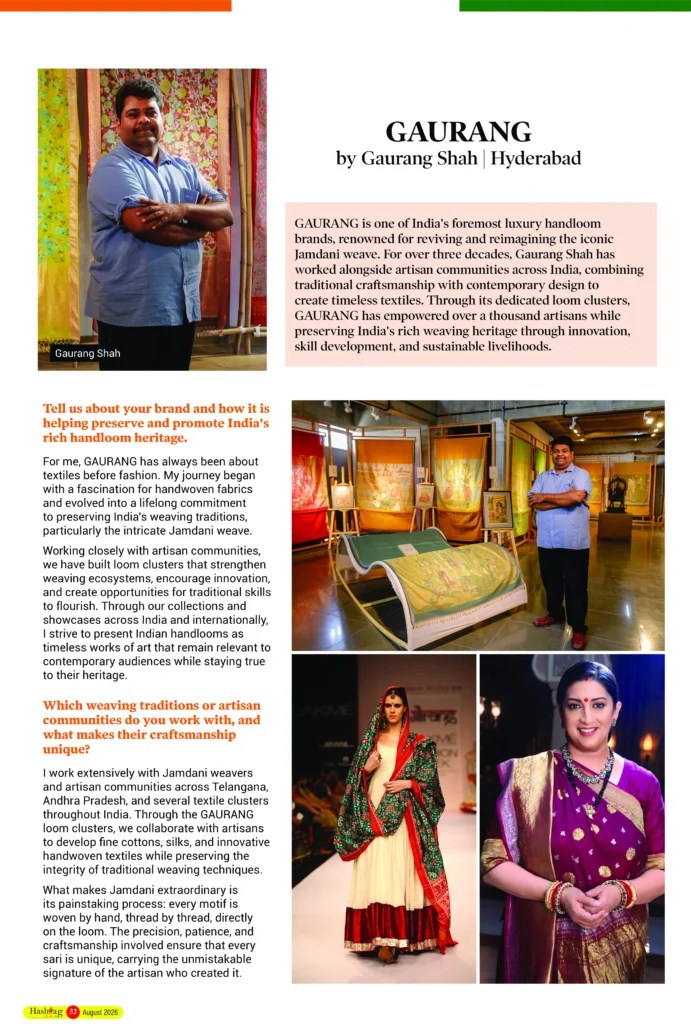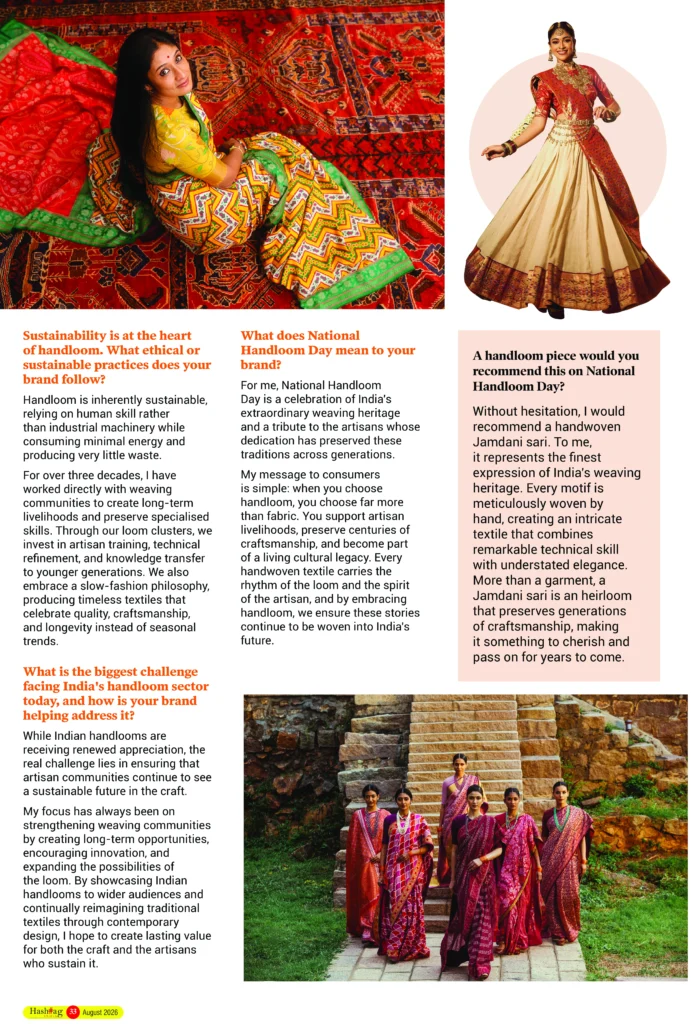
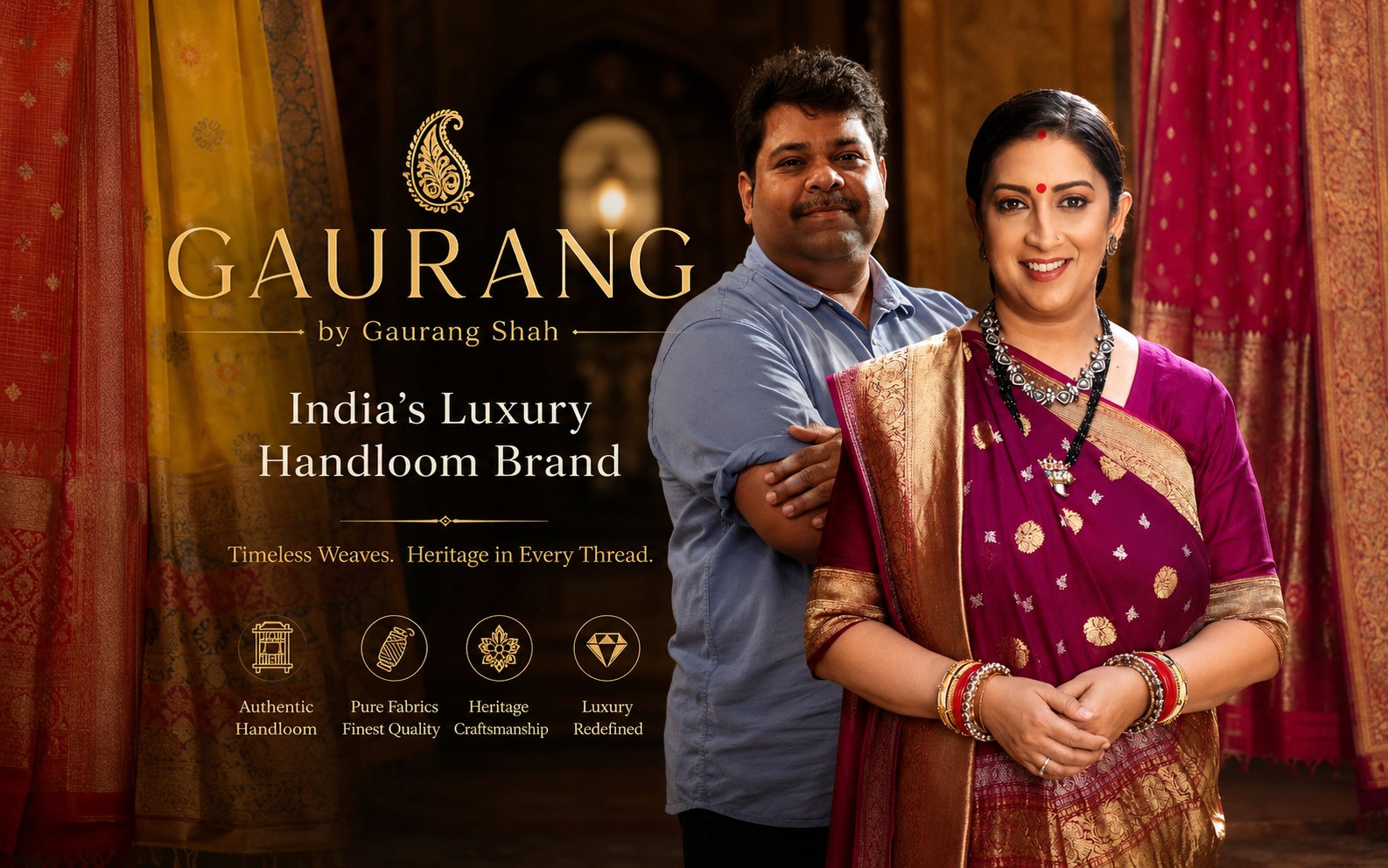
GAURANG is one of India’s foremost luxury handloom brands, renowned for reviving and reimagining the iconic Jamdani weave. For over three decades, Gaurang Shah has worked alongside artisan communities across India, combining traditional craftsmanship with contemporary design to create timeless textiles. Through its dedicated loom clusters, GAURANG has empowered over a thousand artisans while preserving India’s rich weaving heritage through innovation, skill development, and sustainable livelihoods.
1.Tell us about your brand and how it is helping preserve and promote India’s rich handloom heritage.
For me, GAURANG has always been about textiles before fashion. My journey began with a fascination for handwoven fabrics and evolved into a lifelong commitment to preserving India’s weaving traditions, particularly the intricate Jamdani weave.
Working closely with artisan communities, we have built loom clusters that strengthen weaving ecosystems, encourage innovation, and create opportunities for traditional skills to flourish. Through our collections and showcases across India and internationally, I strive to present Indian handlooms as timeless works of art that remain relevant to contemporary audiences while staying true to their heritage.
2.Which weaving traditions or artisan communities do you work with, and what makes their craftsmanship unique?
I work extensively with Jamdani weavers and artisan communities across Telangana, Andhra Pradesh, and several textile clusters throughout India. Through the GAURANG loom clusters, we collaborate with artisans to develop fine cottons, silks, and innovative handwoven textiles while preserving the integrity of traditional weaving techniques.
What makes Jamdani extraordinary is its painstaking process: every motif is woven by hand, thread by thread, directly on the loom. The precision, patience, and craftsmanship involved ensure that every sari is unique, carrying the unmistakable signature of the artisan who created it.
3.Sustainability is at the heart of handloom. What ethical or sustainable practices does your brand follow?
Handloom is inherently sustainable, relying on human skill rather than industrial machinery while consuming minimal energy and producing very little waste.
For over three decades, I have worked directly with weaving communities to create long-term livelihoods and preserve specialised skills. Through our loom clusters, we invest in artisan training, technical refinement, and knowledge transfer to younger generations. We also embrace a slow-fashion philosophy, producing timeless textiles that celebrate quality, craftsmanship, and longevity instead of seasonal trends.
 4.What is the biggest challenge facing India’s handloom sector today, and how is your brand helping address it?
While Indian handlooms are receiving renewed appreciation, the real challenge lies in ensuring that artisan communities continue to see a sustainable future in the craft.
My focus has always been on strengthening weaving communities by creating long-term opportunities, encouraging innovation, and expanding the possibilities of the loom. By showcasing Indian handlooms to wider audiences and continually reimagining traditional textiles through contemporary design, I hope to create lasting value for both the craft and the artisans who sustain it.
5.What does National Handloom Day mean to your brand?
For me, National Handloom Day is a celebration of India’s extraordinary weaving heritage and a tribute to the artisans whose dedication has preserved these traditions across generations.
My message to consumers is simple: when you choose handloom, you choose far more than fabric. You support artisan livelihoods, preserve centuries of craftsmanship, and become part of a living cultural legacy. Every handwoven textile carries the rhythm of the loom and the spirit of the artisan, and by embracing handloom, we ensure these stories continue to be woven into India’s future.
A handloom piece would you recommend this on National Handloom Day?
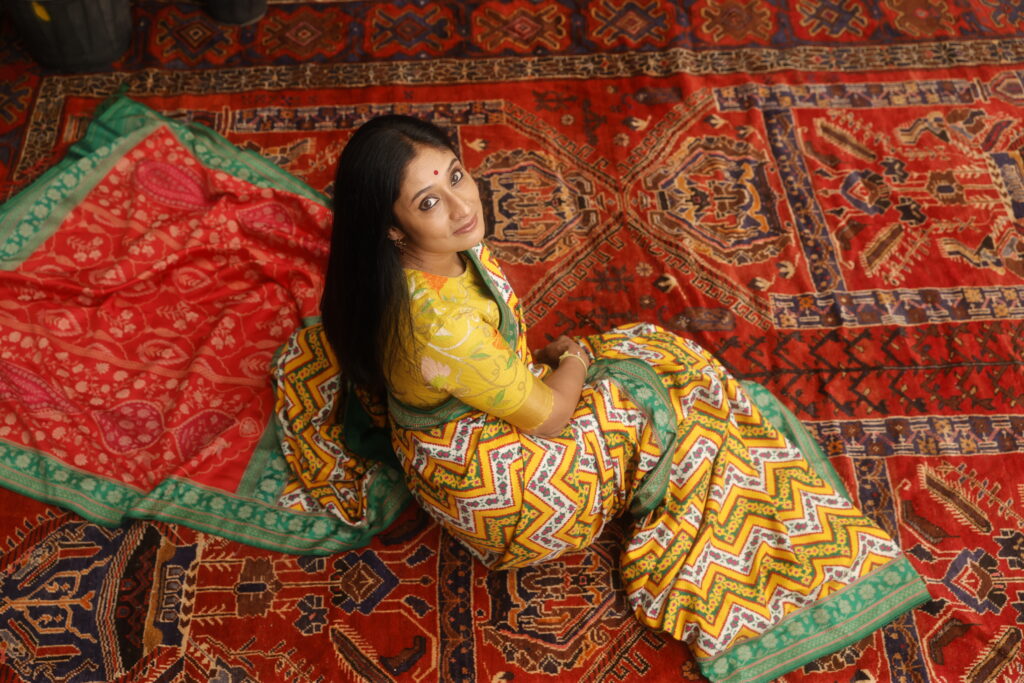
Without hesitation, I would recommend a handwoven Jamdani sari. To me, it represents the finest expression of India’s weaving heritage. Every motif is meticulously woven by hand, creating an intricate textile that combines remarkable technical skill with understated elegance. More than a garment, a Jamdani sari is an heirloom that preserves generations of craftsmanship, making it something to cherish and pass on for years to come.