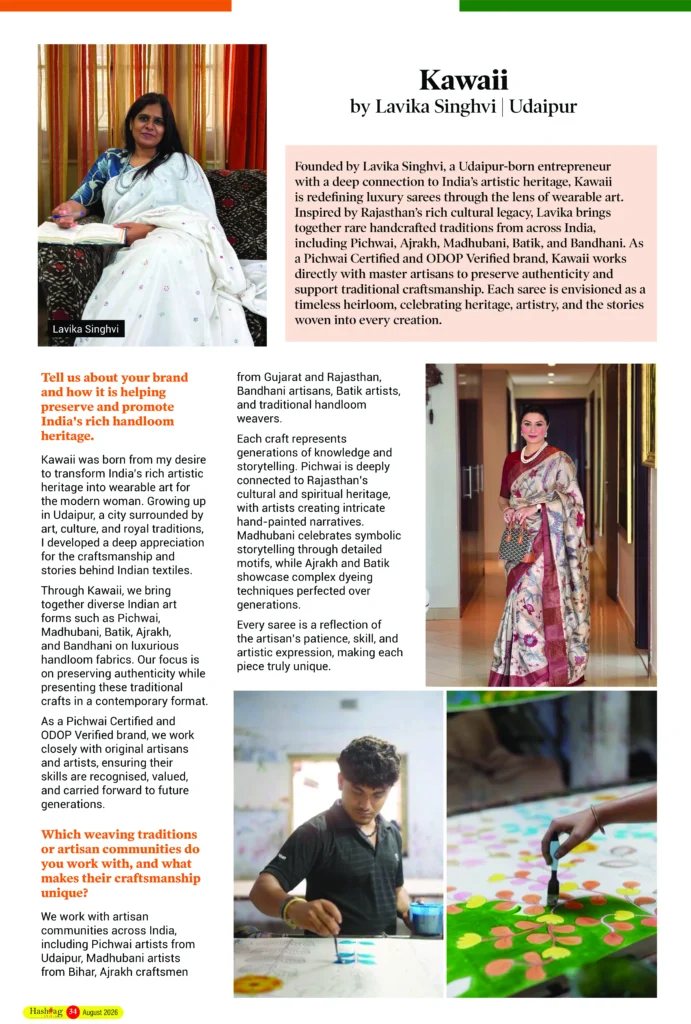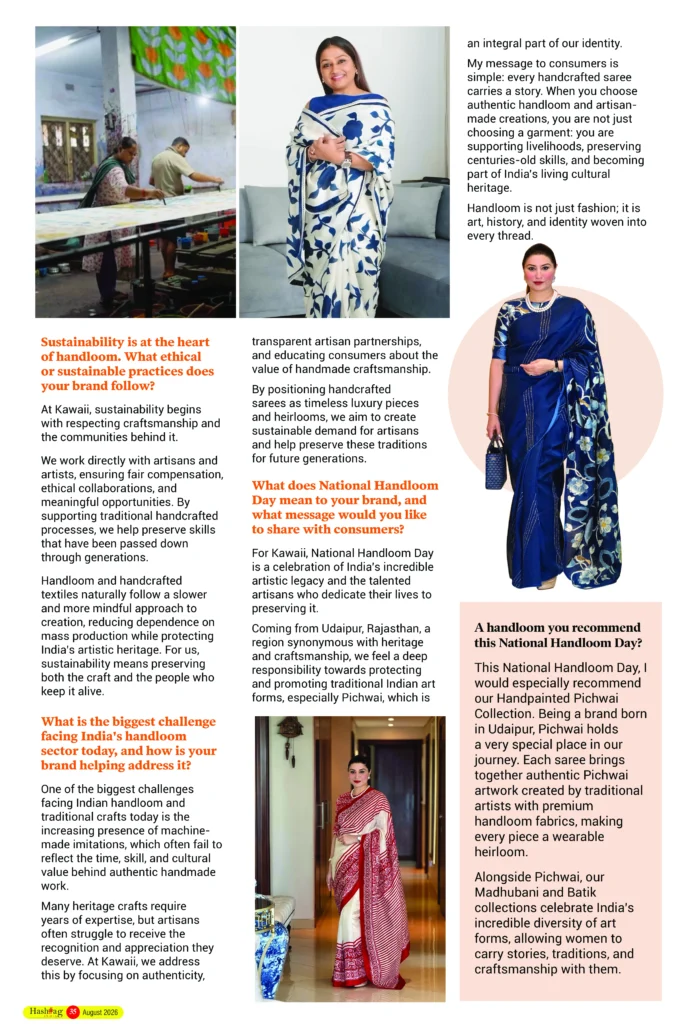
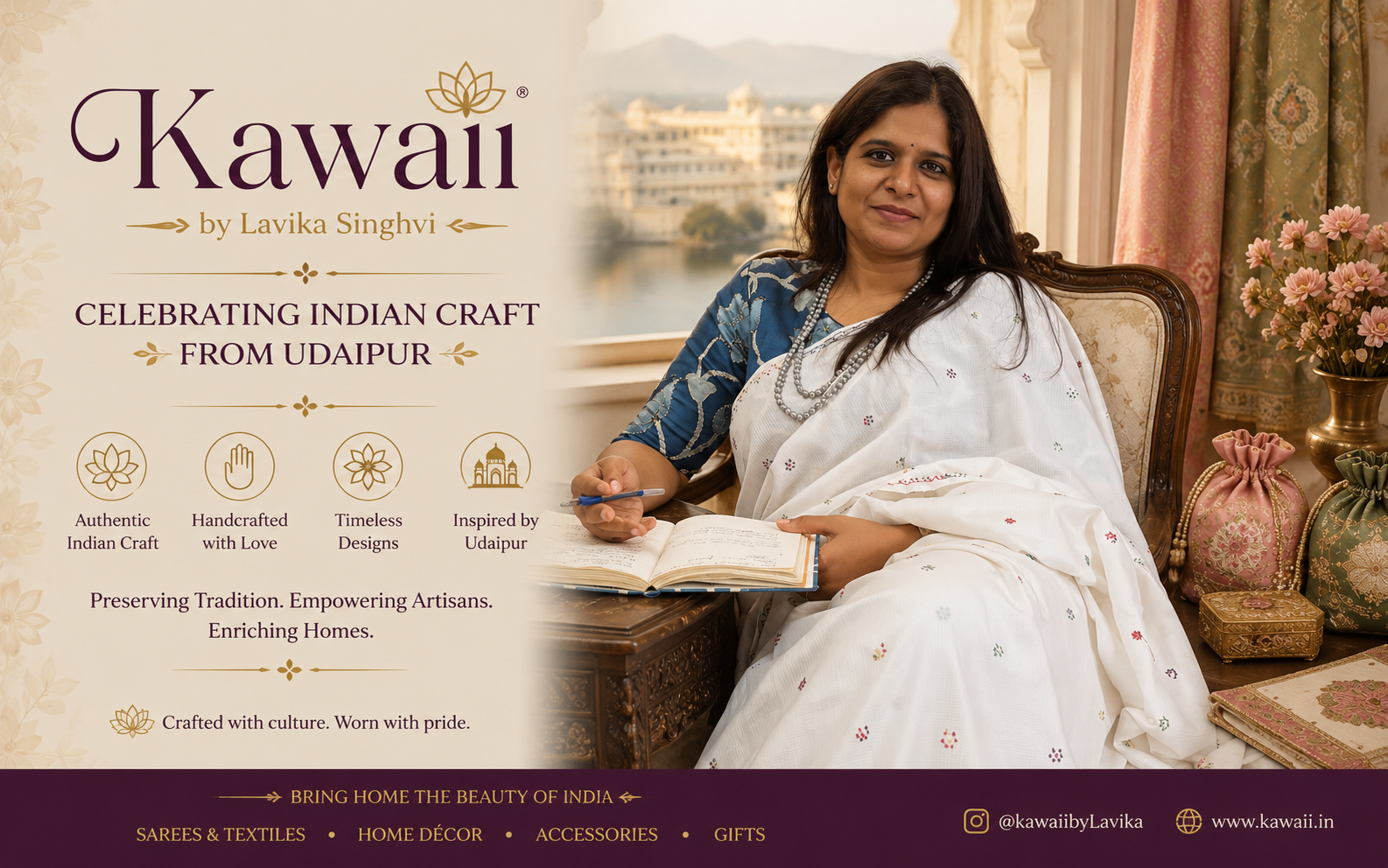
Founded by Lavika Singhvi, a Udaipur-born entrepreneur with a deep connection to India’s artistic heritage, Kawaii is redefining luxury sarees through the lens of wearable art. Inspired by Rajasthan’s rich cultural legacy, Lavika brings together rare handcrafted traditions from across India, including Pichwai, Ajrakh, Madhubani, Batik, and Bandhani. As a Pichwai Certified and ODOP Verified brand, Kawaii works directly with master artisans to preserve authenticity and support traditional craftsmanship. Each saree is envisioned as a timeless heirloom, celebrating heritage, artistry, and the stories woven into every creation.
1.Tell us about your brand and how it is helping preserve and promote India’s rich handloom heritage.
Kawaii was born from my desire to transform India’s rich artistic heritage into wearable art for the modern woman. Growing up in Udaipur, a city surrounded by art, culture, and royal traditions, I developed a deep appreciation for the craftsmanship and stories behind Indian textiles.
Through Kawaii, we bring together diverse Indian art forms such as Pichwai, Madhubani, Batik, Ajrakh, and Bandhani on luxurious handloom fabrics. Our focus is on preserving authenticity while presenting these traditional crafts in a contemporary format.
As a Pichwai Certified and ODOP Verified brand, we work closely with original artisans and artists, ensuring their skills are recognised, valued, and carried forward to future generations.
2.Which weaving traditions or artisan communities do you work with, and what makes their craftsmanship unique?
We work with artisan communities across India, including Pichwai artists from Udaipur, Madhubani artists from Bihar, Ajrakh craftsmen from Gujarat and Rajasthan, Bandhani artisans, Batik artists, and traditional handloom weavers.
Each craft represents generations of knowledge and storytelling. Pichwai is deeply connected to Rajasthan’s cultural and spiritual heritage, with artists creating intricate hand-painted narratives. Madhubani celebrates symbolic storytelling through detailed motifs, while Ajrakh and Batik showcase complex dyeing techniques perfected over generations. Every saree is a reflection of the artisan’s patience, skill, and artistic expression, making each piece truly unique.
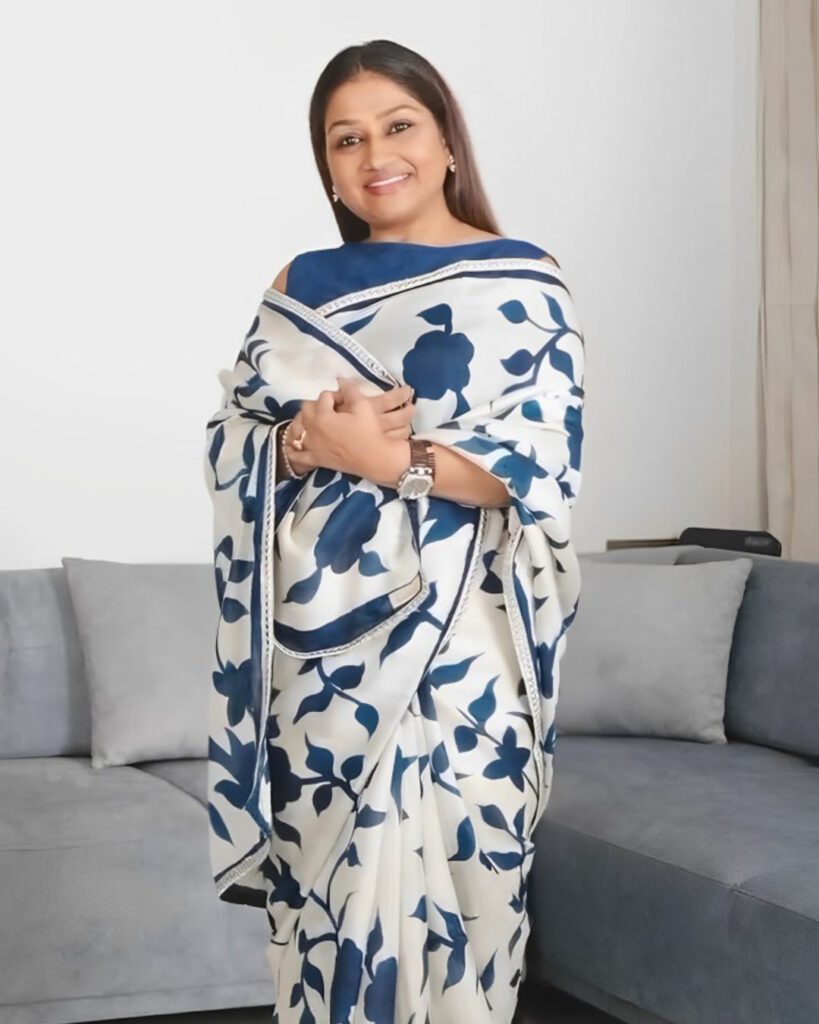 3.Sustainability is at the heart of handloom. What ethical or sustainable practices does your brand follow?
At Kawaii, sustainability begins with respecting craftsmanship and the communities behind it.
We work directly with artisans and artists, ensuring fair compensation, ethical collaborations, and meaningful opportunities. By supporting traditional handcrafted processes, we help preserve skills that have been passed down through generations.
Handloom and handcrafted textiles naturally follow a slower and more mindful approach to creation, reducing dependence on mass production while protecting India’s artistic heritage. For us, sustainability means preserving both the craft and the people who keep it alive.
4.What is the biggest challenge facing India’s handloom sector today, and how is your brand helping address it?
One of the biggest challenges facing Indian handloom and traditional crafts today is the increasing presence of machine-made imitations, which often fail to reflect the time, skill, and cultural value behind authentic handmade work.
Many heritage crafts require years of expertise, but artisans often struggle to receive the recognition and appreciation they deserve. At Kawaii, we address this by focusing on authenticity, transparent artisan partnerships, and educating consumers about the value of handmade craftsmanship. By positioning handcrafted sarees as timeless luxury pieces and heirlooms, we aim to create sustainable demand for artisans and help preserve these traditions for future generations.
5.What does National Handloom Day mean to your brand, and what message would you like to share with consumers?
For Kawaii, National Handloom Day is a celebration of India’s incredible artistic legacy and the talented artisans who dedicate their lives to preserving it.
Coming from Udaipur, Rajasthan, a region synonymous with heritage and craftsmanship, we feel a deep responsibility towards protecting and promoting traditional Indian art forms, especially Pichwai, which is an integral part of our identity.
My message to consumers is simple: every handcrafted saree carries a story. When you choose authentic handloom and artisan-made creations, you are not just choosing a garment: you are supporting livelihoods, preserving centuries-old skills, and becoming part of India’s living cultural heritage. Handloom is not just fashion; it is art, history, and identity woven into every thread.
A handloom you recommend this National Handloom Day?
This National Handloom Day, I would especially recommend our Handpainted Pichwai Collection. Being a brand born in Udaipur, Pichwai holds a very special place in our journey. Each saree brings together authentic Pichwai artwork created by traditional artists with premium handloom fabrics, making every piece a wearable heirloom.
Alongside Pichwai, our Madhubani and Batik collections celebrate India’s incredible diversity of art forms, allowing women to carry stories, traditions, and craftsmanship with them.