No sugar rush, please!
With over 24 years of experience in the world of culinary and academics, culinary expert and chef consultant Chef Reetu Uday Kugaji shares some delicious, healthy Sugar-Free recipes with Hashtag Magazine to revitalise the body, and boost the immune system and promote good health. Enjoy!
Recipe:1
Sheer Khurma (Vermicelli, Milk and Dates Pudding)
Also known as Sheer Korma which means milk with dates in Persian, sheer means milk and Khurma means Dates. A lip-smacking, creamy and rich dessert prepared with fine vermicelli, full-cream milk, dates, saffron strands and clarified butter, garnished with slivered nuts.
Preparation Time: 10 minutes
Cooking Time: 15 minutes
Serves: 8
Ingredients and Quantity:
Vermicelli, fine, broken- 1 ½ cup
Milk, full cream, boiled- 2 litres
Clarified Butter (Desi Ghee)- 04 tbsp.
Purée of Dates- 45 gms/or more as desired
Dates, seedless and chopped- ½ cup/more if sugar is excluded or not added.
Almonds, slivered- 30 gms
Pistachio nuts- 30 gms
Cashew nuts, chopped- 15 gms.
Golden Raisins- 15 gms
Chironji (Charoli), blanched- 02 tbsps
Green Cardamom powder- 1 tsp
Saffron strands, steeped in 1 tbsp of warm milk- ½ gm
Rose Water- 02 tsp
For the Garnish:
Rose Petals, dried and edible- 04 tsp
Almonds, slivered, sautéed- ½ tbsp
Pistachio nuts, sautéed- ½ tbsp
Method:
In a heavy-bottomed non-stick pan, heat the clarified butter.
Add the raisins and the blanched chironji (charoli), and sauté ensuring that it does not burn. Remove and keep aside.
In the same clarified butter, add the slivered nuts and sauté till light brown.
Add the vermicelli, and sauté till it attains a light rust colour.
Add the boiled full-cream milk and the chopped dates.
Cook for 8-10 minutes. Add the steeped saffron strands, puree of dates, green cardamom powder and rose water. Stir and let it cook for a minute. Switch off the flame.
Transfer the khurma into serving bowls and serve chilled/hot/warm garnished with edible rose petals and sautéed slivered nuts.
Chef Tips:
You may add a little nutmeg powder if desired.
Recipe:2
Kulhadwali Mango, Coconut and Fennel Kulfi
(Kulhadwali Aam, Nariyal Aur Saunf Ki Kulfi)
How about an immunity booster sugar-free kulfi? Undeniably the most delectable kulfi in an earthenware pot! This frozen dessert is prepared with the puree of sun-kissed Alphonso Mangoes, reduced full-cream milk, thick coconut cream and powdered fennel seeds, garnished with slivered pistachio nuts, fennel seeds and edible dried rose petals. It is sugar-free, due to the inherent sweetness of the Alphonso Mangoes. This is best served chilled in the earthenware pots (Kulhad).
Preparation Time: 10 minutes
Cooking Time: 25 minutes
Chilling Time in the Freezer: 8 hours
Makes 14 Kulhads of medium size
Ingredients and Quantity:
Alphonso Mango purée, fresh- 1 ½ cup
Full-cream milk- 3 litres
Thick Coconut cream – 1 cup
Fennel seeds, lightly toasted and powdered- 1 tbsp
For the Garnish:
Pistachio nuts, slivered- 2 tbsp
Fennel seeds, lightly toasted and powdered- 2 tbsp
Rose Petals edible and dried- 2 tbsp
For the Covering of Kulhad-
Muslin cloth, unbleached and food safe- ½ metre
Or
Food Grade Aluminium foil – as required.
Method:
In a heavy-bottomed non-stick pan, boil and stir the milk until it reduces to 3/4th of its actual quantity.
Add the powdered fennel powder and mix well.
Remove from the flame and pour it into a wide glass bowl and ensure that it cools down completely.
Add the fresh mango purée, and coconut cream and mix well.
Pour it in soaked Kulhad/earthenware pots.
Sprinkle with the slivered nuts, lightly toasted fennel seeds and edible and dried rose petals.
To cover each kulhad, use a muslin cloth and tie it.
Place the covered kulhads in the freezer for at least 8 hours. Serve chilled.
Chef Tips:
If you are a great alphonso mango fan, you may increase the quantity of its purée.
Recipe:3
Kashmiri Apple and Thandai Kheer
(Kashmiri Saeb Aur Thandai Ki Kheer)
This delectable combination of fresh, ripe and juicy Kashmiri apples is made with spicy homemade thandai spice mix paste, cooked in rich almond milk. This is then reduced, chilled and served garnished with nuts, pepita, melon seeds, peppercorns and rose petals.
Preparation Time: 10 minutes
Time for soaking Thandai spice mix- 2 hours or Overnight
Cooking Time: 30 minutes
Refrigeration Time: 2 Hours or more, if desired
Serves: 8
Ingredients and Quantity:
Kashmiri Red Apple, ripe, peeled and grated- 1 ½ cup
Almond Milk- 6 cups + 2 cups
For the Thandai Spice Mix:
Almonds- 12 nos.
Cashew nuts-12 nos.
Saffron- a few strands
Fennel seeds- ½ tbsp
Poppy seeds- ½ tbsp
Peppercorns, black- 8 nos.
Cinnamon powder- 3/4th tsp
Green Cardamom Powder- ½ tsp
Mixed Melon Seeds- 1/4th tbsp
Edible and Dried Rose petals- 4 tsp
For the Garnish:
Edible and Dried Rose petals- 4 tsp
Almonds, slivered- 4 tsp
Pepitas, lightly toasted- 4 tsp
Mixed Melon seeds- 4 tsp
Black peppercorns, lightly toasted and coarsely ground- 1 tsp
Method:
Soak the ingredients mentioned for Thandai Spice Mix in cold almond milk of 2 cups for 2 hours or overnight.
Prepare a smooth paste and set it aside.
In a heavy-bottomed non-stick deep pan add almond milk and bring it to a boil.
Simmer and add the grated apple.
Stir it occasionally, and let the milk reduce a little.
To this add the Thandai paste and cook it for 2 to 3 minutes.
Let the kheer cool completely. Mix well.
Pour the kheer into soaked Kasoras or earthenware pots.
Refrigerate it for at least 2 hours.
Serve chilled, garnished with edible rose petals, slivered almonds, toasted pepitas, melon seeds and toasted and crushed peppercorn.
Chef Tips:
Do not grate the apple before using it, as it turns to a brownish colour due to enzymatic browning. I suggest that you peel and grate the apple right before it is added to the milk.
Recipe-4
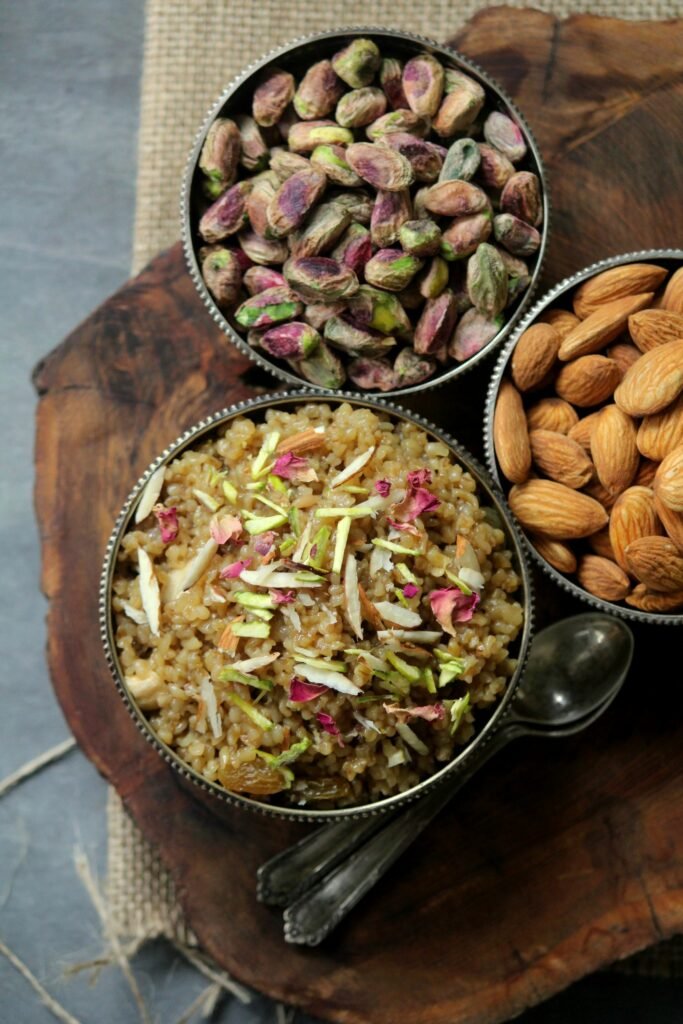
Gujarati-style Broken Wheat Dessert (Fada ni Lapsi/Fada Lapsi)
A healthy and delicious slow-cooked sweet, prepared in almost every Gujarati household. This wheat dessert is prepared with clarified butter roasted and cooked broken wheat, sweetened with organic jaggery and flavoured with green cardamom powder. Served garnished with slivered toasted mixed nuts, raisins and edible rose petals.
Preparation Time: 5 minutes
Cooking Time: 30 minutes
Serves: 8
Ingredients and quantity:
Broken Wheat (Lapsi)- 1 cup
Clarified butter (Desi ghee)- 8 tbsp + 1 tbsp
Organic Jaggery, grated- ½ cup or more if desired
Green cardamom powder- ½ tsp
Raisins, lightly fried in desi ghee- 12 nos.
Cashew nuts, lightly fried in desi ghee- 12 nos.
Water, warm- 5 cups
For the Applying:
Silver leaf (Chandi Ka Warq)- 2 small sheets (Optional)
For the Garnishing:
Toasted mixed nuts, slivered- 1 tbsp
Raisins, lightly fried in desi ghee- 12 nos.
Edible and dried rose petals- 4 tsp
Method:
In a heavy-bottomed non-stick pan, heat clarified butter, add the broken wheat, stir occasionally and sauté it on medium flame till it turns light golden brown. Ensure that it does not burn.
Add warm water, mix it well and cook on a high flame till it comes to a boil.
Simmer, cook and stir it for 20 minutes.
Add the grated jaggery and ensure that it melts completely, cook it for another 5 to 6 minutes.
Now add the nuts and raisins.
Sprinkle the green cardamom powder, and mix it. Drizzle ½ tbsp of clarified butter and simmer for another 2 minutes.
Switch off the flame and the clarified butter will start oozing out.
Serve it hot, drizzled with clarified butter, and garnished with slivered toasted mixed nuts, raisins and edible rose petals.
Chef Tips:
You can also prepare thick jaggery syrup, strain and pour it on the sautéed lapsi instead of adding grated jaggery. You may garnish with fresh coconut shavings too.
Recipe-5
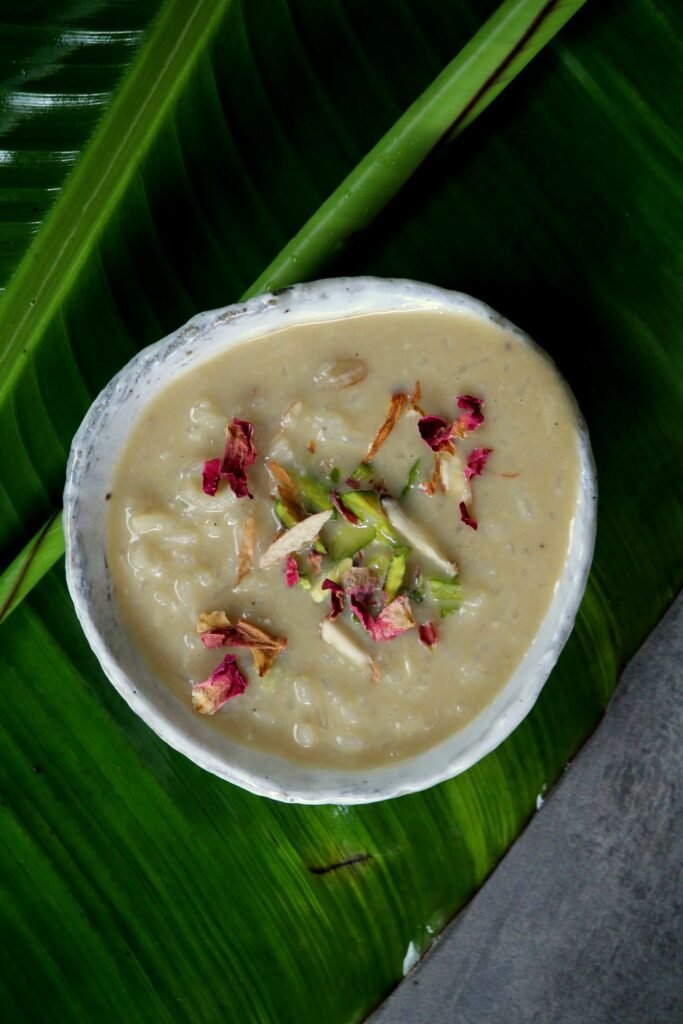
Nolen Gurer Payesh (Bengali Rice Pudding with Date Palm Jaggery)
This authentic Bengali rice pudding is prepared usually during the winters. It is made with the short-grained, aromatic and sticky rice called Gobindobhog which imparts a sweet buttery flavour to the payesh has an amazing earthy and smoky flavour of the delicious Nolen Gur (Date Palm Jaggery) and has the creaminess of the full-cream milk. Served chilled or warm, garnished with slivered nuts and dried edible rose petals.
Preparation Time: 10 minutes
Cooking Time: 30 minutes
Serves: 8
Ingredients and Quantity:
Milk, full cream – 1 ½ litre
Heavy Cream- 1 cup
Rice (gobindobhog/ dubraj)- 1 cup
Date palm jaggery shavings- 8 tbsp or as required
Bay leaves- 4 nos
Cardamom powder- 3/4th tsp
Raisins, golden- 15 gm
Almonds (blanched, peeled and finely slivered)- 15 gm
Pistachio nuts-15 gm
For the Garnish:
Almonds, slivered-15 gm
Pistachio nuts, slivered-15 gm
Dried and edible rose petals- 4 tsp
Method:
Pick, wash and soak the rice (gobindo bhog/ dubraj) for ½ an hour. Drain the water and let the moisture in it dry completely for some time.
In a heavy-bottomed pan, add milk, cream, bay leaves and cardamom powder. Simmer it till it thickens (reduced), now add the drained rice. Ensure that you stir continuously.
Cook it on a low flame until the rice becomes softer in texture (until the rice is cooked up to 70 to 80 %).
Take it off from the flame and add the date palm jaggery, mix it well with the payesh. Ensure the jaggery melts and is incorporated in it completely.
Add the raisins and slivered nuts.
Serve it chilled or warm, as desired, garnished with slivered nuts and rose petals.
Chef Tips:
- You must stir the payesh continuously, otherwise, the rice and milk will get separated.
- In a little clarified butter, you may sear the rice, after draining the water and drying it completely.
- Rice should never be overcooked (only up to 80%).
- Milk will curdle when jaggery is added to a high flame.
Box:
Sugar free alternatives used: