
Toxic Diet Culture: A Cloud of Darkness

Toxic Diet Culture A Cloud of Darkness - Hashtag Magazine

Mehak Walia in Conversation with Dr Harshad Ramineni, a well-known doctor and fitness genius, Nabiya Shahid, a dietitian, health and fitness expert and, Akansha Khanna, a counselling psychologist, NLP Practitioner, and life coach. 

May 6th is celebrated around the globe as No Diet Day, a day meant to raise awareness about the harmful effects of diets and toxic diet culture. With the rise of social media and the pressure to achieve the “perfect” body, toxic diet culture has become a pervasive and damaging force in our society. It refers to the prevalent cultural belief that achieving and maintaining a thin body frame and certain food choices are superior to other body types and food choices. It also often promotes unhealthy and unsustainable dieting practices, encourages disordered eating habits, and can lead to a host of negative physical and mental health-related outcomes.

This toxicity also promotes the idea that weight loss is the solution to all health problems and that those who are overweight or obese are lazy and lack self-control. This is also characterized by an obsession with food, weight, and body shape, and it often leads to harmful behaviors such as restriction, bingeing, and purging. Toxic diet culture is perpetuated by the media, the diet industry, and even healthcare professionals. It just ends up creating a narrow definition of beauty that is unattainable for most people and can lead to feelings of shame and self-hatred. It also promotes the idea that self-worth is tied to appearance, leading to low self-esteem and poor body image.

Even most health professionals agree about the bad effects of toxic diet culture. We spoke to two such professionals to take their viewpoint on the same along with the steps that must be taken to rectify this trend.

Dr Harshad Ramineni is a doctor with extensive experience in the field of health and wellness. In addition to managing health OPDs, his primary focus is on creating evidence-based nutrition and fitness programs that are personalized to meet the unique needs and goals of his clients. He strongly believes that “The world’s obsession with toxic diet culture is extremely concerning. It promotes unhealthy and unsustainable eating habits, promotes unrealistic body standards, and can lead to a host of physical and mental health issues. Diet culture is also often linked to harmful weight stigma and discrimination, which can have a profound impact on people’s mental health and well-being.” 

When it comes to combating this toxic diet culture, he believes that “we need to shift our focus from weight and appearance to overall health and well-being. This means promoting healthy eating habits that are sustainable and enjoyable, rather than restrictive and punishing. It also means encouraging regular exercise and movement, as well as promoting body positivity and self-acceptance. Finally, we need to work together to challenge harmful weight stigma and discrimination, and promote a more inclusive and accepting culture.” 

Meanwhile, Nabiya Shahid, a dietitian, health and fitness expert and, a member of the Indian Dietetic Association, who has been practicing in the health care industry for over seven years with an experience of over 1000 + clients believes that “The beauty standards for men and women have increased manifold times and there is a huge pressure on youngsters to look a certain way to be accepted in the society today. Copying Bollywood celebrities or social media influencers has led Boys and Girls to believe they need to look a particular way and fit into certain outfits to have a sense of belonging. I strongly feel health and fitness are way beyond looking a certain way and fitting into certain outfits. Health comes from within and we need to look beyond just staying size zero and using fad diets to achieve those unrealistic looks.” 

She further added, “There are a couple of things we can do to create awareness and prevent the culture of Toxic Dieting to rise including focusing on good health and not just being a certain weight, educating the youngsters on shifting their mindset from looking a certain way to embracing holistic health and fitness, educating them to not blindly follow celebs and influencers and their meal plans, and teaching them to embrace body positivity and love themselves for who they are with all their flaws. Seek proper guidance from a qualified Nutritionist to lose weight or improve your eating habits, this isn’t supposed to be a fad game.” 

But, the awful effects of toxic diet culture aren’t just physical, it can lead to an extremely distorted body image. The constant comparison to an unattainable standard can lead to feelings of inadequacy and a distorted perception of one’s own body. This can lead to poor self-esteem and mental health issues. To understand this better, we spoke to a mental health expert. 

Akansha Khanna, a counselling psychologist, NLP Practitioner, and life coach who is the founder of Thrive Limitless and is currently working with Hans Foundation for their school project called the Hans Wellness Clinic, believes that “Due to the increased exposure to so many different areas of life coming mostly from social media and the entertainment industry, a benchmark/standard has been set for matching beauty standards and ideal bodies. I see both, young boys and girls, dealing with a sense of dissatisfaction with their bodies due to the comparison. Alas, what they don’t realize is how this online world is just an illusionary portrayal of life. This is why the diet culture at large, is toxic because for everyone diet looks so different.”

She further added, “We have people labelling foods good or bad, avoiding some food, trying to suppress appetite with caffeine, eating only at certain times of the day, and chasing toxic diet trends because they will only look and feel worthy upon losing weight. It also makes people feel guilty or shame upon eating specific kinds of food to the point where they sometimes even avoid social situations with the fear that they might eat a lot and people would judge them. This constant preoccupation with weight can lead to negative self-talk, envying others, internalization of fat-phobia, a bad relationship with food and even eating disorders, depression, anxiety, poor body image, low self-esteem and confidence, addiction to over exercising and much more.”

Isn’t it about time that we hit toxic diet culture where it hurts and work on unlearning the aspects of standardized diets & beauty set by the world? Instead, we should focus on embracing our beautiful bodies. To live a happier and healthier life, we must learn to focus on sustainable lifestyle changes that work best for us & our bodies. After all, once we embrace our uniqueness that is when we can truly shine.

Leave a comment

Your email address will not be published. Required fields are marked *

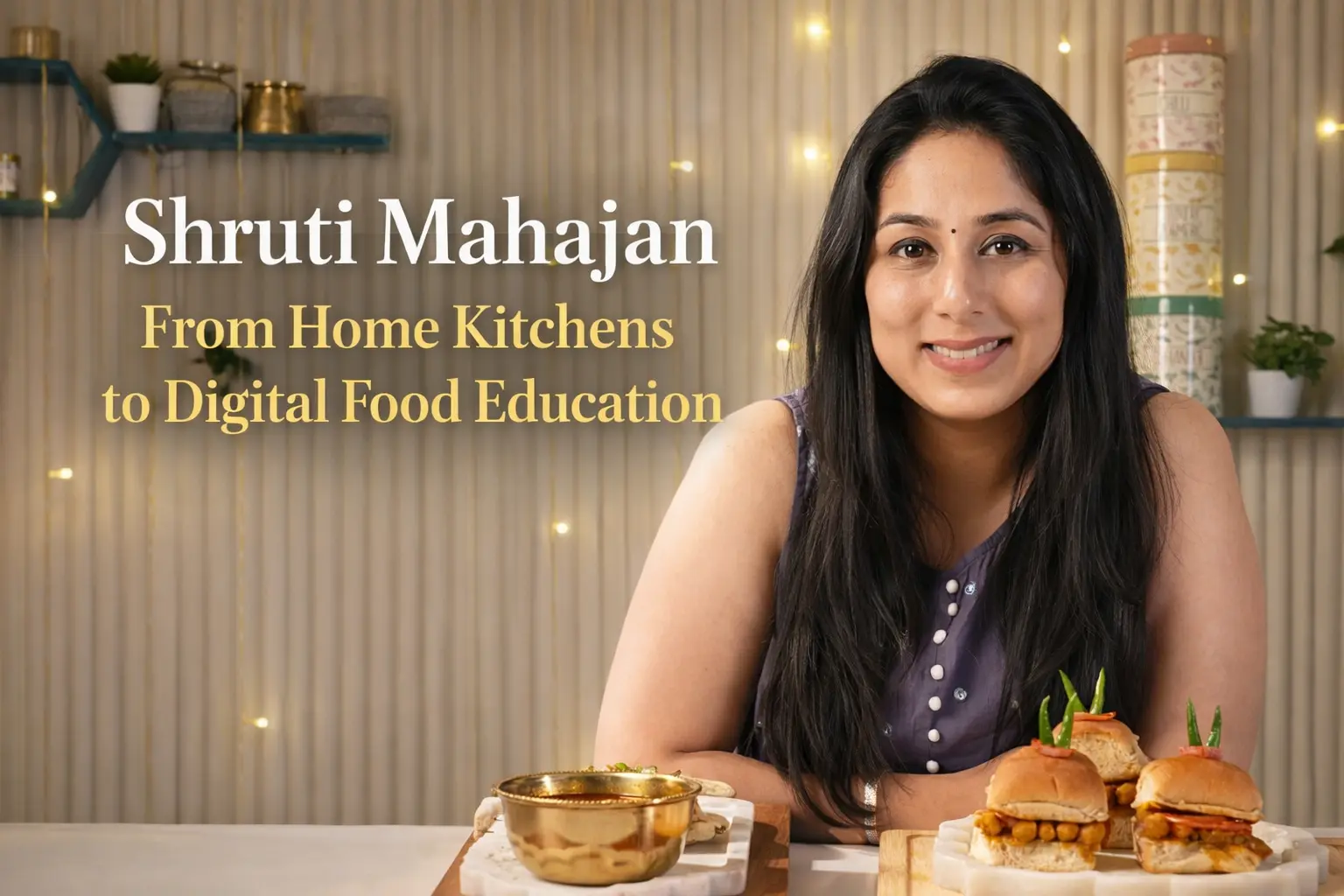
Shruti Mahajan: From Home Kitchens to Digital Food Education

Shruti Mahajan’s relationship with food began long before social media. Raised in a home where meals symbolised comfort and connection, she grew up understanding that food was never just functional; it was emotional infrastructure. Today, based in Delhi NCR, she balances a full-time corporate career alongside a steadily growing culinary platform. Her dual life reflects her personality: equal parts structured and creative. “I’ve always balanced discipline with imagination,” she shares. Managing time, health, and responsibility firsthand shaped her belief that food solutions must work in real life, not just on screen. Simplifying the Everyday Shruti identifies as a culinary content creator and digital educator, but her core mission is simpler: make healthy eating realistic. She noticed that nutrition-forward cooking often felt overwhelming or aspirational. “Food is something we deal with every single day,” she says. “If we can make it easier and healthier, it genuinely improves quality of life.” Her content is built around that practicality, short, efficient recipes designed for busy schedules. Shruti’s signature format includes 30–40 second recipes that viewers can watch, save, and cook without friction. She focuses on ingredients already present in Indian kitchens and has carved a niche by making millets engaging, from Ragi Brownies and Ragi Dhokla to Millet Sambar Khichdi. Built on Consistency Her journey began quietly, experimenting in her own kitchen and sharing what worked. There was no dramatic pivot, only persistence. Balancing content creation alongside a demanding job required discipline. That phase reinforced her core belief: consistency outweighs perfection. The turning point came when followers began writing, “I actually tried this.” That validation signalled impact. Today, she is focused less on virality and more on systems, structured PDFs, nutrition-led education, and scalable tools that empower everyday cooks. Power in Balance Shruti operates on three principles: balance over extremes, progress over pressure,

Nidhi Goyal on Reinvention and Food Entrepreneurship

Nidhi Goyal’s story is one of quiet endurance and deliberate rebuilding. Based in Jaipur, she holds a Bachelor’s degree in Computer Applications (BCA), a foundation that sharpened her analytical thinking and discipline, qualities that would later prove vital in entrepreneurship. Raised in a middle-class business family, she grew up absorbing lessons in independence and responsibility from her father. But life tested her early. Married in 2017, the years that followed brought emotional challenges that deeply impacted her confidence and health. After the birth of her son in 2019, circumstances led her to return to her parental home. Today, as a single mother raising her child with the support of her parents, Nidhi stands self-aware and purpose-driven. “Life may not turn out the way you planned,” she reflects, “but you still have the power to rebuild it.” Cooking as Independence Nidhi is the creator behind Fun2oosh Food, where she shares simple, practical, and relatable recipes for everyday households. But beyond content, her work represents something far deeper: financial independence and dignity. “Every decision I make is driven by one purpose: to give my son a secure and value-driven future,” she says. Content creation became her pathway to rebuilding her life on her own terms. Honest Food, Real Connection Her culinary philosophy is rooted in authenticity. She creates “honest, no-fuss, everyday food,” recipes tested with patience and precision. Over time, her confidence has grown alongside her platform, earning her audience’s trust. Her community associates her work with warmth and reliability. The food feels personal, not performative, a reflection of the care behind every dish. The Courage to Begin Nidhi began her journey in 2021 during a period of vulnerability. Monetisation was slow; it took four months to earn her first $100 on YouTube, an amount that covered her son’s expenses at the

Suzann Homan: A Corporate Lawyer Crafting Goa’s Premium Spirits

Suzann Homan is a Corporate Lawyer and a proud Bandra-born Bombay Goan, whose identity blends Mumbai’s urban sensibility with deeply rooted family values. Raised in a home where food, flavour, and togetherness were sacred rituals, her worldview was shaped by culture and community. At the heart of that influence was her mother, Grace Fernandes, whose quiet strength and intuitive craft left a lasting imprint. From her, Suzann inherited an appreciation for taste, detail, and intentional living, values that would later define her entrepreneurial journey. Turning Ritual into Brand As Founder–Director of Kantala Spirits and the visionary behind Gracia Viva Agave, Suzann did not set out to merely launch a beverage. Gracia was born as a tribute, inspired by her mother’s small-batch infused agave recipe, long shared at intimate family gatherings. For Suzann, the mission was clear: transform a deeply personal ritual into an experience others could access, without losing its soul. Purpose, she believes, lies in honouring origin while allowing thoughtful evolution. Precision Meets Emotion What distinguishes Suzann’s leadership is the seamless blend of emotional authenticity and professional discipline. Where many brands pursue fleeting trends, Gracia is anchored in storytelling, flavour memory, and intention. Her legal background ensures structural rigour and compliance, while heritage guides creativity. She champions balance and mindful indulgence over excess, a philosophy increasingly aligned with modern consumer values. A Family Table in Bandra Gracia’s roots trace back to intimate family rituals. Agave spirit, sourced through family ties in Mexico, was infused at home by Grace Fernandes with fruits, spices, and chocolate, guided entirely by instinct. These bottles were never commercial. They were tokens of celebration, shared among loved ones. The shift from private ritual to public offering was gradual and deliberate, anchored in respect for its origins. Expanding the Table The defining moment came when Suzann

How Walking Away from CA Led to a Life in the Kitchen

Natasha Gandhi’s journey into food was anything but predictable. Once on the path to becoming a Chartered Accountant, she attempted the exams five times before confronting a difficult truth: her heart wasn’t in it. “Walking away from CA was terrifying,” she admits, but that leap of faith led her back to her kitchen, where she began experimenting with healthy, gluten-free, vegan desserts. What started as curiosity soon deepened into a calling. A defining moment came when she stepped onto MasterChef India, finishing as a top finalist. The platform sharpened her confidence and creative voice, introducing her to a national audience. From there, she began sharing recipes online, building a community around wholesome, hearty food rooted in story. Today, many know her as the ‘Biryani Queen,’ a title born from her ability to honour tradition while reimagining comfort food in nourishing, accessible ways. Food as Memory and Medicine Natasha describes her work as culinary storytelling. She documents traditions, reinterprets classics, and brings regional and community-driven recipes into modern kitchens. “Food, for me, is both memory and medicine,” she says. Her philosophy challenges the idea that healthy eating must feel restrictive. Instead, she champions balance, dishes that are satisfying, flavourful, and mindful without sacrificing soul. Heritage with a Modern Lens What distinguishes her voice is her focus on lesser-known regional dishes, from diverse biryanis to India’s pasta-like traditions, presented in ways that feel approachable for home cooks. She avoids chasing fleeting trends, choosing instead to create from curiosity and passion. Her signature strength lies in transforming indulgent favourites into healthier versions without compromising on depth. That blend of heritage, innovation, and mindful cooking defines her identity. Breakthrough Moments Growing up in a Punjabi household where food was celebration and identity, Natasha was surrounded by rich flavours and vibrant conversations. Influenced by chefs

You May Also Like

Connect with us