
Sprucing Up Home Sweet Home: 4 Home Décor Brands That You Need To Check Out

For all the home décor fanatics out there, Shraddha Reddy curates an exclusive list of Indian brands that mix fun with style.

One’s home is truly a reflection of their personality. It’s no wonder that people spend so much time, effort, and money to create the perfect environment that they long to come home to. The vibe of a home and the pieces that fill it up can influence everything, from mood to productivity, and even confidence. Picking the right furniture, decor, and artifacts for a home is a process that takes years of patience and persistence.

That’s why, when you do find those pieces that bring you joy or have a styling element that you love, grab it! From furniture and home textiles and home decor, here are four interesting Indian brands, each with their own unique USP, that have carved out a niche for themselves in the market.

Ghar Ghar

Ghar Ghar is a bohemian-inspired home décor company originating from Bhadohi, a small district in Uttar Pradesh that is hailed as the carpet city of the world. Home to generations of carpet makers karigars, Bhadohi is currently one of India’s biggest hubs for home décor manufacturing. Ghar Ghar was started to provide everyone with the opportunity to create comfortable, vibrant spaces at home affordably and practically. Their rugs, runners, and cushion covers boast an eclectic mix of colours, patterns, and textures that give them a fun, laid-back vibe. 

“The name ‘Ghar Ghar’ is inspired by the traditional childhood game where we created make-belief homes,” says Anushka Ahuja, co-founder of Ghar Ghar. She believes that this imaginative side doesn’t need to stop as people grow up because everybody deserves the chance to create their dream home. “That’s why Ghar Ghar is all about providing you with playful products which will suit your style, give you the home of your dreams, and ensure that going back to your home brings you the comfort you need,” says Anushka.

Little Miss Arty

Little Miss Arty offers a range of handmade concrete home decor products and was started in 2018 out of Mansi and Harshit Jholapara’s architecture design studio. What started out as a passion project due to Mansi’s experimental DIY journey with arts and crafts turned into an official brand mid-2020. “I am an interior designer by profession and my husband is an architect. Creating handmade goods is what we’ve always been passionate about,” says Mansi.
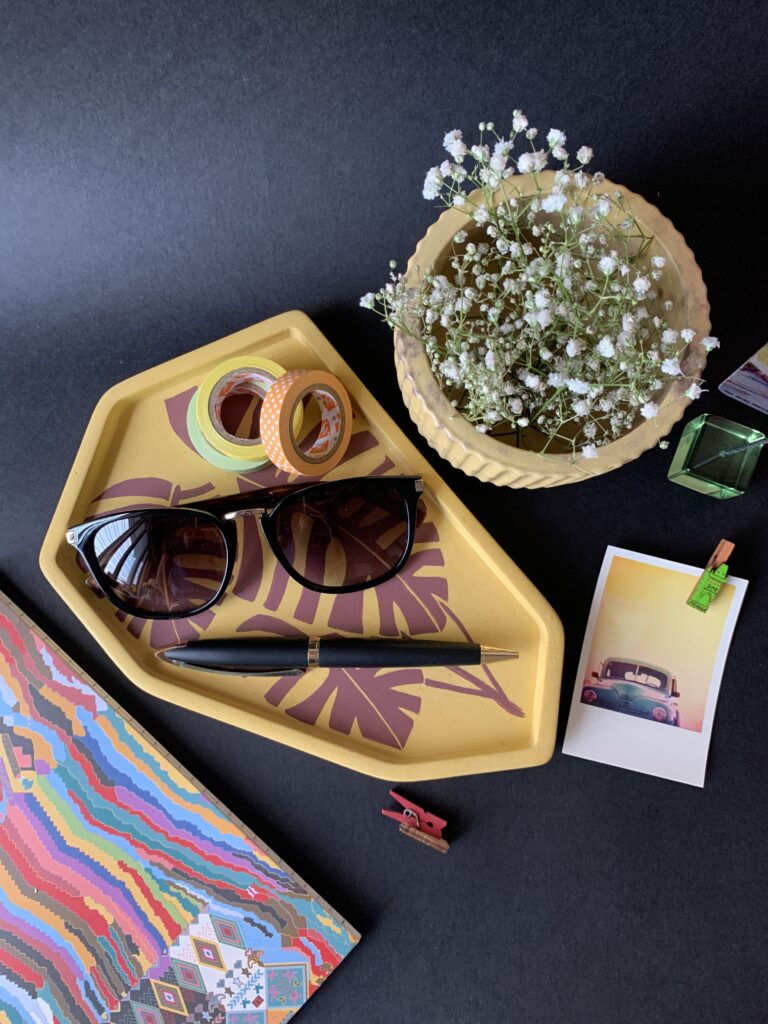
Little Miss Arty specializes in making every day utilitarian objects look beautiful and bespoke. Their lovely trinket trays, paperweights, coasters, soap dishes, photo holders, and fridge magnets not only serve a purpose but also work to beautify a space. Some of their multipurpose products, like their mini planters, can be used as pen holders, paperweights, desk organizers, candle or pen holders, and more. The products can be completely customized to suit each customers’ choice of colours and patterns (like marbling or hand painting). Since the products are handmade, no two products come out looking the same! This further adds to the exclusivity of the products, making them even more unique. Coupled with the affordable rates, these products make for a great gifting option as well. 
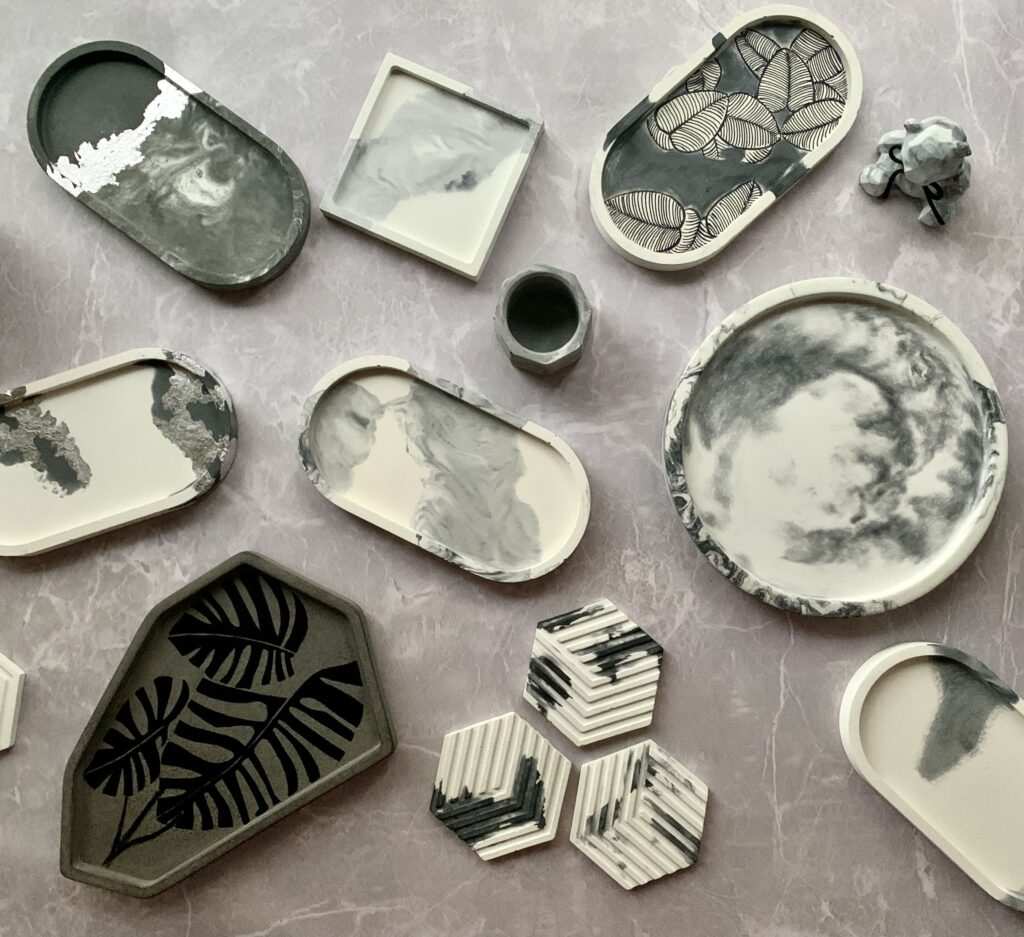
Having an architectural background, the couple was naturally drawn towards concrete to create one-of-a-kind, handmade products for home and office decor. Mansi and Harshit use locally available white or grey cement to make their products and manually make their concrete mixtures with concrete colour pigments. They use acrylic paint for the hand-painted art while the gilded artwork is done using craft gold, copper, and silver leaf sheets. As for their moulds, “We’ve been picking up interesting-looking moulds over the last few years on our travels abroad,” Mansi mentions. 
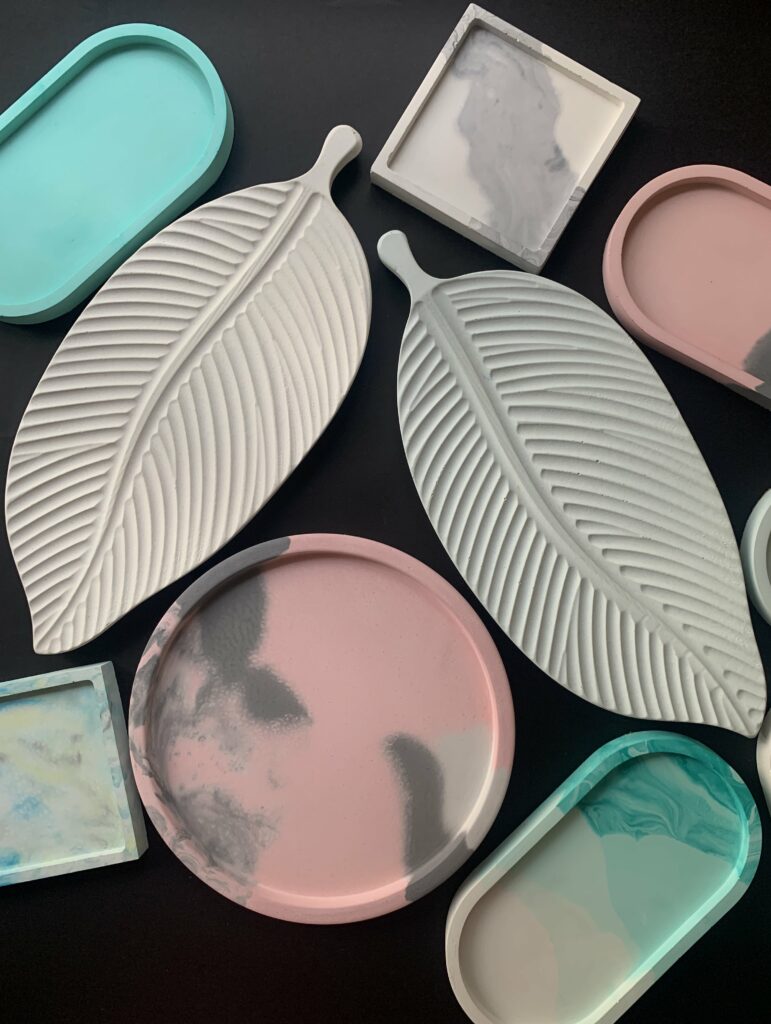
Everything else that goes into making the products is locally purchased from hardware stores and arts & crafts shops. Mansi adds that they make it a point to use sustainable materials not just for their products, but also for their packaging. Sometime in the near future, Mansi also plans to conduct workshops to train those who might be interested in the art of creating beautiful but utilitarian decor pieces from concrete.

Shrila Home

Shrila Home is a custom handcrafted luxury décor brand that specializes in intricate furniture

carving and design. “The brand is inspired by French Baroque and Italian Renaissance styles and shaped by Indian craftsmen,” says Anurag Tikku, founder of Shrila Home. With only the finest quality raw materials and resources being used, the price points for these stunning pieces are on the higher side. For those looking to invest in quality furniture that can potentially become a family heirloom someday, Shrila Home offers a wide variety of grand designs to choose from.

They have an in-house design team of experienced craftsmen from across the country, each an expert in their domain. “Our approach to design is customer-centric. The client’s imagination is put on paper and brought to reality by us,” says Anurag. “From the first sketch of the piece to creating a mood board, and the final finishing touches, the entire process is created taking input from the client,” he adds.

Borderline PLAY

Borderline PLAY is a Delhi-based furniture brand born during the pandemic out of a sheer need for architects to design while their projects had come to a standstill. “The aim was to reimagine objects that we’re usually surrounded by at home, make them ‘fun’ctional, and add our architectural spin to them,” says Shruti Gupta, co-founder of the brand. The products are custom designed by her partner and co-founder Anica Kochhar and go through R&D with different vendors to develop prototypes.
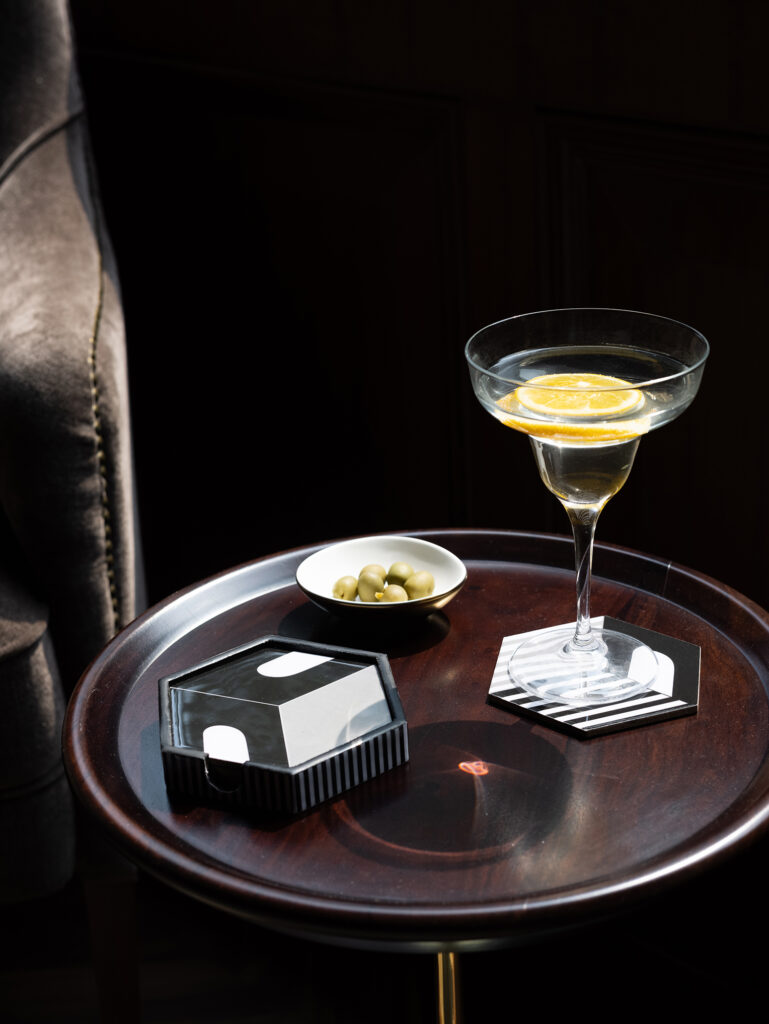
Borderline PLAY’s products are functional art, designed by architects. The products have a very distinct 3-dimensional, volumetric aesthetic associated with them that instantly draws the eye. These unique art deco pieces with strong geometric shapes and patterns are bold, out there, and make a statement. If you’re looking to experiment with home decor and add interesting accents around your home or office, Borderline PLAY’s eccentric-looking products are sure to impress.


Leave a comment

Your email address will not be published. Required fields are marked *

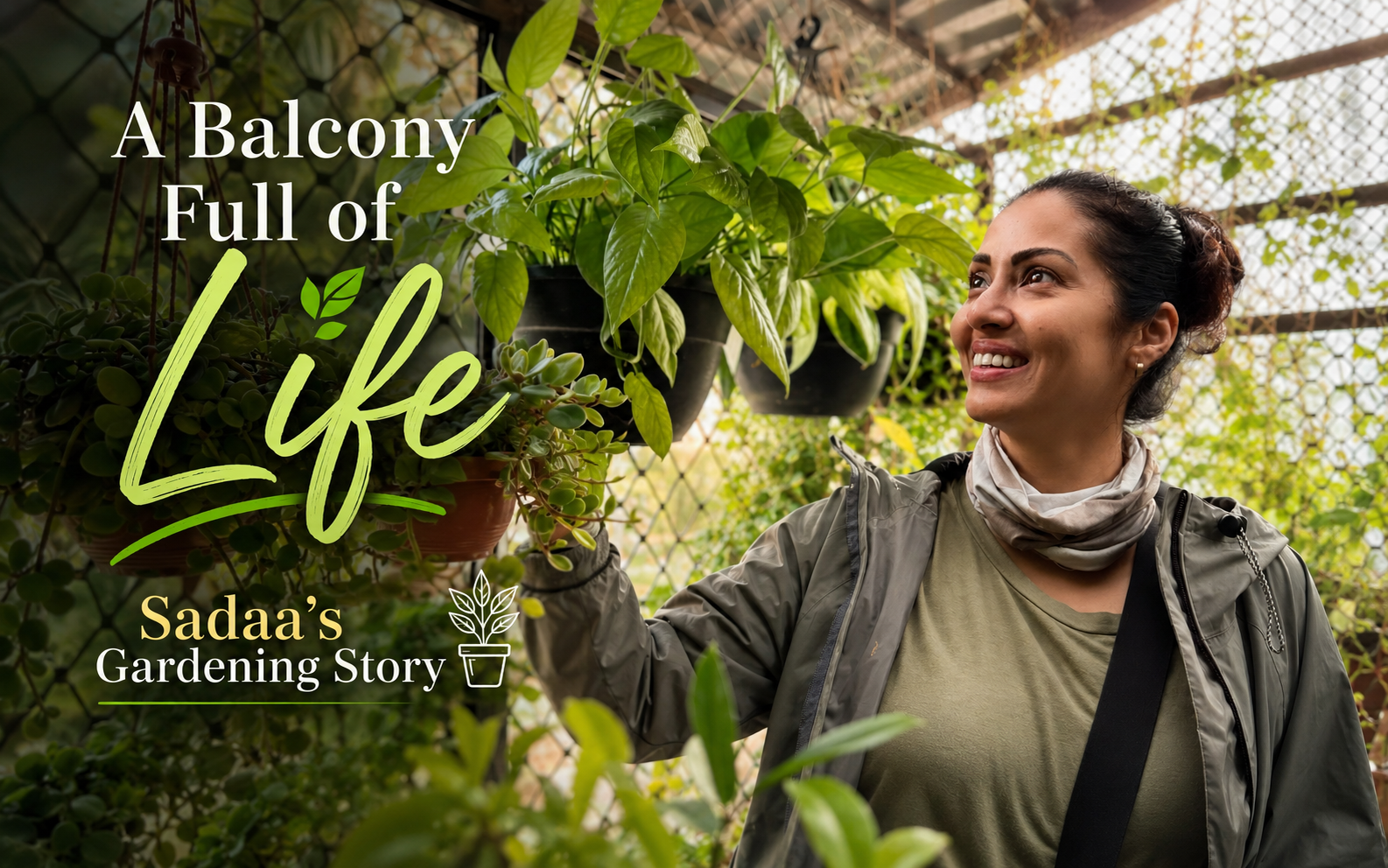
A Balcony Full of Life: Sadaa’s Gardening Story

For actress Sadaa Sayed, best known for films like Jayam, Anninyan, Aethirree, etc., gardening wasn’t a lifelong passion; it was something that gently found its way into her life, one phase at a time. What began as a quiet act of rescuing dying plants during the stillness of lockdown slowly transformed into a deeply personal journey of healing, especially after the loss of her father. Today, her balcony is a thriving sanctuary of over 200 plants, with a special love for the delicate yet resilient Hoya family. But beyond the numbers and rare collections, it’s the emotional connection that defines her space. In an exclusive tête-à-tête with M Priyanka Goud, Sadaa shares how her garden is more than just greenery; it’s where grief softened, routines found meaning, and life, in its most organic form, continued to grow.” Her journey towards gardening Gardening found me in phases. Growing up, I watched my father lovingly tend to everything, from chikoo and coconut trees to mango trees and vibrant flowering plants. But back then, I never felt that connection. Even later, in our Mumbai home, while my parents cared for hibiscus, tulsi, curry leaves, and humble money plants in our balcony, I remained a distant observer. It was only during the lockdown that something shifted. I began rescuing dying plants I’d see outside shuttered shops, bringing them home and nurturing them back to life. That’s when I discovered my love for foliage, collecting varieties like Hoya and surrounding myself with greens that felt quietly alive. Life got busy again, and I was left with only the hardy ones, money plants and philodendrons, while delicate beauties like calatheas slowly faded away. Gardening became therapy through life’s phases After losing my father, I returned to my plants in a completely different way. Repotting root-bound greens

How to Keep Your Home Cool without Increasing AC Bills

When summer arrives in full force, so do the electricity bills. The air conditioner becomes your best friend, and also your biggest expense. But what if you could enjoy a cool, comfortable home without watching your energy costs skyrocket? The good news is, you can! With a few strategic changes and smart habits, it’s possible to reduce heat indoors while keeping AC usage efficient and affordable. Dhanush Kumar brings you a practical, lifestyle-friendly guide to staying cool without overloading your electricity bill. Block the heat before it enters The easiest way to cool your home is to stop the heat at the source. Close curtains and blinds during peak sun hours. Sunlight streaming through windows can significantly raise indoor temperatures. Use thick curtains, blackout drapes, or reflective blinds during afternoon hours. Light-coloured curtains work best as they reflect heat instead of absorbing it. Additionally, using window films, which are heat-reflective and affordable, can reduce solar heat gain without darkening your home too much. Switch to Energy-Efficient Lighting Traditional incandescent bulbs generate heat. Switching to LED lights not only lowers electricity consumption but also keeps rooms cooler. LED bulbs consume less energy and emit minimal heat, a small change that makes a noticeable difference during peak summer. TIPS Let Air Circulate Naturally Good airflow reduces dependence on air conditioning. Cross Ventilation is Key Open windows early morning and late evening when temperatures are lower. Allow fresh air to circulate naturally. Use Ceiling Fans Smartly Ceiling fans don’t cool the air; they circulate it. But that circulation helps sweat evaporate faster, making you feel cooler. Pro tip: Set ceiling fans to rotate counter clockwise in summer for a cooling effect. Seal Gaps and Insulate Properly Cool air escaping means your AC works harder. Close gaps around doors, windows & AC vents. Use

Dinaz’s Décor Diaries 2025: Wedding Trends & Tips

Nestled comfortably between luxury and elegance, Dinaz’s eye for imaginative design and impeccable execution creates multi-layered décor and immersive experiences that delight all the senses. From vintage elegance to contemporary glamour, Design & Décor by Dinaz has grown into a trendsetting firm curating celebrations that remain rooted in memory. From Ambanis to the Ram Charans and the who’s who of the country, weddings feel incomplete without her touch. Here, Dinaz shares her expert insights on wedding décor in 2025. 1.What are the most prominent wedding decor trends you’re observing across India in 2025?This year, weddings are less about grandeur for its own sake and more about experiences. Décor is becoming highly immersive each wedding tells a story through layered themes, curated art, and thoughtful detailing. Couples are leaning towards fusion concepts traditional Indian elements blended seamlessly with contemporary luxury. 2.In your view, what is the single biggest decor transformation shaping Indian weddings this year?The biggest transformation is the rise of personalisation at scale. Even the largest celebrations are designed to feel intimate and meaningful, where every detail reflects the couple’s journey. Décor has shifted from just visual beauty to becoming a medium of storytelling. 3.Which colour palettes are dominating the season? Have you noticed any surprising comebacks?We’re seeing muted pastels paired with regal jewel tones sapphire blues, emerald greens, and deep burgundy. The surprising comeback is gold but not in its loud avatar; instead, antique, and brushed gold accents are adding understated richness. 4.Are couples leaning more towards luxurious opulence or sustainable minimalism in their decor choices?Interestingly, they want both. Couples are very conscious today they desire the glamour and drama of a luxury wedding, but with choices that reflect responsibility and mindfulness. So, the décor is opulent in aesthetic but minimal in waste, a balance of indulgence and intent.

Embracing Organic Interior Trends in India: A Return to Nature at Home

In an age of hyperconnectivity and urban chaos, Indian homeowners are increasingly turning inward — quite literally — to create organic, nature-inspired interiors that soothe the senses and connect with tradition. Whether it’s the rustic charm of mud-plastered walls, the calming presence of indoor plants, or the earthy textures of jute and cane, the shift towards organic design in India is both aesthetic and deeply rooted in cultural heritage. This movement isn’t just about trends — it’s about sustainability, well-being, and reconnecting with indigenous materials. What Are Organic Interiors? Organic interior design is about incorporating natural elements, textures, colours, and materials into your living space. It emphasises sustainability, biophilic design, and the use of locally-sourced, eco-friendly materials. In India, this translates beautifully through the use of: Why Organic Design Makes Sense in the Indian Context India’s rich heritage in vernacular architecture and handcrafted decor makes it a fertile ground for the organic trend. From the thatched roofs of Kerala to mud homes of Gujarat, Indian living has long embraced natural design, long before it became a global trend. Top Organic Interior Trends in India and How to Incorporate Them 1. Earthy Colour Palettes Use shades like terracotta, olive green, sand, ochre, and clay to evoke a grounded, warm feel. Tip: Use lime-washed walls or clay-based paints for an authentic and toxin-free finish. 2. Sustainable Furniture Choose reclaimed wood, bamboo, rattan, or handcrafted cane furniture. Tip: Brands like Baro Design (Mumbai) and Phool Patti (Lucknow) offer handcrafted, eco-conscious furniture made by Indian artisans. 3. Indoor Plants as Living Décor Biophilic design is central to organic interiors. Plants improve air quality and aesthetics. Tip: Try low-maintenance plants like snake plant, money plant, or areca palm. Place them in terracotta pots or brass planters for a traditional touch. 4. Handmade and Textured Fabrics

You May Also Like

Connect with us