
How to Maintain Curly Hair

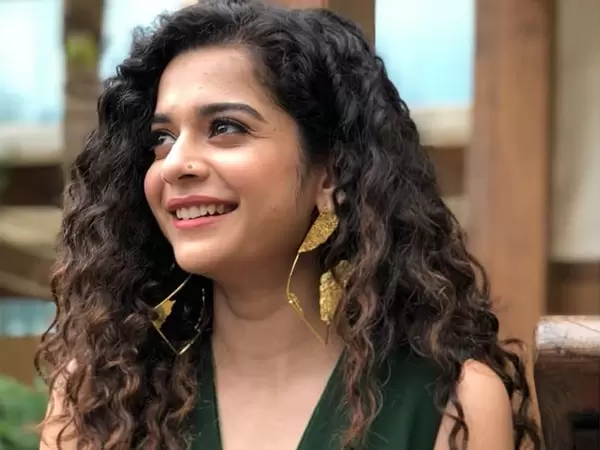
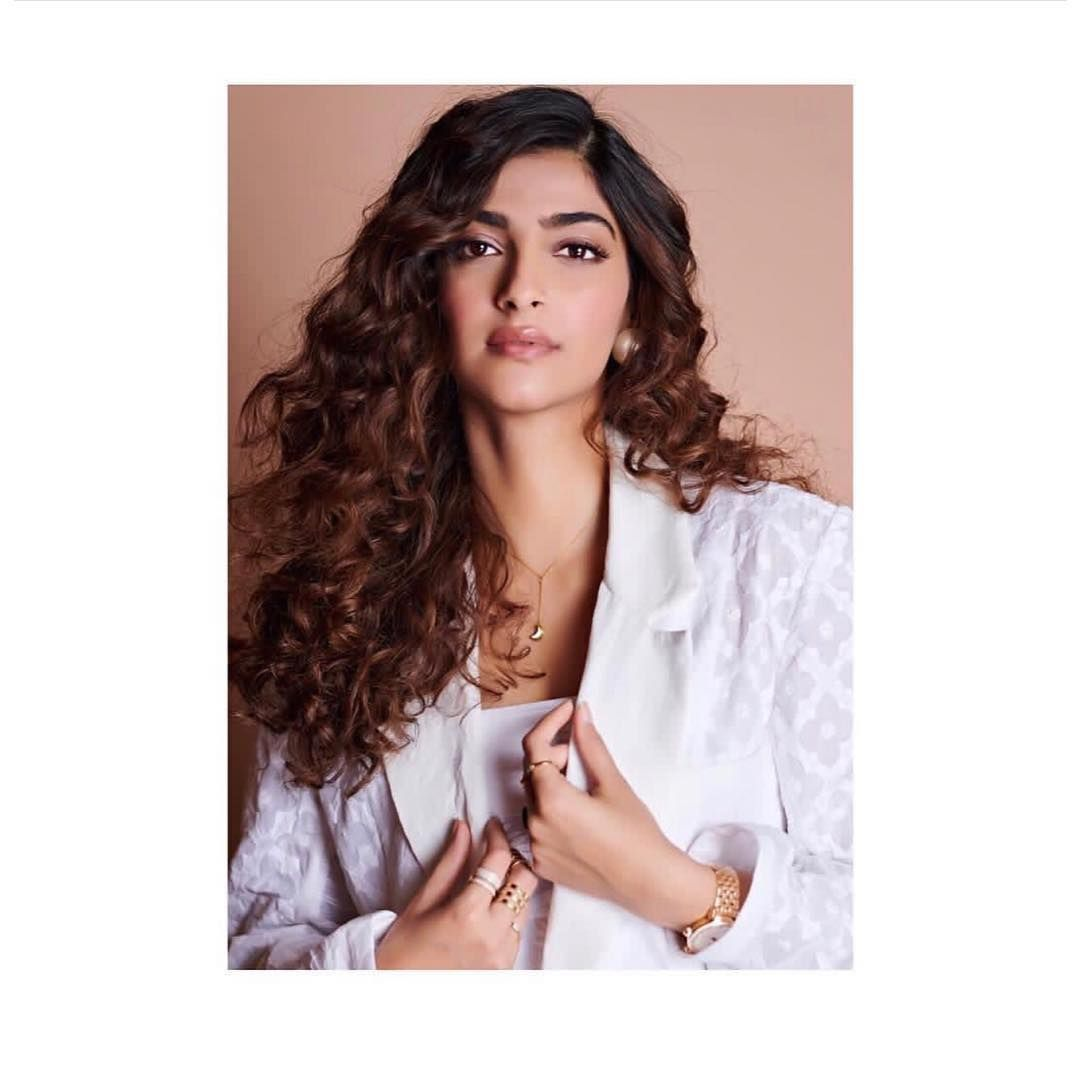
Curly hair is both quaint and dextrous. But did you know, your hair sometimes speaks about your character traits? While straight hair is typically recessive, curly hair is associated with dominance and independence. Girls with curly hair are sometimes perceived to be additionally attractive. 

It is said that the deep and roomy properties of curls renders curly hair quite distinctive. If you are someone with curly hair and are struggling to bolster your locks and their beauty, fret no more. Hashtag steers you right on maintaining curly hair.

10 Tips to Maintain Curly Hair Naturally

Preserving and maintaining the sheer beauty of your locks is a tedious task. Here we give you 10 plausible and user-friendly tips on how to maintain curly hair naturally. 
  1. Be prudent in choosing your shampoo: The primary step to retaining hair health is washing your hair regularly. Employ a gentle shampoo that is devoid of irritants such as sulphates, emollients, alcohols, and preservatives. Sulphates are lathering compounds, whereas parabens are stabilizers found in shampoos and conditioners. Transition to cleansers that include gentle chemicals and are fragrance-free, sulphate-free, silicon-free, and 100 % natural.
  1. Treating your hair before cleansing: When you have particularly rough or curly hair, pre-shampoo therapy could be beneficial. The hydration in rough; curly hair hydration evaporates fast. In principle, utilizing conditioners before washing protects the hair cell such that the cleanser does not deprive the authentic radiance of the hair. Countering the common perception, conditioning may not be required immediately after washing. Conditioners may be used both before and after shampooing.
  1. Excessive shampooing is a bane:  Applying excess amounts of shampoo results in brittle and dry hair. It fades the lush beauty of your locks. Abstain from using immoderate levels of shampoo. Furthermore, try to employ conditioners that incorporate mild moisturizing agents. Conditioning seals the cuticles of your hair and protects it from potential pollution.
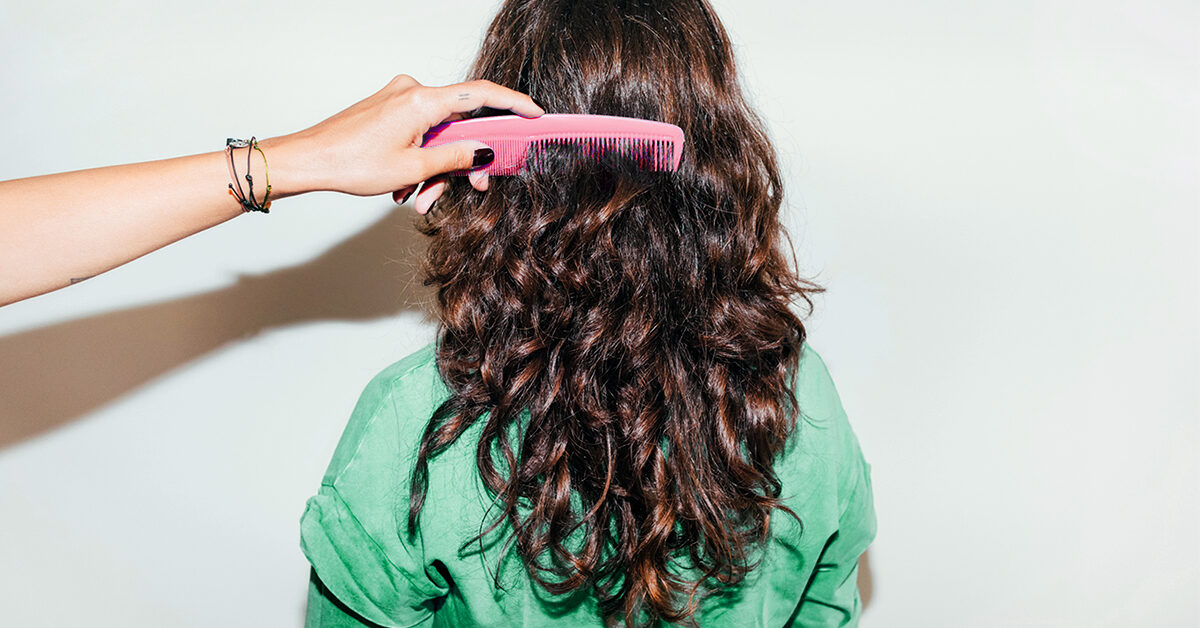
  1. Detangle your hair like this: Experts say that the most common mistake people with curly hair tend to make is untangling their tresses from top to bottom. Instead of piling tangles at the base and tugging your way across, detangling tresses from the base up enables you to delicately untangle every lock. To avoid hair breakage and untangle hair quickly, industry professionals also suggest raking through curly hair using a wide-tooth comb rather than a brush.
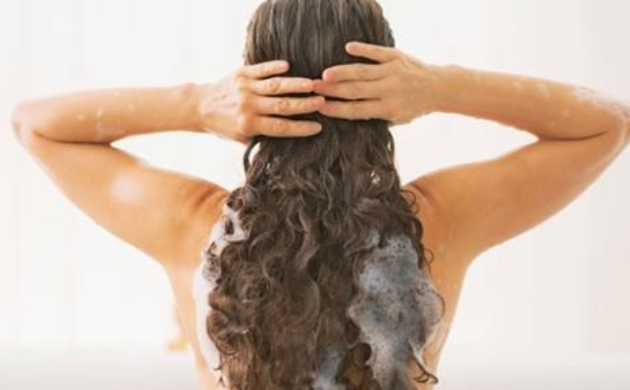
  1. Hair must be rinsed in cold water: Showering in hot water removes the essential oils from your hair roots. This can cause the cuticles to expand, leaving the hair strands more susceptible to dryness and damage. If you’re washing or nourishing your hair, cold water washes are your best choice.
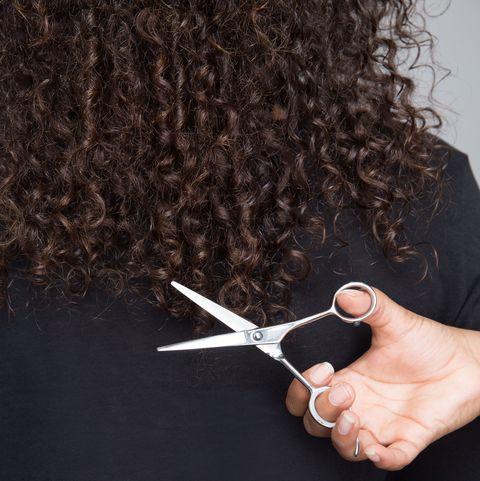
  1. Regular trimming: Damaged hair is seldom a nice appearance, and split ends may leave your curls unruly. If you would like beautiful, natural curls, visit your hairdresser every four to eight weeks for just a brief cut.
14 Best Curly Hair Tips - How to Style Curly Hair
  1. The pineapple trick:  The pineapple trick has helped many keep their natural curls intact. It is a hairstyle wherein the hair is casually collected around the crown area, generally before sleeping. This maintains the curls even while assisting the tresses in preserving natural density and minimises severe bedhead. This also reduces contact between your hair and the pillow cover. To prevent rubbing, replace cotton pillows with silk or satin covers.
  1. Minimum temperatures for styling: Hairstyling equipment with high temperatures can eliminate the organic appearance of your tresses, leaving them drab and lacking lustre. If you can’t stop it, reduce your usage of styling equipment and apply a decent heat-protective agent. To preserve your inherently lovely curls, use low heat as well as a diffuser.
  1. Frequently oiling of your hair: For natural curls, choose mild, non-greasy coconut oil. Massage the oil into your skull with your fingers. You can use oils before going to bed and then rinse them off during the day. Instead, you can add oil to the head an hour beforehand shampooing. Olive oil is an excellent cure for natural curls. It offers a significant amount of hydration to your dehydrated locks.
  1.  DIY treatments at the comfort of home: Homemade DIY remedies are a solution to most of the problems. Similarly, natural curls can be preserved with a few homemade solutions. Here we give you a couple of them, that will help you in maintaining your vivacious curls. 
  • Prepare a mixture by blending olive oil, egg, vinegar, and mayonnaise together. After half an hour, cleanse with a gentle shampoo. Whilst eggs give the hair nutrition, mayonnaise delivers hydration and sheen to brittle curls.
  • Avocados contain a high amount of vitamins B and E, and healthy fats. A ripe avocado can be properly mashed and mixed with a spoonful of honey and 2 teaspoons of olive oil. Allow this solution to sit on your curls for 30 minutes. Use a mild shampoo to remove it.
  • Curly hair maintenance? DIY remedies are the solution. Home remedies for beautiful curly hair include apple cider vinegar, dairy, fenugreek seeds, and hibiscus.

How often should you wash curly hair?

It is determined by the type of curl you have. Open and elegant curls can be lathered up to twice a week. Pattern curls can be co-washed once a week and thoroughly cleansed using shampoos once per month. Stiff curls can be rinsed or co-washed once every day to a week. A healthy practice is to shampoo your curls less regularly if they seem brittle. Rinsing your curls daily may strip them of their essential oils, making it harder for them to preserve moisture.
Curly hair is beautiful, brave and fierce. Let the tresses and locks be natural and vivid. Flaunt your curls and let them face the world.

Leave a comment

Your email address will not be published. Required fields are marked *

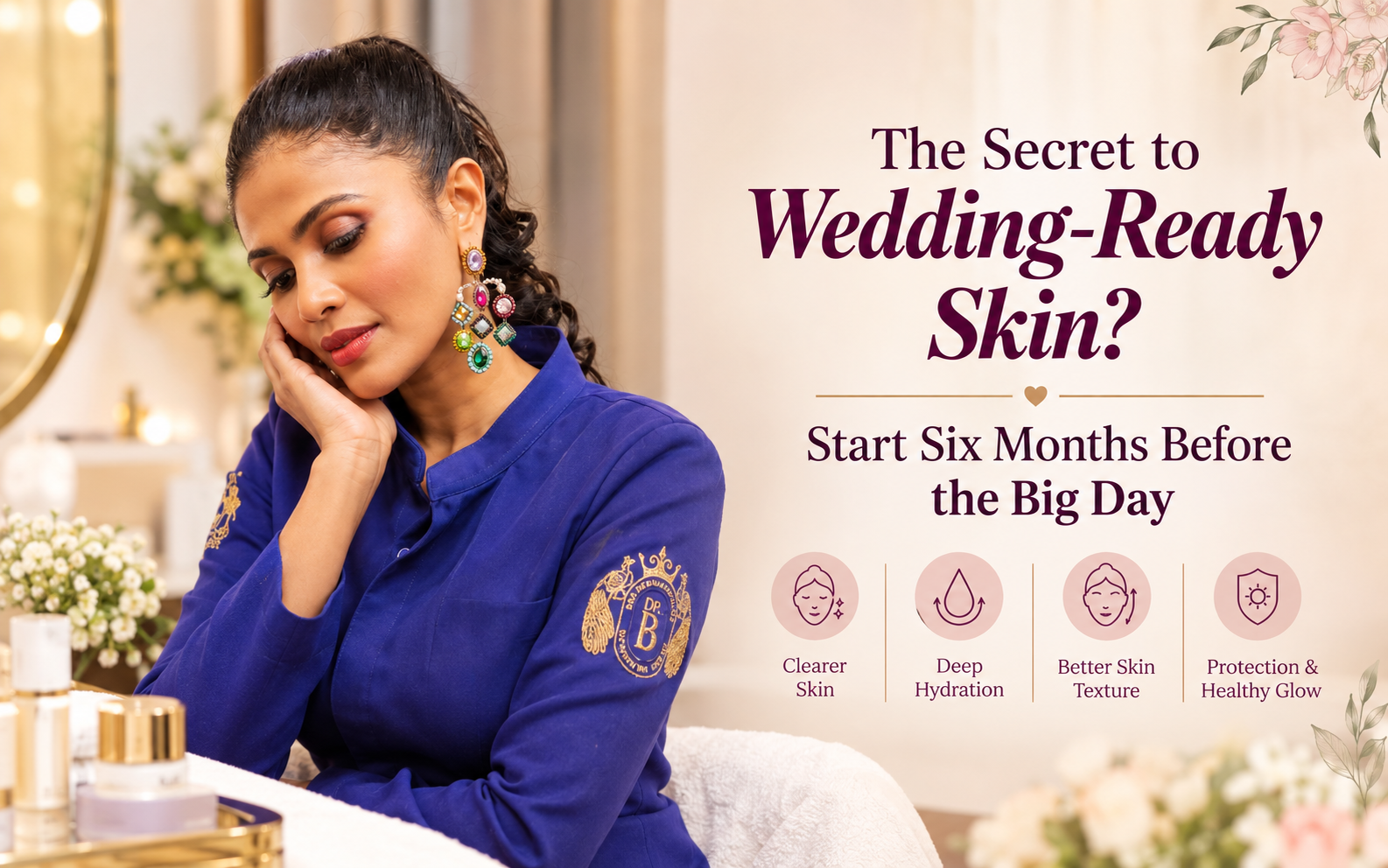
The Secret to Wedding-Ready Skin? Start Six Months Before the Big Day

Dr Bhairavi Senthil is a Chennai-based dermatologist and founder of The Dr B 360 Dermatology Experiential Centre. Her advice for 2026 couples: skip the last-minute “bridal glow” fix; real results come from starting six months ahead, and the final few weeks should be about stability and hydration, not experimenting with something new. Skincare Trends 2026Couples are moving away from a last-minute glow and toward skin preparation as a long-term process. Brides want to look like themselves, just healthier and more even-toned; not heavily treated or made up. Grooms are becoming far more proactive about skincare and grooming too. There’s also a shift toward personalised, science-led routines over viral trends, and a growing focus on prevention and maintenance rather than dramatically changing how skin looks. Pre-Wedding Treatments & TimelineThere’s no universal best treatment; it depends on your skin and timeline. Ideally, meet a dermatologist six months before the wedding, earlier if there’s active acne, pigmentation or hair concerns, since collagen remodelling and barrier repair can’t be rushed. Peels, lasers, microneedling and injectables like botulinum toxin or fillers may all be options depending on the concern, but they all need proper consultation and time to settle. The golden rule: don’t experiment close to the wedding; the final weeks should focus on stability and hydration. Customising Skincare PlansIt starts with one question: what do you want your skin to look and feel like on your wedding day? From there, the plan factors in barrier health, pigmentation, acne, hydration, the wedding timeline, climate and even travel plans. A bride with pigmentation needs a completely different approach from someone dealing with acne or sensitivity, and sometimes the healthiest skin needs no procedures at all, just maintenance. The goal isn’t perfection. It’s healthy, balanced skin that lets you feel confident without hiding behind makeup.

Wear It Beyond the Wedding: The New Rules of Bridal Jewellery

Mohar Jewels, the Mumbai fine jewellery house founded by Nakul and Priyanka Jain and rooted in a three-generation legacy of gemstones and craftsmanship, sees 2026 bridal jewellery becoming more personal, versatile and made to be worn long after the wedding. Here, the brand shares the trends brides are turning to, from coloured gemstones to detachable polki. Bridal Jewellery Trends 2026Bridal jewellery is becoming more personal, versatile and expressive. Brides are moving beyond jewellery worn only on the wedding day and want pieces that become part of their wardrobe for years. Coloured gemstones, particularly emeralds, rubies and sapphires, are gaining importance alongside classic diamonds and polki, adding colour and individuality. There’s also growing interest in refined layering, detachable pieces and jewellery that can be styled in multiple ways across celebrations. Compared to 2025, when statement sets and traditional silhouettes were still dominant, 2026 is more considered: brides are mixing heritage-inspired elements with contemporary silhouettes rather than committing to one uniform look. Balancing Tradition and PersonalityThe balance comes from respecting the craft while letting the design evolve. Traditional elements like polki, diamonds and coloured gemstones are presented through cleaner silhouettes, unexpected combinations and contemporary proportions, such as classic polki and emerald pieces alongside baguette diamonds, unusual gemstone cuts and more minimal designs. The modern bride wants jewellery that feels like an extension of her personality, not something chosen purely because it’s traditional. The idea isn’t to choose between heritage and modernity, but to make the two coexist in one piece. Dressing Every Celebration Each celebration has its own mood, and jewellery should complement it rather than compete. For daytime functions like haldi and mehendi, think lighter, versatile pieces: delicate polki chains, gemstone earrings, refined bracelets and rings that can be layered, plus detachable polki necklaces. For grand evening receptions, jewellery turns dramatic,

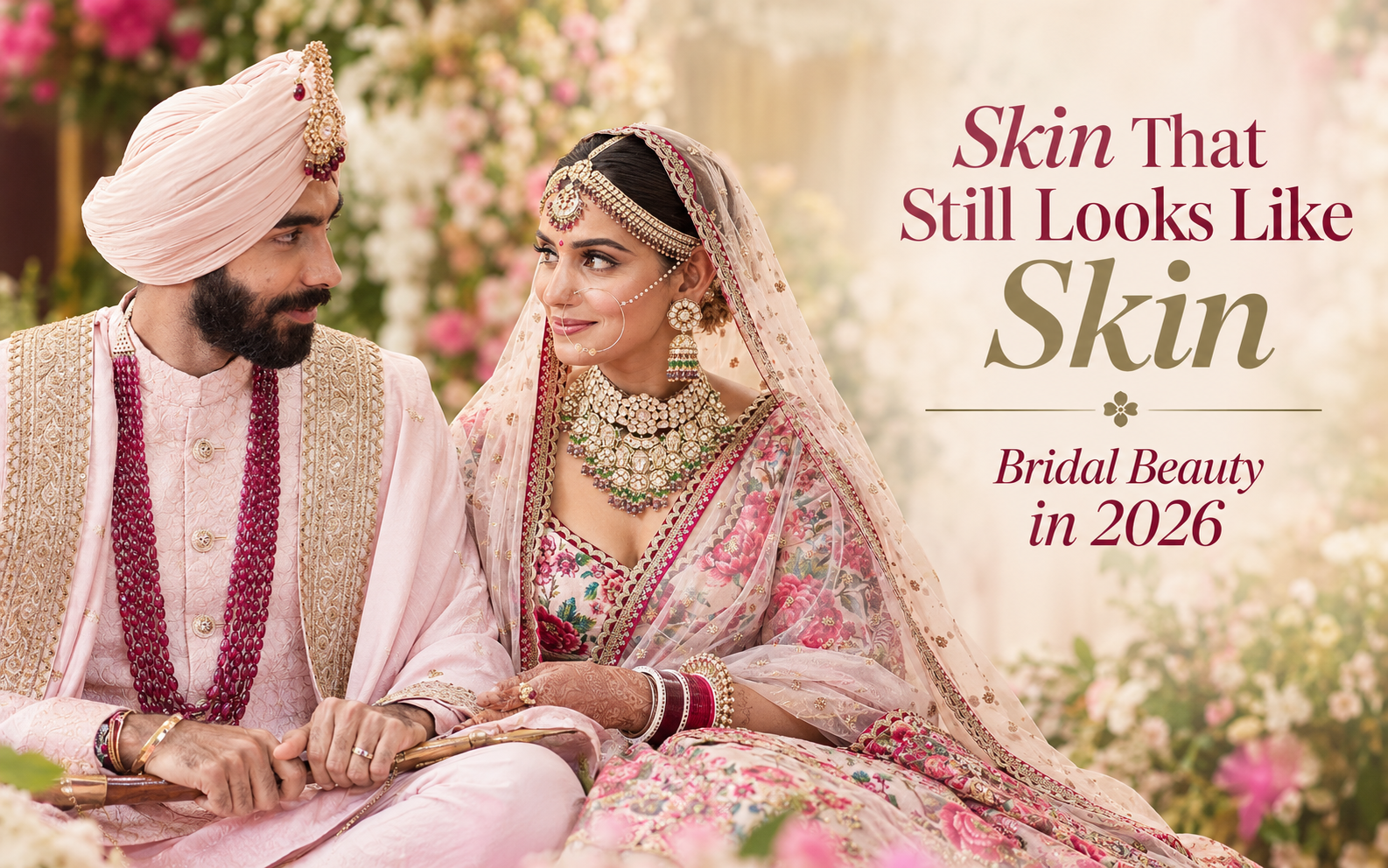
Skin That Still Looks Like Skin: Bridal Beauty in 2026

Celebrity makeup artist Bianca Louzado has spent over two decades in Indian beauty, from her start at India Couture Week working on Manish Malhotra to becoming one of the country’s most trusted names in luxury bridal makeup, with a portfolio that includes Jasprit Bumrah and Sanjana Ganesan, Randeep Hooda and Lin Laishram, and Radhika Ambani’s pre-wedding event. She breaks down why real bridal beauty starts weeks before the wedding, not the morning of, and why 2026 brides are choosing skin that still looks like skin over heavy, “done-up” makeup. What skin prep should brides start ahead of the wedding?Skin prep is about healthy, balanced skin, not last-minute transformation. Start a consistent routine 6–8 weeks out: gentle cleanser, moisturiser, daily SPF, and any new actives introduced early enough to see how skin responds. No experimenting in wedding week. In the final week, simplify: hydration, sleep, water, and skip aggressive treatments or picking at breakouts. Well-prepped skin means less product and a complexion that looks like skin, not a mask. What’s the biggest mistake brides make choosing their look?Picking a look because it worked on someone else, rather than one that suits their own features, outfit and personality. Chasing every trend at once is another; bridal makeup needs to photograph beautifully today and still feel elegant years later. References are useful, but they’re a starting point, not a blueprint. And don’t wait until the wedding morning to find your look; the trial is where that conversation happens. How has airbrush vs. traditional makeup evolved for 2026?The debate itself is outdated! It’s about what the skin needs. Brides want longevity without heaviness, especially for long Indian wedding days. Traditional techniques now allow thin, strategic layering with more control and natural dimension, and unlike airbrush, they can be touched up rather than redone entirely.

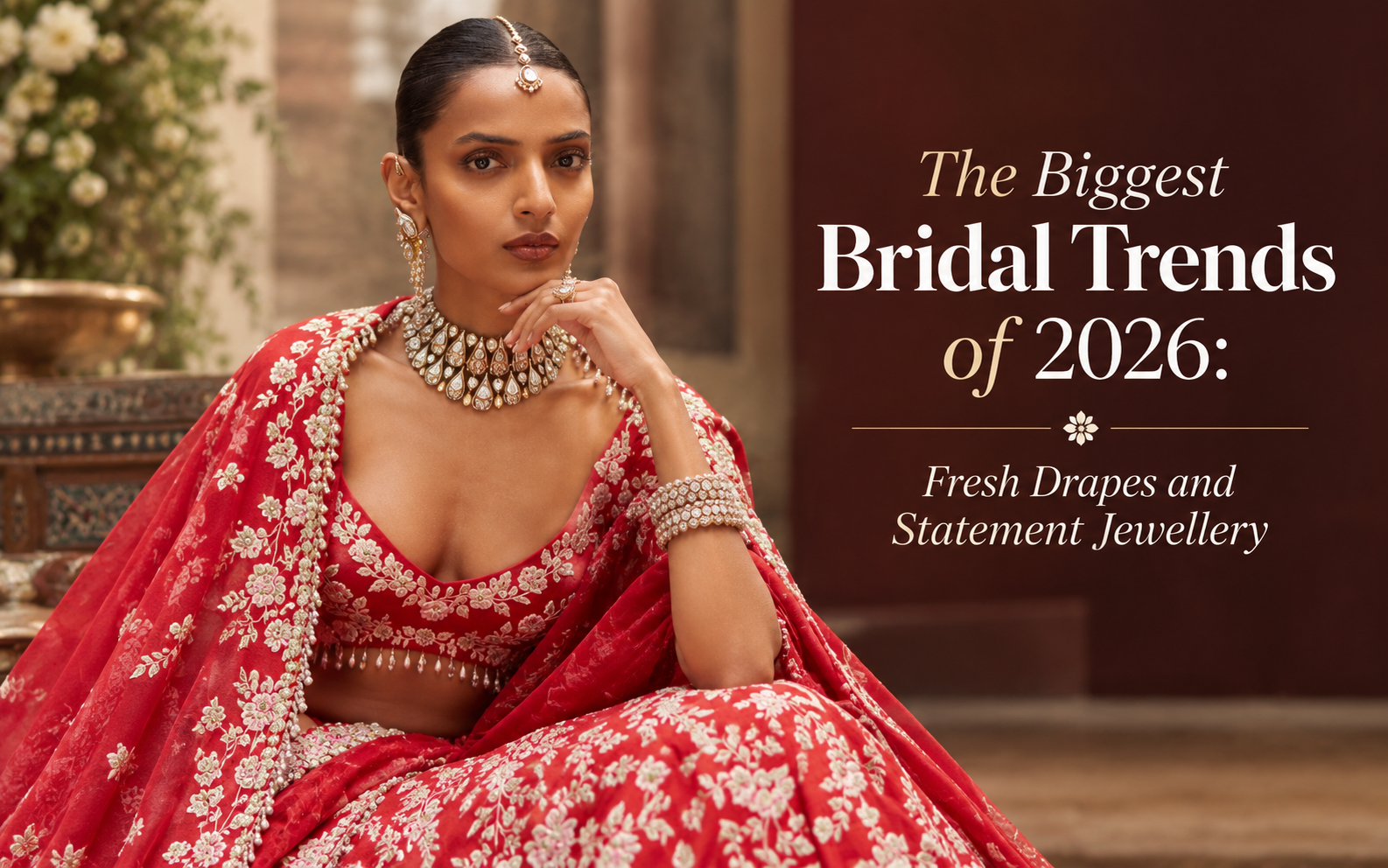
The Biggest Bridal Trends of 2026: Fresh Drapes and Statement Jewellery

What are the three biggest bridal trends you predict will dominate 2026? For me, it’s the reimagining of the drape, the beauty of crafts like chikankari and lace, and a much stronger focus on jewellery. Whether it’s a traditional necklace from our High Jewellery or a contemporary ear cuff that can completely change the feel of an outfit. I think we’ll see the sari and different interpretations of the drape becoming a big part of bridalwear again. There is something so timeless about it, but there are endless ways to make it feel fresh and personal. Which colours and fabrics are going to be particularly relevant? I see a beautiful mix. Ivory and soft pastels continue to feel very relevant, but I also see deeper jewel tones, wine, garnet and unexpected blues becoming important. In fabrics, I love organza, tissue, lace and chiffon for their lightness and movement, balanced with richer silks and velvets. What interests me most is mixing textures rather than allowing one fabric to dominate the entire look. What is one bridal fashion choice you think women should avoid? Wearing something simply because it is trending. Your wedding photographs stay with you forever, and the most beautiful brides are always the ones who still look like themselves. Experiment, absolutely, but don’t allow the outfit to wear you. How should couples approach the challenge of dressing for multiple wedding events without making every look feel repetitive? I always look at a wedding wardrobe as a story. If the wedding is traditional, perhaps the sangeet becomes more glamorous and experimental, the mehendi lighter and playful, and the reception sharper and more contemporary. Change the silhouette, colour, texture and jewellery rather than simply changing the outfit. Every event should reveal another side of you, but together they should still feel

You May Also Like

Connect with us