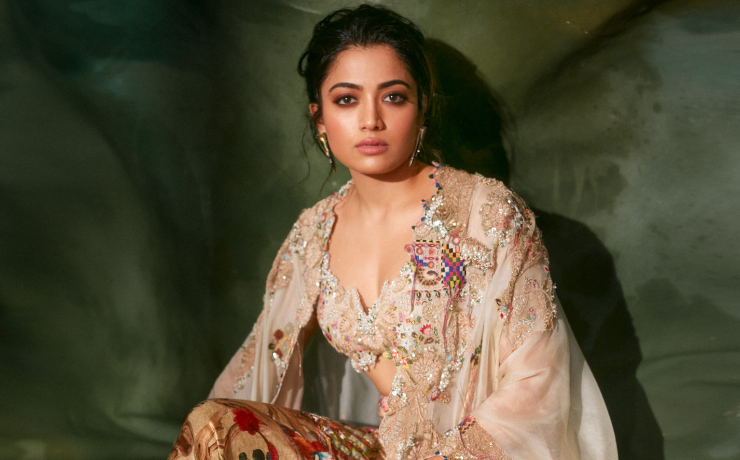
Rashmika Mandanna

Rashmika Mandanna - Hashtag Magazine

Rashmika Mandanna, widely known as the National Crush, in conversation with Lipika Varma. She was seen on a patriotic high with a ride on emotions in the film, Mission Majnu with Sidharth Malhotra, which went down well with the audiences. Rashmika is very happy with the way 2023 begins as she has a few films lined up.

How are you looking at 2023, the New Year which has just begun?

I am very excited about this year. I have four films that are set to be released, and will also be starting three new films which I can’t talk about right now. Vaarisu will be released on August 11th in Tamil, Telugu and Hindi. Then, I have one more release towards the end of the year.

The pairing of you and Siddharth has been appreciated a lot. Do you think a new jodi is born? What do you have to say about the pairing?

We have received loads of love from the audiences and our fans. We do work to entertain them, if they like the pairing it feels good. I hope it is working, as they are the ones watching us, so they have to tell us.

It was your first time working in the Hindi film industry, how was your experience working in Mission Majnu?

Initially, I was very scared as it was a new team. Whenever I am starting a new film of course the butterflies are always there. In one or two days I found myself very comfortable with the team. All of them made me much more at ease.

Industries don’t have any difference, I feel it’s the character and the story that you are saying and the team you are working with, that makes the difference.

Mission Majnu had the ’70s backdrop, what is the best thing you like about the 70s era?

It was the vision of the director that I had to present honestly to the fullest. Whatever we have been exposed to is what we know, but in reality, we don’t know what exactly happened in the seventies. It was a period of utmost innocence, we enjoyed the family life and the friends we grew up with. It was all about close-knit family and friends. Life was just around that. 

How different is it working in Bollywood and Tollywood?

I don’t think there is any difference. The difference comes in with different teams. I have felt this since the beginning as I worked in different industries. I made a debut in Kannada and it’s the same generally. Industries don’t have any difference, I feel it’s the character and the story that you are saying and the team you are working with, that makes the difference.

My whole motivation and entire career is doing extremely good characters and being called by the character’s name.

Pushpa turned you into a global actor. How responsible do you feel as an actor today? How do you look at your career from there on now?

Since the beginning of my career, there have been different characters that people have recognized me by my character’s name. There is Geeta, Lilly, and Shrevali. Sheravali is such a loud name, so as an actor if I do another character, and I can make my audience call me by my character’s name equally as strong as this one, then it will feel great. My whole motivation and entire career is doing extremely good characters and being called by the character’s name. Pushpa 2 is again going to make it bigger.

Are you happy with the way Bollywood has welcomed you?      

I am very happy, with the love and warmth I have received from the Bollywood folks, it feels great. I love Mumbai, thanks for having me here!

How do you look at the pap’s attention? Do you not have the pressure that you have to look good all the time?

I don’t look at it as attention. In fact, they are also doing their job. Everyone’s life is very difficult. I just want to have that 30 seconds conversation with them. I feel it just brings about niceness. I have maintained it with the paps, so I don’t feel there will be any problem. I don’t really have that pressure, it is the way you want it to be. By the end of the day, no human is perfect.  

Would you like to do an out-and-out action film?

I would like to do an out-and-out action movie. I was just going to say- I would go to Siddharth for training in action.
Leave a comment

Your email address will not be published. Required fields are marked *

Exclusive Interview: Nikhil Siddhartha on Swayambhu, Family and Politics

After the pan-India success of Karthikeya 2, Nikhil Siddhartha finds himself at a pivotal phase in his career. The actor is currently gearing up for the release of Swayambhu, one of the most ambitious projects he has undertaken to date, a historical action drama that demanded nearly two-and-a-half years of dedication, extensive physical transformation, and months of post-production work. In a candid conversation with Priyanka Goud, Nikhil opens up about the challenges of mounting a large-scale period film, why he prioritises quality over quantity, how fatherhood has changed his outlook on life, and his belief in using cinema as a tool for social awareness. A Two-and-a-Half-Year Commitment Describing Swayambhu as a project unlike any other in his career, Nikhil revealed that he dedicated nearly two and a half years exclusively to the film.“Some films are easy to make, and some are difficult. Swayambhu falls into the category of films that demand complete commitment. I underwent a significant transformation for the role, growing my hair long, maintaining a specific physique, and immersing myself in the character and story throughout the production period,” he said. A Historical Story with Universal Appeal One of the aspects that attracted Nikhil to Swayambhu was its historical backdrop. Nikhil plays Krishnan Raman, a historical figure whose name appears on ancient copper plate inscriptions that have recently gained attention. “This story is rooted in history, but its themes are universal,” he said. “It’s not confined to one region; audiences across India will be able to connect with it.” The actor also highlighted the growing importance of visual effects in modern filmmaking. Swayambhu reportedly contains nearly 2,700 VFX shots, making post-production one of the most demanding phases of the project. “We completed principal photography in December 2025, but for the last five to six months it has been

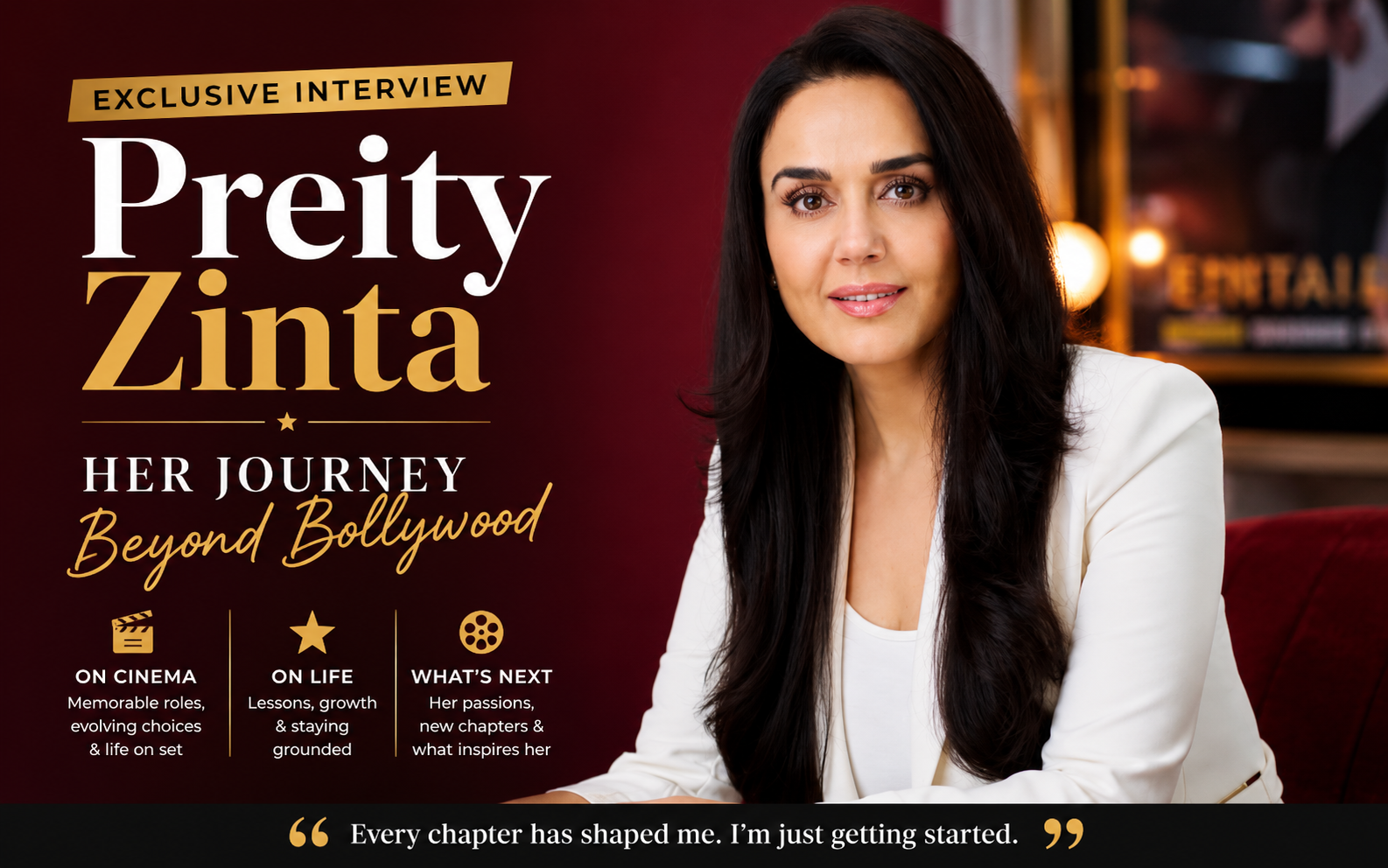
Preity Zinta on Batwara 1947, Motherhood and Finding Her Way Back to Cinema

For Preity Zinta, returning to the screen with Batwara 1947 is about more than making a comeback. The period drama allowed her to explore a chapter of India’s history, work with director Rajkumar Santoshi for the first time, and step into a world far removed from her own. But the film also made her reflect on how much life has changed since she began her career, from the freedoms available to women today to the perspective that comes with becoming a mother. For Zinta, Batwara 1947 is ultimately a story about family, resilience and hope, as she tells Lipika Varma in an exclusive conversation. Why did you say yes to doing this film? What touched you the most? There were a couple of things. First, I really wanted to work with Raj ji. I had never worked with him before, so working with him was always on my bucket list. I had also always wanted to do a period film. Beyond that, I genuinely loved the story. What touched me most was that even in the darkest of times, there is always a ray of hope. People may see this as a story about two countries, but for me, it is essentially about a family. I was also deeply affected by stories of families who believed they were leaving their homes temporarily, even burying their jewellery and valuables, thinking they would return. They never imagined they would lose everything forever. Since this is my first period film, I spent time researching and understanding that era. After such a long break from films, why did you choose this project? I was enjoying my personal life, focusing on my family and raising my children. Professionally, I had always wanted to work with Raj ji and also wanted to do a period film.


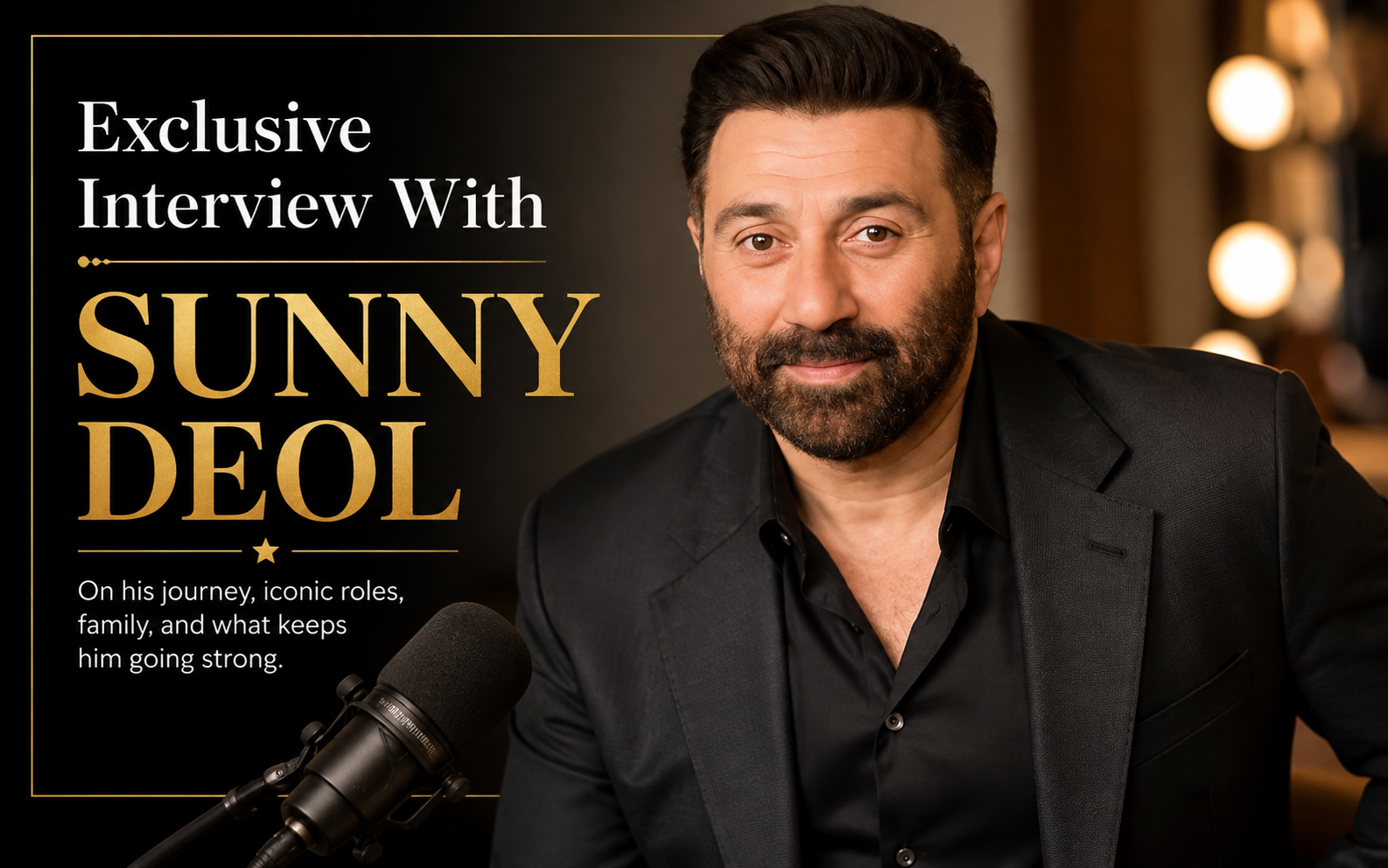
Exclusive Interview with Sunny Deol: Life Beyond Bollywood

Sunny Deol: “Every Film Leaves Some Kind of Impact” With Batwara 1947, Sunny Deol returns to a story rooted in Partition, family and the human cost of one of the most defining moments in Indian history. The actor reflects on why he sees the film as fundamentally different from Gadar, his long-standing association with director Rajkumar Santoshi, his father Dharmendra’s connection to their shared cinematic history, and the responsibility actors carry when their work leaves a lasting impact on audiences. In conversation with Lipika Varma, Sunny Deol also opens up about playing a character outside the action-driven image audiences often associate with him and working alongside his son Karan. How did you approach the character in this film? For me, it was the subject, the story and the character that I had heard about, and I approached it accordingly. I don’t know exactly what was tweaked. I didn’t read the original play or see it. Vivek Raj had read it, and we had been working on this story since 2010. Unfortunately, we couldn’t make it back then, so we had been waiting all these years. As soon as we got the opportunity, we jumped into it. Sunny, are you happy that your fans, including those in Pakistan, will get to see you in a completely different kind of role this time, without the iconic hand-pump moment or typical action scenes? Actually, I don’t think it’s about that. Fans are always there, and they love you no matter what. Sometimes journalism and politics come into the picture and change the colours of things. But the actual viewer, the person sitting in the theatre and watching the film, doesn’t necessarily look at things that way. They simply watch the film. I’ve met a lot of fans across the country and around the

Akshay Kumar: “The Craft Has Changed, But Hard Work Never Goes Out of Style”

With a career spanning over three decades, Akshay Kumar continues to reinvent himself across genres, from action and comedy to social dramas and entertainers. As he looks ahead to his upcoming projects, including the action-thriller Haiwaan and a lineup of comedy entertainers, the actor reflects on his journey, his approach to cinema, discipline, and why staying connected to the craft remains his biggest priority. In conversation with Lipika Varma, Akshay opens up about his evolving approach to cinema, the importance of teamwork, and the values that guide him both on and off screen. You have played action heroes, comedians, romantic leads, and intense characters. What kind of roles excite you the most today? I enjoy all kinds of roles. When I entered the industry, people mostly saw me as an action hero. After that, I consciously chose to explore different genres and keep discovering myself as an actor. I have done comedy, romance, social dramas, and action films. Every genre brings a different challenge, and that is what keeps the journey interesting. Comedy has been one of your strongest genres. What makes it so special for you? Comedy is definitely one of the hardest genres. Making someone emotional can sometimes be supported by the situation or background music, but making someone genuinely laugh requires precision, timing, and a lot of hard work. Comedy often looks effortless on screen, but there is a lot of discipline behind creating that moment. That challenge is what makes it exciting for me. You have been part of several ensemble films. What is your view on multi-starrers? Everyone has their own approach. Some actors prefer solo films, while others enjoy working in ensemble projects. There is no fixed formula for success. A film works because of its content, storytelling, and execution, not simply because of