The Evolution of Bus Travel in India

The Evolution of Bus Travel in India

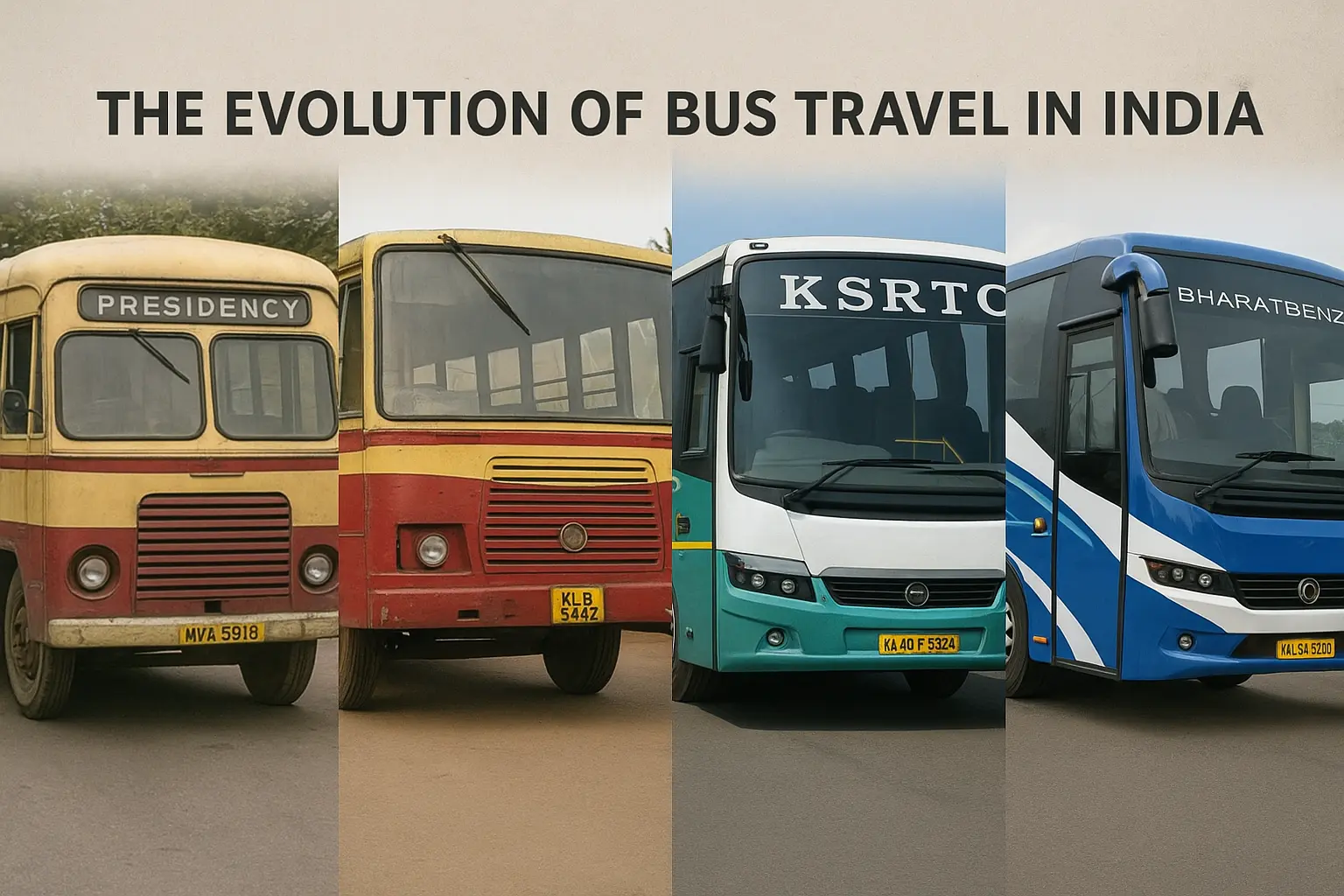
Bus travel in India has transformed dramatically over the years. What once served primarily as a feeder mode of transport or even a basic long-distance travel option has evolved into a sophisticated industry. The rise of powerful luxury buses, coupled with the rapid development of highways, has fueled this remarkable growth. In Part 1 of this series, I explored the early changes in bus designs and operations. The last two decades, in particular, have been a thrilling period for bus travel in India.

Memories of Long-Distance Buses Before 2000

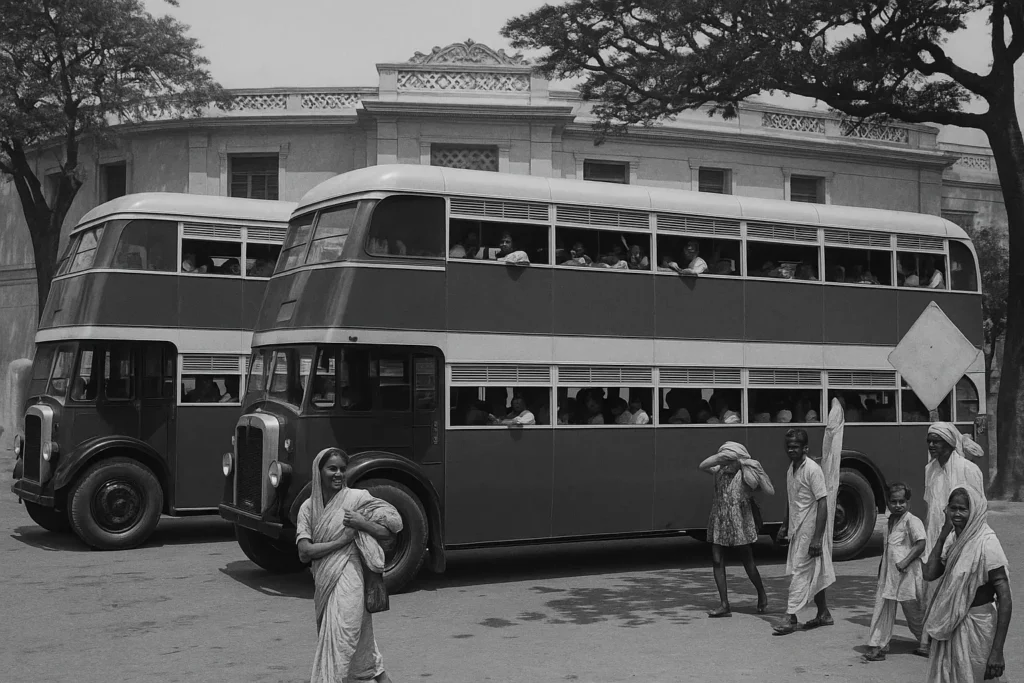
Before diving into recent changes, let me take you back to the late 1990s. During 1999-2000, my daily observations included long-distance buses running between Mumbai and Mangalore operators like CPC and Ballal. These buses took about 24 hours to cover the route, often carrying bulky cargo on their roofs. At that time, the Mumbai-Pune Expressway was not yet operational, so these buses took routes passing through the outskirts of Mumbai, where I lived. These were all seater buses, and I often wondered how passengers could endure such long journeys sitting upright.
Memories of Long-Distance Buses Before 2000
The First Sleeper Bus Encounter – Early 2000s

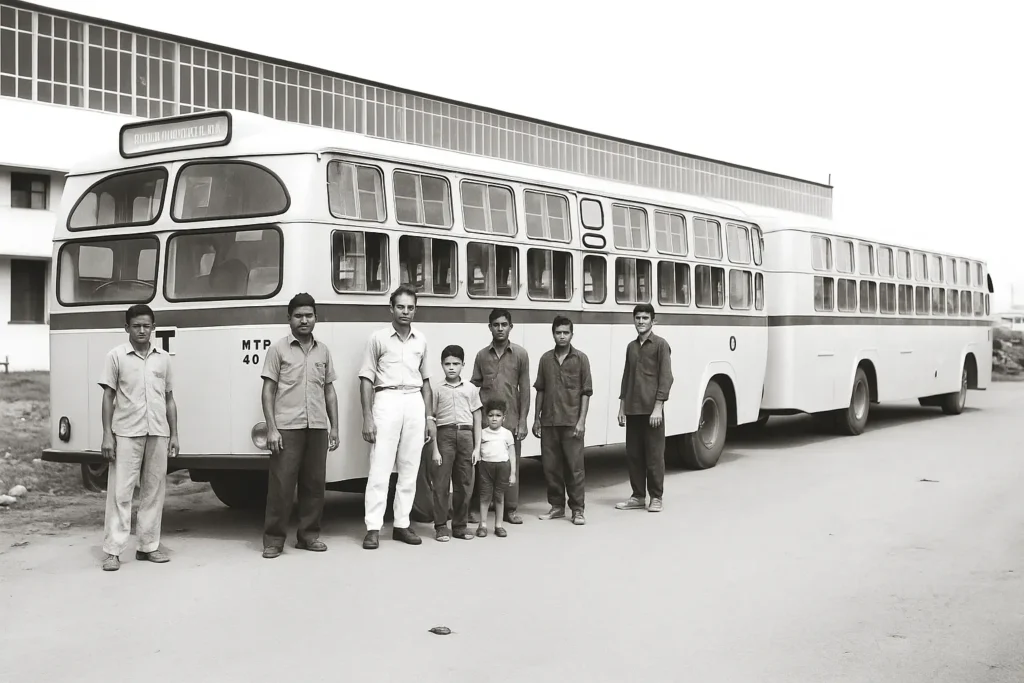
In the early 2000s, during a school outing to Mumbai’s Fort area, I spotted a unique bus operated by Paulo Holiday Makers from Goa. This bus had its entrance in the middle and featured a hybrid seating arrangement: one half with seats and the other half with sleeping berths aligned along the direction of travel, similar to Indian Railways’ side berths. Though I couldn’t enter the bus, it left a strong impression as the first sleeper bus I had ever seen. The body was built by a Goan manufacturer called Damodar.
The First Sleeper Bus Encounter – Early 2000s
The Rise of Sleeper Buses (Mid-2000s to 2010)

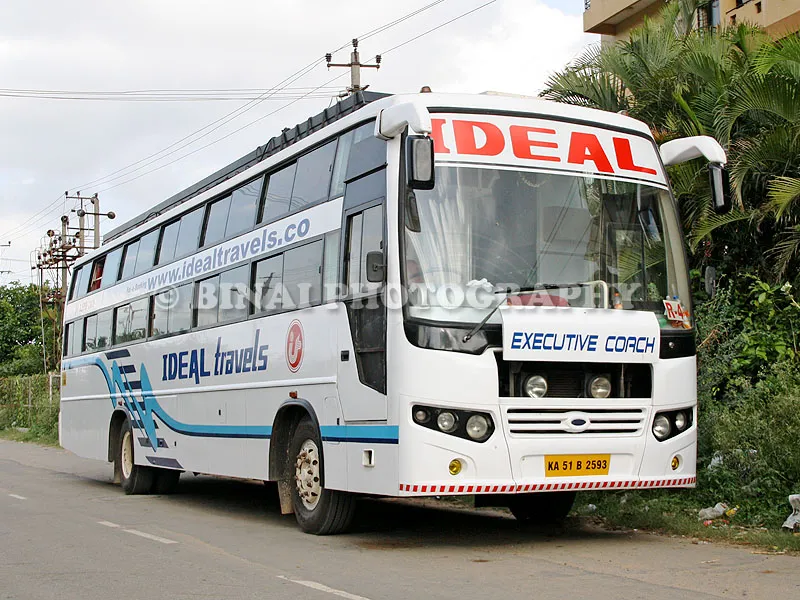
Fast forward a few years to around 2005, sleeper buses became more common, moving beyond Paulo’s initial design to fully-fledged sleeper coaches. Around 2007-08, I spotted an AC sleeper bus from NWKRTC named “Corona.” This rear-engine bus resembled a Volvo and marked the arrival of a new commercial vehicle manufacturer in India that imported technology from MAN Neoplan coaches.

By 2008, after moving to Bengaluru, I saw sleeper buses dominating many routes, with some even outnumbering seater buses. Operators offered seater-cum-sleeper options, especially on routes to Kerala. KSRTC launched a Corona sleeper service to Ernakulam in 2010, which, despite initial setbacks, was eventually upgraded to a Volvo sleeper model and continues today.
Sleeper Buses Gain Market Share

Sleeper buses gained popularity quickly due to their cost-effectiveness: an operator could buy two sleeper coaches for the price of one multi-axle seater coach. Lower taxes and operating expenses added to their appeal, along with the ability to charge higher fares. Manufacturers like Mercedes-Benz (through Sutlej) and Isuzu also introduced sleeper models, while Volvo began offering unfinished shells designed for sleeper conversions around 2012-13.

KPN, a prominent operator, was among the first in South India to adopt these converted sleeper coaches. Following them, many others like Kallada, Sharma, and VRL jumped on the bandwagon, converting older seater buses to sleepers, often charging a premium.

Sleeper Coach Configurations Around 2015

Around 2015, two main types of sleeper layouts dominated the market:

  • Longitudinal berth arrangement (2×1 configuration) — one berth on the left and two on the right side, common across most states.
  • Railway-style cabin arrangement — four-berth cabins, mostly seen in Andhra Pradesh.

However, regulations varied widely by state. Tamil Nadu and Kerala, for example, did not allow sleeper bus registrations, while Karnataka only issued Contract Carriage permits. This led operators to register buses in more permissive states like Odisha or even northeastern states such as Nagaland and Arunachal Pradesh, where regulations were lax. These distant registrations sometimes compromised vehicle inspections and fitness certifications.
Standardization and Regulatory Changes

In 2015, the Automobile Research Association of India (ARAI) introduced a standardized bus body code (AIS:052) for seater coaches, followed by an amended code for sleeper coaches (AIS:119) in 2016. These regulations came into effect from 2018 onward, prompting more states to allow sleeper bus registrations. However, permit issues and concerns over lax regulations in northeastern states led to crackdowns.

The revised code phased out the cabin-style sleeper layout in favor of longitudinal berth arrangements, improving safety and uniformity.
Registration Havens and Market Dynamics

Puducherry remains a key hub for sleeper bus registrations in South India, thanks to its All India Tourist Omni Bus Permit, allowing wide access across states. However, recent tax hikes and stricter office requirements have increased the cost of registration there.

Kerala permits sleeper bus registrations, while Tamil Nadu does not allow private operators to register them, only the state transport corporation. Consequently, many private operators register buses in Puducherry or Kerala to serve Tamil Nadu routes. Interestingly, Tamil Nadu passengers show a strong preference for sleeper buses, which dominate the market there.
Evolution of Sleeper Bus Amenities

Early sleeper buses provided minimal comfort—non-AC coaches offered just a bedspread, while AC coaches added a blanket. Berths lacked proper backrests, allowing only short sitting periods with limited support. Online portals like redBus are now allowing people to book bus ticket seamlessly. 

Modern sleeper buses have come a long way. They now feature:

  • Ergonomic backrests enable passengers to sit comfortably with their legs stretched.
  • Charging points at every berth.
  • Blankets, pillows, snack boxes, and bottled water.
  • Individual LED screens and on-demand entertainment in premium coaches

Riding Experience and Driving Adaptations

Sleeping in a bus differs from a train due to road unpredictability potholes, curves, and abrupt braking are common. Most sleeper berths are aligned longitudinally, which I find more comfortable than transverse berths.

Initially, drivers treated sleepers like sleeper buses, leading to rough rides. With market maturity, drivers adapted to slower, smoother driving styles to enhance passenger comfort. Passengers have accepted slightly longer travel times for this improved ride quality.
Chassis and Coach Builders

Early sleeper buses mostly ran on front-engine chassis from Ashok Leyland and Tata Motors. Eicher later entered with a 12-meter chassis, and Daimler (through BharatBenz) introduced front-engine sleeper chassis with air suspension on both axles.

BharatBenz partnered with MG Bus & Coach in Belgaum to offer fully built sleeper coaches, which are available especially in Kerala.

Multi-Axle Sleeper Coaches and Premium Offerings

Multi-axle coaches became popular in the sleeper market as well. Volvo pioneered custom-built sleeper coaches via Prakash Bus Corporation, starting with the B9R platform and later moving to the B11R under the “Celeste” brand.

Although early Celeste models faced issues like heavy body and poor finish, the product has matured into a premium luxury coach, commanding a price premium willingly paid by passengers.

MG Bus & Coach also offers multi-axle sleepers on Volvo (“Starz”) and Mercedes-Benz (“Dreamz”) platforms, with up to 42 premium berths.
Coach Builders and Personal Preferences

Among front-engine sleeper coaches, Prakash and Veera dominate South India, while Damodar leads on the western coast. Damodar is widely regarded for producing the most comfortable and widest berths with excellent ride quality, followed by Veera and Prakash.

For multi-axle sleepers, Volvo remains the top choice unless Scania or Mercedes-Benz launch updated models.
Final Thoughts

The bus travel landscape in India has evolved from basic seater buses to sophisticated, luxury sleeper coaches offering unprecedented comfort and convenience. Regulatory challenges persist, but the market continues to innovate and grow, catering to passengers’ increasing expectations.


Leave a comment

Your email address will not be published. Required fields are marked *

Family Road Trips in India: 6 Routes with Kid-Friendly Stops and Food

The engine is humming, the bags are packed, and the open road awaits. But as every parent knows, a successful family road trip in India is a fine art. It requires more than just a GPS; it requires a strategy for clean restrooms, engaging pit stops, and food that won’t result in a backseat tantrum. When the logistics are handled, a road trip becomes more than just travel; it becomes a core childhood memory. From the misty mountains of the North to the coastal breezes of the South, Dhanush Kumar brings you six iconic Indian routes designed to keep the kids happy and the parents’ stress levels low. 1. Delhi to Jaipur: The Golden Path The transition from the skyscrapers of Gurgaon to the pink walls of Jaipur is a visual treat. The expansion of the NH48 makes this a smooth drive for families. You can break the journey at Neemrana Fort Palace, the sprawling gardens are perfect for kids to burn off energy, and the vintage car museum is a guaranteed hit. On the way, you can stop at a dhaba and order Paneer Parathas and fresh curd. 2. Mumbai to Mahabaleshwar This route offers a dramatic climb through the Western Ghats. The Mumbai-Pune Expressway provides world-class tarmac, while the climb to the hill station offers cooler air and scenic views. You can stop at Mapro Garden, also known as Panchgani. This isn’t just a stop, it’s a destination. With dedicated play zones and a chocolate factory tour, it’s the ultimate reward for a long drive. 3. Bangalore to Coorg The drive through the lush landscapes of Karnataka is refreshing, but the winding roads near the end require planned breaks to keep motion sickness at bay. A slight detour near Dubare Elephant Camp allows children to interact with elephants

What Lies Ahead in 2026

What Lies Ahead in 2026As we step into the year ahead, astrologer and psychologist Kirron Shahppuri gives us a playful, insightful peek at what the stars have planned from surprises and shifts to fresh beginnings worth getting excited about. ♈ ARIES (March 21 – April 19) Theme 2026: Leadership with emotional maturity Prediction: In 2026, Aries is pushed into positions of responsibility. Career growth is certain, but results come only through patience and strategic action. Financial stability improves gradually. Relationships become smoother once impulsive reactions are controlled. Health requires proper rest and stress management. Avoid: Anger-driven decisions, confrontations, and impulsive spending.Lucky Dates: 9, 18, 27Lucky Colours: Red, CoralRemedy: Offer water to the Sun daily and chant Om Suryaya Namah every Sunday. ♉ TAURUS (April 20 – May 20) Theme 2026: Stability through adaptability Prediction: This year strengthens Taurus financially, but only through long-term planning. Property, savings, and business foundations grow steadily. Emotionally, relationships demand flexibility and openness. Those who resist change may feel stuck. Avoid: Stubbornness, emotional possessiveness, risky investments.Lucky Dates: 6, 15, and 24Lucky Colours: Pastel Pink, Earthy GreenRemedy: Donate milk or rice on Fridays and chant Om Shukraya Namah. ♊ GEMINI (May 21 – June 20) Theme 2026: Mental clarity and communication power Prediction: Gemini experiences professional growth through communication, networking, teaching, and media-related work. New contacts open doors. Mental discipline is essential to avoid anxiety. Personal bonds improve with honest conversations. Avoid: Gossip, multitasking overload, mental exhaustion.Lucky Dates: 5, 14, and 23Lucky Colours: Light Green, YellowRemedy: Chant Om Budhaya Namah on Wednesdays and keep a green plant nearby. ♋ CANCER (June 21 – July 22) Theme 2026: Emotional healing and inner security Prediction: A deeply introspective year where home, family, and emotional balance take priority. Property-related matters may arise. Career growth remains steady if emotional boundaries are

The Year Ahead in Travel: Blogger Insights and Must-Visit Spots

As we step into 2026, Hashtag Magazine connects with travel bloggers to share their top destinations and stories, inspiring you to explore new places and experiences this year. Jatin Parmar: Young Explorer and Community Builder At just 23, Jatin Parmar has transformed his love for travel into impactful ventures that inspire young adventurers. As the founder of TheTeenTravels, he shares authentic travel stories from 26+ countries, while Amigoes brings together like-minded explorers through immersive group trips. Jatin’s mission goes beyond sightseeing—he aims to make travel social, relatable, and confidence-boosting for the next generation of globetrotters. Travel Picks for 2026 Mexico – From the tropical charm of Tulum to its lively party culture and rich heritage, Mexico offers the perfect blend of energy and relaxation. Japan – A mix of bustling shopping districts, Disneyland magic, and serene cherry blossoms, Japan balances tradition and modernity like no other.Norway – Ideal for a scenic road trip, Norway’s fjords, mountains, and pristine wilderness provide a breathtaking escape for nature lovers. Mahi Sharma: Finding Healing and Adventure through Travel For Mahi Sharma, 2025 became a year of transformation through travel. Starting the year heartbroken, she turned to exploration to heal, discovering new countries, cultures, and experiences that reshaped her perspective on life. Solo travel across 13 countries taught her resilience, self-awareness, and the joy of living fully in the present. My Top 3 Travel Experiences Masai Mara, Kenya Out of this world! The safari experience in the Masai Mara was surreal I felt like I was in pure discovery mode, seeing the animal world up close and in its natural habitat. Witnessing lions mating and a hunt unfold right in front of me made it unforgettable. If you love animals, skip the zoos and experience the Masai Mara it’s wholesome, breathtaking, and memorable. Montelpuchino, Tuscany,

The 5 Most Expensive Private Islands You Can Rent For New Year’s

There’s celebration, and then there’s arrival. New Year’s Eve isn’t meant to be lost in crowded parties or noisy resorts. It’s a moment that deserves space, serenity, and a horizon wide enough to hold your dreams for the year ahead. As India’s luxury travel scene steps into 2026, the idea of escape has transformed. No longer just vacations, private island rentals have become portals where time slows down, sea wind feels like scripture, and silence heals in ways noise never can. Dhanush Kumar writes about the five most extravagant private islands you can rent for the New Year in and around India. 1. Munjoh Private Island- Andaman & Nicobar Islands, India Tucked deep within the turquoise cradle of the Andaman lies Munjoh Private Island, a sanctuary carved for those who prefer whisper over crowds. This ultra-luxury island offers private beaches, palm-lined coves, and villas that blend barefoot simplicity with refined indulgence. At night, the sky becomes a cathedral of stars. At dawn, the island wakes in a golden hush.  Private chefs craft ocean-fresh menus, spa therapists arrive at your doorstep, and your very own yacht stands ready. 2.Fregate Island- Seychelles Just a few hours from India by air, the Seychelles unfold like a dream, and Fregate Island is its crown jewel. This is luxury at its most uncompromised. Only a handful of villas exist on the entire island, each carved into the landscape with an artist’s touch. Think infinity pools suspended above the sea, private butlers who know your preferences before you speak, and beaches so untouched they look ancient. Fregate is where billionaires and Hollywood royalty choose to vanish. A perfect place to let the New Year rise without the world watching. 3.Sirai Island, Zanzibar, Tanzania Far across the Indian Ocean, but spiritually close to India’s sense of coastal

You May Also Like

Connect with us