
Up Close and Personal with Madhuri Dixit Nene

Madhuri Dixit Nene, the forever Dhak Dhak Girl, is back on our screens with her latest role. Known for her romantic characters, we will now get to see her in a fresh and exciting new genre. With The Fame Game, she now steps into the rising territory of OTT thriller dramas, and how! Anamika (her character) has everyone spellbound with her mystery and the show has received positive critical attention. Lipika Varma chats with this star for the ages and unravels Dixit’s take on fame, real and reel.

What is the story of fame in The Fame Game? How would you describe Anamika?

Anamika Anand is a big star, and she is very famous. She has the perfect life and the perfect family. I think in that sense she is a star. Her relationship with her family is very different from how mine is in real life. Her relationship with her husband and her dynamic with her kids is very different. She is like a tigress to her children. She loves them a lot; whenever they are subjected to any problems because of her fame, she is protective. This series has depicted the dark side of fame and mystery shrouds Anamika. 

Through the series we see how fame always comes at a cost. Did you have a similar experience?

By and large my life has been good. Honestly, I did not pay any huge price simply because I treated fame as a by-product of what I do. When I get up early in the morning, I feel excited and eager to go to my sets and play my roles. My focus then is my art, be it dancing, singing, or acting. My focus is my family when I’m at home. It’s everything to do with the kids – knowing about their schedule, what they are doing, where are they going – all of this is my priority. I have managed to keep my profession as well my personal life separate. I don’t think fame has affected me in a negative way.

“I [have] treated fame as a by-product of what I do.”

The game of fame is a gamble between wins and losses. How do you juggle this constant rollercoaster of uncertainty? 

You have to reinvent yourself.  You must think about what comes next. You have to grow and look forward to life. When I do something well, fame automatically follows. In fact, for all this, I think out of the box. I try to follow my heart and do what feels good. People will always point out things to do or not to do as they may feel but this does not suit me. People would always like to give their opinion. I think you should do what you want to do. If you do what you like and are passionate about it, you will never go wrong.

Anamika struggles juggling being a mother, an actor, and a daughter in the series. How important is it in real life to hold personal and professional identities at bay from each other?

It’s very important. I always say stardom does not define me. I’m a very different person from my reel persona. I like to learn new things and experiment; I don’t like to be stuck in a mould. For me, my kids and my family are very important along with my own happiness. I like to give glimpses to my fan base that’s under my control. I say whatever I wish to say. You have to pick and choose, and my fans understand it. Stardom should never define you…you should define stardom. What you do should define your stardom.

“People will always point out things to do or not to do as they may feel but this does not suit me.”

Do your children know you are famous?

They better know by now that I’m famous [laughs aloud]. They have lived here for ten years they do know. They are grown up enough. One is 18 and one is 16. Sometimes they come and tell me that one of their friends have watched and liked my songs like ‘Kay Sera Sera.’ Sometimes they think I’m cool and sometimes they ask me ‘What were you doing?’ We have other things to talk about like any normal family does. We don’t discuss my movies all the time. If there’s something new in a film or a show, I do discuss it with them.

What are some of the drawbacks to being famous?

 If you try to hold onto stardom, then there are drawbacks. Anamika tries and we see what happens in the show. I feel like fame treats you the way you treat it. Fame ke saath gehra rishta hota hai – if you go deep down then it affects you. For me, it’s just the by-product.

You disappeared from the film world post marriage. What was it like to be away from the starlight? 

Being off the cameras after my marriage, when I wasn’t working, felt good. Truly speaking, I chose to get married, then I chose to have kids…I did what I felt good. Everyone has their dreams. Having a family was a big part of my dream. I was living my dream. Many people were like ‘aapne ne  apne peak par aisa kyun kiya.’ But all that did not bother me. I love kids so that was a huge thing for me. I am living my dream. I met the right person, I wanted to get married and I have lived my life on my own terms.

Box: 

Madhuri Dixit in 6 Questions

Given the chance, Anamika disappears from the world of fame. Would you run away if given the same chance?

I will never run away. I’m very happy with my life. 

Where would you go to relax? 

When I wish to go out, I go to beaches. Any place which is surrounded with lovely beaches, where I can go along with my children, I would love it as I can relax over there to the fullest.

How did you keep yourself busy during the lockdowns?

I used to do things from home itself. I spent a lot of time with my children and family members and took care of my mother, who lives with us. I also taught through my online classes.

What’s going to be different with the latest season of Dance Deewane?

The third generation (above 35 years of age) will also be participating alongside first- and second-generation dancers. Everyone will be competing, no matter their background.

Dance has changed from the performances we used to know, being more about stunts now. 

I’m often asked this question. Honestly speaking, if you are performing Bharatnatyam, you are exhibiting your flexibility in this dance form. Stunts have no space in this. If you perform hip hop or contemporary, then stunts are considered as part of the dance form. As judges, we are looking at everything. If you don’t do stunts, then it’s not like your dance will not be appreciated. 

“Fame ke saath gehra rishta hota hai – if you go deep down then it affects you.”

We’ve heard you are revamping your style quotient this season?

My style inspiration is going to be a little different in term of styling the saree I drape. Even a ghagra that I will be wearing will surely have a pinch of difference in comparison to what I wore earlier…[smiles] wait and watch.


Leave a comment

Your email address will not be published. Required fields are marked *

Prince Cecil Decodes the Perks & Challenges of a Destination Wedding

Actor Prince Cecil married Sai Machiraju in an intimate, 80–100 guest wedding in New Zealand, her home country, on August 24. In an exclusive with Hashtag Magazine, he breaks down what nobody tells you about planning a wedding away from home. The Perks An intimate celebration: New Zealand as our destination wedding was special because my wife, Sai Machiraju, is from there. But the thing about destination weddings is you have to keep it very private, like close-knit. I think just 80-100 people attended our wedding. Core memories that last: Destination weddings create core memories that stay lifelong. Our post-wedding pics in the snow, flying down from a helicopter, were just two happy people who wanted to capture our love. The couple even shot part of their album at Cecil Peak, a nod to his name. It was pretty cold, but it felt like a Classic Bollywood moment; at least I was covered in a sherwani, and my wife was in a saree. The right team makes the difference: There are a lot of challenges in planning a destination wedding: admin for travel, tickets, food, stage, clothes, logistics. They were quite major, but having a great team, management and a limited crowd was a huge plus. The Challenges Not everyone can make it: Someone close wants to attend it badly, but life, work commitments and the distance meant they had to skip it. That’s one of the hardest parts, missing someone you desperately want there on your special day. You can’t control the weather: The night before their outdoor ceremony, it rained heavily. We were so tensed and worried about how we’d manage, and checking for last-minute backup options. Planning can get chaotic: Coordination outside your space, managing things as per our customs and rituals, is so hard. Everything was

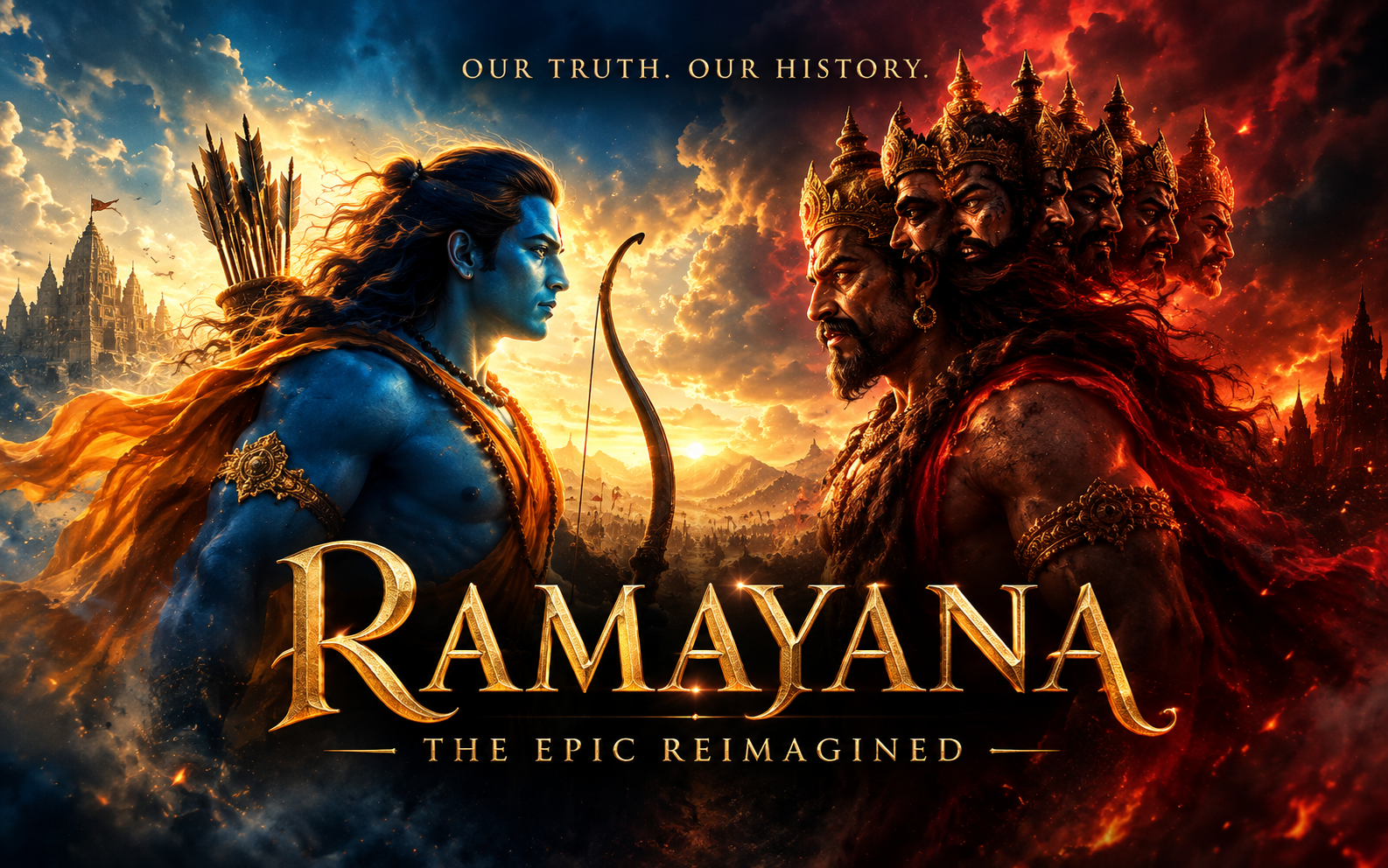
RAMAYANA: THE EPIC REIMAGINED

Ramayana: The Epic Reimagined is shaping up to be one of Indian cinema’s most ambitious productions, bringing together a star-studded cast and an international creative team. From its two-part format and reported ₹4,000-crore budget to its cutting-edge visual effects and global release plans, here are 10 things to know about the epic cinematic spectacle. 1.Two films, one epic Ramayana is planned as a two-part cinematic project. The first instalment is scheduled for release during Diwali 2026, with the second chapter planned for Diwali 2027. The films are directed by Nitesh Tiwari and produced by Namit Malhotra. Ranbir Kapoor has revealed that the team shot around six hours of footage for the first film before editing it down. A Chinese listing reportedly indicates a runtime of about 166 minutes for Part One. 2.Ranbir Kapoor as Rama: The first choice Ranbir Kapoor plays Lord Rama, amid years of speculation over other names. Mahesh Babu, Hrithik Roshan and Ram Charan were among the actors linked to various versions of the project. However, director Nitesh Tiwari and producer Namit Malhotra have clarified that Ranbir was always their first choice for their current Ramayana. Tiwari cited his physicality, screen presence and ability to convey emotion through his expressions. Interestingly, Yash, who plays Ravana, was also reportedly considered for Rama before taking on the antagonist. 3.Sai Pallavi is Sita Sai Pallavi plays Sita opposite Ranbir Kapoor’s Rama. The role marks a major Hindi-film project for the acclaimed South Indian actor and adds another prominent South Indian star to the cast alongside Yash. 4.A large ensemble cast An extensive ensemble supports the three leads. Sunny Deol plays Hanuman, Ravi Dubey plays Lakshman, Arun Govil plays Dasharath, Lara Dutta plays Kaikeyi, Indira Krishnan plays Kausalya, Kajal Aggarwal plays Mandodari, Rakul Preet Singh plays Shurpanakha, Kunal Kapoor plays Indra

Exclusive Interview: Nikhil Siddhartha on Swayambhu, Family and Politics

After the pan-India success of Karthikeya 2, Nikhil Siddhartha finds himself at a pivotal phase in his career. The actor is currently gearing up for the release of Swayambhu, one of the most ambitious projects he has undertaken to date, a historical action drama that demanded nearly two-and-a-half years of dedication, extensive physical transformation, and months of post-production work. In a candid conversation with Priyanka Goud, Nikhil opens up about the challenges of mounting a large-scale period film, why he prioritises quality over quantity, how fatherhood has changed his outlook on life, and his belief in using cinema as a tool for social awareness. A Two-and-a-Half-Year Commitment Describing Swayambhu as a project unlike any other in his career, Nikhil revealed that he dedicated nearly two and a half years exclusively to the film.“Some films are easy to make, and some are difficult. Swayambhu falls into the category of films that demand complete commitment. I underwent a significant transformation for the role, growing my hair long, maintaining a specific physique, and immersing myself in the character and story throughout the production period,” he said. A Historical Story with Universal Appeal One of the aspects that attracted Nikhil to Swayambhu was its historical backdrop. Nikhil plays Krishnan Raman, a historical figure whose name appears on ancient copper plate inscriptions that have recently gained attention. “This story is rooted in history, but its themes are universal,” he said. “It’s not confined to one region; audiences across India will be able to connect with it.” The actor also highlighted the growing importance of visual effects in modern filmmaking. Swayambhu reportedly contains nearly 2,700 VFX shots, making post-production one of the most demanding phases of the project. “We completed principal photography in December 2025, but for the last five to six months it has been

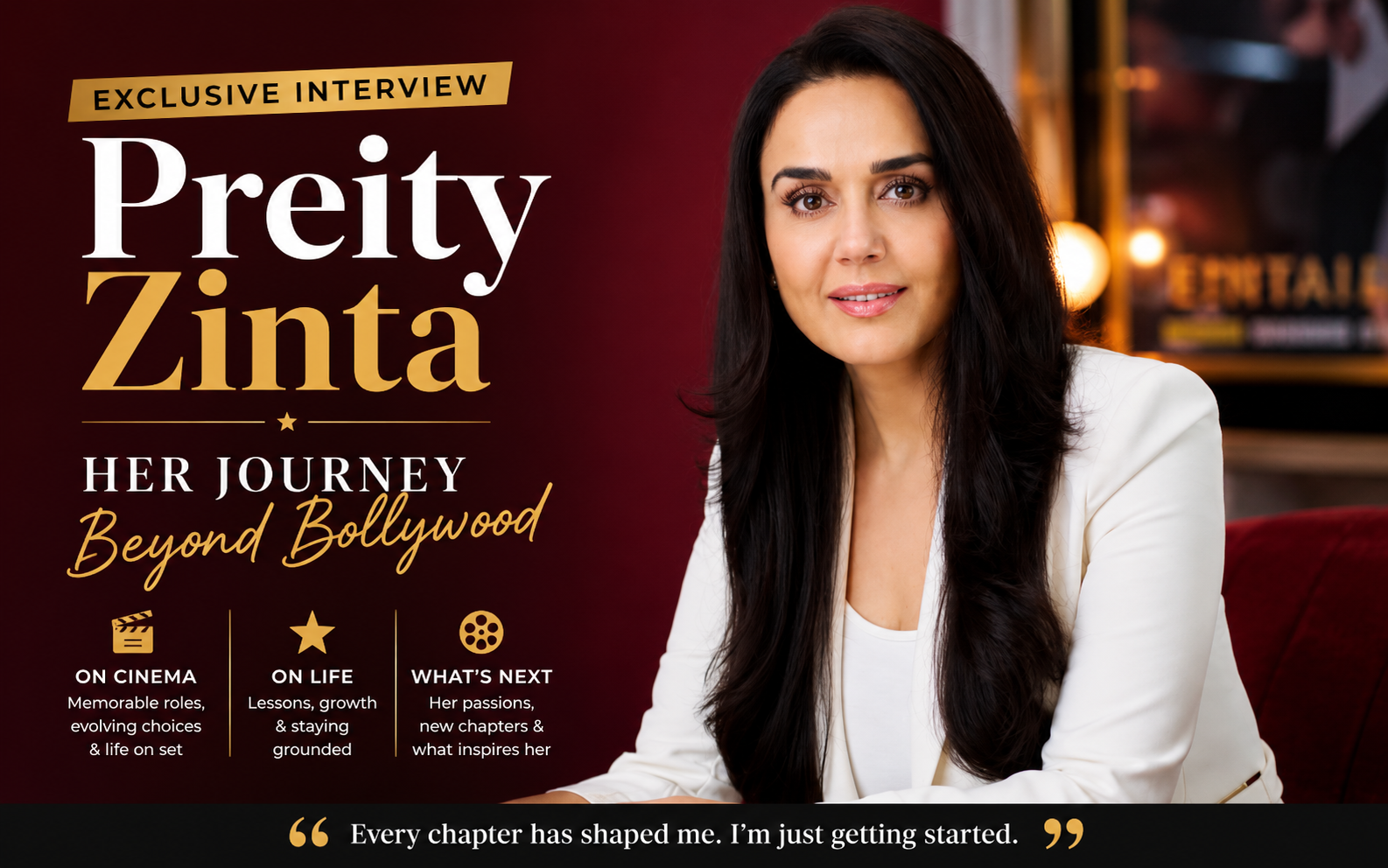
Preity Zinta on Batwara 1947, Motherhood and Finding Her Way Back to Cinema

For Preity Zinta, returning to the screen with Batwara 1947 is about more than making a comeback. The period drama allowed her to explore a chapter of India’s history, work with director Rajkumar Santoshi for the first time, and step into a world far removed from her own. But the film also made her reflect on how much life has changed since she began her career, from the freedoms available to women today to the perspective that comes with becoming a mother. For Zinta, Batwara 1947 is ultimately a story about family, resilience and hope, as she tells Lipika Varma in an exclusive conversation. Why did you say yes to doing this film? What touched you the most? There were a couple of things. First, I really wanted to work with Raj ji. I had never worked with him before, so working with him was always on my bucket list. I had also always wanted to do a period film. Beyond that, I genuinely loved the story. What touched me most was that even in the darkest of times, there is always a ray of hope. People may see this as a story about two countries, but for me, it is essentially about a family. I was also deeply affected by stories of families who believed they were leaving their homes temporarily, even burying their jewellery and valuables, thinking they would return. They never imagined they would lose everything forever. Since this is my first period film, I spent time researching and understanding that era. After such a long break from films, why did you choose this project? I was enjoying my personal life, focusing on my family and raising my children. Professionally, I had always wanted to work with Raj ji and also wanted to do a period film.

You May Also Like

Connect with us