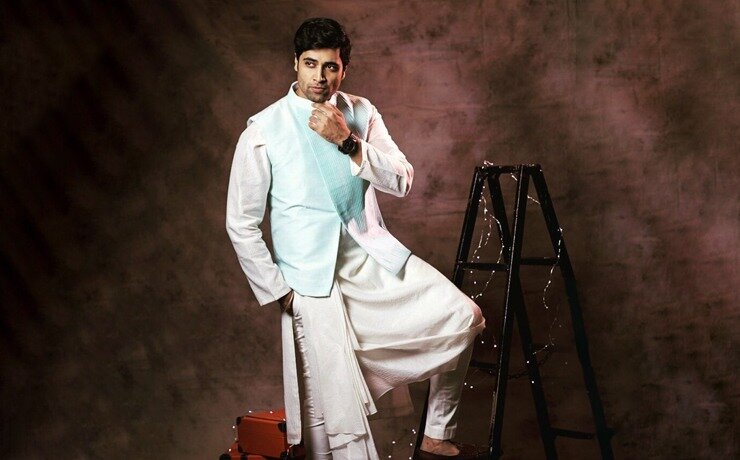
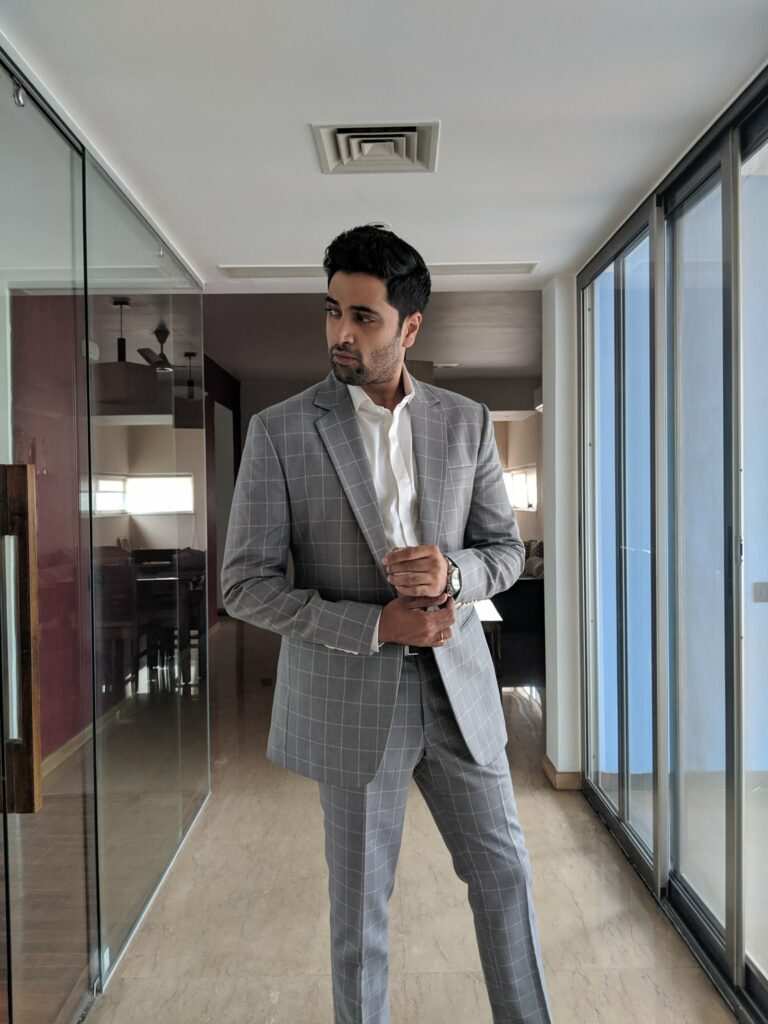
“If director Rajamouli asks me to hold a coffee cup and walk behind him like a junior artist, I’ll do that too.” : Adivi Sesh

Adivi sesh interview exclusive for Hashtag India 2021

Adivi Sesh

Actor ADIVI SESH talks to LIPIKA VARMA in an exclusive interview for HashtagIndia about his much awaited next, Major, a pan-India film, talked highly of in Tollywood and Bollywood circles. Although he was brought up in the US, Adivi Shesh, a Hyderabadi at heart, has been starring in some spectacular Telugu movies over the years. A director, producer and actor, his notable performances and commercial success include Evaru and Goodachari, which brought him into limelight.
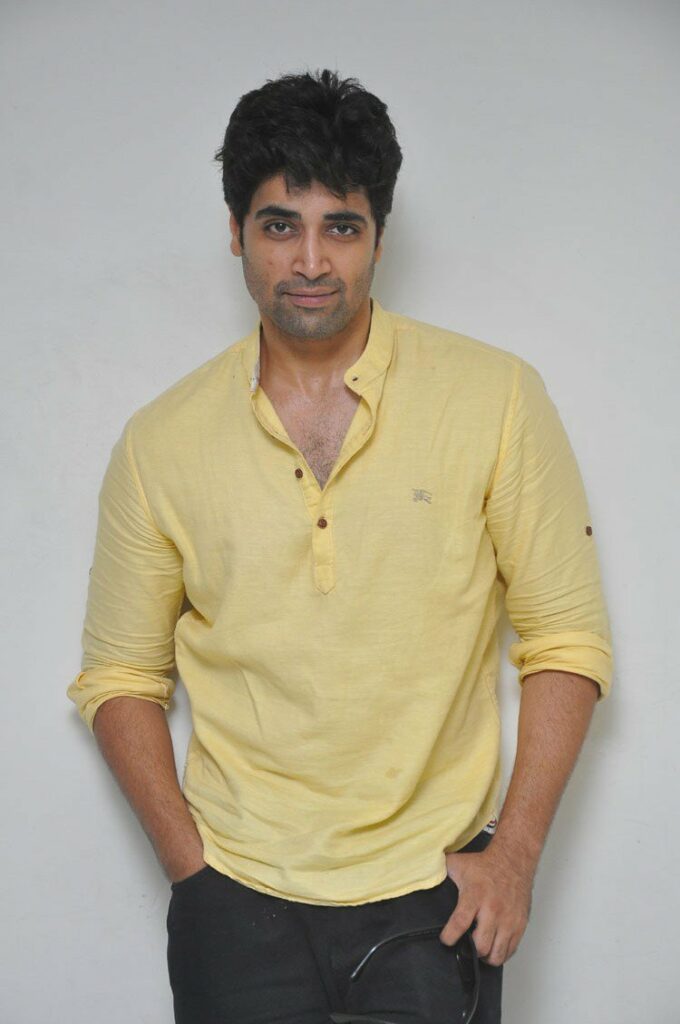
Major is a biographical action film directed by Sashi Kiran Tikka. Shot simultaneously in Telugu and Hindi and later dubbed into Malayalam, it is based on the life of 2008 Mumbai attacks martyr Major Sandeep Unnikrishnan.

Martyr Major Sandeep Unnikrishnan was an absolute real life hero. How was it capturing his spirit on screen?

I think genuinely there were several moments that we recreated. Including the clothes, and the posture. It’s so important not to feel it’s an imitation. Conceptualising is very important for me. Director Sashi Kiran Tikka and I had a lot of discussions. As far as his real life is concerned, we tried our best to capture its true spirit. Some incidents may have happened while he was 19 but we show it in the film when he is 29. I don’t look at it as an issue.

Adivi Sesh’s next, Major, is a biography on 26/11 martyr Late Major Sandeep Unnikrishnan.

Have you completed writing Goodachari 2? Where will it take the story from Goodachari 1?

The writing isn’t complete yet for Goodachari 2. My focus is on Major. Once I complete it, I’ll shift my focus to Goodachari 2. It will be a continuation from where the first part had ended. The last we saw him was in the middle of the ice cold Alpes Mountains. He is in the middle of something that we are curious to know about. That’s where part two will begin, and show us what he is up to.
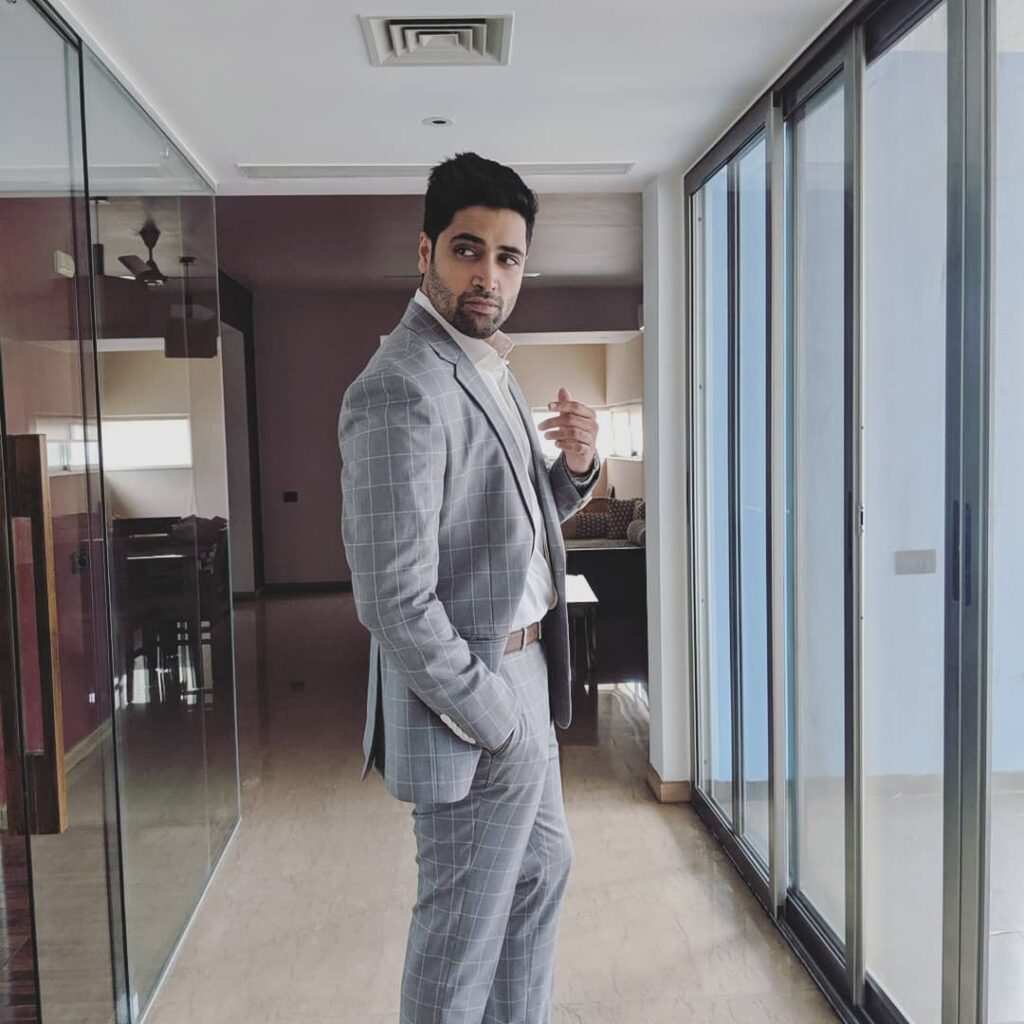
You’ve worked with Director Rajamouli, do you have a script for him or would you prefer working as an actor?

Whatever, he [Director Rajamouli] asks I’ll do it. If he asks me to hold a coffee cup and walk behind him like a junior artist, I’ll do that too. Most of the actors across India will do the same (smiles).

You’ve signed Hit-2. How did that come about?

Nany is a dear friend and one of my favourite actors. It is my second time in a row when an actor is producing a film with me. That’s a coincidence, and it’s good to enter that universe where people will think what kind of a film it will be. They have a specific texture to the Hit franchise. This one is an expansion of the first.

Work hard enough until the time the audiences are seeing you as the reason to watch the film. Success follows. The day when you stop working hard is the day when you become unlucky.

Adivi Shesh

After your film Kshanam, you rejected a couple of scripts. Why did that happen?

Yes I did reject a few scripts. At the end of the day you have to find a script that you find engaging as an audience. The first time when we read a story we always try to visualise a story which I can enjoy as an audience. If it involves me, I’ll do my best to not let it go but only if it involves me and if it doesn’t involve me, my heart’s not going to be in it. At cross roads actors try to compromise with the director. But no matter what, the thought of convincing yourself should never have to happen.

“How do you feel about being tagged as the lucky charm for filmmakers?

(Laughs) Hard work. Work hard enough until the time the audiences are seeing you as the reason to watch the film. Success follows. The day when you stop working hard is the day when you become unlucky.


Leave a comment

Your email address will not be published. Required fields are marked *

Prince Cecil Decodes the Perks & Challenges of a Destination Wedding

Actor Prince Cecil married Sai Machiraju in an intimate, 80–100 guest wedding in New Zealand, her home country, on August 24. In an exclusive with Hashtag Magazine, he breaks down what nobody tells you about planning a wedding away from home. The Perks An intimate celebration: New Zealand as our destination wedding was special because my wife, Sai Machiraju, is from there. But the thing about destination weddings is you have to keep it very private, like close-knit. I think just 80-100 people attended our wedding. Core memories that last: Destination weddings create core memories that stay lifelong. Our post-wedding pics in the snow, flying down from a helicopter, were just two happy people who wanted to capture our love. The couple even shot part of their album at Cecil Peak, a nod to his name. It was pretty cold, but it felt like a Classic Bollywood moment; at least I was covered in a sherwani, and my wife was in a saree. The right team makes the difference: There are a lot of challenges in planning a destination wedding: admin for travel, tickets, food, stage, clothes, logistics. They were quite major, but having a great team, management and a limited crowd was a huge plus. The Challenges Not everyone can make it: Someone close wants to attend it badly, but life, work commitments and the distance meant they had to skip it. That’s one of the hardest parts, missing someone you desperately want there on your special day. You can’t control the weather: The night before their outdoor ceremony, it rained heavily. We were so tensed and worried about how we’d manage, and checking for last-minute backup options. Planning can get chaotic: Coordination outside your space, managing things as per our customs and rituals, is so hard. Everything was

RAMAYANA: THE EPIC REIMAGINED

Ramayana: The Epic Reimagined is shaping up to be one of Indian cinema’s most ambitious productions, bringing together a star-studded cast and an international creative team. From its two-part format and reported ₹4,000-crore budget to its cutting-edge visual effects and global release plans, here are 10 things to know about the epic cinematic spectacle. 1.Two films, one epic Ramayana is planned as a two-part cinematic project. The first instalment is scheduled for release during Diwali 2026, with the second chapter planned for Diwali 2027. The films are directed by Nitesh Tiwari and produced by Namit Malhotra. Ranbir Kapoor has revealed that the team shot around six hours of footage for the first film before editing it down. A Chinese listing reportedly indicates a runtime of about 166 minutes for Part One. 2.Ranbir Kapoor as Rama: The first choice Ranbir Kapoor plays Lord Rama, amid years of speculation over other names. Mahesh Babu, Hrithik Roshan and Ram Charan were among the actors linked to various versions of the project. However, director Nitesh Tiwari and producer Namit Malhotra have clarified that Ranbir was always their first choice for their current Ramayana. Tiwari cited his physicality, screen presence and ability to convey emotion through his expressions. Interestingly, Yash, who plays Ravana, was also reportedly considered for Rama before taking on the antagonist. 3.Sai Pallavi is Sita Sai Pallavi plays Sita opposite Ranbir Kapoor’s Rama. The role marks a major Hindi-film project for the acclaimed South Indian actor and adds another prominent South Indian star to the cast alongside Yash. 4.A large ensemble cast An extensive ensemble supports the three leads. Sunny Deol plays Hanuman, Ravi Dubey plays Lakshman, Arun Govil plays Dasharath, Lara Dutta plays Kaikeyi, Indira Krishnan plays Kausalya, Kajal Aggarwal plays Mandodari, Rakul Preet Singh plays Shurpanakha, Kunal Kapoor plays Indra

Exclusive Interview: Nikhil Siddhartha on Swayambhu, Family and Politics

After the pan-India success of Karthikeya 2, Nikhil Siddhartha finds himself at a pivotal phase in his career. The actor is currently gearing up for the release of Swayambhu, one of the most ambitious projects he has undertaken to date, a historical action drama that demanded nearly two-and-a-half years of dedication, extensive physical transformation, and months of post-production work. In a candid conversation with Priyanka Goud, Nikhil opens up about the challenges of mounting a large-scale period film, why he prioritises quality over quantity, how fatherhood has changed his outlook on life, and his belief in using cinema as a tool for social awareness. A Two-and-a-Half-Year Commitment Describing Swayambhu as a project unlike any other in his career, Nikhil revealed that he dedicated nearly two and a half years exclusively to the film.“Some films are easy to make, and some are difficult. Swayambhu falls into the category of films that demand complete commitment. I underwent a significant transformation for the role, growing my hair long, maintaining a specific physique, and immersing myself in the character and story throughout the production period,” he said. A Historical Story with Universal Appeal One of the aspects that attracted Nikhil to Swayambhu was its historical backdrop. Nikhil plays Krishnan Raman, a historical figure whose name appears on ancient copper plate inscriptions that have recently gained attention. “This story is rooted in history, but its themes are universal,” he said. “It’s not confined to one region; audiences across India will be able to connect with it.” The actor also highlighted the growing importance of visual effects in modern filmmaking. Swayambhu reportedly contains nearly 2,700 VFX shots, making post-production one of the most demanding phases of the project. “We completed principal photography in December 2025, but for the last five to six months it has been

Preity Zinta on Batwara 1947, Motherhood and Finding Her Way Back to Cinema

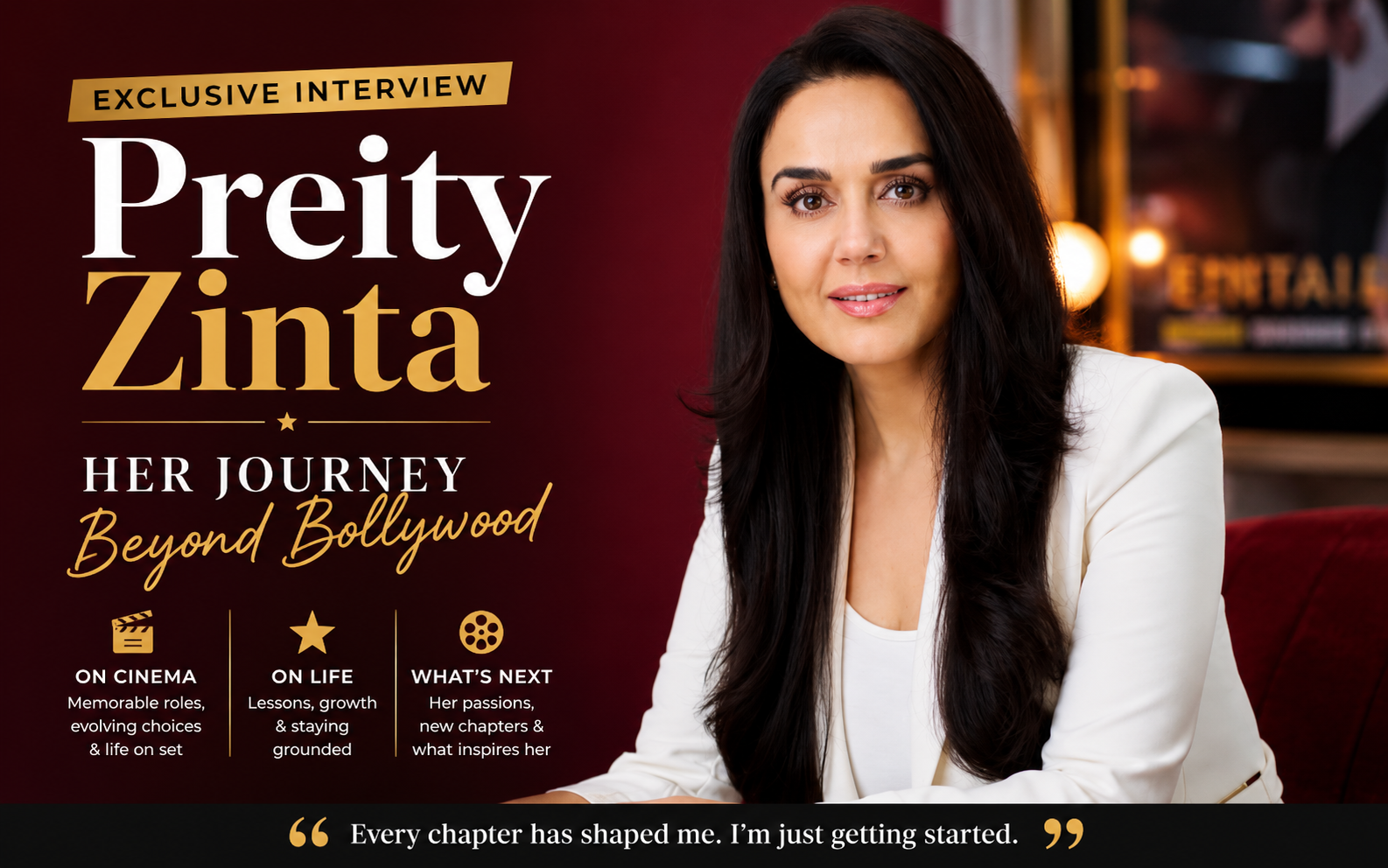
For Preity Zinta, returning to the screen with Batwara 1947 is about more than making a comeback. The period drama allowed her to explore a chapter of India’s history, work with director Rajkumar Santoshi for the first time, and step into a world far removed from her own. But the film also made her reflect on how much life has changed since she began her career, from the freedoms available to women today to the perspective that comes with becoming a mother. For Zinta, Batwara 1947 is ultimately a story about family, resilience and hope, as she tells Lipika Varma in an exclusive conversation. Why did you say yes to doing this film? What touched you the most? There were a couple of things. First, I really wanted to work with Raj ji. I had never worked with him before, so working with him was always on my bucket list. I had also always wanted to do a period film. Beyond that, I genuinely loved the story. What touched me most was that even in the darkest of times, there is always a ray of hope. People may see this as a story about two countries, but for me, it is essentially about a family. I was also deeply affected by stories of families who believed they were leaving their homes temporarily, even burying their jewellery and valuables, thinking they would return. They never imagined they would lose everything forever. Since this is my first period film, I spent time researching and understanding that era. After such a long break from films, why did you choose this project? I was enjoying my personal life, focusing on my family and raising my children. Professionally, I had always wanted to work with Raj ji and also wanted to do a period film.

You May Also Like

Connect with us