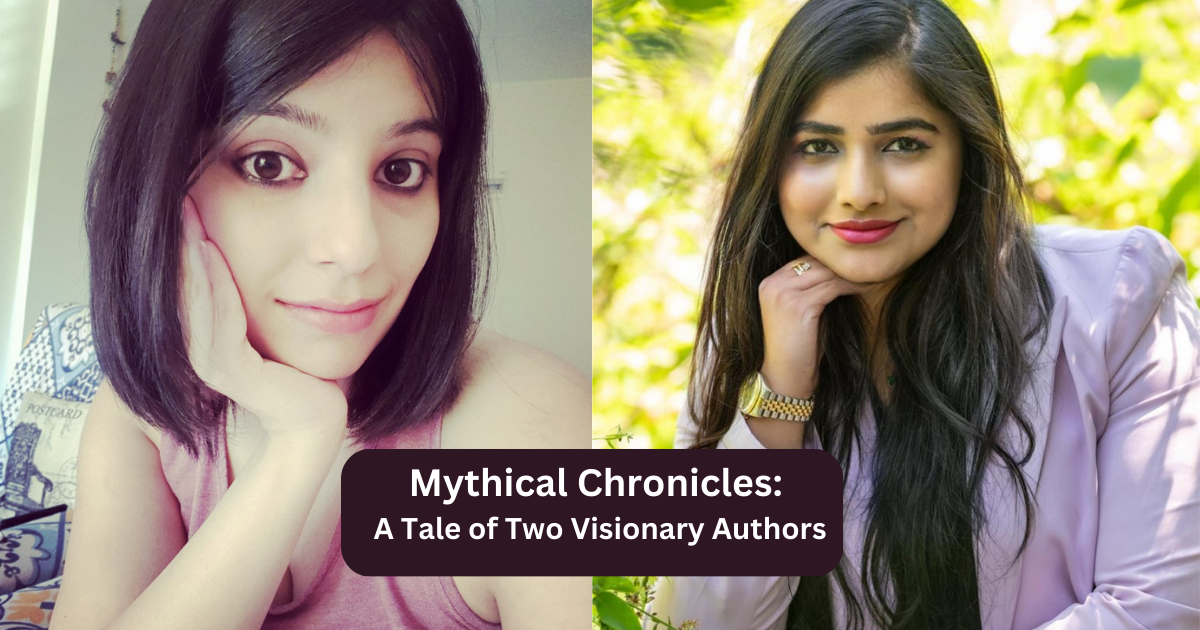
Mythical Chronicles: A Tale of Two Visionary Authors

Journey into the realm of mythology with us as we explore the works of two renowned authors who have carved a niche in this captivating genre. In this exclusive feature, we delve into the imaginative worlds crafted by Smriti Dewan and Manini Priyan, two celebrated figures who have breathed fresh life into age-old myths. Prepare to embark on a literary adventure that reinterprets and reimagines timeless stories, breathing new vitality into ancient narratives.

Smriti Dewan is a professional screenwriter and director who has spent nearly a decade in the television industry and OTT platforms. She began her career in postproduction and moved on to work as an assistant director, host, and recently turned author with her debut novel Urmila: The Forgotten Princess.

Can you tell us about your writing journey and what inspired you to delve into mythology?

I’m an accidental writer; I aspired to direct. I never had any training in writing, and in my line of work, screenplay writing is a complicated craft.  But I would sit in many writing sessions and was gently nudged in that direction. When the opportunity of writing an episode for a TV show presented itself, I was given a chance to try. The whole experience turned out so creatively satisfying that by the end of it, I knew this was what I wanted to do for a living.

Your book explores the reinterpretation of mythological stories. What drew you to this particular approach in your writing?

Urmila is a character that is sleeping for 14 years in half the versions of Ramayana! So, making her a central character and the narrator opened up a new set of avenues. The history of Mithila, its folklore, her parents, her grandmother, and the matriarchy of the kingdom of Patkai. There was just so much scope to create this world on the helms of the main story, a world beyond Ayodhya and Lanka that by itself became the foundation of this approach.  Also, after reading a dozen interpretations of Ramayana, where all Urmila is made to be is this delicate creature, one starts to get an itch to rectify the issue.

How do you balance tradition and innovation in your work?

My endeavor as a writer is always to tell an enjoyable and relatable story. Tales are timeless because the crises that characters find themselves in are universal. But none of the characters’ inner workings made sense to me as a modern woman. We can dismiss only so much with the adage, ‘It was a different time.’ Times change, values change, and therein comes my need to create that world and the character in a way that today’s readers can understand. I keep the journey of the original epic the same, but I try to show you the same sightings from a different angle.

Can you highlight some challenges you faced while writing about mythology and how you overcame them?

We live in a time when writing about mythology can bring you under intense scrutiny. We are emotionally attached to our myths and lores because we worship these gods. Seeing them as just characters on paper takes a certain degree of detachment. The challenge is in the writing itself. If the reader accepts the world you created, you have won.

Are there any upcoming projects or writing endeavors you’d like to share with your readers?

I have a historical novel coming out next, ‘Yashodhara,’ which is based on the wife of Gautam Buddha. ‘Chiranjeevi’ is another franchise based on the Hindu immortal gods I’m working on for a screen adaptation with Blue Monkey films. And a couple more film and OTT scripts are in the pipeline for the following year.

Manini Priyan Olikara is a postgraduate degree holder who discovered her love for writing during her second Master’s program at King’s College, London. During the day, she writes strategic workforce solutions as a Corporate HR business partner, and during the night, she works on her series of novels in science fiction and fantasy. In her debut novel, ‘Search for Transcendence: The Beginning,’ she fuses science fiction and familiar mythological characters.

Can you tell us about your writing journey and what inspired you to delve into mythology?

My fascination with mythology began at a young age, as I was captivated by the rich tapestry of ancient tales and the timeless themes they conveyed. The power of mythology to connect us with our past and delve into the mysteries of the universe inspired me to delve deeper into this enchanting world. Through my writing, I aim to breathe new life into myths, infuse them with fresh perspectives, and transport readers to extraordinary realms where gods, heroes, and monsters come alive.

Your book explores the reinterpretation of mythological stories. What drew you to this particular approach in your writing?

Myths are deeply ingrained in human culture and passed down through generations, but they are adaptable and open to multiple interpretations. It allows us to explore new angles, challenge traditional narratives, and shed light on different aspects of human nature. This writing approach will enable me to breathe new life into familiar myths, infuse them with contemporary relevance, and make them attractive to a young audience.


Could you share insights into your creative process when reimagining these timeless tales? How do you balance tradition and innovation in your work?

The first step is complete immersion in the source material, and I immerse myself in the original myths. Then, the next step is identifying key elements that make the tale memorable and resonate with readers. These could be iconic characters, moral dilemmas, or transformative journeys, and then looking for points of departure where I can introduce innovation while staying true to the spirit of the myth. But the main thing while trying to balance tradition and bringing a fresh perspective is to ensure that the story’s essence remains intact while offering a new and compelling take.

Can you highlight some challenges you faced while writing about mythology and how you overcame them?

One challenge is capturing the essence of the original myth while adding my creative spin. Reimagining myths requires finding fresh angles and perspectives, and for this, I explored different character viewpoints, added depth to secondary characters, and introduced unexpected twists to create a sense of discovery and surprise. Writing this book has been a continuous learning process that allowed me to grow as a writer and offer readers an engaging and thought-provoking exploration of mythology.

 Many writers draw from personal experiences or beliefs when crafting their stories. Is there a personal connection or inspiration that drives your interest in mythology?

The rise of Shakti is a significant theme in the book. Writing about this theme came from my experience of finding the divine feminine energy in my life. The world is challenging for women to traverse, whether at work or home. Finding and discovering my divine power and being my most authentic self was a major inspiration for this particular theme in the book.

Are there any upcoming projects or writing endeavors you’d like to share with your readers?

Book 2 of the series – ‘Dead Rising, Search for Transcendence’ is ready to be launched. I am excited for the readers to discover the series’ second book that further expands this universe of characters. I have a couple of screenwriting projects also in the works.  The last year has been an incredible journey for me, and I am very excited to be in this phase of my writing journey.

Leave a comment

Your email address will not be published. Required fields are marked *

How Anoushka Jain is Redefining History for Young India

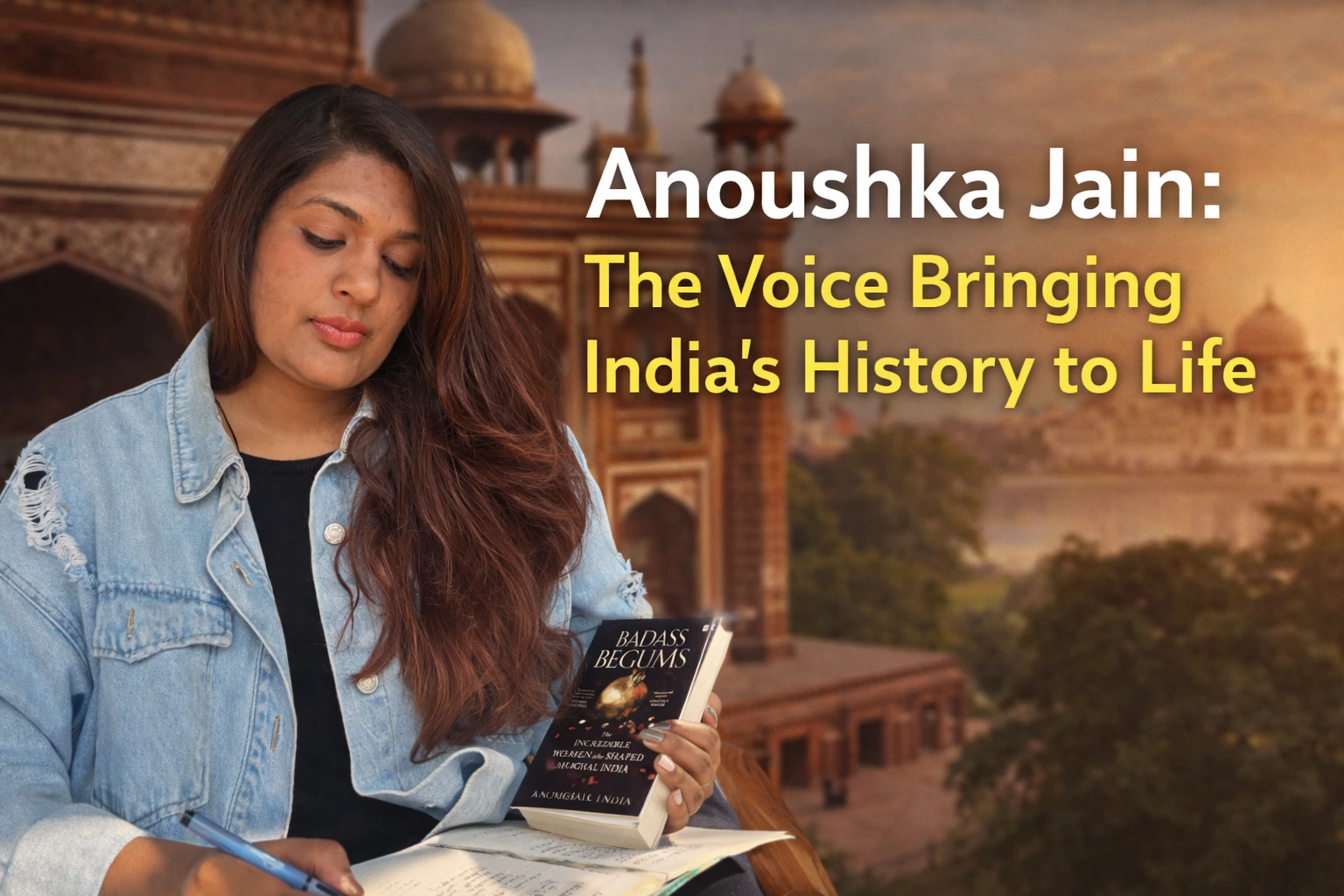
Anoushka Jain does not treat history as a static archive. For her, it is memory, identity, and inheritance. A trained historian, author, and founder based in Delhi, she grew up in a home where conversations revolved around politics, culture, and lived experience. Stories were currency. Yet she noticed a pattern early on: women’s narratives were often softened, sidelined, or erased. “I realised history wasn’t just a subject for me,” she reflects. “It was about whose stories survive.” An introvert by nature, Anoushka listens more than she speaks, a quality that has shaped both her writing and her leadership. Restoring Women to the Frame Anoushka is the author of Badass Begums, published by HarperCollins, and the founder of Enroute Indian History, a heritage initiative she launched in 2019. The idea stemmed from frustration. “History was being reduced to dates and dynasties,” she says. “I wanted it to feel alive.” Through her book and curated heritage walks, she works to restore visibility to women historically romanticised, villainised, or forgotten altogether. “If women are erased from history, they are erased from imagination.” History, Felt Before Analysed What sets her apart is her narrative lens. “I tell history like it is lived, not like it is memorised,” she explains. Her work explores emotional landscapes, power, gender, rebellion, love, and resistance, rather than mere chronology. Her leadership style mirrors this intimacy. She invites questions, encourages disagreement, and prioritises community over hierarchy. The goal is dialogue, not distance. Building Quietly, Persistently Enroute began without spectacle, early morning walks, solo logistics, research, finances, and self-doubt. “I chose this path because I couldn’t choose it,” she says. The breakthrough came when audiences returned not just for information, but for perspective. The publication of Badass Begums marked another milestone, proof that these layered stories belonged beyond city streets. Her

Top 6 Must-Read Books Of 2025

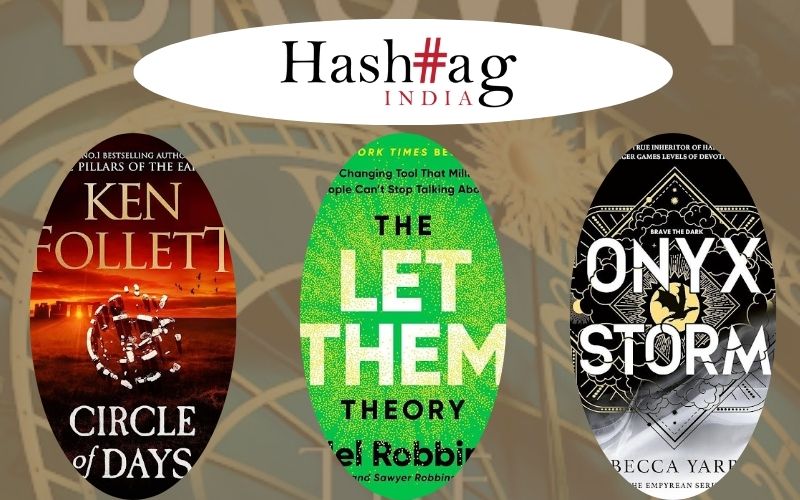
My Friends by Fredrik Backman Backman has always written about ordinary people and the extraordinary tenderness hidden inside them. My Friends continues that legacy. Set in a small Swedish town where everyone knows everyone and everything. This novel unravels the tangled lives of four friends as they stumble into adulthood and the painful beauty of growing up. It’s not just a story of friendship. It’s about how we hold on when life changes its rhythm. Backman’s prose is gentle yet piercing, like being hugged and gutted at once. If A Man Called Ove made you cry, My Friends will leave you staring at the ceiling, smiling through the ache. This is the kind of book that feels lived-in, human, humble, and quietly magnificent. Onyx Storm by Rebecca Yarros The queen of dragon fiction is back, and she’s not holding back her fire. Onyx Storm, the third in Yarros’s Empyrean saga, is pure combustion: romance, rebellion, and raw emotion. The stakes are higher, the dragons fiercer, the heartbreak deeper. Yarros understands something most fantasy writers forget that world-building means nothing if you don’t make the reader feel. Every battle has a pulse; every kiss, a consequence. Beneath all the fire and flight, this is a story about power who wields it, who pays for it, and who dares to challenge it. Expect sleepless nights and shredded nerves. Circle of Days by Ken Follett Ken Follett has never been content to tell small stories. Circle of Days, a monumental historical novel about the creation of Stonehenge, is a towering return to the kind of storytelling that built civilizations. He takes you back five thousand years, into a world where faith and fear were indistinguishable, where men built monuments not for glory but for gods. Follett’s detail is cinematic: the sound of chisels,

Book To Screen Magic: The 6 Most Spectacular Adaptations That Redefined Storytelling

There’s something magical about watching beloved characters leap from pages to pixels, transforming the theatre of our imagination into a shared visual experience. While the debate over the book rages on, certain adaptations transcend comparison. They become masterpieces in their own right, honouring the source material while embracing the unique possibilities of cinema and television. Dhanush Kumar writes about six adaptations that didn’t just meet expectations; they soared beyond them. The Lord Of The Rings Trilogy When Peter Jackson announced his ambitious plan to adapt J.R.R. Tolkien’s sprawling epic, sceptics predicted disaster. How could anyone compress Middle-earth’s intricate world-building, complex languages, and philosophical depth into film? The answer was simple: by treating the source material with reverence while understanding cinema’s different language. Jackson’s trilogy became more than an adaptation; it became a cultural phenomenon that introduced Tolkien’s work to millions who might never have picked up the books. The films captured the essence of friendship, sacrifice, and the corrupting nature of power that made the novels timeless. What makes this adaptation brilliant is its ability to capture the soul of the work. Two decades later, these films remain the benchmark against which all fantasy adaptations are measured. The Shawshank Redemption Stephen King’s novella Shawshank Redemption was already a powerful tale of hope and friendship. Frank Darabont’s adaptation transformed into what many consider the greatest film ever made, a title it has held on IMDb’s Top 250 for years. The film expands on King’s lean narrative, giving depth to the relationship between Andy and Red, two prisoners who find redemption in the most unlikely place. What elevates this adaptation is its patience. The famous rooftop scene, Adny’s opera moment, and that glorious finale on the Pacific Coast aren’t just cinematic moments; they are emotional moments that understand the assignment. Hope is

5 Books on Mythology and Wisdom to Light Up Your Diwali

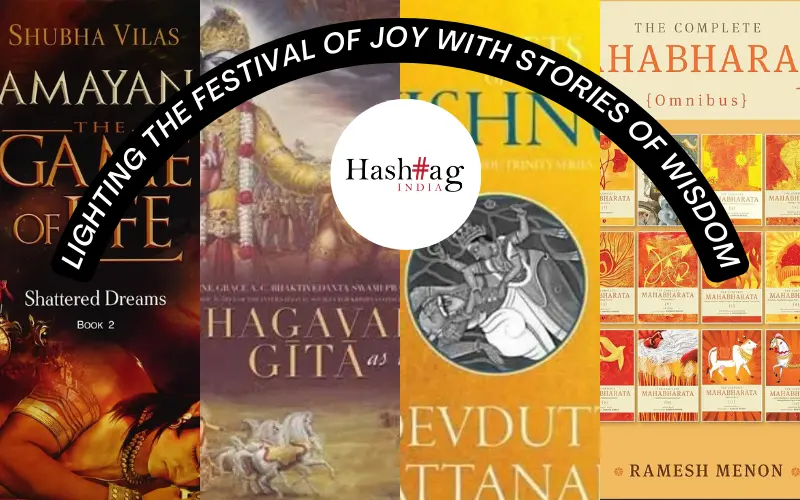
Diwali, the festival of lights, is more than just a celebration of lamps, sweets, and fireworks; it’s also a time for reflection, learning, and the triumph of wisdom over ignorance. Just as we brighten our homes with diyas, we can illuminate our minds with stories and insights from mythology that hold timeless lessons. This festive season, here are five books that combine storytelling, philosophy, and practical wisdom, making them perfect companions or gifts for Diwali. 1. The Bhagavad Gita: As It Is by A.C. Bhaktivedanta Swami Prabhupada At its heart, Diwali celebrates the victory of good over evil, and the Bhagavad Gita embodies this essence. Presented as a dialogue between Krishna and Arjuna, the text explores duty, courage, and self-realization. This edition, with detailed commentary, makes the teachings accessible for both seekers and casual readers. 2. Ramayana: The Game of Life (Series) by Shubha Vilas The Ramayana isn’t just a tale of Rama’s journey it’s also a guide to relationships, leadership, and life’s challenges. Shubha Vilas retells the epic in a way that emphasizes its life lessons, offering practical takeaways for readers. This makes the series especially meaningful during Diwali, when Rama’s return to Ayodhya is celebrated. 3. The Complete Mahabharata (Condensed Retelling) by Ramesh Menon Grand, complex, and deeply human, the Mahabharata is a treasure trove of wisdom. Menon’s retelling brings the epic alive with rich storytelling while making it approachable for modern readers. It’s a reminder of how choices, dharma, and destiny intertwine a theme worth reflecting upon during the festival of lights. 4. The Seven Secrets of Vishnu by Devdutt Pattanaik In this book, Pattanaik explores Lord Vishnu’s avatars and their symbolic meaning. Each chapter decodes how these stories mirror human evolution, spiritual growth, and the balance between chaos and order. It’s a fascinating read for those

You May Also Like

Connect with us