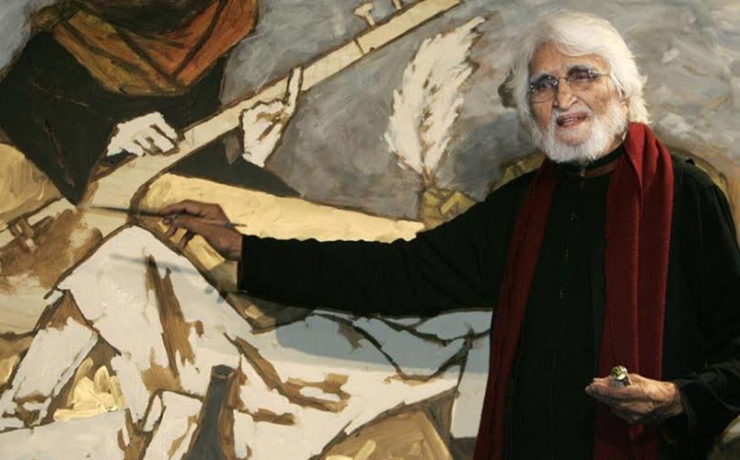
Celebrating The Artistic Genius of M.F. Husain

Celebrating The Artistic Genius of M.F. Husain - Hashtag Magazine

Introduction: 

Born in 1915 in the small town of Pandharpur, Maharashtra, M. F. Husain, grew up artistically inclined. At the age of 20, he moved to Bombay, the city of dreams. He was inspired and humbled by the trials of the city, and he took in every opportunity that would fuel his artistic quest. The only comfort came in the confluence of his two passions- painting and cinema. He began his career painting cinematic billboards, which adorn the streets he had hitherto aimlessly roamed. Through the 1940s, he worked relentlessly to establish his artistic footprint. And after spending a year at the Sir JJ School of Art, he got further involved in deciphering the continuity of art; as an anarchic dialect that tied together and retained its rich history and embraced modern innovations. On the occasion of his birthday, here are five important series of works by M.F. Husain, compiled by Sunny Chandiramani, Vice President Client Relations of AstaGuru Auction House.

Five Important Series by M.F. Husain

Horses: On the global platform, M.F. Husain was seemingly synonymous with his paintings of horses. Capturing his rendition of the beast in the full force of their majestic gallops, the artist created works that surpassed the usual realm of discernment and evoked sublime emotions in the viewer. He once said, “The cavalcade of my horses is multidimensional.” His valiant brush strokes were just reigns that eventually set his horses blazing across canvases. 
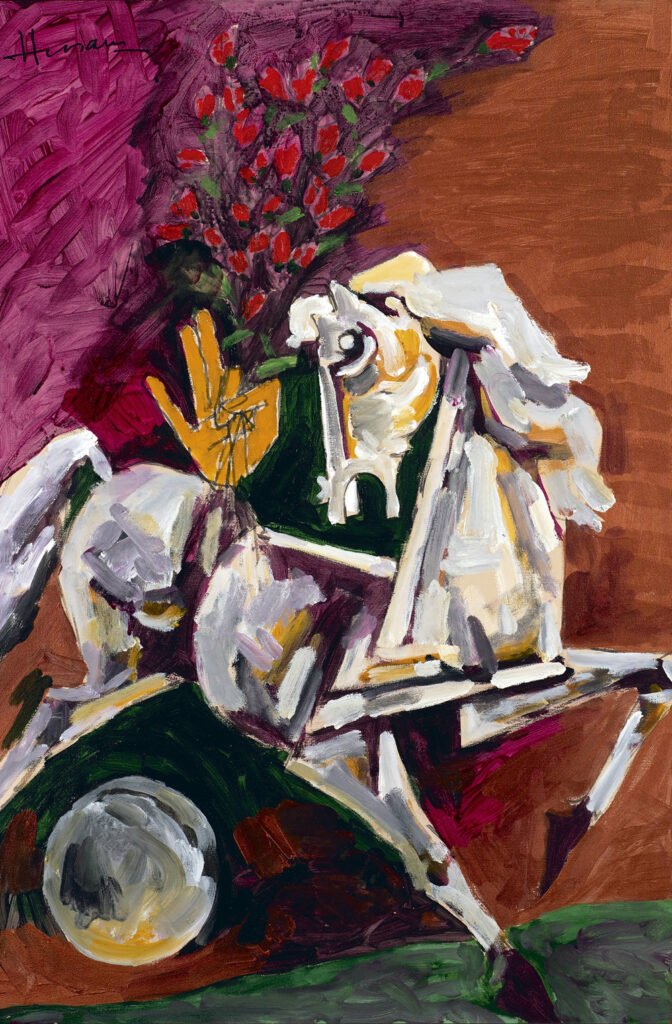
(Horse With A Bouquet), Acrylic on canvas, 35 x 23 in

Mother Teresa: M.F. Husain began depicting the visuals of Mother Teresa in the year 1980. The said series is considered to be amongst his most revered, as well as personal because the artist yearned to fill the void of having lost his mother during his childhood. Through this series, he showcased the profound impact the saint had on his life and work.
The extended and momentous drape with a blue border is symbolic and perfectly represents the aura of Mother Teresa. For the artist, merely depicting Mother Teresa based on her countenance didn’t encapsulate the essence of her spiritual magnitude. And therefore M.F. Husain, methodized a treatment, barring her human presence, exuding her gracious, maternal virtuosity. 
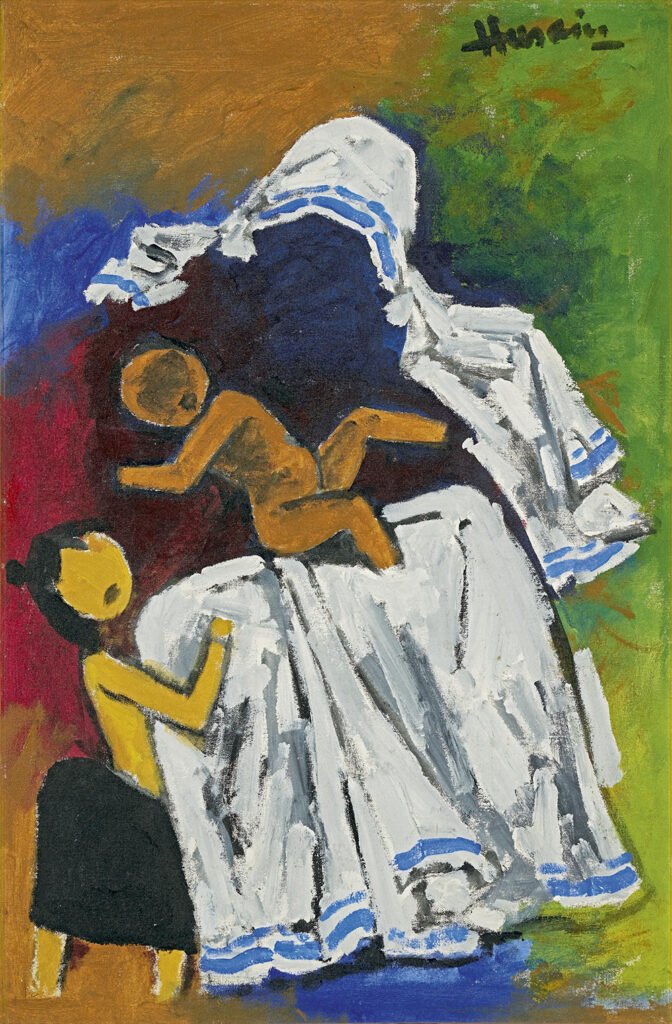
(Mother Teresa), Acrylic on canvas board, Circa 1990, 36 x 24 in

Theorema: M.F. Husain was an ardent believer of secularism and took great pride in India’s diversity. The artist created a unique collection of paintings dedicated towards the theme of religion and faith. He executed the works by retaining the pictorial religious symbols in tandem with the efficacy of his artistic persona and style. M.F. Husain’s concern about the devotion of humans and the aura of divinity inspired him to create an impressive ten-panel series titled Theorama. Executed during the early 1990s, these awe-inspiring creations were an elaborate homage to ten globally followed faiths. He etched the essence of the respective religion’s canons with precision and immense reverence. Executed on a monumental scale, this work elucidates his ideal vision.
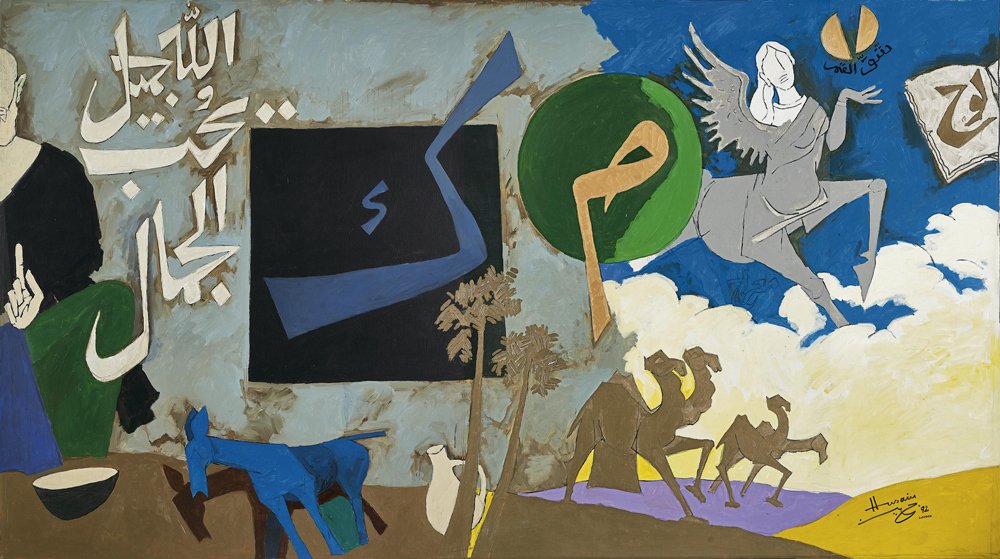
Theorama Series- Islam, Acrylic on canvas, 1992, 78 x 140 in.

The British Raj: The multifarious canvases of the British Raj Series are playful, where tableaus of Indian and British subjects come together with important elements of Indian culture in a satirical visual commentary. The caricatures reminiscent of the dominant colonisers, indolent Maharajas and their bejewelled queens, petty babus, and voiceless servants offer an insight into the social, political, and economic realities of life in India as a colonised nation. Marking a detour from Husain’s mythical inspirations, the British Raj paintings became the artist’s foray into political history. It continues to be regarded as one of the most important series that the artist rigorously returned to throughout the subsequent decades.

Raj, Acrylic, metallic gold & bronze paint on canvas, 1987, 47 x 92 in

Rangmala: M.F. Husain has recurrently paid homage to Indian cultural traditions in their classical forms and during the period of the 1950s to the late 1960s, he produced one of his most energetic series of works entitled Ragamala, capturing the artist’s continuous fascination with rasa (aesthetic rapture). The interdisciplinary nature of music, sculpture, dance, painting and film provided enormous inspiration to Husain at that time and his Ragamala series embodies the masterful usage of his most recognisable pictorial elements.

(Ragmala), Oil on canvas, Circa 1990, 24 x 36 in

Conclusion:

These are a few of M.F.Husain’s most famous paintings. Some of his other works include Lady with Veena, Battle of Ganga and Jamuna, Bharat Mata and more. His works serve as an inspiration to many other artists.

Leave a comment

Your email address will not be published. Required fields are marked *

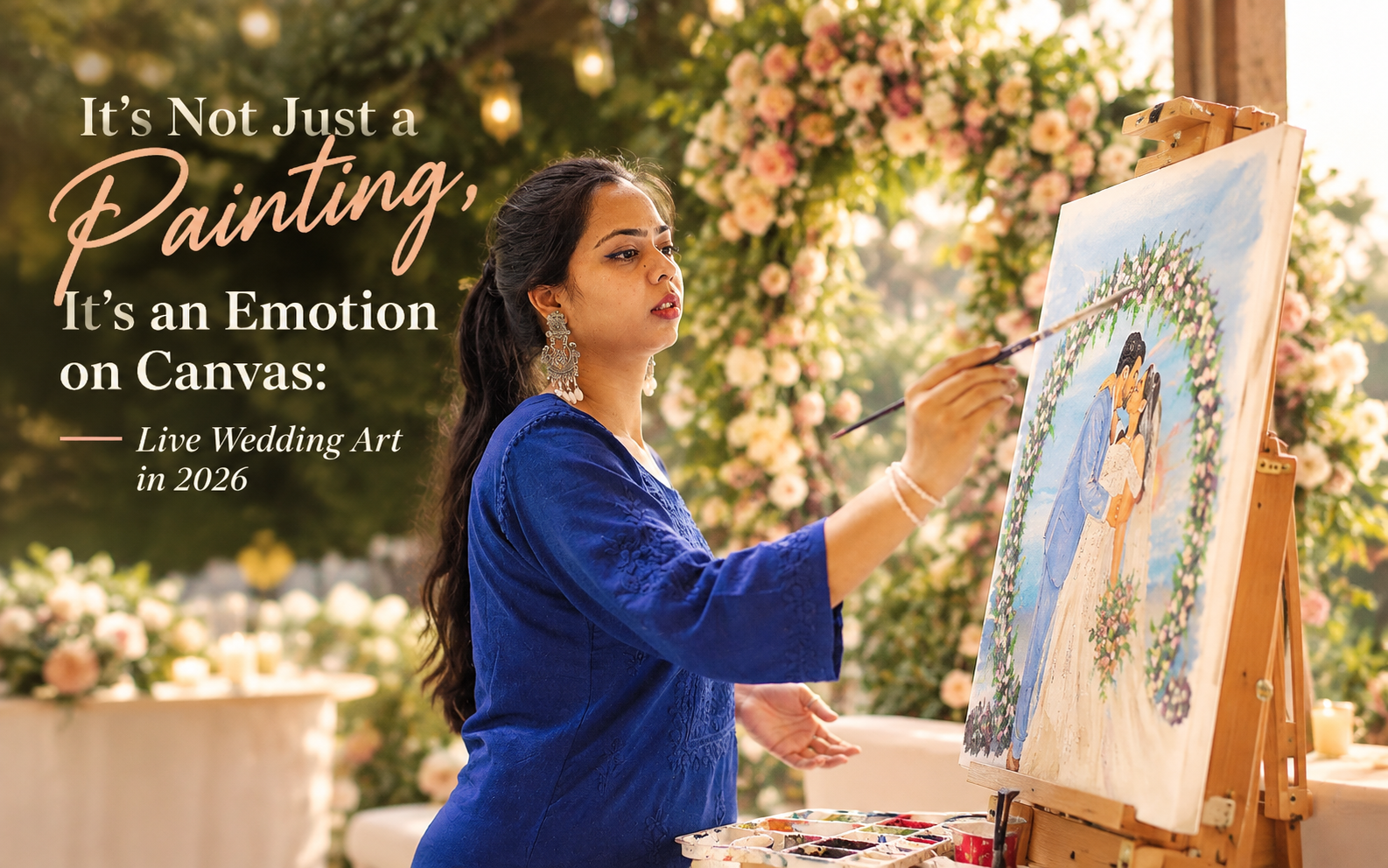
It’s Not Just a Painting, It’s an Emotion on Canvas: Live Wedding Art in 2026

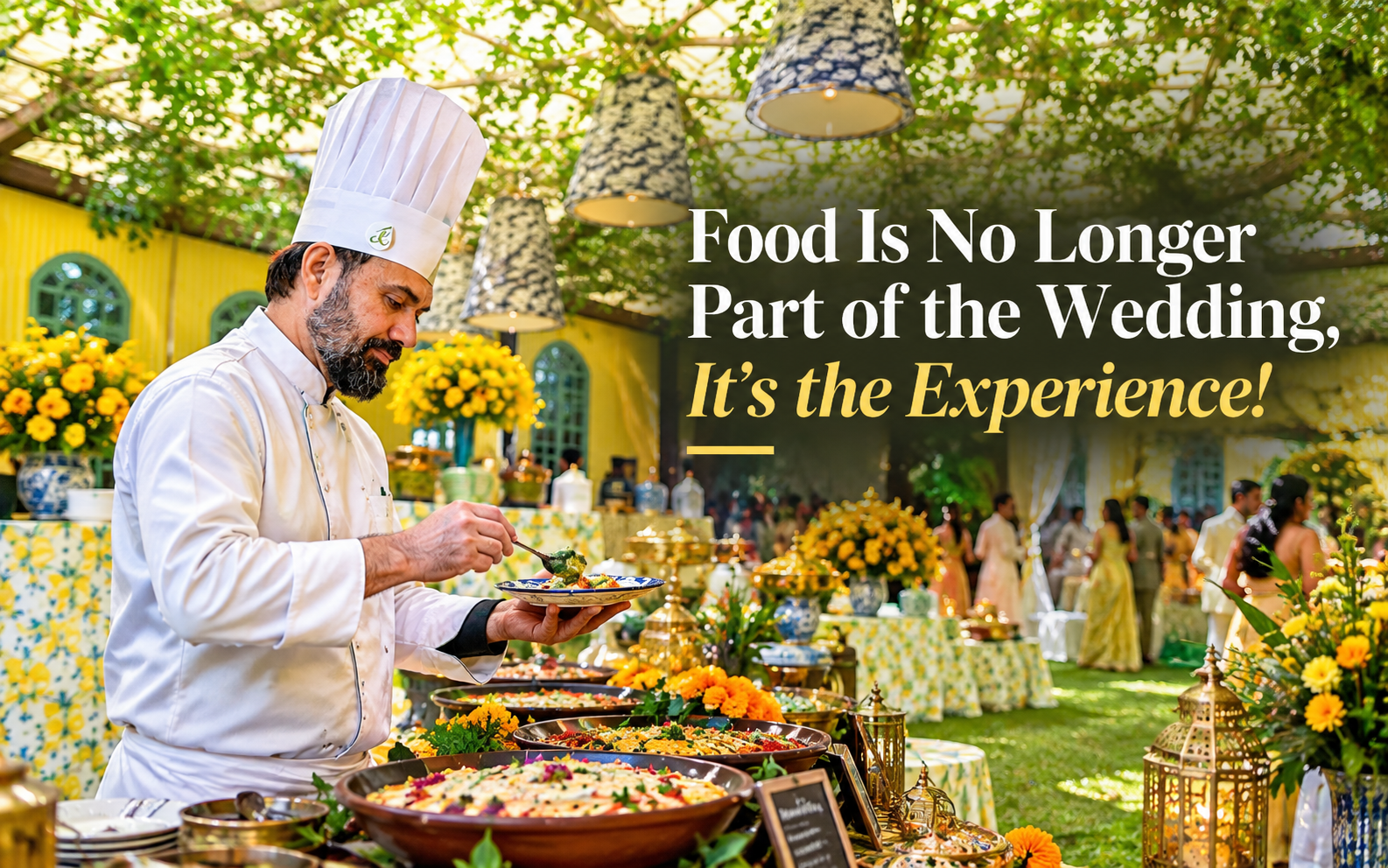
Bangalore-based artist Shivani Jaiswal paints live at weddings and events across India, including destination weddings, translating fleeting moments onto canvas as the celebration unfolds. Her view for 2026: a wedding painting is no longer just a portrait of the couple, but a visual story of the whole day, made to bring back how the wedding felt, not only how it looked. Here is what she sees shaping the art form. From Portrait to Whole-Wedding StoryLive wedding painting is becoming less about a portrait of the bride and groom and more about the feeling and atmosphere of the entire celebration. Couples now want the venue, décor, flowers, family and small details included, so the painting reads as a visual story of the day. It is also becoming more personal: the aim isn’t to reproduce a photograph on canvas, but to interpret the light, expressions, colours and emotions of the wedding in her own artistic style. Painting the Moment That MattersCouples increasingly ask for one specific moment: a forehead kiss, a romantic glance, a groom down on one knee at the ring ceremony, the exchange of garlands, the first dance or the wedding entry. These moments last only seconds in real life, but they are the ones couples want to hold on to forever. A Gift Filled With EmotionThe painting has become a deeply emotional gift. A groom may surprise his bride, a bride her husband, or siblings, friends, and parents may gift it to the couple. It carries the emotion of the giver too, as if to say- I saw this moment, I know how much it means to you, and I wanted you to have it forever. Art That Becomes Part of the CelebrationPainting live means the canvas becomes part of the wedding itself. Guests wander over to ask questions

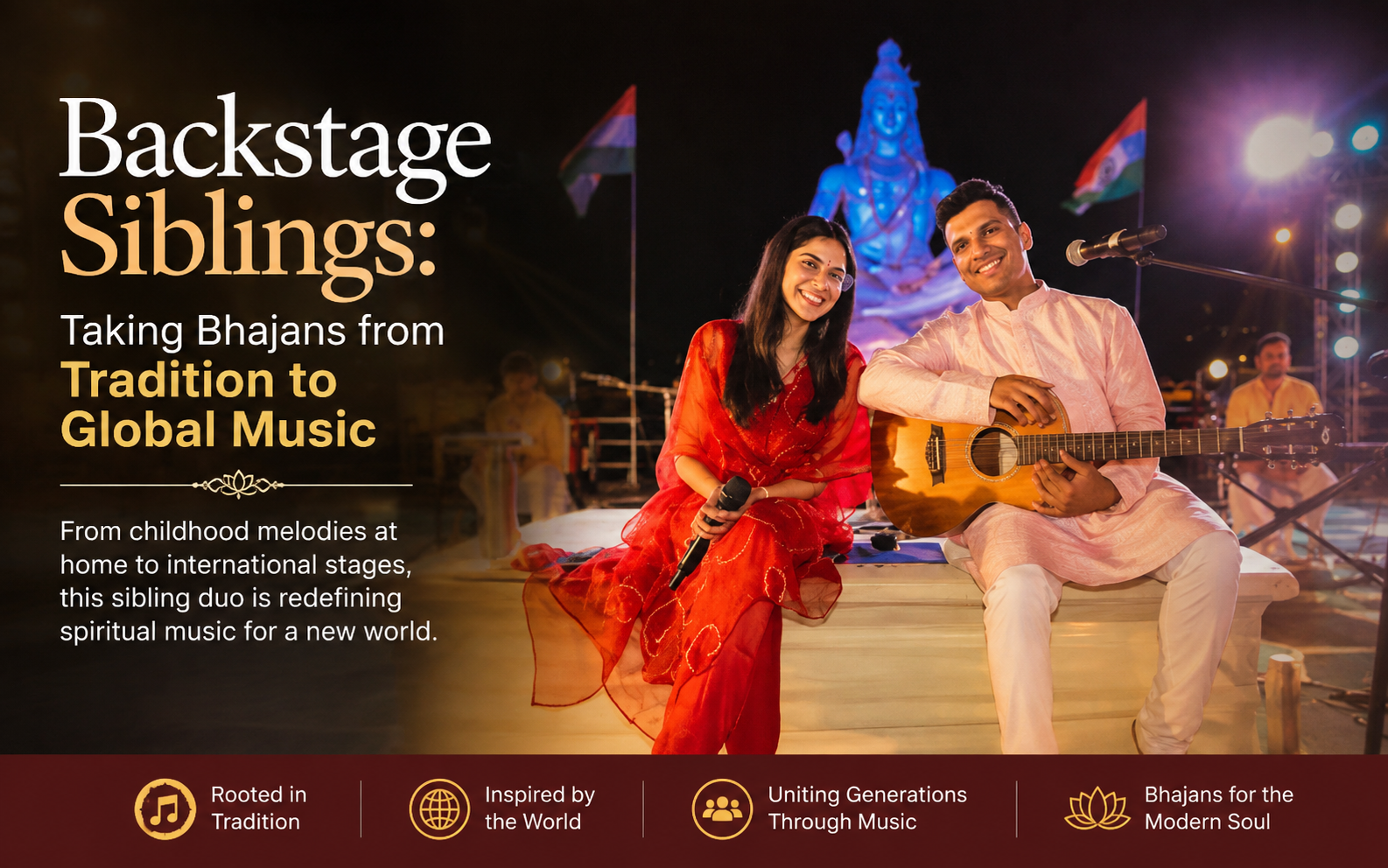
Backstage Siblings: Turning Bhajans into a Global Movement of Music, Connection & Belonging

What began as childhood satsangs has evolved into one of India’s most compelling live music experiences. Siblings Raghav and Prachi, founders of Backstage Siblings, have reimagined bhajans and collective singing for a new generation seeking meaning beyond the noise. From intimate living room sessions to sold-out shows across cities and international stages, their journey is less about scale and more about creating spaces where music becomes a shared emotional release, raw, real, and deeply human. You grew up attending satsangs with your father. At what point did you realise those childhood musical memories could evolve into something this massive?Honestly, there was never one big moment where we thought that this was going to become massive. We grew up going to satsangs with our father, and bhajans were just a very natural part of our lives. They were familiar, comforting and always gave us a sense of peace. That stayed with us quietly, even as we grew older and moved into completely different lives. It was only when we were deep in our corporate careers, surrounded by the constant noise of being always on, that we started feeling the need for something slower and more honest. We kept asking ourselves whether we could create a space where people could feel what music had always made us feel. That question became the beginning of Backstage Siblings. Both of you came from demanding corporate careers. What pushed you to leave that world behind and take Backstage Siblings seriously?Corporate life was fast, demanding and relentless. There is a certain kind of exhaustion that comes from always being connected, always responding, always moving to the next thing. For us, music was the one thing that genuinely slowed everything down. At first, Backstage Siblings was something we did because it felt honest. But very quickly, the

Independent Tattoo Artists Making India’s Ink Scene Cooler Than Eve

There was a time when getting tattooed meant walking into the most popular studio in town and choosing a design off a wall. But India’s tattoo culture has evolved far beyond that. Today, people are searching for something far more personal, with art that carries identity, emotion, storytelling, and individuality. In an era where self-expression matters more than trends, independent tattoo artists are becoming the real stars of the ink scene. Mehak Walia in conversation with six independent tattoo artists, discussing their specializations and beyond. From hyper-detailed realism and hand-poked art to experimental linework and culturally rooted designs, a new generation of tattoo artists across India is building loyal communities purely through their distinct styles and creative vision. They are not just creating tattoos; they are creating experiences, safe spaces, and deeply personal collaborations that stay with people for life. So, let’s just shine a spotlight on some of the most exciting independent tattoo artists making their mark and redefining what India’s modern ink culture looks like today. Six Must-Check Independent Tattoo Artists: AZ aka Azrael: For Azrael, tattooing is far more than a profession; it is a deeply personal and meditative form of expression. Drawn to the idea of creating lasting art on somebody else’s skin, he describes the process as both peaceful and creatively fulfilling. “I love the whole process of creating art on somebody else’s skin,” he says, adding that tattooing is also where he feels most connected to music and to his own individuality as an artist. “I feel like I want to do my own thing in my own way.” While many artists view tattooing purely as body art, Azrael sees the medium extending far beyond skin. Inspired by the intersection of fashion, design, and tattoo culture, he believes the industry has the potential to

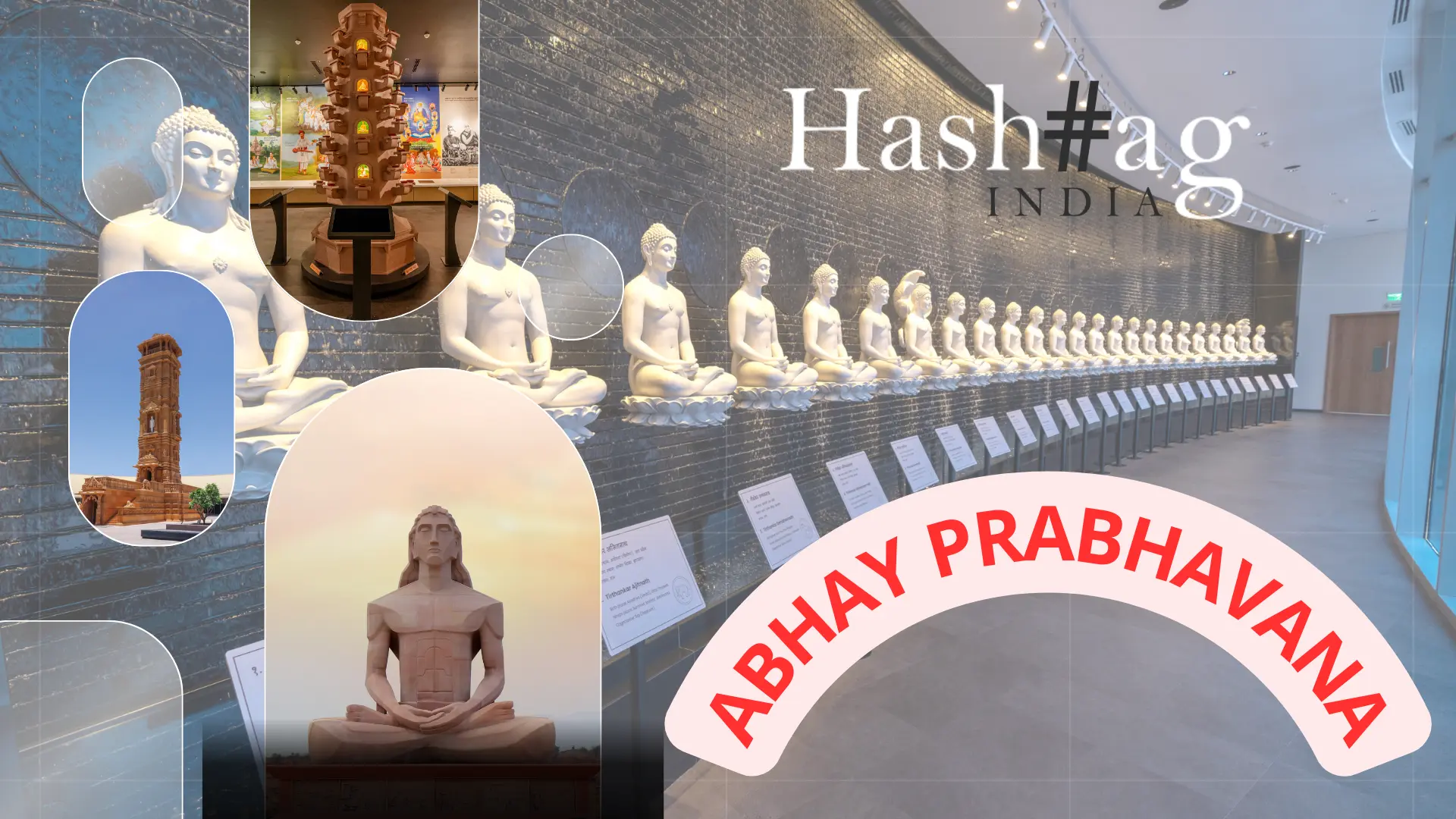
ABHAY PRABHAVANA: WHERE INDIA’S ANCIENT VALUES MEET THE FUTURE

What if a museum didn’t just show you history, but revealed the very values that built India as a civilisation? Abhay Prabhavana is a remarkable museum nestled far away from the rush and noise of the city. Surrounded by peaceful rural landscapes and open skies, the place feels deliberately distanced from distractions, almost as if silence itself is part of the experience. As Vonteru Aarthi Reddy explores, this space offers far more than visual exhibits. Unlike any museum I’ve visited, Abhay Prabhavana does not rely on ancient artefacts or recycled displays. Instead, it invites you on a carefully crafted journey to understand India’s values, evolution, and inner wisdom. What makes it even more extraordinary is that the museum took nearly ten years to build researching, writing, sculpting, designing, revising, and refining all dedicated to presenting India’s civilisation with clarity and integrity. A Museum Built Like a Civilisation — Layer by Layer The first thing that struck me was how thoughtfully everything is structured. This is not a place that overwhelms you with dates and artefacts. Instead, the museum unfolds like a narrative, a story of who we are, where we came from, and why our civilisation stood firm for thousands of years. The journey begins with India’s ancient values. Concepts like Atma, Karma, restraint, truthfulness, compassion, and discipline, often misunderstood or oversimplified, are explained here with remarkable clarity. Visual storytelling blends seamlessly with philosophy. As you move forward, the museum transitions into India’s civilizational story. You witness how our earliest cultures formed along the rivers, how Jain, Buddhist, and Vedic traditions shaped thought, and how ideas circulated freely in ancient India. The narrative is honest and balanced; it explains prosperity, decline, resilience, and transformation without exaggeration or omission. Everything inside the museum is freshly created: every sculpture, every painting, every

You May Also Like

Connect with us