Famous Foods of Sikkim

https://www.britannica.com/place/Sikkim

Food consumed and the traditions practiced in a state depict their forebears while also enlightening the the facts about the circumstances that were relevant. It delineates how the cuisines, cultures flourished and developed. Sikkim is called the state of the famous food in India. To explore the most out of Sikkim’s various gastronomic pleasures, you must visit several native cafes, eateries, and food stalls. There’s no getting away from Sikkim’s fiery, salted, spicy, and bitter meals if you’re in Sikkim. Hashtag Magazine compiles a list of all the traditional foods of Sikkim you must try.

What Makes Sikkim’s Cuisine Special?

Sikkim’s cuisine is a spread of a diverse range of flavours as well as a reflection of the multi-ethnic blend of individuals and traditions within the state. This richness is mirrored in Sikkim’s wonderful menu, which incorporates dishes from neighbouring states as well as bordering nations Nepal, Bhutan, and Tibet. Sikkim is regarded as an ecological state and the cuisine centres on organic foods from local farms. Whenever the tastes of Sikkim combine in this magnificent merge of spices, the outcome is a broad variety of delectable dishes. A curated list of Sikkim food images with names is this piece. 

The optimum blend of deliciousness and energy filled with spices can be relished in the traditional food of Sikkim that you certainly enjoy. From Momos to Thukpa, Sikkim’s famed cuisine is deliciously simple.

10 Famous Foods of Sikkim

We have curated a list of ten of the best and most flavourful of Sikkim’s piquant spread of dishes for your perusal.

  1. Momos 

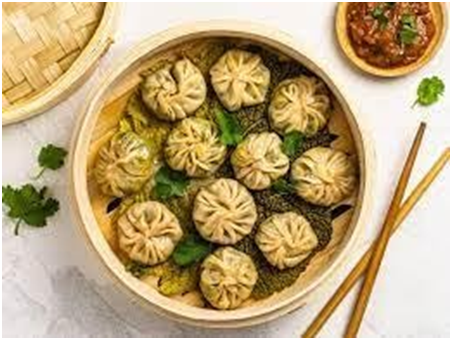
A kind of Tibetan dumpling, momos is consumed in various places like in India that include Darjeeling, Ladakh, Pakistan, Assam, Sikkim and other states. However, Sikkim and momos are a delicious blend. This authentic dish of Nepal is extensively consumed in the state that it shares border with – Sikkim.

Momos are steamed dumplings, which are loaded with stuffing that may comprise meat or vegetables and spices along with cheese, tofu or paneer. The exterior shell of this dish is made of maida, also called all-purpose flour, and water, to make its dough. The dough is made into small flat circles where the stuffing is filled in and wrapped like dumplings. Later, these can be steamed. A tad of yeast is incorporated in the dough for an appealing lift to the dough.

The stuffing has undergone several changes over the years, culminating in the dumplings’ prominence. Momos nowadays are the most extensively consumed dish in various parts of India.

2.  Thenthuk
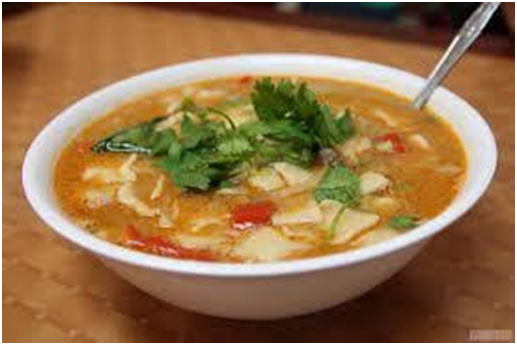
Thenthuk is another tasty and healthful leisure dish. It is one of Sikkim’s regional delicacies. Made out of wheat flour, this comfort dish is served in a broth containing vegetables and meat. Unlike thukpa, the thentuk dough is flattened rather than shaped into typical noodle strands.

It is only introduced after the veggies and meat have been thoroughly cooked. The people of Sikkim usually tend to savour this dish during supper.  

3. Khapse

Khapse is a classic Tibetan cracker made for the Tibetan New Year, or Losar. All-purpose flour, butter, eggs, and sugar are mixed together to make the Khapse mixture and later the mixture is moulded into various shapes and sizes.

4.  Thupka
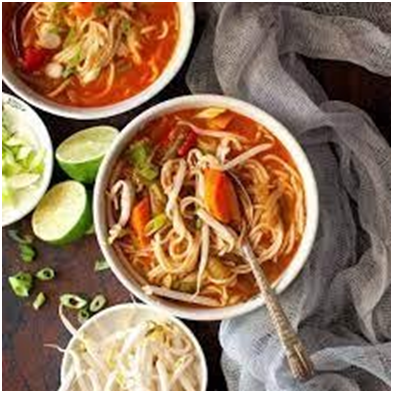
Do not even skip out on the Thukpa when you’re touring Sikkim! This Sikkim delicacy origins in Tibet’s highlands and is sure to please your taste buds. The soup’s spicy flavour is complemented with chopped onion and chopped peppers. This meal comes in both vegan and non-vegetarian varieties. Non-veg thupka would include meat and poached eggs. This exquisite dish is accessible at almost every restaurant in the area, save for roadside kiosks.

5. Bamboo Shoot Curry
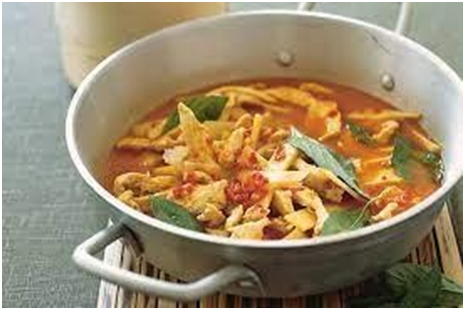
Sikkim cuisine is fostered by several fern-based dishes and one among them is the Bamboo Shoot Curry. Bamboo Shoot Curry is a Sikkim-style cuisine prepared from pickled bamboo. The curry is seasoned with turmeric to ameliorate the aroma of a meal whilst also to overcome the harshness of bamboo plant. This classic Sikkim dish can be truly enjoyed when it is served with rice.

6.  Wachipa
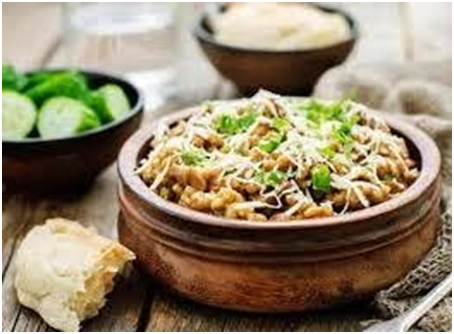
 Wachipa is made of cooked rice, finely diced chicken, and powdered and roasted meat feathers. The powder has a characteristic sour taste. It is feasible to produce a meatless Wachipa by replacing the chicken with the caustic Damlapa leaves and stems or blossoms. It is often eaten only on exceptional occasions. This dish is considered to be the authentic Kirat Rai indigenous firm’s native Sikkim food.

7.  Sel Roti
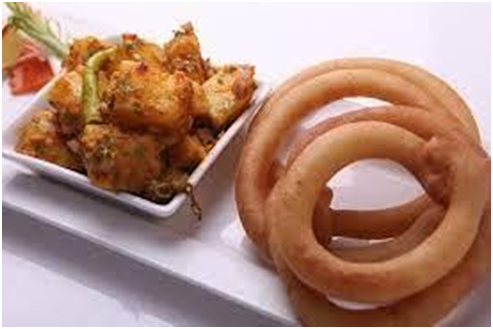
Sel roti is a conventional sugary rice dessert that is round in shape and is common in Nepal and the Kumaon area. Cardamom is introduced to the flavour of the dessert. It is put into the boiling oil in a circular pattern. If you would like to fry it, you’ll require a great deal of experience because it seems simple but can be difficult to prepare. Dashain and Tihar are two extensively commemorated occasions in Nepal, Darjeeling, and Sikkim. Usually, this dish is prepared during that time of the year.

8.  Gundruk
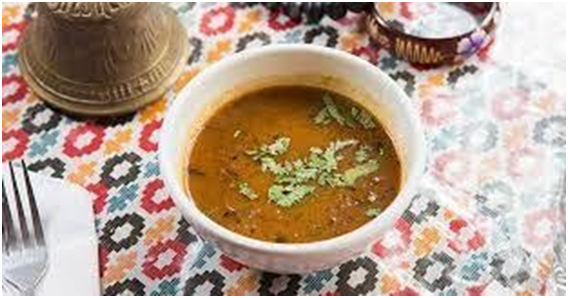
Gundruk is produced by fermenting green plants. It is offered as an appetiser with a primary plate of food. It must be prepared with mustard and lettuce or turnip greens. It’s a tad bit sour, but it still tastes amazing. Gundruk is an essential source of nutrients, especially throughout the off-season whenever the cuisine comprises predominantly potatoes and corn, both of which are mineral-deficient.

9.   Dal-Bhaat

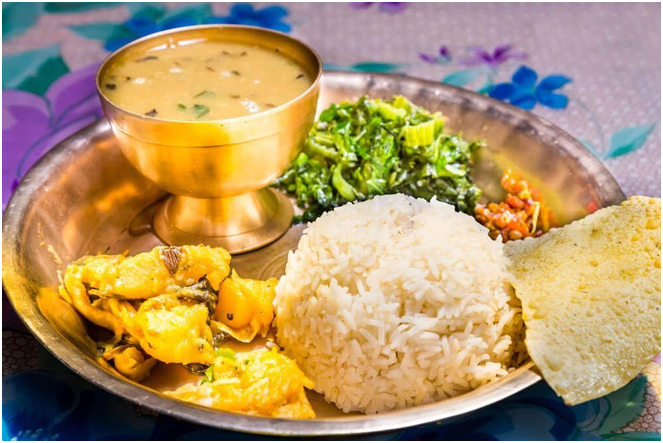
Dal-Bhaat is a classic Indian subcontinental dish that is prevalent in different parts of India, Nepal, and Bangladesh. It involves cooked rice with dal, seared lentils or other vegetable dishes. It is a traditional meal in several nations. In a variety of Indo-Aryan dialects, bhaat or chawal denotes ‘cooked rice.’  Dal-Bhaat is a great option for people who wish to keep things simple and eat little portions of food.
10. Sha Phaley

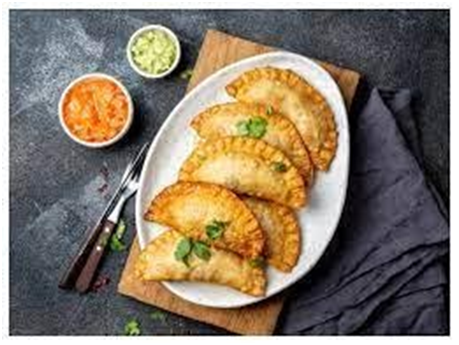
Sha Phaley, sometimes called as Shabhaley, is a Tibetan delicacy made of toast, packed with flavoured pork and lettuce, which would then be shaped into spherical forms and deeply fried or skillet fried depending upon regional differences. Eventually, a crispy meal with a delicate, scrumptious centre is the result. Tofu and cheddar cheese have just been included into the ingredients for vegetarian meals.
In this state of scrumptious food, these delectable dishes should not be missed. For all those travel freaks out there, whenever you travel to Sikkim, these dishes would make your visit worthwhile.   

Leave a comment

Your email address will not be published. Required fields are marked *

Top 10 Destination Wedding Locations for 2026

Explore the top wedding destinations in India and abroad, from the royal palaces of Udaipur and Jaipur to the beaches of Goa and the serene backwaters of Kerala. International favourites including Thailand, Bali, Dubai, Turkey and Sri Lanka offer spectacular settings for multi-day celebrations, luxury experiences and memorable ceremonies. This guide highlights the unique vibe, appeal and estimated budget ranges for each destination, helping couples and families compare options based on style, guest experience and overall wedding vision. Top Indian Destinations – Box Destination Vibe & Appeal Estimated Budget Range Udaipur Palaces, lakes, and royal heritage; Wedding Capital of India ₹50 lakh to ₹70 lakh (palace venues range from ₹70 lakh to ₹2.5 crore) Goa Beachfront luxury, sunset backdrops, and coastal resorts ₹40 lakh to ₹1 crore Jaipur Pink City fortresses, historic courtyards, and grand heritage properties ₹30 lakh to ₹70 lakh Jaisalmer Golden dunes and majestic desert fortress properties like Suryagarh Palace ₹50 lakh to ₹1.2 crore Kerala Peaceful backwater houseboats and palm-fringed lakeside resorts ₹35 lakh to ₹80 lakh Top 5 International Destinations: Destination Vibe & Operational Appeal Estimated Budget Range (100–150 Guests) Thailand (Phuket / Hua Hin) Tropical Beach Luxury: Easiest logistics, massive inventory of seasoned Indian caterers, and a highly optimised system for multi-day South Asian rituals. ₹50 lakh to ₹1.2 crore (Highly flexible packages) Bali, Indonesia (Uluwatu / Nusa Dua) Exotic Clifftops & Jungles: Breathtaking ocean backdrops and Hindu cultural synergy, though specialised Indian buffet menus often require bringing in outside culinary teams. ₹75 lakh to ₹1.8 crore (Luxury resorts command premium rates) Dubai / UAE (Ras Al Khaimah) Glamour & Ultra-Luxury: Unmatched skyline or desert resort backdrops. Phenomenal flight connectivity from all major Indian transit hubs makes guest transit completely seamless. ₹80 lakh to ₹2.5 crore+ (Can scale exponentially for ultra-luxe properties) Turkey (Bodrum

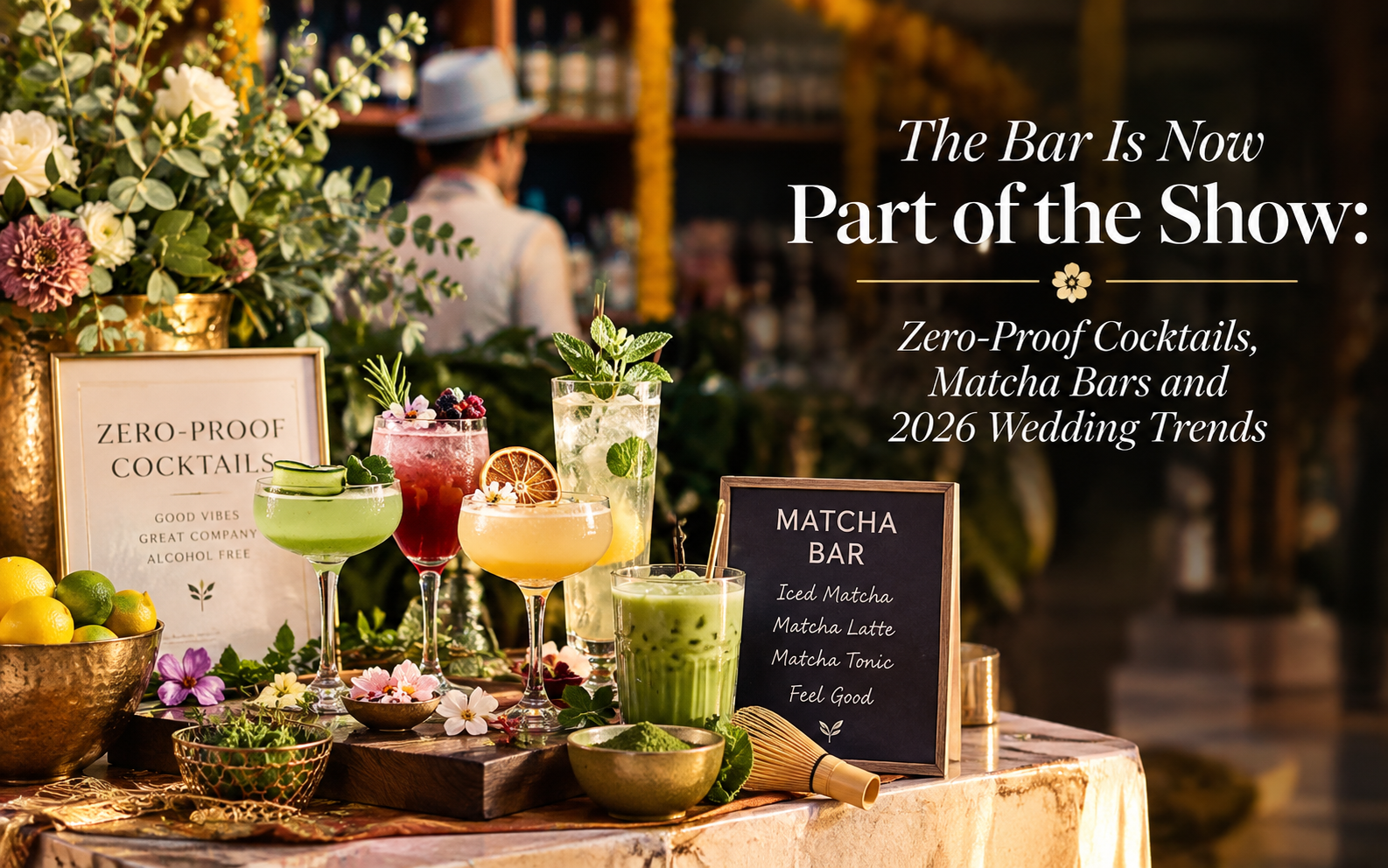
The Bar Is Now Part of the Show: Zero-Proof Cocktails, Matcha Bars and 2026 Wedding Trends

Founded in Bangkok in 2010 by a group of hotel bartenders, FLAIRMIX Thailand began with a single Indian wedding and has grown into a bar and beverage service company working across Thailand, India, Indonesia, Oman, Bahrain and Qatar. Their belief is that a bar is more than a place to pick up a drink: it can shape the atmosphere, the entertainment and the guest experience. Here is what they see changing behind the bar in 2026. Wellness Drinks and Zero-Proof CocktailsThe clearest change from 2025 is in what guests are asking for. Last year still centred on customised cocktails, classics with a twist and drinks with a fancy, luxurious presentation. In 2026, weddings are going beyond the traditional cocktail and mocktail, with hydration bars, electrolyte drinks, kombucha and fully developed zero-proof cocktails joining the menu. What sets this trend apart is the standard. These drinks are no longer treated as a secondary option for guests who don’t drink. They are designed with the same attention to flavour, ingredients, glassware and presentation as alcoholic cocktails. The principle is simple: a guest who chooses not to drink alcohol should enjoy the same level of creativity and experience as everyone else, and a zero-proof menu should be developed to the same standard as the main one. For multi-day Indian weddings, where guests move through a welcome party, haldi, mehendi, sangeet, ceremony, reception and after-party, a bar that offers refreshing, well-crafted options at every stage is a real upgrade for the guest experience. The Rise of the Matcha BarThe second trend is more surprising: Japanese matcha has grown steadily in popularity over the past year, particularly among younger consumers in Asia and internationally, and FLAIRMIX’s clients are now asking for dedicated matcha bars as part of the wedding experience.It also opens up new creative

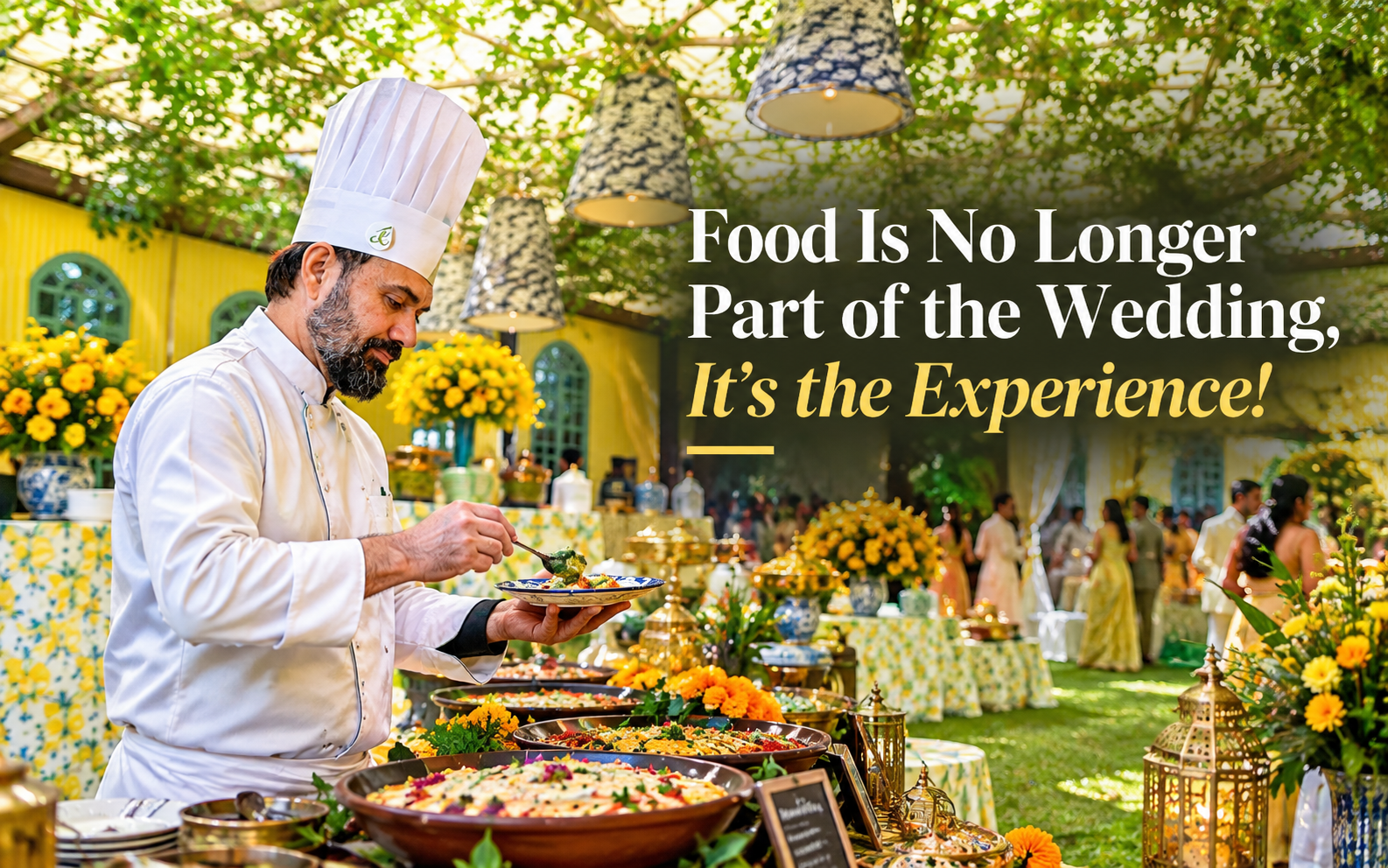
Food Is No Longer Part of the Wedding, It’s the Experience!

Sanjay Vazirani, Chairman & Managing Director of Foodlink Group, has curated menus for some of India’s most talked-about celebrations, including Deepika Padukone and Ranveer Singh’s Lake Como wedding, Allu Sirish’s celebrations and Arjun Tendulkar’s too. His view for 2026: couples no longer judge catering by the size of the spread, but by how well the food tells their story. Here’s what he sees defining the plate this wedding season. Food as the Defining ExperienceFood has moved from being an important part of a wedding to one of its defining experiences. Couples aren’t counting dishes anymore; they’re asking how the menu can tell their story and create moments guests remember. Hyper-PersonalisationMenus are being built from family traditions, regional heritage, travel memories and favourite cuisines, with growing interest in micro-regional and community-specific Indian cuisines presented with contemporary finesse. At Deepika and Ranveer’s Lake Como wedding, the menus drew on Sindhi and Kannada culinary traditions, brought to an Italian setting with an elevated presentation. Personalisation isn’t adding a few favourite dishes to a standard menu; it’s a culinary narrative that feels intrinsic to the couple. Experiential, Multi-Sensory DiningLive culinary theatres, interactive stations, artisanal grazing tables, regional food trails, bespoke beverage experiences and dessert ateliers are turning dining into entertainment. Aroma, presentation, live preparation and chef interaction are all part of the experience. Allu Sirish’s celebration showed this in action, with Mutton Brishta Dumplings in a bone-broth reduction, Smash Paratha Burgers and a Dal Makhani flambéed live with a Jack Daniel’s tadka. Nostalgia, ReimaginedThe best menus balance nostalgia and innovation. For Arjun Tendulkar, Foodlink curated a traditional Maharashtrian Pangat with aamras, puran poli, handmade modak and varan bhaat, alongside undhiyo and ghughra nodding to Anjali Tendulkar’s Gujarati roots. At a Maldives wedding, Mumbai Misal Pav and Dal Khichdi shared the table with Cannoli and

Hemani Chawda and Sagar Patel

Hemani Chawda and Sagar Patel are a travel-content-creator couple and digital nomads who chose a life of exploration over convention. Based between Jhabua, Madhya Pradesh, and Raipur, Chhattisgarh, the duo has built a journey around discovering new places, embracing different cultures, and sharing authentic travel stories. Hemani, a former Radio Jockey, left her career seven years ago to follow her passion for travel and storytelling. Sagar, a post-graduate engineer, later stepped away from the corporate world to join her in creating a life centred around experiences rather than routines. Through their content, they go beyond showcasing destinations to capture the emotions, challenges, connections, and everyday moments that shape life on the road. From ancient traditions to untouched landscapes, here are three countries that have left the deepest impression on their journey. 1. Japan — Where Tradition Meets Tomorrow “Japan holds a special place in our hearts for its incredible balance of ancient traditions, modern innovation, and breathtaking landscapes.” From the peaceful streets of Kyoto and its centuries-old temples to the vibrant energy of Tokyo, every experience feels like discovering a new story. What we love most about Japan is the way it preserves its cultural roots while embracing the future. Whether it is experiencing a quiet tea ceremony, exploring traditional neighbourhoods, or discovering local cuisine, Japan constantly inspires us with its attention to detail, warm hospitality, and endless storytelling possibilities. 2. Philippines — A Tropical Paradise Filled With Human Connections “The Philippines is a destination that feels magical at every turn, with turquoise waters, stunning islands, and some of the warmest people we have met during our travels.” From swimming alongside marine life and exploring hidden lagoons to discovering local communities and untouched beaches, the country offers the perfect blend of adventure and relaxation Beyond its natural beauty, what makes

You May Also Like

Connect with us