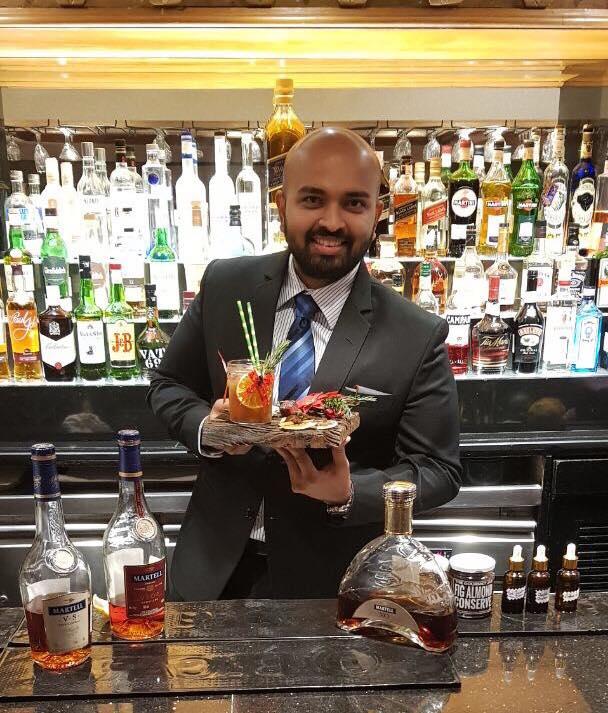
Happy High a bartending academy founded by Ajit Balgi

Introduction: Kimaya Sahasrabuddhe in conversation with Ajit Balgi, the founder of Happy High talks to him about his journey and shares some-must have drinks in a home bar. Ajit Balgi is a hospitality graduate from the Institute of Hotel Management, Mumbai. He is also an MBA degree holder and has worked in the sales and marketing industry but it didn’t interest him. This is when he came back to beverages and founded Happy High in 2014 is based in Mumbai, which is a bartending academy, and a consulting and beverage experiences company.

“Beverages interested me when I bartended at some restaurants and pubs after college hours during my graduation as it gave me enough pocket money and great experience. Post which I got into beverage operations, specifically into Wine and Spirits (2004-2008). I went to London and that’s where I got more exposure to wine. Coming back from London is when I started Happy High,” says Ajit.
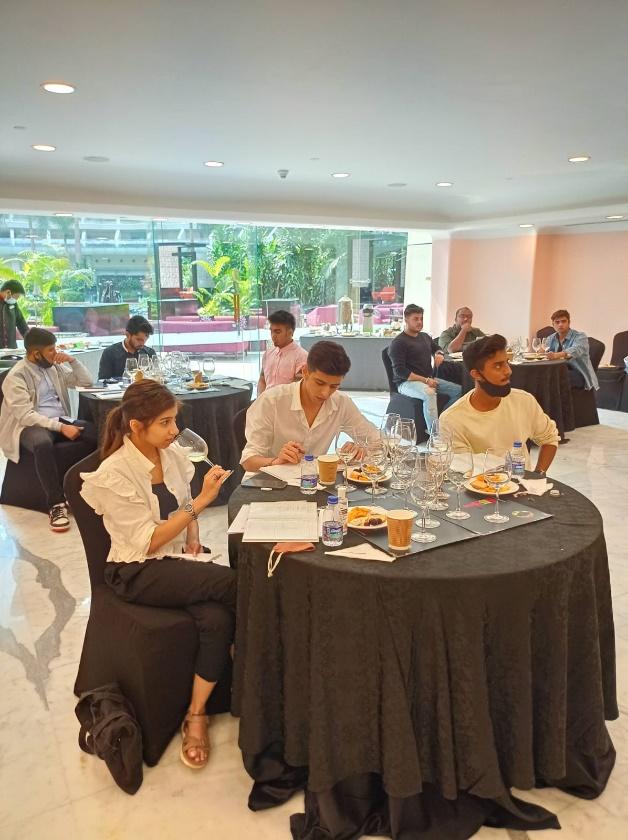
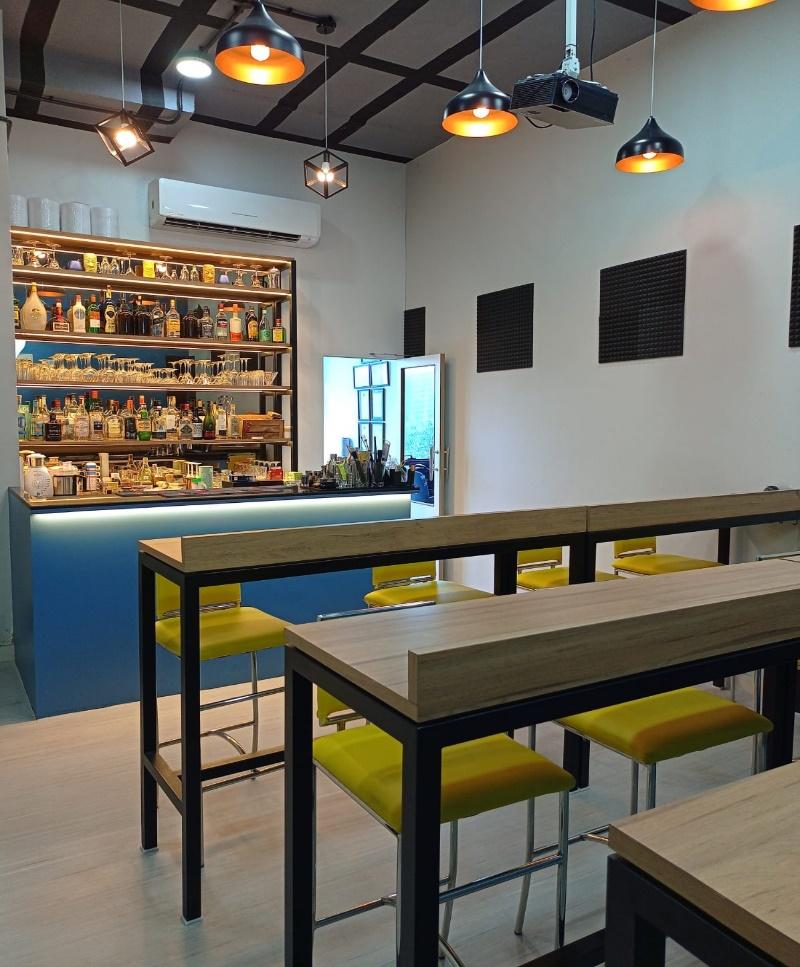
The academy started in February 2021. It provides day-long courses for professionals and also for consumers. It conducts half-day workshops for consumers on making cocktails in addition to running some online courses. It is now one of the leading wines and spirit education companies in India and works with hotels, liquor companies and corporates on skill development, beverage experiences and experiential marketing. 

A usual day of Ajit begins at the academy at around 8 am where he holds workshops that go on till 2 or 3 in the afternoon. Post the workshops he does the consulting bit for various restaurants and clubs. The Academy operates from Monday to Friday. Weekends are kept for travelling that is only if required for specific consultancy work. 
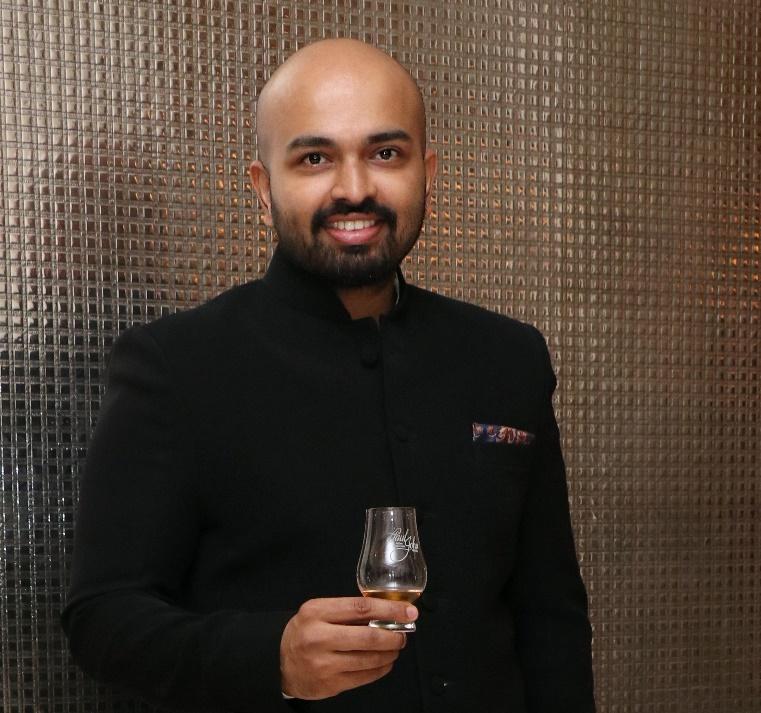
“I work 7 days a week but that doesn’t exhaust me. I love what I’m doing and it gives me happiness. I am made for wine and beverages,” quotes Ajit.
Ajit also shares a list of must haves in a home bar – 


Whiskey is a must-have for any Indian bar as India is a whiskey consuming nation. Whiskey – Single Malt or Classic BlendedVodkaBacardi or any other Rum brandGinBrandyTalking of Non-alcoholics, you can add some drops of Bitters in soda and it becomes a drink for them in a party. There are also non-alcoholic bitters that are available in the market but the alcoholic ones are better. 

Ajit is also a wine educator certified by the Wine & Spirit Education Trust (WSET), London. He has trained over 5000 people in India, the Maldives, Thailand and London. He has had a great journey with immense experience that he happily shares with his students through the academy. 

Contact: TheHappyHigh

☎️+ 91-9930771739 

Address: 416, Goldcrest Business Park, LBS Marg, Ghatkopar West, Mumbai 400086.

Leave a comment

Your email address will not be published. Required fields are marked *

The Bar Is Now Part of the Show: Zero-Proof Cocktails, Matcha Bars and 2026 Wedding Trends

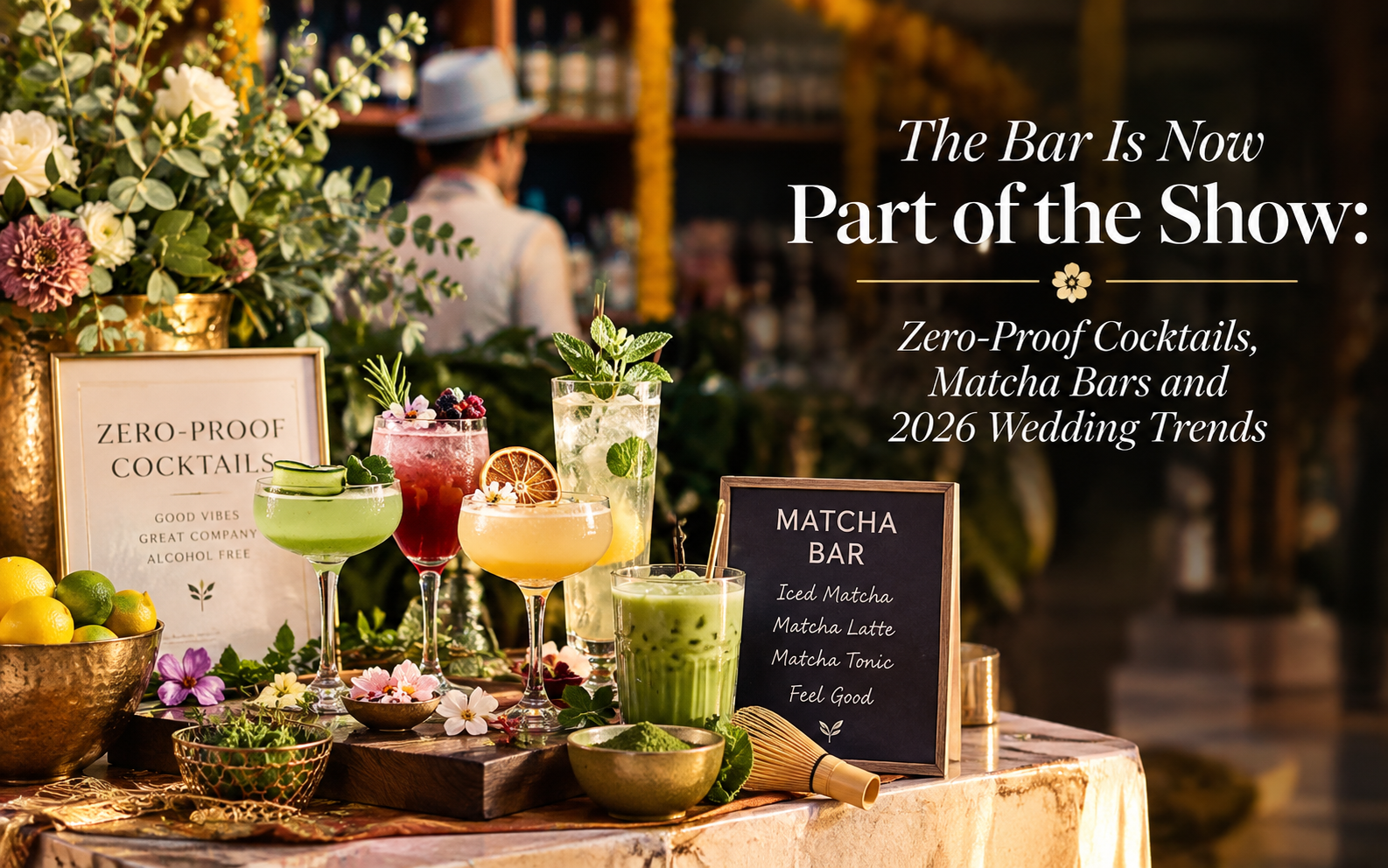
Founded in Bangkok in 2010 by a group of hotel bartenders, FLAIRMIX Thailand began with a single Indian wedding and has grown into a bar and beverage service company working across Thailand, India, Indonesia, Oman, Bahrain and Qatar. Their belief is that a bar is more than a place to pick up a drink: it can shape the atmosphere, the entertainment and the guest experience. Here is what they see changing behind the bar in 2026. Wellness Drinks and Zero-Proof CocktailsThe clearest change from 2025 is in what guests are asking for. Last year still centred on customised cocktails, classics with a twist and drinks with a fancy, luxurious presentation. In 2026, weddings are going beyond the traditional cocktail and mocktail, with hydration bars, electrolyte drinks, kombucha and fully developed zero-proof cocktails joining the menu. What sets this trend apart is the standard. These drinks are no longer treated as a secondary option for guests who don’t drink. They are designed with the same attention to flavour, ingredients, glassware and presentation as alcoholic cocktails. The principle is simple: a guest who chooses not to drink alcohol should enjoy the same level of creativity and experience as everyone else, and a zero-proof menu should be developed to the same standard as the main one. For multi-day Indian weddings, where guests move through a welcome party, haldi, mehendi, sangeet, ceremony, reception and after-party, a bar that offers refreshing, well-crafted options at every stage is a real upgrade for the guest experience. The Rise of the Matcha BarThe second trend is more surprising: Japanese matcha has grown steadily in popularity over the past year, particularly among younger consumers in Asia and internationally, and FLAIRMIX’s clients are now asking for dedicated matcha bars as part of the wedding experience.It also opens up new creative

Food Is No Longer Part of the Wedding, It’s the Experience!

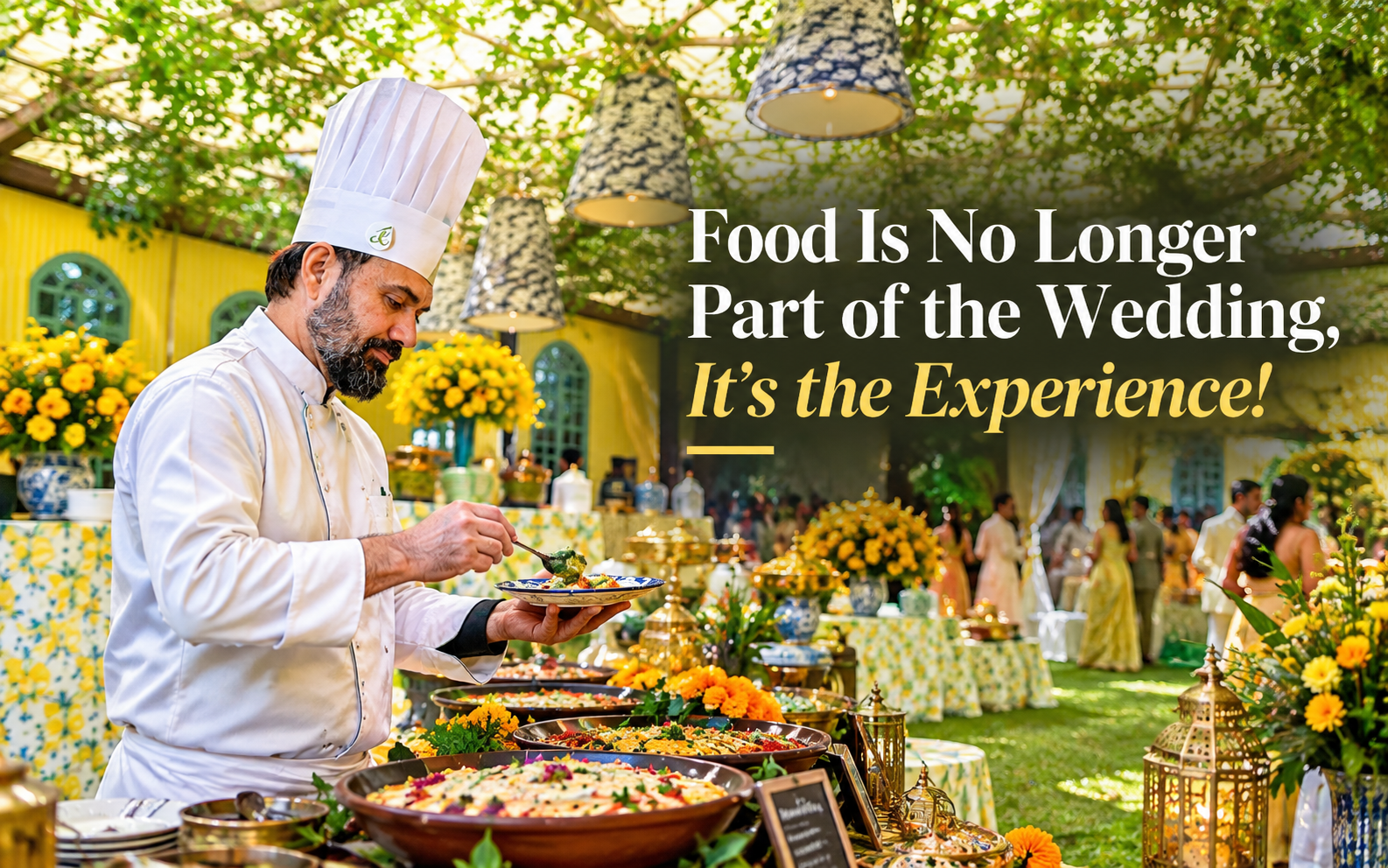
Sanjay Vazirani, Chairman & Managing Director of Foodlink Group, has curated menus for some of India’s most talked-about celebrations, including Deepika Padukone and Ranveer Singh’s Lake Como wedding, Allu Sirish’s celebrations and Arjun Tendulkar’s too. His view for 2026: couples no longer judge catering by the size of the spread, but by how well the food tells their story. Here’s what he sees defining the plate this wedding season. Food as the Defining ExperienceFood has moved from being an important part of a wedding to one of its defining experiences. Couples aren’t counting dishes anymore; they’re asking how the menu can tell their story and create moments guests remember. Hyper-PersonalisationMenus are being built from family traditions, regional heritage, travel memories and favourite cuisines, with growing interest in micro-regional and community-specific Indian cuisines presented with contemporary finesse. At Deepika and Ranveer’s Lake Como wedding, the menus drew on Sindhi and Kannada culinary traditions, brought to an Italian setting with an elevated presentation. Personalisation isn’t adding a few favourite dishes to a standard menu; it’s a culinary narrative that feels intrinsic to the couple. Experiential, Multi-Sensory DiningLive culinary theatres, interactive stations, artisanal grazing tables, regional food trails, bespoke beverage experiences and dessert ateliers are turning dining into entertainment. Aroma, presentation, live preparation and chef interaction are all part of the experience. Allu Sirish’s celebration showed this in action, with Mutton Brishta Dumplings in a bone-broth reduction, Smash Paratha Burgers and a Dal Makhani flambéed live with a Jack Daniel’s tadka. Nostalgia, ReimaginedThe best menus balance nostalgia and innovation. For Arjun Tendulkar, Foodlink curated a traditional Maharashtrian Pangat with aamras, puran poli, handmade modak and varan bhaat, alongside undhiyo and ghughra nodding to Anjali Tendulkar’s Gujarati roots. At a Maldives wedding, Mumbai Misal Pav and Dal Khichdi shared the table with Cannoli and

One Stop, Four Cuisines

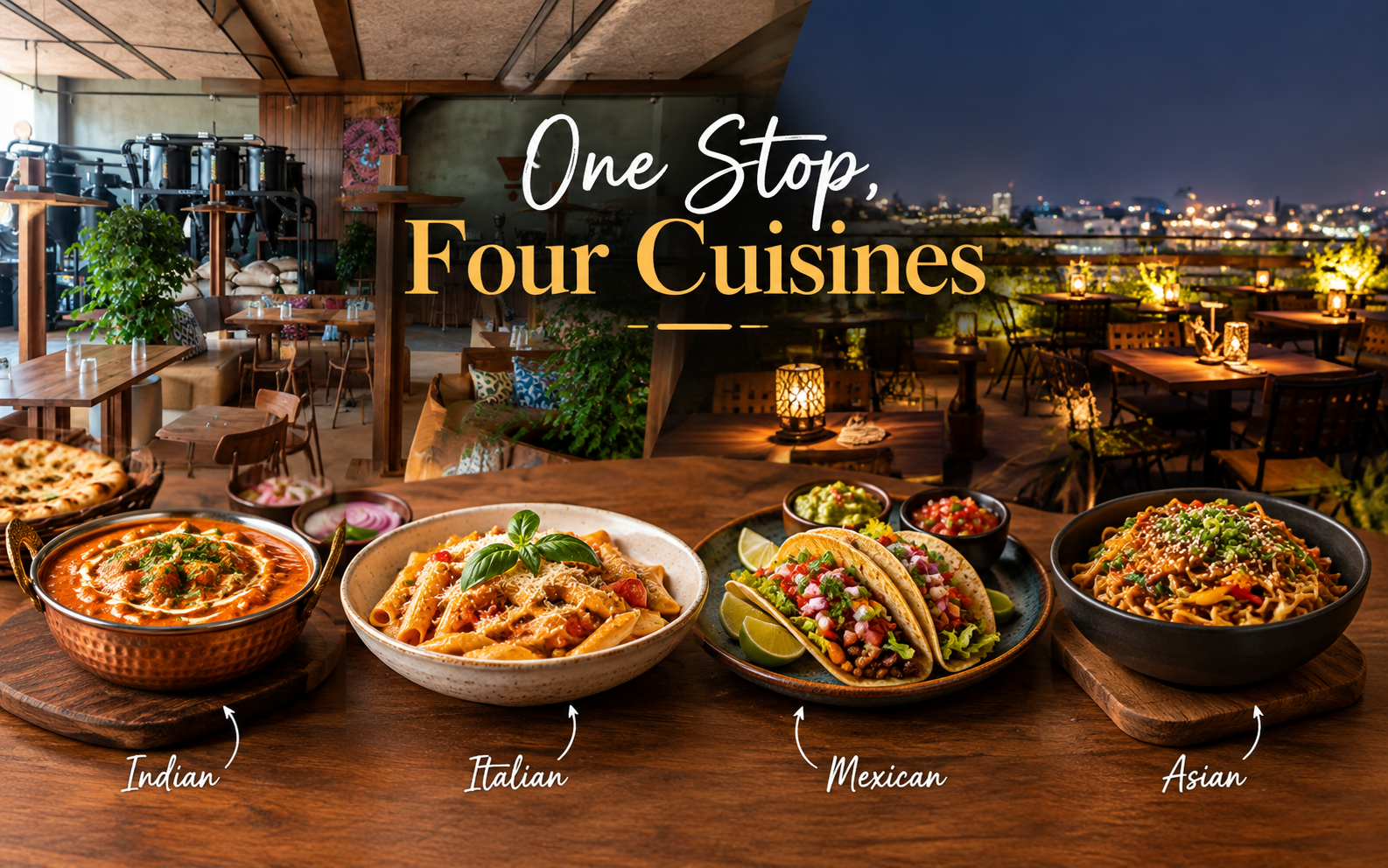
A F&B revolution of sorts is quietly brewing in a building opposite Hyderabad’s landmark Durgam Cheruvu Cable Bridge, and the city of Nizams is approving wholeheartedly. Interestingly, the four F&B properties spawned by hospitality start-up Viksit Hospitality have distinct identities, ranging from regional cuisines showcased at Orlo (derived from our Indian hospitality anthem, Aur Lo Beta!), artisanal coffees from India at Naad, immersive nightlife experiences at Kadamba, to the latest addition of fine dining Japanese restaurant Izumi, in partnership with founder Nooresha Kably. Kadamba Cultural Compound A rooftop terrace bar, Kadamba has, arguably, the grandest ringside views of Durgam Cheruvu, with the night sights of an illuminated cable bridge and the city lights twinkling away on the distant horizon being a definite crowd-puller. The vibe is breezy (literally!) and informal, with the ambience highlights being the kadamba trees with pristine-white ‘chaupals’ (a la village panchayats) around them, where you can sit around and enjoy your drinks. The Japanese izakaya-styled bar promotes the concept of an easy, interactive experience with the team of mixologists. The cocktails are a rage, with colloquial names such as Rambha Ho, a rum-based offering with pineapple, lime juice and chilli pickle; a nod-to-Hyderabad-Kya Toh Bhi, a vodka drink; T-loop, which is tequila, mezcal, muskmelon cordial, caper foam, and Maska made with whisky, brown butter and lime cordial. The cuisine is Indian, including both comfort food and gourmet. Some of the iconic dishes here are the Chelo Kebabs platter; Compound walla Ceviche, which is steamed seabass topped with pani puri dressing, and 50-50, which is corn or bhutta in three different avatars. Orlo Orlo has, at its core, the idea of a Great Indian Dining table where everyone sits together for a relaxed meal, peppered with conversations and slow eating. The distinct aspect of dining at Orlo

Bookmark these Bengaluru restaurants

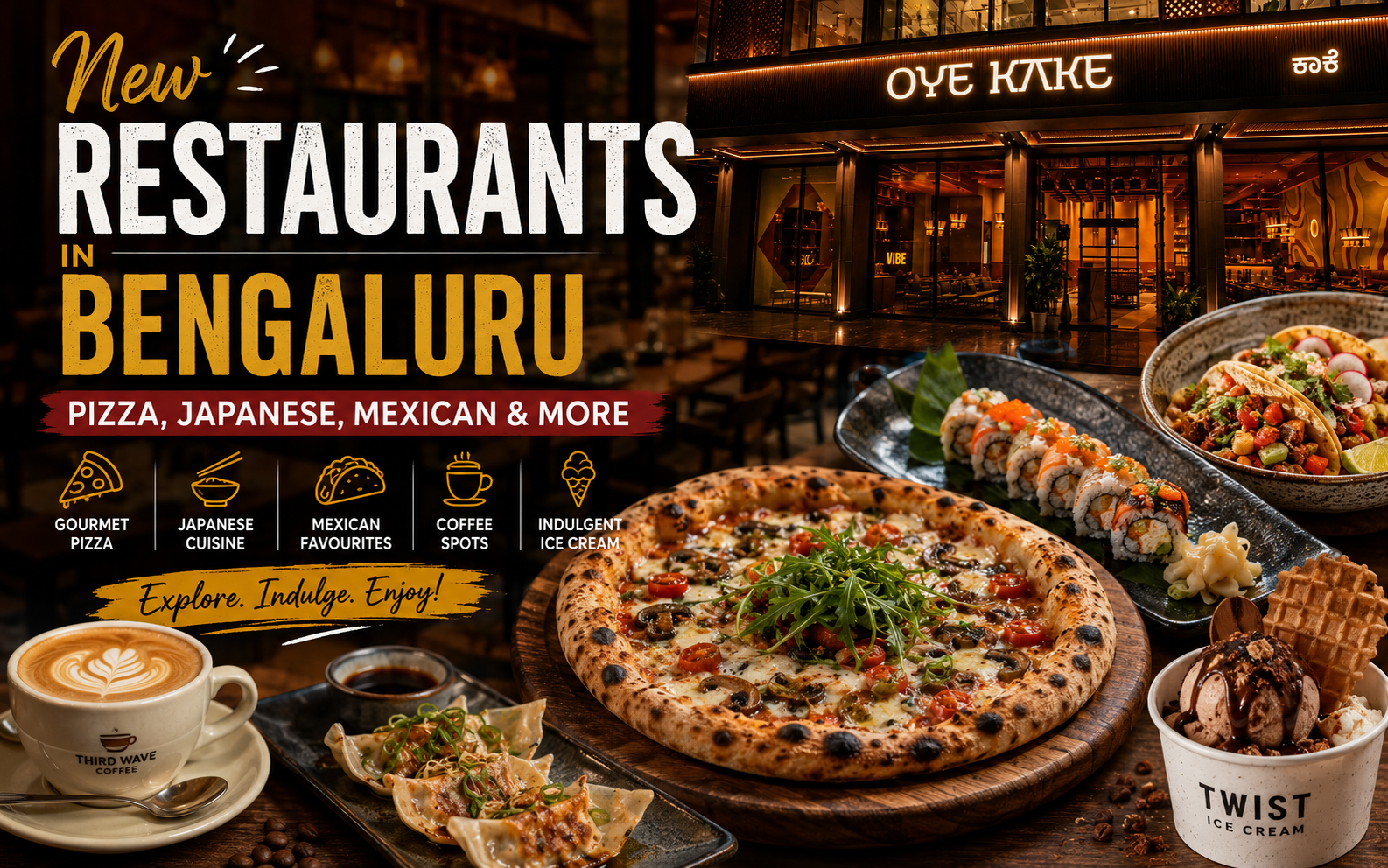
The culinary scene of Bengaluru has got a spanking new makeover with several new restaurants that offer a range of cuisines that are sure to make every palate happy. Known for its vibrant gastronomy, the city continues to offer plenty for food lovers to discover, as Bindu Gopal Rao explores these new dining destinations. Oye Kake, Bengaluru Oye Kake is Mumbai’s beloved 100% vegetarian Amritsari restaurant brand, founded in 2020 by Pankaj Gupta and Avinash Gupta under Flavour Pot Foods. The new space in Bengaluru on MG Road brings the soul of Amritsar, built around three pillars of Punjab’s food culture: the langar, the street, and the home kitchen. Pankaj Gupta, Co-founder, Flavour Pot Foods says, “The food is cooked by Amritsari-trained Ustaads using live tandoor cooking, hand-rolled breads, slow-cooked dals, and clay/iron-based methods, staying true to time-honoured recipes rather than experimenting.” Designed with RAD Co + Lab, the restaurant is a sensory tribute to Punjab and Bengaluru. Every Thursday, the restaurant hosts the Guru Seva Ki Thali, an unlimited community-style feast inspired by the Sikh concept of Seva. Must try: Amritsari De Kulche: classic Bharwan Kulche (Aloo, Pyaaz, Gobi, and Mooli) plus loaded versions like Paneer, Methi Masala, Cheese Garlic, and Nutree Wale Kulcha. Kalpaney Kalpaney is a modern vegetarian dining destination built around the idea of ‘kalpana’, or imagination. Conceptualised by Avinash Kapoli, Co-Founder, Kompany Hospitality, and Chef Sombir Chaudary, Co-Founder, Kompany Hospitality, the restaurant brings together familiar flavours, childhood memories and global culinary influences in unexpected ways. “What makes Kalpaney special is its ability to make vegetarian dining feel playful and contemporary while retaining the comfort and nostalgia of Indian food. The spaces extend this philosophy through carefully curated Indian art and craftsmanship, including Kalamkari-inspired elements and Kavi artwork at the Indiranagar restaurant, created by one of

You May Also Like

Connect with us