
POWER TALK: INSPIRING WOMEN IN BIZ |Piya Bose

Piya Bose who went on to complete a five-year legal degree and was hired by India’s premier law firm left a lucrative profession as a lawyer where she worked roughly for a year, to pursue her passion for travel, and in 2008, she founded the women-only Girls on the Go Travel Club, which began with a zero-cash business plan. Though her parents anticipated this adventurous traveller to be working in an engineering firm today, she has chased her calling while working at a legal business without having prepared her options. Bidisha Barik talks to Piya Bose, the founder of Girls on the Go about how women in travel have evolved in the past few decades.

As the most profound insights occur in the air, Piya’s desk job had her questioning her way of life while she worked graveyard hours. This travel consultant’s adventure began when she had to overland from Lucknow to Nepal and then Tibet on an unexpected vacation. During her tour, she encountered a number of difficulties relating to oppression and other fundamental issues. Standing on the highest Everest mountain near a hamlet in Tibet, unsure of where her life was heading, she realised she wished to “not only make a living but also genuinely live.”

Piya worked for travel firms for a short time at the age of 24 and acquired a connection with the clients as well as learned about the lack of originality in travel companies. Through the hoops, the route of discovery outshined her notion of creating a Women Travel Agency as a midnight fuel. Being a solo wanderer since she was 16 years old, when she took her first solo trip to Brazil, Piya has seen few Indian women travel around the world, which has fueled her desire to bring the thrilling and life-changing experiences she has witnessed through her trips to the Girls on the Go travel club.

In 2008, she rolled the dice by organising her first planned trip to Ladakh, promising more trips if the initial trip was successful. Since then, she has led women on Antarctic expeditions, photographed the Northern Lights in the Arctic, stayed with Nagaland’s headhunters, camped in Mongolia, trekked up a volcano and to the Everest Base Camp, and much more. The fundamental emphasis of the GOTG club has always been to encourage women to travel, but Piya has recently seen a lot of preconceptions women face when it comes to travel. Her work on growing and reforming women for the better when travelling has led her to explore the history of women travelling.

“It’s intriguing to realise that the account of women in travel dates back to the 1880s-90s, yet we’re encountering identical challenges now in the modern world,” she says.

Quick take:

How did your life change as an entrepreneur?

I learnt how to deeply engrave solitude.

One best quote you live by?

“If you are leading the orchestra, you have to turn your back to the crowd.”

Leave a comment

Your email address will not be published. Required fields are marked *

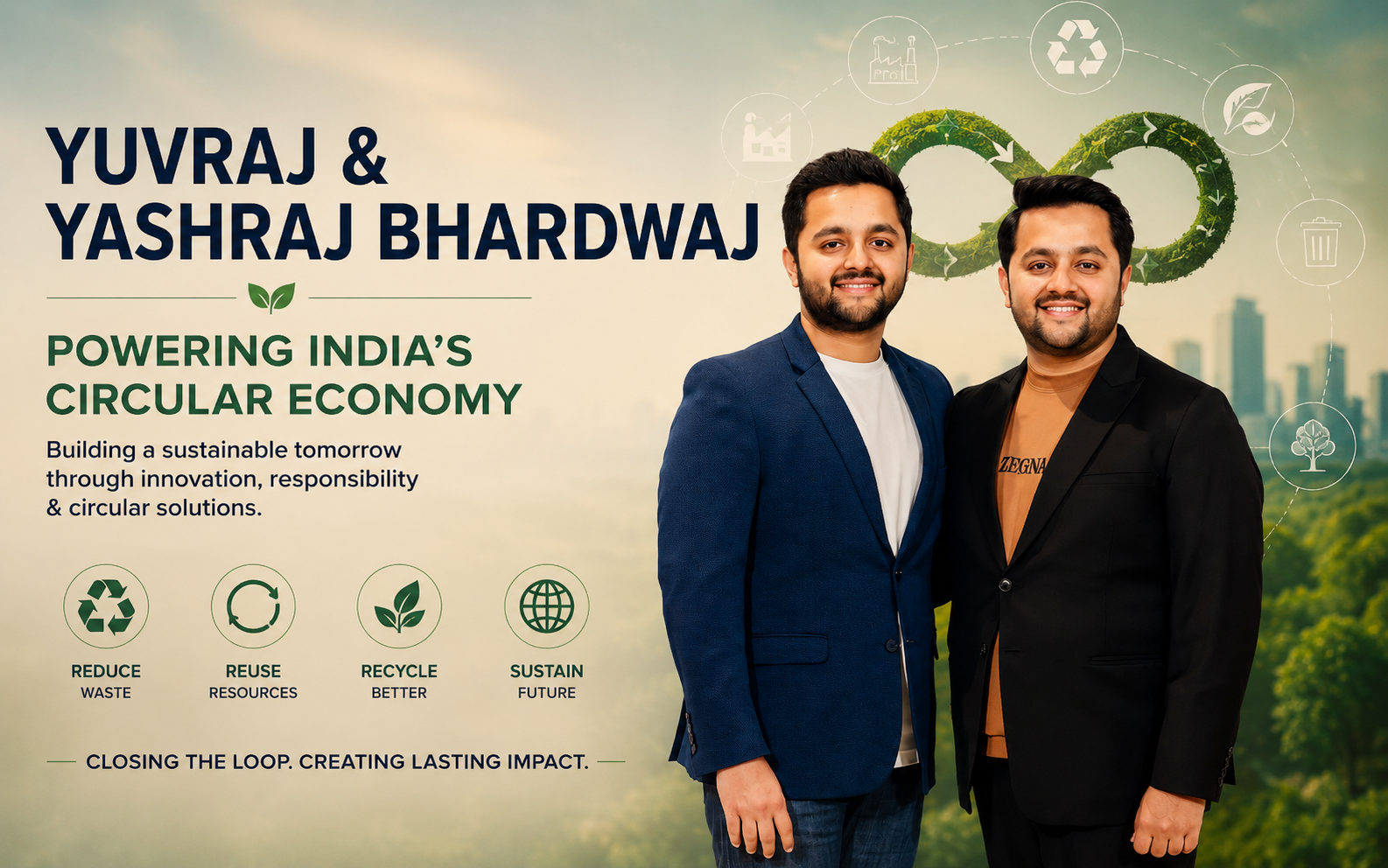
Yuvraj & Yashraj Bhardwaj | Powering India’s Circular Economy

Twin brothers Yuvraj Bhardwaj and Yashraj Bhardwaj are the co-founders of Plannex Recycling, a Gurugram-based circular economy company transforming waste management through technology and innovation. Both entrepreneurs began innovating at the age of 14, filing patents and undertaking research projects long before launching their ventures. Today, while Yuvraj, Co-Founder & CEO, leads operations, technology, and execution, Yashraj drives strategy, policy, partnerships, and global expansion. Together, the Forbes 30 Under 30 Asia honourees have built one of South Asia’s leading recycling platforms, processing over 500,000 metric tonnes of waste annually across 18 facilities in seven countries, proving that sustainability and scale can go hand in hand. 1. Tell us about your venture and how the idea first came to life. What made you decide to build it together as siblings? Yashraj: We’ve been building things together since we were 14, so becoming co-founders wasn’t really a decision; it was the natural next step. We saw India’s waste sector as a fragmented industry with enormous potential but very little technological intervention. While most people saw waste, we saw an opportunity to build infrastructure for the future. Yuvraj: Today, Plannex processes over 500,000 metric tonnes of waste annually across categories such as e-waste, PET plastics, batteries, tyres, and industrial waste, while creating employment for more than 2,000 people. Being twins gave us something every founder hopes to build: complete trust. We couldn’t imagine creating this business any other way. 2. How do your personalities and strengths complement each other? Yuvraj: Although we’re twins, we think very differently, and that’s our biggest advantage. I focus on operations, technology, and execution, making sure every facility runs efficiently and every process delivers on its promise. Yashraj: I spend more time on strategy, partnerships, policy, and investor relationships, helping Plannex expand globally. One of us imagines what’s

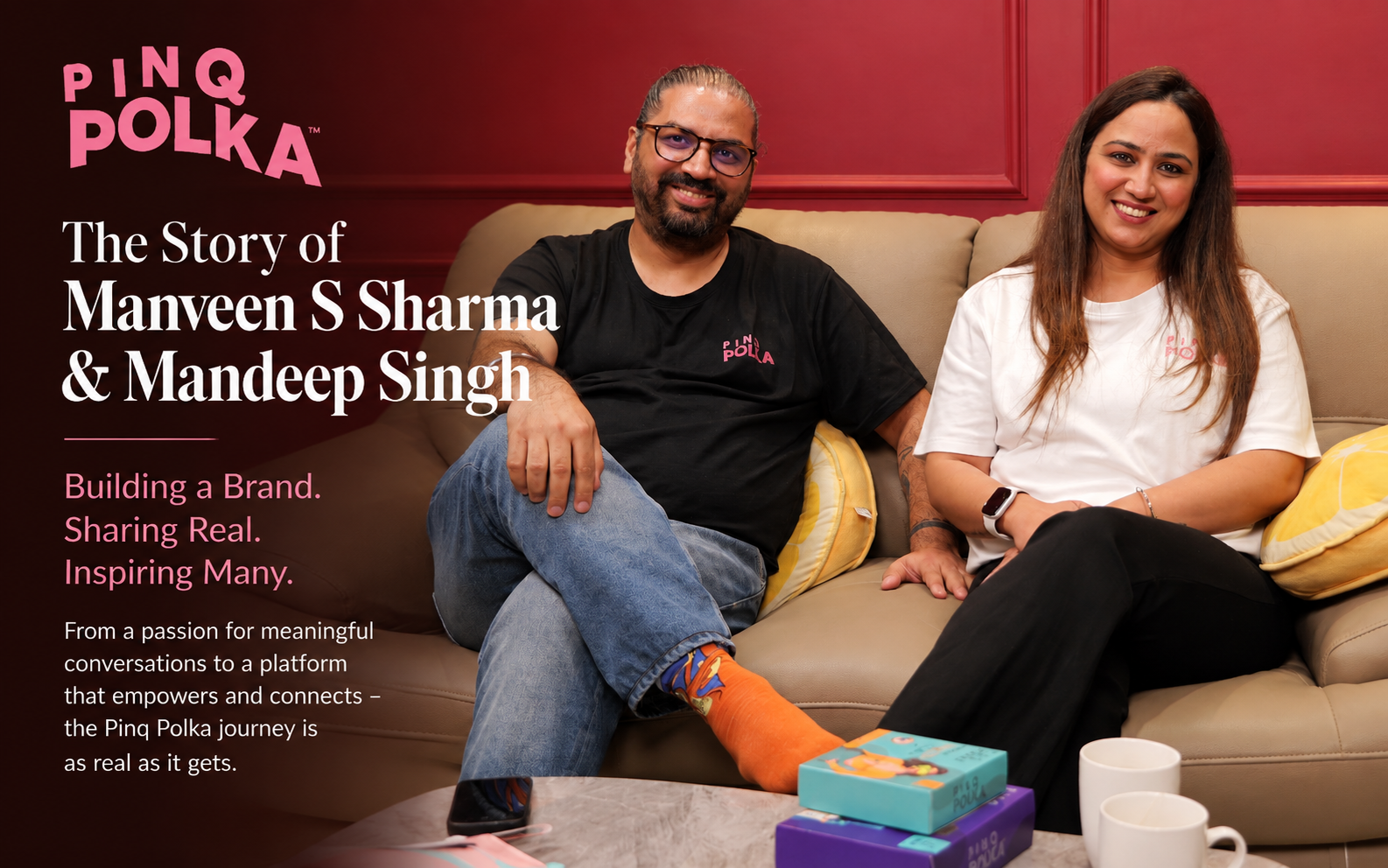
Pinq Polka: The Story of Manveen S Sharma & Mandeep Singh

Manveen S Sharma, CEO of Pinq Polka, brings over nine years of leadership experience across the automotive, mobility, and business sectors, with expertise in business strategy, operations, and customer-centric innovation. Alongside her is her brother, Mandeep Singh, Co-Founder, an entrepreneur with extensive experience in business development, sales, operations, and scaling businesses within the automotive and electric mobility ecosystem. Together, the sibling duo has transformed a simple consumer insight into one of India’s emerging women-first intimate wear and shapewear brands, combining strategic leadership with a shared commitment to creating products that prioritise comfort, confidence, and functionality. 1. Tell us about your venture and how the idea came to life. What made you decide to build it together as siblings? Manveen: Pinq Polka was born out of a personal experience. I often found myself buying women’s personal care products from abroad, because I couldn’t find the same quality in India. During a conversation with my brother, we realised there was a genuine gap in the market. Before launching, we spent months researching, speaking to women, testing products, and gathering honest feedback. That process confirmed we were solving a real problem. Building the brand together happened naturally; we trusted each other’s strengths and shared the same vision of creating products that genuinely improve women’s everyday lives. 2. How do your personalities and strengths complement each other? Manveen: I stay closely connected to our customers, spending time understanding their needs and translating those insights into better products. Many of our innovations have come directly from conversations with women who use our products every day. Mandeep: I focus on business strategy, partnerships, and sustainable growth. While Manveen leads product innovation and customer experience, I ensure we build a business that’s scalable and future-ready. We may approach challenges differently, but we’re united by one principle: never

Brick Brown Home Innovations: Meet Kirti & Yash Verma of Gurgaon

Sibling duo Kirti Verma and Yash Verma, founders of Brick Brown Home Innovations, are redefining modern living through thoughtfully designed home décor that blends traditional Indian craftsmanship with contemporary aesthetics. Based in Gurgaon, the brand creates handcrafted solid wood storage solutions, organisers, and home essentials that celebrate functionality, sustainability, and timeless design. Yash Verma leads product innovation, artisan collaborations, and technology-driven operations, while Kirti Verma shapes the brand’s creative vision, design language, and business strategy. Together, they have built Brick Brown into a contemporary homegrown brand that seamlessly blends heritage craftsmanship with modern design. 1. Tell us about your venture and how the idea first came to life. Why did you decide to build it together as siblings? Brick Brown began with a simple belief that homes should feel warm, personal, and lived in. We wanted to create handcrafted wooden pieces that people would cherish for years instead of following short-lived trends. Building the business together wasn’t a planned decision; it happened naturally. Having grown up with similar values and design sensibilities, we instinctively understood each other’s way of thinking, making us natural partners. 2. How do your personalities and strengths complement each other? We bring very different strengths to the table, and that’s what makes the partnership work. I (Yash) focus on product design, manufacturing, and working closely with artisans to perfect every detail. Kirti leads branding, creative direction, storytelling, and business growth. One of us builds products worth talking about, while the other ensures their story reaches the right audience. 3. Has your sibling bond made entrepreneurship easier or more challenging? It has definitely made the journey easier because trust was never something we had to build; it already existed. One moment we’ll always remember is opening our own studio in Gurgaon. Standing in that space, we realised

Getting Sassiest: The Brand Making Sexual Wellness More Inclusive In India

In a country where conversations about sex are still low-key at dinner tables and turn school classrooms awkwardly silent, brands like Sassiest are changing the script, one meme, conversation, and pleasure-positive post at a time. From cheeky Instagram content and relatable humour to refreshingly honest takes on intimacy, confidence, and self-exploration, the brand is helping young Indians approach sexual wellness with far less awkwardness and a lot more openness. Mehak Walia gets sassy with Aishwarya Dua and Karishma Chavan, the co-founders of Sassiest. And honestly, that shift feels long overdue. For years, discussions around pleasure and desire in India have either been buried under shame or treated like something too scandalous to say out loud, especially when women are leading the conversation. Founded by Aishwarya Dua and Karishma Chavan, Sassiest is pushing back against that discomfort with a voice that feels warm, inclusive, funny, and unapologetically real. Instead of sounding clinical or preachy, the brand creates space for conversations around boundaries, body confidence, emotional well-being, and modern relationships in a way that actually feels relatable to today’s generation. For Karishma, the inspiration behind the brand came from noticing just how disconnected many women grow up feeling from their own bodies. “Most conversations around intimacy here are either hidden, judged, or purely medical,” she says. “Nobody was really talking about pleasure, confidence, self-exploration, or emotional wellness in a way that felt normal, safe, and relatable.” That silence, she explains, extends far beyond intimacy itself. Shame and conditioning often shape confidence, relationships, and even the way women exist in the world. “I wanted Sassiest to feel less clinical and more like a movement,” Chavan shares. “A space where women and queer people could feel seen without embarrassment.” Of course, building a sexual wellness brand in India came with its fair share of