Rishabh Shetty – Dedicated to the craft of Filmmaking

Rishabh Shetty - Dedicated to the craft of Filmmaking - Hashtag Magazine

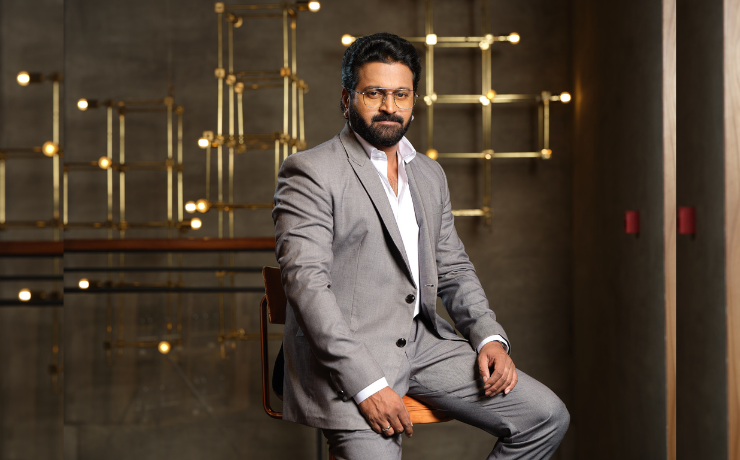
While the movie Kantara continues to make and break records at the box office, the lead actor and director Rishabh Shetty is grabbing eyeballs for all the right reasons. 

When some Government officials visited actor Rishabh Shetty to invite him to be a guest at an upcoming function and asked him how he was feeling, his answer was simple, “normal.” And this is exactly how this exclusive conversation with Bindu Gopal Rao flowed. The actor is amicable and has no baggage of being the face of the highest-grossing film in Karnataka, earning over Rs. 400 crores beating KGF: Chapter 2.  Born Prashant Shetty, he grew up in Kundapura and studied in Bengaluru. Doing all kinds of jobs from a mineral water business to dabbling in real estate and hotels, he armed himself with a diploma in film direction from Bengaluru’s Government Film and TV Institute.After acting in movies like Thuglak, Lucia, Sarkari Hi. Pra. Shaale, Harikathe Alla Girikathe among others, he has also directed movies like Kirik Party, Katha Sangama and Shivamma. His recent release that has been bankrolled by Hombale Films, Kantara which he has both acted and directed in, has made him a household name, and with the right reason. The movie that straddles a social issue using a traditional, spiritual practice strikes the right chords and gives the message without being preachy or trying too hard. And this is something that gives the audience an insight into Shetty’s deep-rooted love for the art and craft of filmmaking.

How do you look back at your decade plus journey in films?

It is just a journey – every film teaches you something and adds to your experience. We try to correct mistakes of the past and make new ones (laughs). It is a learning process for me as each movie teaches me an aspect of filmmaking.

It is just a journey – every film teaches you something and adds to your experience. We try to correct mistakes of the past and make new ones.

For someone who struggled with odd jobs to make it in the industry, what kept you motivated?

I do not think too much about anything and while I had a goal to do something in the film line, there is also a need to survive which means that I had to do odd jobs. While I come from a middle-class home, we are from a reputed family erstwhile Panchayat family. We lost a lot of agricultural lands but had enough to lead a comfortable life. But we all need to work for survival, and I saved a portion of what I earned so that I could make a career in the movies. I think my goal was clear, so I also happened to meet people from the industry.

How did you get your first break? Were you nervous or excited?

I never felt it was a break, for me it was just like the other job ended and this one started. I feel that is how things must be and while everyone is saying Kantara is a big success (we have a Tulu language release pending), for me it’s a job done, and I look at what next. You should not have baggage and in films as I know, neither success nor failure is permanent and it’s all about that one Friday.

In films as I know, neither success nor failure is permanent and it’s all about that one Friday.

As you dabble being an actor, director, writer, and producer, have you felt it is a lot to do or you like doing everything?

I do not look at it like that. I came to be an actor but there were different situations created. I thought of starting through the route of an assistant director and became enamoured by the filmmaking process that gave me a lot of happiness. This was also the time when I faced failures as an actor and in business and looking for a job was my job. At that time all I asked God was to give me so much work that I would not have time to even scratch myself. I just love being busy. When I met Rakshit (Shetty), there was a turning point as we had a good exchange of ideas being technical and I learnt a lot. This is when I started writing as well and had also made up my mind to direct. When I worked with Rakshit on Ulidavaru Kandante in 2014, it was a collaborative effort and he would make all the shot divisions and it gave me immense confidence about film making. And I like direction as I like stories and controlling the narration.

When writing Kantara, did you ever imagine that it would become so successful?

When I narrated the film to Ajaneesh Loknath (music composer), I told him, something will happen, I don’t know what but it will be something and will connect with the audience. I told him we must put our best efforts for the movie as this is something that is once in a lifetime. We started in April 2021, wrote in May 2021, and started shooting in parallel sets in September 2021. I felt there was some energy but never imagined it would become so big.

The subject of Kantara is very unusual. While you have said you grew up watching the Bhoota Kola performance, how did you prepare for the role?

The first thing when doing such a film is that you must believe in it, and I believe in Daiva Aradhane (the worship of spirits also called Bhoota Aradhane). I have seen the same growing up in Kundapara and it extends across Tulu Nadu (Dakshina Kannada district) till Kasargod and beyond. This is not an art form but a belief and a ritual and I had to do it under the lens of spirituality. I went to Dharmasthala and offered prayers to Manjunatah Swamy and Annappa Swamy. I went to the community of the daivaka nartakas (divine dancers), told them the story and had them with me when I did the movie. They were happy and they guided me through the movie until the release. When I was doing these scenes, I abstained from non-vegetarian food and would eat the prasad and start shooting through the night. Once I applied the paint, I would not eat anything till I removed it. 

I never felt it was a break, for me it was just like the other job ended and this one started. I feel that is how things must be and while everyone is saying Kantara is a big success, for me it’s a job done, and I look at what next.

Can you share some experiences you had when shooting this film?

I had many experiences that I will keep to myself but all I will say I had a protected feeling. There was an energy that protected us through the shooting.

Does the blockbuster success of the movie put unconscious pressure on you?

When the movie was about to be released, I had a sense of heaviness. When people saw the movie, some of them started seeing me differently. One of the women who is part of the family of the artists, fell on my legs and I did the same, but it felt too heavy, so I stopped visiting theaters after that. I do not want to be seen as God.

How do you choose scripts to act/direct?

When I am acting, if I like the story and character, I will say yes. When directing, I like social issues and when it is layered with storytelling and anything that talks of our culture. With Kantara also this is what I wanted to do, and I like to create new genres and work on different issues every time. 

What do awards mean to you?

Awards are good appreciation and there is always an attraction about it. Just like in our childhood when we were given a cup when we won something, there is always a good feeling when your work is appreciated.

What next for you?

As of now, I am not working on anything as I am on a break (half of which is done). I have spent time with my family on a holiday and am continuing with some temple runs. I will start in January next.


Leave a comment

Your email address will not be published. Required fields are marked *

Prince Cecil Decodes the Perks & Challenges of a Destination Wedding

Actor Prince Cecil married Sai Machiraju in an intimate, 80–100 guest wedding in New Zealand, her home country, on August 24. In an exclusive with Hashtag Magazine, he breaks down what nobody tells you about planning a wedding away from home. The Perks An intimate celebration: New Zealand as our destination wedding was special because my wife, Sai Machiraju, is from there. But the thing about destination weddings is you have to keep it very private, like close-knit. I think just 80-100 people attended our wedding. Core memories that last: Destination weddings create core memories that stay lifelong. Our post-wedding pics in the snow, flying down from a helicopter, were just two happy people who wanted to capture our love. The couple even shot part of their album at Cecil Peak, a nod to his name. It was pretty cold, but it felt like a Classic Bollywood moment; at least I was covered in a sherwani, and my wife was in a saree. The right team makes the difference: There are a lot of challenges in planning a destination wedding: admin for travel, tickets, food, stage, clothes, logistics. They were quite major, but having a great team, management and a limited crowd was a huge plus. The Challenges Not everyone can make it: Someone close wants to attend it badly, but life, work commitments and the distance meant they had to skip it. That’s one of the hardest parts, missing someone you desperately want there on your special day. You can’t control the weather: The night before their outdoor ceremony, it rained heavily. We were so tensed and worried about how we’d manage, and checking for last-minute backup options. Planning can get chaotic: Coordination outside your space, managing things as per our customs and rituals, is so hard. Everything was

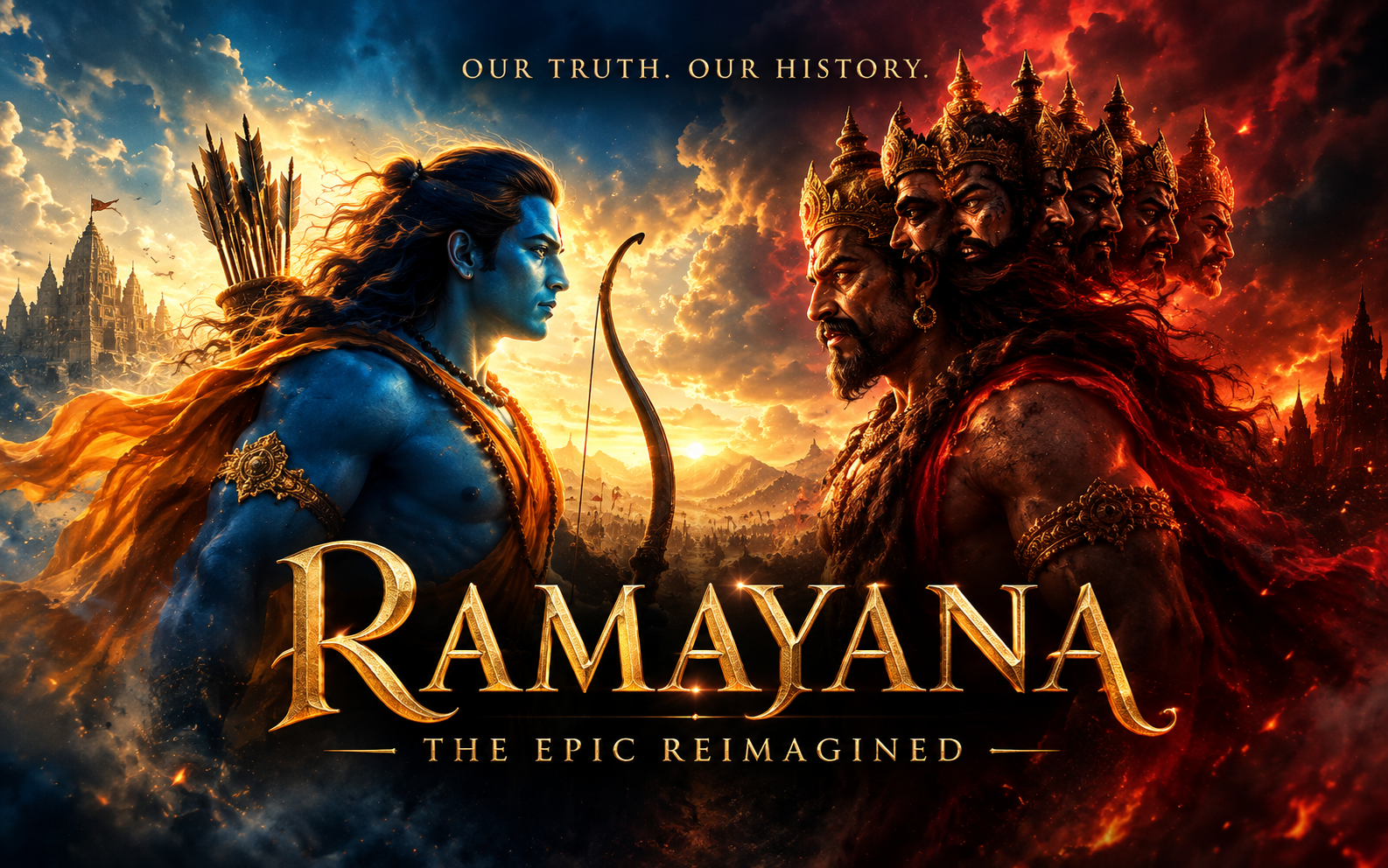
RAMAYANA: THE EPIC REIMAGINED

Ramayana: The Epic Reimagined is shaping up to be one of Indian cinema’s most ambitious productions, bringing together a star-studded cast and an international creative team. From its two-part format and reported ₹4,000-crore budget to its cutting-edge visual effects and global release plans, here are 10 things to know about the epic cinematic spectacle. 1.Two films, one epic Ramayana is planned as a two-part cinematic project. The first instalment is scheduled for release during Diwali 2026, with the second chapter planned for Diwali 2027. The films are directed by Nitesh Tiwari and produced by Namit Malhotra. Ranbir Kapoor has revealed that the team shot around six hours of footage for the first film before editing it down. A Chinese listing reportedly indicates a runtime of about 166 minutes for Part One. 2.Ranbir Kapoor as Rama: The first choice Ranbir Kapoor plays Lord Rama, amid years of speculation over other names. Mahesh Babu, Hrithik Roshan and Ram Charan were among the actors linked to various versions of the project. However, director Nitesh Tiwari and producer Namit Malhotra have clarified that Ranbir was always their first choice for their current Ramayana. Tiwari cited his physicality, screen presence and ability to convey emotion through his expressions. Interestingly, Yash, who plays Ravana, was also reportedly considered for Rama before taking on the antagonist. 3.Sai Pallavi is Sita Sai Pallavi plays Sita opposite Ranbir Kapoor’s Rama. The role marks a major Hindi-film project for the acclaimed South Indian actor and adds another prominent South Indian star to the cast alongside Yash. 4.A large ensemble cast An extensive ensemble supports the three leads. Sunny Deol plays Hanuman, Ravi Dubey plays Lakshman, Arun Govil plays Dasharath, Lara Dutta plays Kaikeyi, Indira Krishnan plays Kausalya, Kajal Aggarwal plays Mandodari, Rakul Preet Singh plays Shurpanakha, Kunal Kapoor plays Indra

Exclusive Interview: Nikhil Siddhartha on Swayambhu, Family and Politics

After the pan-India success of Karthikeya 2, Nikhil Siddhartha finds himself at a pivotal phase in his career. The actor is currently gearing up for the release of Swayambhu, one of the most ambitious projects he has undertaken to date, a historical action drama that demanded nearly two-and-a-half years of dedication, extensive physical transformation, and months of post-production work. In a candid conversation with Priyanka Goud, Nikhil opens up about the challenges of mounting a large-scale period film, why he prioritises quality over quantity, how fatherhood has changed his outlook on life, and his belief in using cinema as a tool for social awareness. A Two-and-a-Half-Year Commitment Describing Swayambhu as a project unlike any other in his career, Nikhil revealed that he dedicated nearly two and a half years exclusively to the film.“Some films are easy to make, and some are difficult. Swayambhu falls into the category of films that demand complete commitment. I underwent a significant transformation for the role, growing my hair long, maintaining a specific physique, and immersing myself in the character and story throughout the production period,” he said. A Historical Story with Universal Appeal One of the aspects that attracted Nikhil to Swayambhu was its historical backdrop. Nikhil plays Krishnan Raman, a historical figure whose name appears on ancient copper plate inscriptions that have recently gained attention. “This story is rooted in history, but its themes are universal,” he said. “It’s not confined to one region; audiences across India will be able to connect with it.” The actor also highlighted the growing importance of visual effects in modern filmmaking. Swayambhu reportedly contains nearly 2,700 VFX shots, making post-production one of the most demanding phases of the project. “We completed principal photography in December 2025, but for the last five to six months it has been

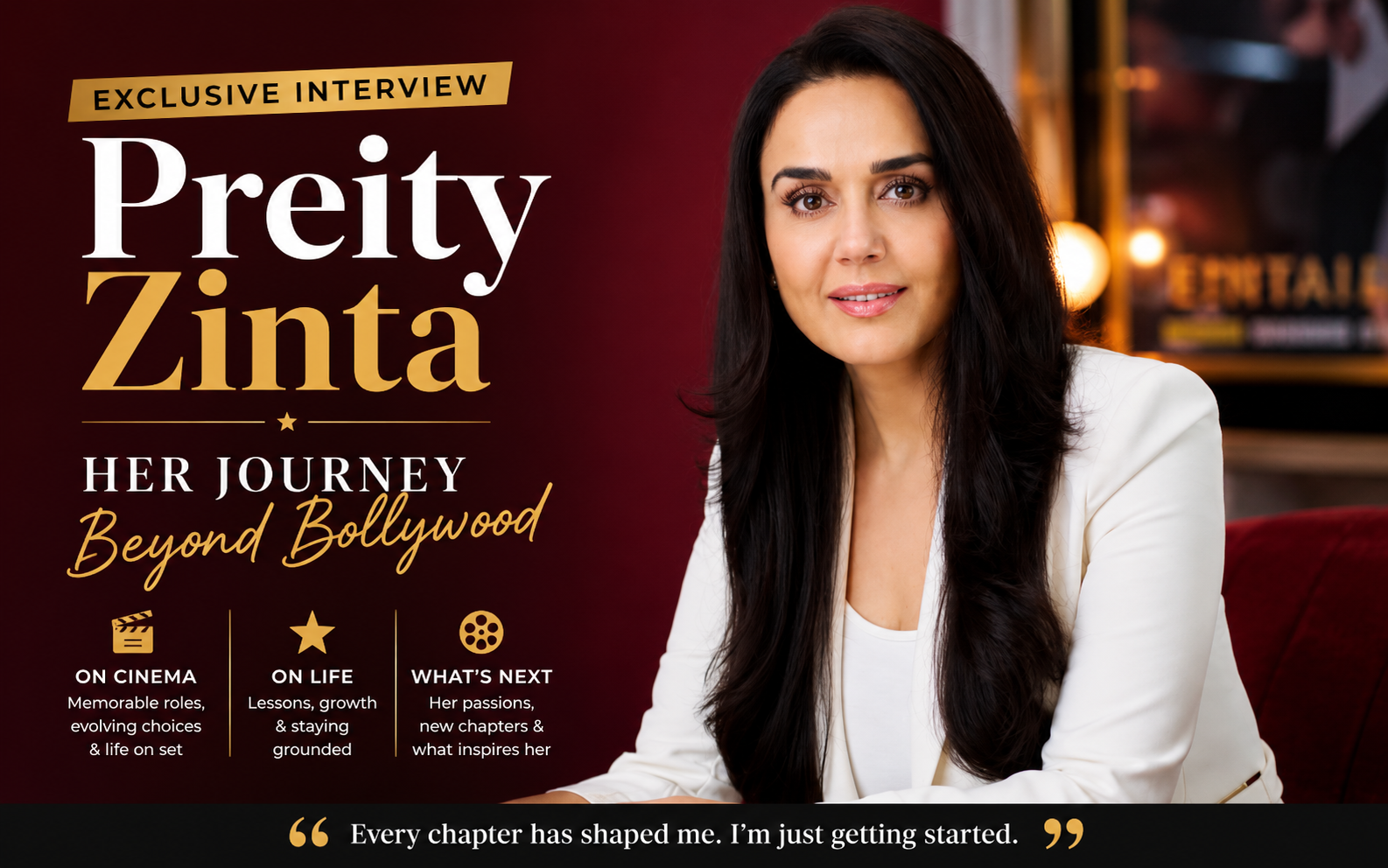
Preity Zinta on Batwara 1947, Motherhood and Finding Her Way Back to Cinema

For Preity Zinta, returning to the screen with Batwara 1947 is about more than making a comeback. The period drama allowed her to explore a chapter of India’s history, work with director Rajkumar Santoshi for the first time, and step into a world far removed from her own. But the film also made her reflect on how much life has changed since she began her career, from the freedoms available to women today to the perspective that comes with becoming a mother. For Zinta, Batwara 1947 is ultimately a story about family, resilience and hope, as she tells Lipika Varma in an exclusive conversation. Why did you say yes to doing this film? What touched you the most? There were a couple of things. First, I really wanted to work with Raj ji. I had never worked with him before, so working with him was always on my bucket list. I had also always wanted to do a period film. Beyond that, I genuinely loved the story. What touched me most was that even in the darkest of times, there is always a ray of hope. People may see this as a story about two countries, but for me, it is essentially about a family. I was also deeply affected by stories of families who believed they were leaving their homes temporarily, even burying their jewellery and valuables, thinking they would return. They never imagined they would lose everything forever. Since this is my first period film, I spent time researching and understanding that era. After such a long break from films, why did you choose this project? I was enjoying my personal life, focusing on my family and raising my children. Professionally, I had always wanted to work with Raj ji and also wanted to do a period film.

You May Also Like

Connect with us