Knocking at the heaven’s door at Zuluk, Sikkim

zuluk

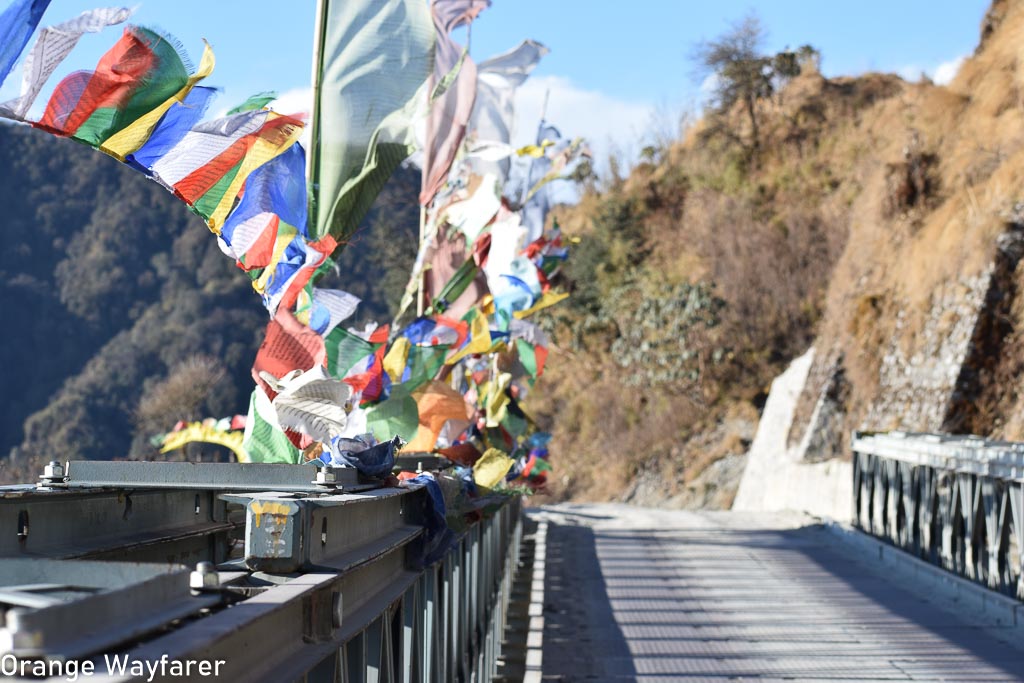
Nestled between the craggy peaks of high Himalayas in Sikkim, Zuluk is a picturesque hamlet that is called home by a handful of Gurung families, transient troops of Indian armed forces and nomadic yak herders. History tells us Zuluk has been an important stop on the Old Silk Route operational until the Chinese invasion of Tibet. Zuluk sits atop a daunting height of 9000 feet. Madhurima Chakraborty explores this rather offbeat destination, which remains hidden under the obscure folds of the mountains guarding northeast India.

Despite being a small state, Sikkim has countless defined tourist routes. While most people visit north Sikkim and a few head to Pelling in the west for a personal rendezvous with the towering range of Sleeping Buddha, Zuluk from the eastern part of Sikkim is often overlooked. Most tourists prefer to set base in the thriving capital of Gangtok, and pack a day’s picnic to the Changu lake. A sacred glacial lake, Changu is locally known as Tsomgo lake. On an ideal East Sikkim tour itinerary, often termed as the Old Silk Route by the numerous tour companies, Zuluk should be the starting point of the loop and Changu must be the penultimate stop before you reach Gangtok! 

Getting there

Upon reaching Bagdogra airport, a small army airport connecting the north of Bengal and the state of Sikkim, you should hop onto an Innova or any big car. Avoid hatchbacks because the tiny cars often fail to trudge through the serpentine roads of the Old Silk Route that get painted with white snow. The ascent to Zuluk starts right from the Bagdogra airport.

The night before reaching Zuluk can be spent at the beautiful riverside village named Reshikhola. A handful of resorts abound in the area. You can proceed a bit further and reach Aritar to spend the night. In April, Aritar is painted bright in hues of Rhododendron bloom to welcome spring. Zuluk is reachable through paved roads by BRO India but driving to Zuluk in one day seems a bit far-fetched. Firstly, you have to sort out your entry permit to Sikkim. After that, an entry to Zuluk needs to be sorted at Aritar upon providing your ID pass. Moreover, Zuluk is sitting at an astounding height of 9000 feet. Not all human mechanisms are built in order to face that sheer change in altitude in a day. 

Allow the first night at Aritar for a proper rest and start the morning with a relaxed drive that will span for three hours. The entire range of Sleeping Buddha will appear on the left of the road, granting your journey to the forbidden land of the mountain! 

Life in Zuluk: Serenity Redefined

Zuluk is a small village divided in two segments, Upper Zuluk and Lower Zuluk. Zuluk’s alluring proximity to the high Himalayas also translates into the village being scarily close to the Chinese border. In fact the Old Silk Route loops around Nathang valley and Nathula Pass which straddle the border with Chinese occupied Tibet. Needless to say, men in uniform dominate the horizon starting from Zuluk. This is a rest stop for Indian Armed forces before they venture into posts located further up in higher altitudes. 

Alongside setting up army camps, makeshift tents and a place of worship used by every faith, the Indian army has also set up a water tank clearly marked in olive green and red that takes care of water supply for the whole village. 

Sans occasional tourist footfall, Zuluk has not more than 20 local households. The quaint village homes are equipped to host tourists in humble clean homestays. All of them grow their own vegetables in the backyard. Plants include potatoes, cabbages and spinach during the short stint of summer. A cow or a zombu (a mix breed between a yak and a cow) takes care of the family’s dairy needs. 

Thambi View Point, Zuluk’s Crowning Glory
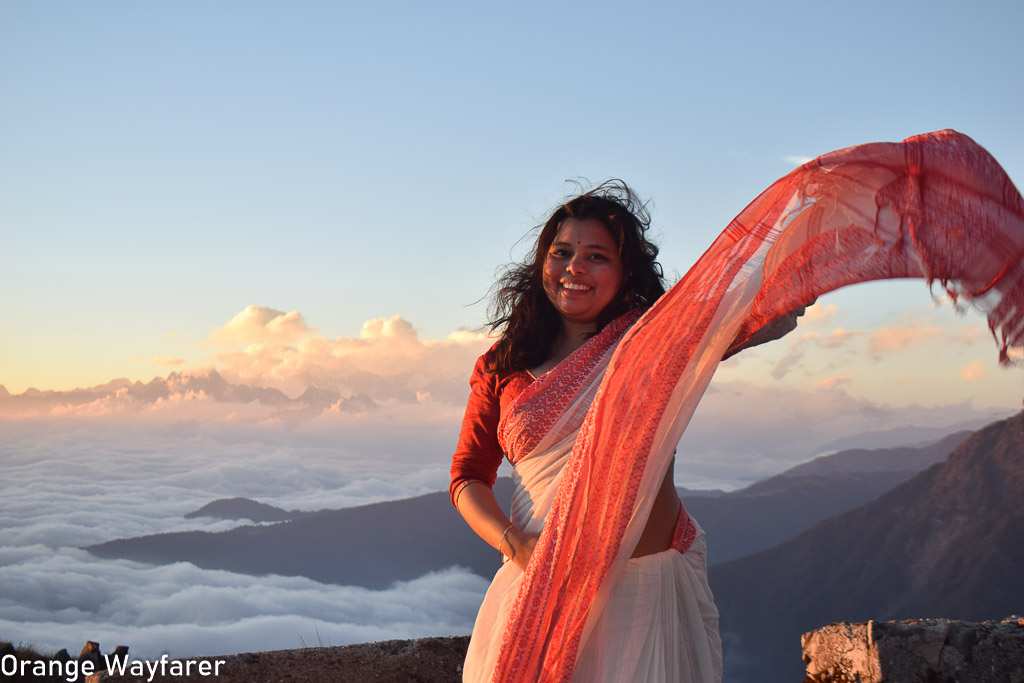
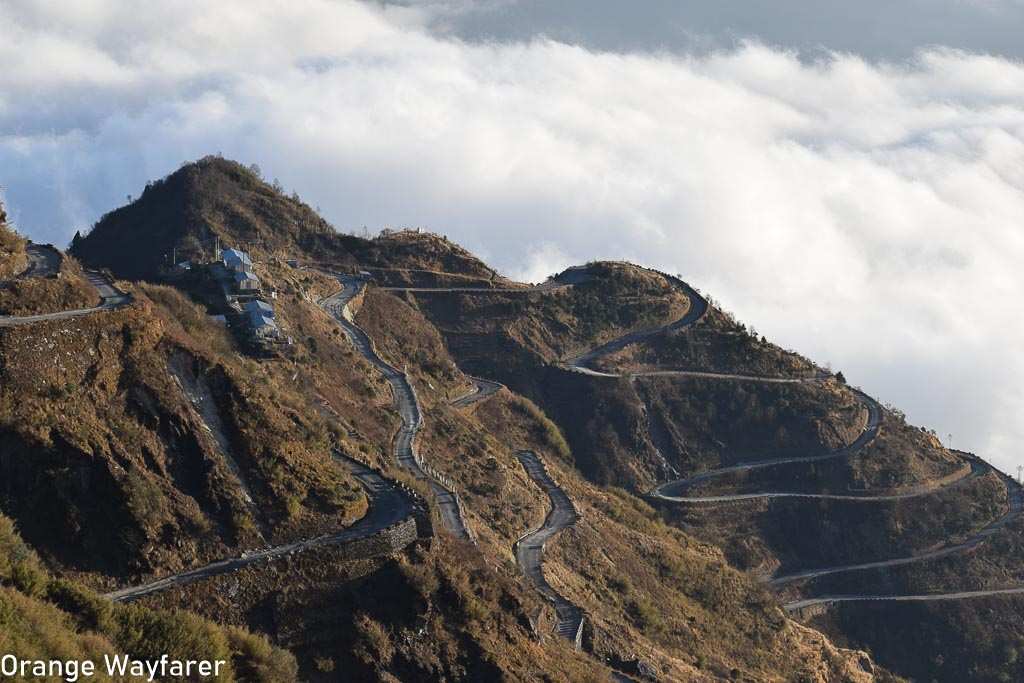
If life is hard and resources are scarce, why do travelers rank Zuluk so high? The answer is buried at Thambi view point! About two hours (14 km) drive from Zuluk village through hairpin bends, you reach the proverbial doorstep to heaven. Thambi View point bestows you with a memorable panoramic view of Mount Kanchenjunga and the entire sleeping Buddha range of mountains while clouds kiss you at the feet at a sheer height of 11,800 feet! From Thambi view point, you will get a clear view of the Old Silk Route, the serpentine routes that curve the mountain heads and look extremely pretty during golden hour. In case you are visiting Zuluk during January or later, the roads (Old Silk Route) will dazzle in bright white snow! 

Zuluk is a safer bet to spend the night in the mountains, when compared to the Lungthung village, which is accessible from the Thambi view point. Zuluk is better equipped with tourist infrastructure although power supply is frivolous. You may also need to turn the heater on from midnight to get warm water in the morning. Often, water supply is clogged due to sub zero temperature at night. You need to wait till the Sun rolls his magic wand.

The Snow Lion Resort in Zuluk is a decent hotel with running water and electric backup that may fail if power is not restored for more than 8 hours. So is the Zuluk Sojourn Homestay. Please note, the village relies on military facilities for sudden medical requirements. You may check out Padamchen at a lower altitude for better facilities including a small market. 

Onwards from Zuluk, Completing the Loop at Old Silk Route! 
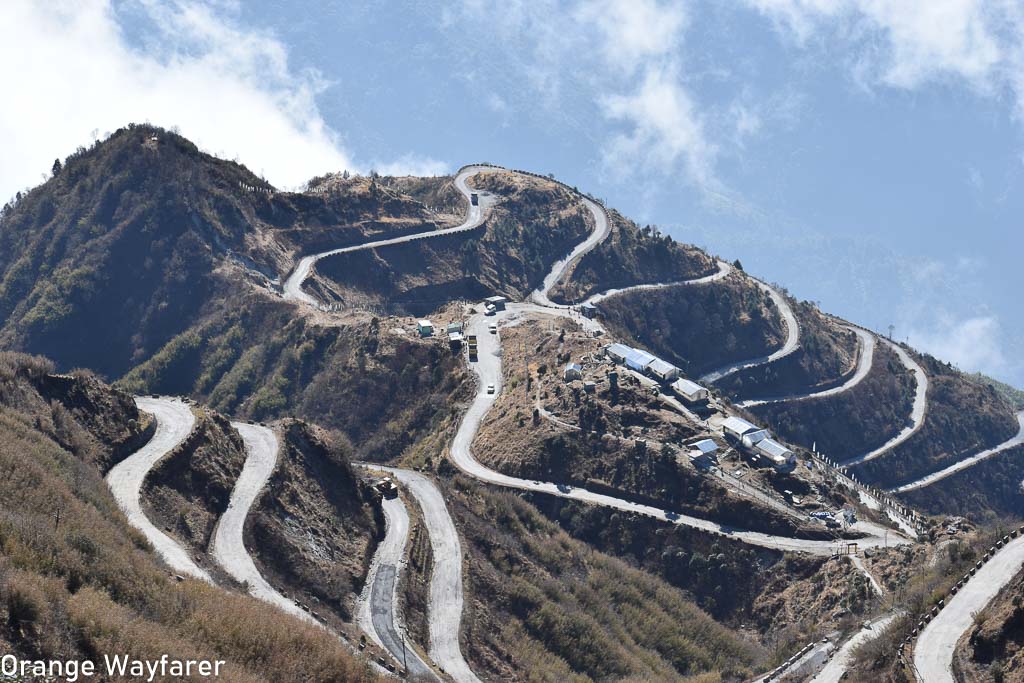
From Zuluk, you may stop for a night at the Nathang Valley, a small village sprang up on a valley on the west of which the towering Sleeping Buddha Range stands still. The next day, start early and complete the loop of Old Silk Route at the Tsomgo lake. True, Changu has become an apple in the eyes of tourists in recent times,  but the changing colours of the glacial lake will inspire you to find your own quiet. Gorging on a hot plate of “mountain maggi” is a prized experience you will find only at the Changu lake.

Lungthung Village, the Shepherds’ Abode! 

A short hike from Thambi View Point will bring you closer to Lunthung village. Only a handful of homestays run the show here. Lunthung was not developed to be a village for local’s stay. There is scarcely any water here. However the makeshift homes are the sole respite for yak herders or nomadic mountain tribes during prolonged nights of snowstorm. You may choose to stay in Lungthung to witness a stunning view of sun kissed Kanchanjungha during sunrise. However beware of the hissing mountain winds. If the weather is spoiled, Lungthung becomes merciless. 

Planning a trip to Zuluk:

Usually the Old Silk Route remains open throughout the year barring a few nights of particularly heavy snowfall in winter. If that happens, a permit to drive towards Zuluk will not be issued at the Aritar check post. You should plan your trip to Zuluk barring the monsoon months from June to September. Peak of winter usually paints the Old Silk Route in sparkling white but the road remains open with enormous military supply trucks braving the snow with special chains tied to wheels.

  • An important stop on the Old Silk Route, Zuluk sits at an astounding height of 9000 feet.
  • Zuluk has no more than 20 local households. The quaint village homes are equipped to host tourists in humble clean homestays. All of them grow their own vegetables in the backyard.
  • Thambi View point presents a memorable panoramic view of Mount Kanchenjunga and the entire Sleeping Buddha range of mountains from a sheer height of 11,800 feet.

Leave a comment

Your email address will not be published. Required fields are marked *

Hidden Gems I Can’t Stop Talking About

Who: Dimpi Sanghvi – Travel & Lifestyle Creator, Storyteller, and Curator of Slow Travel Experiences With a lens that finds beauty in the simplest of details, Dimpi Sanghvi is redefining mindful travel. A creator with a love for storytelling and design, she transforms ordinary journeys into visual poetry evoking nostalgia, warmth, and curiosity in every frame. Through her platform, she brings together her twin passions travel and slow living encouraging her audience to pause, wander, and feel. Whether she’s exploring Cuba’s colourful streets or uncovering hidden gems around the world, Dimpi’s storytelling reminds us that travel isn’t just about distance it’s about depth. Featured Destination: Cuba Why Dimpi Recommends It:“Cuba is like stepping into another era,” Dimpi says. “Havana’s pastel-hued buildings, cobblestone lanes, and beautifully preserved vintage cars feel like a living time capsule. What makes it special is the rhythm the music that flows through the streets, the impromptu dancing, and the locals’ warmth that instantly makes you feel at home. Cuba isn’t just a destination; it’s a mood, a melody, an emotion.” Top 3 Must-Do Experiences: Take a ride in a classic vintage car through the vibrant streets of Havana the city’s most iconic experience. Witness the cannon shot ceremony at La Cabaña, a fascinating ritual that’s been performed nightly since the 18th century. Visit a Cuban cigar and Havana rum factory to experience the meticulous artistry behind the island’s most famous exports.Best Local Dish or Drink: “Order a Daiquiri at El Floridita the birthplace of the cocktail and Ernest Hemingway’s favourite haunt,” Dimpi says. “It’s the perfect way to cool off after a day under the Cuban sun.” One Thing Travellers Should Know: Vegetarian options can be limited, so carrying some essentials or snacks is a good idea. “But honestly, the charm of Cuba more than makes

Places I’d Go Back to in a Heartbeat

Who: Roop Verma Travel Creator, Storyteller, and Seeker of Global Magic Meet Roop Verma, a creator who finds joy in both quiet European mornings and electric Asian nights. Whether it’s sipping espresso on a sun-drenched street in Paris or chasing neon reflections through Tokyo’s midnight rain, Roop travels to feel alive to find beauty in hidden corners and capture fleeting moments that make the world pause. Through his lens and words, Roop brings his audience along for the ride every trip feels like a shared heartbeat, a collective discovery. “Travel changes you,” he says. “Each place leaves me a little more in awe and a lot more in love with this crazy, beautiful world.” Featured Destination: Provence, France Why I Recommend It: “Provence feels otherworldly,” Roop says with a smile. “It’s a place where lavender fields stretch forever, sunsets look hand-painted, and every village feels like a dream you never want to wake up from.” What Makes It Special: “There’s a calm magic here a rhythm that makes you slow down and just exist. In Provence, time doesn’t rush; it breathes.” Top 3 Must-Do Experiences: Wander through endless lavender fields at sunrise.2. Sip rosé in a café in Gordes, watching the village come alive.3. Explore local markets in Aix-en-Provence overflowing with cheeses, pastries, and vintage trinkets. Best Local Dish or Drink: “Freshly baked tarte aux fruits paired with a chilled glass of rosé it’s Provence on a plate,” says Roop. “And my favourite thing? Losing myself in the farmers’ markets of Aix-en-Provence they’re pure sensory bliss.” One Thing Travelers Should Know: “Provence moves at its own pace slow, intentional, and full of wonder. So, don’t rush it or you’ll miss the magic.” Insider Tip: “Rent a car and drive through the lavender hills. Every turn is a postcard, every stop

My Must-Visit Destinations for 2025

For Sarishti, travel isn’t about ticking destinations off a list it’s about feeling the soul of a place. She immerses herself in cultures, connects with people, and never skips a chance to try local food. Through her platform @theNomadicKat, she reminds her audience that you don’t need to quit your 9-to-5 to live a life of adventure just curiosity, courage, and maybe a weekend (or two). Featured Destination: Japan Why I Recommend It: “Japan completely captured my heart,” says Sarishti. “It’s a country of contrasts where futuristic skylines meet ancient shrines. One moment you’re surrounded by Tokyo’s neon glow, and the next, you’re standing under maple trees in complete silence. It makes you pause and truly feel the beauty of life.” What Makes It Special: “What I love most about Japan is how seamlessly it balances calm and chaos. It’s organized yet full of surprises. The people are kind, the food is incredible (yes, even at convenience stores!), and there’s a mindfulness in everything from a cup of matcha to the way a leaf falls in autumn. It’s poetic simplicity at its best.” Top 3 Must-Do Experiences: 1. Soak in an Onsen (Hot Spring Bath) – A deeply traditional experience that embodies Japan’s philosophy of slowing down and rejuvenating. 2. Visit Fushimi Inari at sunrise – Thousands of orange Torii gates line a quiet mountain trail, offering a surreal, almost spiritual experience. 3. Dine at a live grill – Watch chefs cook with precision and flair, turning every meal into a cozy, aromatic performance. Best Local Dish or Drink: “It’s impossible to pick one favourite!” laughs Sarishti. “But my top picks would be Okonomiyaki in Kyoto’s Nakagyo Ward, Melon Bread Ice Cream in Osaka’s Dotonbori, and the iconic Egg & Mayo Sandwich from 7-Eleven Japan’s most underrated delight.” One Thing

Esha Hindocha: The Decade Long Journey From Fashion to Far Flung Shores

For over a decade, Esha Hindocha has been a familiar face in the digital world a creator who transformed her passion for fashion and lifestyle into a narrative of authenticity and inspiration. Now, she’s taking her creativity global, seamlessly blending style with travel as she expands into YouTube and destination storytelling. Her collaborations with AirAsia, Indonesian Tourism, and GetYourGuide reflect her ability to blend visual elegance with cultural depth. Beyond her digital work, Esha also contributes to the artistic community as Joint Secretary of the Telangana Artist Association, grounding her cosmopolitan vision in creative purpose. For Esha, travel is more than just movement it’s a continuation of her artistic journey. “Fashion taught me to appreciate details,” she says. “Travel allows me to live them.” Featured Destination: Jordan Why Esha Recommends It: “Jordan is the ultimate all-rounder,” Esha says. “It’s where raw nature, ancient history, and warm hospitality meet. You can lose yourself among ancient ruins one day and float effortlessly in the Dead Sea the next. It’s everything beauty, history, and adventure wrapped in one unforgettable experience.” What Makes It Special: Jordan’s geographical and historical diversity is unmatched. “In one journey, you can walk through the alien landscapes of Wadi Rum, stand before the rose-hued grandeur of Petra, wade through the canyon streams of Wadi Mujib, and gaze across the serene expanse of the Dead Sea,” she explains. “It’s sensory overload most magically.” Top 3 Must-Do Experiences: 1. Marvel at the ancient splendour of Petra, the “Rose City.” 2. Take a jeep safari and camp overnight under the stars in Wadi Rum. 3. Go canyoneering through Wadi Mujib’s Siq Trail a thrilling mix of adventure and beauty. Best Local Dish or Drink: “As a vegetarian, I adored the fresh hummus and Mediterranean spreads found everywhere,” Esha says. “But the real

You May Also Like

Connect with us