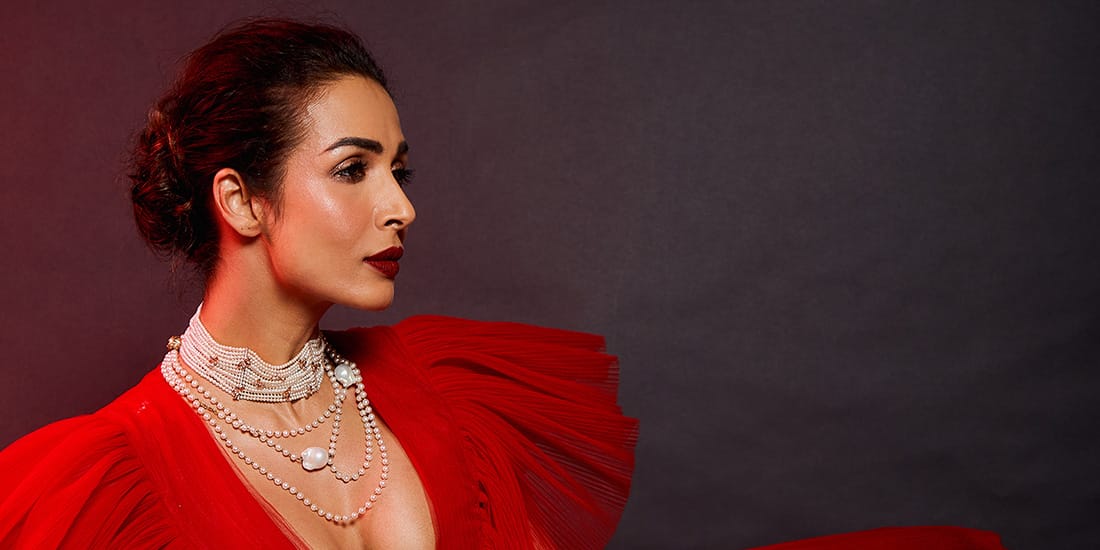
The Divalicious Malaika Arora Khan

Malaika on Fashion
Actress-model-TV hostess Malaika Arora Khan is a head turner both on and off-screen. The October-born actress’s beauty is undimmed by time. A fashionista par excellence, Malaika carries off everything she wears—whether a high slit gown or a short bodycon dress or even a traditional saree— with equal sass and panache. Her perfectly fit body, impeccable taste in fashion and charming personality make her a true diva in every sense. This month, Anita Raheja and Heena Agarwal chatted with Malaika to get tips on fashion, makeup and hair exclusively for the readers of Hashtag Magazine.
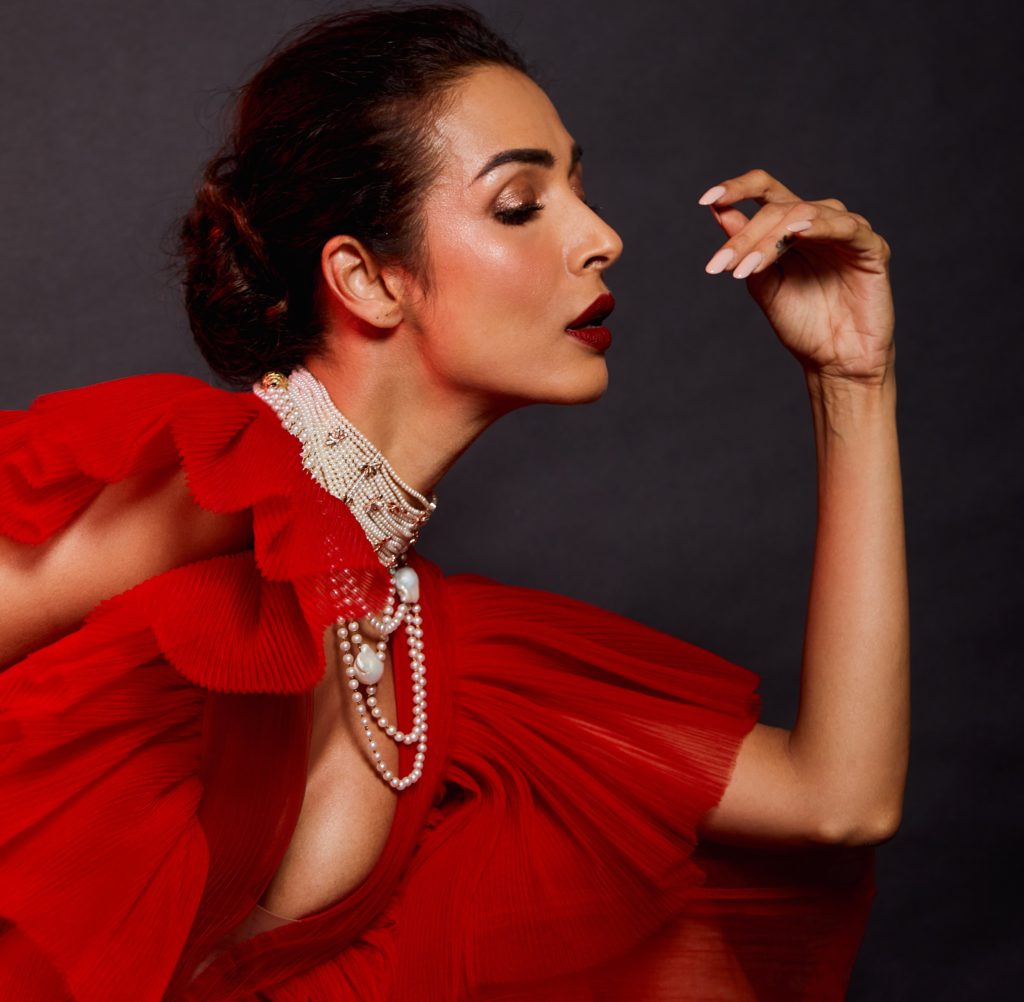
Malaika Arora Khan for Hashtag Magazine

Malaika on Fashion

Favourite outfit: A pair of jeans. I love wearing jeans because I can give them a casual as well as a semi-formal look. My tops keep changing depending on my mood. I could pick up anything from my cupboard when I wake up in the morning. 

Go-to for evening wear: I would choose an Armani suit or a saree if it’s an award function. I love wearing sarees for film functions as I feel they look very classy and elegant. I would also sport a nice salwar-kameez for formal occasions.

Go-to for night wear: I take extra effort while picking up my night wear. It makes me feel so much of a woman.

I look best in: A saree! I can really carry it off well. I love authentic sarees like Banarasi and chiffons.

Indian designers I like: Monisha Jaisingh, Wendell Rodricks, Hemant Trivedi, Sumeet Verma and Seema Khan.

Favourite brands: Armani followed by Prada, Gucci and Versace

Favourite colours: Red, black and white. In winter, I prefer beige and neutral colours

I have a fetish for: Shoes. I have over 200 pairs of shoes! I don’t pick up shoes from India as I feel they haven’t mastered the art of making the perfect pair. Occasionally, however, I do pick up a pair from Rinaldi in town.

I have a fetish for shoes and I have over 200 pairs of them!

Favourite handbag brand: Dior, Gucci and Fendi

My handbag contains: Credit cards, a wallet, a dairy, my mobile and its charger. I love carrying large bags so that everything fits in.

My wardrobe is incomplete without: Colour co-ordinated clothes. Every piece I own has a history behind it. A lot of love goes behind every bag and shoe I buy.

For my first day’s shoot I wore: A chaniya choli for my first film shoot and for my first MTV shoot I wore a red bustier and a flaming red-hot skirt

According to me, the best-dressed men are: Akshay Kumar, Shah Rukh and Kabir Bedi

And the best-dressed women: Besides myself, I like the way Amrita Arora and Victoria Beckham dress.

I love shopping at: Los Angeles and New York. Sometimes I pick up stuff from flea markets too. London and New York have the best uptown and downtown shops!

The most expensive outfit I have ever bought: A Gucci gown and a close second would be my black Armani suit.

Favourite perfume: Gucci Envy. I don’t like to change my perfume too often.

A fashion tip for the readers of Hashtag: Create your own personal style, wear what you are comfortable in and don’t try to be somebody else. One should be wear the latest trends only if he/she is able to carry it off.

Create your own personal style, wear what you are comfortable in and don’t try to be somebody else.

Malaika on Hair

Length: I like my hair really long!

Hair colour: I like to experiment with colour. Red hair looks great on Indian skin. I also like nice rich chocolate tresses.

Colours I like to highlight my hair in: Bronze, copper and gold

Shampoo and conditioner I use: L’Oreal products

My hairstyle at home: Simple. I like to tie up my hair while I’m home and on a regular day I hate doing anything fancy to my hair. My hair is generally very manageable so it stays no matter what I do. But when I am shooting, I experiment with my hairstyle occasionally.

Go-to hairstyle for formal functions: I like to leave my hair loose

My personal hairstylists: Kanta and Clarabelle

A man whose hair I admire: Shaan (singer). His hair is so silky, I often joke with him that he has no business having such beautiful hair (laughs)!

Haircare I follow: I oil my hair twice a week with oil I make at home myself. I don’t like to wash my hair too often because it gets really dry, so I wash it only if it’s greasy, with a really mild shampoo. I deep condition my hair once in a while too. 
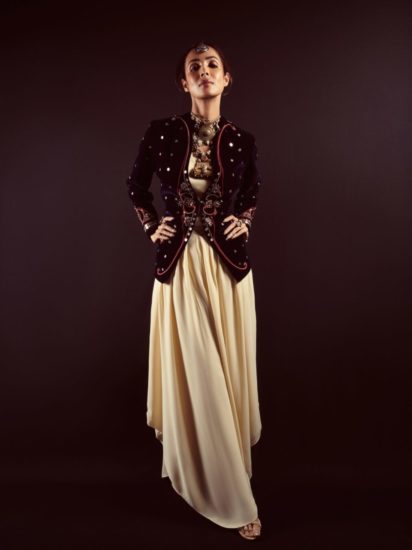
Malaika on Fashion Favourite outfit

Your inner state reflects on your skin so live a stress-free life and you will glow!

Malaika on Makeup

Favourite makeup brands: Mac and Bobbi Brown

Skincare regime when I’m not shooting: I hate using make-up when I’m not shooting. I usually just use a moisturiser. I believe in a fresh, clean, natural and radiant look—it is the best. Luckily, I don’t have problematic skin so go in for minimal makeup most of the times.

A feature I love to accentuate: My eyes and my lips. I love using mascara as I have long eyelashes, and a nice blusher to highlight my cheeks.

My favourite shades in make-up: Bronze/fresh pink/ peach/ orange/ brown.

A pro-make-up tip for Hashtag readers: Your inner state reflects on your skin so live a stress-free life and you will glow!

Leave a comment

Your email address will not be published. Required fields are marked *

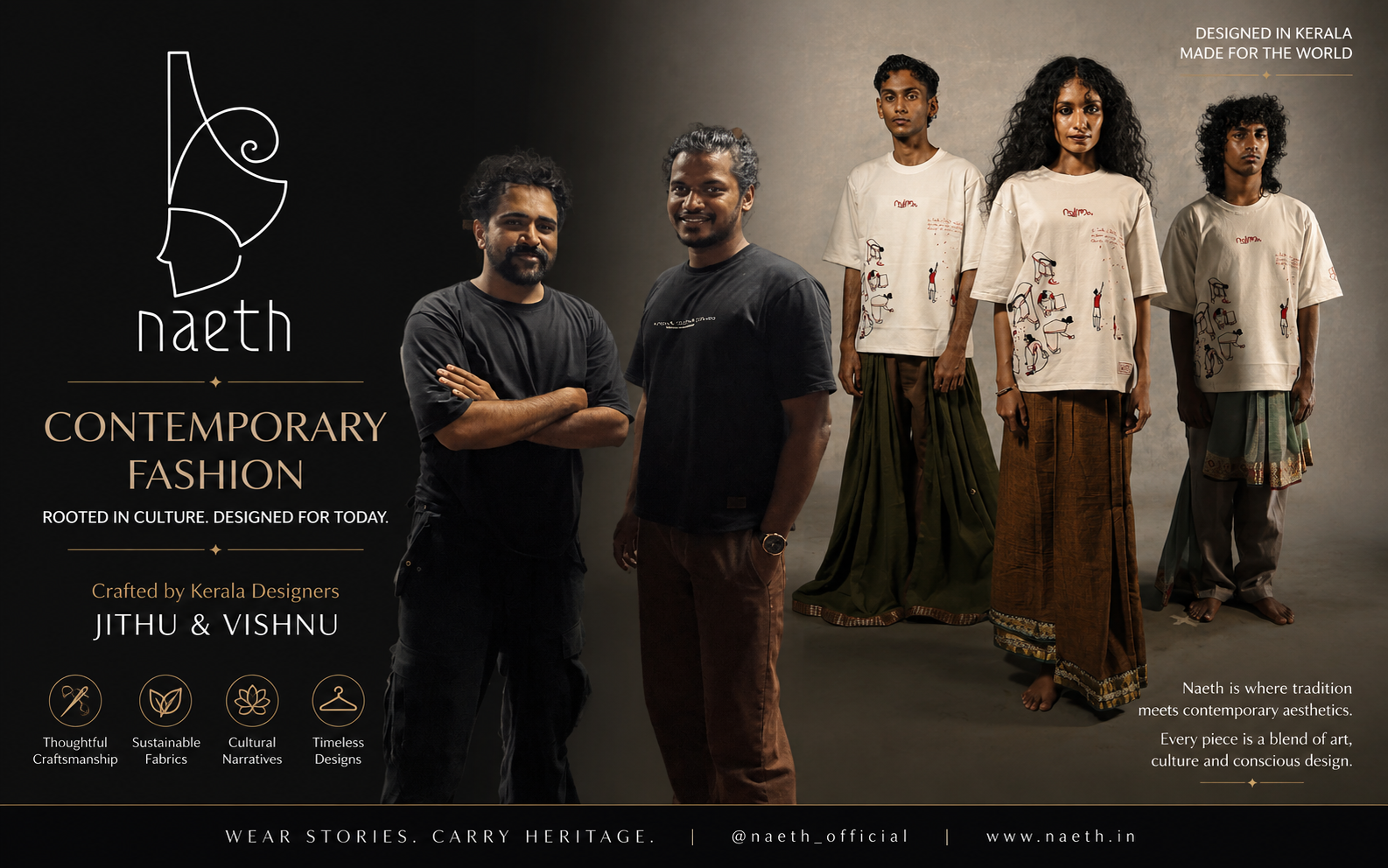
Naeth: Contemporary Fashion by Kerala Designers Jithu & Vishnu

Founded by mechanical engineering graduates and classmates Jithu Gopakumar and Vishnu Girija Gopal, Naeth is a contemporary fashion label from Kerala that bridges heritage with modern design. Inspired by the state’s rich textile traditions, the duo transforms handloom into contemporary silhouettes through innovative fabrics, technical textiles, and thoughtful craftsmanship. Their vision is simple yet powerful: to make India’s weaving traditions relevant for today’s generation while preserving the stories behind every thread. 1.Tell us about your brand and how it is helping preserve and promote India’s rich handloom heritage. At Naeth, we reinterpret traditional handloom through contemporary fashion. Our collections transform heritage textiles into modern, wearable silhouettes that appeal to younger audiences while preserving the craftsmanship, stories, and cultural significance woven into every fabric. 2.Which weaving traditions or artisan communities do you work with? We work closely with the weavers of Balaramapuram, Kerala, a community renowned for its centuries-old weaving tradition. Their handcrafted sarees and mundus are celebrated for their precision, purity, and exceptional craftsmanship, making every textile a reflection of Kerala’s rich cultural legacy. 3.How does your brand support sustainability and responsible craftsmanship? Sustainability is central to our design philosophy. We upcycle traditional handloom textiles into contemporary garments, reducing waste while extending the life of these fabrics. Alongside direct collaborations with artisans and limited-batch production, we also experiment with eco-conscious materials such as bamboo fibres and recycled PET fabrics. 4.What is the biggest challenge facing India’s handloom sector today? One of the biggest challenges is changing the perception that handloom belongs only to traditional wear. We believe handloom deserves a place in contemporary fashion. At the same time, we’re working towards creating greater value for artisan communities by reducing dependence on intermediaries and promoting fair recognition for their craftsmanship. 5.What does National Handloom Day mean to Naeth? For us, National

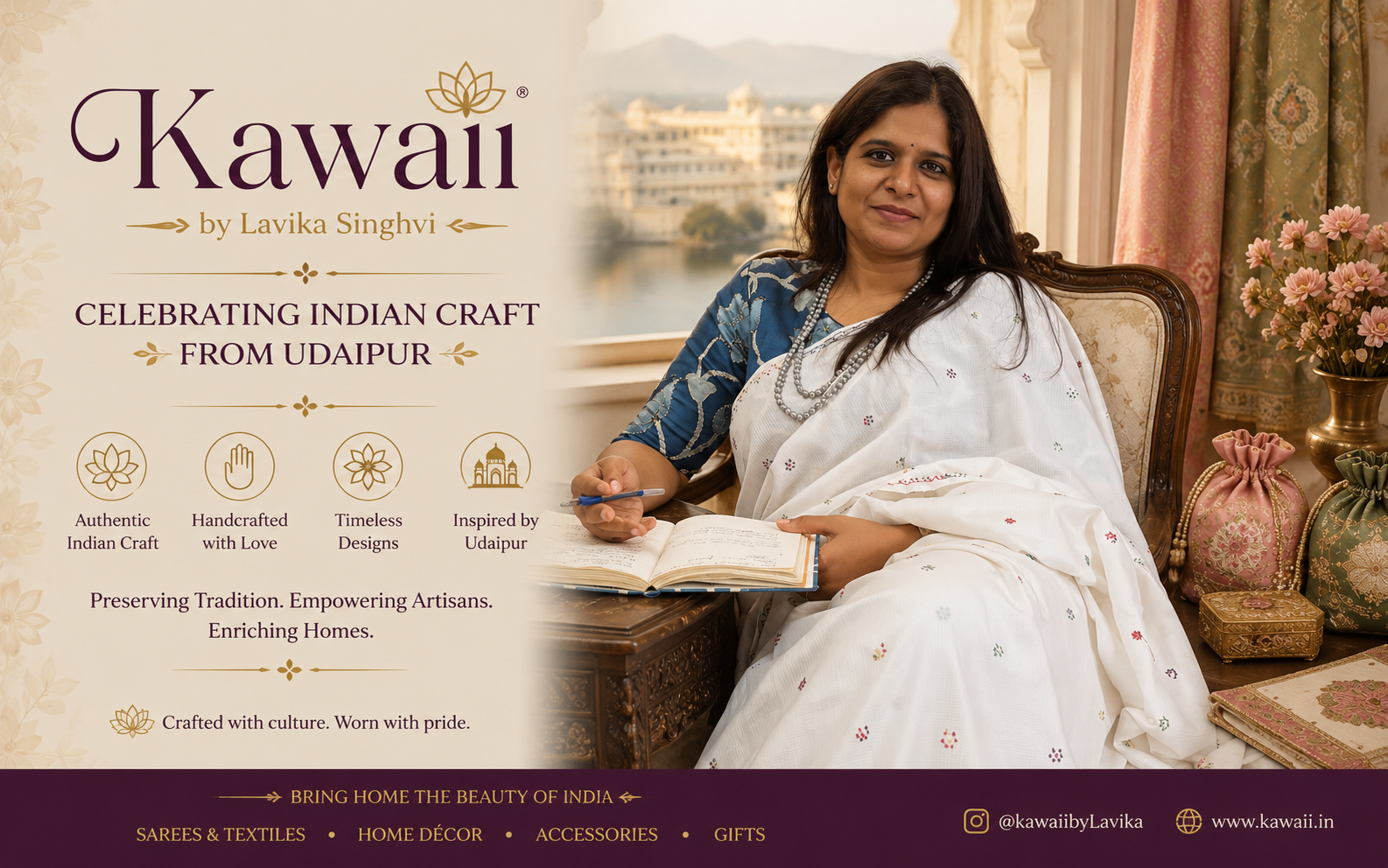
Kawaii by Lavika Singhvi | Udaipur

Founded by Lavika Singhvi, a Udaipur-born entrepreneur with a deep connection to India’s artistic heritage, Kawaii is redefining luxury sarees through the lens of wearable art. Inspired by Rajasthan’s rich cultural legacy, Lavika brings together rare handcrafted traditions from across India, including Pichwai, Ajrakh, Madhubani, Batik, and Bandhani. As a Pichwai Certified and ODOP Verified brand, Kawaii works directly with master artisans to preserve authenticity and support traditional craftsmanship. Each saree is envisioned as a timeless heirloom, celebrating heritage, artistry, and the stories woven into every creation. 1.Tell us about your brand and how it is helping preserve and promote India’s rich handloom heritage. Kawaii was born from my desire to transform India’s rich artistic heritage into wearable art for the modern woman. Growing up in Udaipur, a city surrounded by art, culture, and royal traditions, I developed a deep appreciation for the craftsmanship and stories behind Indian textiles. Through Kawaii, we bring together diverse Indian art forms such as Pichwai, Madhubani, Batik, Ajrakh, and Bandhani on luxurious handloom fabrics. Our focus is on preserving authenticity while presenting these traditional crafts in a contemporary format. As a Pichwai Certified and ODOP Verified brand, we work closely with original artisans and artists, ensuring their skills are recognised, valued, and carried forward to future generations. 2.Which weaving traditions or artisan communities do you work with, and what makes their craftsmanship unique? We work with artisan communities across India, including Pichwai artists from Udaipur, Madhubani artists from Bihar, Ajrakh craftsmen from Gujarat and Rajasthan, Bandhani artisans, Batik artists, and traditional handloom weavers. Each craft represents generations of knowledge and storytelling. Pichwai is deeply connected to Rajasthan’s cultural and spiritual heritage, with artists creating intricate hand-painted narratives. Madhubani celebrates symbolic storytelling through detailed motifs, while Ajrakh and Batik showcase complex dyeing techniques perfected over

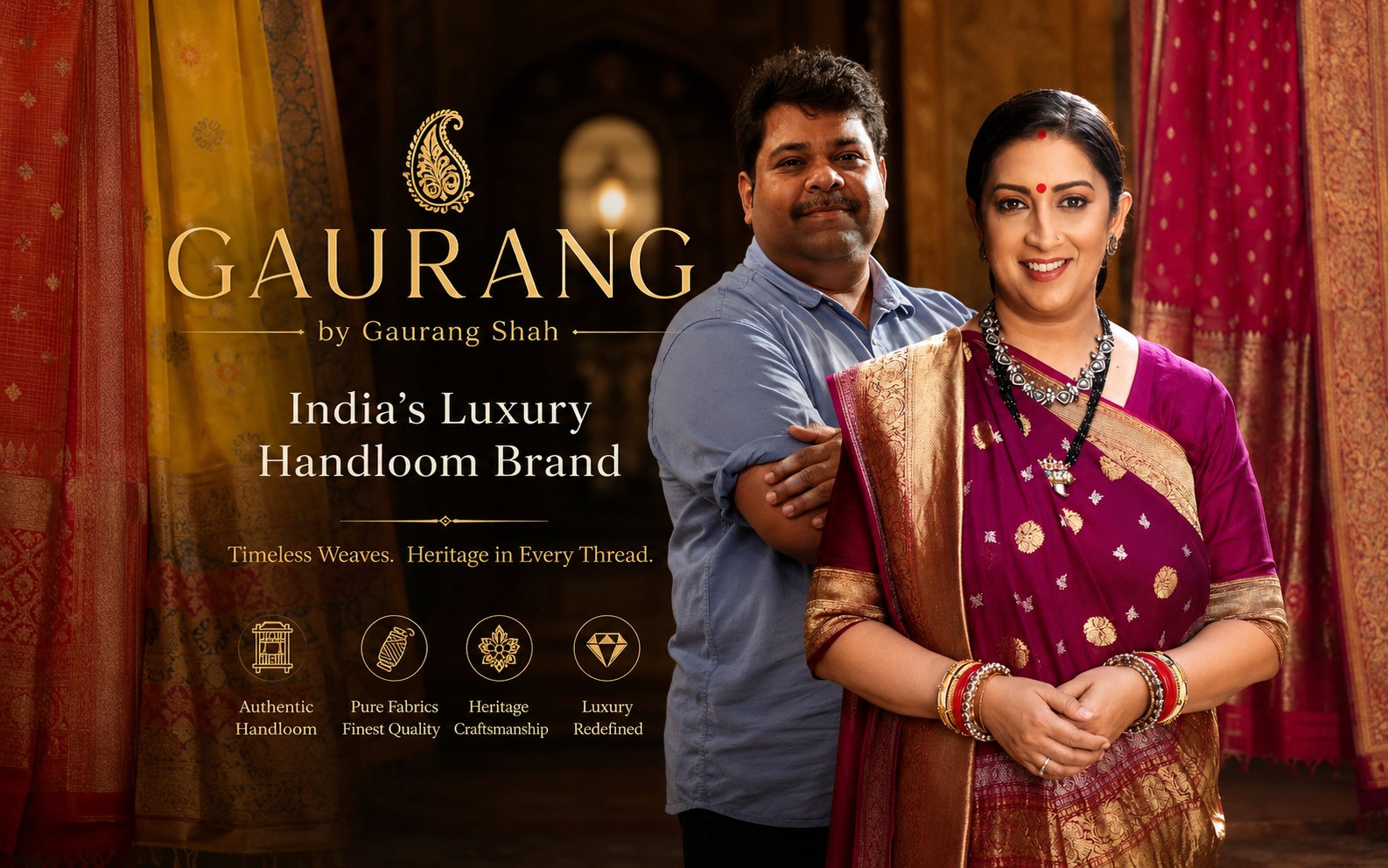
GAURANG by Gaurang Shah I Hyderabad

GAURANG is one of India’s foremost luxury handloom brands, renowned for reviving and reimagining the iconic Jamdani weave. For over three decades, Gaurang Shah has worked alongside artisan communities across India, combining traditional craftsmanship with contemporary design to create timeless textiles. Through its dedicated loom clusters, GAURANG has empowered over a thousand artisans while preserving India’s rich weaving heritage through innovation, skill development, and sustainable livelihoods. 1.Tell us about your brand and how it is helping preserve and promote India’s rich handloom heritage. For me, GAURANG has always been about textiles before fashion. My journey began with a fascination for handwoven fabrics and evolved into a lifelong commitment to preserving India’s weaving traditions, particularly the intricate Jamdani weave. Working closely with artisan communities, we have built loom clusters that strengthen weaving ecosystems, encourage innovation, and create opportunities for traditional skills to flourish. Through our collections and showcases across India and internationally, I strive to present Indian handlooms as timeless works of art that remain relevant to contemporary audiences while staying true to their heritage. 2.Which weaving traditions or artisan communities do you work with, and what makes their craftsmanship unique? I work extensively with Jamdani weavers and artisan communities across Telangana, Andhra Pradesh, and several textile clusters throughout India. Through the GAURANG loom clusters, we collaborate with artisans to develop fine cottons, silks, and innovative handwoven textiles while preserving the integrity of traditional weaving techniques. What makes Jamdani extraordinary is its painstaking process: every motif is woven by hand, thread by thread, directly on the loom. The precision, patience, and craftsmanship involved ensure that every sari is unique, carrying the unmistakable signature of the artisan who created it. 3.Sustainability is at the heart of handloom. What ethical or sustainable practices does your brand follow? Handloom is inherently sustainable, relying on

5 Viral Shopping Apps Dominating Gen Z Trends

Gen Z shopping in India is fast, trend-driven and completely digital, with fashion apps shaping what’s in and what’s out. From viral styles to budget-friendly finds, these platforms make it easy to build a wardrobe with just a few taps. Here are five of the best shopping apps Gen Z is obsessed with right now, curated by Sunerii Vennam. Shopping today goes far beyond malls and offline stores. With just a few taps, you can build an entire wardrobe, whether it’s trend-led pieces or a carefully curated personal style. From Y2K revivals to ever-evolving microtrends, fashion is moving faster than ever. And somehow, our carts are filling up even faster. From aesthetic outfits to budget-friendly basics, these are the five apps Gen Z in India can’t get enough of right now. Savana: The Rising Favourite Savana has become a go-to app for people chasing trendy, Pinterest-inspired looks because it’s not just budget-friendly but also known for its new type of sales almost every week. This makes Savana one of the best apps for buying daily essential outfits or the best outfit maker for your next event. The app stands out because its collections often match current trends, making it popular among shoppers who enjoy experimenting with styles. Sunerii’s Favourites: Unique tops and versatile jewellery Newme: Fashion That Understands Gen Z Newme feels like an app built specifically for younger shoppers. The styles are bold, trendy and often inspired by what is currently popular online. The main fan favourites from this store are dresses and bodycons. Newme is expanding its base by also opening offline stores in multiple states across the country, such as Hyderabad, Bangalore, Delhi and more. If keeping up with trends is important, Newme has become a familiar name. Sunerii’s Favourites: Bodycon dresses and hoodies/ sweatshirts Littlebox India:

You May Also Like

Connect with us