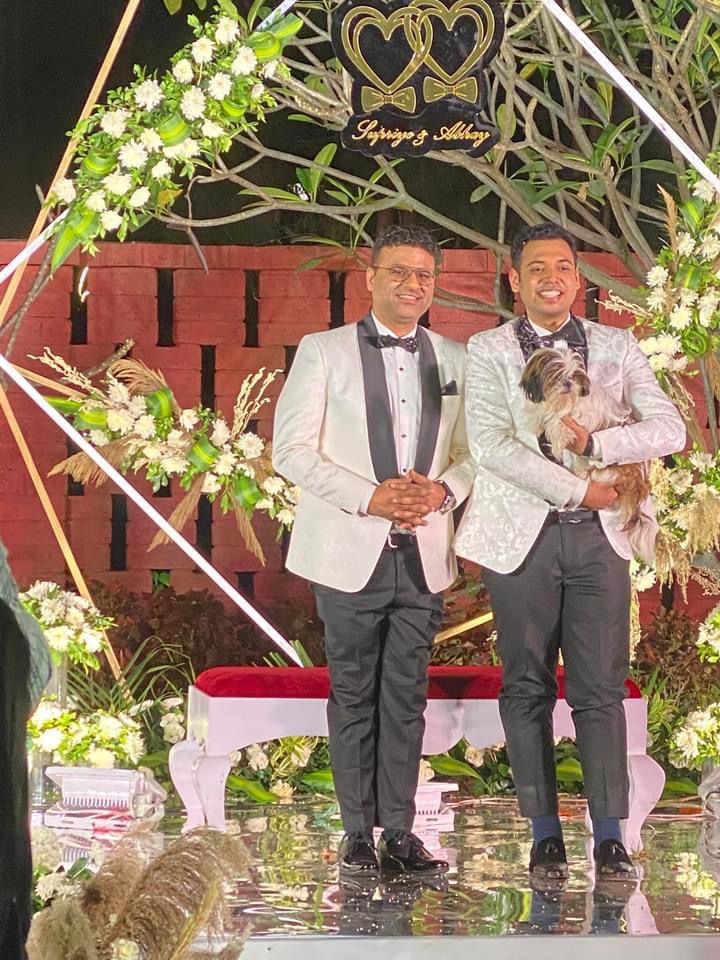
Telangana’s first gay wedding

Swati Sucharita was there at Telangana’s first gay wedding or their ‘promising ceremony’ as hospitality professional Supriyo Chakraborty and software developer Abhay Dang would prefer calling it. She presents to us a firsthand account of the ceremony, and how crucial the event stands to be in the landscape of gender politics in India.

At first look, it resembled just about any big, fat Indian wedding, held outdoors at a resort in Hyderabad’s suburbs on a pleasant December afternoon. However, it ended up being perspective-altering in its takeaways. To begin with, it was the first gay wedding I was attending, but it didn’t feel any different. This was true right from the time I had received the elegantly designed invite card. It could be perhaps because I knew my host Supriyo Chakraborty as one of the gentlest and nicest human being, with a sensitive bend of mind and creativity to boot.  
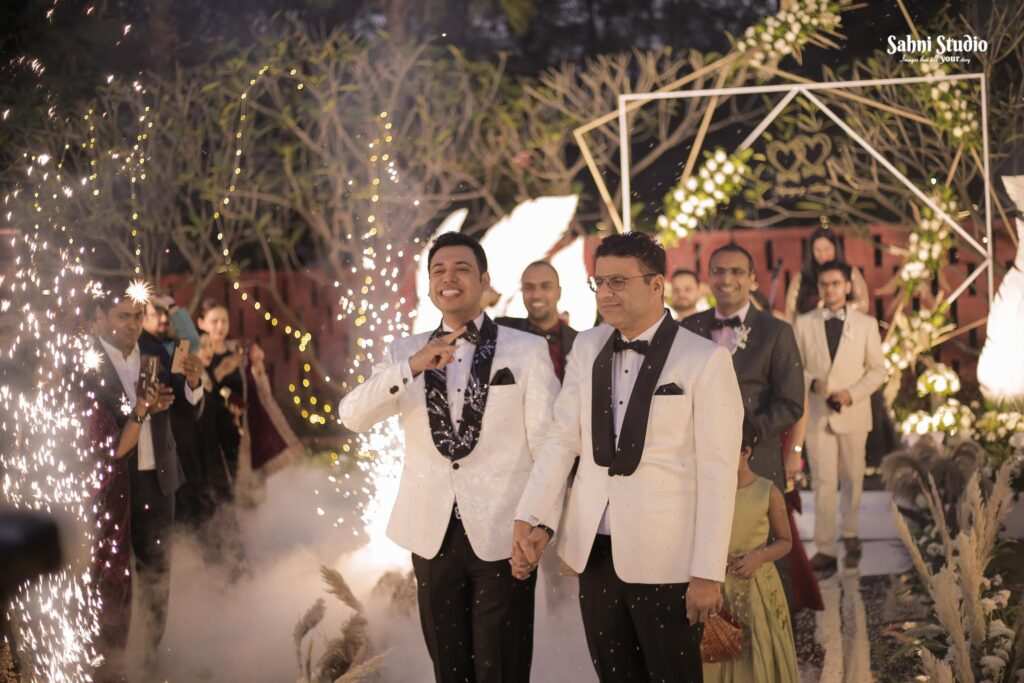
All his bong creativity was on display from the word go, right from the flower-bedecked entrance and podium from which the couple – his live-in partner of nine years Abhay Dang and him – were to take their wedding vows, to the little bag containing a tiny bell to be rung when the couple declared their vows, and some grains of rainbow-colored rice to shower on the duo post the ceremony when the couple would walk down the aisle. Since gay weddings are yet to be legalized in India, the welcome boards called it a ‘promising ceremony.’
 Suprio Chakraborty  and  Abhay Dang  

I had missed the sangeet and mehndi ceremony the previous evening, so I was keen on reaching the venue in rather-distant Moinabad on time. Yes, there had been a proper Bollywood-styled band-baaja-baarat the previous evening, with a bit of Banglaina thrown in with the topor – the head gear worn by the bride and groom in traditional Bengali weddings.

Assembled was a small but meaningful gathering, consisting of family – including the couple’s parents – and friends, as well as colleagues from either side. In fact, it felt very normalized to see that there were children too, adding to the inclusive feel around the wedding festivities
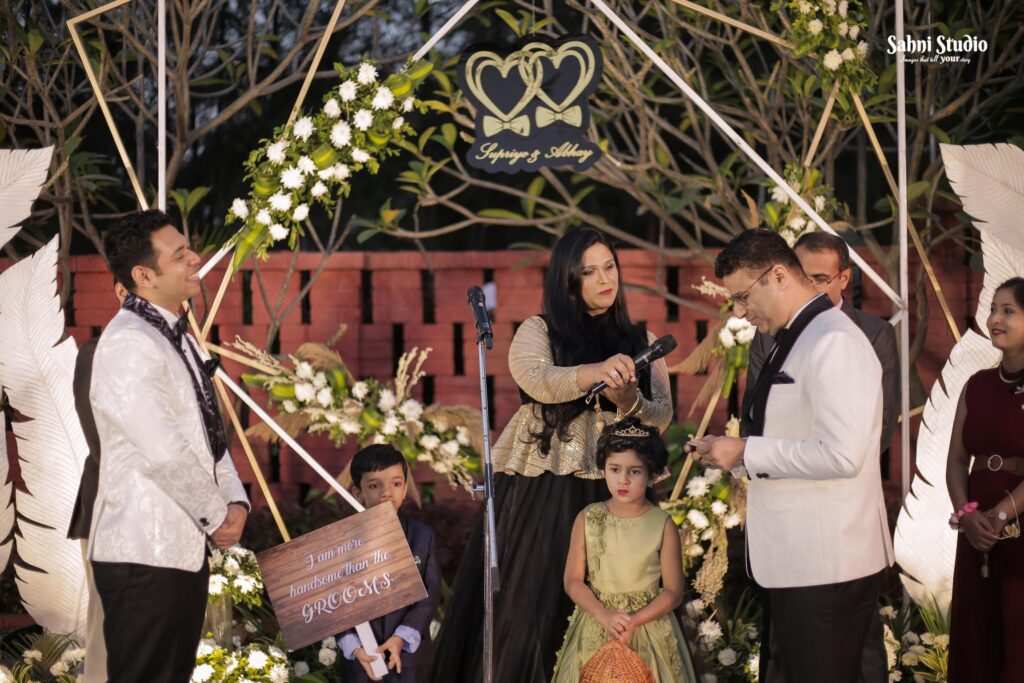
 Promising Ceremony : Suprio Chakraborty  ( on the left) and  Abhay Dang  with Sophia David( in the middle) a trans woman who officiated the vows.

Officiating the ceremony was the extremely inspiring Sophia David, leader-coach, IT consultant and facilitator. A trans woman herself, she won everyone’s admiration with her anchoring skills, keeping a firm hand on both the flow and tenor of the evening’s proceedings. The vows were made, the declarations of loving and looking after each other in health and sickness were announced and they were pronounced husband and husband, to a cheering and applauding gathering. Fireworks, music, and dance followed, along with raising a toast to the couple, with much happiness all around.
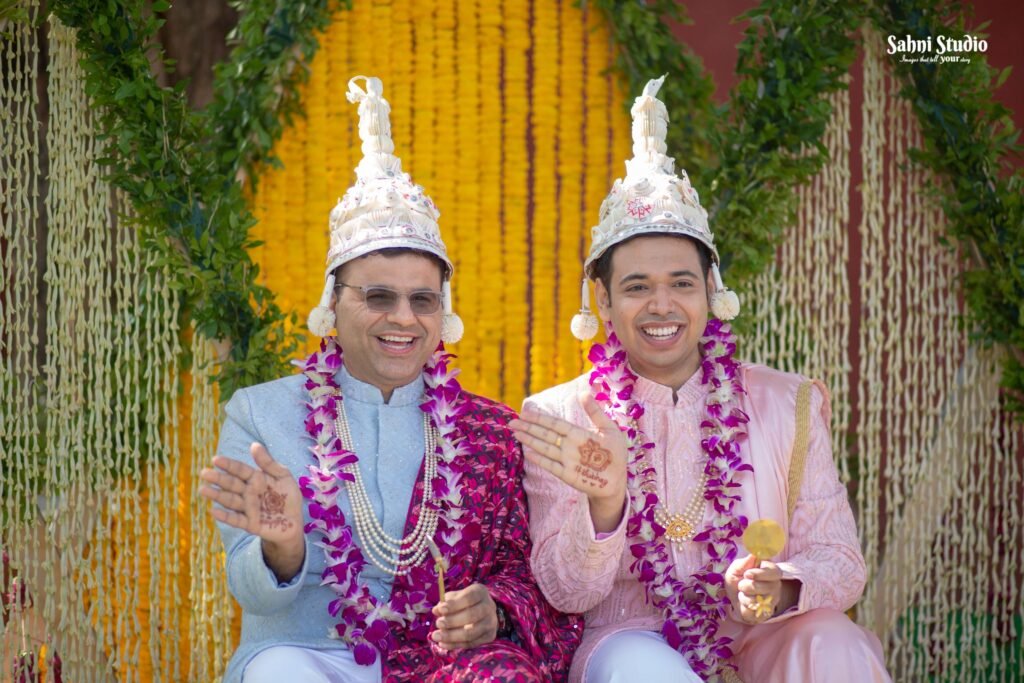
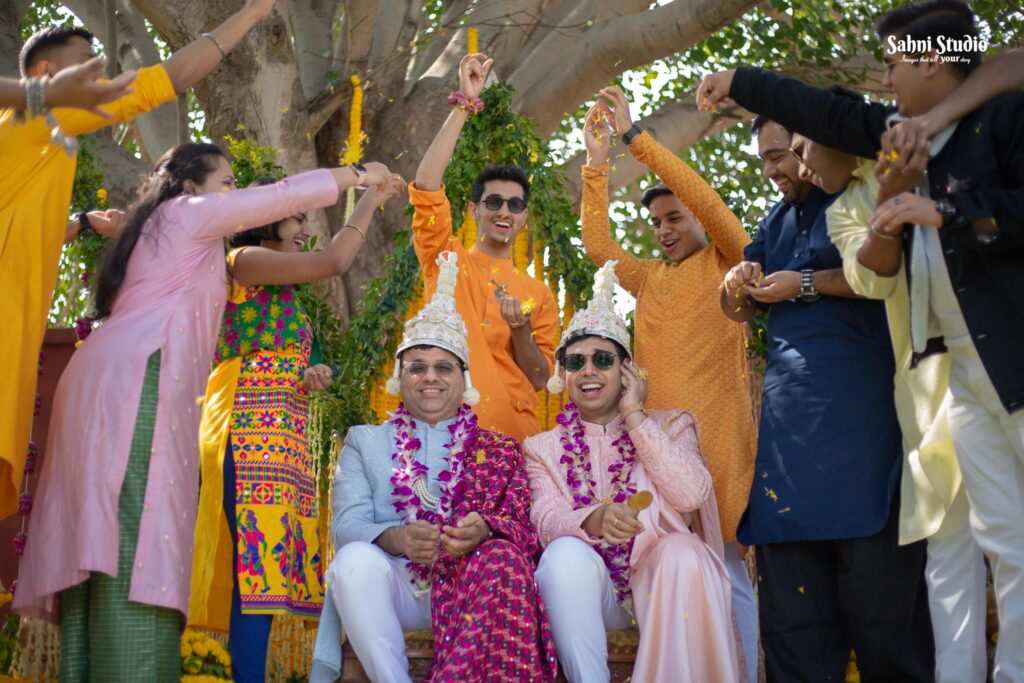
 Abhay (on left) & Suprio (on right) wearing Topor the headgear sported by bride & groom in traditional Bengali weddings 

Leave a comment

Your email address will not be published. Required fields are marked *

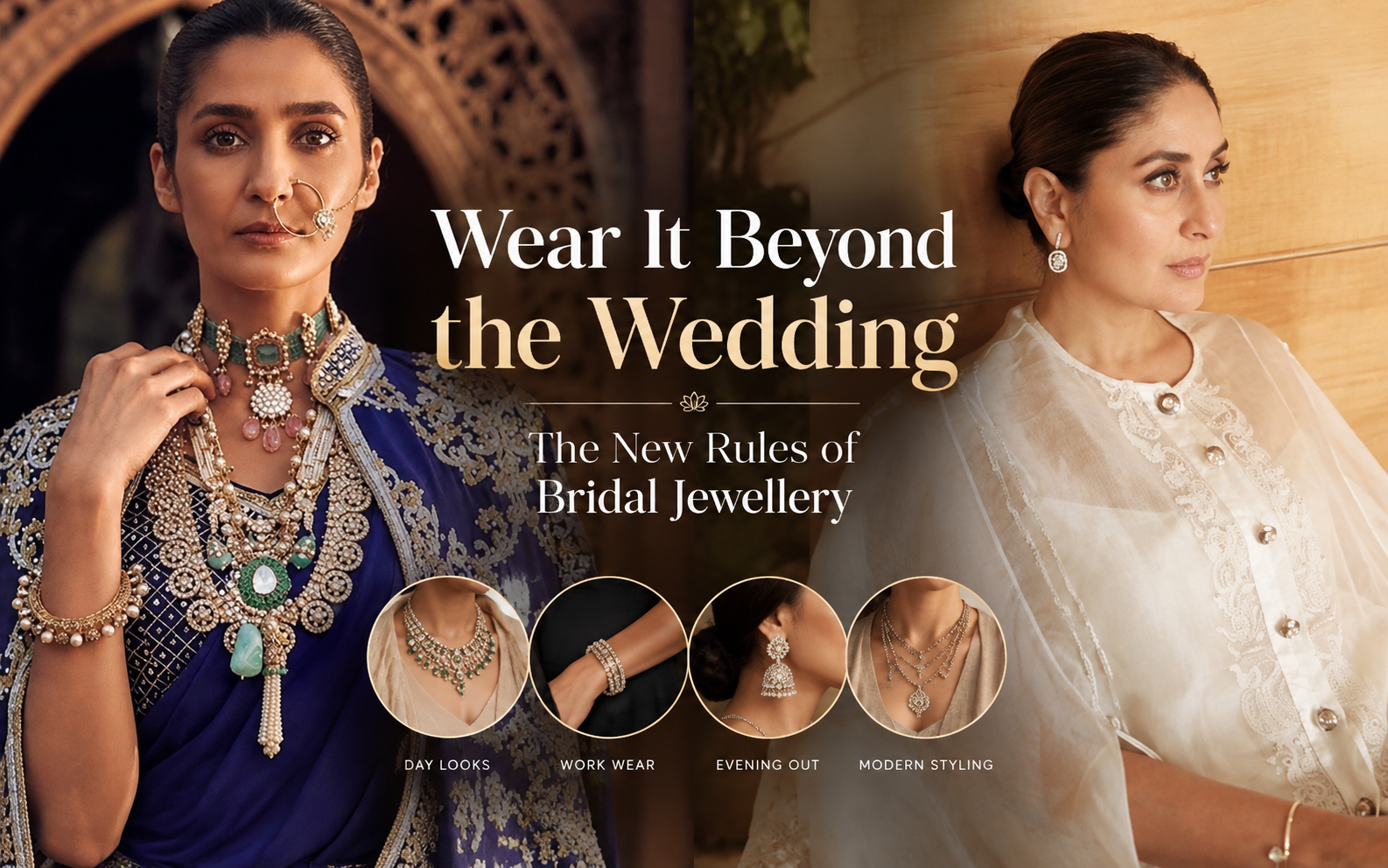
Wear It Beyond the Wedding: The New Rules of Bridal Jewellery

Mohar Jewels, the Mumbai fine jewellery house founded by Nakul and Priyanka Jain and rooted in a three-generation legacy of gemstones and craftsmanship, sees 2026 bridal jewellery becoming more personal, versatile and made to be worn long after the wedding. Here, the brand shares the trends brides are turning to, from coloured gemstones to detachable polki. Bridal Jewellery Trends 2026Bridal jewellery is becoming more personal, versatile and expressive. Brides are moving beyond jewellery worn only on the wedding day and want pieces that become part of their wardrobe for years. Coloured gemstones, particularly emeralds, rubies and sapphires, are gaining importance alongside classic diamonds and polki, adding colour and individuality. There’s also growing interest in refined layering, detachable pieces and jewellery that can be styled in multiple ways across celebrations. Compared to 2025, when statement sets and traditional silhouettes were still dominant, 2026 is more considered: brides are mixing heritage-inspired elements with contemporary silhouettes rather than committing to one uniform look. Balancing Tradition and PersonalityThe balance comes from respecting the craft while letting the design evolve. Traditional elements like polki, diamonds and coloured gemstones are presented through cleaner silhouettes, unexpected combinations and contemporary proportions, such as classic polki and emerald pieces alongside baguette diamonds, unusual gemstone cuts and more minimal designs. The modern bride wants jewellery that feels like an extension of her personality, not something chosen purely because it’s traditional. The idea isn’t to choose between heritage and modernity, but to make the two coexist in one piece. Dressing Every Celebration Each celebration has its own mood, and jewellery should complement it rather than compete. For daytime functions like haldi and mehendi, think lighter, versatile pieces: delicate polki chains, gemstone earrings, refined bracelets and rings that can be layered, plus detachable polki necklaces. For grand evening receptions, jewellery turns dramatic,

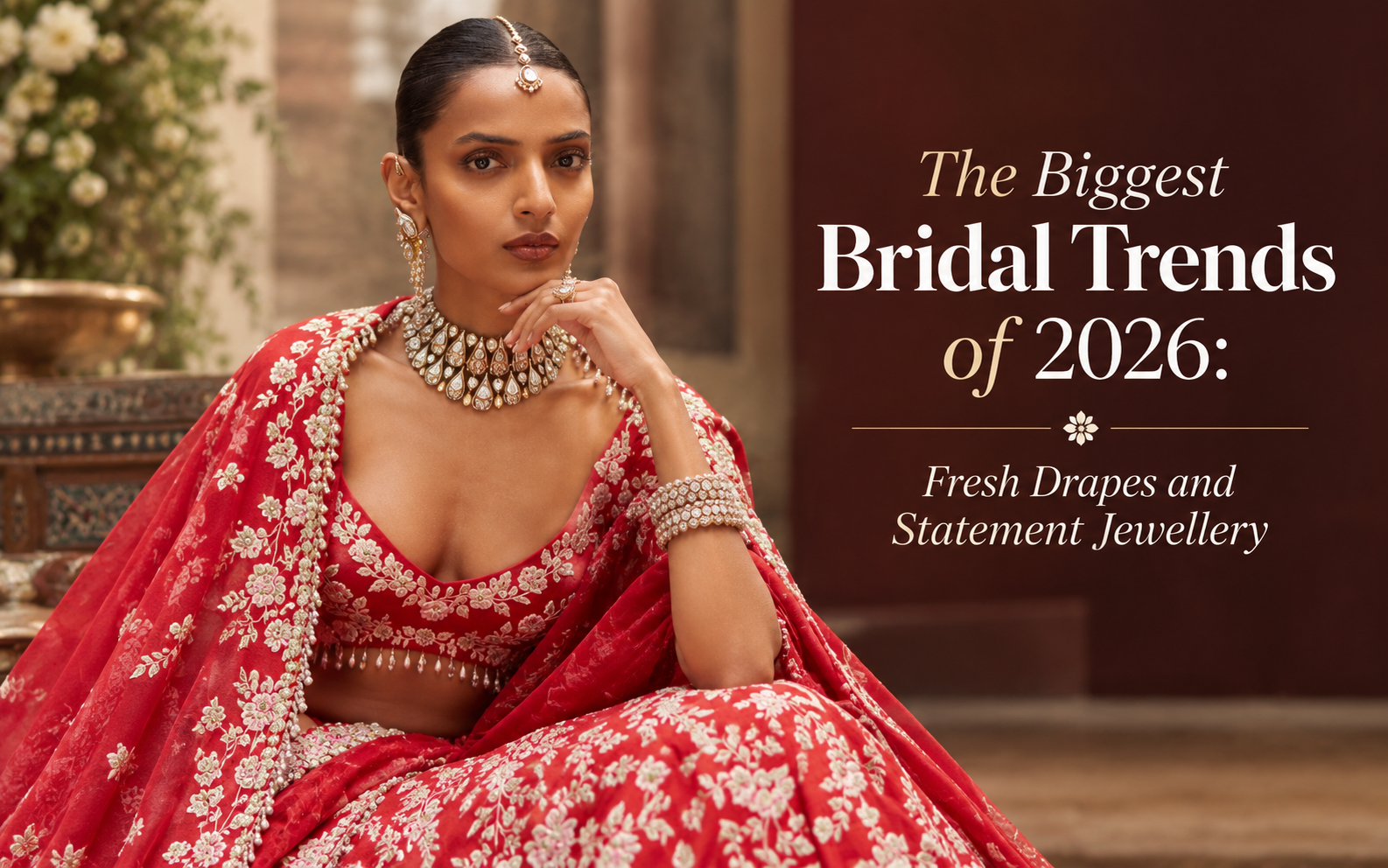
The Biggest Bridal Trends of 2026: Fresh Drapes and Statement Jewellery

What are the three biggest bridal trends you predict will dominate 2026? For me, it’s the reimagining of the drape, the beauty of crafts like chikankari and lace, and a much stronger focus on jewellery. Whether it’s a traditional necklace from our High Jewellery or a contemporary ear cuff that can completely change the feel of an outfit. I think we’ll see the sari and different interpretations of the drape becoming a big part of bridalwear again. There is something so timeless about it, but there are endless ways to make it feel fresh and personal. Which colours and fabrics are going to be particularly relevant? I see a beautiful mix. Ivory and soft pastels continue to feel very relevant, but I also see deeper jewel tones, wine, garnet and unexpected blues becoming important. In fabrics, I love organza, tissue, lace and chiffon for their lightness and movement, balanced with richer silks and velvets. What interests me most is mixing textures rather than allowing one fabric to dominate the entire look. What is one bridal fashion choice you think women should avoid? Wearing something simply because it is trending. Your wedding photographs stay with you forever, and the most beautiful brides are always the ones who still look like themselves. Experiment, absolutely, but don’t allow the outfit to wear you. How should couples approach the challenge of dressing for multiple wedding events without making every look feel repetitive? I always look at a wedding wardrobe as a story. If the wedding is traditional, perhaps the sangeet becomes more glamorous and experimental, the mehendi lighter and playful, and the reception sharper and more contemporary. Change the silhouette, colour, texture and jewellery rather than simply changing the outfit. Every event should reveal another side of you, but together they should still feel

Prince Cecil Decodes the Perks & Challenges of a Destination Wedding

Actor Prince Cecil married Sai Machiraju in an intimate, 80–100 guest wedding in New Zealand, her home country, on August 24. In an exclusive with Hashtag Magazine, he breaks down what nobody tells you about planning a wedding away from home. The Perks An intimate celebration: New Zealand as our destination wedding was special because my wife, Sai Machiraju, is from there. But the thing about destination weddings is you have to keep it very private, like close-knit. I think just 80-100 people attended our wedding. Core memories that last: Destination weddings create core memories that stay lifelong. Our post-wedding pics in the snow, flying down from a helicopter, were just two happy people who wanted to capture our love. The couple even shot part of their album at Cecil Peak, a nod to his name. It was pretty cold, but it felt like a Classic Bollywood moment; at least I was covered in a sherwani, and my wife was in a saree. The right team makes the difference: There are a lot of challenges in planning a destination wedding: admin for travel, tickets, food, stage, clothes, logistics. They were quite major, but having a great team, management and a limited crowd was a huge plus. The Challenges Not everyone can make it: Someone close wants to attend it badly, but life, work commitments and the distance meant they had to skip it. That’s one of the hardest parts, missing someone you desperately want there on your special day. You can’t control the weather: The night before their outdoor ceremony, it rained heavily. We were so tensed and worried about how we’d manage, and checking for last-minute backup options. Planning can get chaotic: Coordination outside your space, managing things as per our customs and rituals, is so hard. Everything was

RAMAYANA: THE EPIC REIMAGINED

Ramayana: The Epic Reimagined is shaping up to be one of Indian cinema’s most ambitious productions, bringing together a star-studded cast and an international creative team. From its two-part format and reported ₹4,000-crore budget to its cutting-edge visual effects and global release plans, here are 10 things to know about the epic cinematic spectacle. 1.Two films, one epic Ramayana is planned as a two-part cinematic project. The first instalment is scheduled for release during Diwali 2026, with the second chapter planned for Diwali 2027. The films are directed by Nitesh Tiwari and produced by Namit Malhotra. Ranbir Kapoor has revealed that the team shot around six hours of footage for the first film before editing it down. A Chinese listing reportedly indicates a runtime of about 166 minutes for Part One. 2.Ranbir Kapoor as Rama: The first choice Ranbir Kapoor plays Lord Rama, amid years of speculation over other names. Mahesh Babu, Hrithik Roshan and Ram Charan were among the actors linked to various versions of the project. However, director Nitesh Tiwari and producer Namit Malhotra have clarified that Ranbir was always their first choice for their current Ramayana. Tiwari cited his physicality, screen presence and ability to convey emotion through his expressions. Interestingly, Yash, who plays Ravana, was also reportedly considered for Rama before taking on the antagonist. 3.Sai Pallavi is Sita Sai Pallavi plays Sita opposite Ranbir Kapoor’s Rama. The role marks a major Hindi-film project for the acclaimed South Indian actor and adds another prominent South Indian star to the cast alongside Yash. 4.A large ensemble cast An extensive ensemble supports the three leads. Sunny Deol plays Hanuman, Ravi Dubey plays Lakshman, Arun Govil plays Dasharath, Lara Dutta plays Kaikeyi, Indira Krishnan plays Kausalya, Kajal Aggarwal plays Mandodari, Rakul Preet Singh plays Shurpanakha, Kunal Kapoor plays Indra

You May Also Like

Connect with us