
The Youth Sensation, Tara Sutaria!

Tara Sutaria makes a spellbinding return to the silver screen in her latest release Tadap. Tapasvi Vibhute catches up with one of the most recognisable faces of the industry to have a candid chat about her latest release, her experience in the industry, and more!

An actor who has successfully carved a niche for herself right from the day when she stepped into the industry, Tara Sutaria is gearing up to be a force to be reckoned with. Since her debut with Student of the Year 2, she has been on a spree of signing projects one after the other and is today a prominent and recognizable face of the industry. The actress, who started her career with Oye Jassie and The Suite Life of Karan & Kabir, is the primary choice for several filmmakers casting their leading lady on-screen. 

We roped in the petite starlet for an exclusive conversation wherein she spilled the beans about her recently released film Tadap, working with a newcomer like Ahan Shetty, her journey of 3 years, and more!
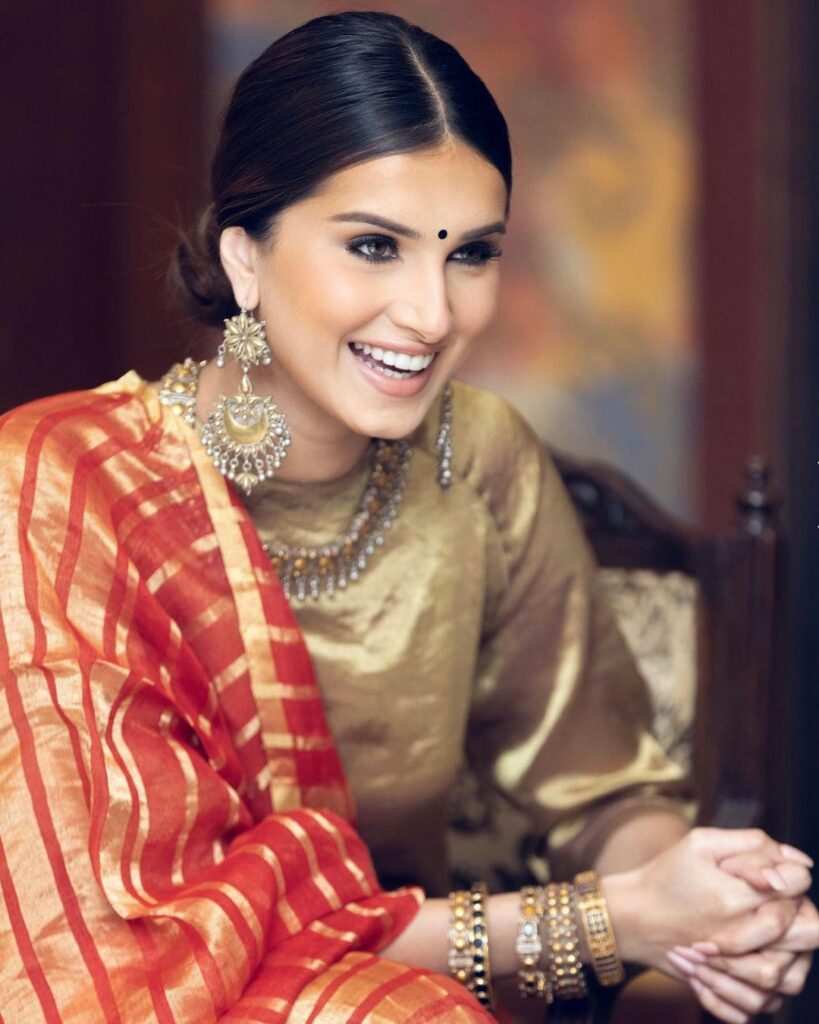
Tara’s motto: “Do that which makes me happy.”

With Ahan Shetty being a debutant in Tadap, did you get a chance to showcase your seniority?

(Laughs) No, nothing like this happened. No one is a senior; we are of the same age. I have hardly been a part of a couple of films in these last 3 years, so I don’t think I am eligible to advise someone at this stage.

Your career had just taken off when the pandemic hit. What was your reaction? How did you spend your lockdown?

I was anxious and nervous, but that’s part and parcel of the same. In order to make my lockdown a bit more productive, my sister and I took some important dance lessons. We also cooked together and did everything that helped us keep ourselves sane.

We have grown up watching Suniel Shetty and you have now worked with his son Ahan Shetty. Are there any similarities you can list between the father-son duo?

There are many similarities but also there are also many differences that make Ahan unique. Mainly, his vulnerability and his sensitivity, which is seen on the screen as well. 

How was your first meeting with Ahan? And what was your first talk about?

We met at Sajid Nadiadwala’s office before I signed the film, and Ahan was already on the board. We were asked to read a scene from the movie The Dirty Picture.

“Having a great support system is very important and a blessing in disguise.”

You are known to be a very good singer. Why didn’t you take this forward?

I’m singing in my next film Ek Villain Returns. I can’t wait for those songs to go on-air and the kind of reaction it will get from the audience. 

Given your background, we know you are a great dancer. How much would you rate co-star Ahan on his dancing skills?

I don’t think so I can rate him, as we haven’t danced a lot in the film. We were shooting in Rishikesh for a song, but it was more like lifting and very simple and fun steps. He did a couple of difficult lifts in the song which required a lot of practice. According to me, he is a very good dancer. 

Everyone emphasizes more on physical fitness. What do you do for your mental well-being and fitness?

It is the most important aspect, and we should support ourselves personally to maintain our mental well-being. Having a great support system is very important and a blessing in disguise. The ones whom we can easily rely on – for example, our parents, friends, and close ones –who are warm, genuine and, supportive and stand by our side like a rock when we need them in crises are important.

What do you think about social media?

I think being real and being myself is much more important. ‘Do that which makes me happy,’ and that’s the reason why I am not active on social media. Although it’s a great platform, for someone like me I would prefer things that make me mentally happy and help in my overall growth.


Leave a comment

Your email address will not be published. Required fields are marked *

Prince Cecil Decodes the Perks & Challenges of a Destination Wedding

Actor Prince Cecil married Sai Machiraju in an intimate, 80–100 guest wedding in New Zealand, her home country, on August 24. In an exclusive with Hashtag Magazine, he breaks down what nobody tells you about planning a wedding away from home. The Perks An intimate celebration: New Zealand as our destination wedding was special because my wife, Sai Machiraju, is from there. But the thing about destination weddings is you have to keep it very private, like close-knit. I think just 80-100 people attended our wedding. Core memories that last: Destination weddings create core memories that stay lifelong. Our post-wedding pics in the snow, flying down from a helicopter, were just two happy people who wanted to capture our love. The couple even shot part of their album at Cecil Peak, a nod to his name. It was pretty cold, but it felt like a Classic Bollywood moment; at least I was covered in a sherwani, and my wife was in a saree. The right team makes the difference: There are a lot of challenges in planning a destination wedding: admin for travel, tickets, food, stage, clothes, logistics. They were quite major, but having a great team, management and a limited crowd was a huge plus. The Challenges Not everyone can make it: Someone close wants to attend it badly, but life, work commitments and the distance meant they had to skip it. That’s one of the hardest parts, missing someone you desperately want there on your special day. You can’t control the weather: The night before their outdoor ceremony, it rained heavily. We were so tensed and worried about how we’d manage, and checking for last-minute backup options. Planning can get chaotic: Coordination outside your space, managing things as per our customs and rituals, is so hard. Everything was

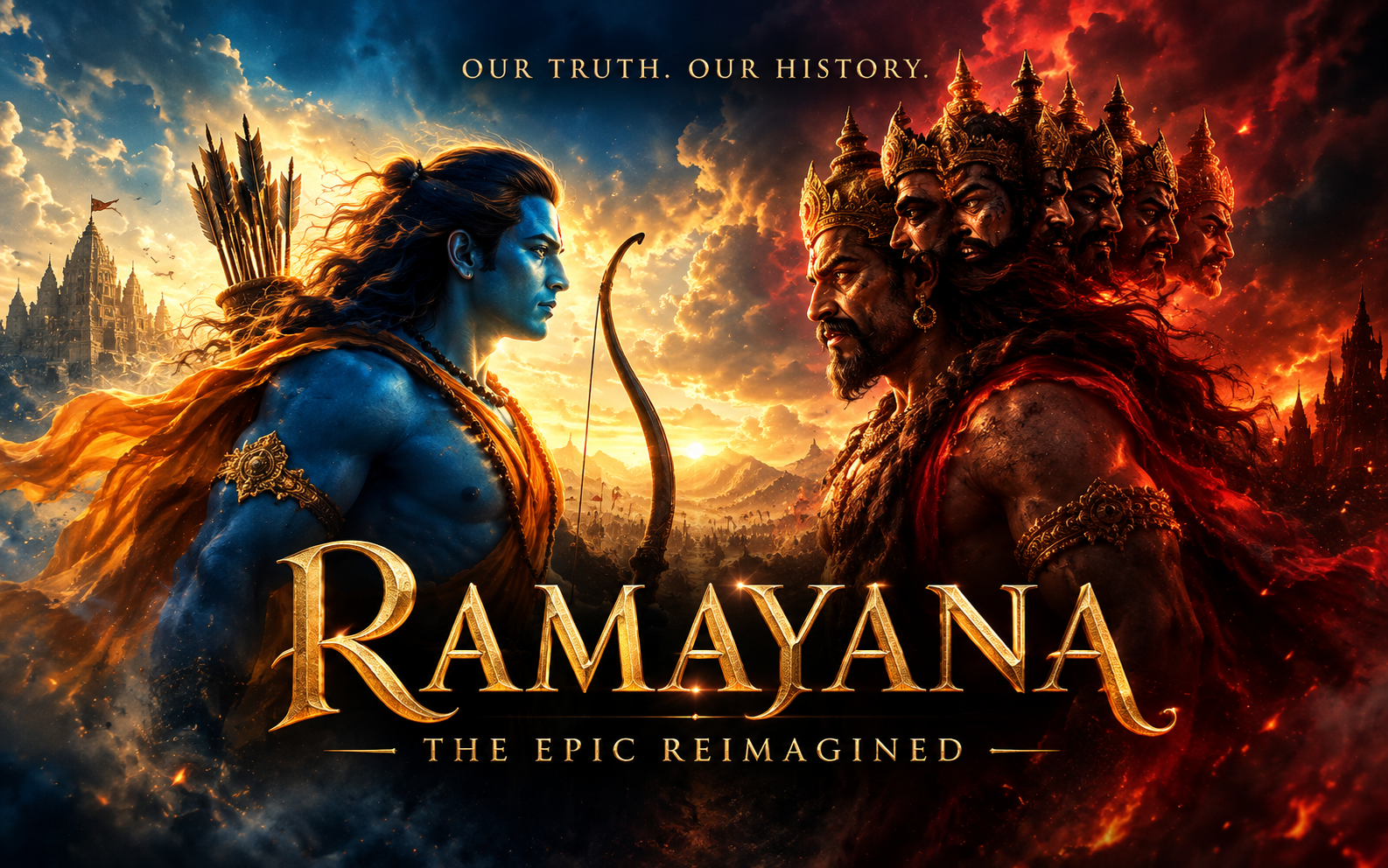
RAMAYANA: THE EPIC REIMAGINED

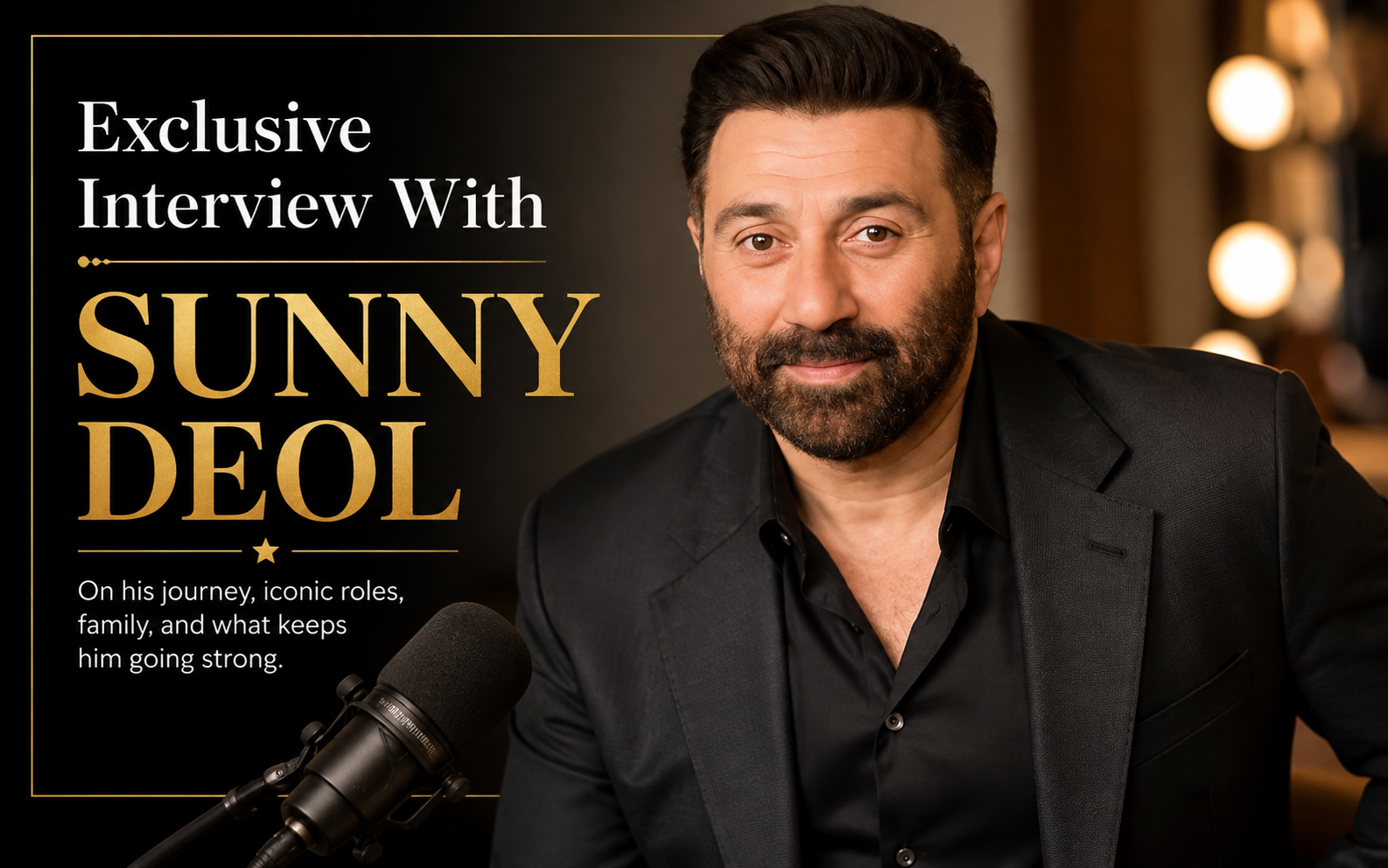
Ramayana: The Epic Reimagined is shaping up to be one of Indian cinema’s most ambitious productions, bringing together a star-studded cast and an international creative team. From its two-part format and reported ₹4,000-crore budget to its cutting-edge visual effects and global release plans, here are 10 things to know about the epic cinematic spectacle. 1.Two films, one epic Ramayana is planned as a two-part cinematic project. The first instalment is scheduled for release during Diwali 2026, with the second chapter planned for Diwali 2027. The films are directed by Nitesh Tiwari and produced by Namit Malhotra. Ranbir Kapoor has revealed that the team shot around six hours of footage for the first film before editing it down. A Chinese listing reportedly indicates a runtime of about 166 minutes for Part One. 2.Ranbir Kapoor as Rama: The first choice Ranbir Kapoor plays Lord Rama, amid years of speculation over other names. Mahesh Babu, Hrithik Roshan and Ram Charan were among the actors linked to various versions of the project. However, director Nitesh Tiwari and producer Namit Malhotra have clarified that Ranbir was always their first choice for their current Ramayana. Tiwari cited his physicality, screen presence and ability to convey emotion through his expressions. Interestingly, Yash, who plays Ravana, was also reportedly considered for Rama before taking on the antagonist. 3.Sai Pallavi is Sita Sai Pallavi plays Sita opposite Ranbir Kapoor’s Rama. The role marks a major Hindi-film project for the acclaimed South Indian actor and adds another prominent South Indian star to the cast alongside Yash. 4.A large ensemble cast An extensive ensemble supports the three leads. Sunny Deol plays Hanuman, Ravi Dubey plays Lakshman, Arun Govil plays Dasharath, Lara Dutta plays Kaikeyi, Indira Krishnan plays Kausalya, Kajal Aggarwal plays Mandodari, Rakul Preet Singh plays Shurpanakha, Kunal Kapoor plays Indra

Exclusive Interview: Nikhil Siddhartha on Swayambhu, Family and Politics

After the pan-India success of Karthikeya 2, Nikhil Siddhartha finds himself at a pivotal phase in his career. The actor is currently gearing up for the release of Swayambhu, one of the most ambitious projects he has undertaken to date, a historical action drama that demanded nearly two-and-a-half years of dedication, extensive physical transformation, and months of post-production work. In a candid conversation with Priyanka Goud, Nikhil opens up about the challenges of mounting a large-scale period film, why he prioritises quality over quantity, how fatherhood has changed his outlook on life, and his belief in using cinema as a tool for social awareness. A Two-and-a-Half-Year Commitment Describing Swayambhu as a project unlike any other in his career, Nikhil revealed that he dedicated nearly two and a half years exclusively to the film.“Some films are easy to make, and some are difficult. Swayambhu falls into the category of films that demand complete commitment. I underwent a significant transformation for the role, growing my hair long, maintaining a specific physique, and immersing myself in the character and story throughout the production period,” he said. A Historical Story with Universal Appeal One of the aspects that attracted Nikhil to Swayambhu was its historical backdrop. Nikhil plays Krishnan Raman, a historical figure whose name appears on ancient copper plate inscriptions that have recently gained attention. “This story is rooted in history, but its themes are universal,” he said. “It’s not confined to one region; audiences across India will be able to connect with it.” The actor also highlighted the growing importance of visual effects in modern filmmaking. Swayambhu reportedly contains nearly 2,700 VFX shots, making post-production one of the most demanding phases of the project. “We completed principal photography in December 2025, but for the last five to six months it has been

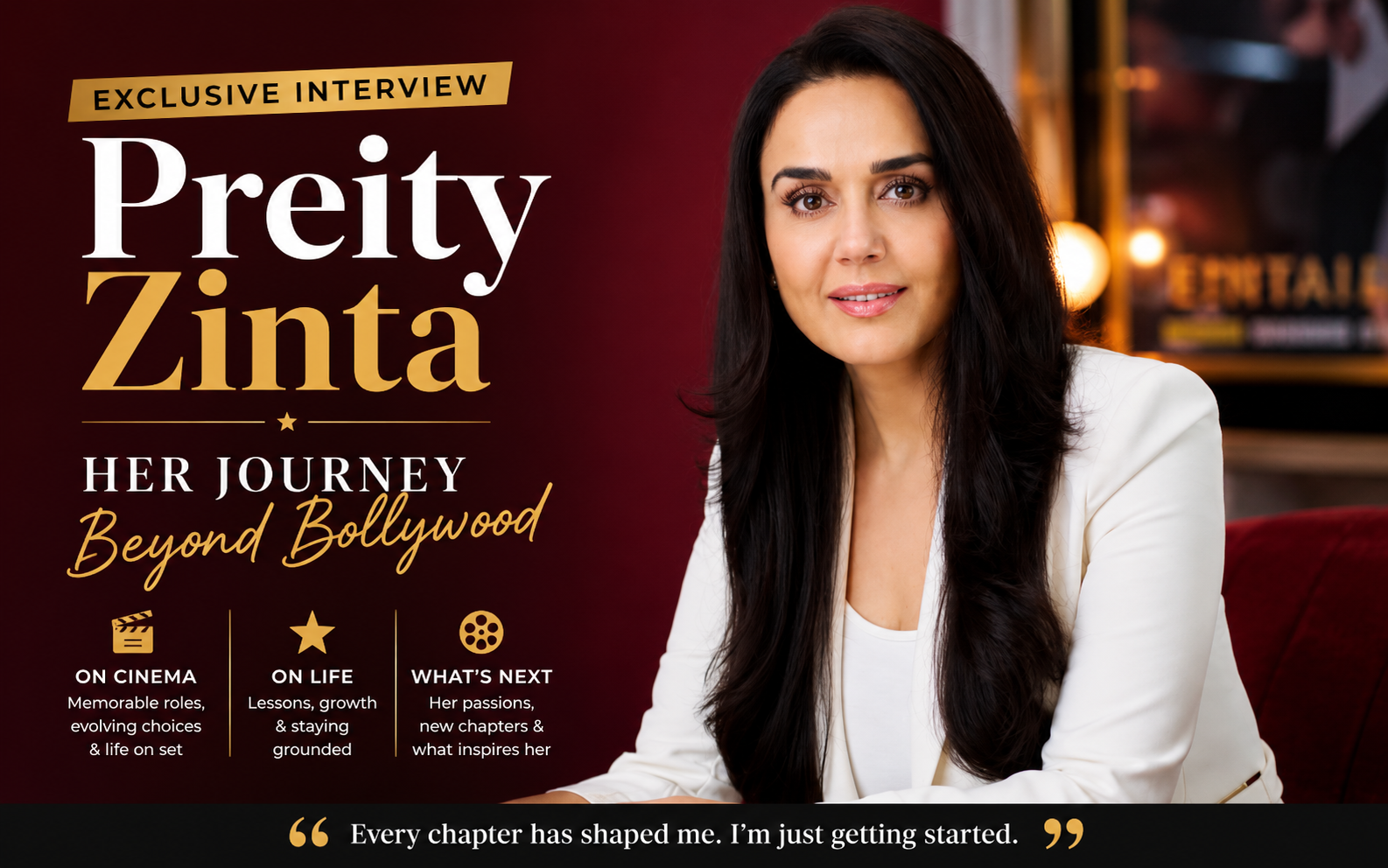
Preity Zinta on Batwara 1947, Motherhood and Finding Her Way Back to Cinema

For Preity Zinta, returning to the screen with Batwara 1947 is about more than making a comeback. The period drama allowed her to explore a chapter of India’s history, work with director Rajkumar Santoshi for the first time, and step into a world far removed from her own. But the film also made her reflect on how much life has changed since she began her career, from the freedoms available to women today to the perspective that comes with becoming a mother. For Zinta, Batwara 1947 is ultimately a story about family, resilience and hope, as she tells Lipika Varma in an exclusive conversation. Why did you say yes to doing this film? What touched you the most? There were a couple of things. First, I really wanted to work with Raj ji. I had never worked with him before, so working with him was always on my bucket list. I had also always wanted to do a period film. Beyond that, I genuinely loved the story. What touched me most was that even in the darkest of times, there is always a ray of hope. People may see this as a story about two countries, but for me, it is essentially about a family. I was also deeply affected by stories of families who believed they were leaving their homes temporarily, even burying their jewellery and valuables, thinking they would return. They never imagined they would lose everything forever. Since this is my first period film, I spent time researching and understanding that era. After such a long break from films, why did you choose this project? I was enjoying my personal life, focusing on my family and raising my children. Professionally, I had always wanted to work with Raj ji and also wanted to do a period film.

You May Also Like

Connect with us