
5G – The Latest Network

5G - The Latest Network - Hashtag Magazine

5G – the fifth generation of cellular network technology – is finally making its way to India after much hype and delays over the last two years. A 5G spectrum auction was held from July 26th to August 1st, 2022, and after 40 rounds of bidding, a total of 51.2 GHz of spectrum out of 72 GHz was sold among four applicants Reliance Jio, Airtel, Vodafone Idea (VI), and Adani Data Networks Limited for a total of Rs. 1.5 lakh crore, with Reliance Jio acquiring the maximum spectrum of 24.7 GHz by spending Rs. 88,078 crores. Following this news, it has been confirmed that the 5G will be released sooner than expected, but there are still many questions and confusion among people about 5G and its accessibility, so Aniket Pande from BlazeTechnica, gives you a lowdown of everything you need to know.

Do we need to get a new SIM card for using 5G?

Many people are wondering if they will need to get a new SIM card to access 5G, and the answer is both No and Yes. When it comes to constructing a 5G infrastructure, there are primarily two types of deployments: Standalone (SA) and Non-Standalone (NSA). NSA is a 5G radio access network that leverages existing 4G infrastructure to make our 4G SIM cards 5G ready. It also makes it easier for Mobile Network Operators to provide 5G access to the masses in a short period of time and lowers the cost of building a completely new infrastructure from the ground up. Currently, in India, all the Mobile Networks Operators will be sticking to the NSA technology, so getting a new SIM card is not required for now. However, NSA has some drawbacks, such as not supporting the core 5G functionality of 1ms low latency and requiring high power consumption because it has to power both 4G and 5G networks over a common infrastructure; as a result of these factors, we can expect a significant increase in the cost of mobile data plans. On the other hand, SA is not compatible with the existing 4G infrastructure as it is built on an entirely new architecture and requires a new SIM card, however, SA is very expensive to implement but it does bring all the perks and benefits of a true 5G network like 5G Network Slicing, Ultra-low latency etc., and in India, this is most likely to be adapted for business and commercial purposes only.

Which 5G Smartphone to buy?

There are two types of 5G: Sub-6 5G and mmWave 5G. Sub-6 5G operates on frequencies less than 6 GHz and can offer marginally faster speeds than 4G but has a wider coverage range, whereas mmWave 5G operates on frequencies between 24-52 GHz and can achieve very high speeds up to Gigabit per second but has a shorter coverage range. Currently, the primary focus in India is on Sub-6 5G. 5G bands acquired by Indian telcos include n71, n28, n5, n8, n3, n1, n40, n41, n78, n77, n79, and n258 and include all low and mid bands to ensure 5G connectivity reaches rural areas as well as tier 1 and tier 2 cities. For the last two years, 5G smartphones have been selling in the Indian market, and to ensure that a smartphone supports 5G in India, it should have an integrated 5G modem and support at least one of these bands; however, it is ideal to have at least eight 5G bands to ensure seamless connectivity across the country.

When is 5G rolling out?

The biggest question on everyone’s mind right now is when we will be able to access 5G on our smartphones. Currently, 5G services are expected to roll out in Tier 1 regions such as metropolitan cities by September or later, but because this is an initial rollout, it will take some time for a widespread rollout, and Tier 2 and Tier 3 cities will only be able to experience 5G by 2023 or 2024.


Leave a comment

Your email address will not be published. Required fields are marked *

Top Dashcam and Car Safety Tech Products Every Driver Should Have in 2026

Best dashcams and car safety tech every driver needs in 2026, from AI collision alerts to tyre monitors. Drive smarter, drive safer. Think about the last time you were on a highway at night. Trucks overtaking from the left. Potholes with no warning signs. Someone running a red light at a junction you thought was clear. Indian roads are not forgiving. They are among the most unpredictable in the world, and that is not an exaggeration. In 2024, India recorded over 1.7 lakh road accident deaths, which is roughly one every three minutes. But here is what is changing. In 2026, the technology available to ordinary drivers, not just luxury car owners, is genuinely remarkable. Dashcams that record everything and call for help automatically. Tyre sensors that warn you before a blowout happens. Blind spot monitors: systems that keep you awake on long drives. Viofo A229 Pro 3-Channel If there is one dashcam built for Indian road reality, this is it. The Viofo A229 Pro covers three angles simultaneously: front, rear, and the cabin interior. So whether someone rear-ends you, you have a dispute at a toll booth, or a passenger causes trouble, it is all on record. The 4K front camera footage is clear enough to read number plates even at night. And night is when most serious accidents happen on Indian highways. The Sony STARVIS 2 sensor inside handles low light better than most cameras twice the price. It also has built-in GPS, which stamps your exact location and speed onto every clip, making it incredibly valuable as evidence in insurance claims or legal disputes.The parking mode is genuinely useful too. Park on a busy street, and if anyone bumps your car or breaks in, the camera wakes up and records it. In cities like Bengaluru and Mumbai,

How PMS Portfolios Perform During a Market Crash | Risk Management Guide

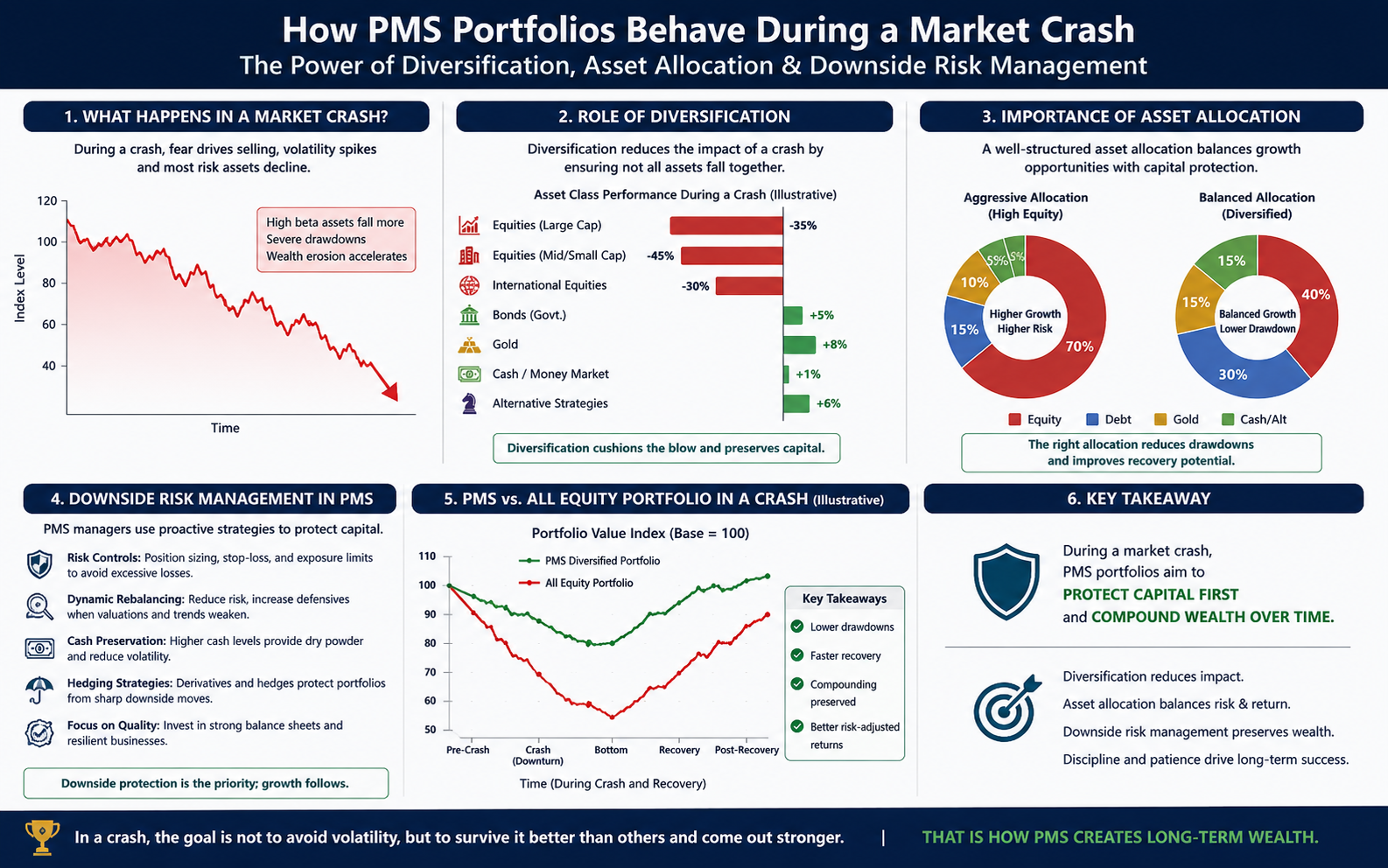
Market crashes are the ultimate stress test for any investment strategy. While returns dominate conversations during bull markets, it is during downturns that the true structure and resilience of a PMS portfolio become visible. Many investors assume that all portfolio management services portfolios behave similarly in a crash. In reality, outcomes can vary significantly depending on how the portfolio is constructed. 1. What a Traditional PMS Looks Like A traditional equity PMS is typically built as a concentrated portfolio of 15–30 individual stocks. This structure is intentional: Managers aim to generate alpha through high-conviction bets Capital is allocated meaningfully to each idea Diversification is limited compared to mutual funds However, during a market crash, this concentration becomes a double-edged sword. What happens in a crash? If a few key holdings fall sharply, the overall portfolio can decline disproportionately Single-stock risk gets amplified Liquidity issues in mid and small caps can worsen drawdowns For example, if a PMS holds 20 stocks and 3–4 of them fall 40–50%, the portfolio impact can be severe. This is the structure most investors picture when they think “PMS in a crash” — and it is also what has given PMS an unfair reputation for being high-risk by default. But concentration in direct stocks is a choice, not a requirement of the PMS structure. What sits inside the portfolio is what determines crash behaviour. 2. Not All PMS Portfolios Are Built the Same It is a common misconception that all PMS providers only buy direct stocks. In reality, a PMS is simply a personalized account managed by a professional. The strategy inside can vary wildly. While many providers stick to equities, others take a multi-asset approach. These providers build portfolios using a mix of mutual funds, direct bonds, gold, REITs (Real Estate Investment Trusts), and InvITs

Top Gaming Laptops That Can Handle Indian Summer Heat

April in Hyderabad, May in Delhi, and June in Chennai, you know what that feels like! The kind of heat that makes your phone hot just sitting on a table. The kind that turns a power cut into a genuine crisis. Now imagine gaming in that.Most laptops panic. The fans scream. The frame rates drop. The machine thermal throttles, which is a technical way of saying it gives up and slows down to stop itself from burning alive. But some laptops were built differently. Dhanush Kumar writes about the laptops that handle the heat, keep their cool, and let you game through an Indian summer without melting down. ASUS ROG Strix G16 If there is one laptop that truly understands Indian summer, it is this one. Asus put a Tri-fan technology system inside the ROG Strix G16, three fans working together, so no single part of the machine overheats. There are also liquid metal thermal compound pads on the CPU, which is a premium touch you usually only find on much more expensive machines. Even during long gaming sessions at room temperatures of 35 to 38 degrees, this laptop holds steady. Frame rates stay consistent. The keyboard doesn’t become a frying pan. The RTX 4070 inside pushes beautiful visuals in everything from BGMI to Cyberpunk. This is the one we would put our money on for an Indian summer. Lenovo Legion Pro 5i Gen 9 Lenovo’s Legion line has always been serious about thermal management, and the Pro 5i Gen 9 is their best effort yet. The Cold Front 5.0 cooling system uses a hybrid fan design with a bigger air intake. Translation: more cool air comes in, more hot air goes out, faster. What makes this special for India is how it handles dust. Indian summers come with dust.

Top AI Tools Everyone Must Use in 2026

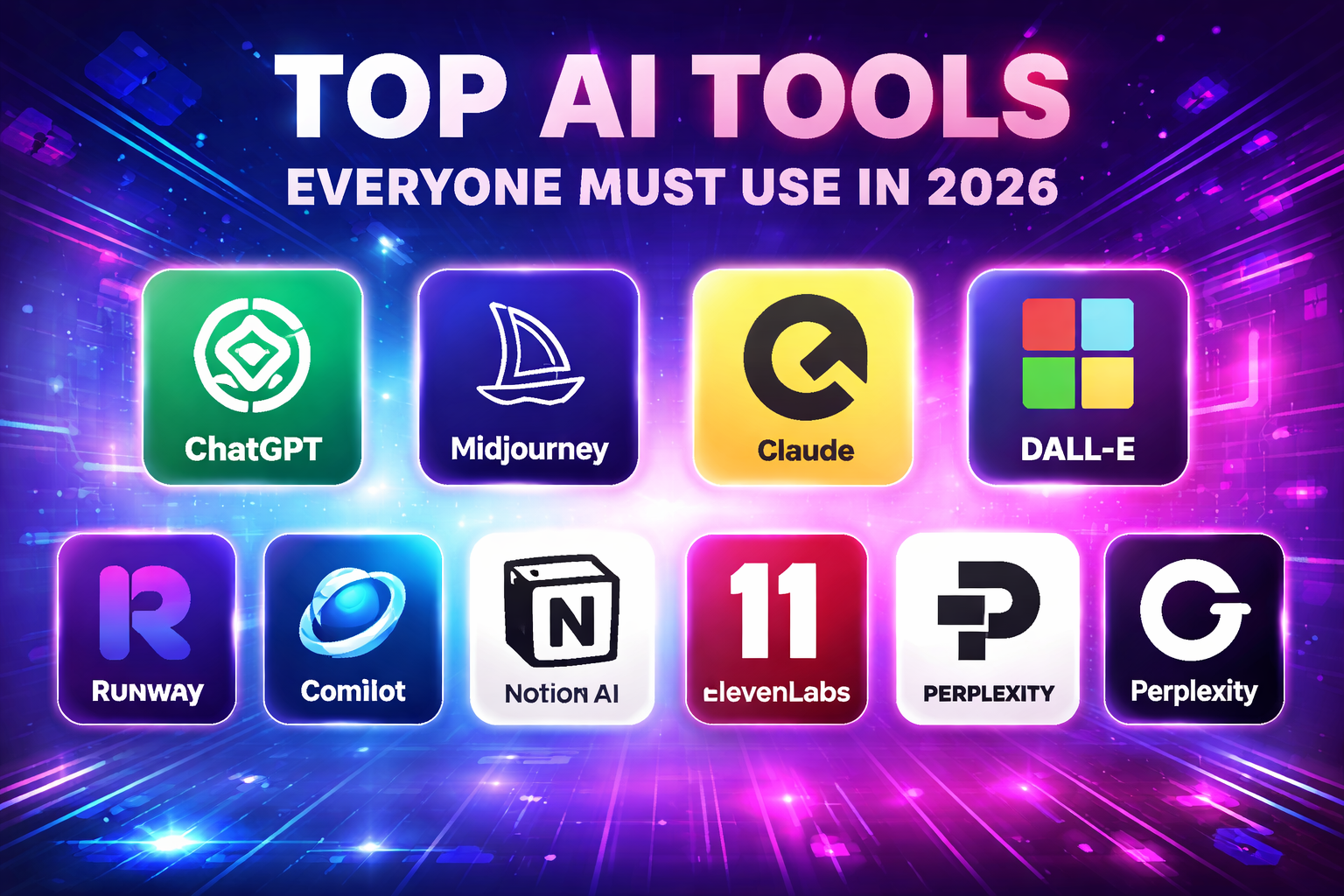
Artificial Intelligence is no longer limited to tech companies or programmers. In 2026, AI tools are becoming essential everyday companions for students, professionals, entrepreneurs, designers, and content creators. From writing emails and designing visuals to coding software and researching complex topics, AI-powered platforms are transforming how we work and create. Experts say generative AI tools now help automate repetitive tasks, speed up creativity, and improve productivity across industries. They allow users to produce content, analyze data, generate visuals, and even compose music within minutes. Here are some of the most powerful AI tools everyone should consider using in 2026. 1. ChatGPT – The All-Purpose AI Assistant ChatGPT remains one of the most widely used AI tools globally. It can help users write articles, generate ideas, summarize information, plan projects, and even assist with coding. Its conversational interface allows people to interact with AI as if they were talking to a colleague. Best for: Writing and editing content Brainstorming ideas Coding and debugging Learning new topics For many professionals, ChatGPT has become a daily productivity companion. 2. Google Gemini – AI for Research and Productivity Google Gemini is designed to integrate deeply with Google’s ecosystem, including Gmail, Docs, Sheets, and Android devices. It excels at analyzing large amounts of information, summarizing reports, and answering complex research questions. Best for: Research and information analysis Email drafting and document summaries Data insights and knowledge work Because of its integration with Google tools, Gemini is especially useful for students and professionals. 3. Microsoft Copilot – The Workplace AI Microsoft Copilot is embedded directly into Microsoft 365 apps like Word, Excel, Outlook, and Teams. It can generate reports, create presentations, summarize meetings, and analyze spreadsheets. Best for: Office productivity Data analysis in Excel Drafting professional emails and reports For businesses and corporate teams, Copilot acts

You May Also Like

Connect with us