The rise of sustainable Indian fashion brands marks a shift towards eco-conscious living, with names like Iro Iro, Baroodi, LataSita, and The Good Doll leading the way by using upcycled and recycled fabrics for clothing and toys. As fast fashion poses environmental challenges, ethical brands embrace creativity to offer stylish, planet-friendly alternatives, such as fabric dolls and apparel made from cotton, wool, and waste textiles. This movement highlights sustainability’s role in reshaping the industry, a vision championed by Surabhi Goel, who focuses on waste fabrics in major brands. Surabhi Goel highlights sustainability in major brands, focusing on waste fabrics for clothing and fabric dolls.
Iro Iro
The Journey of the Founder
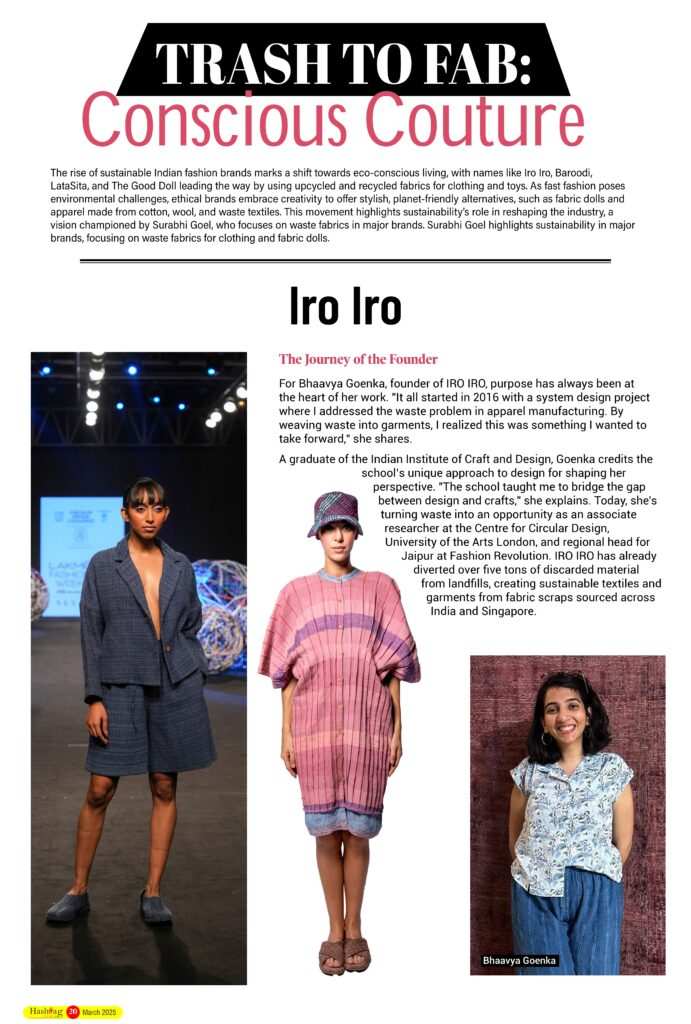
For Bhaavya Goenka, founder of IRO IRO, purpose has always been at the heart of her work. “It all started in 2016 with a system design project where I addressed the waste problem in apparel manufacturing. By weaving waste into garments, I realized this was something I wanted to take forward,” she shares.

Bhaavya Goenka
A graduate of the Indian Institute of Craft and Design, Goenka credits the school’s unique approach to design for shaping her perspective. “The school taught me to bridge the gap between design and crafts,” she explains. Today, she’s turning waste into an opportunity as an associate researcher at the Centre for Circular Design, University of the Arts London, and regional head for Jaipur at Fashion Revolution. IRO IRO has already diverted over five tons of discarded material from landfills, creating sustainable textiles and garments from fabric scraps sourced across India and Singapore.
Inspiration behind the Brand
“IRO IRO was born from a deep concern for the environment and a desire to work ethically,” shares Bhaavya Goenka. “The more I learned about the industry, the more I wanted to run away from it. That’s when I began exploring ways to craft garments without exploitation, using waste textiles to create new fabrics.”
Growing up around her parents’ garment business, Goenka witnessed first-hand the sheer volume of waste generated in fashion. “I remember trucks full of fabric scraps being taken to landfills or burned nearby,” she recalls. These early experiences, paired with her training in crafts and textile design, inspired her to reimagine waste into opportunity, creating textiles that support villages and champion ethical practices.
Sustainability Practices
“Our process is decentralized,” explains Bhaavya Goenka. “We create income opportunities within villages, ensuring we don’t disrupt their lifestyles or quality of life.“
IRO IRO redefines sustainability by transforming waste from factories into beautiful textiles. “We collect, sort, design, and weave, all while blending indigenous aesthetics with global appeal,” she shares. The brand collaborates with businesses and directly sources materials, empowering around 20 craftspeople and women from non-craft backgrounds to earn a sustainable income. “It’s about preserving traditions, supporting communities, and redefining what sustainable fashion means.”

USP
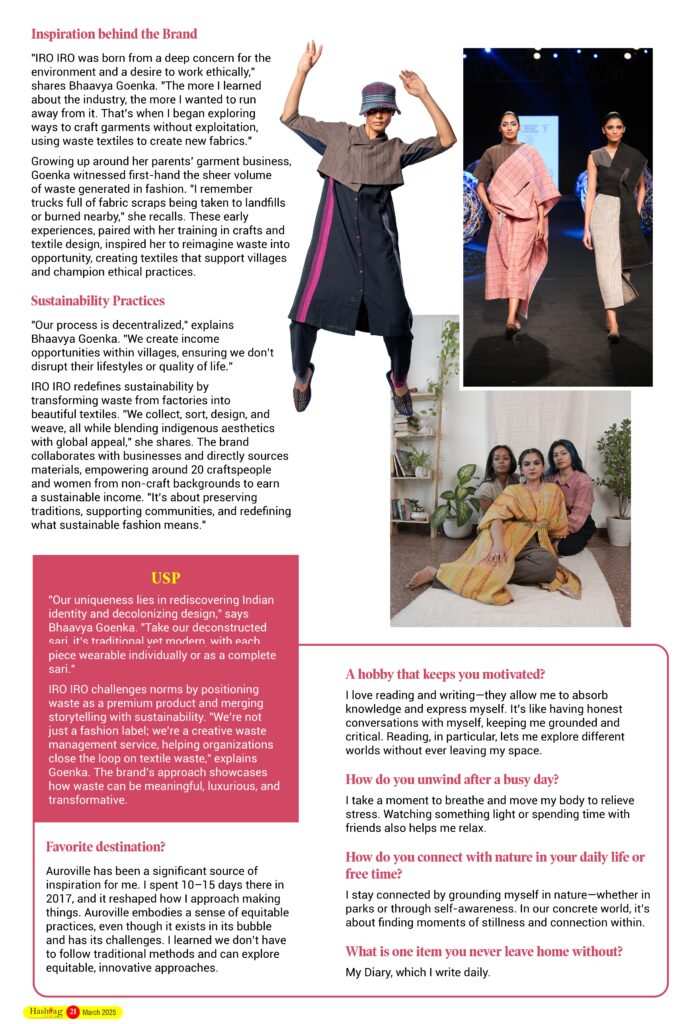
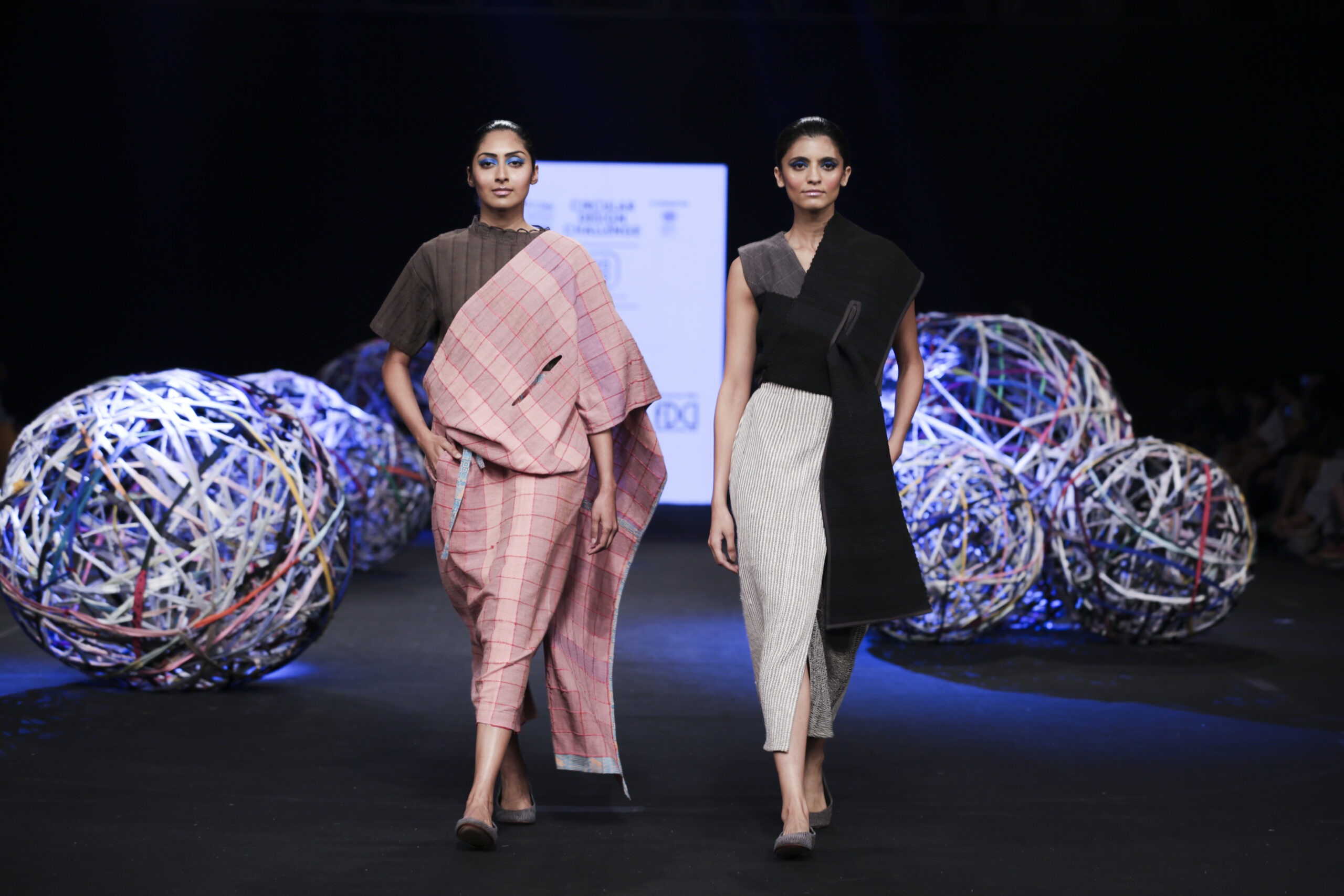
“Our uniqueness lies in rediscovering Indian identity and decolonizing design,” says Bhaavya Goenka. “Take our deconstructed sari, it’s traditional yet modern, with each piece wearable individually or as a complete sari.”
IRO IRO challenges norms by positioning waste as a premium product and merging storytelling with sustainability. “We’re not just a fashion label; we’re a creative waste management service, helping organizations close the loop on textile waste,” explains Goenka. The brand’s approach showcases how waste can be meaningful, luxurious, and transformative.
Favorited destination?
Auroville has been a significant source of inspiration for me. I spent 10–15 days there in 2017, and it reshaped how I approach making things. Auroville embodies a sense of equitable practices, even though it exists in its bubble and has its challenges. I learned we don’t have to follow traditional methods and can explore equitable, innovative approaches.
A hobby that keeps you motivated?
I love reading and writing—they allow me to absorb knowledge and express myself. It’s like having honest conversations with myself, keeping me grounded and critical. Reading, in particular, lets me explore different worlds without ever leaving my space.
How do you unwind after a busy day?
I take a moment to breathe and move my body to relieve stress. Watching something light or spending time with friends also helps me relax.
How do you connect with nature in your daily life or free time?
I stay connected by grounding myself in nature—whether in parks or through self-awareness. In our concrete world, it’s about finding moments of stillness and connection within.
What is one item you never leave home without?
My Diary, which I write daily.
Baroodi
1. Inspiration behind the Brand
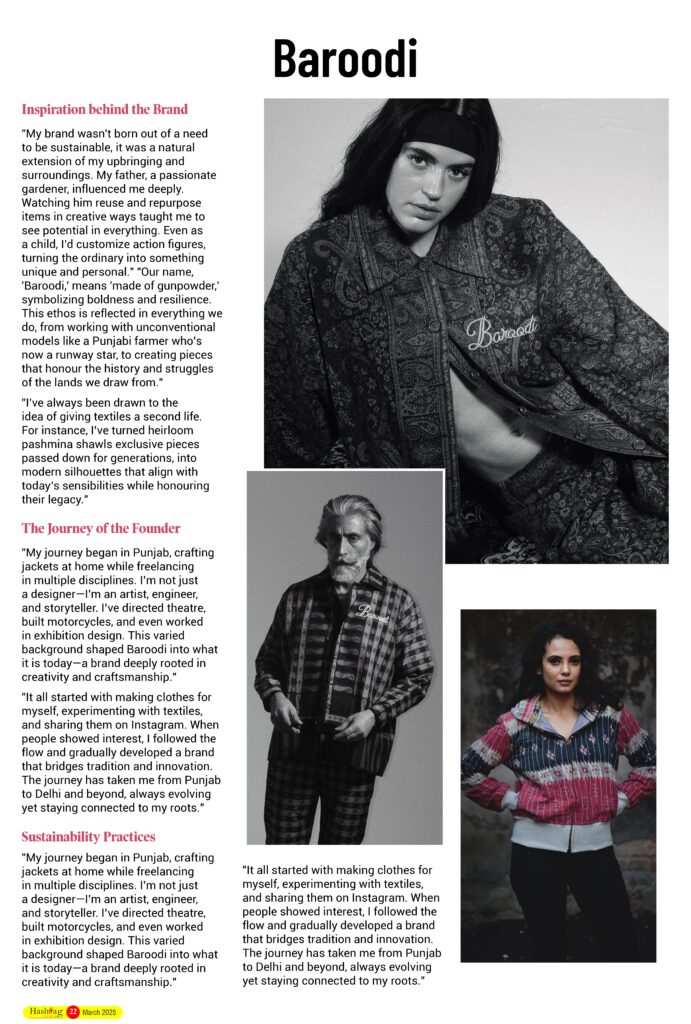
“My brand wasn’t born out of a need to be sustainable, it was a natural extension of my upbringing and surroundings. My father, a passionate gardener, influenced me deeply. Watching him reuse and repurpose items in creative ways taught me to see potential in everything. Even as a child, I’d customize action figures, turning the ordinary into something unique and personal.” “Our name, ‘Baroodi,’ means ‘made of gunpowder,’ symbolizing boldness and resilience. This ethos is reflected in everything we do, from working with unconventional models like a Punjabi farmer who’s now a runway star, to creating pieces that honour the history and struggles of the lands we draw from.”
“I’ve always been drawn to the idea of giving textiles a second life. For instance, I’ve turned heirloom pashmina shawl’s exclusive pieces passed down for generations, into modern silhouettes that align with today’s sensibilities while honouring their legacy.”
2. The Journey of the Founder
“My journey began in Punjab, crafting jackets at home while freelancing in multiple disciplines. I’m not just a designer—I’m an artist, engineer, and storyteller. I’ve directed theatre, built motorcycles, and even worked in exhibition design. This varied background shaped Baroodi into what it is today—a brand deeply rooted in creativity and craftsmanship.”
“It all started with making clothes for myself, experimenting with textiles, and sharing them on Instagram. When people showed interest, I followed the flow and gradually developed a brand that bridges tradition and innovation. The journey has taken me from Punjab to Delhi and beyond, always evolving yet staying connected to my roots.”
3. Sustainability Practices
“Sustainability is a sensitive topic for me. I don’t label my brand as fully sustainable because true sustainability is an ideal—a journey, not a destination. Even a sewing machine leaves a footprint, but we strive to minimize it through thoughtful practices.”
“Our process involves sourcing vintage and heirloom textiles, working with local weavers, and breathing new life into old materials. For example, we’ve printed Persian rug motifs on old canvas to create commercial yet meaningful products. It’s about making sustainability desirable, adding value while respecting the craft.”
“We also aim to empower communities by collaborating with artisans across India. By focusing on one state at a time like Kashmir and Gujarat. We celebrate regional crafts while ensuring fair wages and preserving traditional techniques.”
4. USP
“What sets Baroodi apart is its theatricality and focus on storytelling. Our designs go beyond fashion—they are experiences. For instance, our pashmina jackets aren’t just garments; they’re heirlooms meant to be treasured and passed down through generations.”
“Unlike many brands, we merge high fashion with heritage. We showcase exquisite craftsmanship in a way that appeals to modern luxury while maintaining its cultural authenticity. Each piece is designed to make a statement, celebrating boldness and individuality.”
Favorited Destination?
Traveling deeply inspires my work and values. I’ve created a system that allows me to move between Delhi, Mumbai, and Goa, each offering unique energy and poetic charm. These places recharge me creatively. I’ve also drawn inspiration from Europe, exploring its colonial history and cultural nuances.
A hobby that keeps you motivated?
Collecting music and listening to it loudly energizes me while gathering artefacts keeps me inspired and constantly engaged like a hoarder.
How do you unwind after a busy day?
Music is always my go-to, but lately, I’ve found myself drawn to comedy shows. After fast-paced, intense days, comedy offers the perfect escape. I’m grateful for the growing comedy scene in our country. It’s a refreshing and much-needed source of entertainment.
How do you connect with nature in your daily life or free time?
My home is surrounded by nature. I have around 500 to 600 plants and wake up immersed in greenery. I also have 10 dogs, many of them rescues, and often see hummingbirds and parrots visiting. I’m deeply drawn to the sea as well, always chasing beaches and the tranquillity they bring. Plants, animals, and nature are constants in my life.
What is one item you never leave home without?
It has to be my phone. After everything, I’ve realized it’s practically an extension of me. I’ve tried spending a day without it, and it made me appreciate how much I rely on it like for communication, connection, and all the little conveniences we often take for granted.
The Good Doll

1. Inspiration Behind the Brand
Suhas Ramegowda and Sunita were deeply inspired by the gap they saw in the market for dolls that truly represented Indian children. They noticed that existing dolls were often plastic and Barbie-like, which didn’t reflect Indian heritage or culture. “We could see that there was a real problem, children didn’t have relatable dolls that looked like them. Friends and family often pointed out that there were no dolls that mirrored their identity.” This inspired them to create dolls that were not only visually appealing but also empowering, reflecting Indian values and diversity. Through storytelling related to sustainability and inclusivity, the brand fosters a more inclusive mind-set, ensuring that no child feels marginalized based on appearance or skin tone.
2. The Journey of the Founder
Suhas and Sunita began their journey in 2017 after deciding to leave the corporate world and live a more meaningful, sustainable life. “Both Sunita and I were typical city folks, spending over 15 years working in the corporate world across different parts of India. By 2017, we were ready for a change. We moved to the Nilgiris, built a house off the grid, and started a sustainable lifestyle.” Initially focused on living off the grid, they transitioned into building a social enterprise that supports local communities through craft-based work.
3. Sustainability Practices
The foundation of The Good Doll is sustainability, starting from sourcing raw materials to production. “We source most of our materials locally from Tamil Nadu, which significantly reduces our carbon footprint. We also work with factories that send us their textile waste, which we upcycle into smaller products, ensuring zero waste.” Every step from using handmade processes to eliminating waste reflects the brand’s commitment to sustainability.
4. USP
The Good Doll’s unique selling proposition lies in its detailed craftsmanship and cultural relevance. Suhas explains, “Our dolls are not just dolls; they are miniature versions of real garments. This provides children with an experience of handling real clothing, fostering creativity and learning.” Additionally, the dolls reflect inclusivity, featuring different skin tones and looks to ensure children feel represented. “When a child looks at these dolls, they immediately see someone who looks like them or someone from their family.”
The Good Doll has had a significant positive impact on the environment by reducing plastic use and repurposing textile waste. “Every doll we sell replaces plastic in households, and through upcycling textile waste, we are ensuring that minimal waste goes to landfills.
Favorited Destination
My favourite destination is the mountains where I live. We enjoy staying close to nature and finding peace in our surroundings. Traveling only happens when it’s necessary for work, and we always look forward to returning home to this beautiful, serene environment.
A hobby that keeps you motivated?
The hobby that keeps me motivated is working in our garden. Living in a rural landscape, we strive for self-sufficiency and handle most household chores ourselves. Alongside maintaining our garden, I enjoy hiking and exploring nature around us. Additionally, I’m writing a book about our journey, from city life to living in the mountains which offers a deeper insight into our transition and experiences.
How do you unwind after a busy day?
After a busy day, Sunita and I unwind by going for a short hike or a walk. During this time, we reflect on the day, discuss what happened, share our experiences, and let go of any mental baggage. It helps us connect and relax before we move on to cooking and enjoying a meal together.
How do you connect with nature in your daily life or free time?
Since we live in the wilderness, we’re constantly connected to nature. There are days when we take our laptops on hikes and work in forested areas, spending the entire day surrounded by nature. It’s a seamless connection, and we don’t need to do anything extra to feel connected.
What is one item you never leave home without?
The only thing we never leave home without is our mind-set. Whether it’s a hike or a daily activity, our approach to life and sustainability always stays with us.
LataSita
1. Inspiration behind the Brand
Meghna Nayak’s journey to LataSita was born from a deep concern for sustainability and a desire to challenge exploitative fashion practices. “I studied journalism in Cornwall to be an environmental journalist. Sustainability, sweatshop culture, and alternative lifestyles occupied me,” she shares. Despite her initial scepticism of the fashion industry as “frivolous,” her return to India made her aware of the waste and pollution caused by the industry. She explains, “I realized I could enter the fashion supply chain and try, first-hand, to do things differently.”
The breakthrough moment came when her mother opened her wardrobe, revealing sarees inherited from her grandmother. “It felt like an instant, intimate connection,” Meghna recalls. She recognized that countless sarees across the country lay unused, holding deep emotional value but remaining impractical for everyday wear. This insight inspired her to repurpose these heirlooms into new garments, combining nostalgia with a minimal carbon footprint.
2. The Journey of the Founder
Starting with a one-room studio and her meagre savings in 2012, Meghna embarked on her journey to revolutionize the fashion industry. Having returned to Kolkata after nearly seven years in England, she worked as a journalist but found writing about change less fulfilling than actively creating it. “Writing about what people should do was less satisfying than actually doing it myself,” she says.
Her mission was to challenge fast fashion and redefine the perception of old textiles. “I have sourced cloth not just from people’s wardrobes; I have bought entire Puja pandals because the cloth was going to be dumped into landfill,” she reveals.
The initial challenge was overcoming societal resistance to upcycling in India, where newness is aspirational. “Old comes with superstitions, myths, and even a negative connotation like ‘uttaran,’ which means old clothes,” Meghna explains. Despite this, her horror at the exploitative practices in fashion drove her forward. “The fashion industry doesn’t promote or sell sustainability. Cheap, mass production is prioritized, and treating labourers poorly is encouraged,” she laments.
Through perseverance, Meghna has built LataSita as a niche yet impactful brand, gaining recognition among younger generations who are more open to thrifting and sustainable practices.
3. Sustainability Practices
Sustainability is at the core of LataSita. The brand champions upcycling, primarily using sarees sourced directly from women’s wardrobes, heirloom collections, or even unexpected places like Durga Puja pandals. “In using the upcycled saree, I found something that not only had a charming sense of newness and nostalgia but also the smallest carbon footprint,” Meghna explains.
She critiques the superficiality of “greenwashing” in the industry. “Sustainability has become a buzzword. Just using organic cotton doesn’t make a brand sustainable, it’s about waste management, paying fair wages, packaging choices, and ensuring a net positive social impact,” Meghna states.
LataSita’s designs are tailored to be long-lasting and adaptable, accommodating changes in body shape. “The most sustainable garment is the one you didn’t buy. Our designs accommodate you whether you lose or gain weight so that they can be worn for years,” she explains.
4. Unique Selling Proposition (USP)
LataSita stands out for its commitment to ethics, sustainability, and personalization. “Each piece is lovingly crafted at our Kolkata studio to the highest standard of ethics and sustainability. Only thread, elastic, zips, hooks, buttons, and linings are new,” Meghna notes.
The brand operates a transparent, closed-loop production chain. “Any customer can know exactly who made their clothes and see the conditions they’re made in,” she says. Meghna also ensures that her designs balance aesthetic appeal with practicality. “Ultimately, people want great quality and great design. Our pieces not only look good but are also built to last.”
By integrating sustainability into every aspect of her business, Meghna is reshaping perceptions of upcycling in India. “It’s been a difficult journey to make one-of-a-kind pieces while staying reasonably priced, but the shift in mind-set, especially among younger generations, is promising,” she concludes.
4. Unique Selling Proposition (USP)
LataSita stands out for its commitment to ethics, sustainability, and personalization. “Each piece is lovingly crafted at our Kolkata studio to the highest standard of ethics and sustainability. Only thread, elastic, zips, hooks, buttons, and linings are new,” Meghna notes.
The brand operates a transparent, closed-loop production chain. “Any customer can know exactly who made their clothes and see the conditions they’re made in,” she says. Meghna also ensures that her designs balance aesthetic appeal with practicality. “Ultimately, people want great quality and great design. Our pieces not only look good but are also built to last.”
By integrating sustainability into every aspect of her business, Meghna is reshaping perceptions of upcycling in India. “It’s been a difficult journey to make one-of-a-kind pieces while staying reasonably priced, but the shift in mind-set, especially among younger generations, is promising,” she concludes.
Favorited Destination
Traveling for work takes me across the globe, but my biggest inspiration comes from Kolkata and West Bengal. The artistry and talent here, often overlooked, deeply move me. Seeing master artisans struggle motivates me to celebrate and support the beauty of my home city.
A hobby that keeps you motivated?
Spending quality time with friends and building meaningful relationships keeps me motivated. The support from my friends and community provides the nourishment I need to stay inspired.
How do you unwind after a busy day?
After a busy day, I like to laugh more than crawl into my comfy bed. I love resetting my mind with crossword puzzles, word games, and Sudoku. They’re my daily brain workout. I also enjoy winding down with some light, brainless fun on Netflix.
How do you connect with nature in your daily life or free time?
Living in a city, my connection to nature comes through my mother’s love for plants. She fills our home with greenery, turning everyday items into planters and nurturing them with care. Her passion inspires me and keeps me grounded in nature daily.
What is one item you never leave home without?
I never step out without my cherished beeswax lip balm, it’s essential for me.