Top 6 places that one must visit in Ranchi

The scenic beauty of Ranchi will never disappoint. With lush green forests, clean blue water bodies, and various religious shrines, there are many little pockets of tourist interest. It is a great destination for a vacation with family and friends. Kimaya Sahasrabuddhe gives you details on the top must-visit places in Ranchi. Plan your tour of the city with your family and friends. 

The best time to visit Ranchi is post rains, i.e. from September to April, when all the water bodies are full, leaving the surroundings cool and the forests fresh. Ranchi was the centre of activity during its separation from Bihar, and its significance can never be overlooked as it is the native place of the great cricket icon, Mahendra Singh Dhoni. 

If you follow our guide, your tour will be close to nature and full of great falls, dams, lakes and greenery. The trip would be short and sweet, for 6 days and 5 nights. The fresh forests will refresh your mood and give you a good break from the daily routine of everyday life. 

Top places to visit in Ranchi 

1.Patratu Valley and Lake

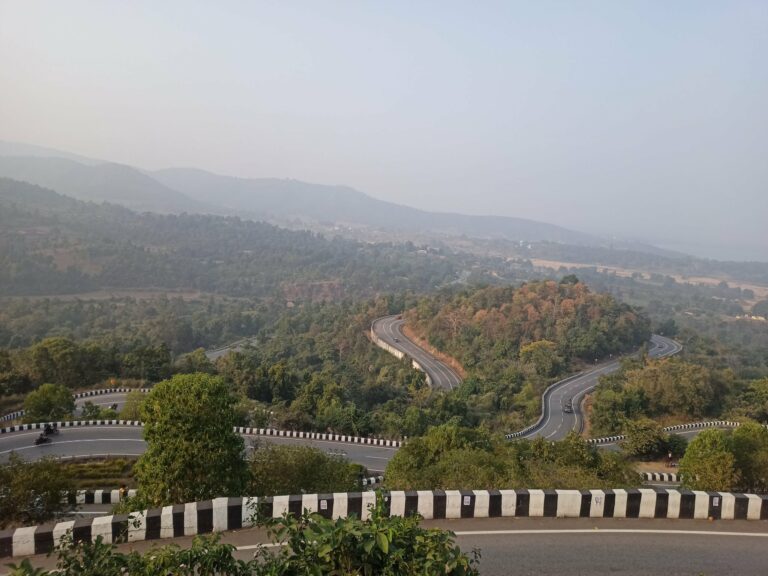
The Patratu valley is a scenic beauty 40 kms away from the main city. The road is amazing with many twists and turns (ghat road). The road passes through the lush green jungle. Look down the road from a certain point and you will see that the road presents the shape of a garland. It is one of the most sought-after spots to click pictures. Many stop to bite into goodies and then move towards the Patratu lake.

The Patratu lake is made of the stagnant water from the Patratu dam. The main attraction here is boating. If you visit the place between December and February, you get to see the Siberian cranes that migrate annually to the lake in winter. As the temperature rises in Russia, they go back to their usual habitats. Visitors are allowed to feed them while enjoying their boat ride. 

2.Dhurwa Dam

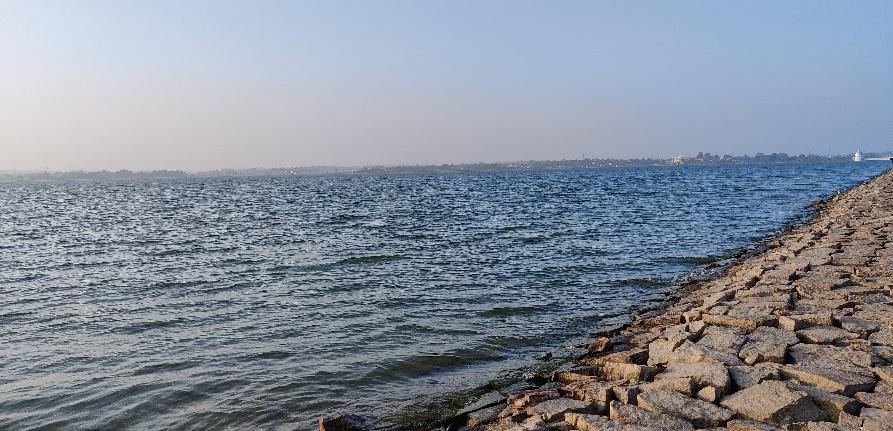
This is a very peaceful spot to visit with friends and family to chill. It is about 15 kms from the main city. You can come here to enjoy the setting sun and the cool breeze. Having a cup of tea or coffee would only add to the moment. 
3.Palani Falls

These falls have been recently discovered by some locals and are therefore less crowded. Not many know of them yet but they are gaining popularity just by word of mouth. The falls are on the way to Patratu. 

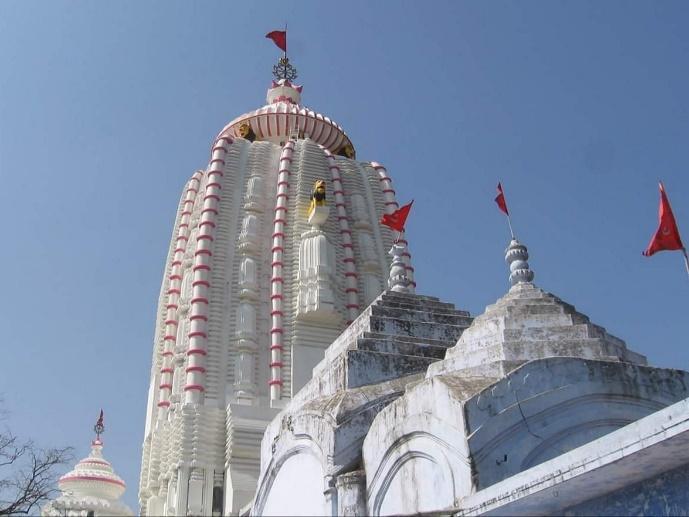
4.Jagannath Temple

This Jagannath temple dates back to the year 1691 and is one of the most historical landmarks of Ranchi. It is a replica of the Jagannath temple in Puri, Odisha. The temple walls are decorated with intricate filigree work, like the ones found in Jain temples. The Rath Yatra is one such festival that is celebrated here just like it is in Puri. 
5.Hundru Falls

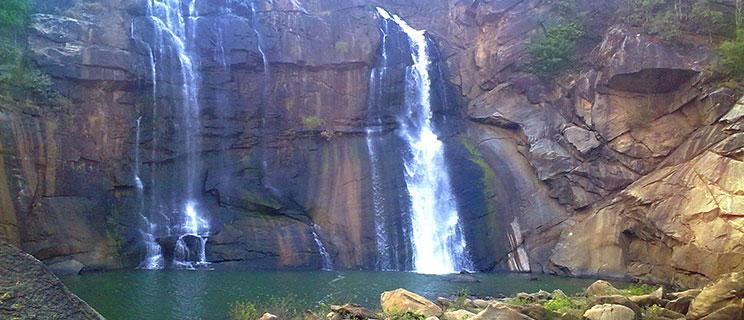
The river Subarnarekha, while flowing through Ranchi, forms a lot of waterfalls. One of them is the Hundru Falls, one of the best and the biggest falls in Ranchi. The height of the falls is 322 ft. Reaching the falls involves a little adventure combined with lots of fun. Once you reach the spot it is great to just sit on the rocks and enjoy the surroundings in the backdrop of the cascading waters.
6.Ranchi Lake

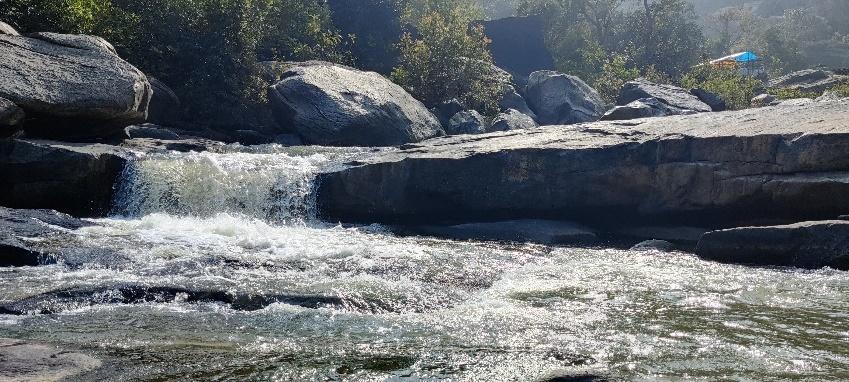
Also called the Bada Talab, the lake is situated in the middle of the city. It is an artificial lake dug by the British in 1842. It was made for ground water recharge and water supply to the city. The lake also has a boating facility. The main attraction of the place since 2019 has been the statue of Swami Vivekananda. It was unveiled by the then Chief Minister Raghubar Das on the occasion of the 156th birth anniversary of Swami Vivekananda, celebrated as the National Youth Day. The lake was also renamed as ‘Vivekananda Sarovar.’ 

Ranchi allures visitors with its many attractions, and one leaves the place with a lot of peace of mind restored. It provides pleasant memories to ruminate even after a long time of returning to one’s groove.


Leave a comment

Your email address will not be published. Required fields are marked *

Bookstore Tourism: India’s Most Beautiful Literary Escapes

Travel usually means ticking off monuments or finding the perfect beach, but there is a quieter, more rewarding way to see India, through its bookshelves. Bookstore Tourism is the art of slowing down, trading the chaos of the streets for the scent of old paper and the creak of wooden floorboards. In a world of digital scrolls, these physical spaces offer a sanctuary. They aren’t just shops; they are cultural anchors housed in heritage bungalows, 150-year-old mansions, and even on islands. Dhanush Kumar writes about the popular Indian bookstores that invite you to get lost in a labyrinth of stories. Kitab Khana, Mumbai Nestled in a 150-year-old building in the historic Fort area, Kitab Khana feels like a time capsule. With its soaring ceilings, Corinthian Columns, and floor-to-ceiling wooden shelves, it offers a majestic escape from Mumbai’s humidity. Find a corner by the tall windows and watch the world go by. The bookstore has a Subko coffee outlet inside, blending Mumbai’s best third-wave coffee with its most beautiful reading room. They have one of the best collections of Marathi and Gujarati books in the city. Literati Bookshop and Café, Goa Forget the beach parties for attention. Located in a lush, red-tiled Indo-Portuguese villa in Calangute, Literati is where the Slow Goa movement truly lives. Browse through sun-drenched rooms filled with second-hand treasures, then take your find out to the garden. It feels more like visiting a well-read friend’s home than a retail store. Keep an eye out for first-edition Goan history books or rare out-of-print paperbacks often tucked in the second-hand corners. Rachna Books, Gangtok Perched in the heart of the Himalayas, Rachna Books is a pilgrimage site for bibliophiles. It’s a family-run space that has won “Bookstore of the Year” awards for its curated collection and cultural impact. This

CINTA & Pantai Pura Founder Rupika Harshwardhan P

For Rupika Harshwardhan P, design has never been merely aesthetics; it is emotional architecture. A graduate of Srishti School of Art and Design, with further studies in art history at Chitrakala Parishad, her education trained her to see spaces as layered narratives shaped by material, form, and feeling. An early internship at Elle Decor India proved pivotal. It offered her an insider’s view of the design industry and crystallised a quiet but firm decision: she would not simply participate in design, she would build something of her own. Drawn instinctively to craft traditions and handmade objects, Rupika’s understanding of “home” is rooted in belonging. For her, furniture is not functional; it is memory made tangible. Brands Built on Meaning Rupika is the Founder and Creative Director of CINTA and Pantai Pura. CINTA, meaning “love,” is a children’s home décor brand centred on imagination and family bonds. Pantai Pura, “Sacred Beach,” explores natural harmony and mindful living. “I didn’t create these brands just to sell furniture,” she explains. “I wanted to change how we see materials and craftsmanship.” Her work bridges tradition and modernity, connecting artisan communities with contemporary homes. Particularly through CINTA, she reflects on how a child’s first furniture piece can become part of their emotional blueprint. Reimagining Rattan At the core of her practice is rattan, a material she champions for its agility, durability, and quiet elegance. Challenging misconceptions that it is dated or interchangeable with bamboo, Rupika reinterprets rattan through a contemporary lens while honouring traditional craft. Her approach rests on three pillars: craftsmanship, co-creation, and community. Designs are developed collaboratively with artisans, resulting in bespoke pieces that respond to real homes rather than fleeting trends. “Design is a conversation, not a monologue,” she says. From Online Beginnings to Experiential Spaces Both brands began online, where one

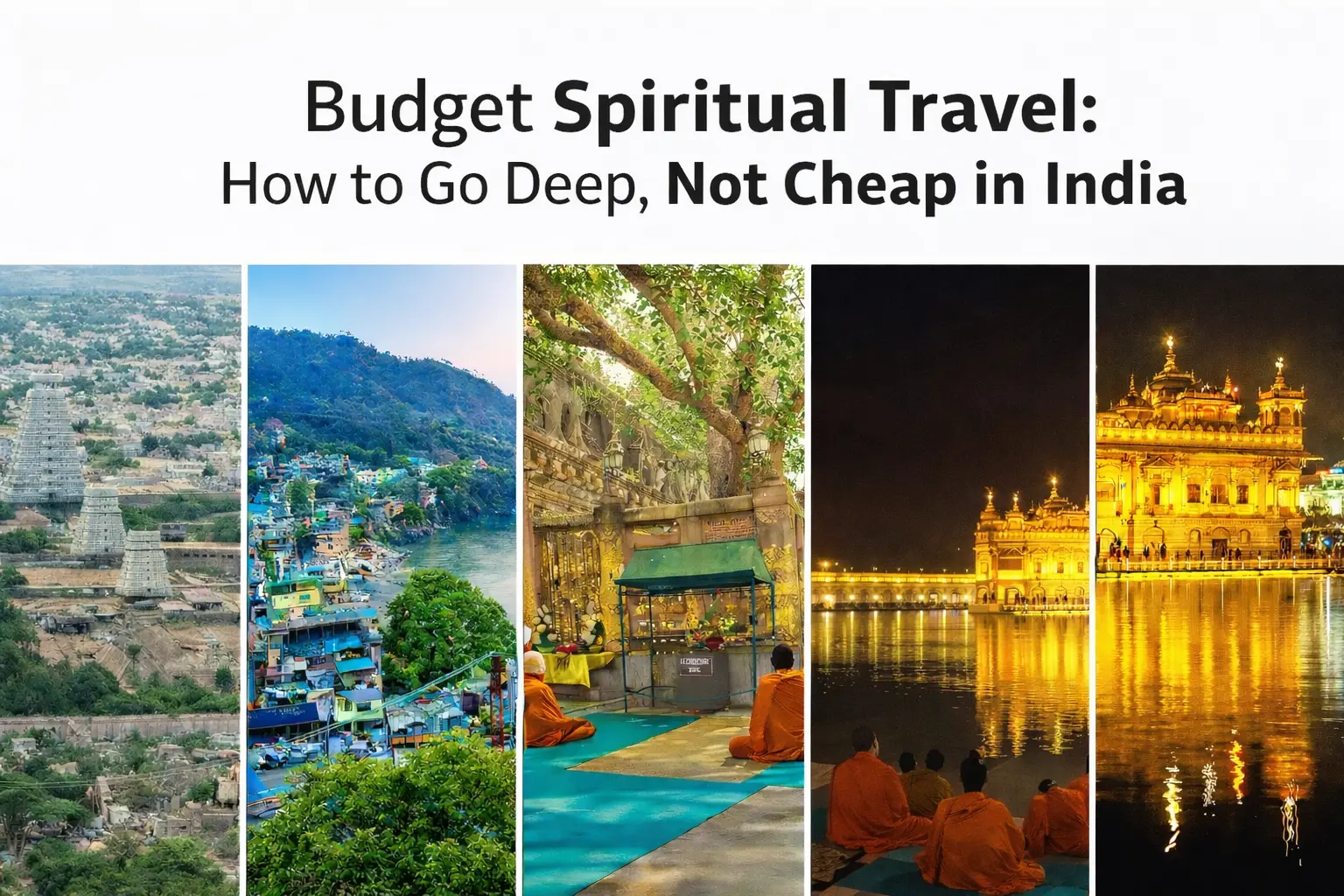
Budget Spiritual Travel: How to go Deep, Not Cheap in India

In 2026, spiritual tourism in India has become a massive industry. From high-end meditation boutiques in the Himalayas to luxury detox villas in Kerala, it is easier than ever to spend a fortune on enlightenment. But here is the truth that every true seeker eventually realises: spirituality is one of the few things in life that actually becomes less authentic the more you pay for it. Going deep isn’t about the thread count of your yoga mat; it’s about the intensity of your immersion. Dhanush Kumar writes about how to experience the spiritual soul of India without falling into the trap. The Power of Seva: Amritsar The Golden Temple is the ultimate classroom for humility. While thousands of tourists visit to take photos, the deep experience lies in the Langar, which is the community kitchen. Instead of just walking through, volunteer for two hours in the kitchen. Peeling garlic or washing giant vats alongside people from every walk of life is a more profound meditation than any paid workshop. Arrive at 4 AM for the Paki Sahib procession. You will hear the low, rhythmic chanting of Gurbani hymns that seem to vibrate through the very marble floor. The air is cool, and the reflection of the illuminated temple in the Amrit Sarvoar creates a sense of being in a world between worlds. The Path of Self Inquiry: Tiruvannamalai While many spiritual hubs feel like a circus, the town of Tiruvannamalai, home to the sacred Arunachala Hill, remains a sanctuary for serious meditators. Stay at the Sri Ramanasramam or a nearby simple guesthouse. Avoid the spiritual cafes and instead participate in the Girivalam, a 14 km walk around the mountain at 4 AM with thousands of others, but the experience is intensely deep. The scent of camphor from small roadside shrines

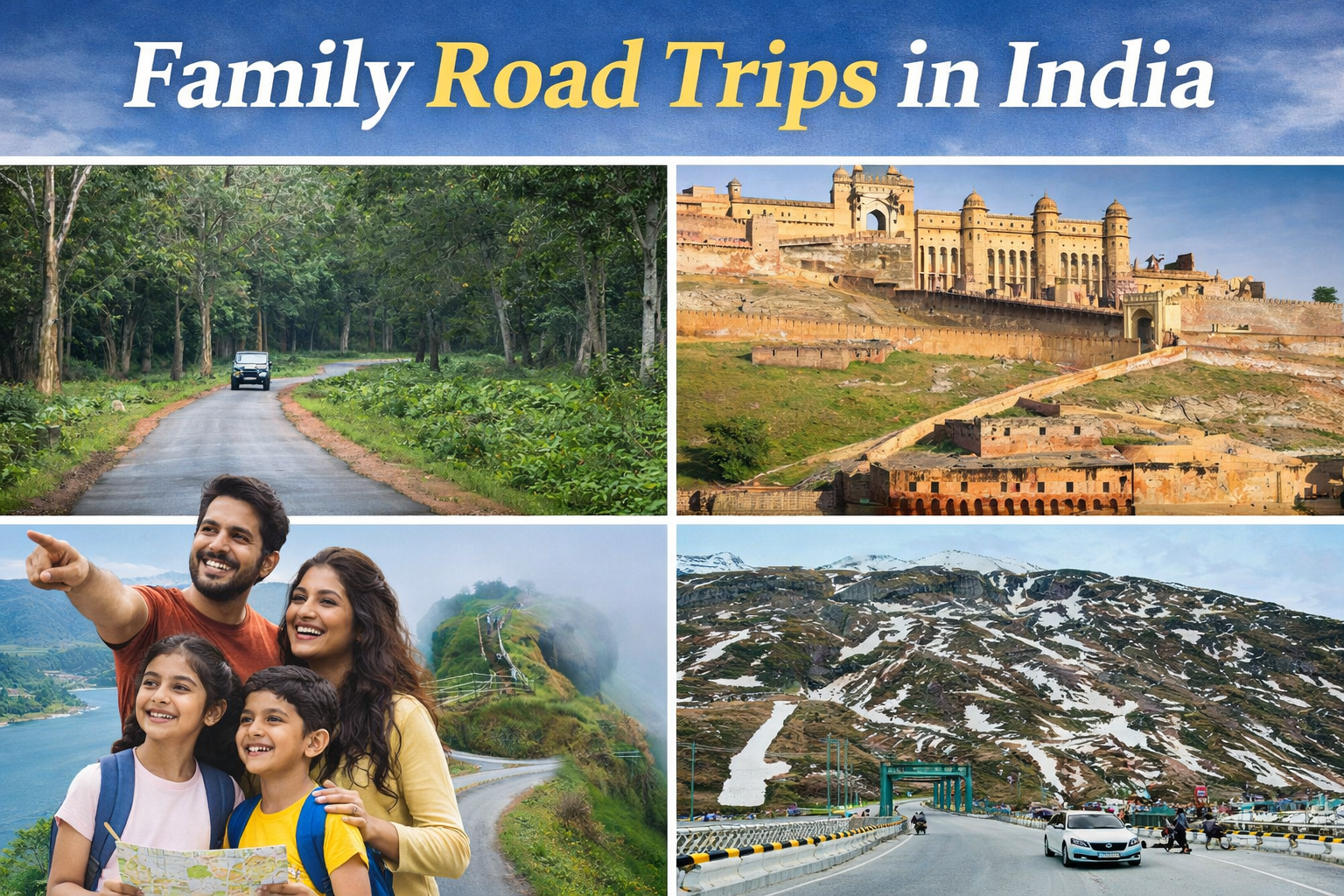
Family Road Trips in India: 6 Routes with Kid-Friendly Stops and Food

The engine is humming, the bags are packed, and the open road awaits. But as every parent knows, a successful family road trip in India is a fine art. It requires more than just a GPS; it requires a strategy for clean restrooms, engaging pit stops, and food that won’t result in a backseat tantrum. When the logistics are handled, a road trip becomes more than just travel; it becomes a core childhood memory. From the misty mountains of the North to the coastal breezes of the South, Dhanush Kumar brings you six iconic Indian routes designed to keep the kids happy and the parents’ stress levels low. 1. Delhi to Jaipur: The Golden Path The transition from the skyscrapers of Gurgaon to the pink walls of Jaipur is a visual treat. The expansion of the NH48 makes this a smooth drive for families. You can break the journey at Neemrana Fort Palace, the sprawling gardens are perfect for kids to burn off energy, and the vintage car museum is a guaranteed hit. On the way, you can stop at a dhaba and order Paneer Parathas and fresh curd. 2. Mumbai to Mahabaleshwar This route offers a dramatic climb through the Western Ghats. The Mumbai-Pune Expressway provides world-class tarmac, while the climb to the hill station offers cooler air and scenic views. You can stop at Mapro Garden, also known as Panchgani. This isn’t just a stop, it’s a destination. With dedicated play zones and a chocolate factory tour, it’s the ultimate reward for a long drive. 3. Bangalore to Coorg The drive through the lush landscapes of Karnataka is refreshing, but the winding roads near the end require planned breaks to keep motion sickness at bay. A slight detour near Dubare Elephant Camp allows children to interact with elephants

You May Also Like

Connect with us