The Patriot Act: Vicky Kaushal

The Patriot Act Vicky Kaushal

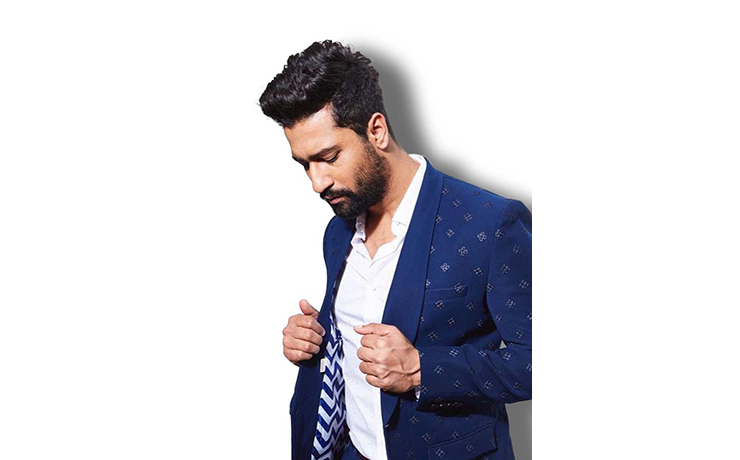
Riding the waves of success of Sardar Udham, VICKY KAUSHAL talks of his most challenging till date in a candid interview with LIPIKA VARMA.

Since its release, Sardar Udham has been making waves ripple across the entertainment industry. The Shoojit Sircar directed biopic is unhurried in its narrative and yet, profound in its delivery. The film tells the tale of the revolutionary Sardar Udham Singh, who assassinated Michael O’Dwyer to avenge the Jallianwala Bagh Massacre, and has actor Vicky Kaushal playing the titular role. As has been the way with most films during the pandemic, Sardar Udham too released on an OTT platform, Amazon Prime Video. Adding to the list of accolades received, the movie was in consideration as India’s official entry for the 2022 Oscars. 

In an interview with Lipika Varma, we learn about Kaushal’s experiences shooting the acclaimed biopic. 

I had a sense of responsibility…You have to handle the subject with utmost sensitivity; it can’t be presented randomly and frivolously.

Shooting such an emotional film must have been difficult. Were there any scenes that stood out to you? 

Yes, the shoot was difficult, and I broke down many times. Shooting the Jallianwala Bagh scene was emotional and difficult; it numbed me from within. Director Shoojit Sircar brought about a very real world, of 1919, where a crowd of over 20,000 people saw and lived through this incident. With such a huge crowd, there was no place to run away as the army was firing bullets one after the other. There were children and people of all ages comprising this crowd. Shooting such moments had shaken me completely.

Not many know that veteran actor Irfan Khan was roped in to play the role of Sardar Udham Singh. 

Firstly, nobody can replace Irfan Khan sahib. It’s unfortunate that he has left for his heavenly abode. If he had to do it, he would have done a great job. If I have delivered close to even a single per cent of what he would have done, then I will feel I have done great. He was a great actor across the world. It’s a privilege for me to get the role that he was going to play. I have to keep up to the level of gravitas. It is a small tribute to him.

How was it working with Shoojit Sircar?
I had to unlearn whatever I had learned. I followed his vision of what Sardar Udham Singh would have been like. He had kept this story with him for the past 20 years since he came to Mumbai. He couldn’t make it as it wasn’t possible for him then. He is very fluid and fast at his work. I truly got to learn a lot.

If I don’t get food, I get angry and cranky.

How challenging was it to play this role? What difficulties did you face?

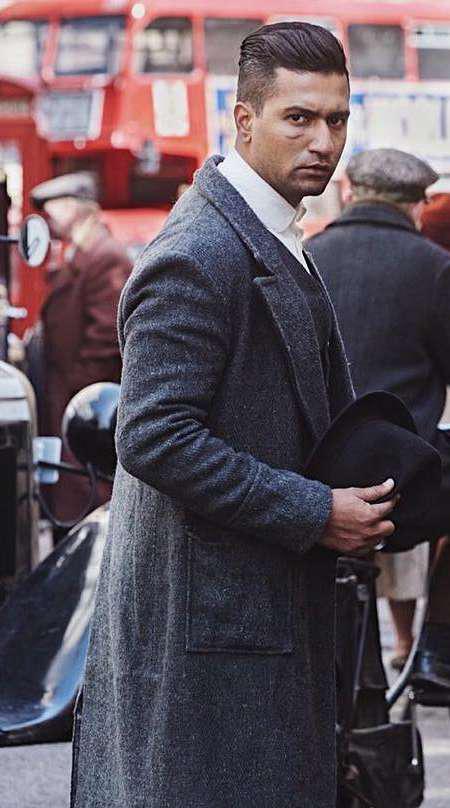
It was challenging as I played both a 20-year-old Sardar Udham Singh and then, at 40 years of age. For the younger arc, I was asked to lose around 15 to 20 kilos in just 2 months’ time. Later, to play him as 40 years old, I had to gain weight. We came to understand him through his photos. He would change his identity, so I had to live with different looks. There was a Russian, Serbia and Indian team to help me with this. We kept the costume, makeup, and setting very genuine to the times. Emotions and pain had to be lived alongside too. I had a sense of responsibility. Portraying this unsung hero through his film will enable people to resonate and remember him. You have to handle the subject with utmost sensitivity; it can’t be presented randomly and frivolously.

How do you manage your intensity and anger while not acting?

I just remain cooled down. I like to be quiet, and I always isolate myself totally. I need an hour or so to come back to normal. If someone tries to talk to me then my anger may burst out. I deal with my anger with calmness. If I don’t get food, I get angry and cranky. It also happens when I have done a lot of work. In most situations, I love to be quiet.

How has playing this role personally changed your self? 

I would like to believe I have got some self-control in me now. Realising how one person could keep his ideologies within himself with patience has been a great learning experience for me.

Realising how one person could keep his ideologies within himself with patience has been a great learning experience for me.

Did you learn about the revolutionary and his actions in your school days? 

Belonging to a Punjabi family, whenever Punjab was referred to in class, I would come home and ask my parents. They told me about the sacrifices made by our freedom fighters such as Bhagat Singh and Udham Singh, alongside others. Today, I realise how important it is to bring such stories to life through films so that we all know about the struggles our freedom fighters faced in their bid for independence.

From the beginning of your career until now, you have worked across a vast variety of genres. We hear that you are all set to now add another feather to your cap, after being cast in a romantic role opposite Sara Ali Khan in Laxman Utekar’s upcoming film? 

Baat toh chal rahi hai! Talks are on with director Utekar. God is great to have bestowed upon me such opportunities. I’m also getting to do new and explore varied roles as an actor and I try to do different roles and grow. I have 2 upcoming films. One is with Yashraj Films and Dharma Productions; they will make the official announcements. There is also Sam Bahadur. 

Leave a comment

Your email address will not be published. Required fields are marked *

Prince Cecil Decodes the Perks & Challenges of a Destination Wedding

Actor Prince Cecil married Sai Machiraju in an intimate, 80–100 guest wedding in New Zealand, her home country, on August 24. In an exclusive with Hashtag Magazine, he breaks down what nobody tells you about planning a wedding away from home. The Perks An intimate celebration: New Zealand as our destination wedding was special because my wife, Sai Machiraju, is from there. But the thing about destination weddings is you have to keep it very private, like close-knit. I think just 80-100 people attended our wedding. Core memories that last: Destination weddings create core memories that stay lifelong. Our post-wedding pics in the snow, flying down from a helicopter, were just two happy people who wanted to capture our love. The couple even shot part of their album at Cecil Peak, a nod to his name. It was pretty cold, but it felt like a Classic Bollywood moment; at least I was covered in a sherwani, and my wife was in a saree. The right team makes the difference: There are a lot of challenges in planning a destination wedding: admin for travel, tickets, food, stage, clothes, logistics. They were quite major, but having a great team, management and a limited crowd was a huge plus. The Challenges Not everyone can make it: Someone close wants to attend it badly, but life, work commitments and the distance meant they had to skip it. That’s one of the hardest parts, missing someone you desperately want there on your special day. You can’t control the weather: The night before their outdoor ceremony, it rained heavily. We were so tensed and worried about how we’d manage, and checking for last-minute backup options. Planning can get chaotic: Coordination outside your space, managing things as per our customs and rituals, is so hard. Everything was

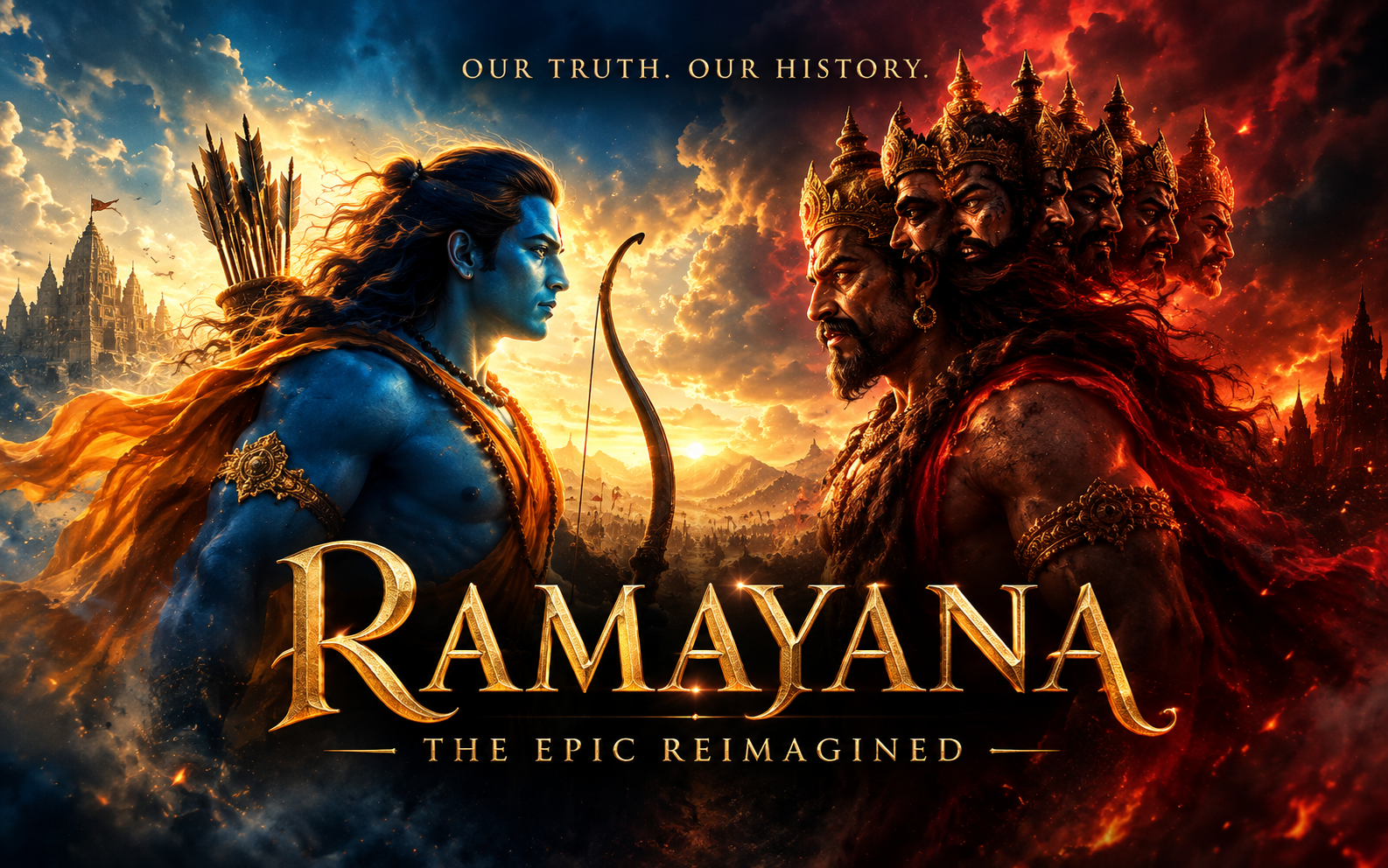
RAMAYANA: THE EPIC REIMAGINED

Ramayana: The Epic Reimagined is shaping up to be one of Indian cinema’s most ambitious productions, bringing together a star-studded cast and an international creative team. From its two-part format and reported ₹4,000-crore budget to its cutting-edge visual effects and global release plans, here are 10 things to know about the epic cinematic spectacle. 1.Two films, one epic Ramayana is planned as a two-part cinematic project. The first instalment is scheduled for release during Diwali 2026, with the second chapter planned for Diwali 2027. The films are directed by Nitesh Tiwari and produced by Namit Malhotra. Ranbir Kapoor has revealed that the team shot around six hours of footage for the first film before editing it down. A Chinese listing reportedly indicates a runtime of about 166 minutes for Part One. 2.Ranbir Kapoor as Rama: The first choice Ranbir Kapoor plays Lord Rama, amid years of speculation over other names. Mahesh Babu, Hrithik Roshan and Ram Charan were among the actors linked to various versions of the project. However, director Nitesh Tiwari and producer Namit Malhotra have clarified that Ranbir was always their first choice for their current Ramayana. Tiwari cited his physicality, screen presence and ability to convey emotion through his expressions. Interestingly, Yash, who plays Ravana, was also reportedly considered for Rama before taking on the antagonist. 3.Sai Pallavi is Sita Sai Pallavi plays Sita opposite Ranbir Kapoor’s Rama. The role marks a major Hindi-film project for the acclaimed South Indian actor and adds another prominent South Indian star to the cast alongside Yash. 4.A large ensemble cast An extensive ensemble supports the three leads. Sunny Deol plays Hanuman, Ravi Dubey plays Lakshman, Arun Govil plays Dasharath, Lara Dutta plays Kaikeyi, Indira Krishnan plays Kausalya, Kajal Aggarwal plays Mandodari, Rakul Preet Singh plays Shurpanakha, Kunal Kapoor plays Indra

Exclusive Interview: Nikhil Siddhartha on Swayambhu, Family and Politics

After the pan-India success of Karthikeya 2, Nikhil Siddhartha finds himself at a pivotal phase in his career. The actor is currently gearing up for the release of Swayambhu, one of the most ambitious projects he has undertaken to date, a historical action drama that demanded nearly two-and-a-half years of dedication, extensive physical transformation, and months of post-production work. In a candid conversation with Priyanka Goud, Nikhil opens up about the challenges of mounting a large-scale period film, why he prioritises quality over quantity, how fatherhood has changed his outlook on life, and his belief in using cinema as a tool for social awareness. A Two-and-a-Half-Year Commitment Describing Swayambhu as a project unlike any other in his career, Nikhil revealed that he dedicated nearly two and a half years exclusively to the film.“Some films are easy to make, and some are difficult. Swayambhu falls into the category of films that demand complete commitment. I underwent a significant transformation for the role, growing my hair long, maintaining a specific physique, and immersing myself in the character and story throughout the production period,” he said. A Historical Story with Universal Appeal One of the aspects that attracted Nikhil to Swayambhu was its historical backdrop. Nikhil plays Krishnan Raman, a historical figure whose name appears on ancient copper plate inscriptions that have recently gained attention. “This story is rooted in history, but its themes are universal,” he said. “It’s not confined to one region; audiences across India will be able to connect with it.” The actor also highlighted the growing importance of visual effects in modern filmmaking. Swayambhu reportedly contains nearly 2,700 VFX shots, making post-production one of the most demanding phases of the project. “We completed principal photography in December 2025, but for the last five to six months it has been

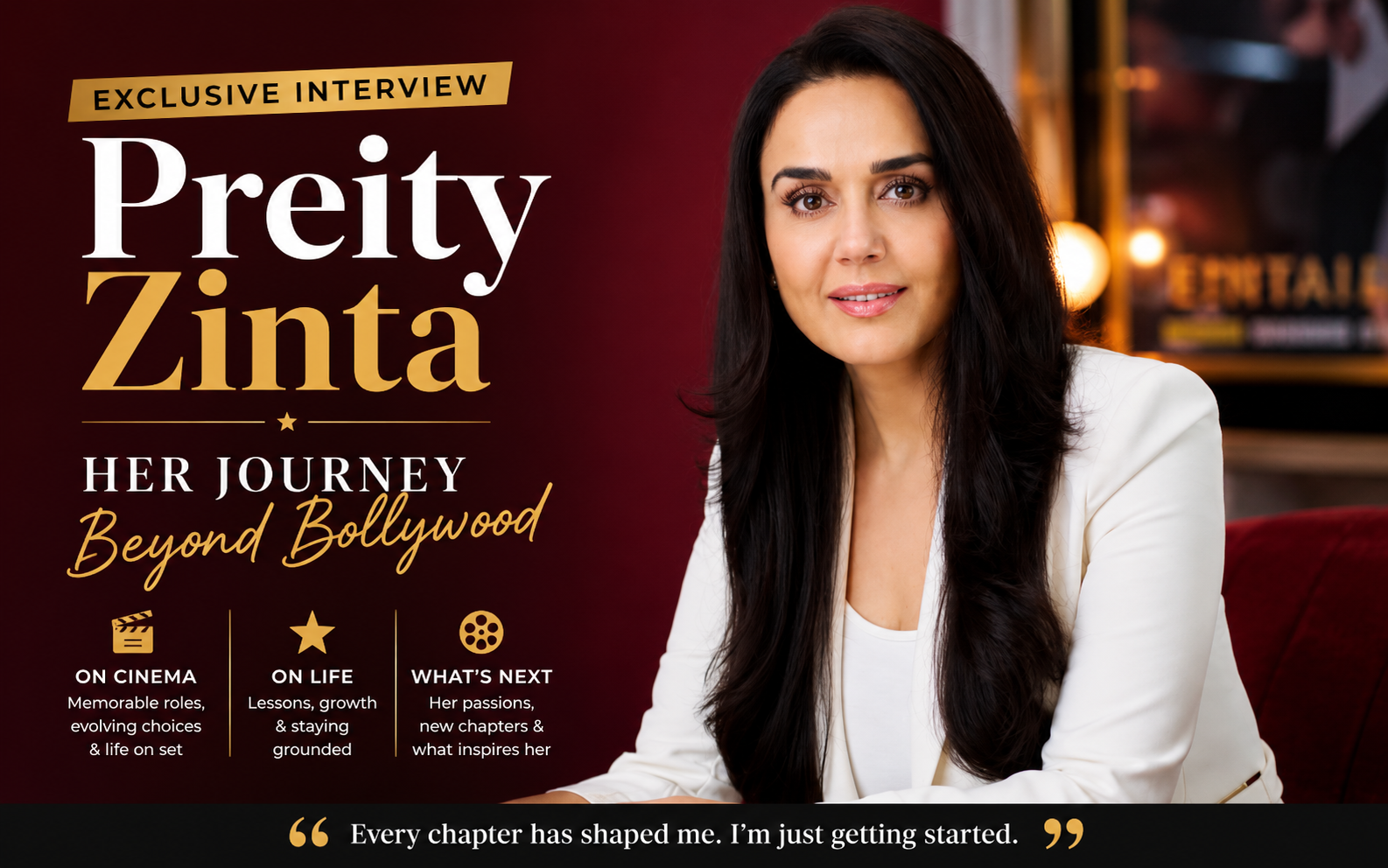
Preity Zinta on Batwara 1947, Motherhood and Finding Her Way Back to Cinema

For Preity Zinta, returning to the screen with Batwara 1947 is about more than making a comeback. The period drama allowed her to explore a chapter of India’s history, work with director Rajkumar Santoshi for the first time, and step into a world far removed from her own. But the film also made her reflect on how much life has changed since she began her career, from the freedoms available to women today to the perspective that comes with becoming a mother. For Zinta, Batwara 1947 is ultimately a story about family, resilience and hope, as she tells Lipika Varma in an exclusive conversation. Why did you say yes to doing this film? What touched you the most? There were a couple of things. First, I really wanted to work with Raj ji. I had never worked with him before, so working with him was always on my bucket list. I had also always wanted to do a period film. Beyond that, I genuinely loved the story. What touched me most was that even in the darkest of times, there is always a ray of hope. People may see this as a story about two countries, but for me, it is essentially about a family. I was also deeply affected by stories of families who believed they were leaving their homes temporarily, even burying their jewellery and valuables, thinking they would return. They never imagined they would lose everything forever. Since this is my first period film, I spent time researching and understanding that era. After such a long break from films, why did you choose this project? I was enjoying my personal life, focusing on my family and raising my children. Professionally, I had always wanted to work with Raj ji and also wanted to do a period film.

You May Also Like

Connect with us